
Built to spec
Built to your engineered drawings, survey, and the real site conditions, not a one-size-fits-all approach forced to fit.
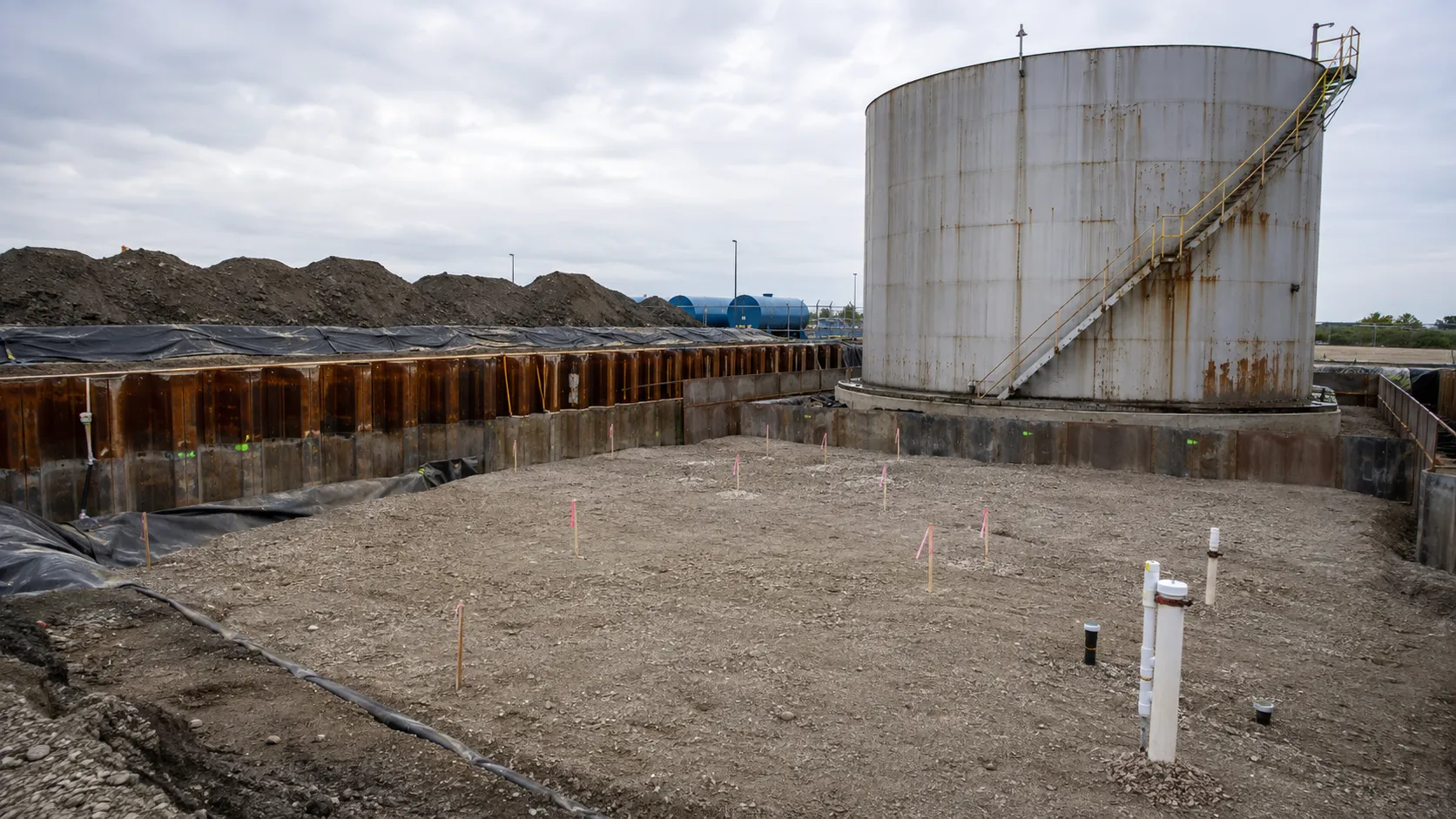
Harrowgate Group completes tank site remediation directly for property owners, developers, facility managers, and environmental consultants across Toronto, the GTA, and Ontario, with the equipment, field controls, documentation, and civil restoration kept under one accountable construction team.
Tell us what you need and we’ll get you a quote. Licensed, insured & WSIB-covered · Free, no-obligation quote & on-site assessment.
Licensed, insured & WSIB-covered · Free, no-obligation quote & on-site assessment.
Built to your engineered drawings, survey, and the real site conditions, not a one-size-fits-all approach forced to fit.
Durable materials and methods chosen for the load, traffic, and environment on site.
Send specs, drawings, or photos and get a free, no-obligation site visit and estimate with no guesswork.
Installation and site work completed in accordance with Ontario requirements.
Tank site remediation addresses contaminated soil, groundwater, concrete, and buried fuel infrastructure discovered around a former or leaking storage system. Harrowgate performs source removal, excavation, water treatment, soil management, confirmation access, backfill, and restoration across Toronto and the GTA under the Qualified Person's remedial plan and applicable TSSA requirements.
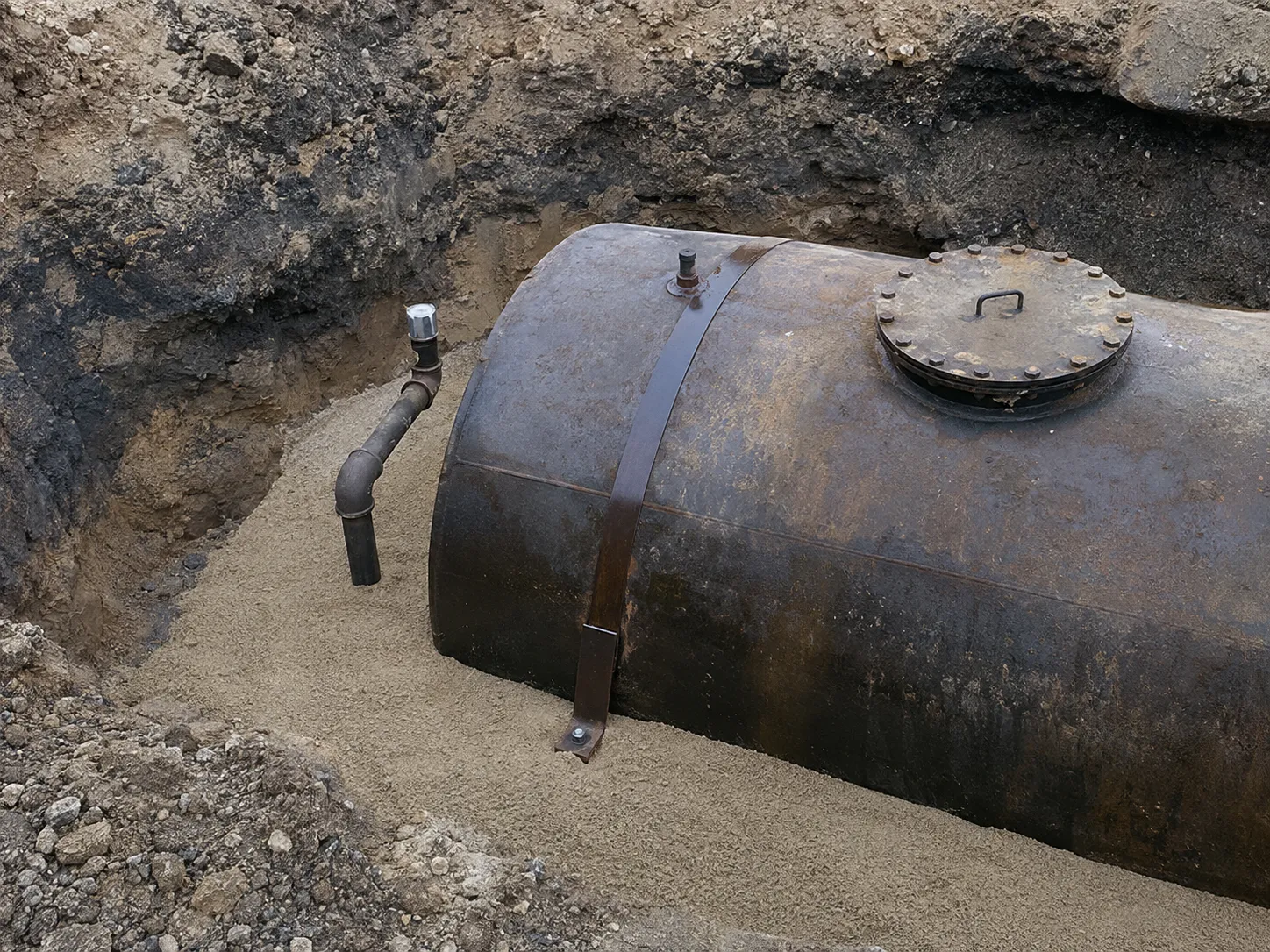
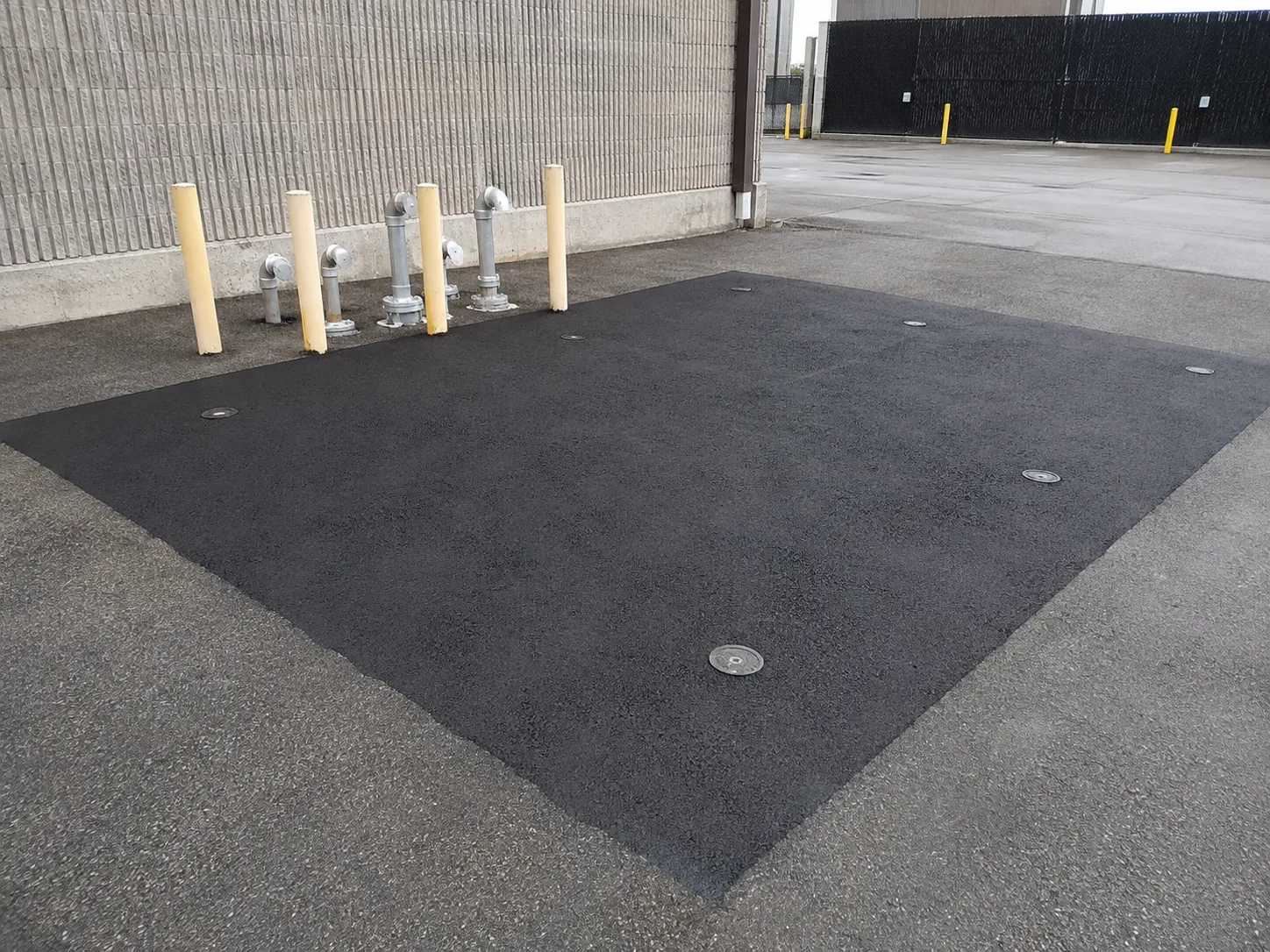
Our tank site remediation sequence starts with verified site information, controlled work zones, and written acceptance points, then moves through field execution, consultant inspection, records, and restoration. We assign each material, asset, sample area, and load a defined status so crews know what can move, what must remain exposed, and who releases the next step.
After product recovery and safe tank removal, we protect the excavation for consultant inspection and targeted sampling. Surveyed limits guide staged soil removal. We segregate material by source and quality, isolate unexpected conditions, and track every load.
If groundwater enters, it is contained, characterized, and treated or hauled through an approved route. Free product is recovered without uncontrolled pumping that could spread the plume. Confirmation samples are taken from exposed walls and floors as directed. Released areas receive approved backfill, lift compaction, and pavement, slab, or landscaped restoration.
Harrowgate coordinates shutdown, product transfer, excavation, lifting, environmental response, civil reinstatement, and records with one field schedule. Our crews control the work area and keep exposed equipment protected from traffic and weather. Owners receive practical daily reporting on recovered product, removed components, disposal documentation, discovered conditions, inspection points, and restored surfaces.
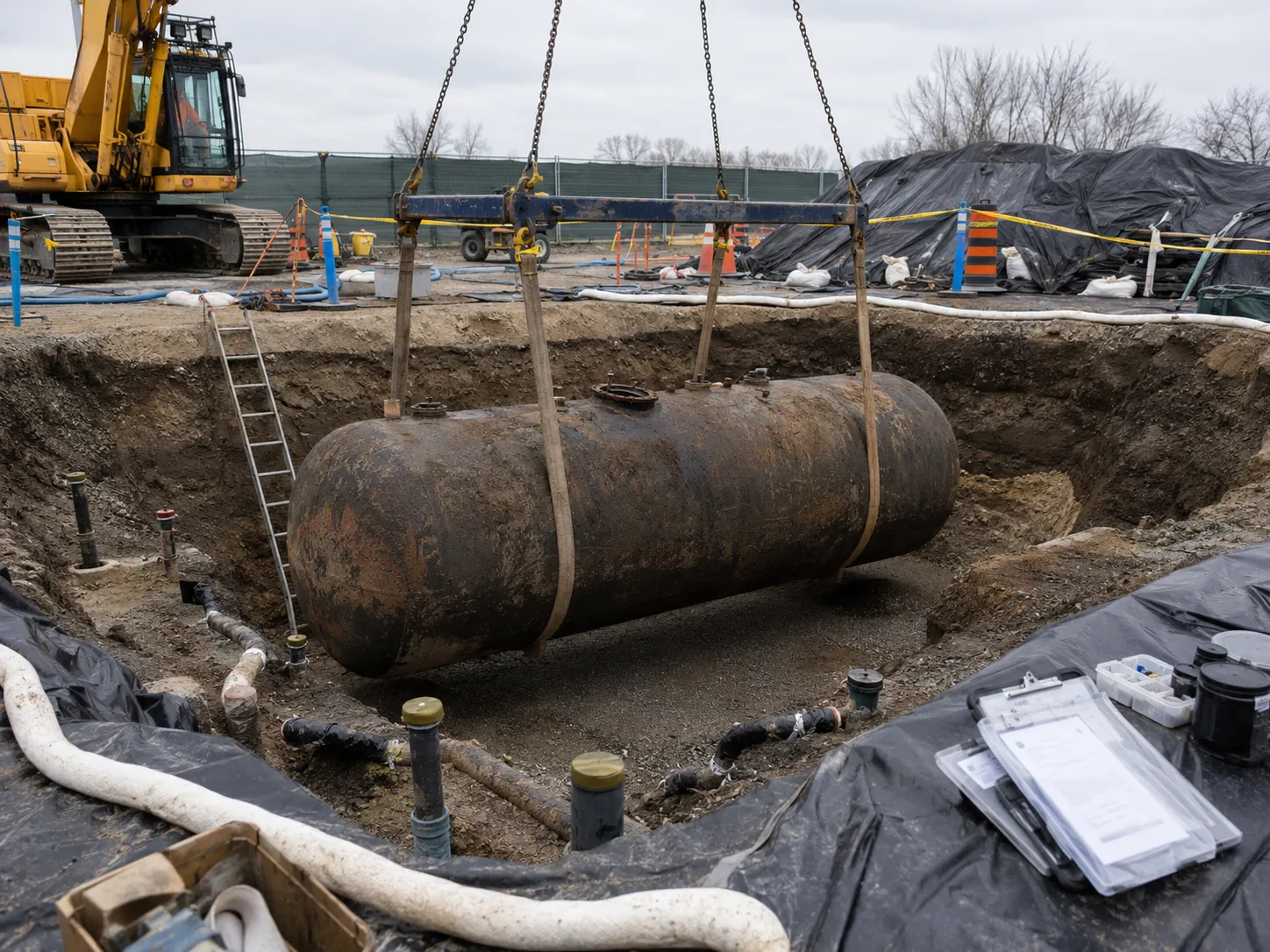
Materials and acceptance criteria for tank site remediation come from the current Ontario requirements, approved drawings, consultant documents, receiving facilities, and owner standards that apply to the actual site. We check those criteria before procurement or hauling, record field changes, and preserve the evidence required for inspection, environmental review, and future construction.
Environmental evidence for an RSC related project follows Ontario Regulation 153/04 and the Qualified Person's applicable standard or accepted risk criteria. Excess soil movements follow Ontario Regulation 406/19 where it applies. Tank and line closure use the applicable TSSA fuel code and adoption document. Petroleum assessment commonly distinguishes volatile and extractable petroleum fractions, related volatile compounds, free product, and groundwater effects based on the consultant's program. Soil receiving approval, water discharge approval, vapour controls, and imported fill documentation are resolved separately.
Ontario fuel equipment is governed by the Technical Standards and Safety Authority framework and the code adopted for the fuel involved. Current requirements can include the Liquid Fuels Handling Code, its Ontario adoption document, or the CSA B139 series for oil burning equipment. Tank construction, supports, venting, fill, overfill protection, leak detection, corrosion protection, clearances, and contractor qualifications are confirmed against the approved design and current adopted edition.
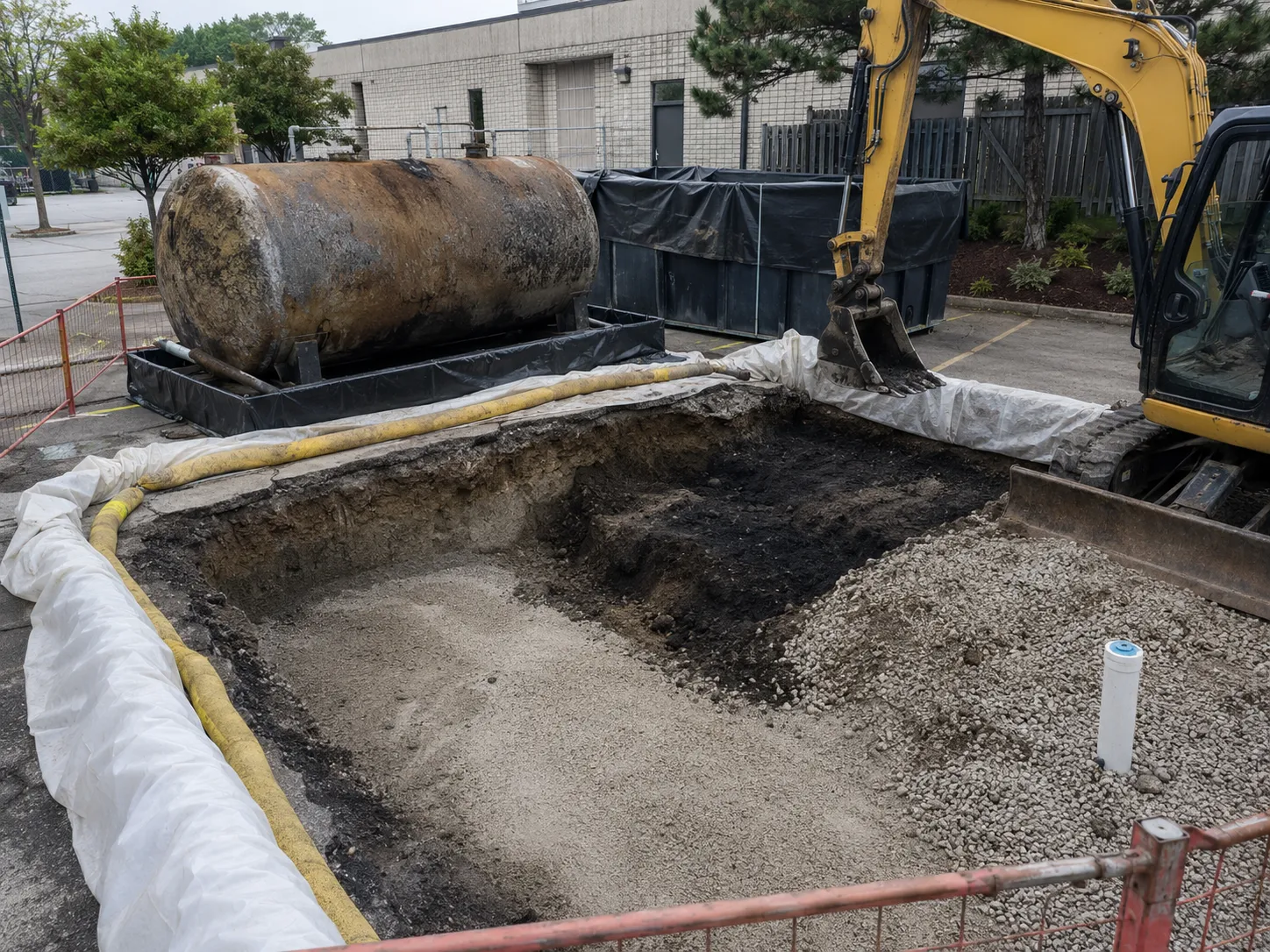
Tank Site Remediation fails when field production gets ahead of characterization, isolation, inspection, or documentation. Harrowgate prevents that gap with staged work, clearly marked hold points, segregated materials, daily records, and immediate escalation of changed conditions. The goal is to protect people and operations while avoiding rejected loads, concealed deficiencies, repeat excavation, and schedule loss.
Stopping excavation at the tank footprint can miss line and dispenser releases. Aggressive dewatering can draw contamination under a boundary, while uncovered stockpiles can create odour and runoff. Backfilling before sample release forces repeat excavation. We map the full system, investigate joints and low points, keep impacted water separate, use covered labelled cells, and build time for laboratory hold points. Where the excavation nears structures, services, or property limits, shoring and staged risk decisions replace unsafe over excavation.
We review the next two weeks of work against approvals, sampling, deliveries, shutdowns, and weather. Daily pre work discussions identify the exact limits and status of each area. Photographs and measurements are taken before concealment, and unresolved items stay visible on the field log until the responsible reviewer provides direction or acceptance.
Have drawings for tank site remediation? Send them over and we will scope it.
We start with tank history, system layout, soil and groundwater data, and consultant remedial criteria. We also confirm access, utilities, operating restrictions, consultant responsibilities, notices, and the intended endpoint. Resolving these items before mobilization lets the field team establish controls, receiving routes, hold points, and contingency space instead of making compliance decisions beside an open excavation.
The main drivers are tank bed, fill, vent, lines, joints, dispensers, pumps, and water table. Weather, laboratory turnaround, inspection availability, and working hours can also control production. We build the sequence around the slowest approval or physical constraint and identify parallel tasks that continue without covering work, mixing materials, or compromising a required hold point.
The governing requirements depend on the material, property, equipment, and approval. The work can involve staged removal with consultant samples and written release before backfill. We confirm the current project specific criteria with the engineer, Qualified Person, owner, municipality, or TSSA as applicable. A general industry practice never replaces the written requirement that governs the actual site.
Our field record includes free product recovery, settling, filtration, treatment, or authorized off site handling. Entries are tied to dates and work areas so quantities and events can be reconstructed. We reconcile documents during the job, not only at closeout, which gives the owner and consultant time to correct a missing ticket, unclear location, or inconsistent quantity before demobilization.
We use separate labelled cells, approved destinations, load records, and weather controls. Work pauses until the condition is safe, isolated, and assigned a documented response. The supervisor records what changed, where it occurred, who provided direction, and how material or equipment was controlled, preventing an unexpected discovery from contaminating accepted work or disappearing from the record.
Yes, where the design permits it. We plan shoring, utilities, property limits, risk decisions, and alternative treatment methods. The operating boundary, shutdown windows, truck route, emergency access, controls, and daily handback condition are agreed before work starts. Production is staged so facility staff and construction crews do not share uncontrolled access to the work zone.
Closeout should include approved fill, controlled lifts, density tests, survey, and pavement or slab repair. Depending on the project, it can also include photographs, surveys, receiving records, inspection releases, operating logs, test results, redline drawings, and a list of remaining assets. The package supports the owner's consultant and operations team, but professional certifications remain with the appropriately qualified person.
Still have a question about tank site remediation? Ask our team directly.
Commercial and heavy-civil construction delivered for developers, contractors, property managers, and municipalities.
Send drawings, a site plan, or a description of the scope. Harrowgate Group is licensed, insured, and WSIB-covered.
Licensed, Insured & WSIB-Covered, work managed and documented on every job
Tell us what you need and we’ll get you a quote. Licensed, insured & WSIB-covered · Free, no-obligation quote & on-site assessment.
Harrowgate Group provides tank site remediation, delivered and installed with quote-ready support across Toronto and surrounding Ontario communities.
Companies We've Worked With
Harrowgate Group delivers commercial and heavy-civil construction for developers, contractors, institutions, municipalities, and property groups across Ontario.
 Popeyes
  Tim Hortons
  Subway
  University of Toronto
  Madison Group
  RioCan
  Women's College Hospital
  Starbucks
  Mazda
Mazda  TD Bank
  City of Toronto Popeyes Tim Hortons Subway University of Toronto Madison Group RioCan Women's College Hospital Starbucks Mazda TD Bank City of Toronto
 Three fields. We reply with the next step.
Thanks, we will call you shortly.