
Built to spec
Built to your engineered drawings, survey, and the real site conditions, not a one-size-fits-all approach forced to fit.
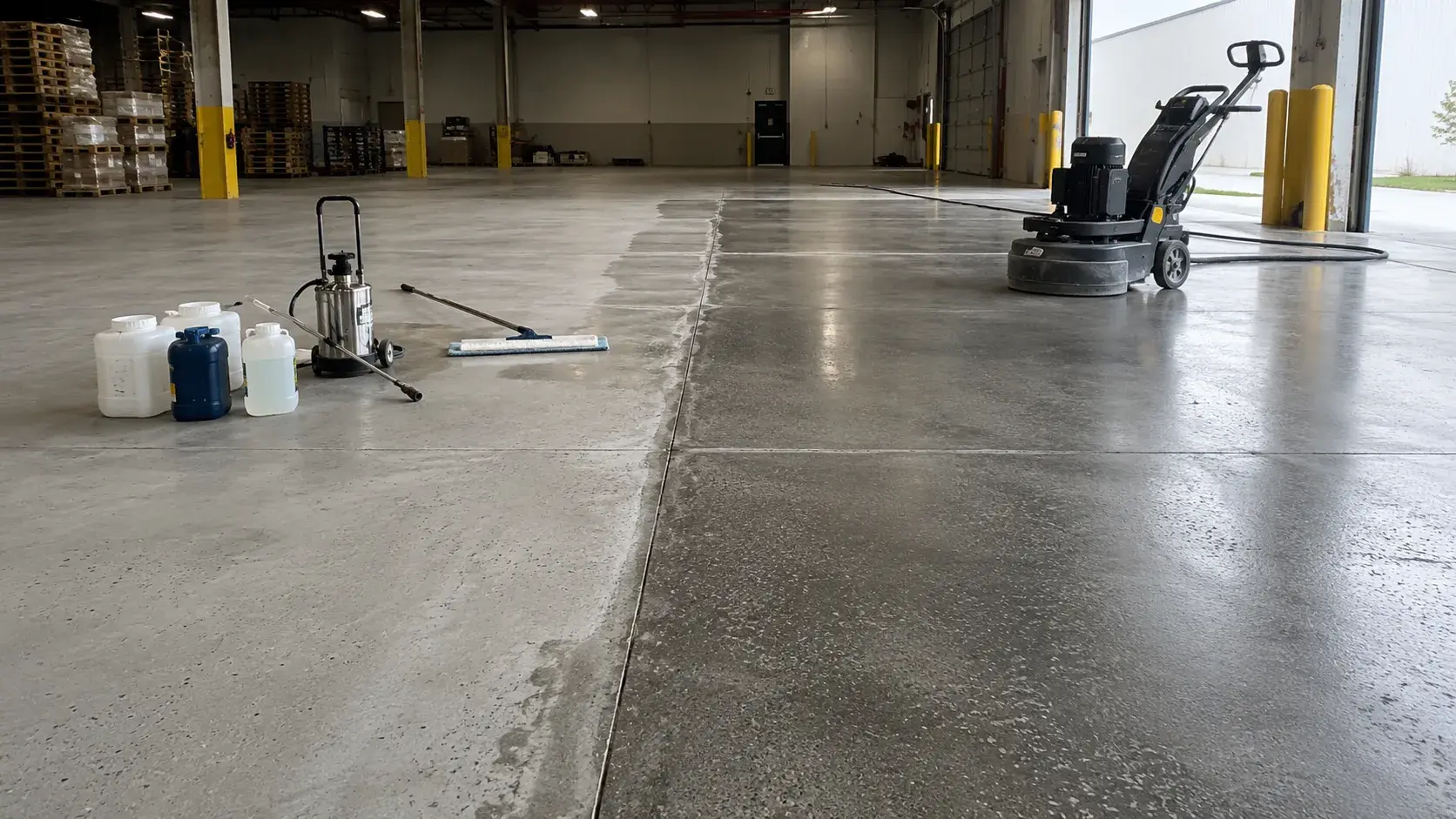
Penetrating concrete densifiers and sealers for Ontario industrial, commercial, parking, and civil slabs, performed by Harrowgate after the preparation and repairs needed for uniform absorption.
Tell us what you need and we’ll get you a quote.
Licensed, insured & WSIB-covered · Free, no-obligation quote & on-site assessment.
Built to your engineered drawings, survey, and the real site conditions, not a one-size-fits-all approach forced to fit.
Durable materials and methods chosen for the load, traffic, and environment on site.
Send specs, drawings, or photos and get a free, no-obligation site visit and estimate with no guesswork.
Installation and site work completed in accordance with Ontario requirements.
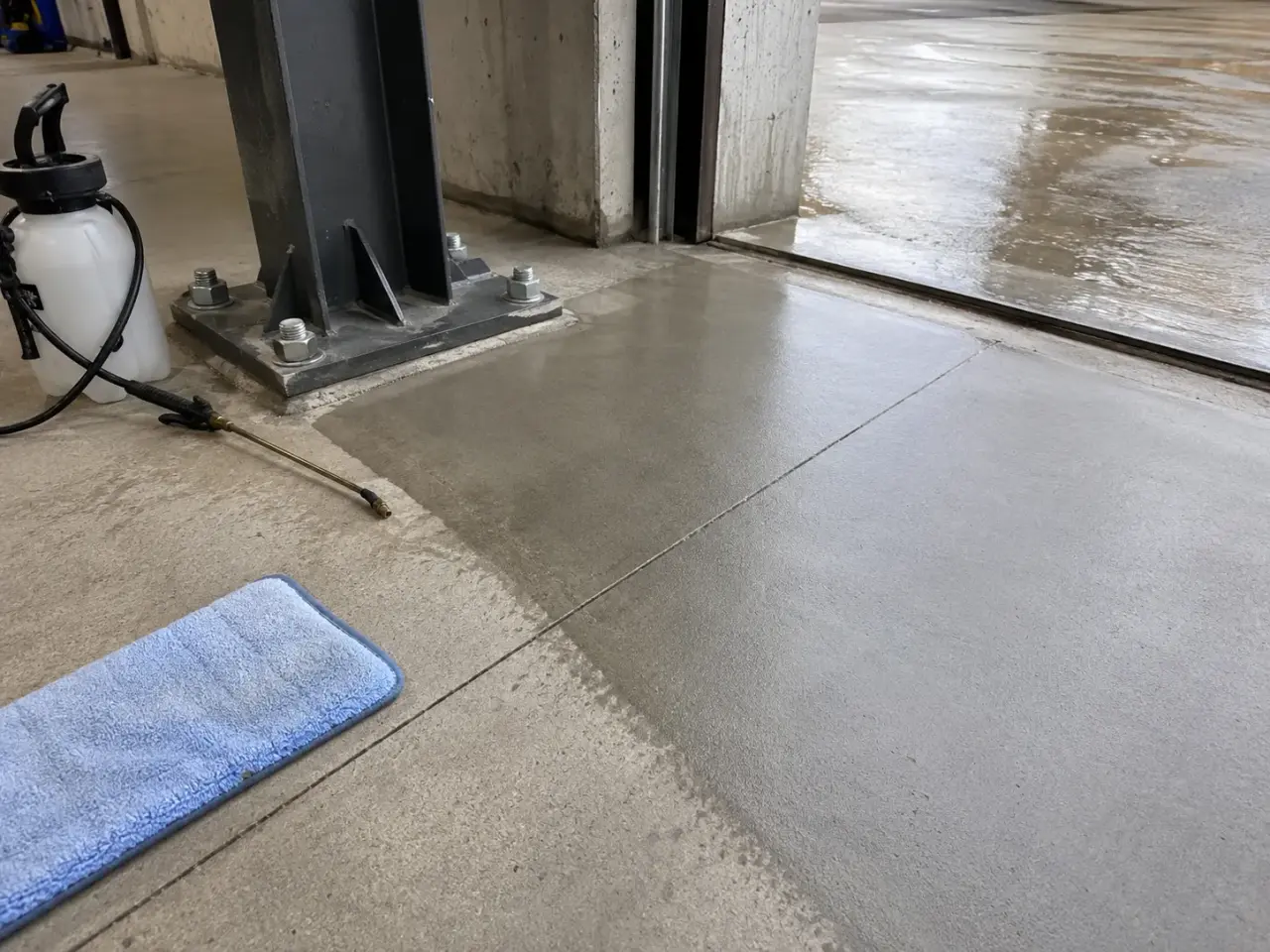
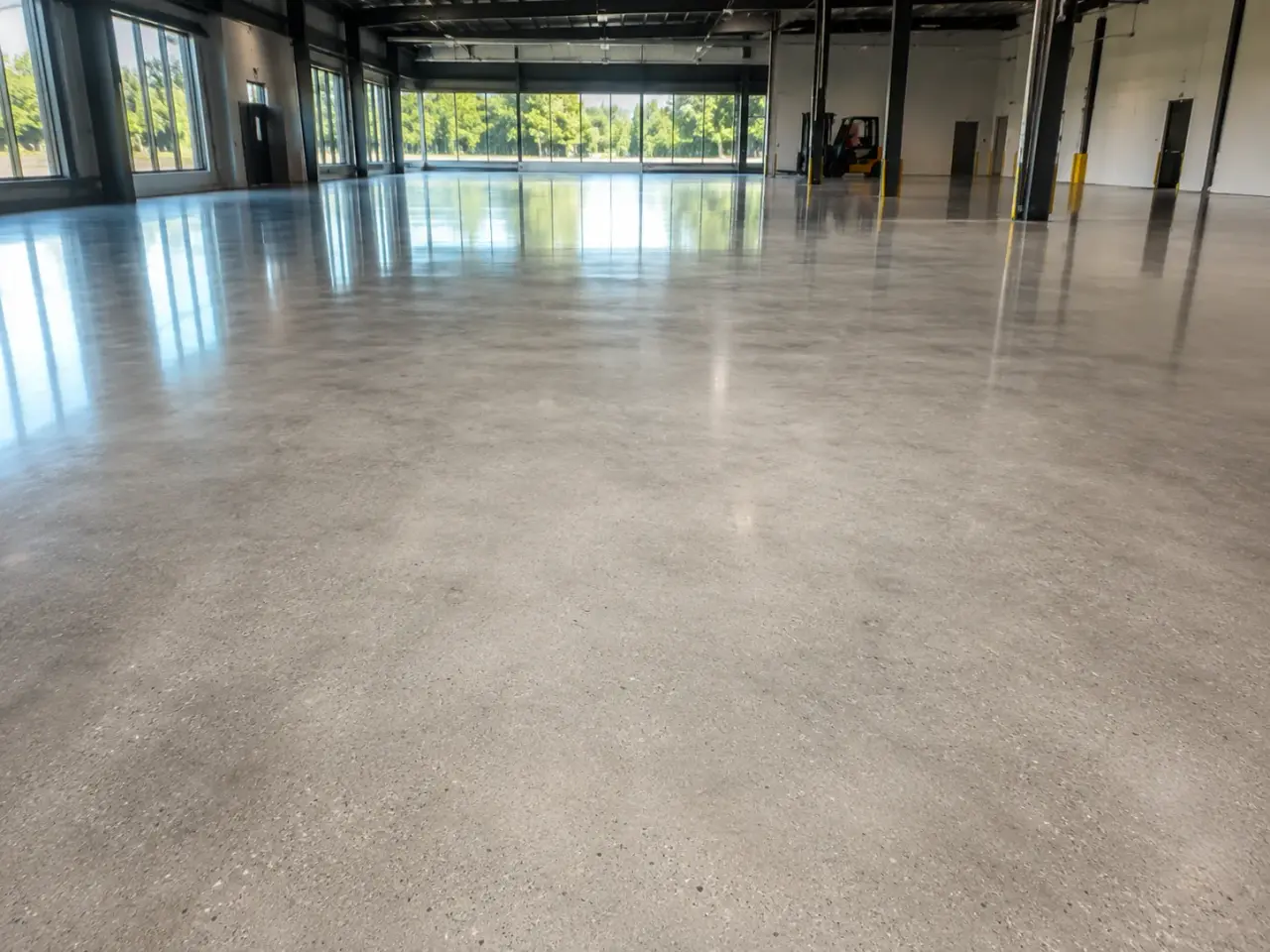
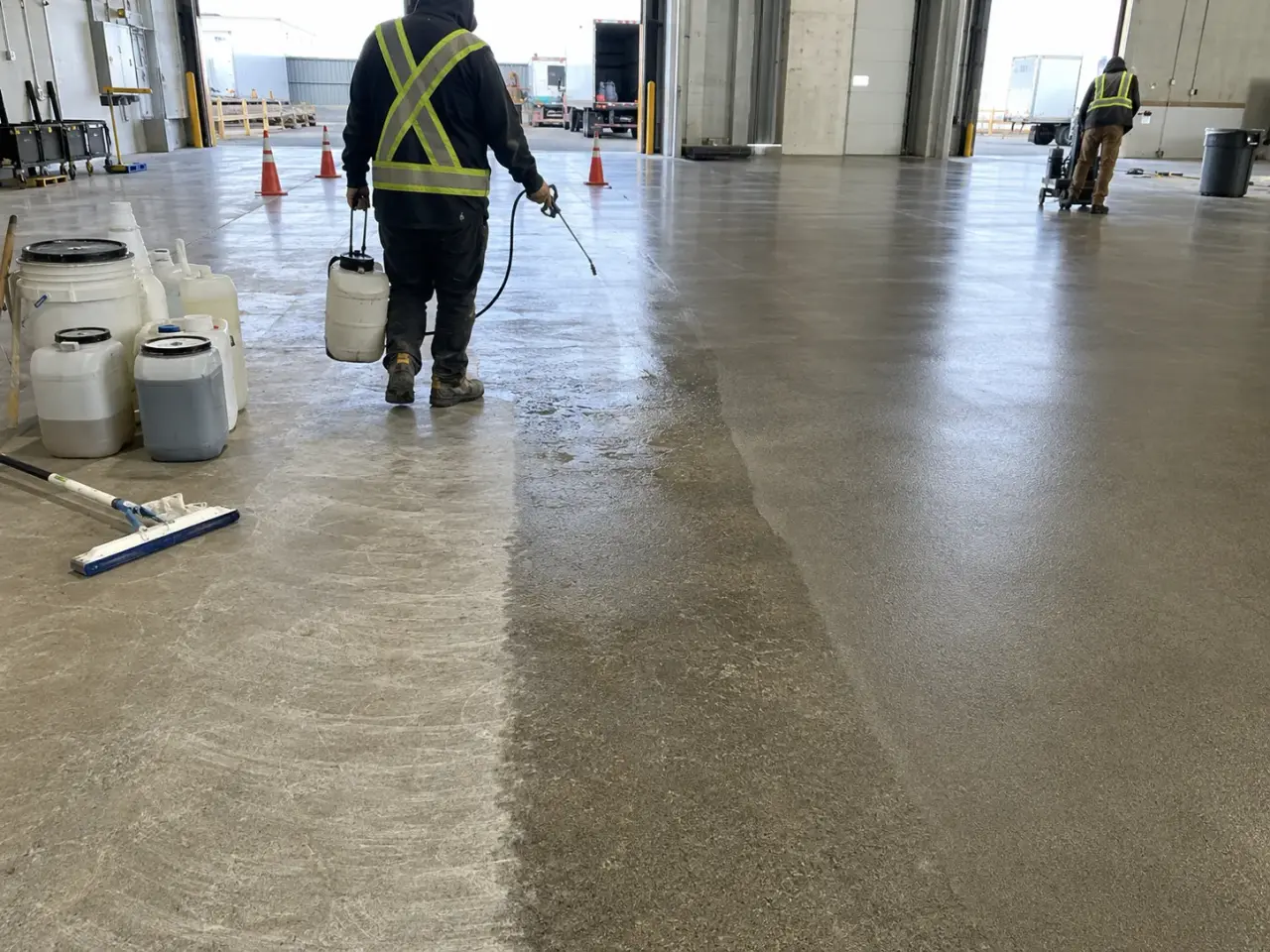
The product is selected from the substrate, moisture, abrasion, salts, chemicals, appearance, slip resistance, vapour transmission, maintenance, and whether the treatment must remain within the pores or form a surface film. Silicate densifiers harden suitable cement paste, penetrating repellents reduce liquid absorption, film-forming sealers change the surface, and resin coatings provide a thicker barrier where preparation and moisture permit.
Silicate densifiers. Lithium, sodium, or potassium silicate solutions react with available calcium compounds in concrete and can reduce dusting while supporting polished-floor performance. They do not bridge cracks, level weak concrete, or make a slab liquid-tight. Coverage and reaction vary with paste quality and previous treatments.
Penetrating water and salt repellents. Silane and siloxane treatments enter sound, dry concrete and reduce capillary water uptake while remaining relatively vapour permeable. Penetration depth, solids, surface dryness, application rate, and exposure determine performance. They are often used on exterior concrete subject to rain and de-icing salts.
Film-forming sealers. Acrylic and related products create a visible surface film that can deepen colour and assist stain resistance. Film thickness, vapour pressure, ultraviolet exposure, abrasion, recoat compatibility, and slip are considered. Trapped moisture can whiten or detach an unsuitable film.
Protective resin systems. Epoxy, polyurethane, and other coatings provide higher build and chemical resistance when the substrate is properly prepared and dry enough. They are separate systems from penetrating sealers. Cracks, joints, pinholes, termination details, and cure conditions require explicit treatment.
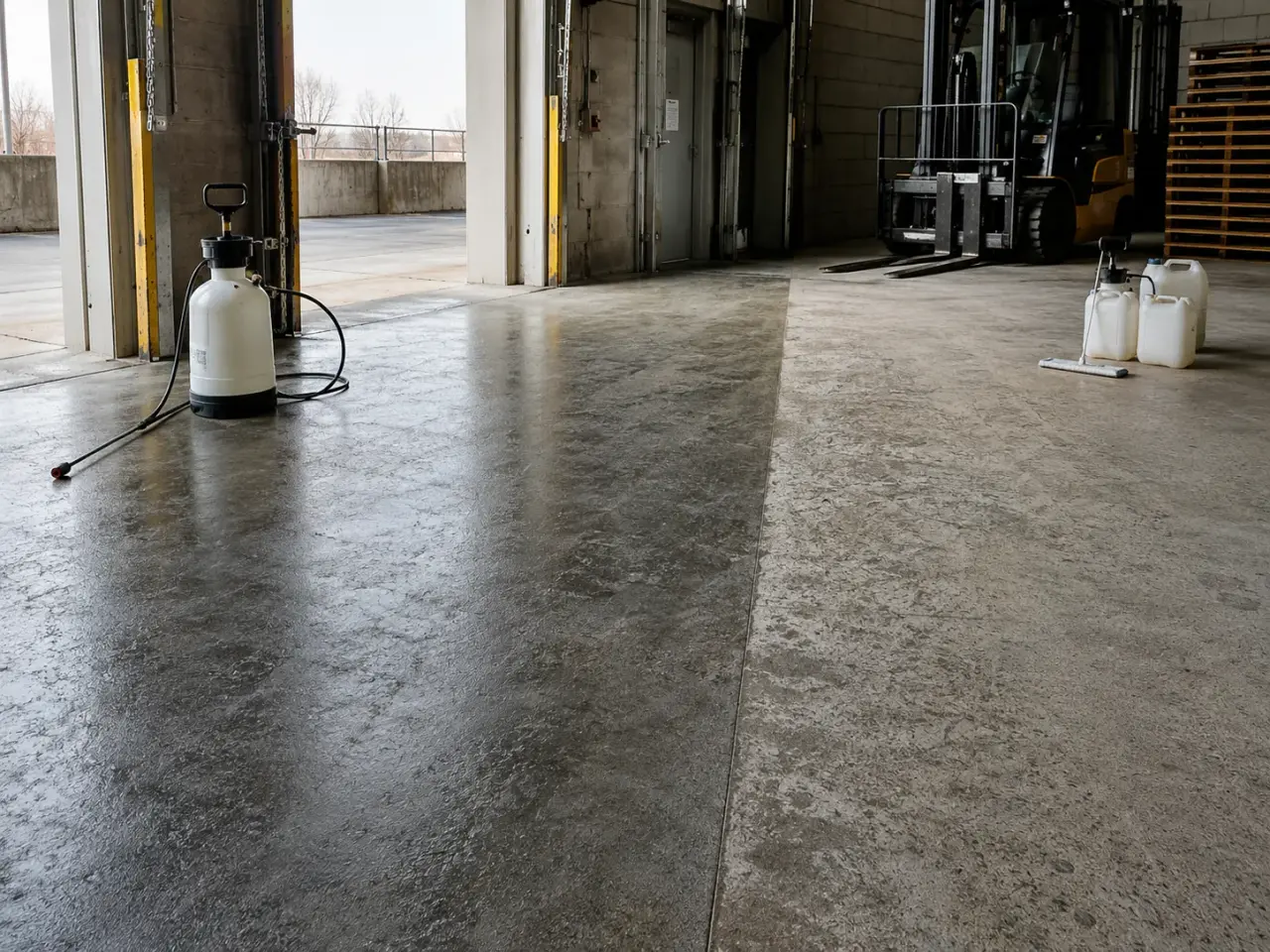
Step 1, identify the substrate and exposure. Harrowgate checks concrete age, finish, strength, porosity, moisture, contaminants, salts, traffic, cleaning, chemicals, appearance, slip, and prior coatings before product selection.
Step 2, prepare a representative test area. Cleaning, grinding, blasting, or stripping removes material that blocks penetration or adhesion. A mockup confirms absorption, colour, sheen, texture, application rate, and compatibility on the actual slab.
Step 3, establish application conditions. Surface temperature, moisture, dew point, ventilation, protection, equipment, coverage, dwell time, and cure window are checked against the product data. Adjacent glass, metal, walls, drains, and occupied areas are protected.
Step 4, apply at a controlled rate. Densifier is kept active and distributed without allowing residue to harden. Penetrating sealer receives uniform saturation without ponding. Film systems are applied at the specified thickness and recoat interval.
Step 5, remove residue and protect cure. Excess material is collected as required, the surface is inspected for misses or overapplication, and access remains controlled through cure. Final appearance, slip, absorption, adhesion, or thickness checks follow the specified system.
Penetrating treatments perform only when they reach open, clean concrete at controlled coverage. Harrowgate prepares the slab uniformly, selects the chemistry for the exposure, keeps reactive material active for the required dwell, removes excess, and protects the surface until the reaction or cure is complete.
Absorption and compatibility review. Water-drop and test-panel observations help identify dense, porous, or previously treated areas. We review whether moisture vapour must pass, whether chloride protection or oil repellency is required, and whether the floor will later receive adhesive or coating. A treatment that blocks future bond is not placed without that decision.
Cleaning and surface opening. Scrubbing and hot-water extraction remove soil and soluble residues. Diamond grinding or honing removes curing compounds, weak paste, or old film where necessary. Dust is vacuumed with industrial extraction. Preparation is kept consistent because heavily ground patches absorb more treatment and can appear darker than adjacent hard-trowelled concrete.
Crack and spall repair. Loose edges and spalls are rebuilt before treatment. Densifier does not glue unsound concrete together, and sealer does not bridge moving cracks. Repair material is selected for the traffic and finished flush. Active joints remain functional, while dormant cracks receive compatible treatment when appearance or debris collection matters.
Densifier placement. Reactive silicate is sprayed or spread at controlled coverage and kept evenly wet for the manufacturer's penetration period, often around 20 to 30 minutes depending on the product and slab. Dry areas receive additional material. Excess is redistributed or removed before it forms hard white residue on the surface.
Penetrating sealer placement. Silane, siloxane, or specialty repellents are applied to saturation at the specified rate, sometimes in wet-on-wet passes. Vertical overspray, glass, metals, and adjacent finishes are protected. The concrete remains dry and within temperature limits through absorption and cure. Ponding is avoided unless the product specifically permits it.
Burnishing and release. Interior densified floors can be burnished to improve initial sheen and remove minor residue. We inspect for blotches, unabsorbed material, lap marks, and untreated repairs. Areas remain protected from water, oil, deicing salts, and traffic until the approved treatment reaches its required cure or reaction period.
Turnover distinguishes routine cleaning from retreatment. Densified concrete is maintained with neutral or mildly alkaline cleaners and mechanical scrubbing, not acidic products that etch cement paste. Penetrating repellents are inspected by absorption and exposure zones over time. Loading docks, parking entrances, snow-storage edges, and wash areas usually require closer observation than protected interior slabs.
Planning concrete sealing and densifying? Talk it through with our team.
Densifier reacts within cement paste to harden and dustproof the surface. A penetrating sealer reduces absorption of water, chlorides, or oils. A topical sealer forms a film. One product can combine some functions, but selection must identify the primary need, exposure, vapour movement, appearance, and future floor finishes.
It can improve sound but porous or mildly dusting paste after proper cleaning and preparation. It cannot restore deep weakness, delamination, severe carbonation, or failing topping. Harrowgate tests representative areas and removes unsound material first. Floors with major deterioration may need resurfacing or a bonded coating instead.
Coverage depends on porosity, hardness, finishing, grinding, age, and previous treatment. Some Canadian lithium silicate data lists roughly 0.2 to 0.4 kg per square metre, but the approved product and trial area govern. Harrowgate monitors wet dwell and material yield instead of forcing a fixed volume into dense concrete.
Many silane or siloxane repellents create little visible change after cure, while topical and colour-enhancing sealers can darken or add sheen. Repairs and porous areas may still respond differently. We install a representative test area and review it after full cure under normal lighting before treating the entire surface.
Possibly, but penetrating repellents and topical sealers can interfere with bond. The existing treatment must be identified and removed or overcome through an approved preparation and primer process, followed by adhesion testing. Harrowgate checks future floor plans before sealing so coating zones can be excluded or documented clearly.
No. Penetrating sealer reduces absorption through sound concrete pores but does not bridge moving cracks, open joints, penetrations, or failed drain details. Those pathways require crack repair, joint treatment, drainage correction, or a continuous waterproof membrane. Sealer is one durability measure, not a substitute for water-management repairs.
Provide area, slab age, exposure, traffic, cleaning chemicals, current dusting or leakage concerns, previous coatings or curing compounds, desired appearance, and future flooring plans. Harrowgate checks porosity and contamination, prepares a trial area, and prices the required cleaning, grinding, repairs, treatment, protection, and access phasing.
No. A densifier reacts within suitable cement paste and can improve surface hardness or reduce dusting, but it does not bridge cracks, seal moving joints, or form a waterproof membrane. Leakage requires diagnosis of the water path and a repair or waterproofing system designed for that condition.
Concrete porosity, finish, moisture, previous products, and aggregate exposure vary even within one floor. A test area shows absorption, colour change, sheen, texture, coverage, residue, and cleaning response on the actual substrate. It also gives the owner a reference for accepting the completed appearance.
Still have a question about concrete sealing and densifying? Ask our team directly.
Commercial and heavy-civil construction delivered for developers, contractors, property managers, and municipalities.
Send drawings, a site plan, or a description of the scope. Harrowgate Group is licensed, insured, and WSIB-covered.
Licensed, Insured & WSIB-Covered, work managed and documented on every job
Tell us what you need and we’ll get you a quote.
Harrowgate Group provides concrete sealing and densifying, delivered and installed with quote-ready support across Toronto and surrounding Ontario communities.
Companies We've Worked With
Harrowgate Group delivers commercial and heavy-civil construction for developers, contractors, institutions, municipalities, and property groups across Ontario.
 Popeyes
  Tim Hortons
  Subway
  University of Toronto
  Madison Group
  RioCan
  Women's College Hospital
  Starbucks
  Mazda
Mazda  TD Bank
  City of Toronto Popeyes Tim Hortons Subway University of Toronto Madison Group RioCan Women's College Hospital Starbucks Mazda TD Bank City of Toronto