
Built to spec
Built to your engineered drawings, survey, and the real site conditions, not a one-size-fits-all approach forced to fit.
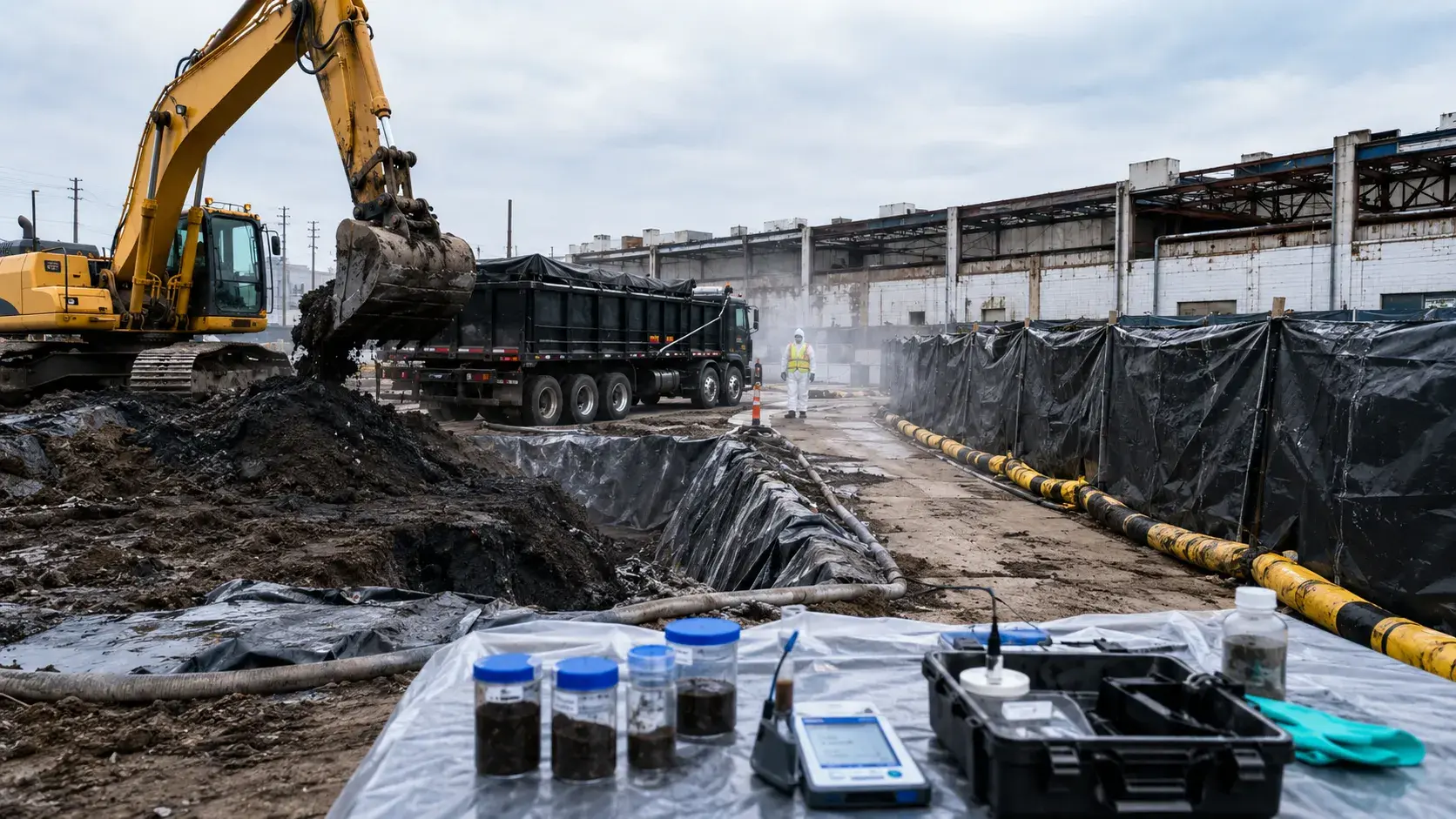
Harrowgate Group performs contaminated soil removal across Ontario for developers, municipalities, industrial owners, and environmental consultants.
Tell us what you need and we’ll get you a quote.
Licensed, insured & WSIB-covered · Free, no-obligation quote & on-site assessment.
Built to your engineered drawings, survey, and the real site conditions, not a one-size-fits-all approach forced to fit.
Durable materials and methods chosen for the load, traffic, and environment on site.
Send specs, drawings, or photos and get a free, no-obligation site visit and estimate with no guesswork.
Installation and site work completed in accordance with Ontario requirements.
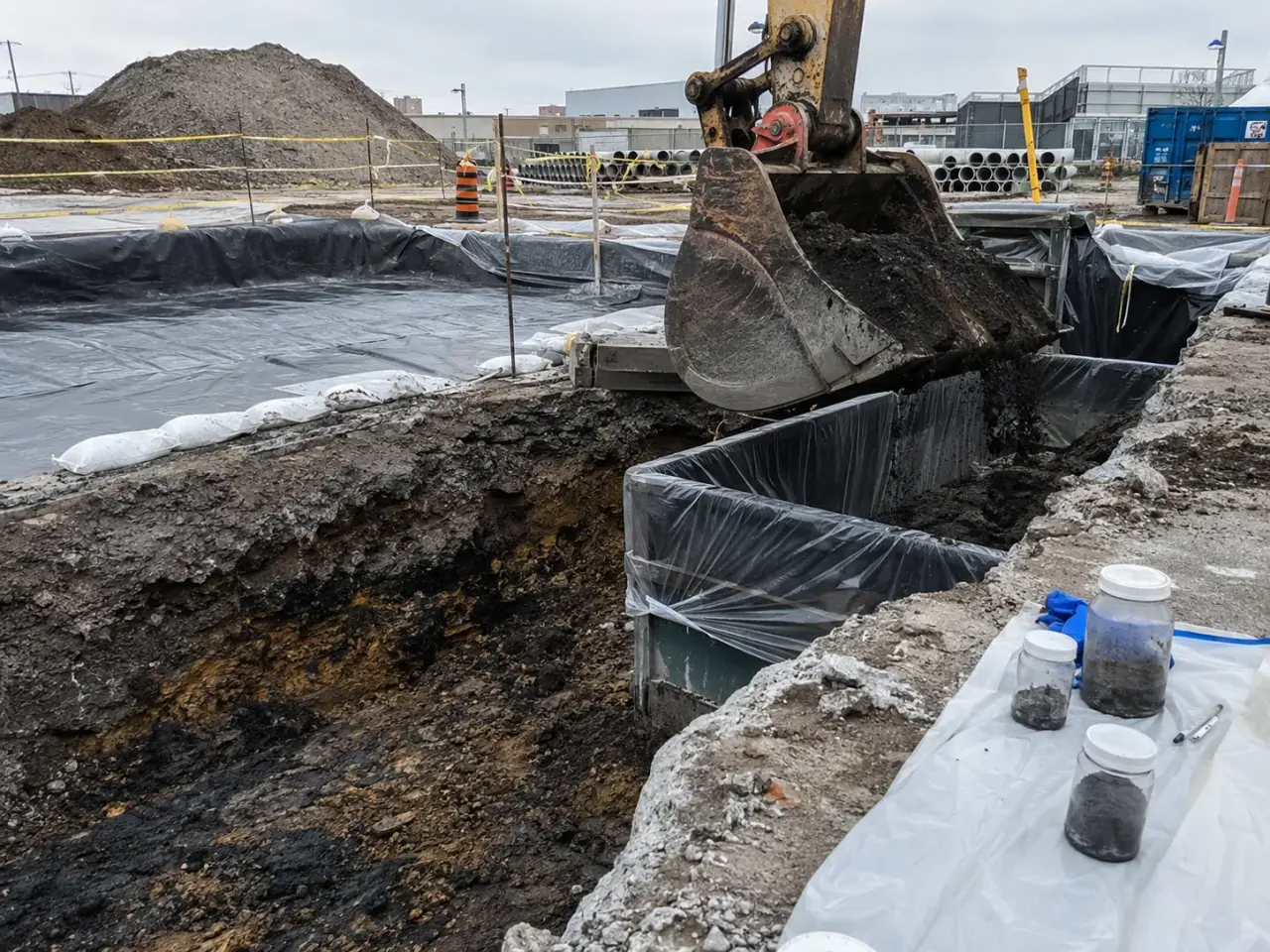
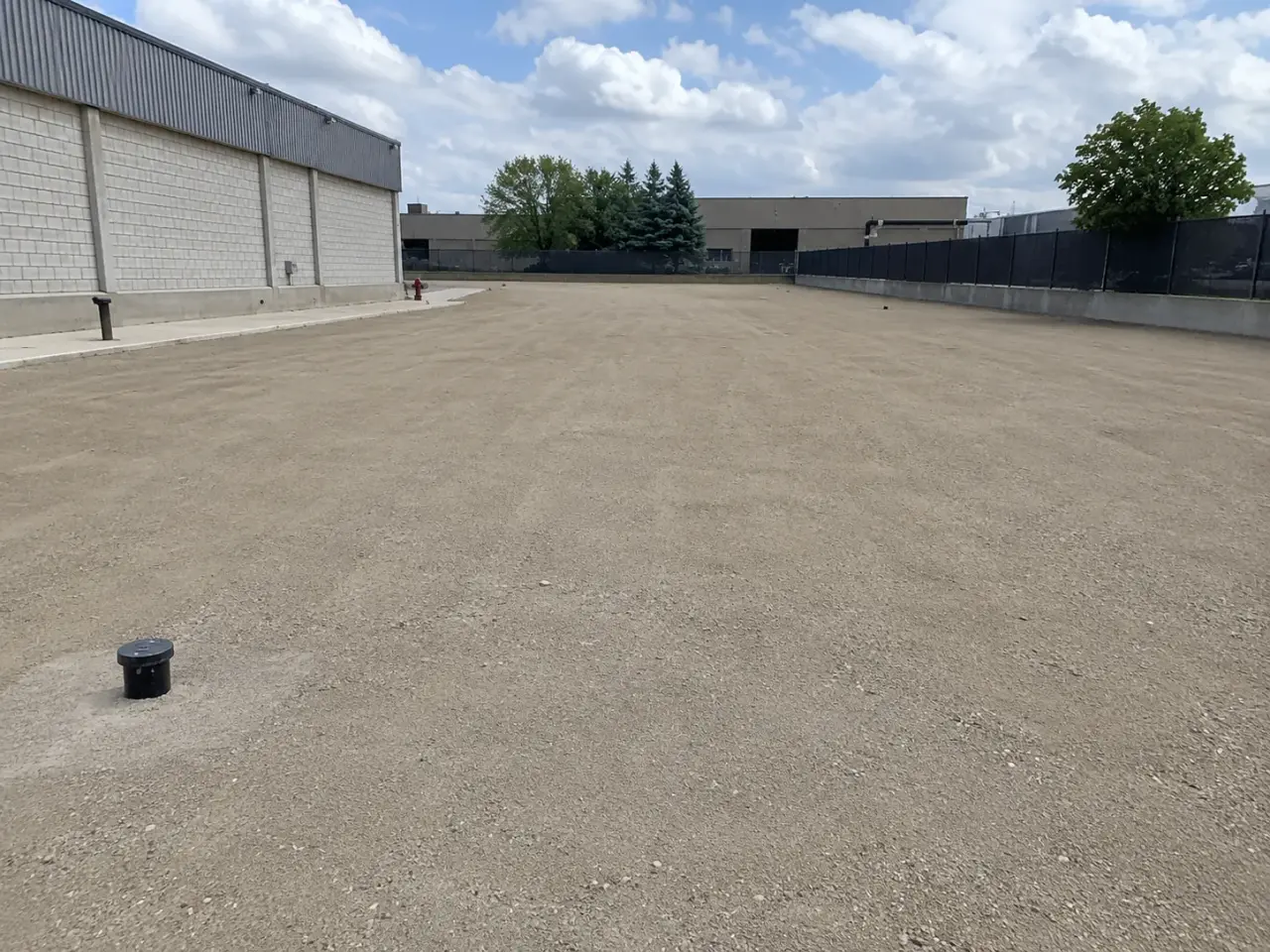
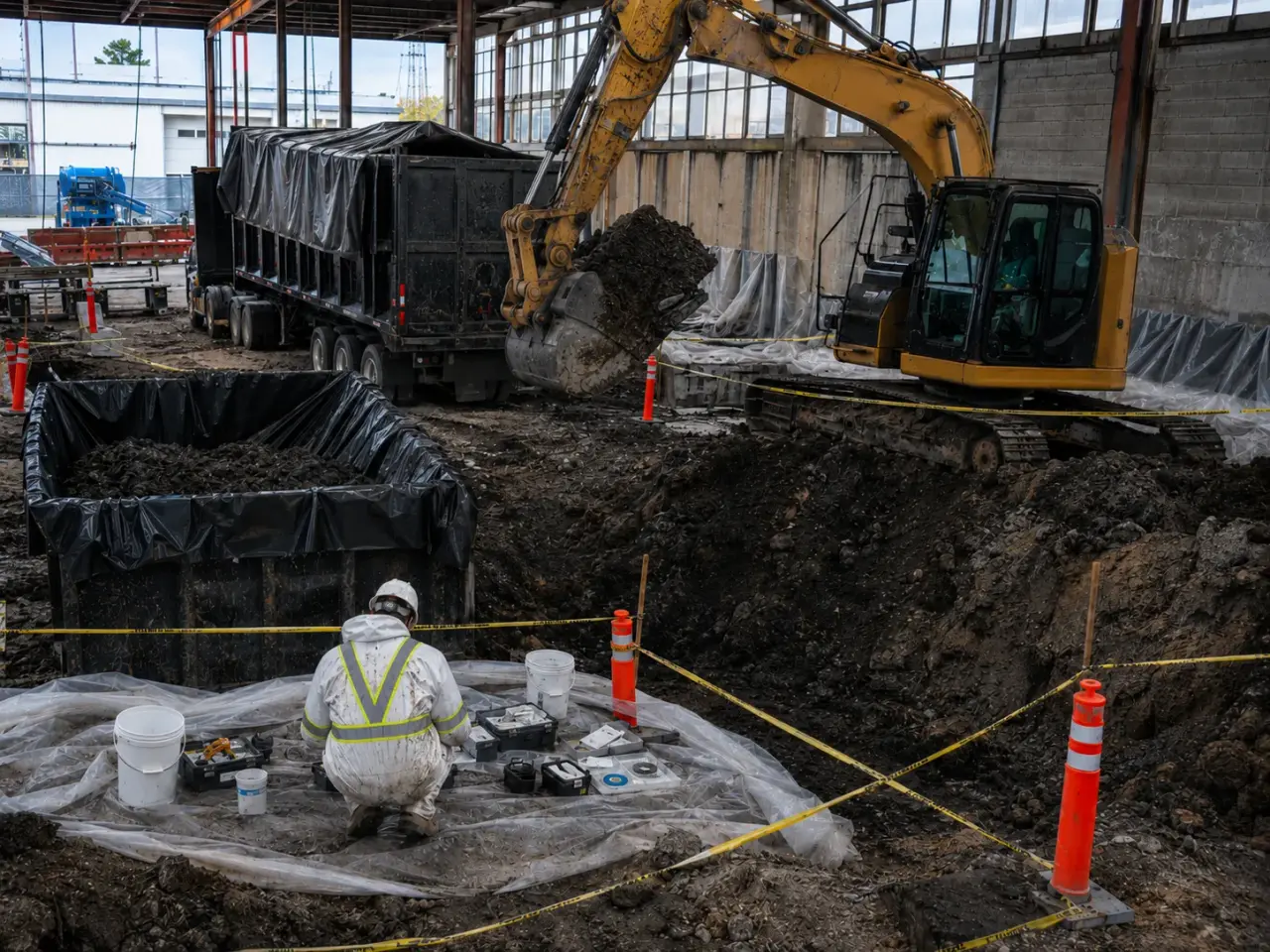
Method selection for contaminated soil removal follows ground, water, utilities, access, environmental controls, temporary works, material behaviour, receiving capacity, testing, and its required handoff.
Targeted excavation. Surveyed grids, field screening, visual and odour observations, and confirmatory samples guide removal around tanks, spills, former processes, utilities, and property constraints.
Bulk remedial excavation. Large impacted zones require shoring, groundwater control, dust and vapour measures, segregated stockpiles, lined loading areas, traffic, and coordinated receiving capacity.
Selective segregation. Different soil qualities, waste classes, debris, free product, and reusable material remain separated using defined cells, liners, covers, labels, and sampling.
In-situ and off-site combinations. Excavation may work with soil treatment, stabilization, vapour mitigation, groundwater remediation, barriers, or risk-management measures under the consultant's plan.
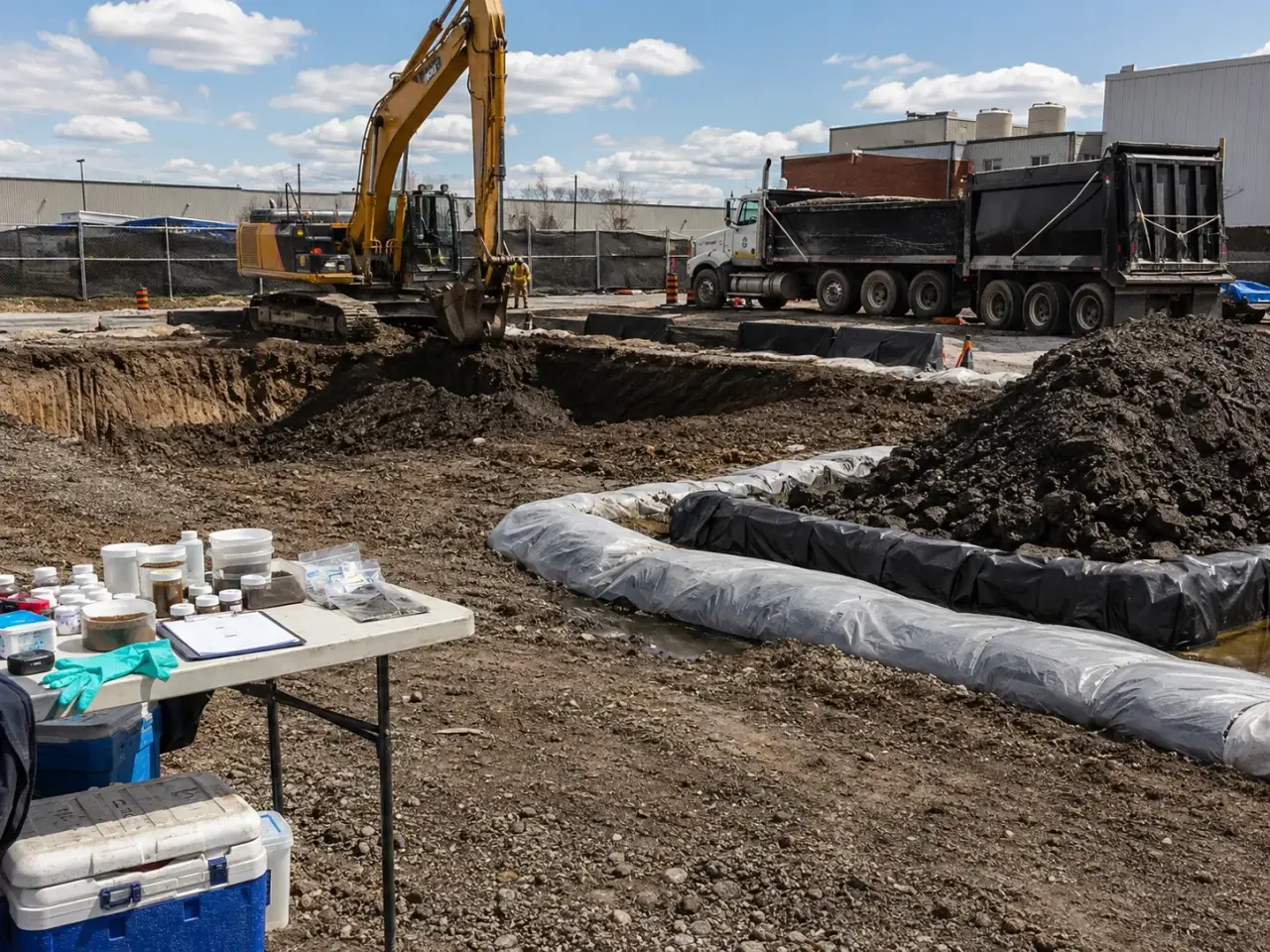
Step 1, review environmental reports, contaminants, limits, utilities, shoring, water, worker controls, sampling, haul routes, destinations, and emergency procedures.
Step 2, establish exclusion zones, decontamination, dust or vapour control, lined stockpiles, water management, and truck controls.
Step 3, excavate by surveyed cell while screening, segregating, and recording soil observations and quantities.
Step 4, load accepted destinations with required characterization, manifests, bills, tickets, covers, and decontamination.
Step 5, collect confirmatory samples, address residual impacts, backfill accepted areas, and reconcile disposal and survey records.
We establish survey control and excavation grids, verify utility locates, install erosion and sediment controls, and prepare a stable loading area before disturbing impacted ground.
Contaminated Soil Removal sequence, step 2. Excavators remove soil in controlled lifts and cells while a spotter and the environmental consultant monitor visual, odour, and field-screening indicators. Separate buckets and haul paths prevent cross-contamination.
Contaminated Soil Removal sequence, step 3. Material awaiting results is placed on an impermeable lined pad, covered against precipitation, bermed to retain runoff, and labelled by source area so analytical results remain tied to the correct volume.
Contaminated Soil Removal sequence, step 4. Approved trucks are loaded to legal weights, tarped, documented, and dispatched only to the destination identified for that soil quality. We reconcile tickets, scale weights, and excavation quantities each shift.
O. Reg. 406/19 and the incorporated Rules for Soil Management and Excess Soil Quality Standards govern assessment, characterization, storage, tracking, and reuse where they apply.
Contaminated Soil Removal requirement 2. Where a Record of Site Condition or risk assessment is involved, O. Reg. 153/04 controls Phase Two investigation, laboratory analysis, chain of custody, and confirmation sampling requirements under the Qualified Person's direction.
Contaminated Soil Removal requirement 3. Temporary stockpiles use compatible liners, secure covers, perimeter berms, controlled access, and separate identification. Water contacting impacted soil is contained and managed under the project discharge plan.
Contaminated Soil Removal requirement 4. Survey surfaces and confirmation samples establish the final excavation limits. Imported backfill is matched to the geotechnical specification and applicable excess soil quality standard before placement in compacted lifts.
Applicable document set. O. Reg. 406/19, the Excess Soil Rules, O. Reg. 153/04 when applicable, O. Reg. 347 for waste classification where soil is managed as waste, and the site-specific remedial action plan.
Planning contaminated soil removal? Talk it through with our team.
Cross-contamination occurs when clean and impacted material share buckets, haul roads, or stockpile pads. We define zones, clean equipment at transition points, and preserve distinct material streams.
Contaminated Soil Removal failure control 2. Rejected loads create schedule and cost exposure when destination criteria are not checked against analytical data. We confirm acceptance, booking, and paperwork before a truck leaves the site.
Contaminated Soil Removal failure control 3. Excavating beyond the delineated cell can increase disposal volume and destabilize adjacent work. Machine operators follow survey limits and pause at unexpected staining, odour, tanks, or buried debris.
Contaminated Soil Removal failure control 4. Rain and groundwater can mobilize contaminants and interrupt sampling. Berms, covers, clean-water diversion, sump control, and planned dewatering keep the excavation manageable and the record defensible.
We establish survey control and excavation grids, verify utility locates, install erosion and sediment controls, and prepare a stable loading area before disturbing impacted ground. Excavators remove soil in controlled lifts and cells while a spotter and the environmental consultant monitor visual, odour, and field-screening indicators. Separate buckets and haul paths prevent cross-contamination.
The governing documents are O. Reg. 406/19, the Excess Soil Rules, O. Reg. 153/04 when a Record of Site Condition applies, O. Reg. 347 for soil managed as waste, and the remedial action plan. Together they control characterization, storage, tracking, transport, destination acceptance, confirmation sampling, and site-specific release decisions.
The price responds to the contaminant profile, excavation depth, groundwater, shoring needs, soil volume and density, trucking distance, receiving-site fees, analytical turnaround, site access, and backfill requirements. Rain and groundwater can mobilize contaminants and interrupt sampling. Berms, covers, clean-water diversion, sump control, and planned dewatering keep the excavation manageable and the record defensible.
The controlling schedule factors are laboratory turnaround, receiving-site capacity, haul distance, excavation support, water management, and the Qualified Person's confirmation sampling release. Approved trucks are loaded to legal weights, tarped, documented, and dispatched only to the destination identified for that soil quality. We reconcile tickets, scale weights, and excavation quantities each shift.
Yes. We phase cells, isolate haul routes, use controlled loading windows, and maintain access for plant, tenant, or municipal operations while protecting clean areas from truck traffic and tracked soil. Rain and groundwater can mobilize contaminants and interrupt sampling. Berms, covers, clean-water diversion, sump control, and planned dewatering keep the excavation manageable and the record defensible.
Quality records include survey quantities, daily truck logs, scale tickets, destination receipts, stockpile IDs, field observations, and confirmation sampling results. The environmental consultant and Qualified Person make environmental release decisions, while Harrowgate maintains traceability between each excavation cell, temporary stockpile, transported load, receiving site, and placed backfill area.
Provide environmental reports, soil analytical tables, a remedial action plan, civil and shoring drawings, utility information, estimated quantities, proposed destinations, site access limits, and the target excavation and backfill schedule. We establish survey control and excavation grids, verify utility locates, install erosion and sediment controls, and prepare a stable loading area before disturbing impacted ground.
The qualified environmental professional and project team match analytical results, soil characteristics, waste status, receiving criteria, approvals, capacity, and documentation. The destination must accept the specific material before hauling.
They are samples collected from excavation bottoms and sidewalls or other defined locations after removal to assess whether cleanup criteria or the remedial design have been achieved.
Still have a question about contaminated soil removal? Ask our team directly.
Commercial and heavy-civil construction delivered for developers, contractors, property managers, and municipalities.
Send drawings, a site plan, or a description of the scope. Harrowgate Group is licensed, insured, and WSIB-covered.
Licensed, Insured & WSIB-Covered, work managed and documented on every job
Tell us what you need and we’ll get you a quote.
Harrowgate Group provides contaminated soil removal, delivered and installed with quote-ready support across Toronto and surrounding Ontario communities.
Companies We've Worked With
Harrowgate Group delivers commercial and heavy-civil construction for developers, contractors, institutions, municipalities, and property groups across Ontario.
 Popeyes
  Tim Hortons
  Subway
  University of Toronto
  Madison Group
  RioCan
  Women's College Hospital
  Starbucks
  Mazda
Mazda  TD Bank
  City of Toronto Popeyes Tim Hortons Subway University of Toronto Madison Group RioCan Women's College Hospital Starbucks Mazda TD Bank City of Toronto