
Built to spec
Built to your engineered drawings, survey, and the real site conditions, not a one-size-fits-all approach forced to fit.
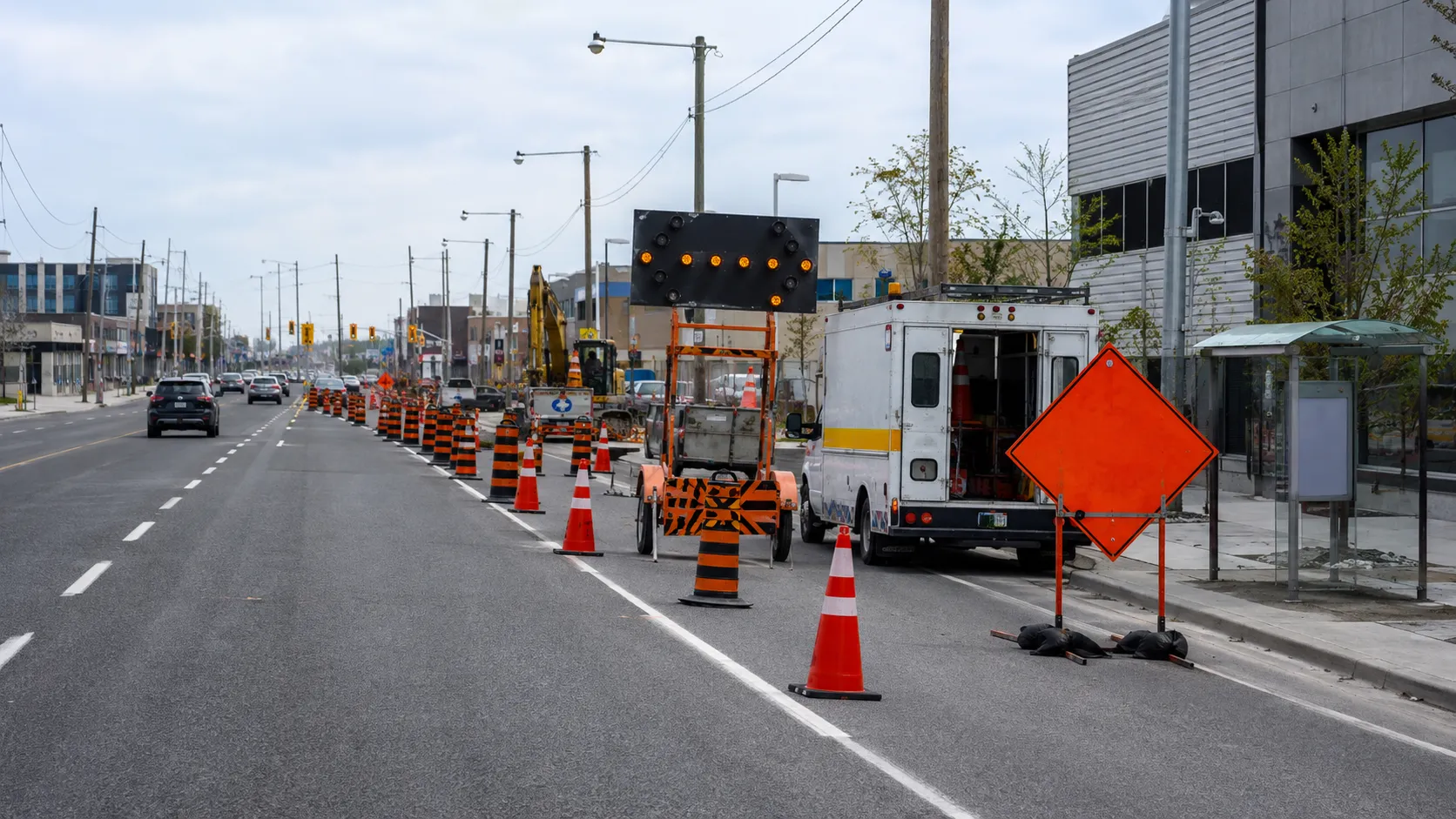
We set up, operate, inspect, and remove permitted lane closures and road occupations for commercial, municipal, industrial, and heavy civil work across Toronto, the GTA, and Ontario, coordinating traffic flow with the construction activity inside the protected area.
Tell us what you need and we’ll get you a quote. Licensed, insured & WSIB-covered · Free, no-obligation quote & on-site assessment.
Licensed, insured & WSIB-covered · Free, no-obligation quote & on-site assessment.
Built to your engineered drawings, survey, and the real site conditions, not a one-size-fits-all approach forced to fit.
Durable materials and methods chosen for the load, traffic, and environment on site.
Send specs, drawings, or photos and get a free, no-obligation site visit and estimate with no guesswork.
Installation and site work completed in accordance with Ontario requirements.
Lane closure and road occupancy work creates a permitted, clearly channelized space for construction while preserving the required movement of traffic, cyclists, pedestrians, and emergency vehicles. Harrowgate builds and manages partial roadway closures for active projects throughout Toronto and the GTA.
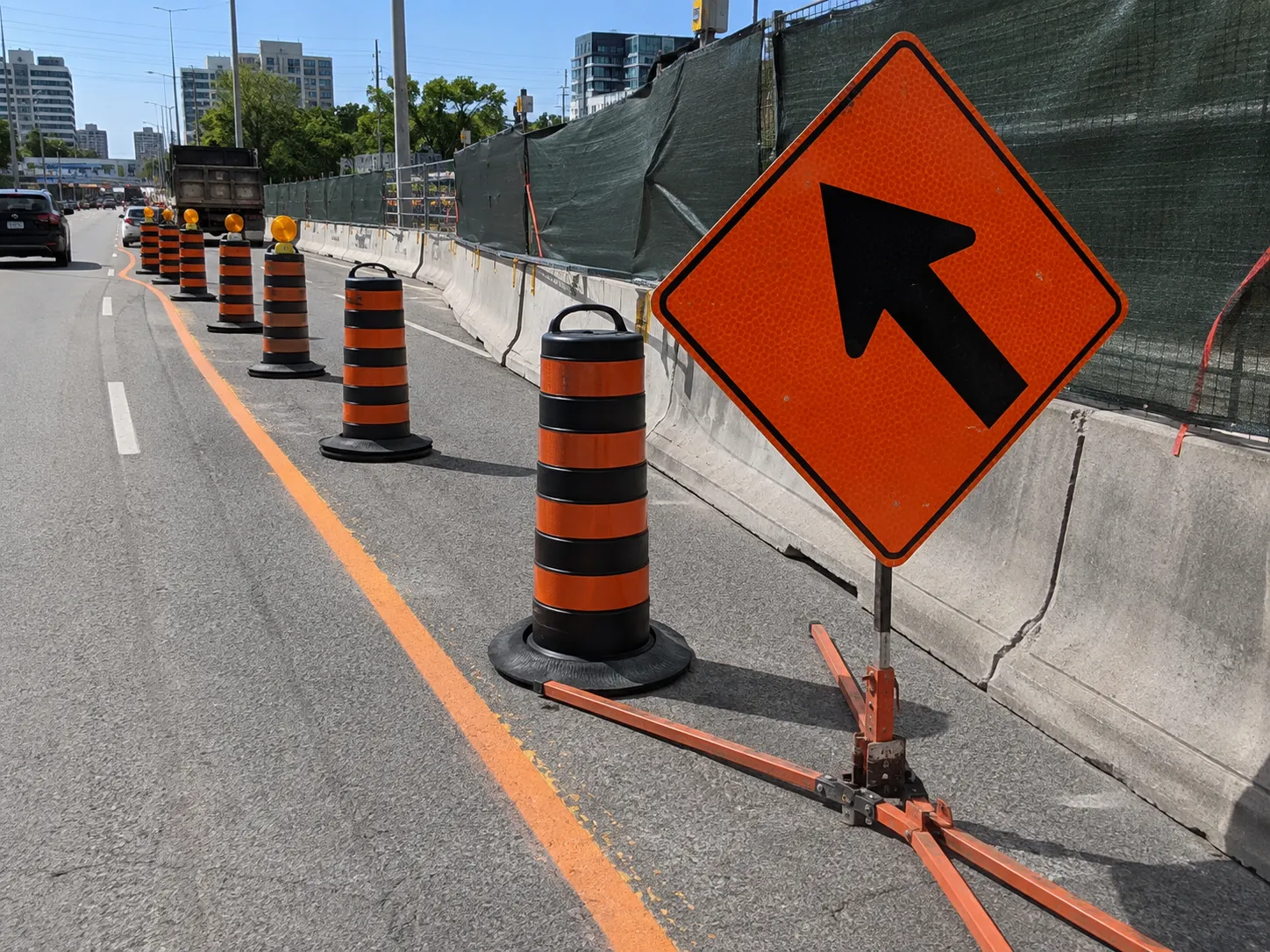
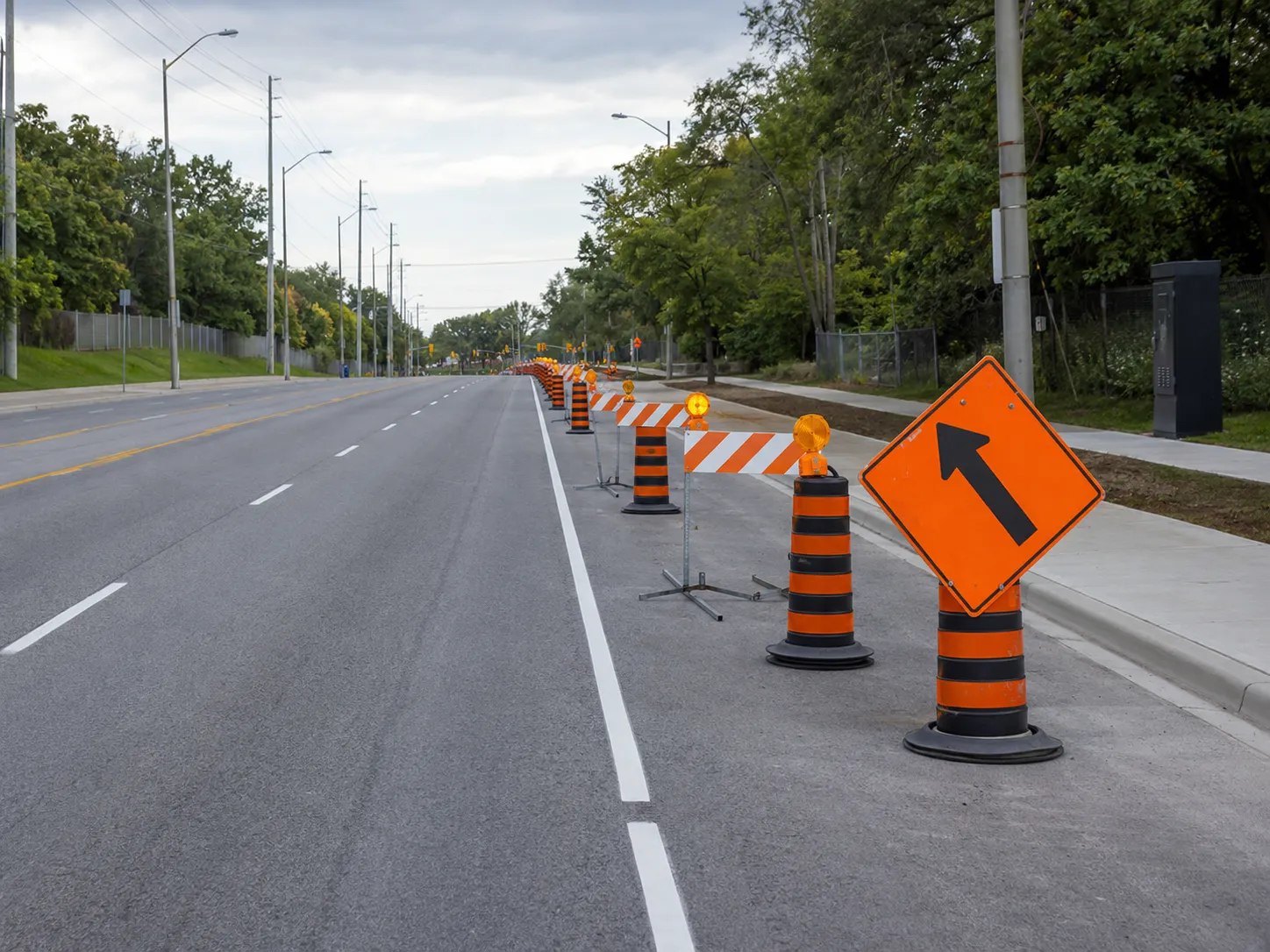
We verify the permit window, inspect the road, place advance warning from upstream to downstream, form the taper, channelize the work area, and confirm lane widths and sight lines before crews enter. During the shift, we patrol devices, queues, access points, and changing construction limits.
For a short-duration closure, setup and removal are planned as high-exposure activities with a protected installation sequence. Long-duration occupations receive heavier devices, secure barriers where specified, temporary markings, and robust overnight delineation. We coordinate deliveries so trucks enter fully within the protected area without blocking the live lane. At intersections, tapers and signs are adjusted to signal heads, turn lanes, and queue storage. At shift end, we remove or cover messages that no longer apply and restore the required travel condition.
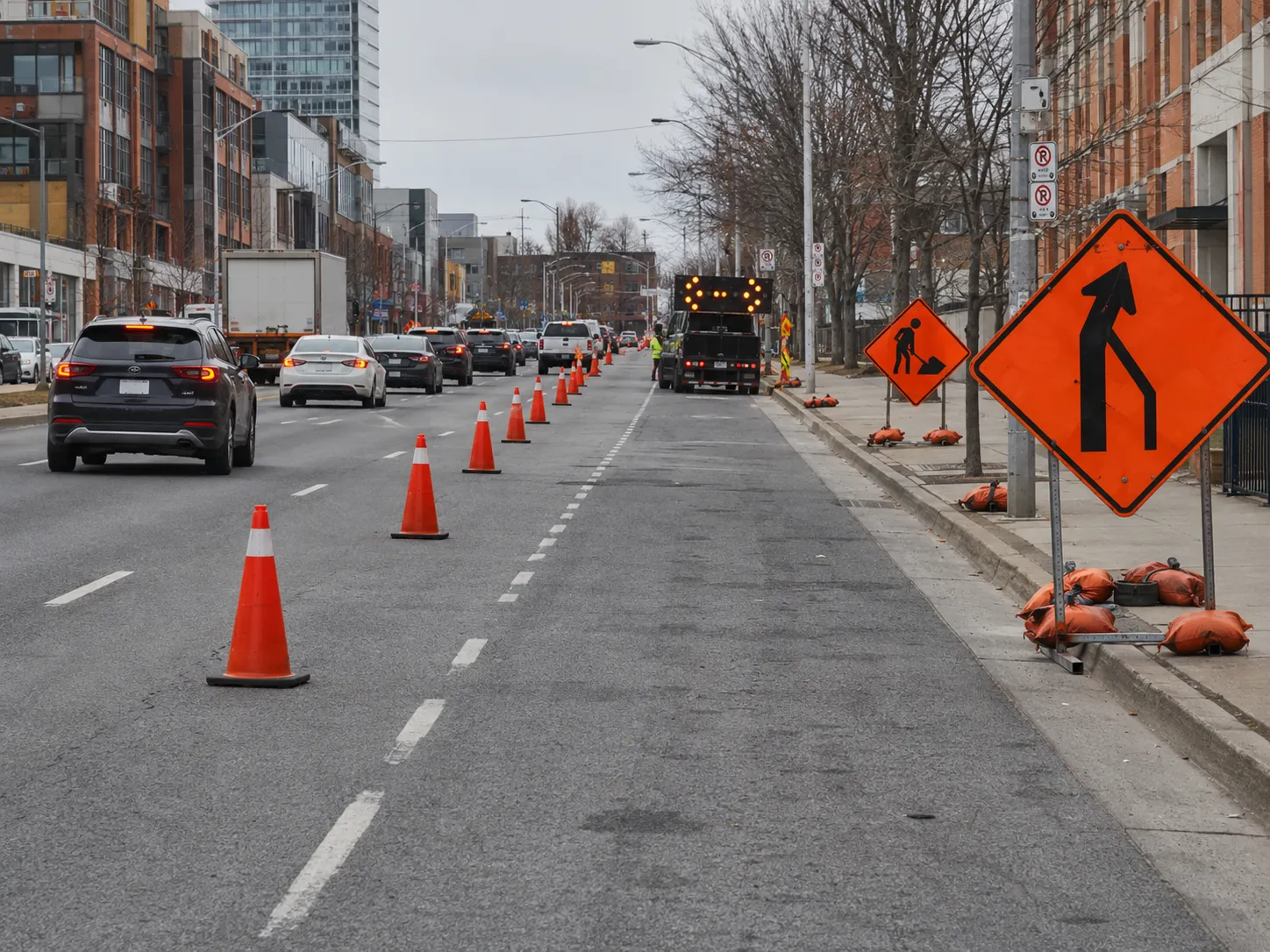
Lane closures follow the accepted Ontario Traffic Manual Book 7 layout, Ontario Regulation 213/91, applicable OPSS provisions, and road-authority permit conditions. Toronto occupations may require Street Occupation approval, construction staging review, road disruption reporting, and restrictions tied to route, time, transit, or nearby work.
The posted and operating speed, number of lanes, road geometry, work duration, traffic demand, and worker exposure determine the control package. The accepted drawing identifies taper and buffer lengths, sign sequence, channelizing devices, temporary barrier, arrow display, traffic control persons, and pavement marking treatment where applicable. Permit hours are treated as hard production boundaries. We document setup and removal times, inspections, strikes, and corrections, providing the project team with evidence that the occupied area was maintained as approved.
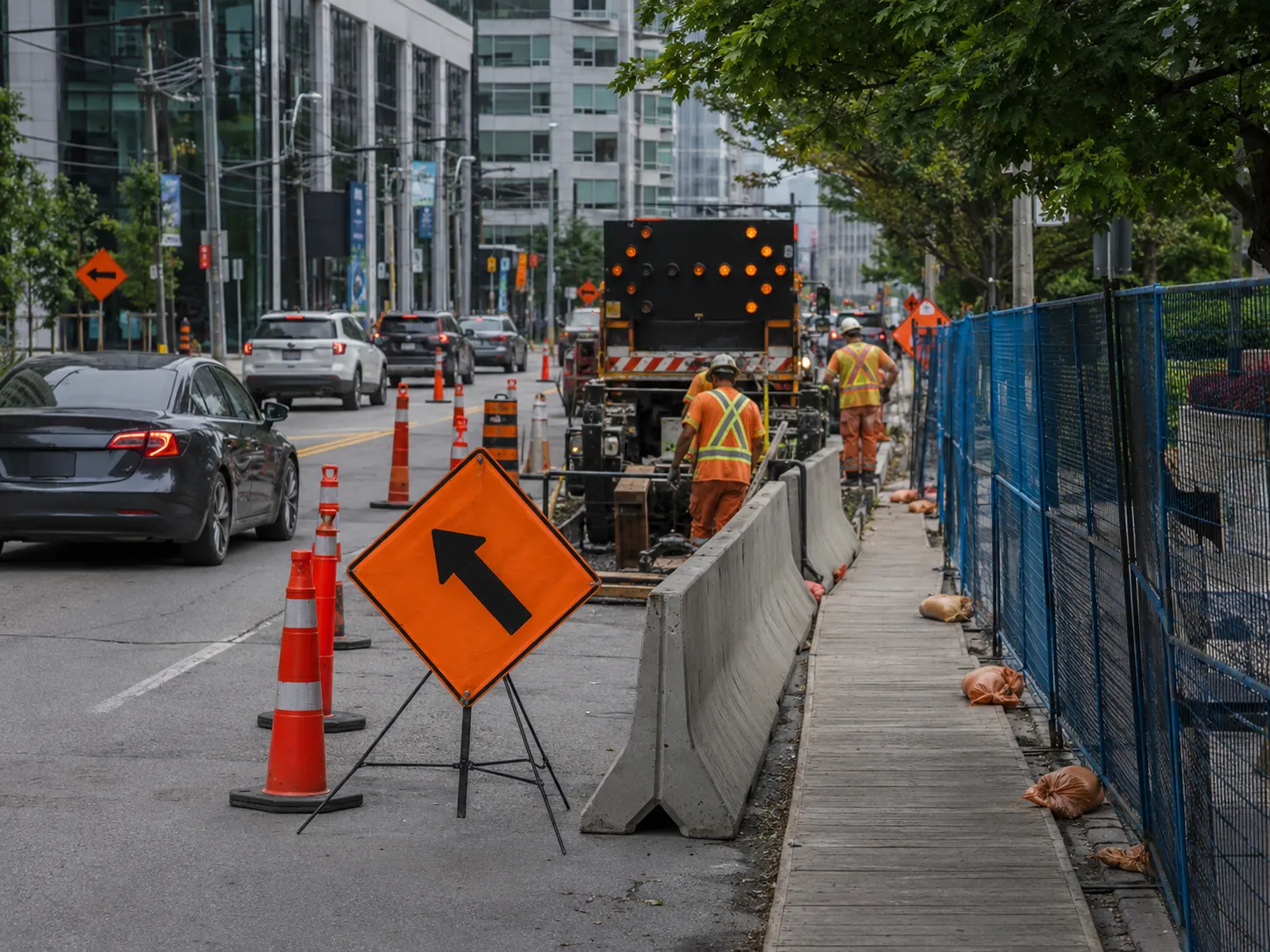
Closures fail when crews take more width than approved, queues reach beyond warning signs, turning vehicles cut through the taper, devices migrate, or the work operation projects into live traffic. We prevent this through measured limits, continuous supervision, delivery control, and prompt plan escalation when conditions change.
A closure that works at midday may fail during the peak period or when an adjacent project opens another occupation. We monitor actual queues and driver behaviour, not only drawing assumptions. Driveways within the closure receive specific access control so vehicles do not enter the work space unexpectedly. Excavation plates, temporary asphalt, and drainage paths are checked where lanes reopen between shifts. In winter, snow can hide channelization and reduce usable width, so maintenance and reset requirements are incorporated into the operating plan.
Planning lane closures and road occupancy? Talk it through with our team.
Lane closures support utility cuts, sewer and watermain work, road reconstruction, shoring, concrete pumping, mobile-crane operations, façade access, bridge repairs, environmental drilling, test pits, and loading beside constrained developments. The occupation is sized to the task, equipment, and required clearances.
On arterial roads, capacity and transit effects often control the allowable window. On local roads, school activity, driveway access, and emergency routes can dominate. Industrial corridors introduce wide turning paths and frequent heavy trucks. A mobile operation may advance in short increments, while an excavation needs a fixed protected zone. We coordinate the closure type with the superintendent’s look-ahead schedule so the permit is used efficiently and the roadway is returned as soon as the operation permits.
Have drawings for lane closures and road occupancy? Send them over and we will scope it.
The required permit depends on the road, activity, duration, and type of occupation. Toronto Transportation Services may require a Street Occupation Permit, construction staging approval, road disruption reporting, and supporting traffic drawings. Expressways, provincial routes, transit impacts, and major closures can involve additional review or separate authority.
A planned occupation of the public right of way should not proceed without the approvals and traffic-protection measures required by the road authority and Ontario law. Emergency conditions have separate procedures. Harrowgate confirms the permit, approved layout, work window, and field limits before establishing a scheduled closure.
The required width is set by the road authority, accepted plan, vehicle mix, alignment, barriers, and project conditions. It is not safe to assume a universal dimension. We measure the installed lane at controlling points and account for device width, curves, buses, trucks, snow, and lateral clearance.
Yes, if the permit and accepted long-duration plan allow it. Overnight setups need stable channelization, suitable barrier where specified, visible delineation, correct pavement markings, secure pedestrian treatment, and inspections. Devices and signs for an inactive short-duration closure should be removed or covered when they no longer communicate a valid condition.
Cost drivers include road classification, traffic speed and volume, number of lanes, closure duration, hours, device quantity, barrier or arrow-board needs, traffic control persons, permit conditions, stage changes, delivery control, night work, and inspection frequency. Complex intersections, transit, cycling, and pedestrian diversions add coordination and equipment.
Emergency access is defined during planning and reviewed at the crew briefing. We avoid blocking designated routes, keep movable controls available where the plan requires controlled entry, and maintain communication with site supervision. A closure should never depend on moving fixed equipment after an emergency vehicle has already arrived.
Work pauses at the protected boundary. We assess whether controls can be adjusted within the accepted plan and permit, or whether a revised drawing and road-authority approval are required. Extending equipment, materials, or workers into a live lane without protection creates an unacceptable exposure and permit risk.
Still have a question about lane closures and road occupancy? Ask our team directly.
Commercial and heavy-civil construction delivered for developers, contractors, property managers, and municipalities.
Send drawings, a site plan, or a description of the scope. Harrowgate Group is licensed, insured, and WSIB-covered.
Licensed, Insured & WSIB-Covered, work managed and documented on every job
Tell us what you need and we’ll get you a quote. Licensed, insured & WSIB-covered · Free, no-obligation quote & on-site assessment.
Harrowgate Group provides lane closures and road occupancy, delivered and installed with quote-ready support across Toronto and surrounding Ontario communities.
Companies We've Worked With
Harrowgate Group delivers commercial and heavy-civil construction for developers, contractors, institutions, municipalities, and property groups across Ontario.
 Popeyes
  Tim Hortons
  Subway
  University of Toronto
  Madison Group
  RioCan
  Women's College Hospital
  Starbucks
  Mazda
Mazda  TD Bank
  City of Toronto Popeyes Tim Hortons Subway University of Toronto Madison Group RioCan Women's College Hospital Starbucks Mazda TD Bank City of Toronto
 Three fields. We reply with the next step.
Thanks, we will call you shortly.