
Built to spec
Built to your engineered drawings, survey, and the real site conditions, not a one-size-fits-all approach forced to fit.
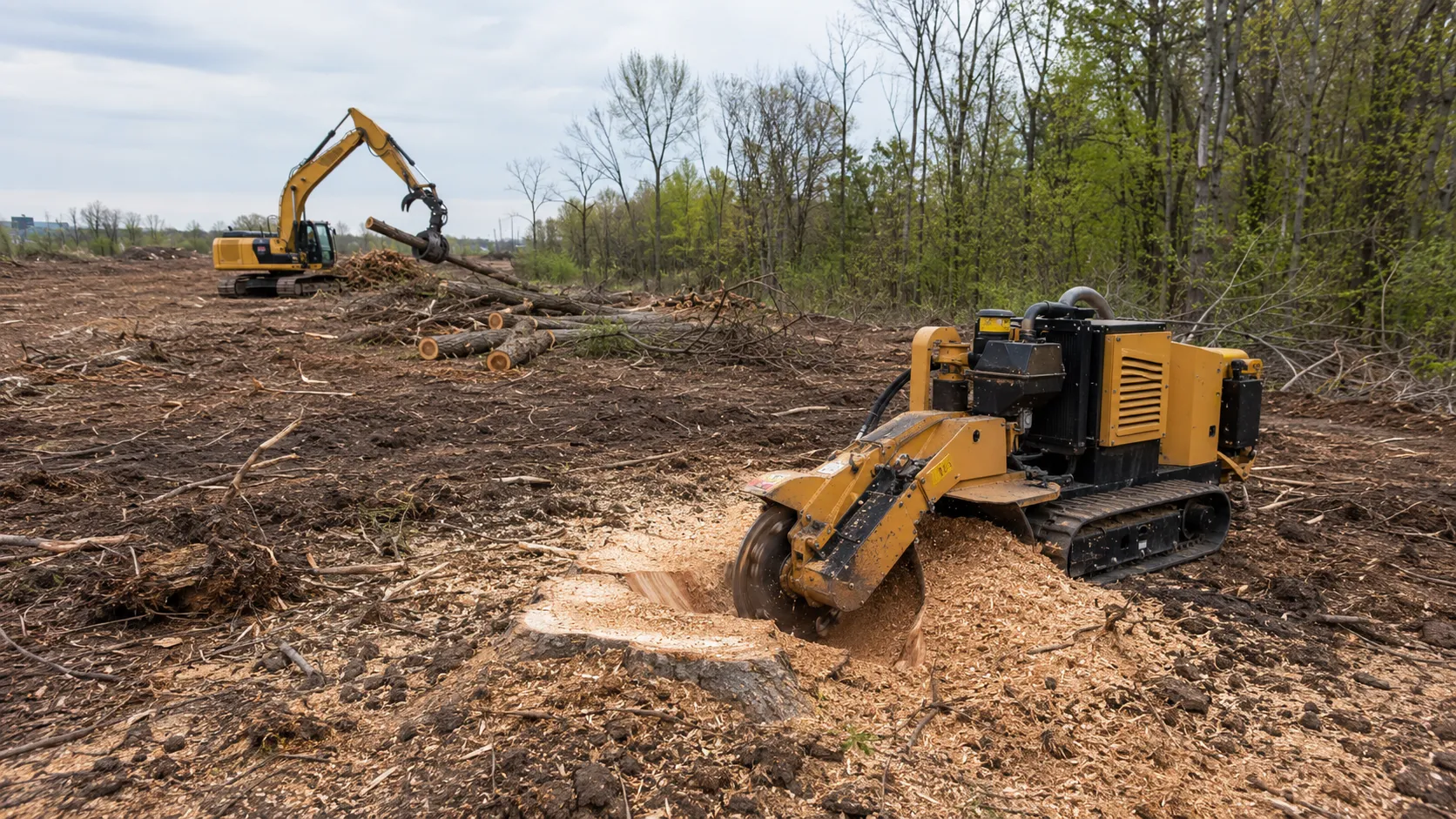
We remove approved trees and grind designated stumps for commercial, industrial, municipal, and heavy civil sites across Toronto, the GTA, and Ontario, controlling the drop zone, protecting retained features, processing wood, and preparing each location for its next construction stage.
Tell us what you need and we’ll get you a quote. Licensed, insured & WSIB-covered · Free, no-obligation quote & on-site assessment.
Licensed, insured & WSIB-covered · Free, no-obligation quote & on-site assessment.
Built to your engineered drawings, survey, and the real site conditions, not a one-size-fits-all approach forced to fit.
Durable materials and methods chosen for the load, traffic, and environment on site.
Send specs, drawings, or photos and get a free, no-obligation site visit and estimate with no guesswork.
Installation and site work completed in accordance with Ontario requirements.
Commercial tree removal and stump grinding take approved stems and residual stumps out of construction, access, grading, utility, and maintenance areas. Harrowgate performs the cutting, sectional handling, processing, grinding, and cleanup directly for Toronto and GTA projects, coordinated with permits and site logistics.
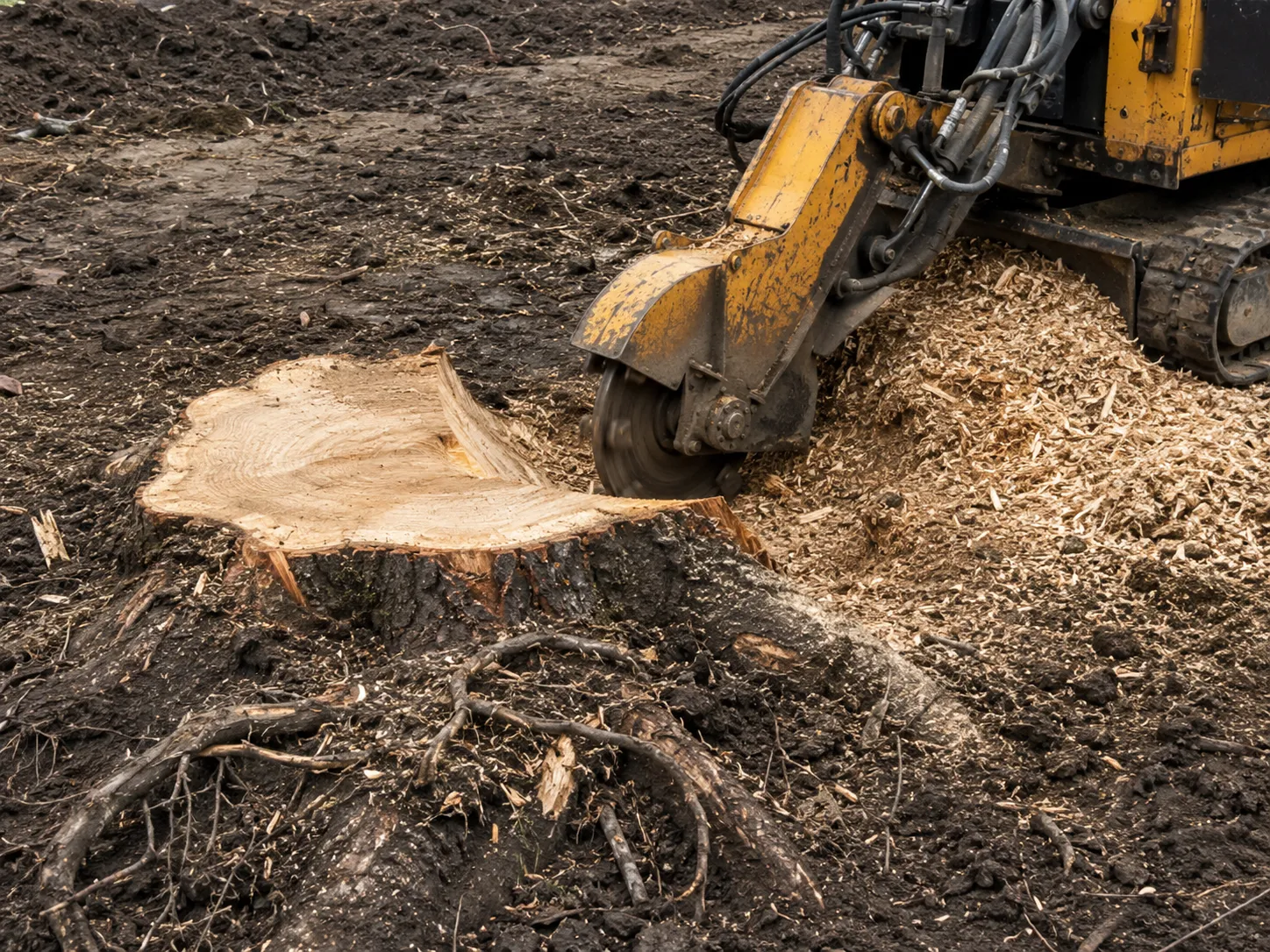
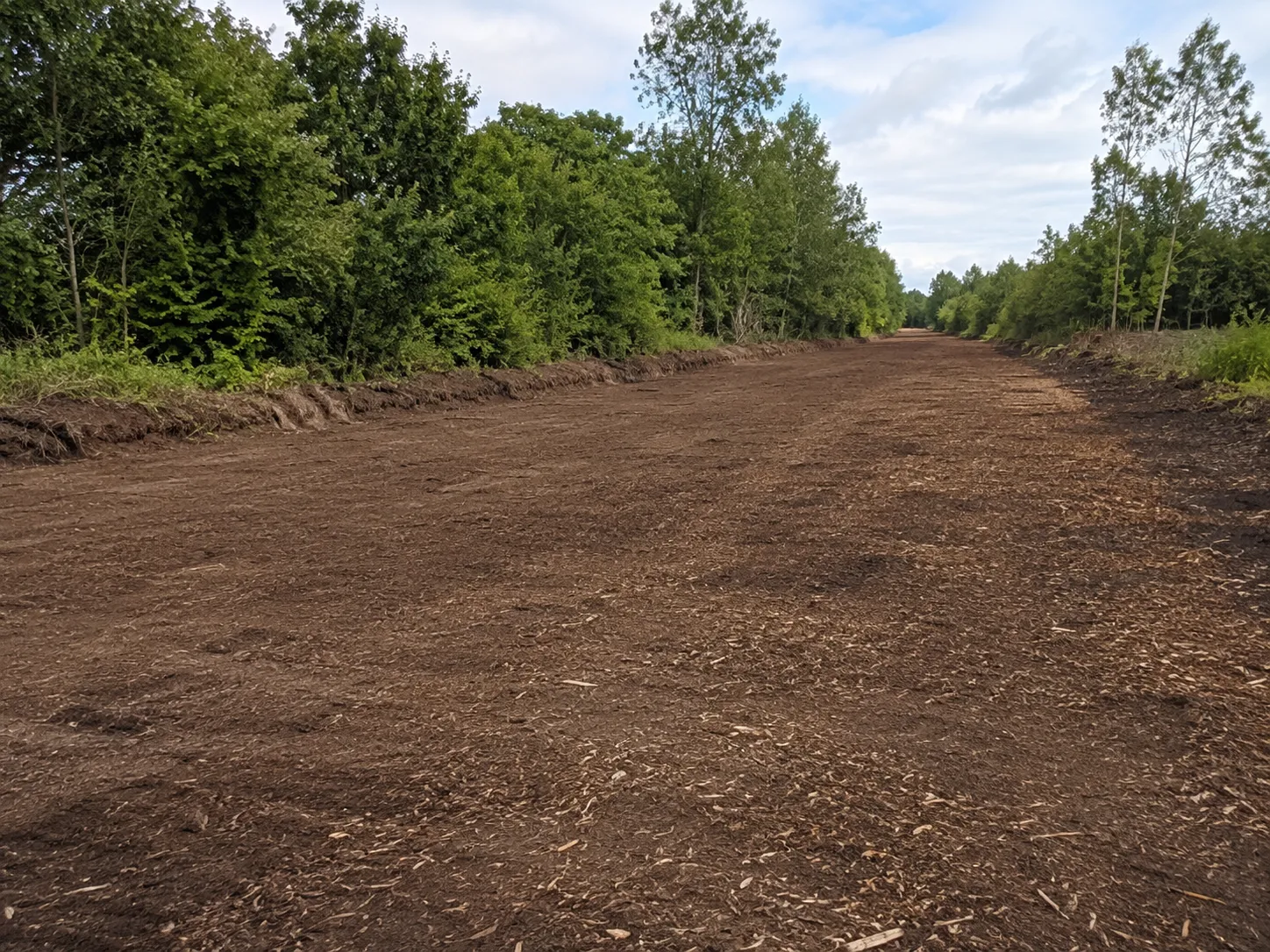
We verify tree tags and permits, establish exclusion and traffic-control zones, select the felling or sectional-removal method, remove limbs and stem in a controlled sequence, process the wood, inspect the stump area for utilities, and grind to the project’s required depth and diameter.
Crews confirm escape routes and communication before each cut. Ropes, rigging, excavator assistance, elevated access, or cranes are used only within a planned system suited to the piece weight and landing zone. At the stump, utility locates are reviewed because roots can conceal shallow services, irrigation, lighting, and old fence lines. Grindings are collected or reused only as approved. The resulting depression is backfilled with specified material and compacted where the next operation requires stable access, rather than concealed with loose chips.
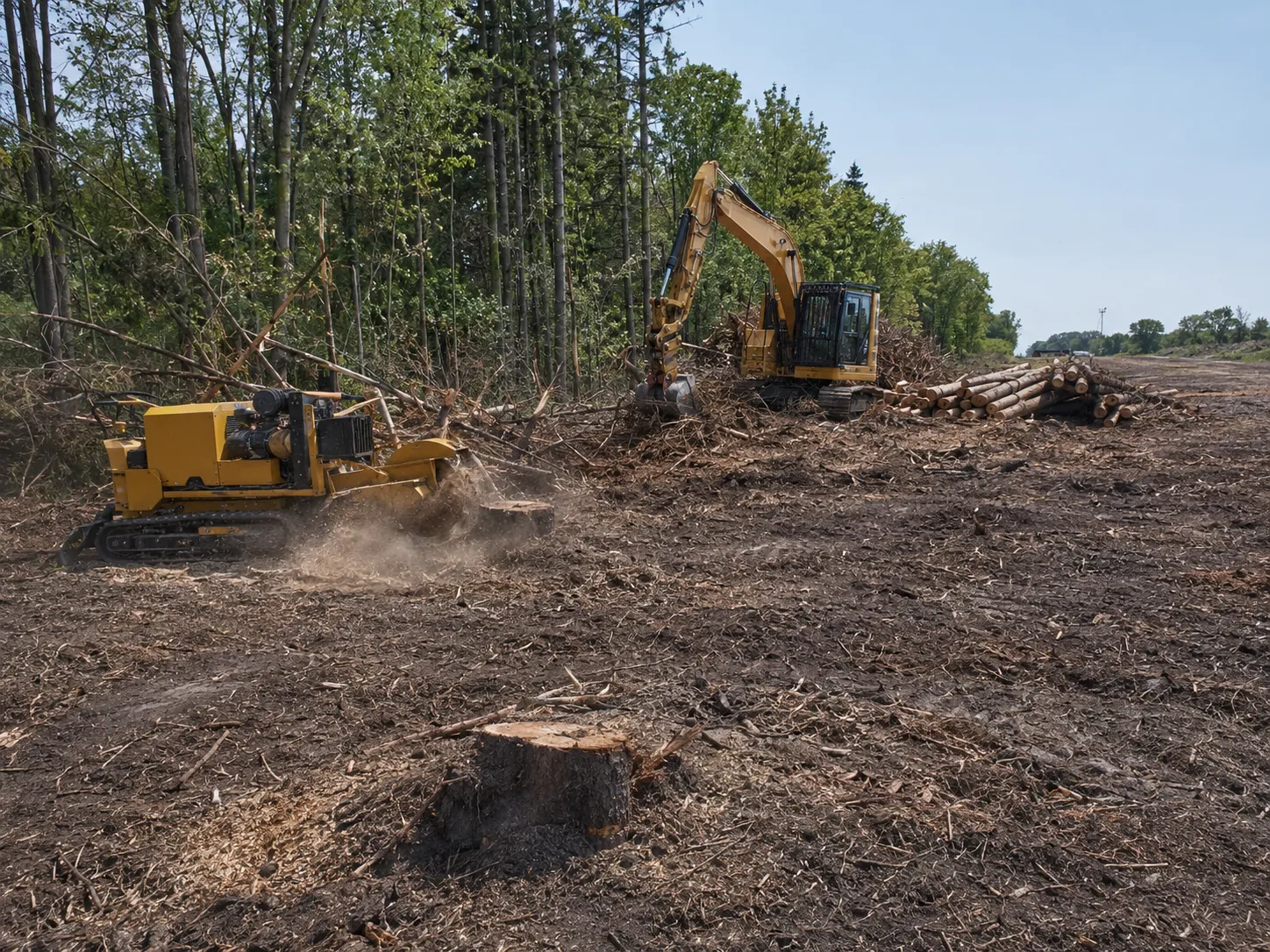
Tree removal follows municipal permits, approved arborist documents, Ontario safety requirements, project specifications, and OPSS 201 where included in the contract. Toronto permission can apply to City trees, qualifying private trees, replacement trees, and every tree within mapped ravine and natural feature protection areas.
Toronto’s private-tree threshold includes trees at least 30 centimetres in diameter measured 1.4 metres above ground, but location and permit history matter as much as size. A demolition or building permit does not authorize tree injury. Permit drawings may require specific protection fencing, arborist attendance, replacement planting, or branch and root treatment. We remove only the identified trees and retain tags or photographic records where the project uses them for acceptance. Natural heritage timing and species requirements are confirmed before cutting.
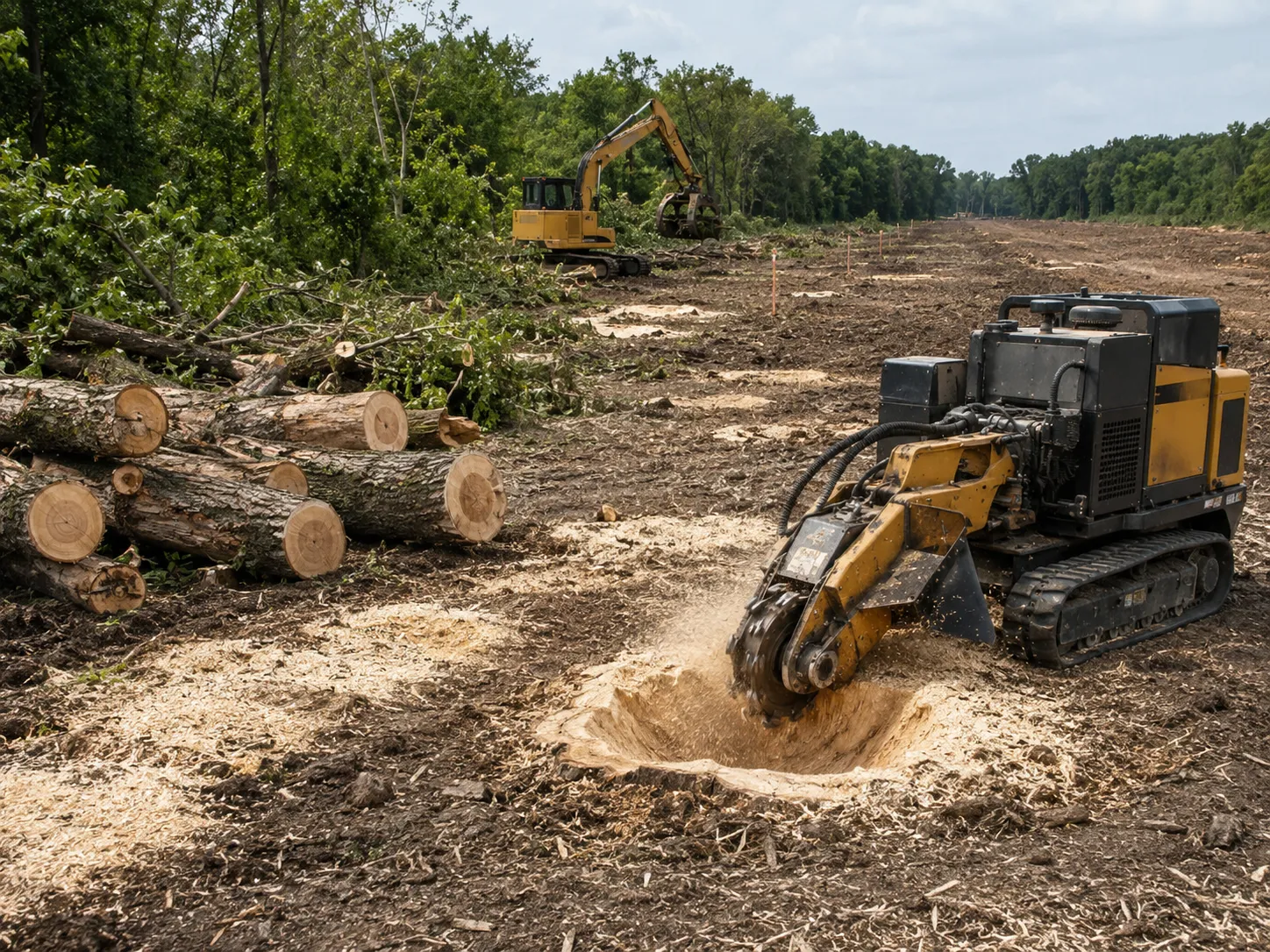
Failures include cutting the wrong tree, uncontrolled limb swing, contact with conductors or traffic, damage to retained roots, grinding into utilities, leaving unstable voids, or mixing chips into structural subgrade. We prevent them with positive identification, exclusion zones, planned rigging, locates, and controlled backfill.
A stump can appear fully removed while lateral roots remain within a sewer trench or footing. We distinguish the visual finish expected in landscaped areas from the excavation standard needed under structures and pavements. Grindings retain organic content and compress as they decay, so they are not buried as engineered fill.
Where fungal condition, invasive pest controls, or contaminated soil affects disposal, material is isolated and routed according to the project plan. Wind and ice conditions are monitored because they alter both tree behaviour and rigging loads.
Planning tree removal and stump grinding? Talk it through with our team.
Tree removal and stump grinding support new warehouses, commercial buildings, road widening, utility installation, shoring, parking expansions, industrial access, municipal parks work, stormwater facilities, and selective hazard removal. The method changes with space, tree condition, traffic exposure, and the planned use of the ground.
Sectional removal is common beside occupied facilities, roads, utilities, and retained structures. Mechanized felling is productive on open development land where exclusion zones can be maintained. Stump grinding suits areas that need surface clearance for landscaping, access, or shallow grading. Full excavation is more appropriate inside building pads, pavement subgrades, deep utility corridors, and engineered slopes. We coordinate the chosen treatment with civil drawings so the site does not pay to grind a stump that will immediately be excavated.
Have drawings for tree removal and stump grinding? Send them over and we will scope it.
Grinding mechanically reduces the stump and root flare below a specified surface elevation, but lateral and deeper roots can remain. Stump removal excavates the stump and major roots, creating a larger disturbed area. Foundations, utilities, pavement, and engineered fill commonly require excavation or grubbing rather than surface grinding alone.
Depth is set by the contract, next land use, root flare, utilities, and machine access. A landscaped area needs a different result from a building pad or utility trench. We verify the required finished elevation before work and do not present grinding as complete root removal where structural excavation is required.
Yes, using a constrained-site method that can include sectional dismantling, controlled lowering, elevated access, equipment assistance, traffic control, and protected landing zones. The method follows tree condition, available rigging points, nearby glass, roofs, utilities, and public routes. Facility access and work hours are coordinated before mobilization.
Yes. Toronto states that a building or demolition permit does not constitute permission to injure or destroy a protected tree. Urban Forestry approval may be needed for City trees, protected private trees, replacement trees, and trees within ravine and natural feature areas, with its own documents and conditions.
Grindings can be loaded out, stockpiled separately, or reused in approved non-structural applications. They should not be buried beneath foundations, slabs, pavement, or engineered fill because organic material decomposes and loses volume. Soil mixed with grindings may also affect receiving options, so the intended route is confirmed beforehand.
We review current utility locates, site drawings, private locates where required, surface features, and the excavation or grinding limits before starting. Grinding depth and position are controlled around identified services. If an unknown line, concrete encasement, or obstruction appears, work stops until it is positively identified.
Key drivers include permit and arborist requirements, tree number and size, defects, lean, rigging complexity, drop-zone restrictions, crane or elevated-access needs, traffic control, utility exposure, wood and chip handling, stump treatment, access, seasonal environmental constraints, and restoration. A field review is often needed for reliable planning.
Still have a question about tree removal and stump grinding? Ask our team directly.
Commercial and heavy-civil construction delivered for developers, contractors, property managers, and municipalities.
Send drawings, a site plan, or a description of the scope. Harrowgate Group is licensed, insured, and WSIB-covered.
Licensed, Insured & WSIB-Covered, work managed and documented on every job
Tell us what you need and we’ll get you a quote. Licensed, insured & WSIB-covered · Free, no-obligation quote & on-site assessment.
Harrowgate Group provides tree removal and stump grinding, delivered and installed with quote-ready support across Toronto and surrounding Ontario communities.
Companies We've Worked With
Harrowgate Group delivers commercial and heavy-civil construction for developers, contractors, institutions, municipalities, and property groups across Ontario.
 Popeyes
  Tim Hortons
  Subway
  University of Toronto
  Madison Group
  RioCan
  Women's College Hospital
  Starbucks
  Mazda
Mazda  TD Bank
  City of Toronto Popeyes Tim Hortons Subway University of Toronto Madison Group RioCan Women's College Hospital Starbucks Mazda TD Bank City of Toronto
 Three fields. We reply with the next step.
Thanks, we will call you shortly.