
Built to spec
Built to your engineered drawings, survey, and the real site conditions, not a one-size-fits-all approach forced to fit.
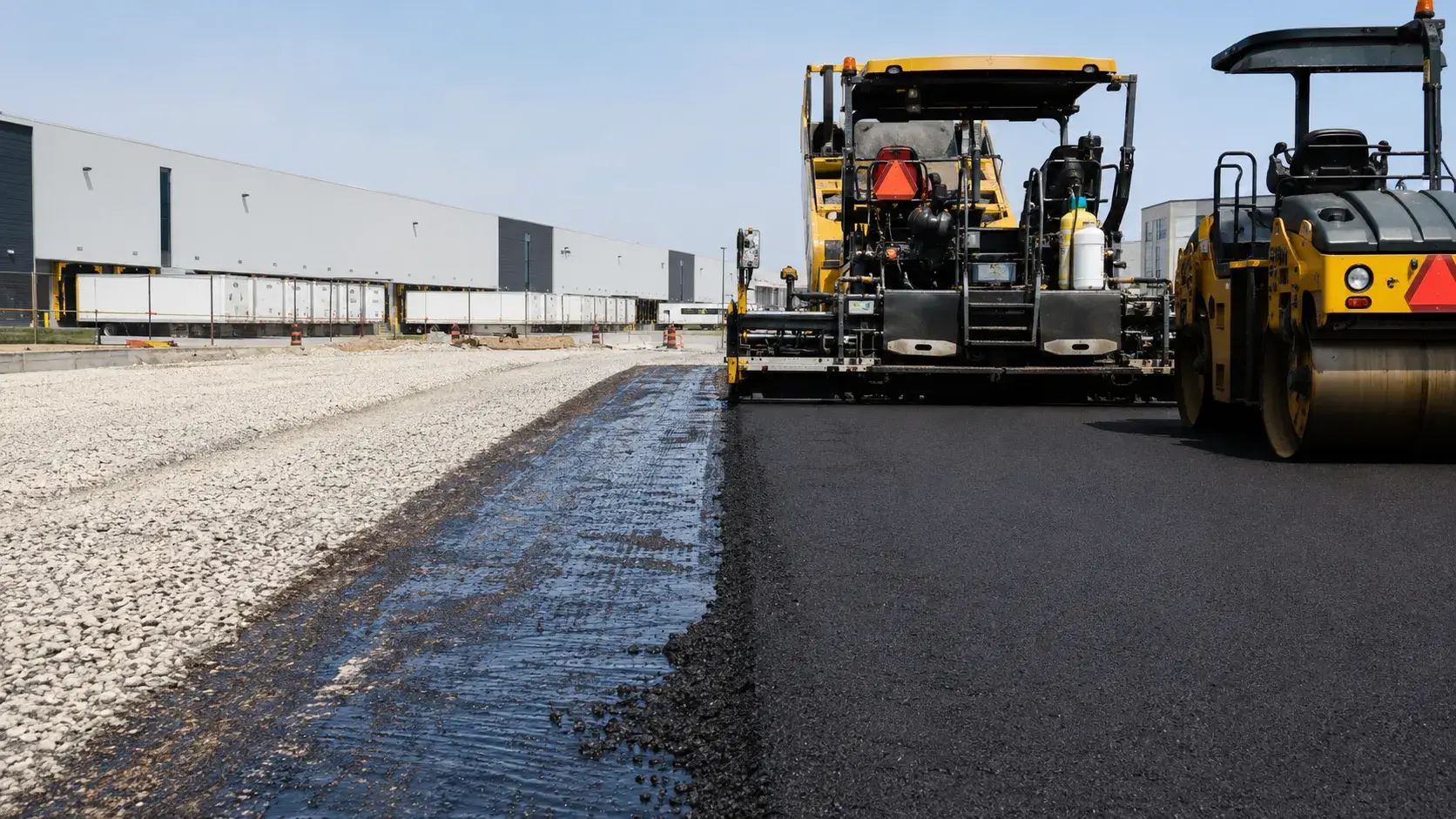
Harrowgate Group completes asphalt paving on commercial and heavy-civil sites for parking lots, access roads, loading areas, and municipal roadways across the GTA and Ontario, from subgrade preparation through granular base, binder and surface courses, and finished line marking.
Tell us what you need and we’ll get you a quote.
Licensed, insured & WSIB-covered · Free, no-obligation quote & on-site assessment.
Built to your engineered drawings, survey, and the real site conditions, not a one-size-fits-all approach forced to fit.
Durable materials and methods chosen for the load, traffic, and environment on site.
Send specs, drawings, or photos and get a free, no-obligation site visit and estimate with no guesswork.
Installation and site work completed in accordance with Ontario requirements.
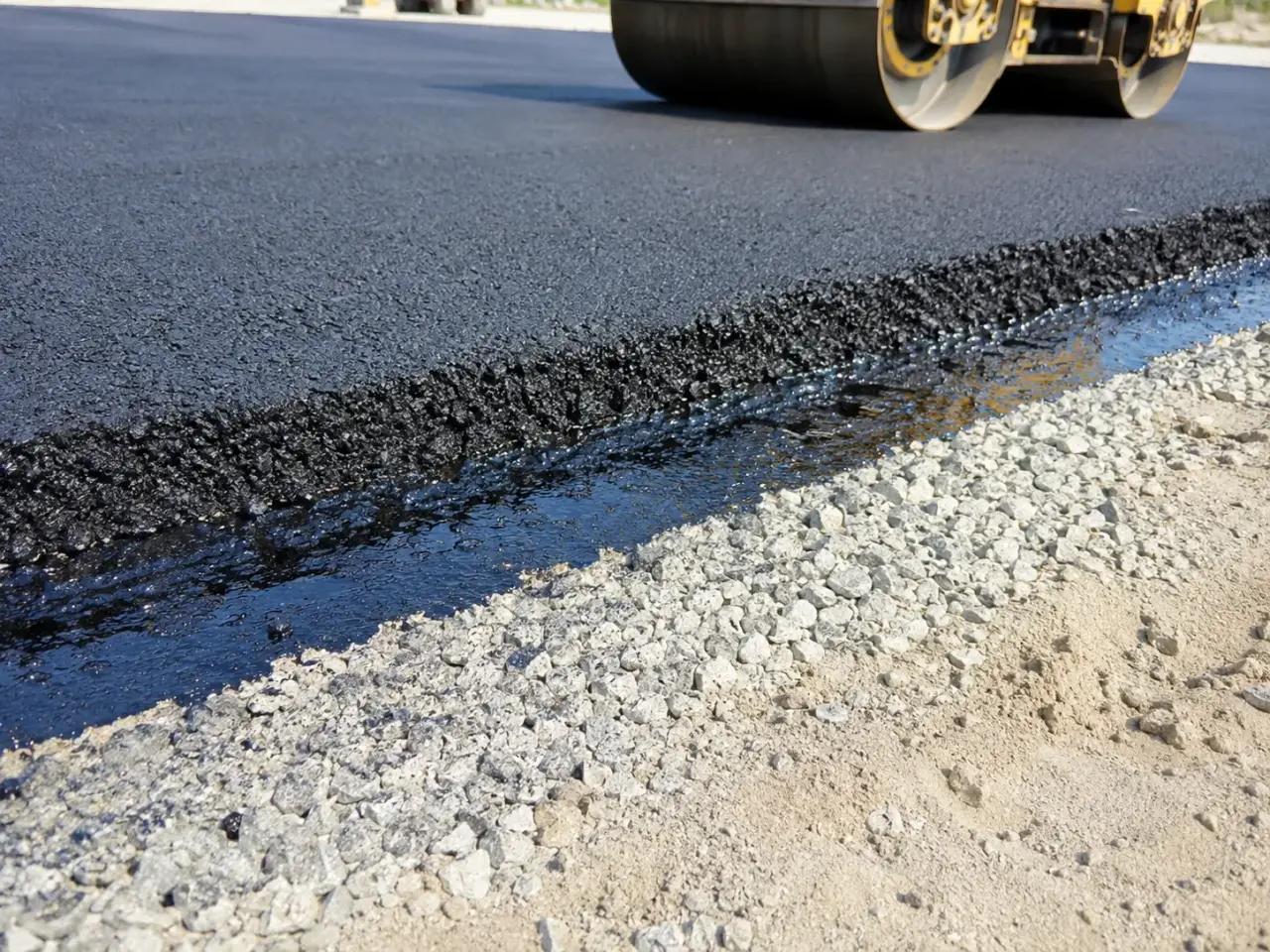
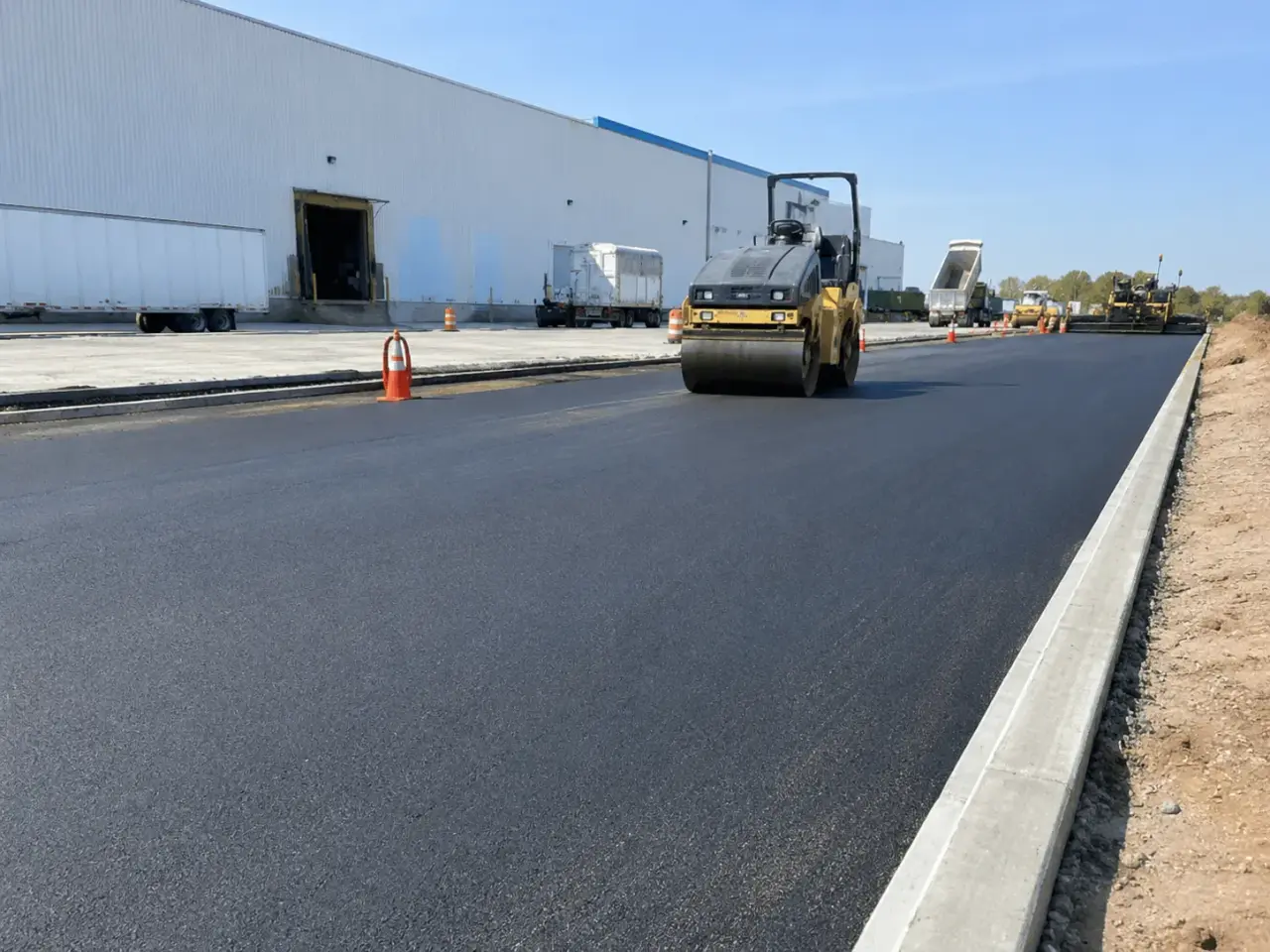
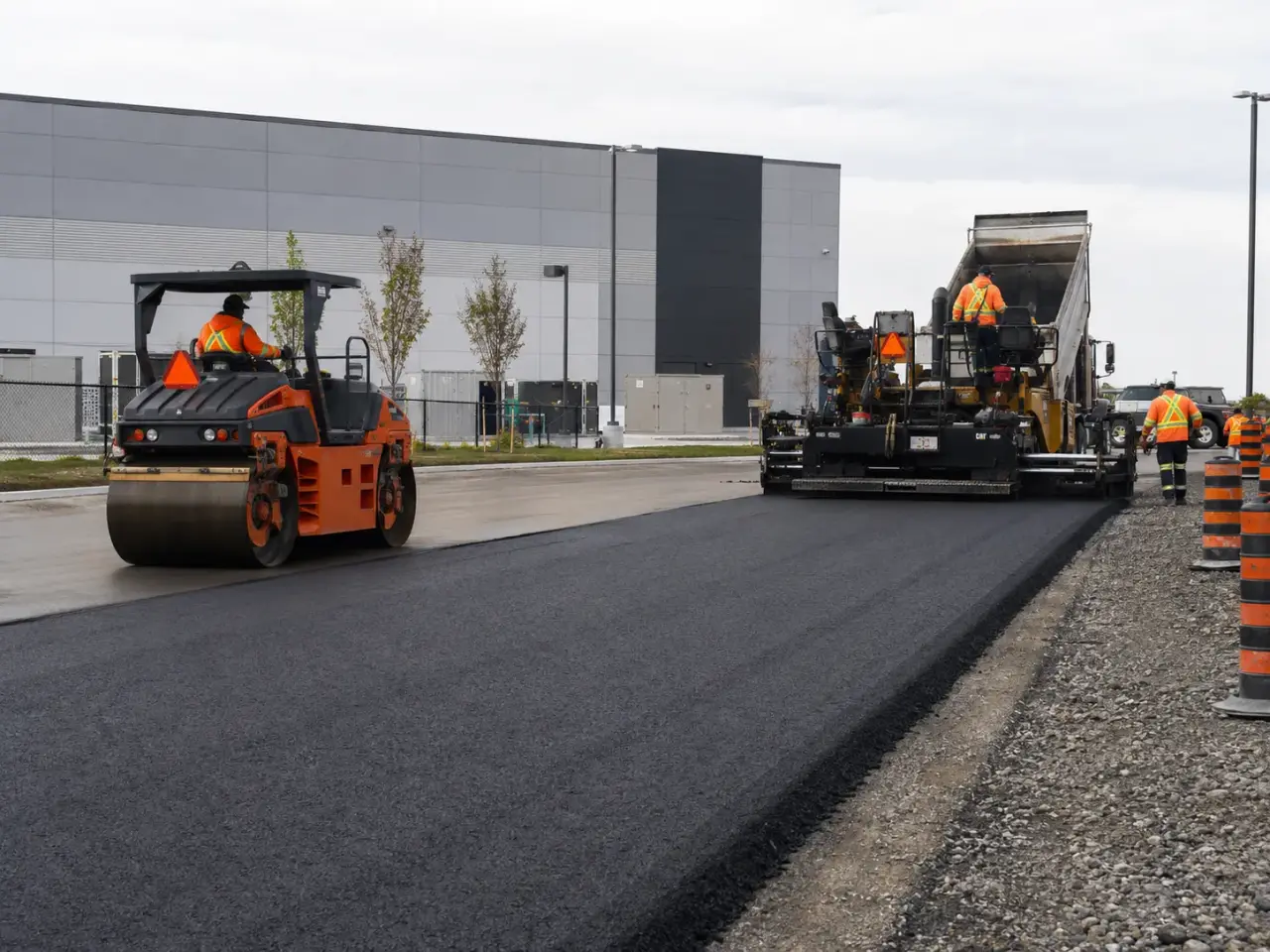
The right paving method depends on whether distress is confined to the surface, extends into the asphalt structure, or begins in the granular base and subgrade. An overlay can renew a stable pavement, milling can restore elevations, and full-depth reconstruction is required when movement, drainage, or base failure would simply reflect through new asphalt.
New full-depth pavement. On a development or expansion, Harrowgate builds from approved subgrade upward. The pavement design sets the subbase, granular base, binder course, and surface course for the expected axle loads, frost exposure, and drainage. This method gives complete control over grades and structure elevations.
Mill and overlay. Milling removes a controlled depth of oxidized or deformed asphalt while preserving a sound lower pavement structure. It is useful where curbs, loading docks, catch basins, and entrances prevent a simple overlay from raising finished grade. Local base failures are repaired before the new lift is placed.
Overlay. A bonded asphalt lift can restore texture and ride quality when the existing pavement remains stable, drains correctly, and has enough elevation clearance. Cracks are routed, sealed, or repaired as specified, failed patches are removed, and tack coat bonds the new lift. Overlaying alligator cracking, pumping, or settled base hides the symptom without correcting the cause.
Full-depth repair and phased replacement. Local excavation is suited to isolated failures around catch basins, utility cuts, truck routes, and loading areas. Large operating sites can be rebuilt in phases with temporary traffic routes, but every phase needs durable tie-ins and positive drainage during construction.
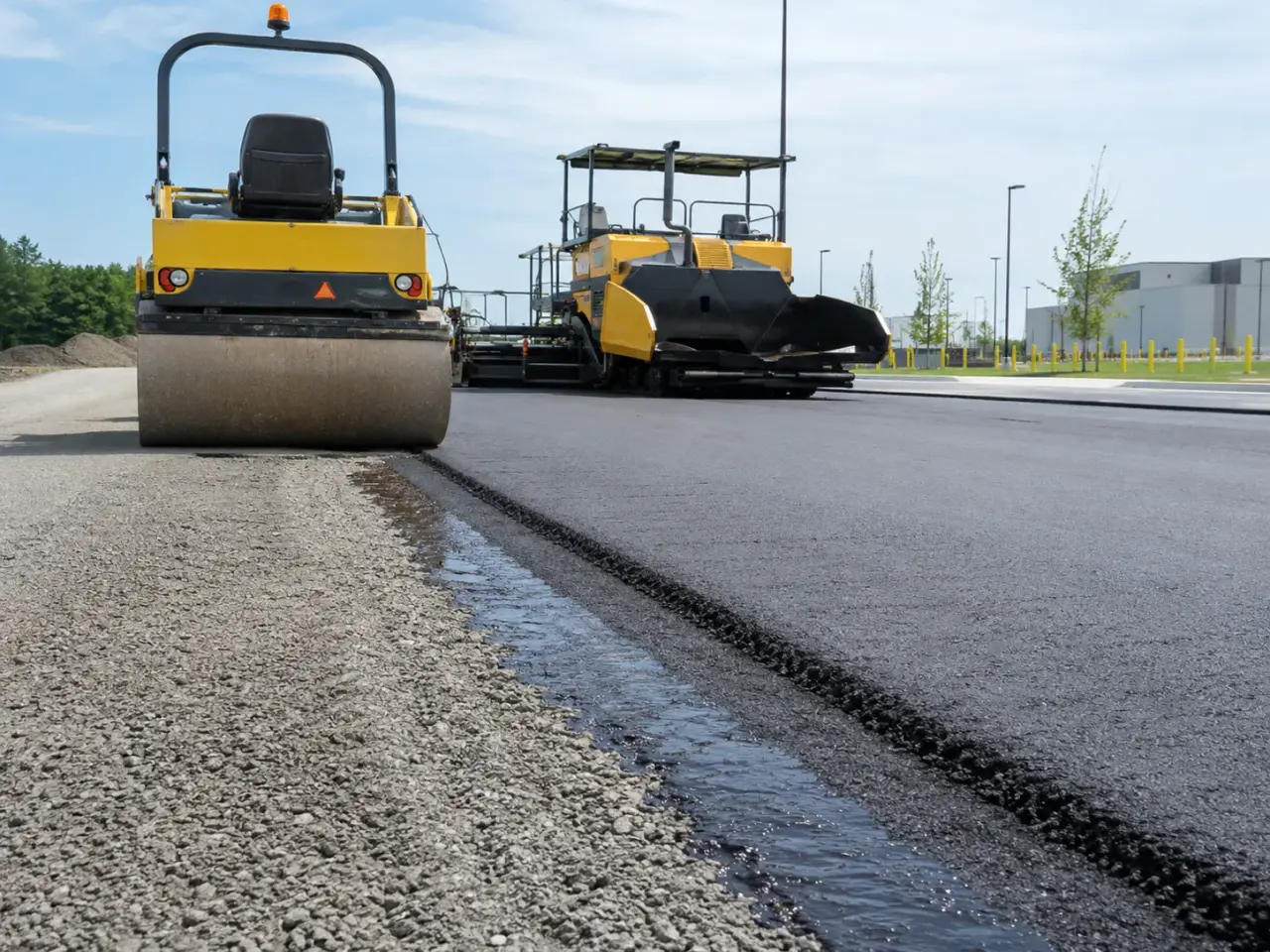
Step 1, diagnose and set limits. We map cracking, rutting, settlement, ponding, previous utility cuts, and weak edges, then compare those conditions with drawings, geotechnical information, drainage elevations, and traffic use. Cores, test pits, proof rolling, or survey are used when surface appearance cannot show the remaining structure.
Step 2, remove and correct. Asphalt is sawcut or milled to clean limits. Unsuitable, wet, or pumping subgrade is undercut to firm material and replaced or treated under the design. Geotextile or geogrid is installed where specified, without presenting it as a substitute for drainage or adequate aggregate thickness.
Step 3, build the granular platform. Approved aggregate is placed in lifts that the compaction equipment can densify. Each lift is moisture conditioned, compacted, checked for grade and density where specified, and proof rolled. Catch basins, maintenance holes, valve boxes, curbs, and concrete aprons are set to the finished paving elevations before hot mix arrives.
Step 4, prepare joints and contact surfaces. Existing edges are cut back to sound, vertical faces are cleaned, and tack coat is applied at joints and between asphalt lifts as specified. The paving plan limits cold longitudinal joints, identifies handwork around structures, and keeps truck exchange from stopping the paver unnecessarily.
Step 5, place and compact each lift. Mix tickets, weather, delivery temperature, mat temperature, yield, and lift thickness are monitored. The roller pattern uses breakdown, intermediate, and finish rolling appropriate to the mix and work area. Joint faces are built and pinched while the material remains compactable.
Step 6, verify drainage and finish the site. Harrowgate checks surface tolerance, crossfall, transitions, and inlet capture before demobilizing. Deficient areas are corrected while access remains. Once the surface is ready, pavement markings, accessible stalls, wheel stops, signs, and other traffic controls are installed to the approved plan.
We start by confirming the subgrade has been proof rolled, approved, and graded to the design template. Soft, saturated, or unsuitable material is identified and corrected before granular placement begins, not buried under it. Granular base and subbase are placed and compacted in controlled lifts to the specified density, with structures, valve boxes, and drainage inlets set to finished grade in advance so the paving crew is not working around late adjustments.
Binder course asphalt is placed first where the design calls for a two-lift structure, compacted while hot, and checked for grade, cross slope, and thickness before the surface course follows. Joints between passes and against existing pavement or curbs are cut clean, tacked, and compacted so they do not become the first place the pavement fails.
Surface course asphalt is placed to the finished grades shown on the site plan, with cross falls and swales built to route water to the catch basins and away from building entrances, loading docks, and accessible routes.
Compaction is verified with rollers matched to the mix and lift thickness, not a single pass regardless of the material. We check mat temperature, joint density, and surface tolerance as paving proceeds, so problems are caught while the asphalt is still workable instead of after it has cooled. Once the surface has cured, line marking, wheel stops, bollards, and signage are installed to the approved layout.
Our process runs the same way on every site. We start with a call or a submitted plan, walk the site to measure the paved area, confirm subgrade condition, drainage, and access, and return a written quote scoped to the actual site conditions. Once approved, Harrowgate performs the excavation, granular, and paving work to the design, and closes out with a walkthrough, compaction records where specified, and a marked-up plan of what was built.
Planning asphalt paving? Talk it through with our team.
Send a site plan or sketch showing the area to be paved, the current surface condition, any grading or drainage plan, and expected traffic type. Harrowgate walks the site to measure the area, check subgrade and drainage, and confirm access before returning a written quote.
Thickness depends on subgrade strength and expected traffic. Light passenger parking may need a thinner structure than a loading dock or fire route carrying regular truck traffic. Harrowgate follows the engineered pavement design where one exists, or recommends a structure based on the site's actual use.
Sometimes, if the existing pavement is structurally sound and grades still work with an added lift. Where the base has failed or grades need to change, milling or full removal and rebuild of the granular base gives a more durable result than paving over a failing surface.
Newly placed asphalt needs to cool and set before vehicle traffic. Harrowgate confirms timing on site based on mix type, weather, and lift thickness, and coordinates line marking and reopening so the surface is not damaged while still soft.
Yes. Harrowgate performs the full scope, including subgrade preparation, granular base, grading to move water toward catch basins, and the asphalt paving itself, so drainage and pavement are built as one coordinated package rather than disconnected scopes.
Early failures usually trace back to soft subgrade, thin or poorly compacted granular base, or water that was never routed away from the pavement structure. Harrowgate verifies subgrade and compaction before paving and checks finished grades against the drainage plan to avoid these outcomes.
Milling is preferred when adding asphalt would bury curbs, reduce drainage fall, create high lips at doors, or leave structures too low. It also removes rutted or oxidized surface material. The remaining pavement still has to be stable, because milling does not repair weak granular base or subgrade.
Hot mix must arrive, spread, and compact within the temperature and weather limits in the project specification. Thin lifts and long hauls lose heat quickly, making density harder to achieve. Harrowgate plans production, truck cycles, paver speed, and roller coverage around the forecast rather than placing material that cannot be compacted correctly.
Ponding usually means the grate, surrounding asphalt, or approach grades do not form a continuous low point to the inlet. Harrowgate sets structures from survey control, checks asphalt crossfall during placement, and checks the finished surface before closing the work. Pipe capacity must also be checked if the basin captures water but drains slowly.
Still have a question about asphalt paving? Ask our team directly.
Commercial and heavy-civil construction delivered for developers, contractors, property managers, and municipalities.
Send drawings, a site plan, or a description of the scope. Harrowgate Group is licensed, insured, and WSIB-covered.
Licensed, Insured & WSIB-Covered, work managed and documented on every job
Tell us what you need and we’ll get you a quote.
Harrowgate Group provides asphalt paving, delivered and installed with quote-ready support across Toronto and surrounding Ontario communities.
Companies We've Worked With
Harrowgate Group delivers commercial and heavy-civil construction for developers, contractors, institutions, municipalities, and property groups across Ontario.
 Popeyes
  Tim Hortons
  Subway
  University of Toronto
  Madison Group
  RioCan
  Women's College Hospital
  Starbucks
  Mazda
Mazda  TD Bank
  City of Toronto Popeyes Tim Hortons Subway University of Toronto Madison Group RioCan Women's College Hospital Starbucks Mazda TD Bank City of Toronto