Built to spec
Built to your engineered drawings, survey, and the real site conditions, not a one-size-fits-all approach forced to fit.
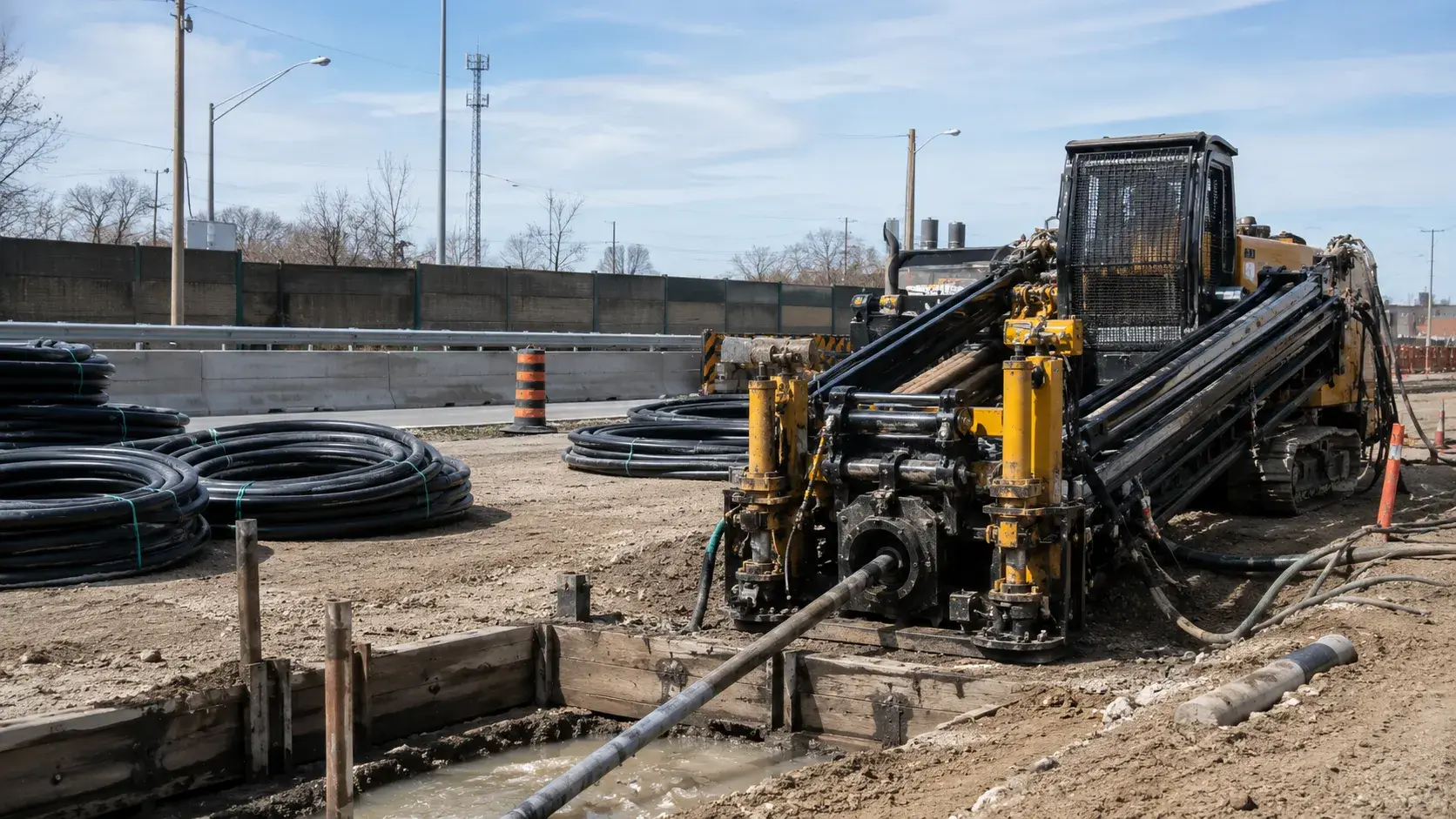
Horizontal Directional Drilling in Bradford West Gwillimbury is trenchless boring that installs pipe and conduit under roads, rivers, and obstacles.
Tell us what you need and we’ll get you a quote.
Licensed, insured & WSIB-covered · Free, no-obligation quote & on-site assessment.
Built to your engineered drawings, survey, and the real site conditions, not a one-size-fits-all approach forced to fit.
Durable materials and methods chosen for the load, traffic, and environment on site.
Send specs, drawings, or photos and get a free, no-obligation site visit and estimate with no guesswork.
Installation and site work completed in accordance with Ontario requirements.
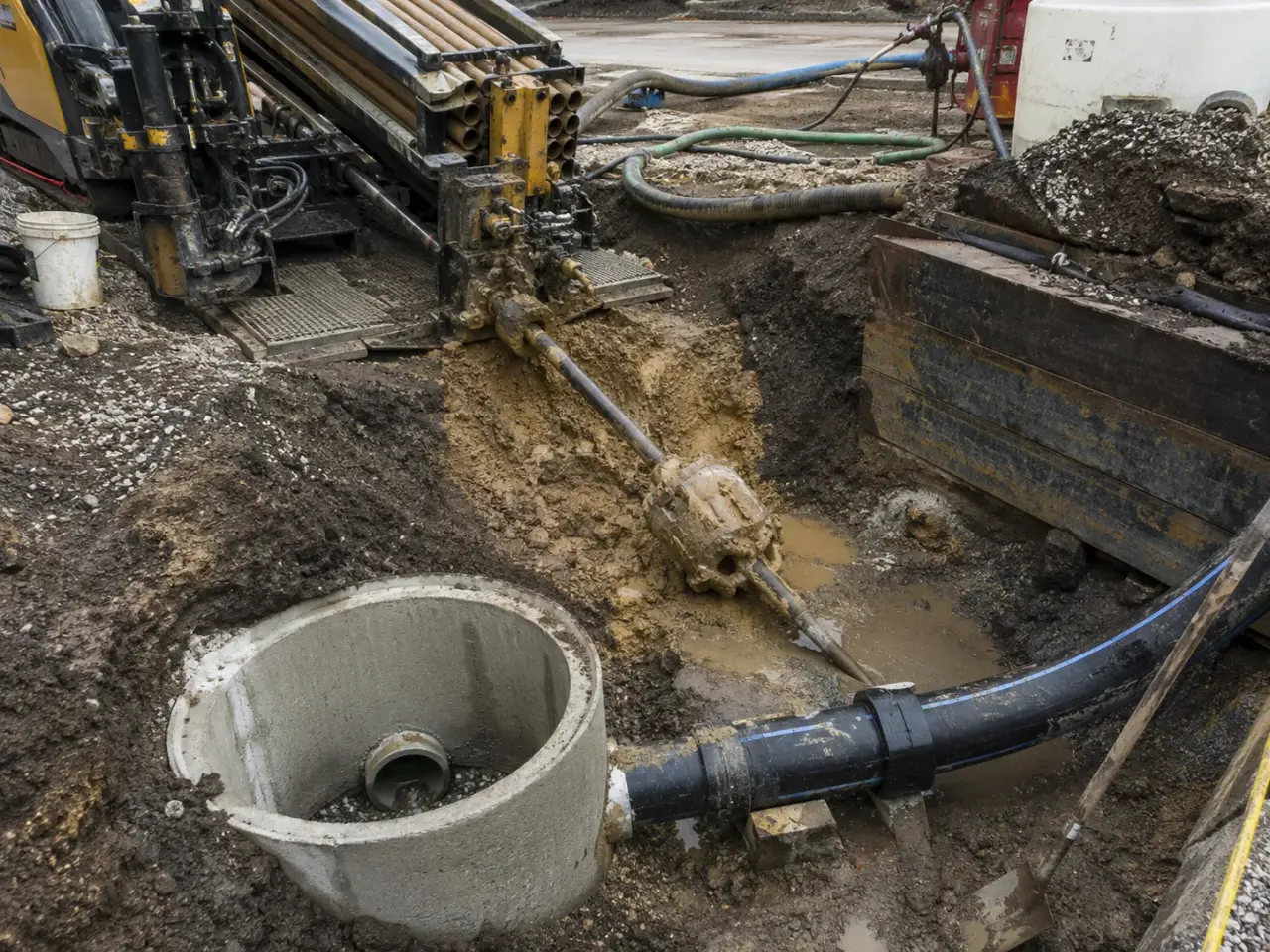
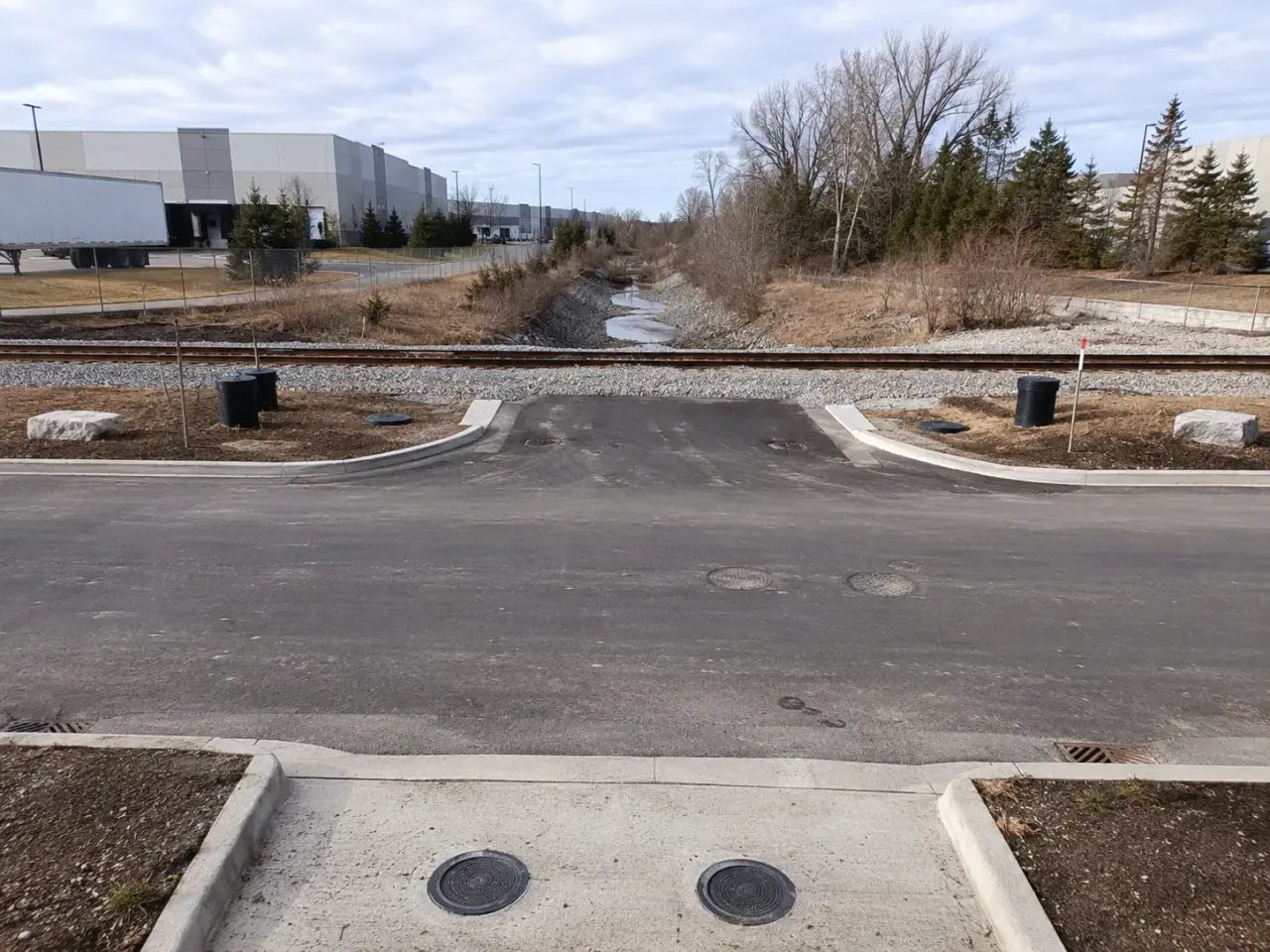
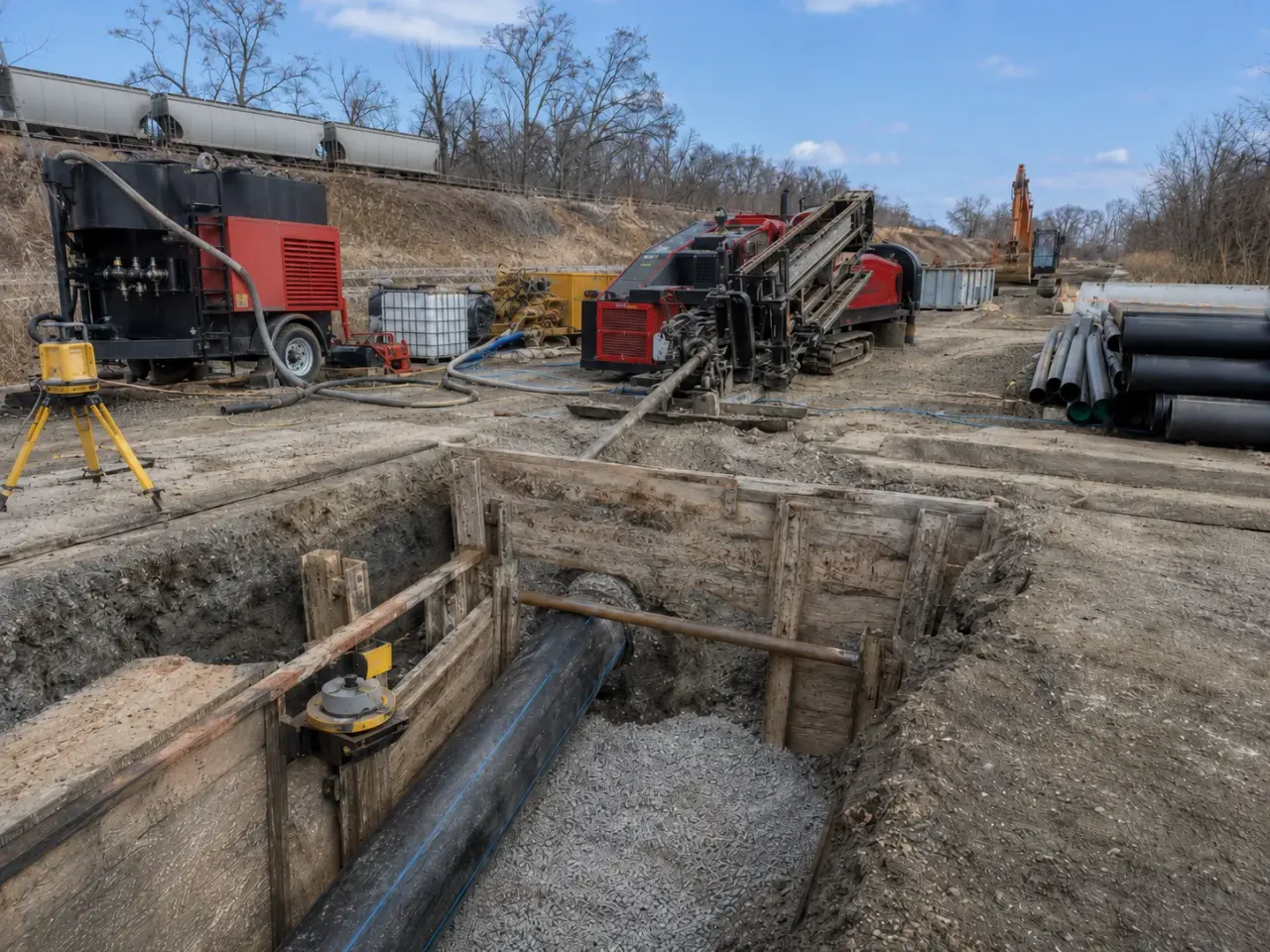
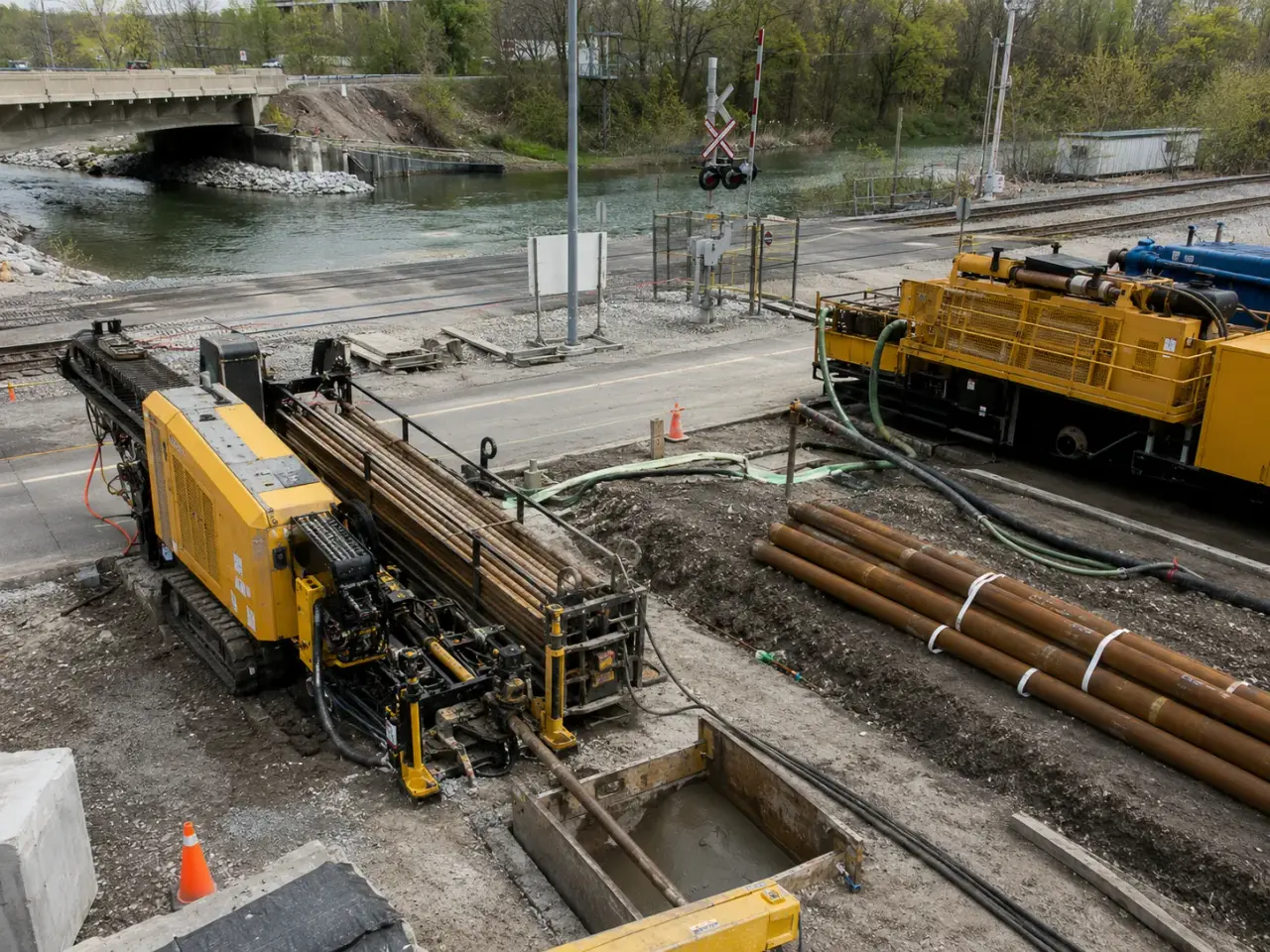
A conventional pilot bore, progressive reaming, and product pullback suits many pressure pipes and conduits. Smaller steerable bores address services, while maxi-rig installations cross wider corridors and larger obstacles. Intersect drilling or specialized tooling can help long or difficult profiles. HDD is screened against auger boring, pipe jacking, microtunnelling, or open cut when grade tolerance, ground, cobbles, rock, cover, diameter, fluid return, or settlement risk exceeds directional-drilling control.
Step 1,
Step 2, Pre-bore planning starts with horizontal and vertical survey control, proposed utility inverts, entry and exit angles, minimum cover, product diameter and bend radius, existing utility records, property and right-of-way limits, bore length, allowable pull force, and connection geometry.
Boreholes or other geotechnical data establish soil layers, groundwater, cobbles, fill, obstructions, and rock. We plan the drill-string and product curve as smooth arcs rather than abrupt corrections, and confirm that the rig thrust, torque, fluid capacity, reamers, swivels, and pulling equipment suit the expected ground.
Step 3, Ontario One Call locate responses are obtained before ground disturbance. Standard requests require time for infrastructure owners to respond, so locate status is treated as a schedule gate, not a field-day formality. Records and paint are then reconciled with the design.
We use hydro excavation to expose critical crossings and confirm line material, horizontal position, and elevation. The daylight holes are large enough to see the drill head pass at the required clearance. Private infrastructure is located separately where it is outside the public notification system.
Step 4, The rig is set on a stable working platform and anchored for expected pushback and pullback forces. Entry and exit pits or containment areas are prepared, drilling fluid is mixed for the soil, and returns are collected for reuse or disposal.
The pilot head advances on the designed path while an electronic guidance system tracks depth, pitch, roll, heading, and temperature. The operator steers by rotating the angled head to drill straight or holding orientation through a correction. Tracking data is recorded by rod length and compared with the allowable alignment envelope.
Step 5, After the pilot reaches the exit, backreamers enlarge the bore in one or more passes. Tool type and diameter depend on cohesive soil, sand, gravel, mixed ground, product diameter, and the annular space needed for fluid and cuttings.
Swab or conditioning passes confirm the bore is open and returns are moving. The fused product string is laid out on rollers in the planned approach, visually inspected, pressure or mandrel tested where specified, fitted with a pulling head, and connected behind a swivel that prevents drill-string rotation from reaching the pipe.
Step 6, During pullback we monitor pulling force, torque, fluid pressure and returns, product movement, and surface conditions. The pipe enters without dragging across sharp ground or exceeding its minimum bend radius. Work stops if loads rise unexpectedly, returns disappear, the pipe stalls, or the ground shows heave or drilling-fluid escape. Once installed, we expose and survey the ends, complete specified testing, install tracer wire or detection features, make open-cut connections, manage remaining fluid and spoils, and restore pits and working surfaces.
Planning horizontal directional drilling in Bradford? Talk it through with our team.
Fused HDPE is common because it forms a continuous restrained string and tolerates planned curvature. Fusible PVC and certain conduit systems can also be installed when accepted by the designer and owner. Material, diameter, wall class, joint, bend radius, pressure, external load, and allowable pull force must all suit the bore.
Accuracy depends on bore length and depth, ground conditions, electronic interference, guidance method, operator control, and the geometry allowed for steering. Tracking records depth, pitch, roll, and heading during the pilot. Critical crossings are daylighted, and completed ends are surveyed. Tight gravity grades may require another trenchless method with greater line-and-grade control.
No. Ontario One Call responses and private locates are essential, but records and surface markings do not establish exact depth. Harrowgate reconciles the responses with the design and hydro excavates critical crossings to verify horizontal position, elevation, and utility material. The drill head is then tracked past an open daylight at the required clearance.
It is drilling fluid that leaves the intended bore and appears at the ground, in a utility trench, drain, or water feature. We reduce risk by managing bore pressure, fluid properties, cover, and returns. Sensitive areas are monitored, containment and recovery equipment are staged, and the approved response plan controls notification and corrective action.
The entry side needs room for the drill rig, rods, fluid mixing, vacuum recovery, and safe operation. The exit side needs a pit and often a straight or gently curved product-string layout at least comparable to the installed length. Site geometry, traffic, overhead restrictions, pipe fusion, bend radius, and connection excavations determine the final footprint.
Yes, with a rock-capable drill head, steering system, reamers, fluid program, and rig selected for the formation. Competent rock, fractured rock, and mixed soil and rock behave differently. Geotechnical data and bore samples are critical because tooling suitable for clay or sand will not reliably complete a rock crossing or mixed-face transition.
Project requirements determine the closeout package. It can include pilot-bore tracking logs, entry and exit surveys, final product and elevation records, drilling-fluid and disposal records, pipe fusion reports, pullback data, pressure tests, tracer-wire continuity, conduit proofing, restoration records, and marked-up drawings showing the installed crossing and connection points.
HDD can be unsuitable where exact gravity grade is critical, cover is too shallow, cobbles or obstructions make steering unreliable, the pipe cannot tolerate the curve or pull load, product-string space is unavailable, or fluid release risk is unacceptable. Harrowgate compares HDD with auger boring, pipe ramming, tunnelling, and open cut before construction.
Fluid can follow fractures, loose fill, utility trenches, coarse seams, low cover, or a pressure path created during drilling and reaming. Investigation, bore profile, fluid properties, pressure control, return monitoring, and a prepared containment response reduce but do not erase the risk.
Records and surface locating establish the initial model, then critical crossings are daylighted to confirm depth, material, size, and orientation. The bore profile preserves design clearance, steering is tracked continuously, and progress is checked against exposed references and allowable tolerance.
Still have a question about horizontal directional drilling in Bradford? Ask our team directly.
Commercial and heavy-civil construction delivered for developers, contractors, property managers, and municipalities.
Send drawings, a site plan, or a description of the scope. Harrowgate Group is licensed, insured, and WSIB-covered.
Licensed, Insured & WSIB-Covered, work managed and documented on every job
Tell us what you need and we’ll get you a quote.
Harrowgate Group provides horizontal directional drilling, delivered and installed with quote-ready support across Toronto and surrounding Ontario communities.
Companies We've Worked With
Harrowgate Group delivers commercial and heavy-civil construction for developers, contractors, institutions, municipalities, and property groups across Ontario.
 Popeyes
  Tim Hortons
  Subway
  University of Toronto
  Madison Group
  RioCan
  Women's College Hospital
  Starbucks
  Mazda
Mazda  TD Bank
  City of Toronto Popeyes Tim Hortons Subway University of Toronto Madison Group RioCan Women's College Hospital Starbucks Mazda TD Bank City of Toronto