
Built to spec
Built to your engineered drawings, survey, and the real site conditions, not a one-size-fits-all approach forced to fit.
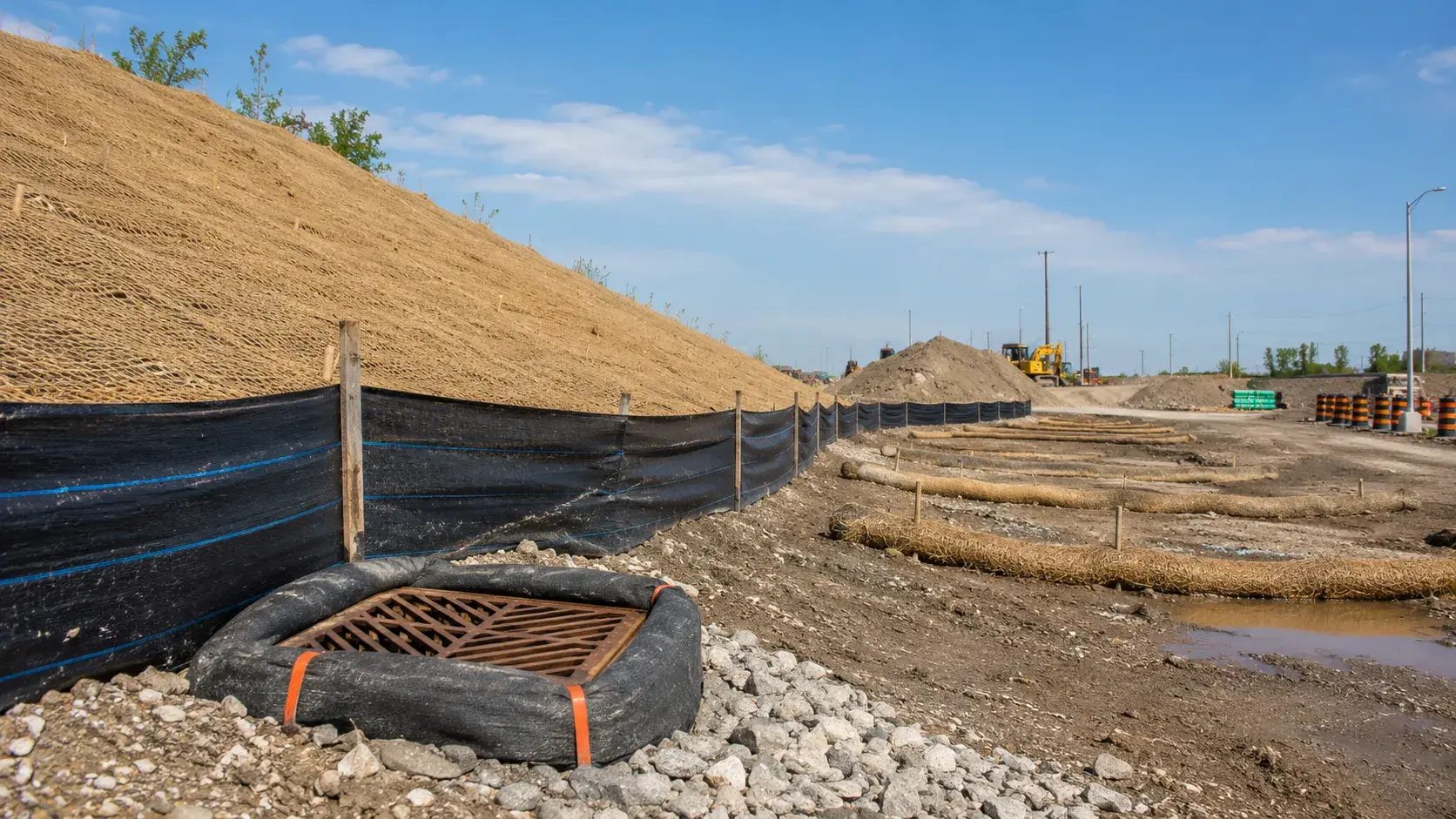
Erosion and Sediment Control in Whitby is the measures that keep soil and sediment on site and out of drainage during construction.
Tell us what you need and we’ll get you a quote.
Licensed, insured & WSIB-covered · Free, no-obligation quote & on-site assessment.
Built to your engineered drawings, survey, and the real site conditions, not a one-size-fits-all approach forced to fit.
Durable materials and methods chosen for the load, traffic, and environment on site.
Send specs, drawings, or photos and get a free, no-obligation site visit and estimate with no guesswork.
Installation and site work completed in accordance with Ontario requirements.
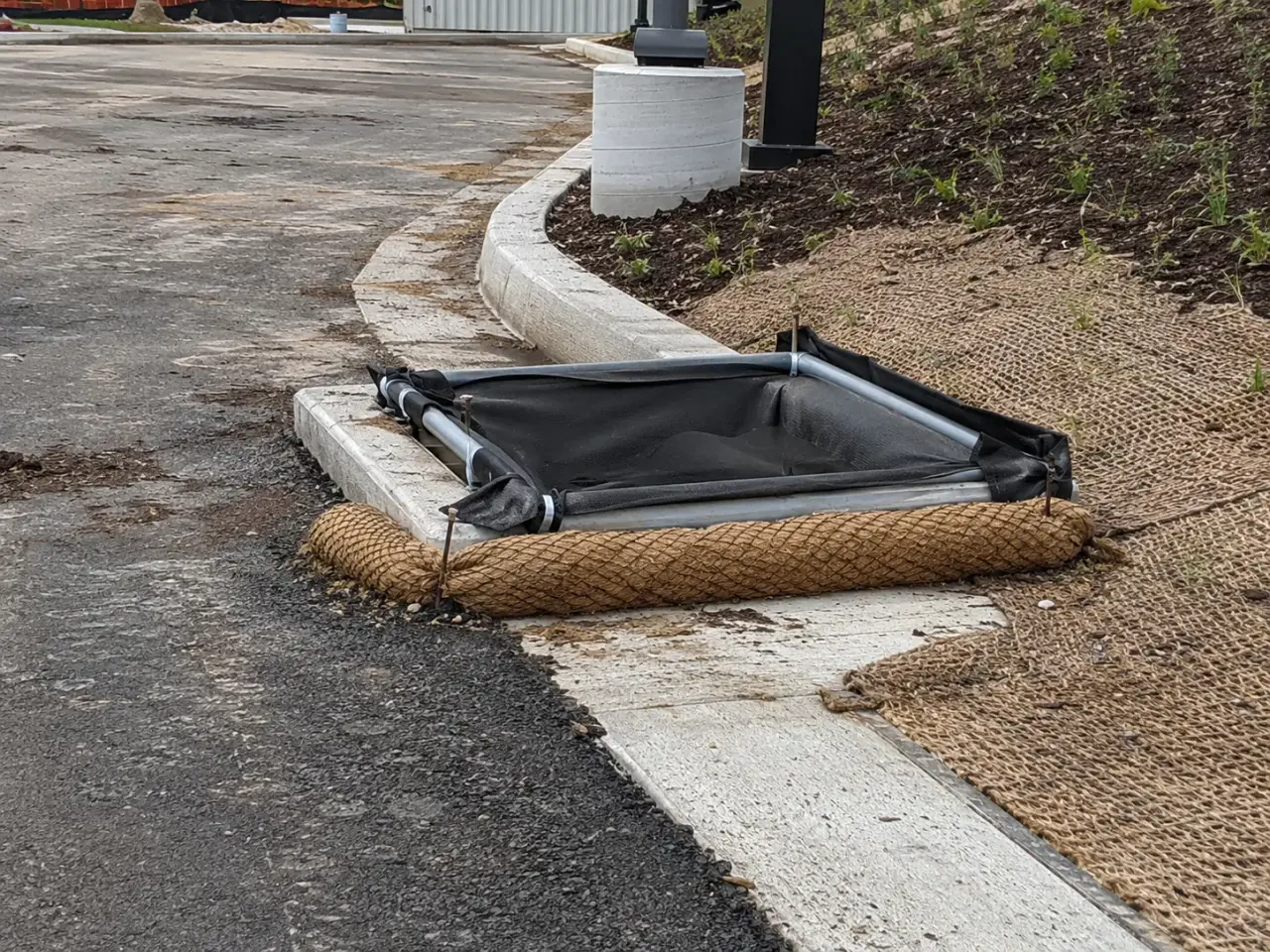
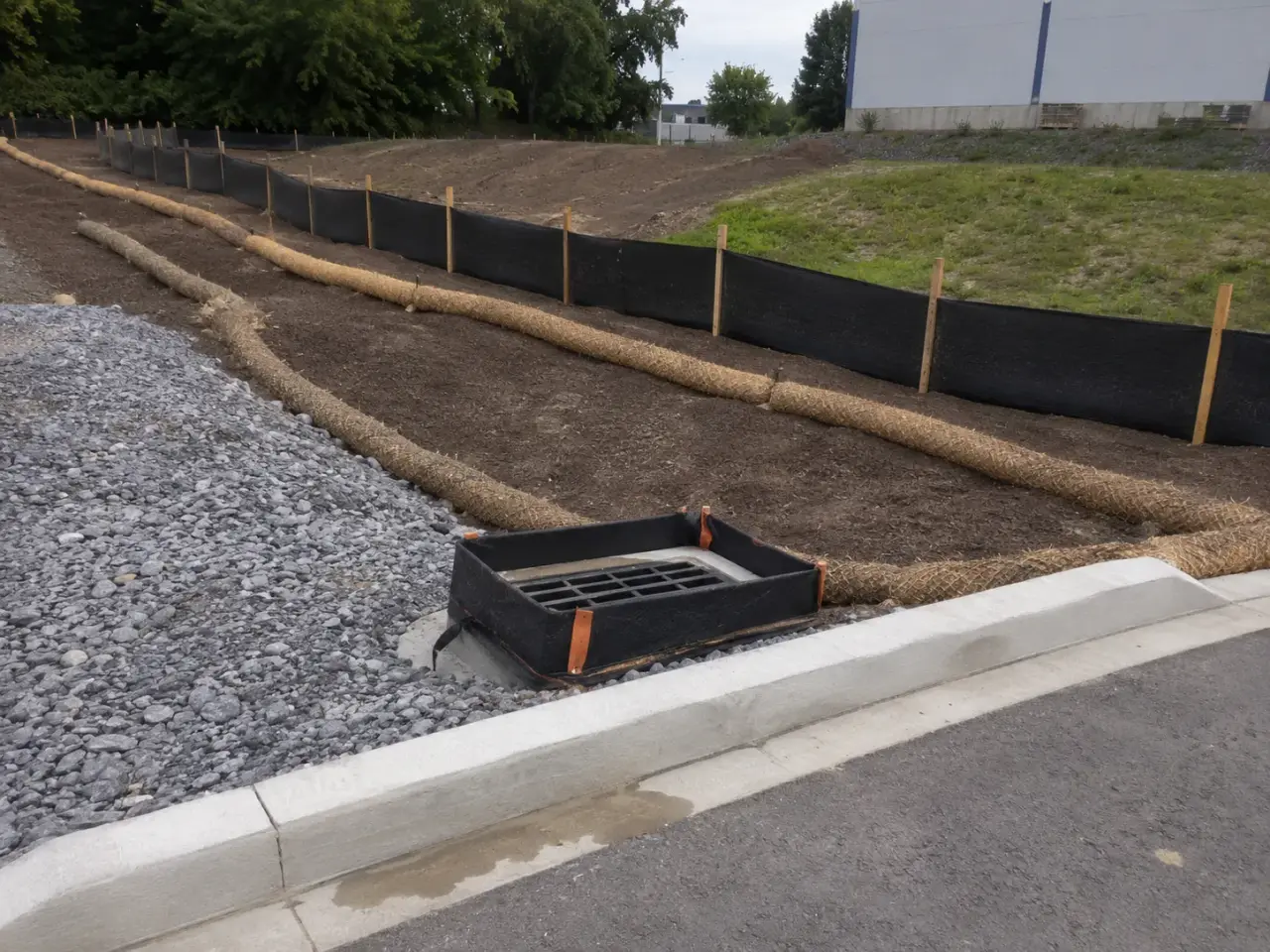
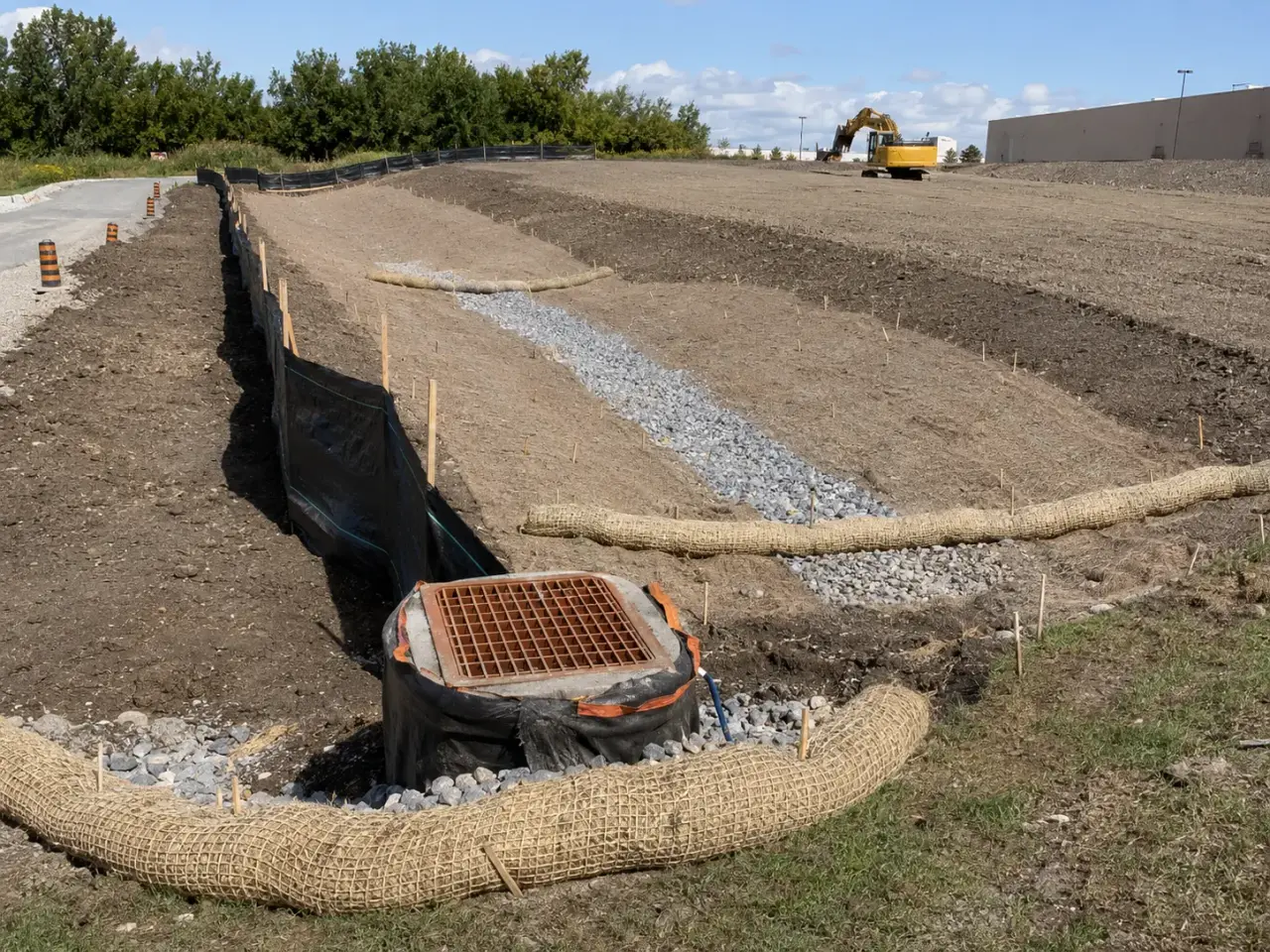
Method selection for erosion and sediment control follows ground, water, utilities, access, environmental controls, temporary works, material behaviour, receiving capacity, testing, and its required handoff.
Perimeter sediment controls. Silt fence, compost socks, berms, cut-off swales, and stabilized boundaries intercept sheet flow only when keyed, supported, and maintained for the actual drainage area.
Inlet and channel protection. Catch-basin inserts, stone checks, wattles, blankets, turf reinforcement, riprap, and energy dissipation protect concentrated flow without causing unsafe flooding.
Sediment basins and treatment. Traps, ponds, tanks, filtration, flocculation, and settlement systems manage larger flows and fine particles under the environmental design.
Progressive stabilization. Mulch, seed, sod, blankets, stone, pavement, and phased grading reduce exposed soil at the source rather than relying only on downstream barriers.
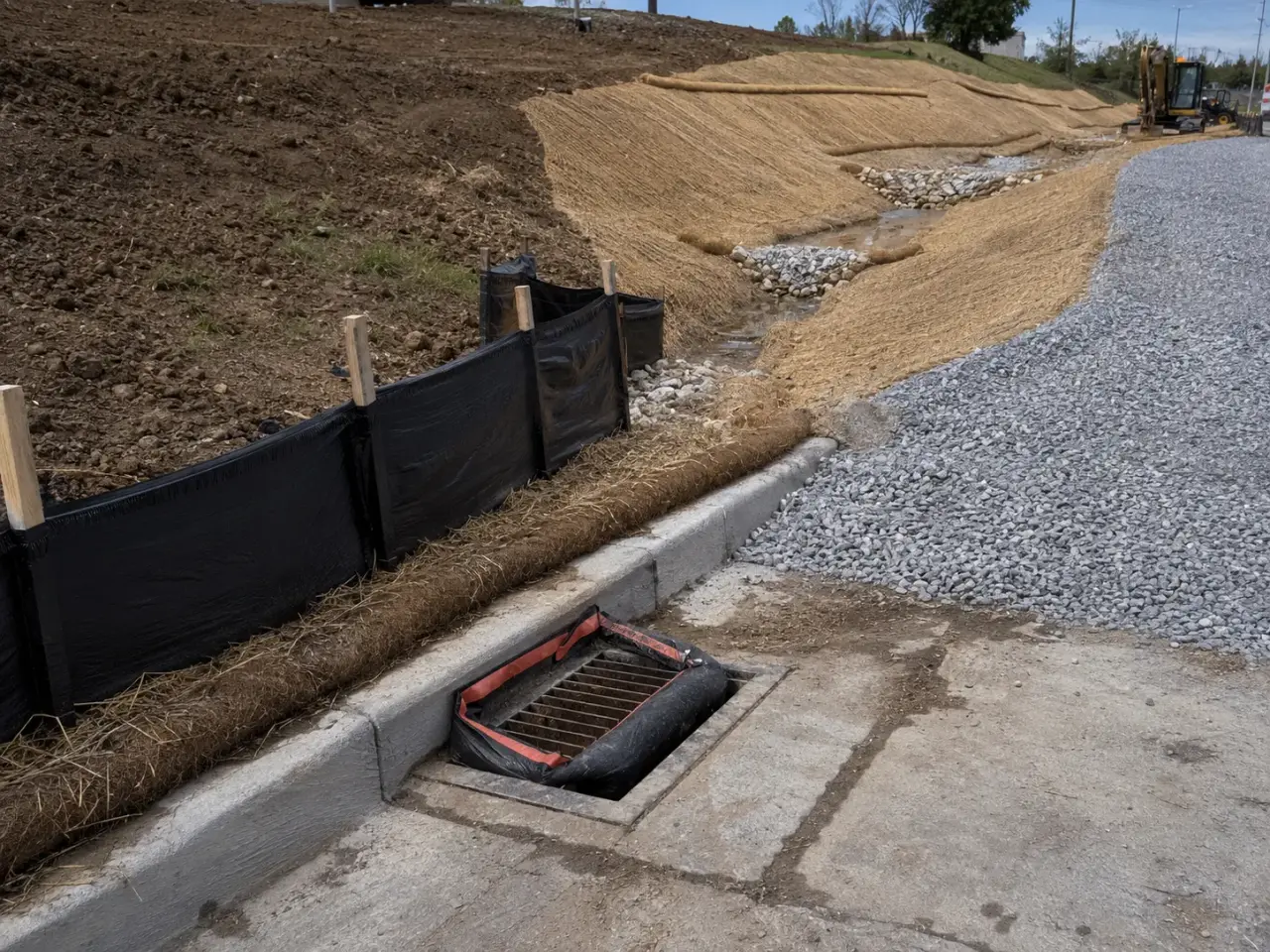
Step 1, map drainage areas, sensitive receivers, outlets, soil, slopes, phasing, inspection triggers, and emergency materials.
Step 2, install perimeter, access, inlet, diversion, basin, and stabilization controls before mass disturbance.
Step 3, inspect during active grading and before, during, and after qualifying weather or snowmelt events.
Step 4, remove accumulated sediment, repair undercut or bypassed controls, and adjust measures as drainage areas change.
Step 5, stabilize final surfaces and remove temporary controls only after the site and receiving system meet release criteria.
We divide clean and dirty water, shorten slope length, slow concentrated flow, protect outlets, and place sediment controls at reachable maintenance locations. The system is staged from clearing through final landscaping so runoff never depends on one silt fence at the property line.
Work stage 1. Before earthwork, we review drainage area, slopes, soil erodibility, receiving inlets, watercourses, stockpiles, access, and the approved ESC plan. Sensitive and no-entry areas are fenced and controls are installed downslope.
Work stage 2. Stabilized construction entrances use sized clear stone over separation fabric at sufficient length and width to remove mud from tires. Street sweeping and wheel cleaning supplement the entrance when tracking continues.
Work stage 3. Silt fence is trenched into the ground, attached to posts on the correct side, turned upslope at ends, and used for sheet flow from limited areas. It is not installed across concentrated channels.
Work stage 4. Catch-basin inserts, filter berms, gravel collars, or sealed temporary covers protect inlets according to the drainage and emergency-overflow plan. Accumulated sediment is removed before it blocks safe site drainage.
Work stage 5. Diversion swales, berms, slope drains, check dams, sediment traps, and basins slow or route runoff through stable paths. Outlets receive rock, matting, or other energy dissipation to prevent a new scour hole.
Work stage 6. Exposed soil is stabilized promptly with mulch, erosion-control blanket, tackifier, aggregate, paving, or permanent vegetation. Inspections after rain, snowmelt, and grading changes trigger repairs, cleanout, upgrades, and plan revisions.
Planning erosion and sediment control in Whitby? Talk it through with our team.
Erosion control prevents soil particles from detaching by protecting surfaces and controlling runoff velocity. Sediment control captures particles after they move using barriers, traps, basins, filters, or settling. Harrowgate uses both. A perimeter barrier cannot replace stabilized slopes, and mulch alone cannot capture sediment carried from active excavation or haul routes.
Controls are installed before clearing, stripping, excavation, or stockpiling creates a sediment path. Perimeter protection, entrances, clean-water diversions, inlet protection, and designated stockpile zones come first. As grading changes, measures move or are added. Temporary controls remain until permanent surfaces, drainage, and vegetation are established and the approved removal criteria are met.
Silt fence is intended for sheet flow from small areas, not concentrated channel flow. Water concentrated in a ditch can overtop, tear, or undercut it. Harrowgate uses check dams, sediment traps, lined channels, diversion, or other designed measures in ditches, while silt fence is placed along contours with keyed ends and proper trenching.
Inspection frequency follows the approved plan and permits, with additional checks before and after significant rain, snowmelt, dewatering, and major grading changes. Active entrances and inlets are observed daily. Harrowgate records condition, sediment depth, tears, undercutting, overtopping, scour, maintenance, and upgrades so controls remain functional rather than merely present.
The inlet measure is selected for drainage area, sediment load, traffic, and required overflow. Inserts, filter berms, gravel collars, or temporary covers are installed with an approved emergency path. Sediment is removed before capacity is lost. Harrowgate also stabilizes upstream soil so the catch basin is not expected to filter the entire site.
Pumped water passes through settling tanks, filter bags, media, sediment basins, or other approved treatment before the permitted outlet. Flow is spread or energy-dissipated so it does not erode the discharge area. Turbidity and required water-quality parameters are monitored, and filters are changed before blinding, rupture, or bypass sends sediment downstream.
Removal occurs after disturbed areas are permanently stabilized, drainage works are operating, vegetation has established to the approval criterion, and accumulated sediment is cleaned out. Controls are removed in a sequence that does not release trapped soil. Harrowgate restores trenches, post holes, stone areas, and flow paths, then documents final condition and any ongoing maintenance items.
Common causes include excessive drainage area, concentrated flow, poor trenching, weak posts, overtopping, undercutting, damage, or accumulated sediment. The right control and maintenance must match the flow.
Removal follows stabilization and project acceptance criteria. Vegetation, stone, pavement, or other permanent cover must be established, drainage must function, and disturbed areas from removal must be restored.
Still have a question about erosion and sediment control in Whitby? Ask our team directly.
Commercial and heavy-civil construction delivered for developers, contractors, property managers, and municipalities.
Send drawings, a site plan, or a description of the scope. Harrowgate Group is licensed, insured, and WSIB-covered.
Licensed, Insured & WSIB-Covered, work managed and documented on every job
Tell us what you need and we’ll get you a quote.
Harrowgate Group provides erosion and sediment control, delivered and installed with quote-ready support across Toronto and surrounding Ontario communities.
Companies We've Worked With
Harrowgate Group delivers commercial and heavy-civil construction for developers, contractors, institutions, municipalities, and property groups across Ontario.
 Popeyes
  Tim Hortons
  Subway
  University of Toronto
  Madison Group
  RioCan
  Women's College Hospital
  Starbucks
  Mazda
Mazda  TD Bank
  City of Toronto Popeyes Tim Hortons Subway University of Toronto Madison Group RioCan Women's College Hospital Starbucks Mazda TD Bank City of Toronto