
Built to spec
Built to your engineered drawings, survey, and the real site conditions, not a one-size-fits-all approach forced to fit.
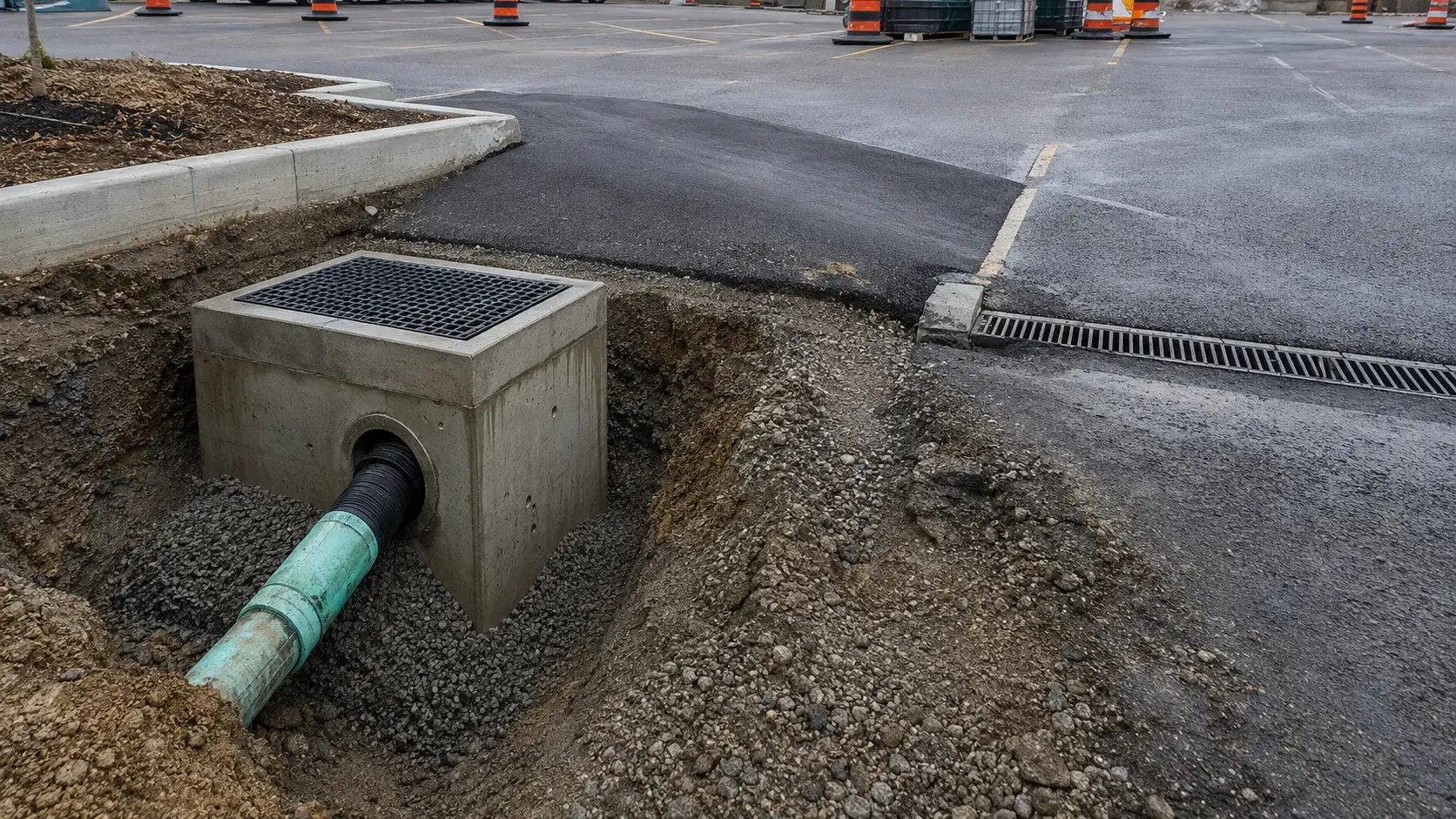
Harrowgate Group is a commercial and heavy-civil contractor that performs drainage installation and repair for parking lots, industrial sites, developments, and municipal infrastructure across the GTA and Ontario.
Tell us what you need and we’ll get you a quote.
Licensed, insured & WSIB-covered · Free, no-obligation quote & on-site assessment.
Built to your engineered drawings, survey, and the real site conditions, not a one-size-fits-all approach forced to fit.
Durable materials and methods chosen for the load, traffic, and environment on site.
Send specs, drawings, or photos and get a free, no-obligation site visit and estimate with no guesswork.
Installation and site work completed in accordance with Ontario requirements.
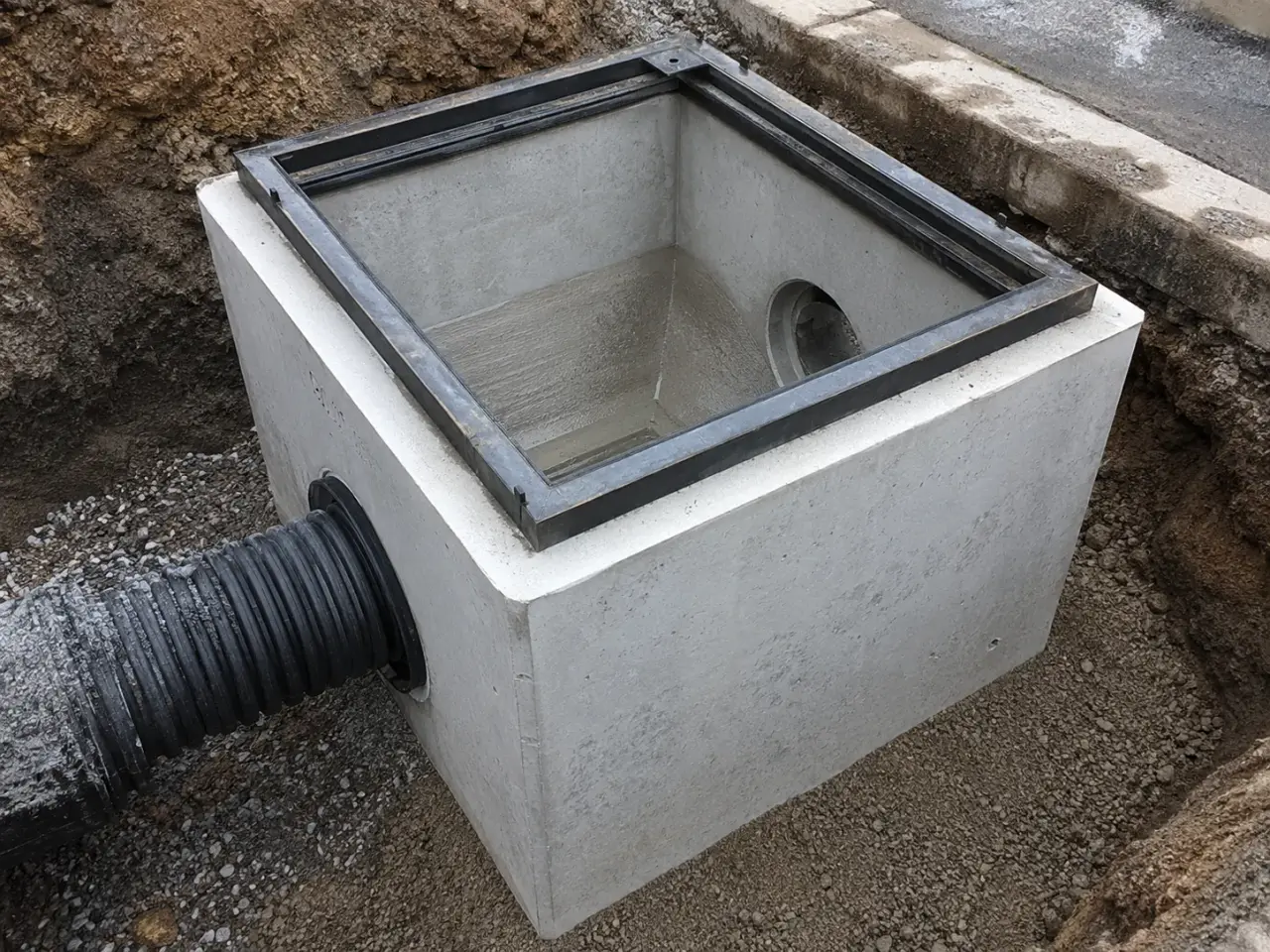
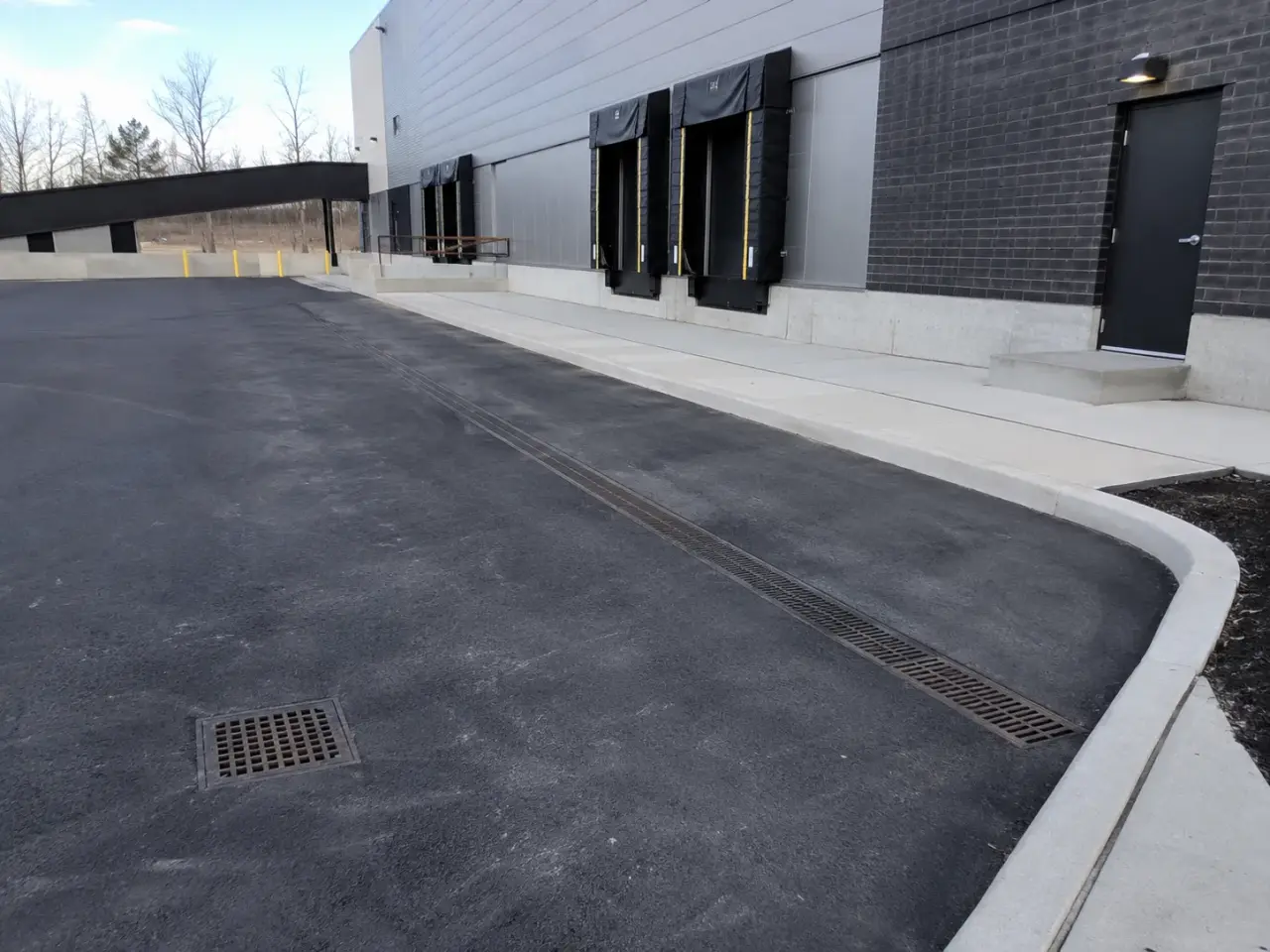
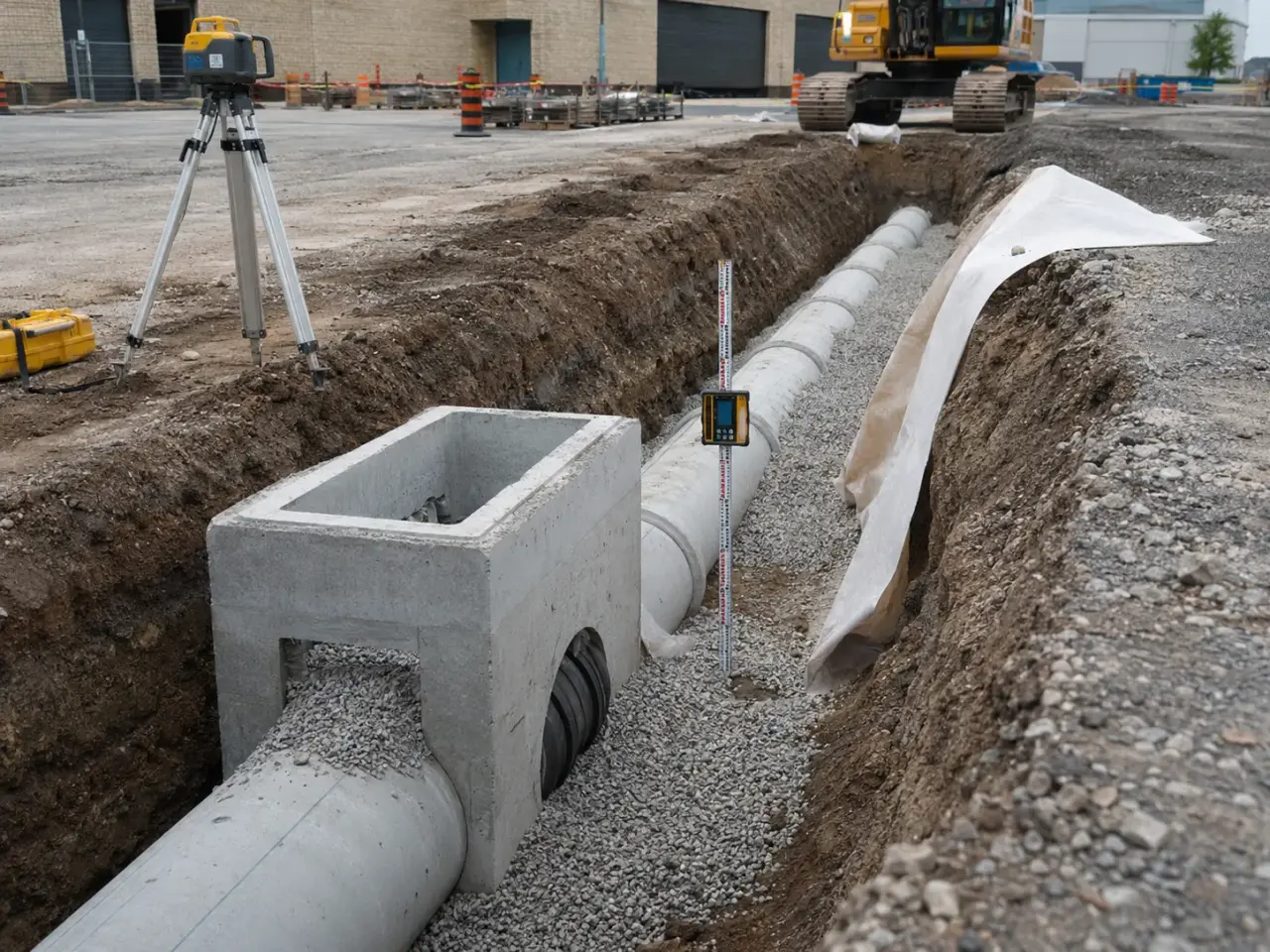
Surface water needs positive grading and inlets, water trapped below pavement needs subdrains, concentrated runoff needs storm sewer capacity, groundwater can require foundation drainage or dewatering, and regulated site discharge may need storage and treatment. Installing a drain without confirming source, elevation, outlet, and design flow can move flooding to another part of the property.
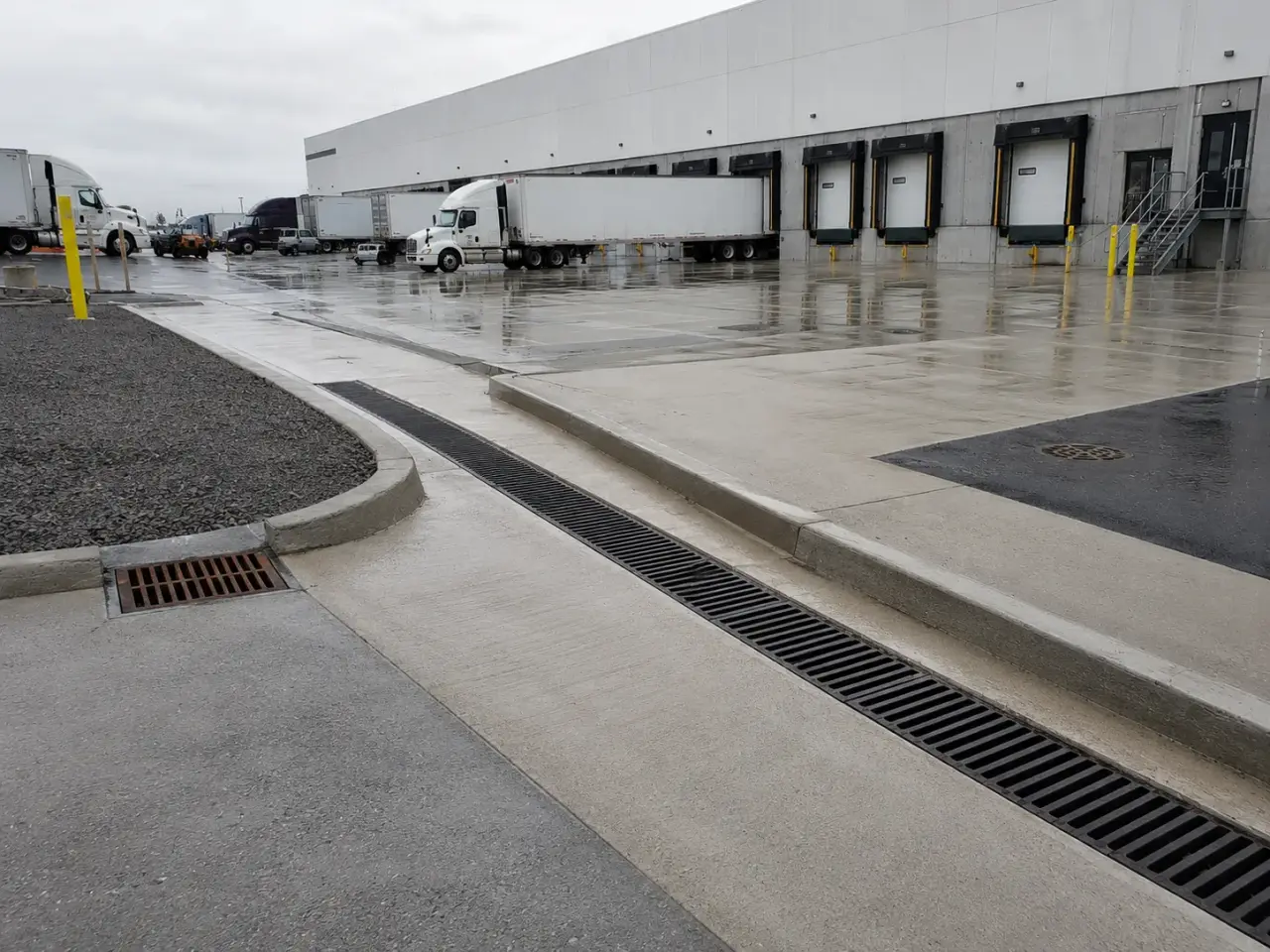
Grading, swales, and trench drains. Surface measures intercept runoff before it reaches doors, ramps, loading docks, or low pavement. Swales need continuous fall, stable lining, and an outlet. Trench drains suit narrow collection lines but depend on grate capacity, sediment access, and a downstream pipe that can accept the captured flow.
Catch basins and storm sewers. Catch basins collect paved-area runoff and provide a sump for sediment. Maintenance holes give access at junctions and grade changes. Pipe diameter, slope, material, cover, bedding, and structure spacing follow the civil design and municipal criteria, with inverts surveyed before concealment.
Subdrains and French drains. Perforated pipe in clean drainage aggregate lowers localized subsurface water around pavement edges, retaining walls, foundations, and athletic or landscaped areas. Filter fabric or graded filter criteria keep fine soil from migrating into the stone. A perforated pipe with no reliable outlet eventually becomes storage, not drainage.
Culverts, outlets, and erosion protection. Culverts maintain drainage beneath roads and entrances. Headwalls, end sections, riprap, ditch grading, and scour protection manage velocity at the ends. Outlet elevation and downstream condition are checked before upstream work is connected.
Stormwater storage and quality treatment. Underground chambers, tanks, ponds, control structures, and oil-grit separators manage peak flow or water quality when required by the approved design. These devices need maintenance access and commissioning, because a treatment unit that cannot be cleaned will lose performance.
Step 1, trace the water. Harrowgate checks rainfall behaviour, topography, roof and pavement discharge, downstream constraints, historic changes, maintenance records, and signs of sediment or surcharge. CCTV, flushing, dye testing, survey, test pits, infiltration observations, or flow monitoring may be used to distinguish blockage from grade or capacity failure.
Step 2, confirm the approved route. The design establishes catchment, inlet locations, pipe sizes, slopes, storage, treatment, and legal outlet. Municipal connection permits, conservation-authority requirements, easements, and environmental approvals are addressed where applicable. Private water cannot simply be redirected to a road, neighbouring property, or sanitary sewer.
Step 3, locate services and control excavation water. Utility records and field locates are reviewed, daylighting is used at conflicts, and trench support follows soil and depth requirements. Bypass pumping, sump pumping, or dewatering is planned so pipe bedding is placed on a stable surface and sediment-laden water is not discharged without the specified controls.
Step 4, install from the outlet upstream. Starting at the known downstream elevation protects the grade available for every branch. Bedding is prepared to line and invert, pipe joints are cleaned and seated, structures are set from survey control, and laterals enter at the designed elevation and orientation. Laser and survey checks continue throughout the run.
Step 5, inspect before backfill. Pipe, joints, connections, bedding, haunch support, inverts, sumps, frames, and protection details are checked while visible. Testing, mandrel inspection, CCTV, leakage checks, or flushing follow the contract and pipe type. Selected embedment is placed evenly so pipe is not displaced or distorted.
Step 6, restore grades and commission. Trench backfill is compacted in controlled lifts, pavement and landscape grades are rebuilt to feed the inlets, and grates are adjusted to final surface. The system is cleaned, outlets and controls are confirmed, deficiencies are corrected, and as-built coordinates and inverts are recorded.
We begin with the civil or landscape drainage plan, the geotechnical report where one exists, and the municipal stormwater requirements for the site. Survey control establishes the invert elevations for every catch basin, pipe run, and outlet before excavation starts, so the finished system actually drains by gravity to the point of discharge rather than relying on guesswork.
Trenches are excavated, shored where required, and dewatered as needed to keep the work area workable. Bedding is placed to the specified depth, and pipe, catch basins, manholes, oil-grit separators, and culverts are installed on line and grade, with joints and connections made to the manufacturer's and municipality's requirements. Backfill is placed and compacted in controlled lifts so the completed trench does not settle and disrupt the pipe grade later.
Surface elements, including catch basin grates, French drain outlets, and swales, are built to the finished grading plan so water is captured at the low points and routed to the underground system rather than pooling on pavement or against building walls. Where a site discharges to a stormwater management pond or an oil-grit separator, Harrowgate confirms the facility is built and functioning to its design before the upstream drainage is connected to it.
Our process is consistent from first call to closeout. Harrowgate checks the site or the available drainage plan, visits to confirm grading, soil, and existing structures, and returns a written quote for the scope. Once approved, we perform the excavation, installation, and backfill, and close out with as-built information showing what was actually installed and where.
Planning drainage contractor? Talk it through with our team.
Standing water, a flooded loading dock, saturated ground near a foundation, or repeated backups in a storm sewer or catch basin are signs the existing drainage is not routing water correctly. Harrowgate visits the site to identify the cause before recommending a fix.
A site plan showing grading and existing drainage if available, a description of the problem or the new scope, and any known soil or groundwater conditions. Harrowgate confirms these details on a site visit before returning a written quote.
Yes. Harrowgate performs excavation, drainage, and asphalt paving as one coordinated scope, so catch basin and pipe elevations are set before paving rather than adjusted after the fact.
Common causes include undersized pipe, a low or reversed invert grade, debris blocking the inlet, or a downstream connection that cannot carry the flow. Harrowgate investigates the system to identify the actual cause before recommending repair or replacement.
Storm sewer connections and stormwater management facilities typically require municipal approval, and some projects require Ministry of the Environment, Conservation and Parks approval for the discharge. Harrowgate identifies the applicable approvals during project review.
Timing depends on the length of pipe runs, number of structures, soil conditions, and whether shoring or dewatering is required. Harrowgate provides a schedule as part of the written quote once the site has been reviewed.
A French drain uses perforated pipe and drainage stone to collect subsurface water along a distributed trench. A storm sewer uses solid pipe and structures to convey collected runoff to an approved outlet. They can work together, but pipe type, filter detail, access, and discharge point serve different functions.
Sometimes. Cleaning, localized structure repair, spot replacement, inlet adjustment, or a new intercepting drain may solve a defined defect. Widespread negative grading, collapsed pipe, insufficient capacity, or failed trench backfill can require broader reconstruction. CCTV and survey help limit excavation to work that addresses the cause.
Pipe and surrounding embedment act together to resist soil and traffic loads. Uniform bedding supports the barrel, while properly placed haunch material supports the lower sides and limits movement or distortion. Dumping backfill over unsupported pipe can change grade, open joints, deform flexible pipe, and create settlement at the surface.
Still have a question about drainage contractor? Ask our team directly.
Commercial and heavy-civil construction delivered for developers, contractors, property managers, and municipalities.
Send drawings, a site plan, or a description of the scope. Harrowgate Group is licensed, insured, and WSIB-covered.
Licensed, Insured & WSIB-Covered, work managed and documented on every job
Tell us what you need and we’ll get you a quote.
Harrowgate Group provides drainage contractor, delivered and installed with quote-ready support across Toronto and surrounding Ontario communities.
Companies We've Worked With
Harrowgate Group delivers commercial and heavy-civil construction for developers, contractors, institutions, municipalities, and property groups across Ontario.
 Popeyes
  Tim Hortons
  Subway
  University of Toronto
  Madison Group
  RioCan
  Women's College Hospital
  Starbucks
  Mazda
Mazda  TD Bank
  City of Toronto Popeyes Tim Hortons Subway University of Toronto Madison Group RioCan Women's College Hospital Starbucks Mazda TD Bank City of Toronto