
Built to spec
Built to your engineered drawings, survey, and the real site conditions, not a one-size-fits-all approach forced to fit.
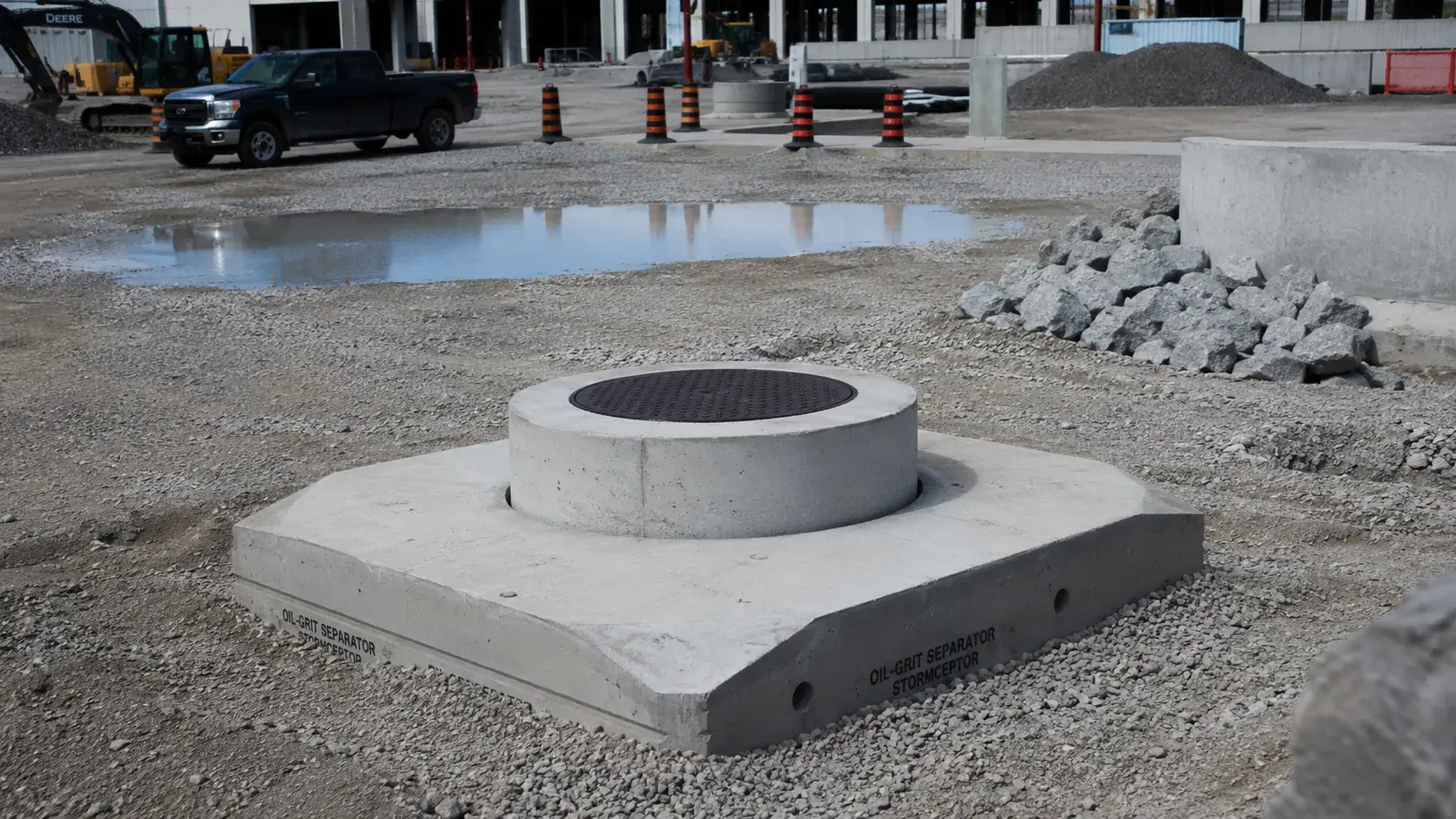
Harrowgate performs excavation, shoring, bedding, placement, storm connections, bypass structures, commissioning, and restoration for oil grit separators across the GTA and Ontario.
Tell us what you need and we’ll get you a quote.
Licensed, insured & WSIB-covered · Free, no-obligation quote & on-site assessment.
Built to your engineered drawings, survey, and the real site conditions, not a one-size-fits-all approach forced to fit.
Durable materials and methods chosen for the load, traffic, and environment on site.
Send specs, drawings, or photos and get a free, no-obligation site visit and estimate with no guesswork.
Installation and site work completed in accordance with Ontario requirements.
An oil grit separator is an underground stormwater structure that uses gravity, flow separation, and internal chambers to retain sediment, floatables, and free oil before runoff reaches downstream controls. Harrowgate performs GTA installation and replacement, including excavation, groundwater control, base preparation, lifting, pipe connections, backfill, access, and commissioning.
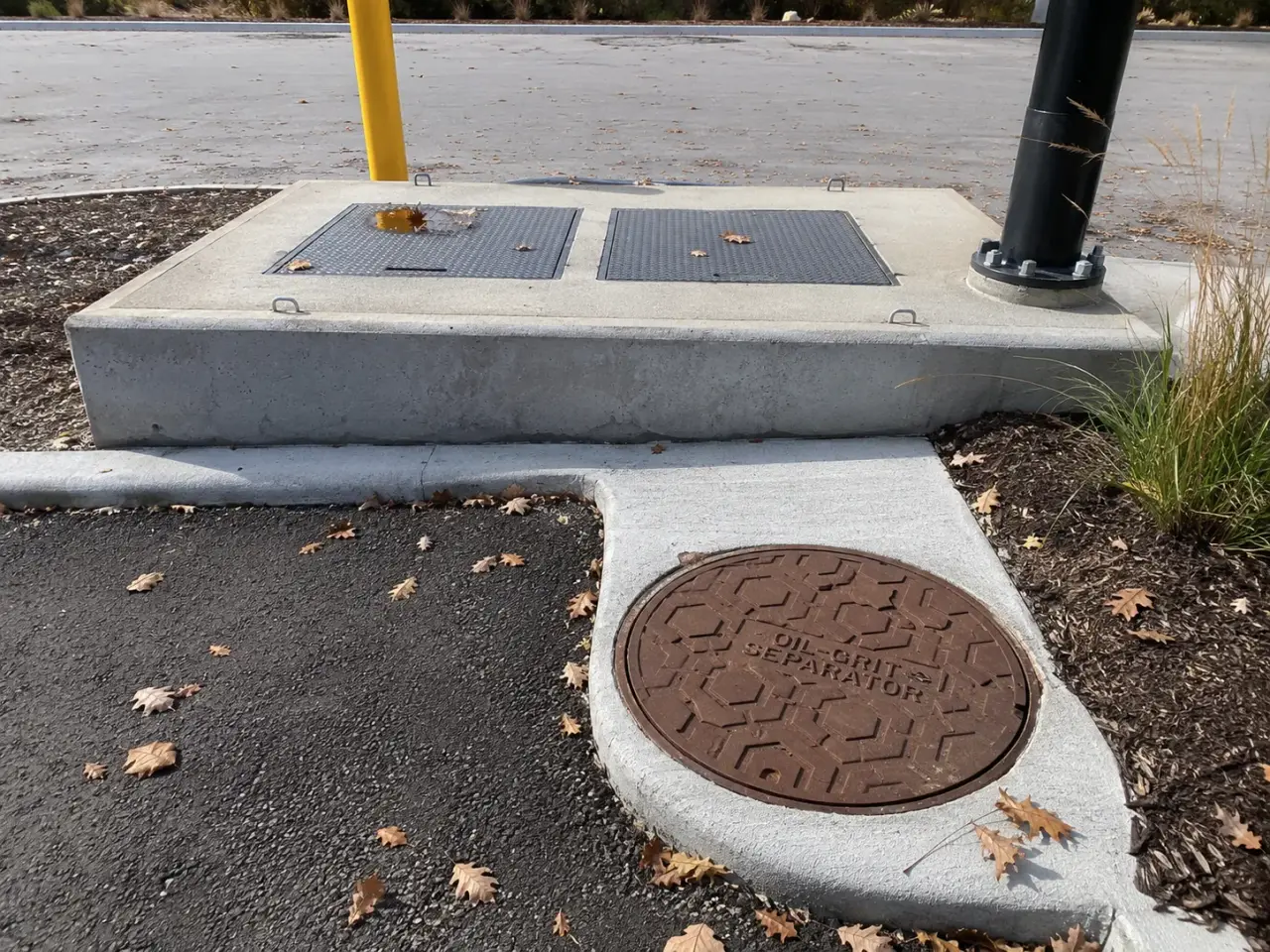
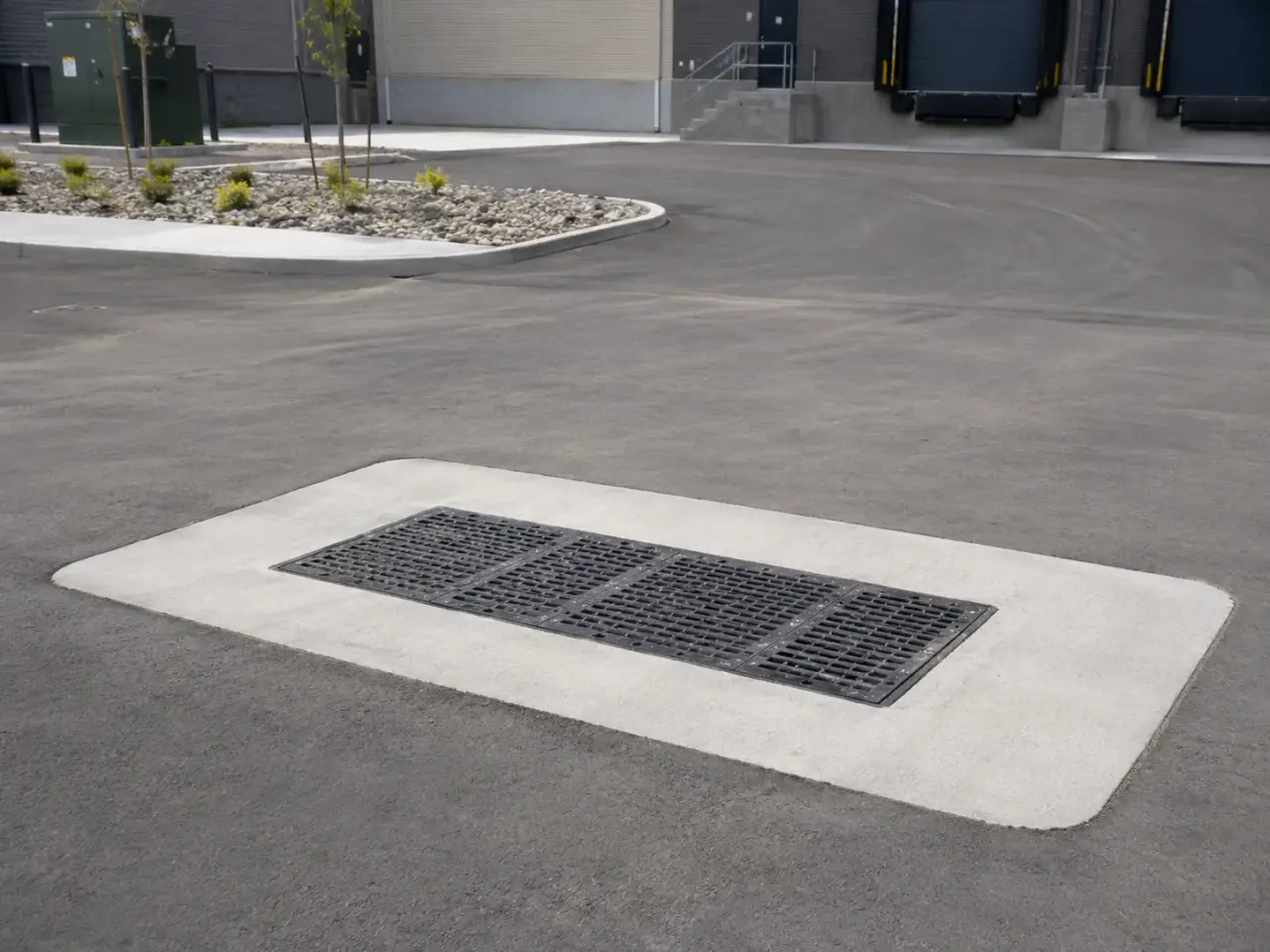
Hydrodynamic, chambered, manhole-style, coalescing, and bypass oil-grit separators use different flow paths and components to settle grit and retain floatables or free oil. Some serve pretreatment ahead of infiltration or underground storage, while others support spill control or water-quality treatment on constrained sites. They do not provide meaningful flood storage by themselves and may bypass or lose efficiency at higher flows, so selection follows drainage area, treatment flow, particle assumptions, spill duty, head loss, outlet, maintenance, and verified device performance.
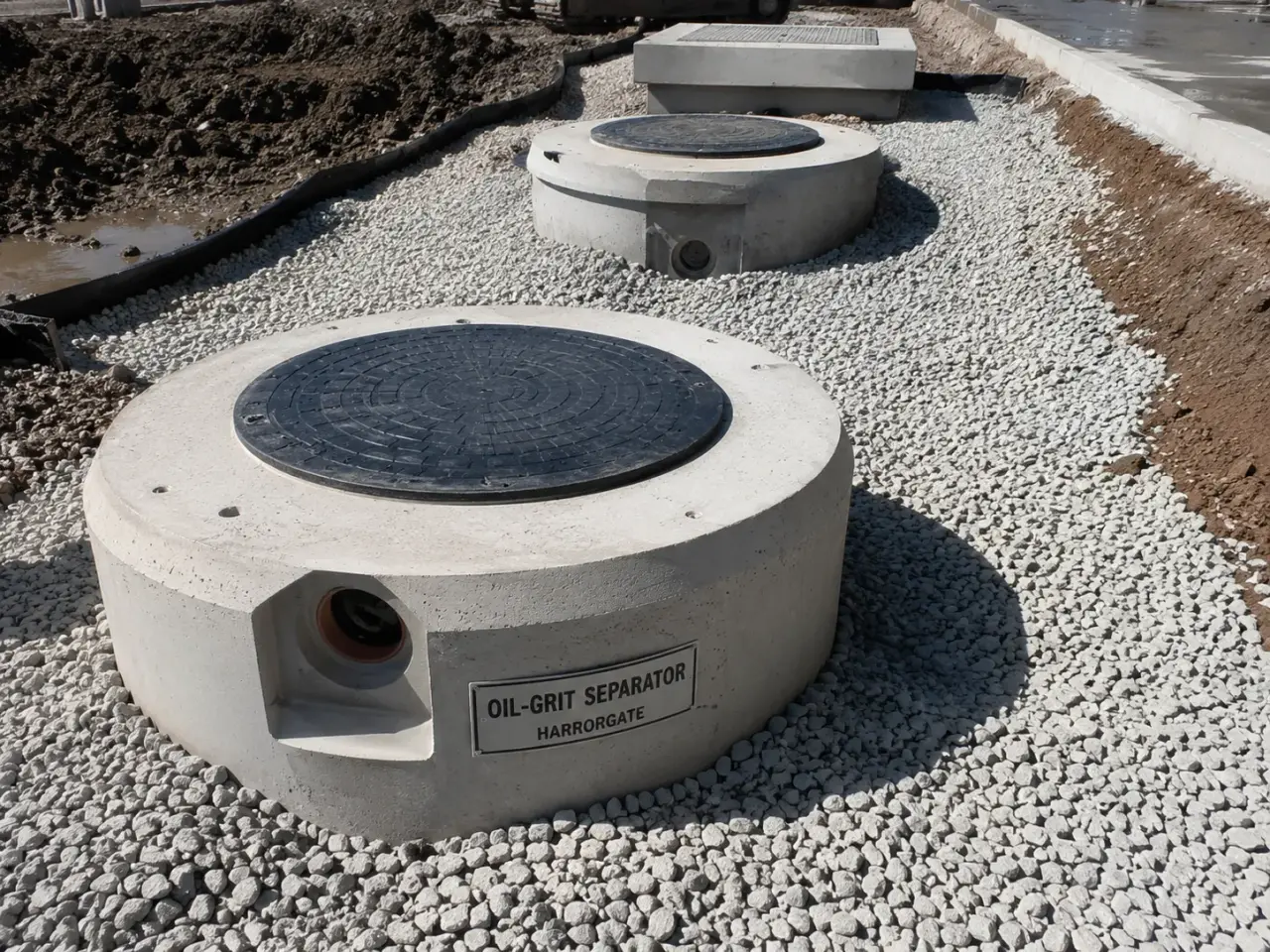
Step 1, We confirm utility locates, structure dimensions, pipe inverts, groundwater, excavation support, crane radius, delivery route, and live-flow bypass before digging. The excavation is shored or sloped to the engineered plan. Dewatering keeps the foundation stable without discharging turbid water uncontrolled. Unsuitable soil is removed, and the base uses the specified granular layer or concrete slab at exact elevation.
Step 2, Precast sections are inspected for damage and lifted only from designed pick points. The sump, chamber orientation, inlet and outlet, internal baffles, flow-control components, and maintenance openings are aligned with the approved shop drawings. Joint gaskets and sealants are kept clean and evenly compressed. Pipe penetrations use specified connectors that permit watertight movement rather than improvised mortar packing.
Step 3, Backfill is placed symmetrically in controlled lifts so the structure is not displaced or point-loaded. Pipe haunches receive careful compaction. Where groundwater uplift governs, the anchoring slab, ballast, or structural connection is completed before dewatering is relaxed. Frame and cover elevations are set for pavement drainage and future vacuum-truck access, then the surface is restored without burying inspection features.
Step 4, Commissioning removes construction sediment and verifies that baffles, screens, flow controls, and bypass paths are correctly installed. Pipes are inspected and the structure is checked for leakage, obstruction, and accessible sump depth. Harrowgate records as-built inverts, coordinates manufacturer or engineer inspection, and hands over a clean unit with maintenance access unobstructed.
Step 5, Harrowgate commissions the OGS after cleaning, internal inspection, surveyed connections, verified bypass and flow path, completed backfill and surface, and delivery of device and maintenance records.
OGS installation follows the issued stormwater design, approved device data, demonstrated performance basis, OPSS where specified, environmental controls, and applicable local municipal requirements. Ontario guidance treats separators as spill controls, pretreatment, or water-quality elements, often within a multi-component system.
The structural and geotechnical design addresses loading, cover, groundwater, buoyancy, bedding, pipe connections, and backfill. Concrete components follow CSA requirements where applicable. Product substitutions are checked for hydraulic performance, head loss, dimensions, access, and maintenance, not just nominal treatment flow.
Pipe and structure elevations preserve the accepted hydraulic grade and bypass. Seals and penetrations are installed to prevent soil and groundwater entry where required. Backfill is placed evenly so the unit does not shift, crack, ovalize, or impose load on connected pipes.
Commissioning removes construction sediment, checks internal components, documents as-built elevations, and transfers inspection and maintenance information. Retained oil, grit, and spill material are removed and routed under the applicable waste requirements.
Planning oil-grit separators? Talk it through with our team.
An incorrectly oriented or elevated unit can short-circuit flow, surcharge upstream drainage, or bypass treatment too often. Harrowgate sets the base and each pipe from survey control, checks internal flow direction before backfill, and confirms bypass components against approved drawings. We do not rely on casting labels alone when field piping differs from tender assumptions.
Foundation movement and groundwater can crack joints, pull pipe connections, or float an empty structure. We dewater to preserve bearing, remove disturbed soil, compact bedding, use engineered anti-flotation details, and place backfill evenly. Joint cleanliness and penetration seals are inspected before access becomes restricted.
Construction sediment can consume the sump before the unit enters service. We isolate or protect the separator during upstream grading and clean it at commissioning. Maintenance access failures are prevented by setting covers clear of curbs, islands, overhead obstructions, and parked-equipment zones, with a route that can support a vacuum truck.
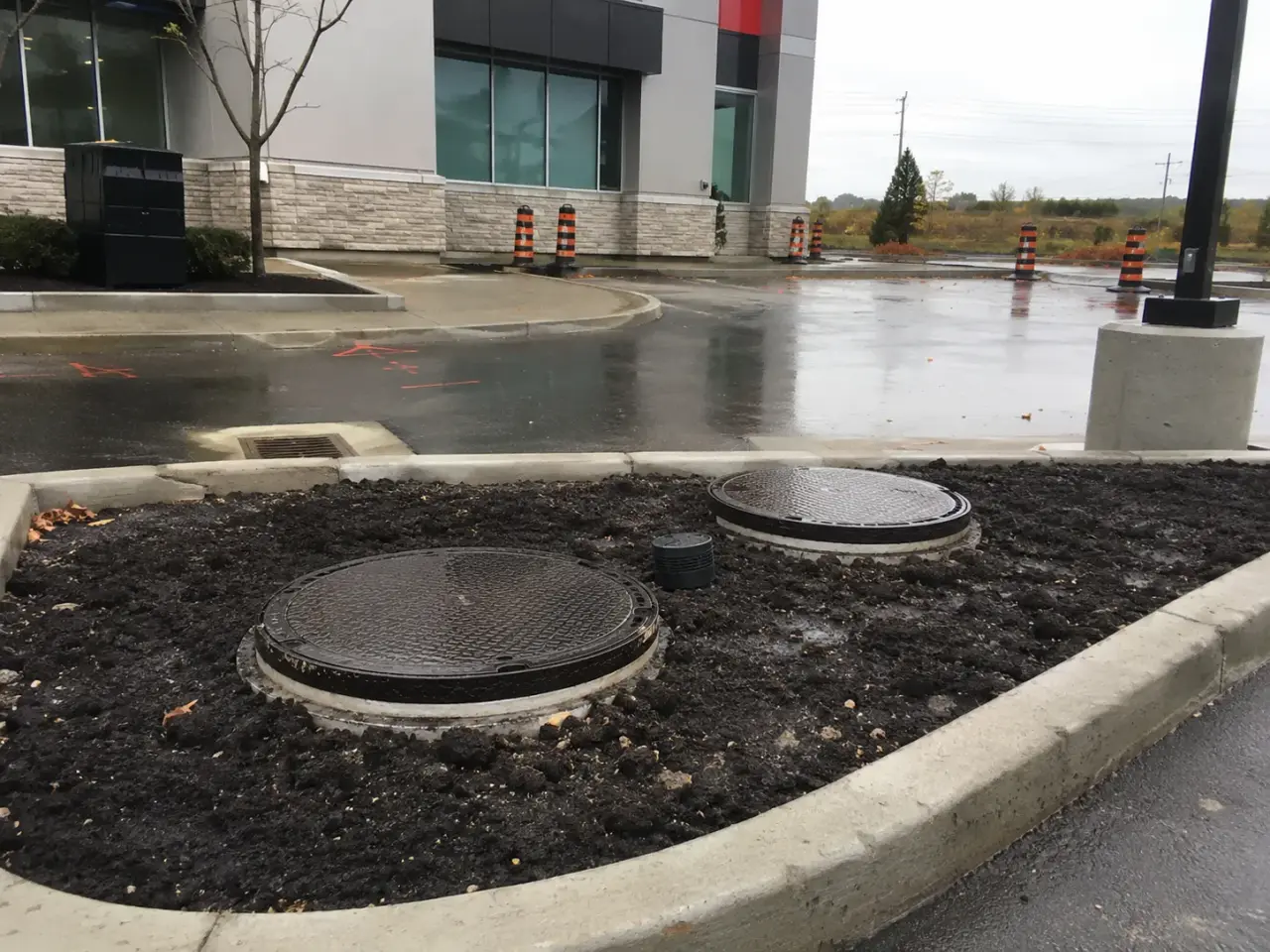
Completed on site to the engineered drawings, coordinated with concrete, servicing, and the surrounding work, then a clean, documented finish.
Runoff enters a chamber where velocity and internal flow paths allow dense grit to settle, floatables to rise, and free oil to remain at the surface. Treated flow exits toward downstream storm controls while larger flows may bypass. Stored sediment and oil must be removed periodically to preserve hydraulic and treatment capacity.
Generally no. A separator has limited internal storage and is designed primarily for sediment, floatable, and free-oil capture. It normally provides little meaningful peak-flow attenuation. Where a site requires quantity control, the separator is paired with a pond, tank, chamber system, oversized pipe, or another approved detention measure.
Ontario guidance identifies separators as typically used on small drainage areas below 2 hectares, but final selection is site-specific. Treatment flow, runoff capture, sediment loading, spill risk, bypass hydraulics, municipal criteria, and verified device performance determine sizing. The civil engineer and approval authority establish the accepted model and configuration.
The design compares groundwater uplift with the weight of the empty structure, soil cover, and any anchoring system. Where needed, a reinforced base slab, ballast, or structural connection resists uplift. Harrowgate completes the anti-flotation detail and balanced backfill before reducing dewatering around the installed unit.
A bypass carries flows above the water-quality treatment rate without creating damaging head loss, upstream flooding, sediment resuspension, or reverse flow. It can be internal or external. Harrowgate verifies flow direction, structure elevations, weirs, orifices, and bypass connections against approved hydraulic drawings before the system is buried.
It should be protected during upstream earthwork and cleaned before commissioning because construction sediment can rapidly consume the sump. Ongoing frequency depends on measured accumulation, oil storage, site use, and the approved maintenance plan. Inspection after major spills and high-sediment periods is essential rather than relying only on a calendar interval.
Yes. We plan storm bypass, excavation support, groundwater control, traffic staging, crane access, temporary protection, and tie-in windows. The old structure is isolated and removed, the new unit is set to surveyed inverts, and pavement is restored in phases. Commissioning confirms a clean, accessible, correctly oriented system.
Normally it is a water-quality, pretreatment, or spill-control device with little detention storage. Flood and erosion control require the broader stormwater system, including conveyance, storage, outlets, and overflow.
Earthworks and paving can send unusually high sediment loads into the new storm system. Removing construction sediment restores the sump and treatment volume and gives the owner a known baseline for future inspection and maintenance.
Still have a question about oil-grit separators? Ask our team directly.
Commercial and heavy-civil construction delivered for developers, contractors, property managers, and municipalities.
Send drawings, a site plan, or a description of the scope. Harrowgate Group is licensed, insured, and WSIB-covered.
Licensed, Insured & WSIB-Covered, work managed and documented on every job
Tell us what you need and we’ll get you a quote.
Harrowgate Group provides oil-grit separators, delivered and installed with quote-ready support across Toronto and surrounding Ontario communities.
Companies We've Worked With
Harrowgate Group delivers commercial and heavy-civil construction for developers, contractors, institutions, municipalities, and property groups across Ontario.
 Popeyes
  Tim Hortons
  Subway
  University of Toronto
  Madison Group
  RioCan
  Women's College Hospital
  Starbucks
  Mazda
Mazda  TD Bank
  City of Toronto Popeyes Tim Hortons Subway University of Toronto Madison Group RioCan Women's College Hospital Starbucks Mazda TD Bank City of Toronto