
Built to spec
Built to your engineered drawings, survey, and the real site conditions, not a one-size-fits-all approach forced to fit.
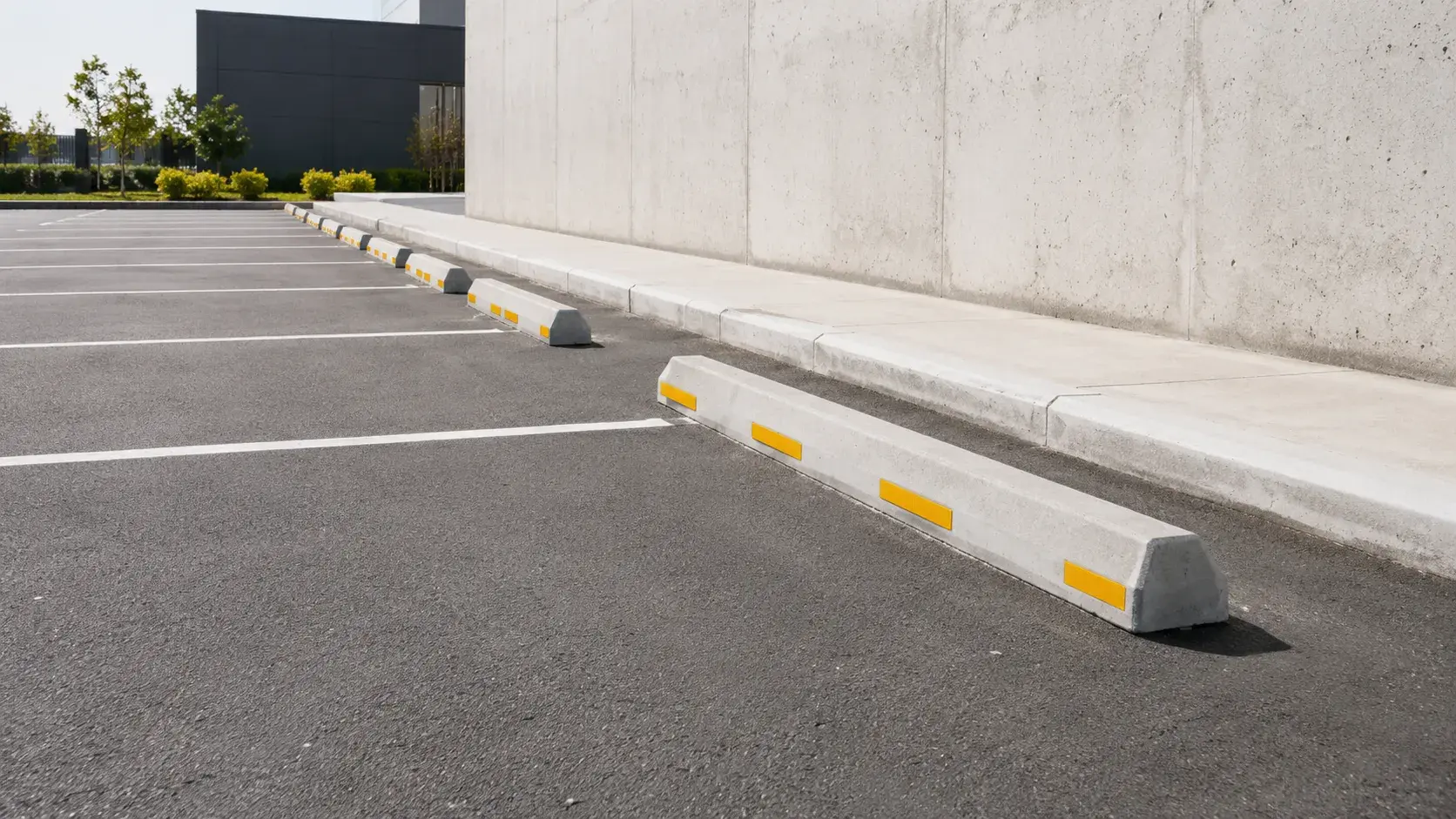
Wheel Stops and Parking Curbs in Whitby are the concrete or precast stops and low curbs that control parking and protect walkways.
Tell us what you need and we’ll get you a quote.
Licensed, insured & WSIB-covered · Free, no-obligation quote & on-site assessment.
Built to your engineered drawings, survey, and the real site conditions, not a one-size-fits-all approach forced to fit.
Durable materials and methods chosen for the load, traffic, and environment on site.
Send specs, drawings, or photos and get a free, no-obligation site visit and estimate with no guesswork.
Installation and site work completed in accordance with Ontario requirements.
Wheel stops and parking curbs position vehicles, protect walls and equipment, define stall limits, and keep parked vehicles clear of pedestrian routes. Harrowgate performs GTA layout, pavement investigation, precast or cast-in-place installation, anchoring, marking, and repairs using dimensions coordinated with stalls, accessible routes, drainage, snow operations, and vehicle overhang.
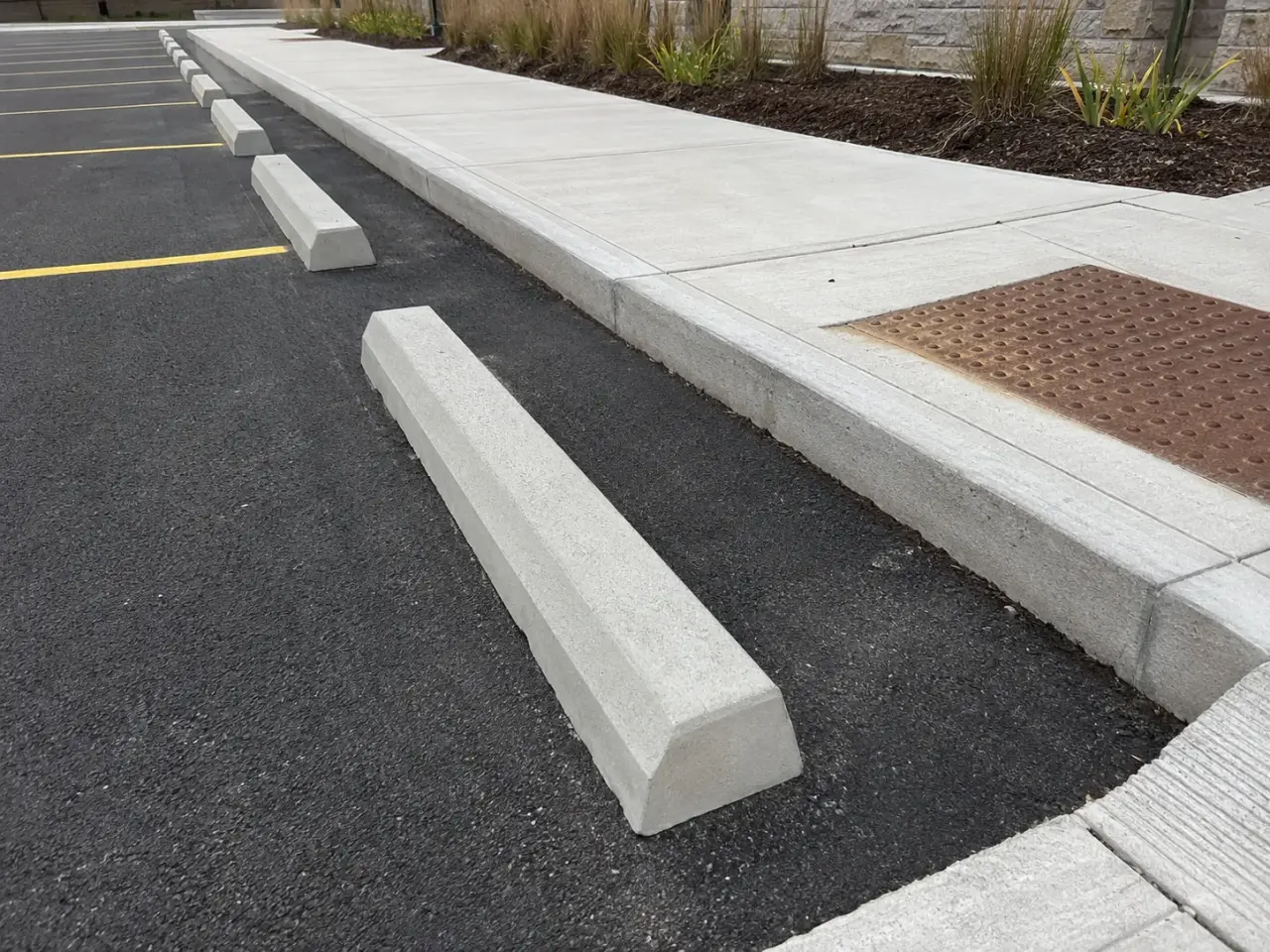
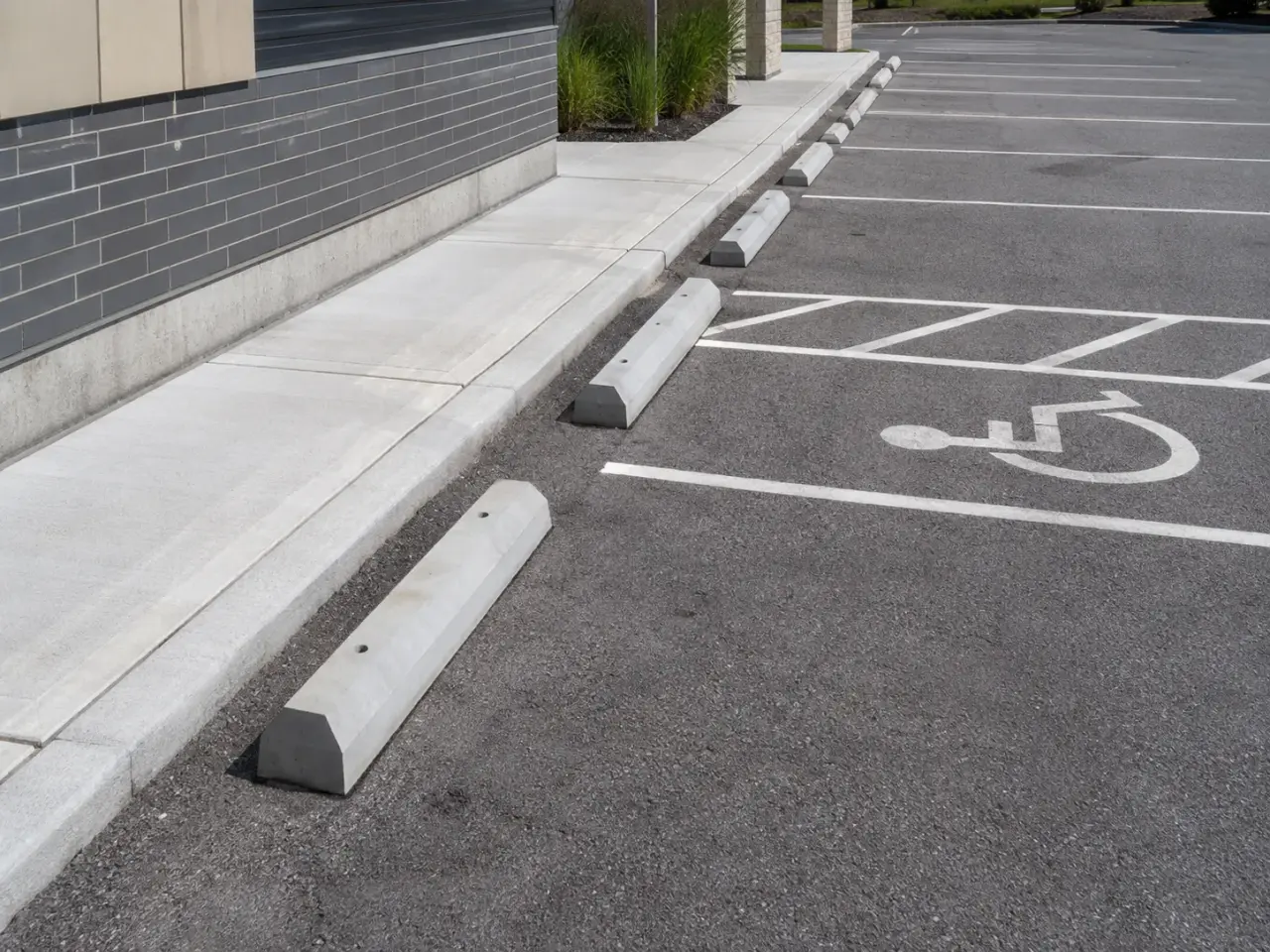
Precast concrete wheel stops provide mass and durable edges for many commercial stalls. Rubber or recycled units reduce weight and can simplify replacement, but anchorage and ultraviolet, snowplow, fuel, and temperature exposure must suit the site. Cast-in-place curbs integrate with pavement and islands where a continuous barrier is needed. Removable units support seasonal or reconfigurable layouts. Selection follows vehicle size, pavement or slab, pedestrian movement, accessibility, drainage, maintenance, and the consequences of vehicle overrun.
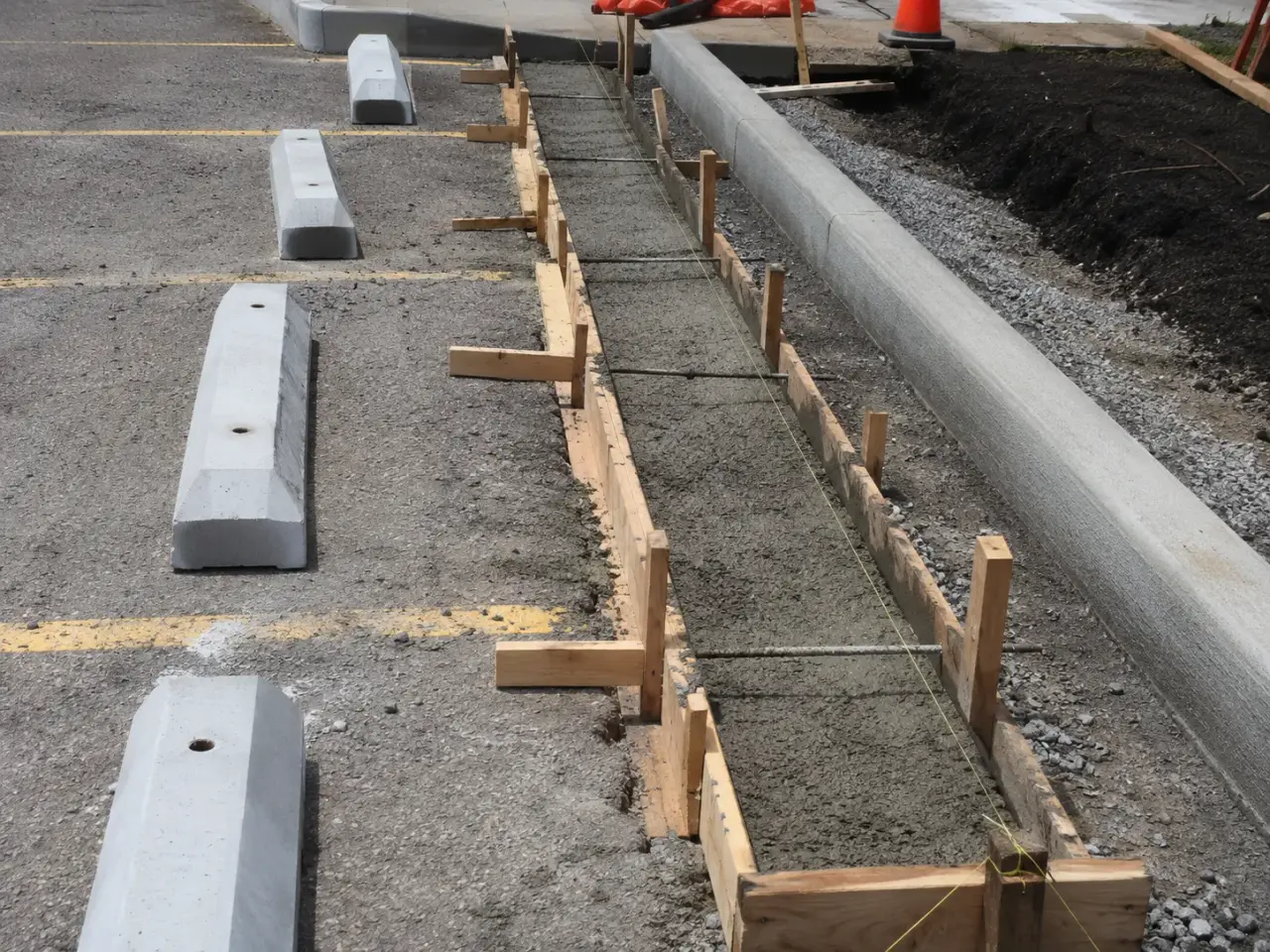
Step 1, Harrowgate first identifies the pavement section and substrate. Existing units and anchors are removed, broken asphalt is sawcut, and abandoned holes are repaired. We snap the designed stop line and mark each unit centre against the final stall layout, then dry-set units to verify vehicle clearance, sidewalk overhang, accessible aisle, and drainage before drilling.
Step 2, Precast concrete stops are lifted from approved points and bedded evenly so they do not rock. Asphalt installations use the specified long pins or approved anchoring detail, while concrete slabs use drilled anchors with verified embedment and reinforcing clearance. Steel, rubber, or recycled composite units use manufacturer-approved fasteners suited to the substrate. Fasteners finish flush or recessed to remove snag points.
Step 3, Cast-in-place parking curbs use compacted base, braced forms, reinforcement or dowels where designed, air-entrained concrete, joints, and curing. Openings are maintained for drainage. Ends are tapered or protected where vehicles and snowplows approach. Reflective markings or paint are applied only after the concrete or unit surface is prepared and sufficiently dry.
Step 4, Final inspection checks alignment, spacing, rocking, anchor torque or seating, sharp edges, visibility, pavement distress, and clear routes. Harrowgate reinstates line painting around the actual stop position and records areas where failed pavement requires broader repair rather than repeatedly replacing anchors.
Step 5, Harrowgate verifies layout, anchors, alignment, markings, pavement condition, drainage, accessible clearance, and vehicle overhang before reopening the completed parking zone.
Planning wheel stops and parking curbs in Whitby? Talk it through with our team.
Wheel stops and parking curbs follow the issued site and accessibility layout, approved product and anchorage data, and applicable local municipal requirements. The design confirms stall and aisle geometry, accessible clearances, fire access, and protected-object offsets for the property.
Concrete units and cast-in-place work follow CSA concrete requirements where applicable. Fasteners, pins, adhesives, coatings, and reflective products are selected for the unit and supporting pavement without damaging membranes, reinforcement, or building systems.
Work zones maintain safe vehicle and pedestrian routes. Drilling, cutting, dust, debris, protruding anchors, and temporary markings are controlled until each zone is complete.
Acceptance records unit count and type, layout, anchorage, repaired support, markings, and deficiencies. Applicable OPSS is used where the work forms part of an invoked civil specification.
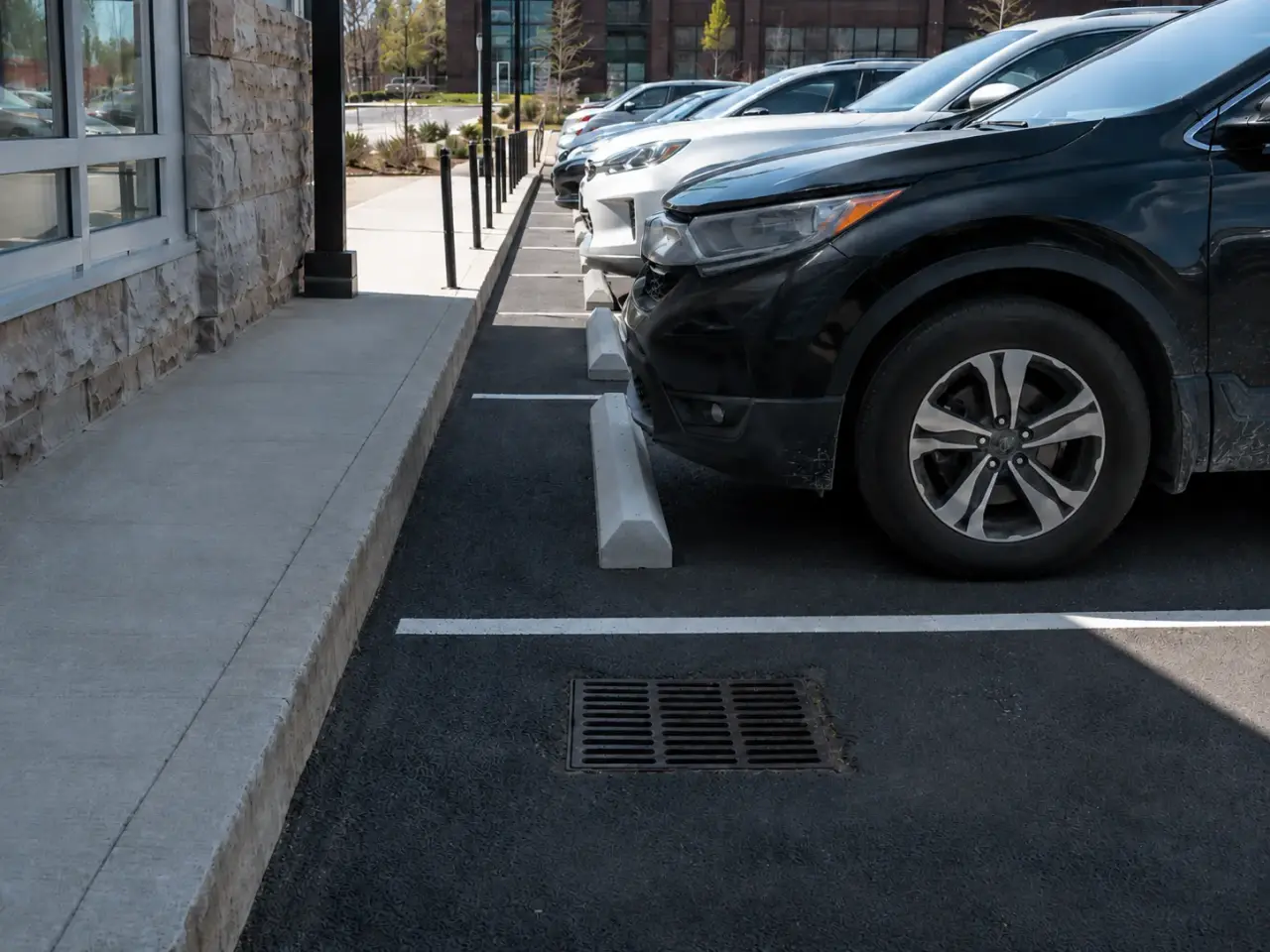
Completed on site to the engineered drawings, coordinated with concrete, servicing, and the surrounding work, then a clean, documented finish.
Placement is set from the approved parking layout, expected vehicle overhang, stall depth, adjacent wall or equipment, sidewalk width, and accessible route. There is no safe universal setback for every site. Harrowgate dry-sets and checks units against actual field geometry before drilling so protection and pedestrian clearance both work.
Yes, using the specified driven pins or anchoring system where asphalt and base are sound and thick enough. Thin, cracked, or rutted asphalt will not hold a stop reliably. Harrowgate investigates the pavement, repairs failed areas, uses full bearing, and matches pin diameter and length to the approved detail.
Concrete offers mass, rigidity, and durable visibility but needs sound support and can be damaged by impact or plows. Rubber or composite units are lighter and can suit structured parking or removable layouts. Traffic, substrate, salt, fire requirements, anchor capacity, maintenance, and owner standards determine the appropriate material.
They may be used where the approved design requires vehicle positioning, but they cannot obstruct access aisles, transfer zones, or the accessible route. Their location must account for vehicle overhang and user movement. Harrowgate coordinates the physical unit with markings, curb ramps, signs, and clear widths before installation.
Frequent causes are short pins, weak asphalt, poor base, rocking units, freeze movement, vehicle impact, and snowplow strikes. Reusing the same enlarged hole produces another failure. Harrowgate removes damaged material, repairs the substrate, restores full bearing, relocates anchors where approved, and installs the specified fastener cleanly.
Yes. Long curbs and poorly placed units can dam sheet flow or direct water into stalls and walkways. Harrowgate checks slopes and catch-basin paths, maintains designed gaps, and avoids trapping runoff against pavement edges. Cast-in-place curbs receive drainage openings where the civil detail requires them.
Yes. We phase rows, close only required stalls, remove units and exposed anchors, repair pavement, and coordinate line painting before reopening. Work around busy commercial sites can be scheduled by zone or off-hours. No area is released with open holes, protruding pins, wet coatings, or unsecured units.
The issued layout should set the position from vehicle class, curb or wall, pedestrian overhang, accessible route, equipment, and stall geometry. One universal distance can create bumper conflicts or sidewalk obstruction on a different site.
Only after slab thickness, reinforcement, post-tensioning, membranes, coatings, radiant systems, and allowable drilling are confirmed. Scanning and a base-plated or adhesive detail may be required; ordinary pavement pins are not assumed suitable.
Still have a question about wheel stops and parking curbs in Whitby? Ask our team directly.
Commercial and heavy-civil construction delivered for developers, contractors, property managers, and municipalities.
Send drawings, a site plan, or a description of the scope. Harrowgate Group is licensed, insured, and WSIB-covered.
Licensed, Insured & WSIB-Covered, work managed and documented on every job
Tell us what you need and we’ll get you a quote.
Harrowgate Group provides wheel stops and parking curbs, delivered and installed with quote-ready support across Toronto and surrounding Ontario communities.
Companies We've Worked With
Harrowgate Group delivers commercial and heavy-civil construction for developers, contractors, institutions, municipalities, and property groups across Ontario.
 Popeyes
  Tim Hortons
  Subway
  University of Toronto
  Madison Group
  RioCan
  Women's College Hospital
  Starbucks
  Mazda
Mazda  TD Bank
  City of Toronto Popeyes Tim Hortons Subway University of Toronto Madison Group RioCan Women's College Hospital Starbucks Mazda TD Bank City of Toronto