
Built to spec
Built to your engineered drawings, survey, and the real site conditions, not a one-size-fits-all approach forced to fit.
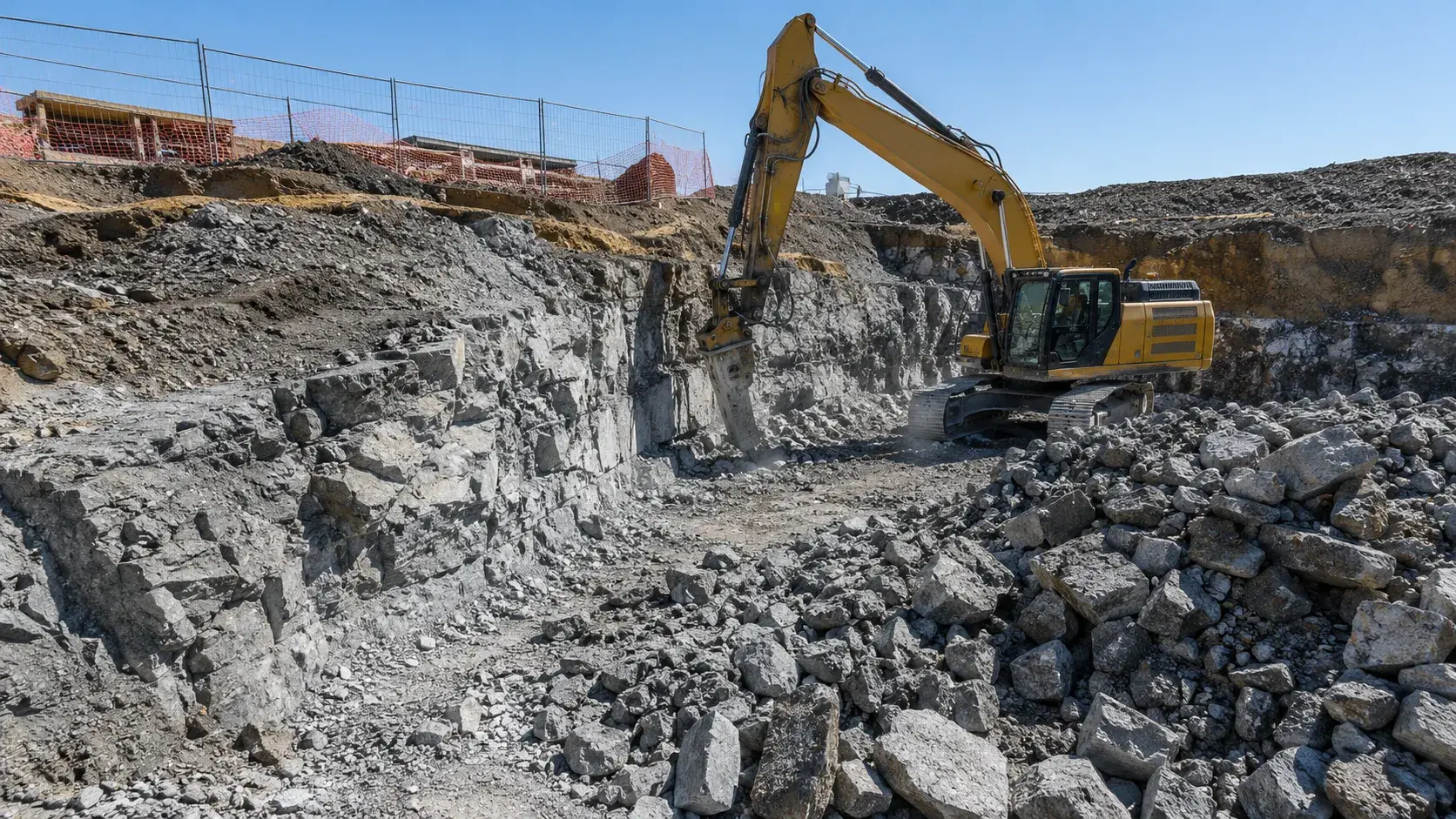
Rock Excavation in Guelph is the breaking, ripping, and removal of rock to reach grade where soil excavation cannot.
Tell us what you need and we’ll get you a quote.
Licensed, insured & WSIB-covered · Free, no-obligation quote & on-site assessment.
Built to your engineered drawings, survey, and the real site conditions, not a one-size-fits-all approach forced to fit.
Durable materials and methods chosen for the load, traffic, and environment on site.
Send specs, drawings, or photos and get a free, no-obligation site visit and estimate with no guesswork.
Installation and site work completed in accordance with Ontario requirements.
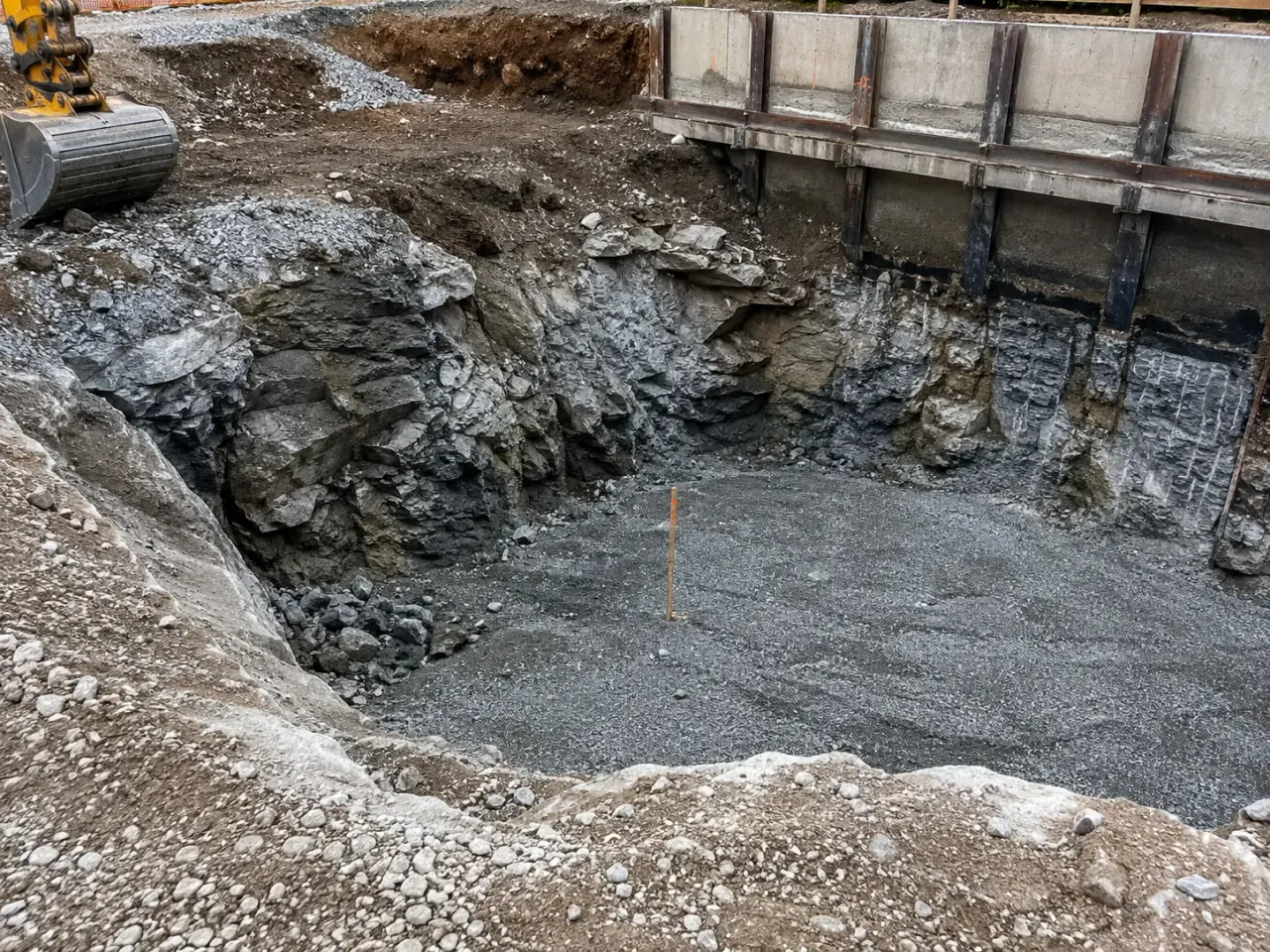
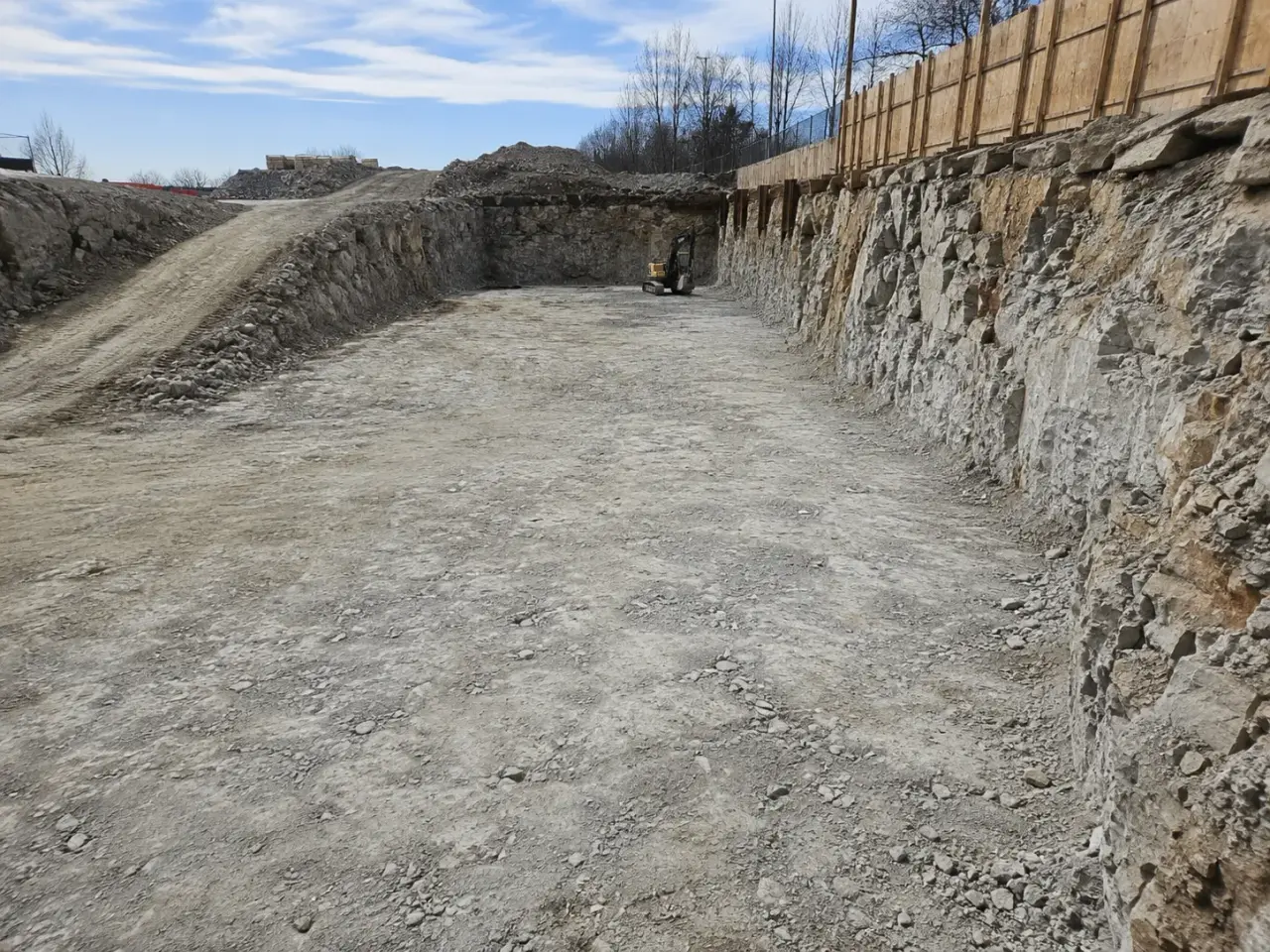
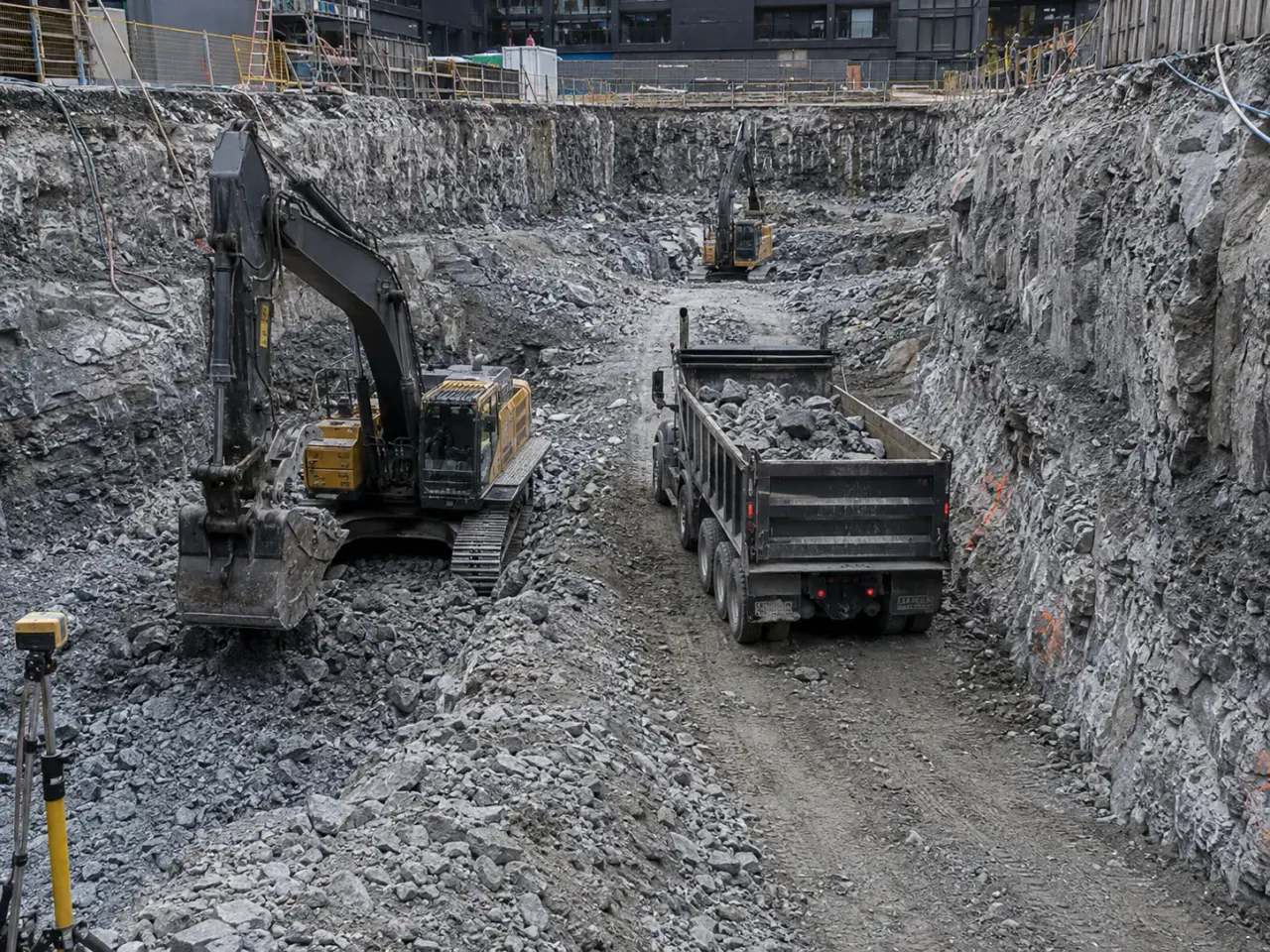
Rock-removal method follows intact strength, jointing, weathering, volume, required profile, vibration and noise limits, neighbours, utilities, groundwater, access, reuse potential, and schedule.
Ripping and mechanical excavation. Weathered or fractured rock may be loosened with dozer rippers or excavator attachments where geology and equipment traction support production.
Hydraulic hammering. Hoe rams break localized rock and obstructions with flexible staging, but vibration, noise, fly chips, tool access, and overbreak require control.
Sawing, splitting, and line drilling. Controlled perimeter techniques create precise edges around foundations, occupied buildings, sensitive utilities, or rock that must remain sound.
Controlled blasting. Engineered drilling, loading, timing, mats, monitoring, security, and post-blast review can remove larger volumes where approvals and surroundings permit.
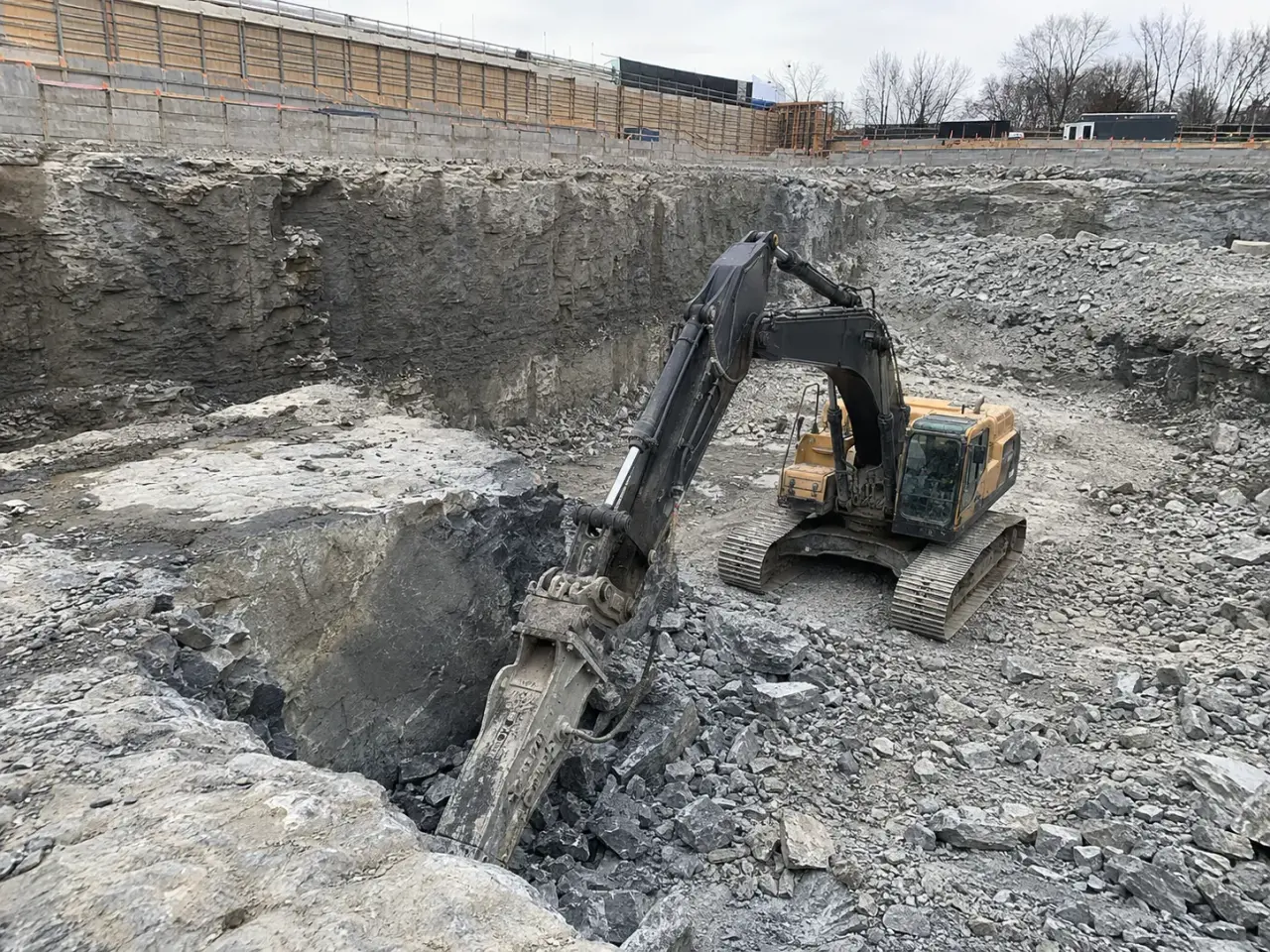
Step 1, Review geotechnical information, boreholes, survey, final rock profile, neighbours, utilities, vibration criteria, environmental controls, and destinations.
Step 2, Expose and map the rock surface, complete condition surveys or monitoring where required, and establish safe drilling or equipment platforms.
Step 3, Perform test sections or blasts, measure response, and adjust energy, hole pattern, equipment, sequence, and protection.
Step 4, Remove broken rock by surveyed lift while scaling loose material, controlling water, separating reusable product, and protecting final faces.
Step 5, Survey the completed profile, treat overbreak or loosened bearing under direction, and reconcile rock quantity, processing, export, and monitoring records.
We first expose enough rock to map elevation, weathering, joints, seams, and the relationship to foundations, services, property lines, and existing structures. Survey establishes the theoretical rock line and any presplit or neat-line limits.
Rippable shale or fractured rock may be removed by dozer and excavator; isolated knobs by hydraulic breaker; narrow trenches by saw, drill, and splitter; and larger competent masses by an approved blast design where permitted. Production begins with a test area so tool size, hole pattern, energy, fragmentation, and overbreak can be evaluated before the full face is committed.
Rock is removed in benches that maintain safe access and provide a controlled catch area. Final bearing surfaces receive reduced energy and careful scaling. In utility trenches, Harrowgate protects the bedding envelope from sharp projections and avoids widening the cut beyond the support and pipe design. Excavated rock is separated by quality and size for potential processing or authorized removal. Surveyed pre-rock and post-rock surfaces, drilling records, truck tickets, and photographs support quantity review and distinguish sound rock from weathered transition material.
Planning rock excavation in Guelph? Talk it through with our team.
The decision considers volume, rock quality, required profile, schedule, access, nearby structures, utilities, vibration limits, noise, permitting, and available exclusion distance. Hydraulic breaking is flexible but can be slow and locally damaging. Controlled blasting can move volume efficiently, but only where engineered design, monitoring, containment, and approvals make it suitable.
Overbreak is rock removed outside the designed excavation profile. It increases haulage and may require extra concrete, granular, stabilization, or revised support. Harrowgate controls it with accurate rock-line survey, neat-line drilling or sawing where appropriate, smaller equipment and lower energy near final grade, and frequent checks before the remaining protection thickness is lost.
Projects commonly compare surveyed exposed-rock and completed-rock surfaces, sometimes with agreed theoretical limits or classified methods. Harrowgate cleans enough of the transition for a reliable survey, records inaccessible areas, separates loose boulders from continuous bedrock where the contract does so, and keeps truck tickets as supporting information rather than substituting payload for in-place volume.
Repeated impact creates ground vibration and structure-borne noise, particularly when the breaker works on continuous rock connected to foundations. Harrowgate selects tool size and operating direction, creates relief cuts where useful, maintains stand-off, monitors vibration when specified, and switches to sawing, drilling, or splitting as the work approaches sensitive assets.
Locate records alone do not establish depth through rock. Harrowgate checks as-builts, scans and traces where applicable, then exposes critical crossings or drill limits by an approved method. Hole positions and maximum depths are marked, drilling is observed, and work stops on unexpected voids, steel, water, or loss of resistance that may indicate a conflict.
Potential uses include processed granular, drainage stone, riprap, or general fill, but only when the material meets gradation, durability, environmental, and design requirements. Harrowgate keeps competent rock separate from soil, shale, concrete, and debris, then follows the engineer's processing and placement direction. Oversize fragments are reduced before controlled lift placement.
Provide geotechnical logs, rock core recovery and quality data, expected rock surface, design excavation lines, allowable methods, vibration and noise criteria, pre-condition requirements, utility information, monitoring points, haul or reuse assumptions, final surface tolerance, and measurement rules. Access for drills, breakers, cranes, and spoil handling can materially change production.
Blasting may be efficient for suitable larger rock volumes with adequate engineered controls and approvals. Hammering can better suit smaller quantities or phased access, although duration, vibration, noise, and overbreak still require evaluation.
Project criteria can require pre-condition surveys, seismographs at selected receptors, calibrated instruments, event records, trigger values, and review of excavation energy or blast design when readings approach limits.
Still have a question about rock excavation in Guelph? Ask our team directly.
Commercial and heavy-civil construction delivered for developers, contractors, property managers, and municipalities.
Send drawings, a site plan, or a description of the scope. Harrowgate Group is licensed, insured, and WSIB-covered.
Licensed, Insured & WSIB-Covered, work managed and documented on every job
Tell us what you need and we’ll get you a quote.
Harrowgate Group provides rock excavation, delivered and installed with quote-ready support across Toronto and surrounding Ontario communities.
Companies We've Worked With
Harrowgate Group delivers commercial and heavy-civil construction for developers, contractors, institutions, municipalities, and property groups across Ontario.
 Popeyes
  Tim Hortons
  Subway
  University of Toronto
  Madison Group
  RioCan
  Women's College Hospital
  Starbucks
  Mazda
Mazda  TD Bank
  City of Toronto Popeyes Tim Hortons Subway University of Toronto Madison Group RioCan Women's College Hospital Starbucks Mazda TD Bank City of Toronto