
Built to spec
Built to your engineered drawings, survey, and the real site conditions, not a one-size-fits-all approach forced to fit.
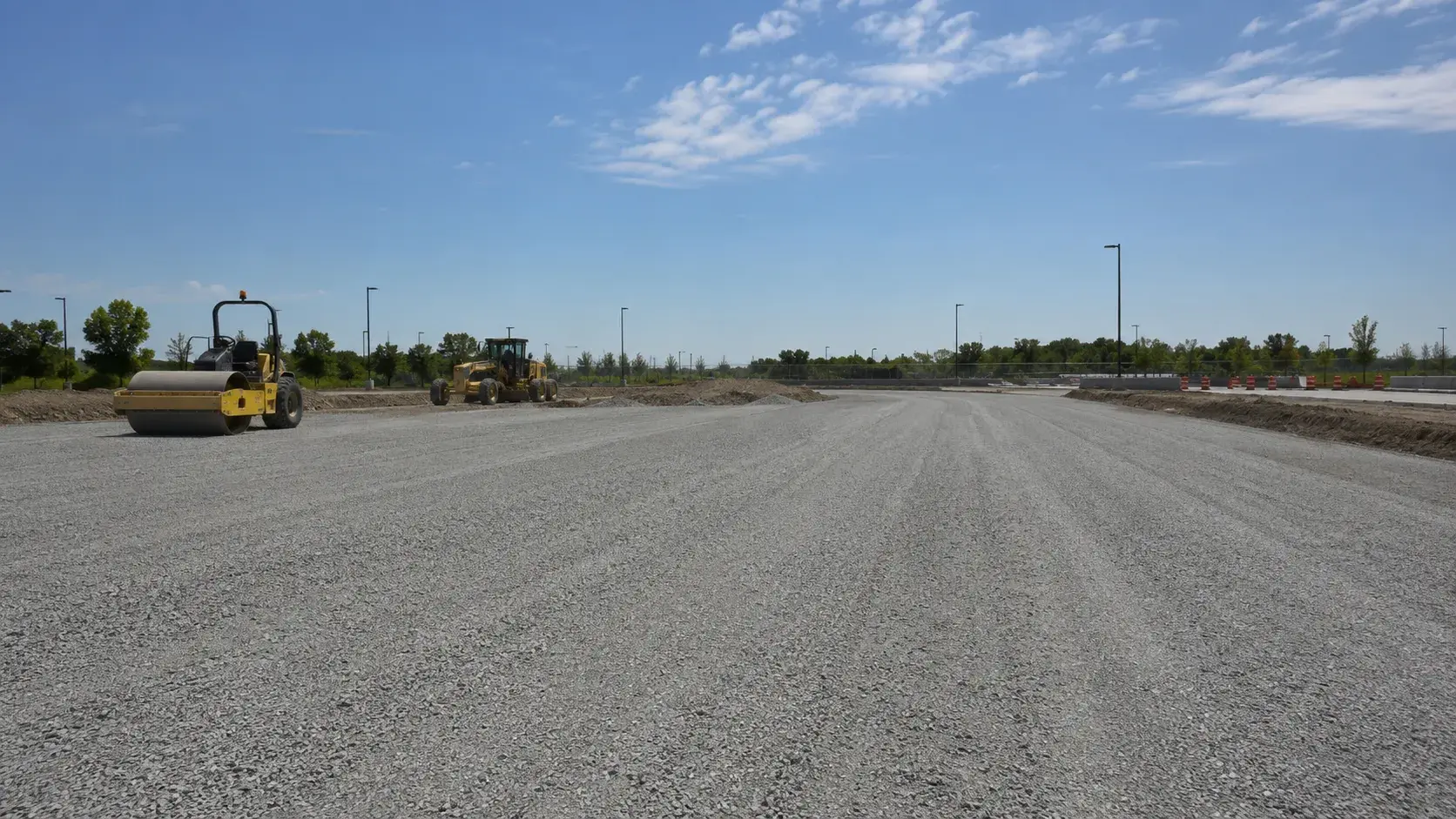
Roadworks and Pavement Base in Milton is the granular base, grading, and preparation that supports asphalt and concrete roadways and lots.
Tell us what you need and we’ll get you a quote.
Licensed, insured & WSIB-covered · Free, no-obligation quote & on-site assessment.
Built to your engineered drawings, survey, and the real site conditions, not a one-size-fits-all approach forced to fit.
Durable materials and methods chosen for the load, traffic, and environment on site.
Send specs, drawings, or photos and get a free, no-obligation site visit and estimate with no guesswork.
Installation and site work completed in accordance with Ontario requirements.
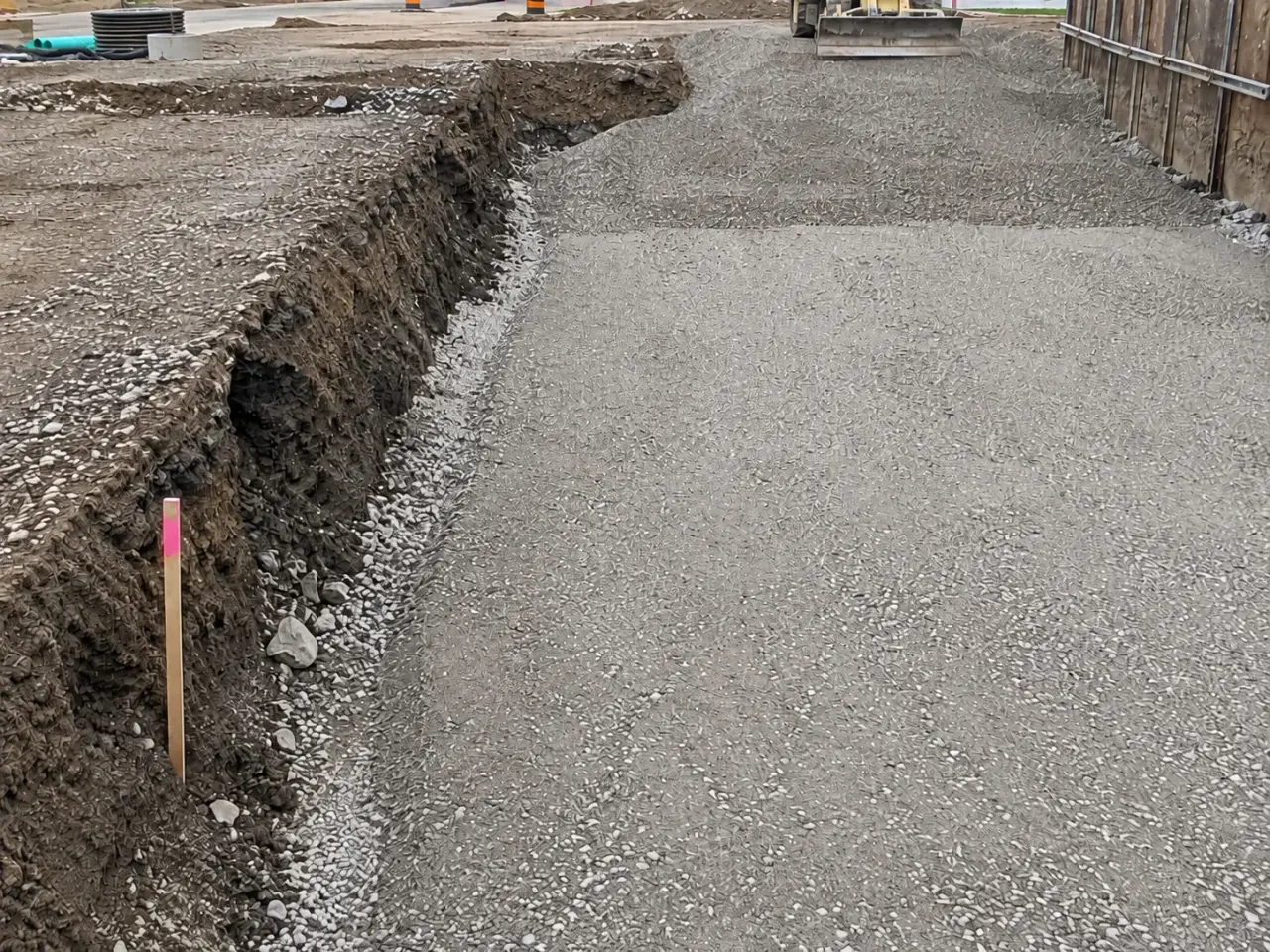
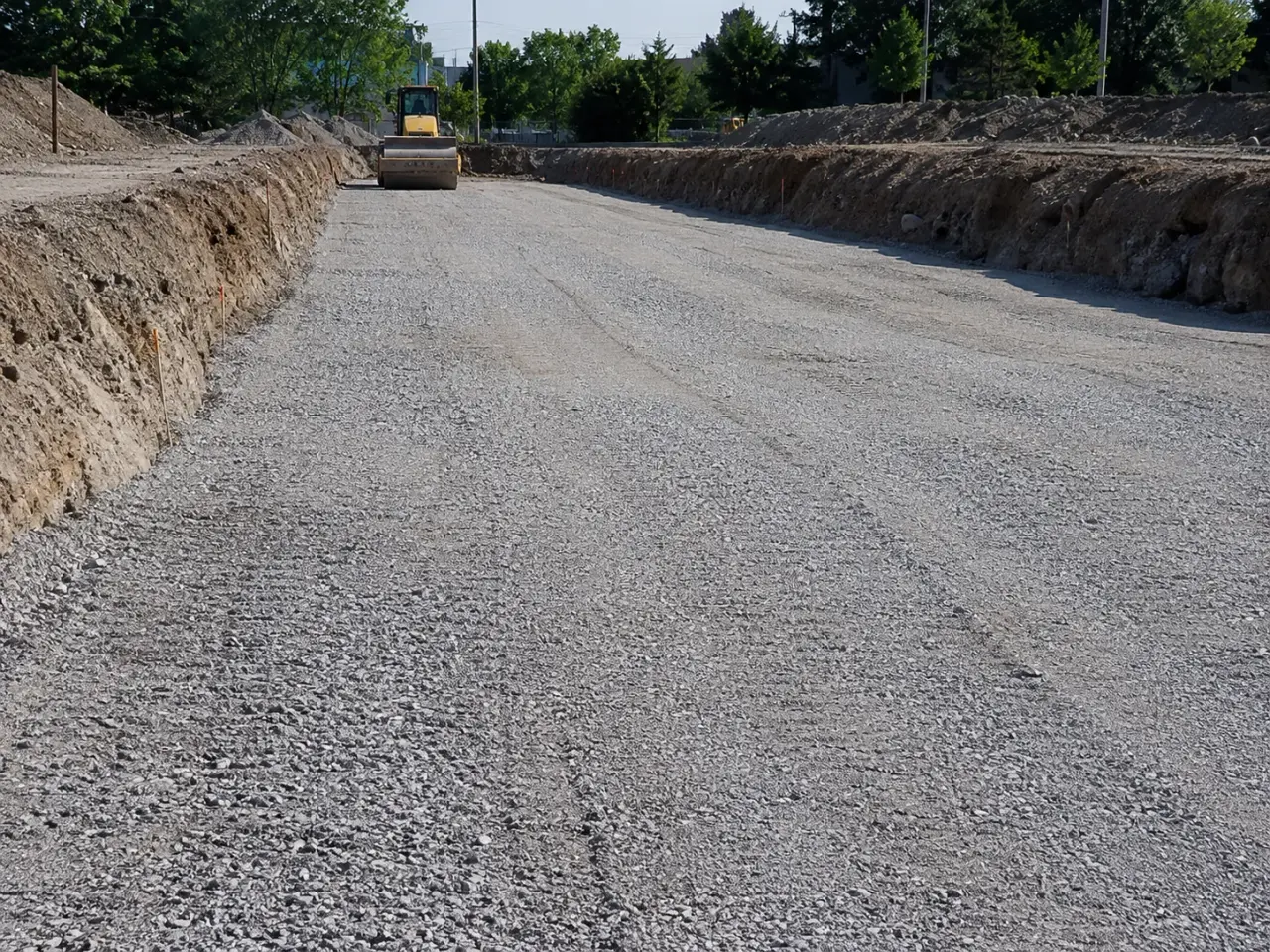
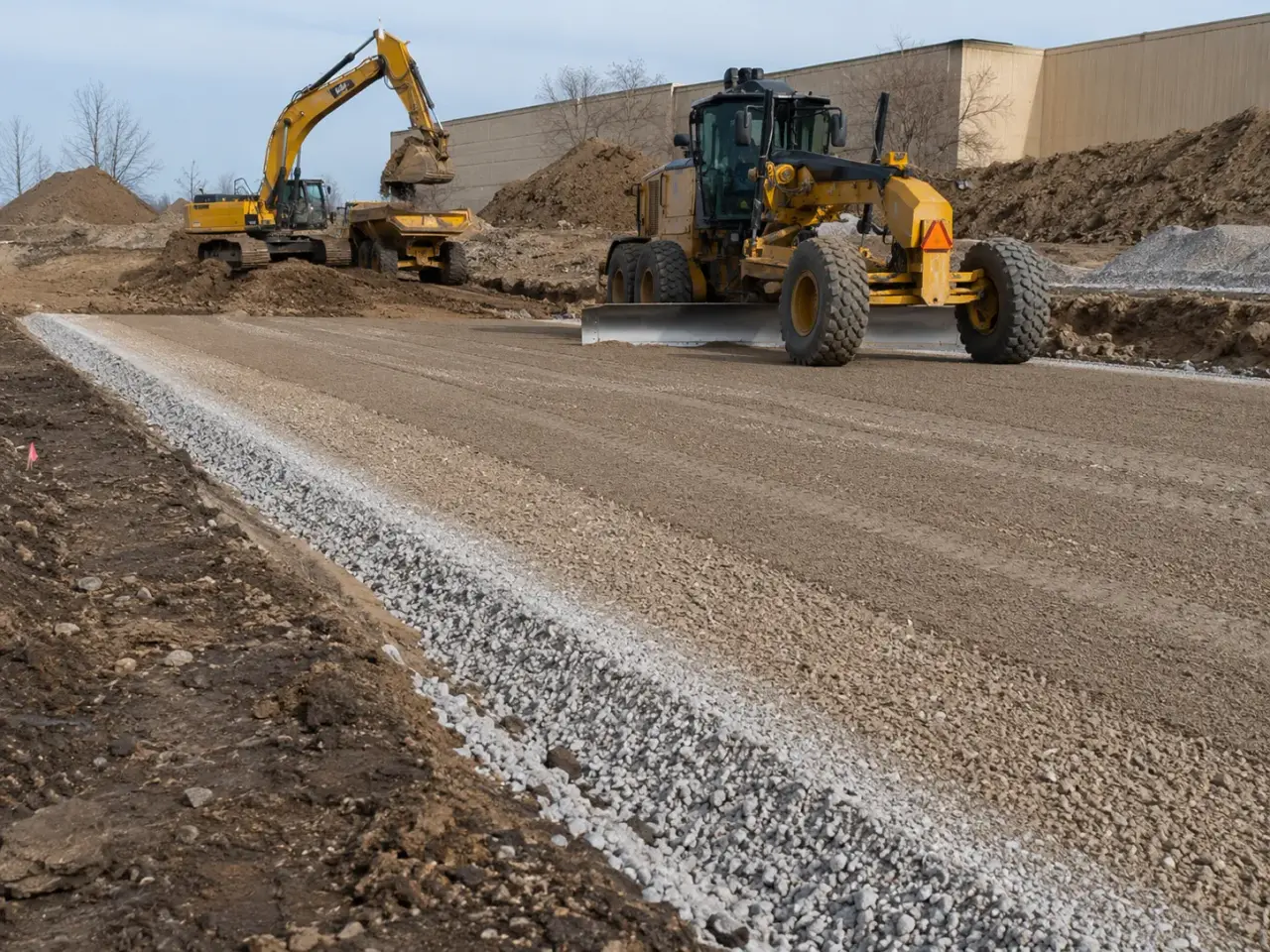
Road-base method follows traffic loading, frost exposure, subgrade strength, drainage, utility trenches, aggregate section, construction traffic, staging, survey tolerance, and the asphalt or concrete pavement that will cover it.
New road construction. Stripping, earthworks, subgrade, drainage, granular subbase and base, structures, curbs, and paving are advanced through tested layers.
Full-depth reconstruction. Failed pavement and base are removed so drainage, utilities, weak soil, granular thickness, and road profile can be corrected.
Widening and tie-ins. Benching, edge drainage, step joints, utility adjustments, and differential support are managed where new road structure meets retained pavement.
Staged rehabilitation. Milling, localized excavation, base repair, grading, and temporary surfaces preserve traffic while permanent pavement is rebuilt by phase.
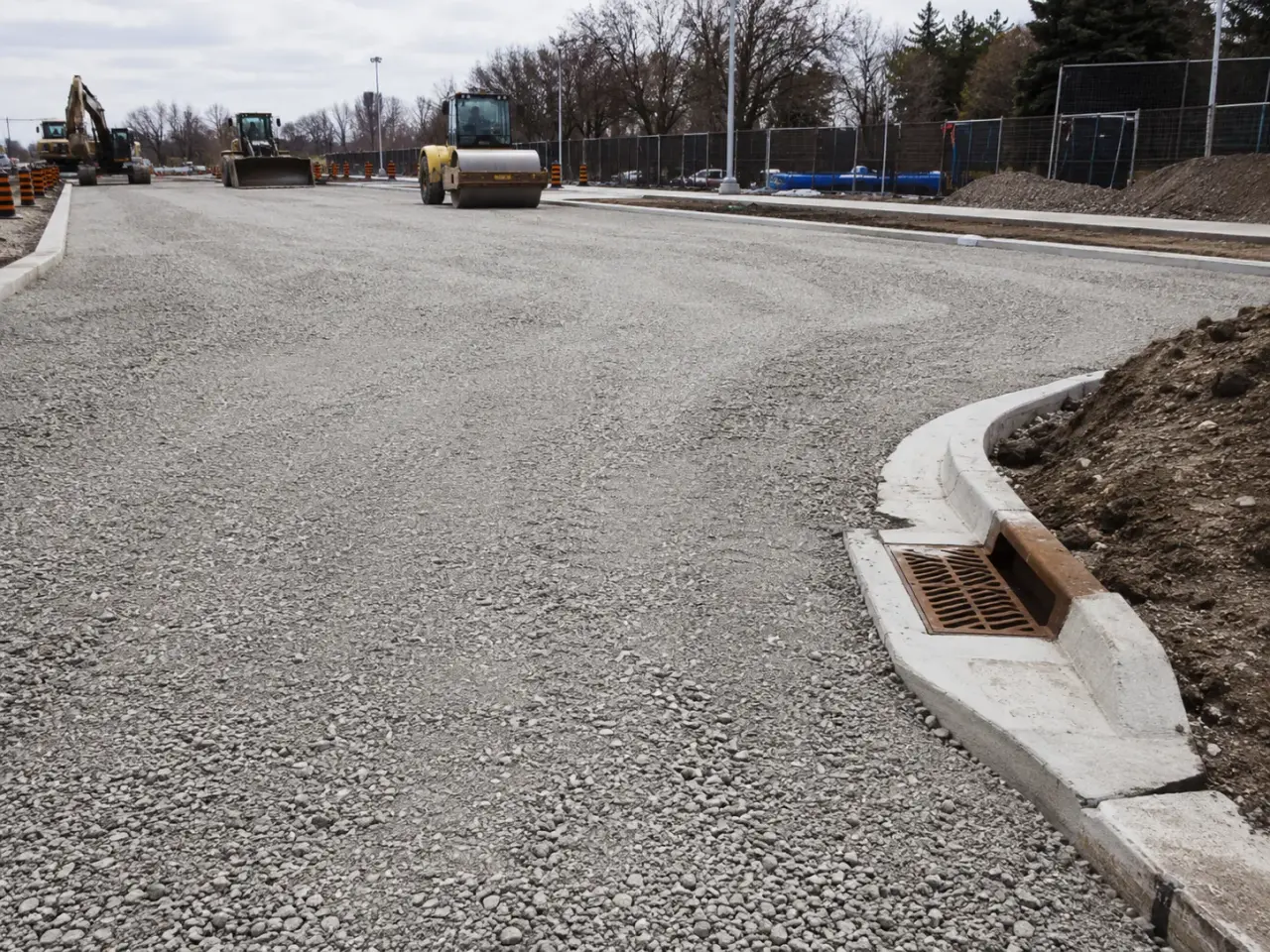
Step 1, Review pavement design, geotechnical criteria, utilities, drainage, traffic staging, survey, material approvals, testing, and paving tolerances.
Step 2, Remove unsuitable material, shape and proof subgrade, correct weak zones, and install separation, stabilization, or drainage where designed.
Step 3, Place approved subbase and base in controlled lifts, condition moisture, compact, and map density, thickness, and proof response.
Step 4, Fine-grade crown, crossfall, superelevation, tie-ins, structures, and curb interfaces, then protect the accepted platform.
Step 5, Release paving from survey and testing, maintain traffic and drainage, and close quantities, material, and as-built records.
We build the roadway by lots, starting with drainage and a surveyed formation that identifies cuts, fills, frost-susceptible zones, utility restorations, and areas requiring geotechnical review. Subgrade is trimmed without trapping water, proof rolled where specified, and corrected through drying, undercut, stabilization, geogrid, or approved replacement. Subdrains and outlets are installed before granular blocks access. Trucks place approved aggregate in a manner that limits segregation; graders spread to a consistent uncompacted depth and maintain crown, crossfall, superelevation, and tie-in grades.
Each layer is moisture-conditioned and compacted with equipment matched to aggregate and edge confinement. Harrowgate checks density, elevation, and thickness before the next material hides it. At maintenance holes, catchbasins, curbs, and trench edges, smaller equipment and additional testing address confined areas.
Final base is trimmed tightly enough to preserve asphalt thickness, but not polished or segregated. The surface is protected from contamination, turning traffic, rain ponding, and winter damage until paving. Deflected or rutted areas are reworked through their affected depth, not bladed flat at the top.
Planning roadworks and pavement base in Milton? Talk it through with our team.
A typical section includes prepared subgrade, optional select subgrade or stabilization, granular subbase, granular base, and one or more asphalt courses, plus subdrains and curb where designed. Exact materials and thicknesses depend on soil, frost, drainage, traffic, and owner standards. Harrowgate builds the issued section and verifies every buried layer.
Under OPSS. MUNI 1010, Granular A is commonly specified as a tighter-graded base close to asphalt, while Granular B types are commonly used as deeper subbase. Their permitted source materials and gradations differ. Harrowgate confirms the specified type and source, prevents cross-contamination, and places each at the designed compacted thickness.
Proof rolling applies a controlled load to reveal yielding, pumping, rutting, or non-uniform support that spot tests may miss. The geotechnical reviewer interprets the response. Harrowgate marks unstable areas, investigates their depth and cause, completes the approved drying, undercut, drainage, or stabilization repair, and repeats review before granular cover.
Surveyed subgrade and top-of-layer elevations provide a broad thickness check, supplemented by depth checks or quantity reconciliation where specified. Harrowgate controls loose spread depth so compaction reaches the target without leaving thin areas. Particular attention goes to crowns, curb lines, utility structures, widened edges, and transitions where grader geometry changes.
Paving should not proceed over saturated, pumping, rutted, frozen, contaminated, or unstable base. Moisture at the surface can also interfere with bond and finishing. Harrowgate restores drainage, dries or replaces affected material, regrades, recompacts, and obtains acceptance. Paving over a temporarily firm crust does not correct a weak layer below.
The trench receives specified embedment and backfill in controlled lifts, with density attention at edges and around structures. Granular and asphalt layers are reconstructed to the road detail, often with saw-cut or stepped limits. Harrowgate removes loose edge material and addresses differential support so the narrow trench does not settle as a visible longitudinal strip.
Provide plan and profile, pavement design, geotechnical report, material and compaction specifications, utility and drainage plans, curb details, traffic staging, proof-rolling and testing criteria, undercut or stabilization allowances, source approvals, restoration limits, survey tolerances, seasonal restrictions, and anticipated construction traffic. Identify whether the road will be municipally assumed.
Proof rolling reveals broader yielding, pumping, rutting, trench settlement, or weak pockets under a controlled load that individual density tests may not capture.
A road can meet finished elevation while containing too little aggregate if subgrade is high. Survey of both surfaces and measured depth verify the designed structural section.
Still have a question about roadworks and pavement base in Milton? Ask our team directly.
Commercial and heavy-civil construction delivered for developers, contractors, property managers, and municipalities.
Send drawings, a site plan, or a description of the scope. Harrowgate Group is licensed, insured, and WSIB-covered.
Licensed, Insured & WSIB-Covered, work managed and documented on every job
Tell us what you need and we’ll get you a quote.
Harrowgate Group provides roadworks and pavement base, delivered and installed with quote-ready support across Toronto and surrounding Ontario communities.
Companies We've Worked With
Harrowgate Group delivers commercial and heavy-civil construction for developers, contractors, institutions, municipalities, and property groups across Ontario.
 Popeyes
  Tim Hortons
  Subway
  University of Toronto
  Madison Group
  RioCan
  Women's College Hospital
  Starbucks
  Mazda
Mazda  TD Bank
  City of Toronto Popeyes Tim Hortons Subway University of Toronto Madison Group RioCan Women's College Hospital Starbucks Mazda TD Bank City of Toronto