
Built to spec
Built to your engineered drawings, survey, and the real site conditions, not a one-size-fits-all approach forced to fit.
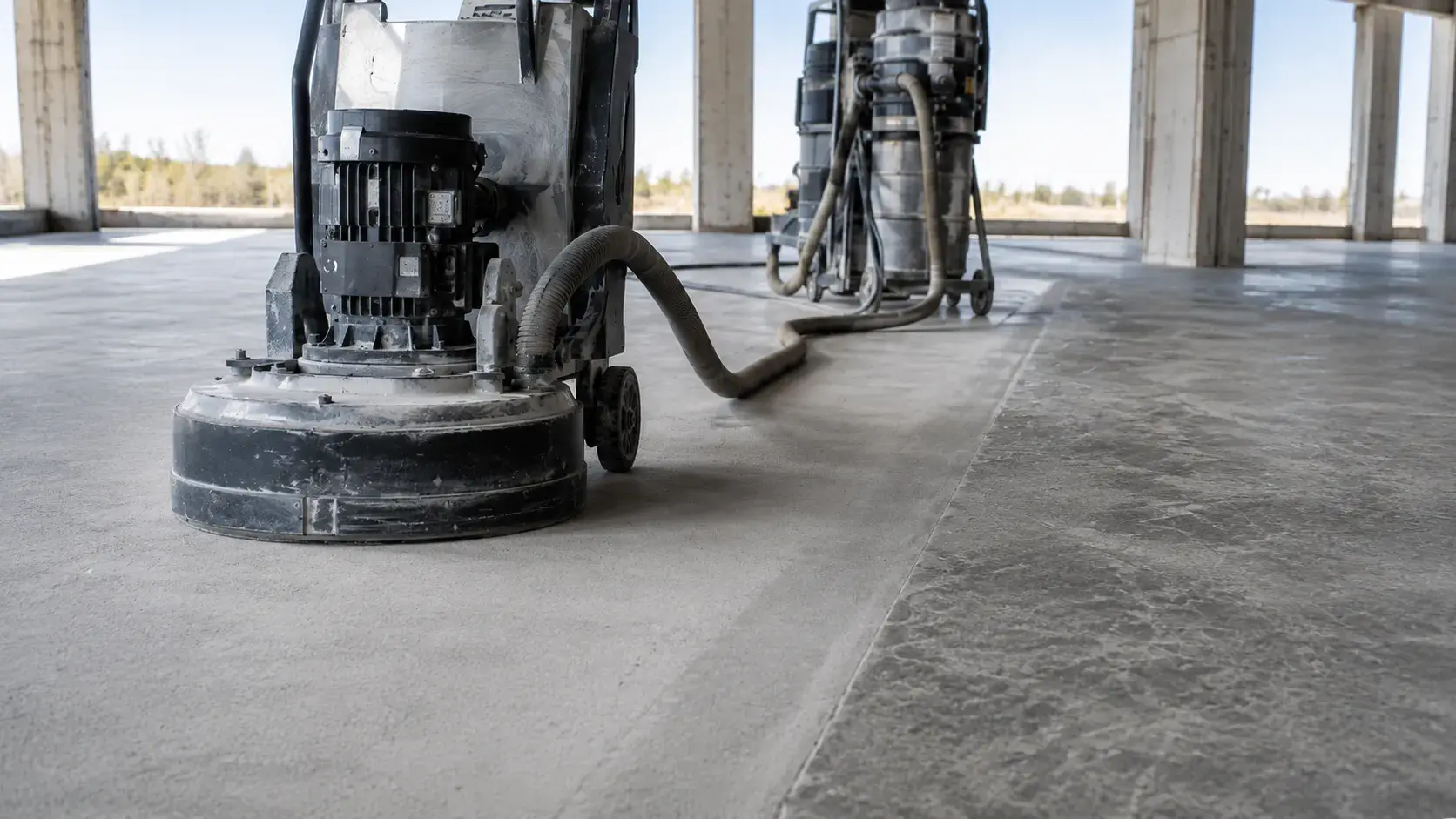
Harrowgate performs concrete shot blasting, diamond grinding, scarifying, coating removal, edge preparation, dust extraction, moisture testing, profiling, and substrate repairs for commercial and industrial finishes across Ontario.
Tell us what you need and we’ll get you a quote.
Licensed, insured & WSIB-covered · Free, no-obligation quote & on-site assessment.
Built to your engineered drawings, survey, and the real site conditions, not a one-size-fits-all approach forced to fit.
Durable materials and methods chosen for the load, traffic, and environment on site.
Send specs, drawings, or photos and get a free, no-obligation site visit and estimate with no guesswork.
Installation and site work completed in accordance with Ontario requirements.
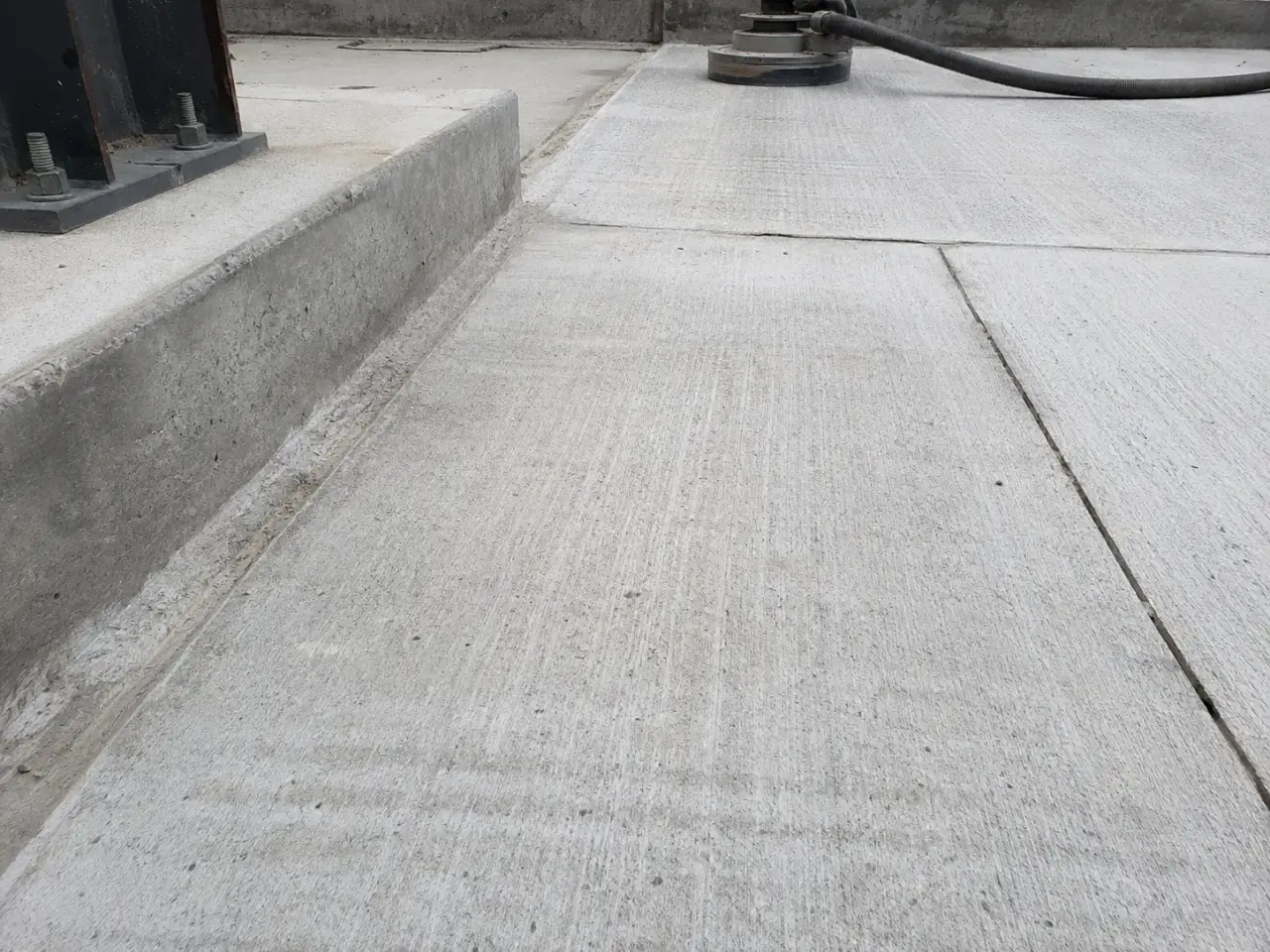
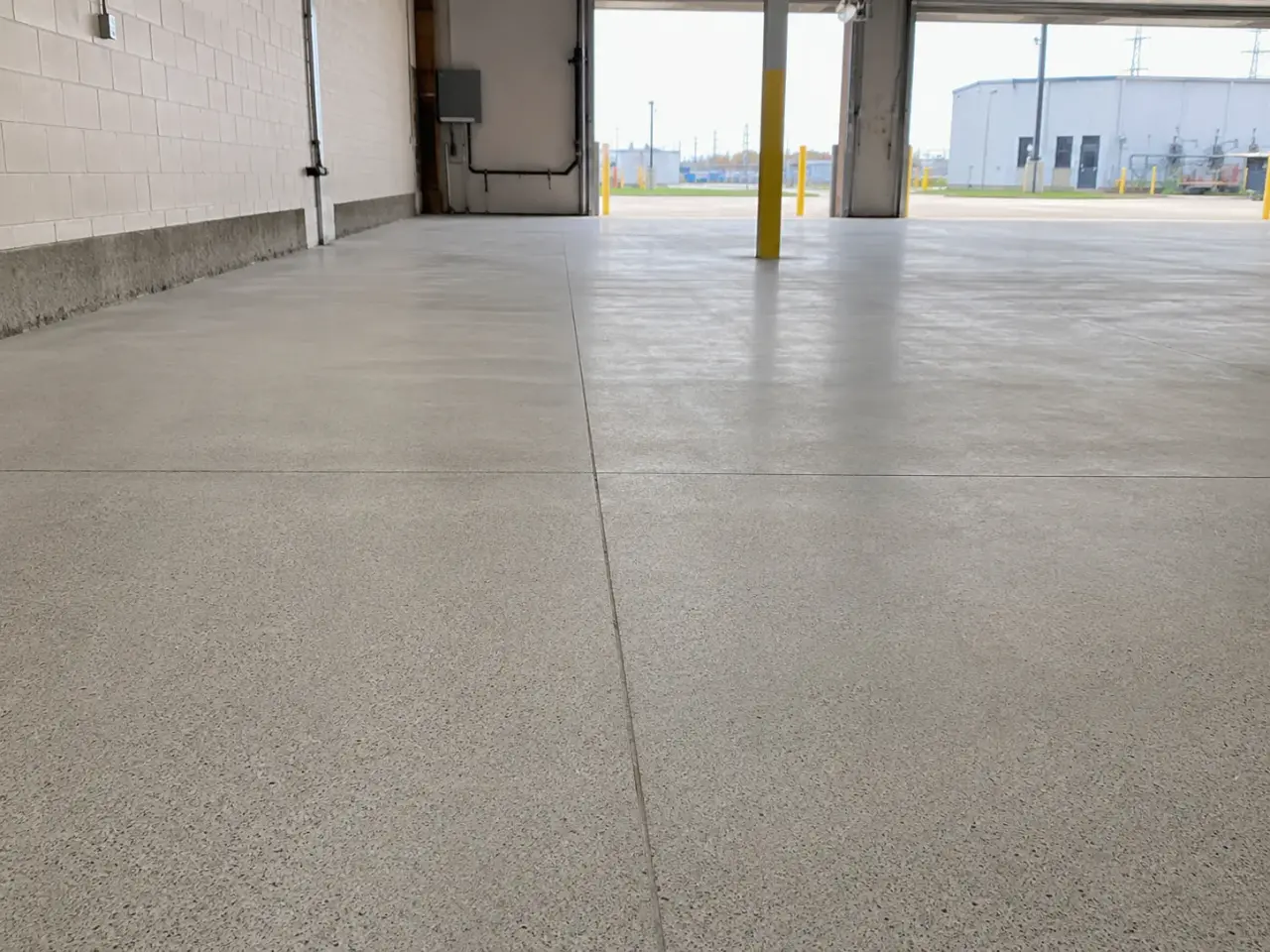
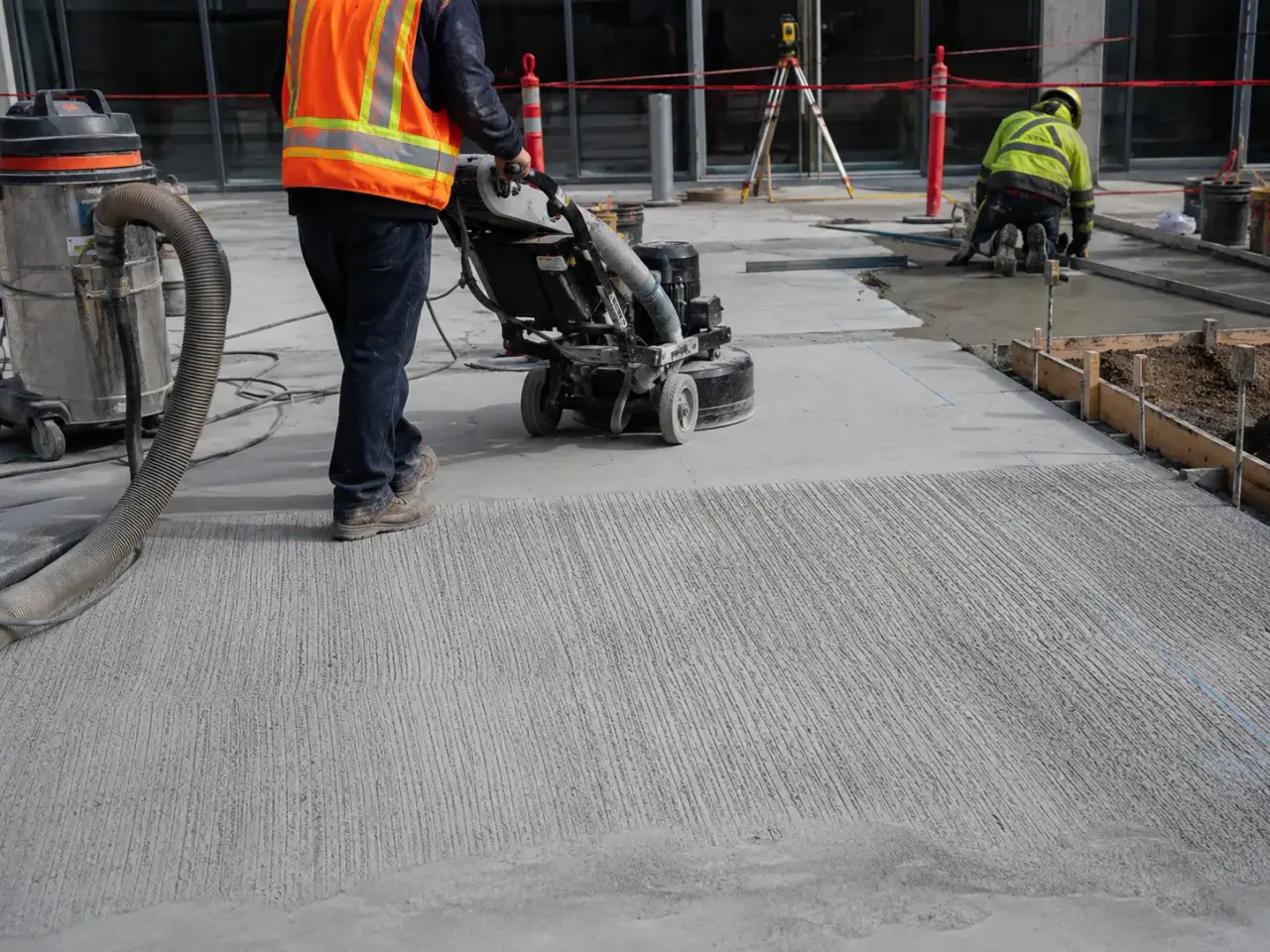
Diamond grinding, shot blasting, scarifying, milling, sanding, water jetting, and hand tooling produce different removal rates, profiles, vibration, dust, edge access, and finish.
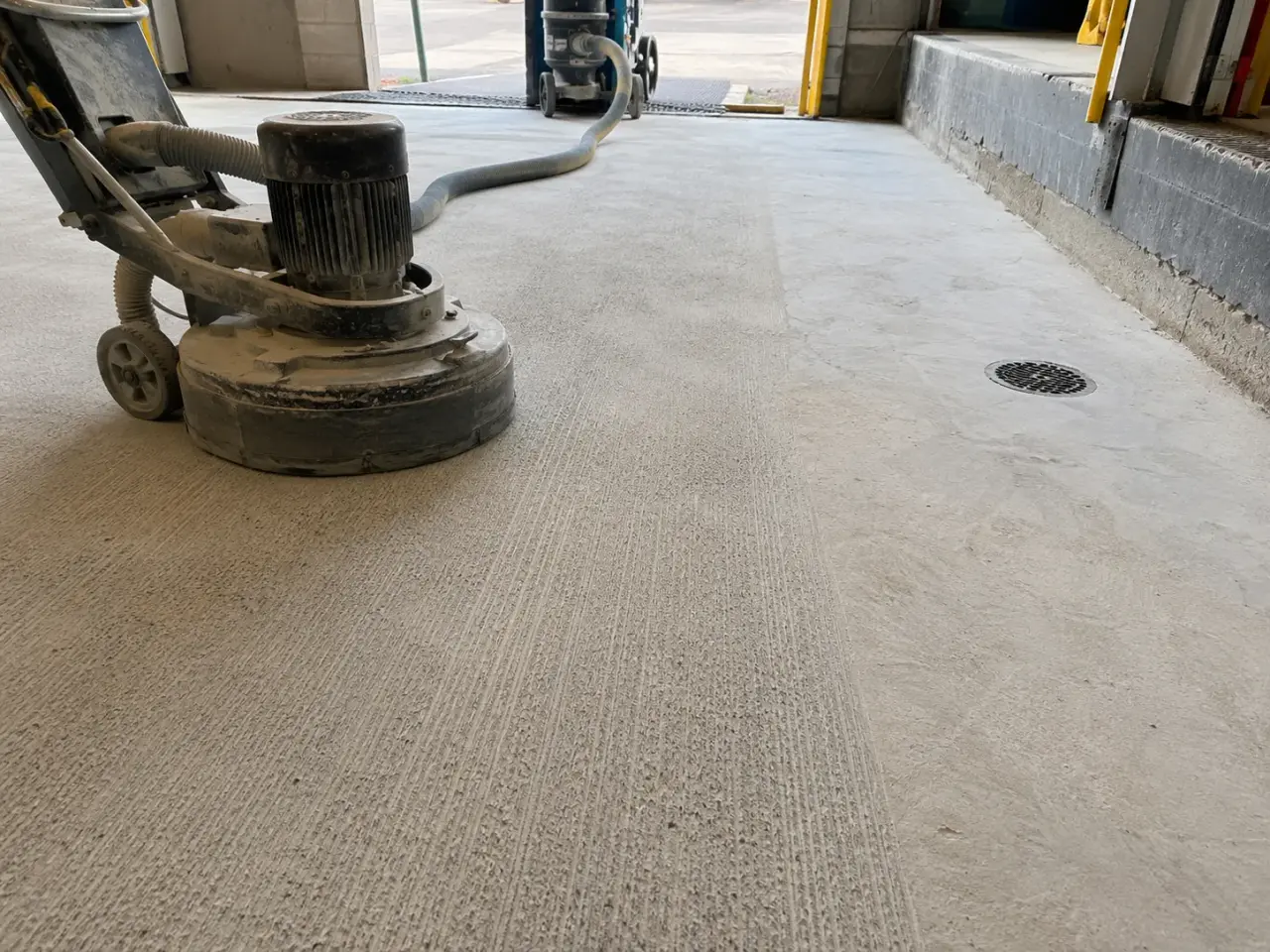
Step 1, We define the required profile and flatness, make test areas, isolate dust and services, remove contamination, prepare the open field and edges, repair defects, then test cleanliness, tensile bond, moisture, and geometry before the next material is applied.
Step 2, Work stage 1. We survey coating type, thickness, adhesion, oil, laitance, curing compound, moisture, cracks, joints, delamination, hardness, and high spots. Hazardous or unknown coatings are assessed before mechanical disturbance.
Step 3, Work stage 2. A representative mockup compares grinding, shot blasting, scarifying, or combinations against the specified profile and planned finish. Production equipment and tooling are selected from that accepted result.
Step 4, Work stage 3. Shot blasters propel steel media in a closed circuit and vacuum rebound and dust, leaving a clean textured path. Pass overlap is controlled so stripes and unprepared lanes do not remain.
Step 5, Work stage 4. Planetary or walk-behind diamond grinders use bonded tooling selected for concrete hardness and coating. Successive grits are used only when the finish requires refinement, because over-polishing reduces bond.
Step 6, Work stage 5. Scarifiers plane heavy coatings, laitance, or concrete with rotating cutters, then grinding or blasting removes ridges and fractured peaks. Edges, corners, columns, drains, and curbs receive smaller matched tools.
Step 7, Work stage 6. Dust is vacuumed with effective local extraction, defects are repaired, and the surface is checked by visual inspection, profile comparison, pull-off tests, moisture tests, straightedge or survey, and coating-manufacturer acceptance.
Preparation follows the approved flooring, coating, membrane, or repair system, CSA A23 concrete requirements, Ontario silica controls, and project acceptance tests. Required profile, tensile strength, moisture condition, flatness, cleanliness, and environmental limits are documented before production.
Control point 1. The coating or membrane manufacturer defines the required concrete surface profile or equivalent texture. A heavy mortar overlay needs a different profile than a thin sealer or traffic topcoat.
Control point 2. Mechanical preparation exposes sound aggregate without leaving crushed weak peaks. Acid etching is not substituted where the specification requires mechanical removal and dust-free texture.
Control point 3. Moisture testing follows the selected flooring system and consultant's method. A visually dry slab can still transmit vapour that blisters an impermeable coating.
Control point 4. Pull-off testing measures the weakest plane through coating, repair, or concrete. Failure in a weak surface layer shows that additional removal is required even if the area looks clean.
Control point 5. Grinding tolerances use survey, straightedge, or floor-profile data named by the project. High-spot removal is limited so cover, slab thickness, joints, and embedded systems remain acceptable.
Control point 6. Ontario silica requirements apply to grinding, cutting, and scabbling concrete. Effective on-tool extraction, restricted access, respiratory controls where required, and dust-safe housekeeping are planned for each machine.
Planning surface preparation and grinding? Talk it through with our team.
Preparation fails when crews polish instead of profile, leave edges or oil, spread dust, remove too much cover, or apply the next material before moisture and bond acceptance. Harrowgate uses mockups, matched tooling, extraction, and objective tests.
Risk control 1. Coatings peel where curing compound, oil, rubber, or old resin remains in pores. Test cuts and repeated mechanical passes continue until clean concrete and acceptable pull-off are achieved.
Risk control 2. Diamond tools glaze hard concrete or load on soft coatings. Bond hardness, segment type, machine speed, weight, and dust flow are adjusted from the test area.
Risk control 3. Shot-blast striping results from poor overlap, worn seals, uneven media, or speed changes. Machine setup and cross-pass inspection keep profile uniform.
Risk control 4. Scarifier grooves telegraph through thin toppings. The rough removal pass is followed by grinding or blasting that knocks down ridges and fractured edges.
Risk control 5. Dust contaminates active facilities and newly prepared surfaces when vacuum capacity is too low. Sealed zones, maintained filters, pre-separators, and final vacuum cleaning control migration.
Risk control 6. Over-grinding exposes bars or reduces slab thickness near high spots. Scan data, depth limits, survey, and engineer review control removal where structural cover may be affected.
Shot blasting propels steel media in a closed machine to remove laitance and leave a uniform open texture for coatings and membranes. Diamond grinding abrades with bonded segments and is better for high spots, thin coatings, adhesive, and controlled smoothing. Harrowgate often combines methods because open fields, edges, and thick defects require different tooling.
Acceptance uses the specified profile, complete removal of contaminants and weak material, cleanliness, moisture result, and tensile pull-off where required. A uniform appearance is not enough. Harrowgate produces a mockup, compares the production surface, repairs defects, and obtains consultant or manufacturer acceptance before primer or coating covers the concrete.
Grinding removes contaminated surface concrete, but oil can penetrate deeper and migrate back. We identify the extent, use approved cleaning or poultice treatment where specified, remove affected concrete, and perform adhesion trials. Severely saturated areas may need deeper replacement or a compatible mitigation system rather than repeated shallow grinding.
Yes, disturbing concrete can release respirable silica. Harrowgate uses effective on-tool vacuum extraction, sealed work zones, maintained filters, controlled waste handling, and Ontario-required exposure controls. Dry sweeping and uncontrolled compressed air are not used. Wet methods are selected only when slurry can be fully contained and the next flooring system permits moisture.
Grinding can remove measured high spots and reduce joint lips or local transitions. It cannot raise low areas and may be limited by slab cover, thickness, embedded systems, drainage, and required finish. Harrowgate surveys the floor and combines controlled removal with repairs or toppings where the tolerance cannot be reached by grinding alone.
The floor may have been polished too smooth, left dusty, contaminated below the surface, too moist, or covered after the preparation window. Weak concrete can also remain beneath a clean face. Harrowgate selects tooling from a mockup, vacuums thoroughly, tests pull-off and moisture, and protects the accepted surface until primer is applied.
Smaller shrouded grinders, hand tools, and localized blasting prepare edges to a profile compatible with the open field. Harrowgate works around columns, curbs, drains, joints, walls, and equipment without leaving a smooth perimeter strip. Edge dust is extracted and the transition is inspected under the same acceptance criteria as the main area.
The receiving coating, mortar, membrane, overlay, or polish specification sets the required roughness and preparation method for its bond and thickness.
Residual dust blocks adhesion and spreads contamination. Suitable extraction and final cleaning expose the actual profile for inspection and testing.
Still have a question about surface preparation and grinding? Ask our team directly.
Commercial and heavy-civil construction delivered for developers, contractors, property managers, and municipalities.
Send drawings, a site plan, or a description of the scope. Harrowgate Group is licensed, insured, and WSIB-covered.
Licensed, Insured & WSIB-Covered, work managed and documented on every job
Tell us what you need and we’ll get you a quote.
Harrowgate Group provides surface preparation and grinding, delivered and installed with quote-ready support across Toronto and surrounding Ontario communities.
Companies We've Worked With
Harrowgate Group delivers commercial and heavy-civil construction for developers, contractors, institutions, municipalities, and property groups across Ontario.
 Popeyes
  Tim Hortons
  Subway
  University of Toronto
  Madison Group
  RioCan
  Women's College Hospital
  Starbucks
  Mazda
Mazda  TD Bank
  City of Toronto Popeyes Tim Hortons Subway University of Toronto Madison Group RioCan Women's College Hospital Starbucks Mazda TD Bank City of Toronto