
Built to spec
Built to your engineered drawings, survey, and the real site conditions, not a one-size-fits-all approach forced to fit.
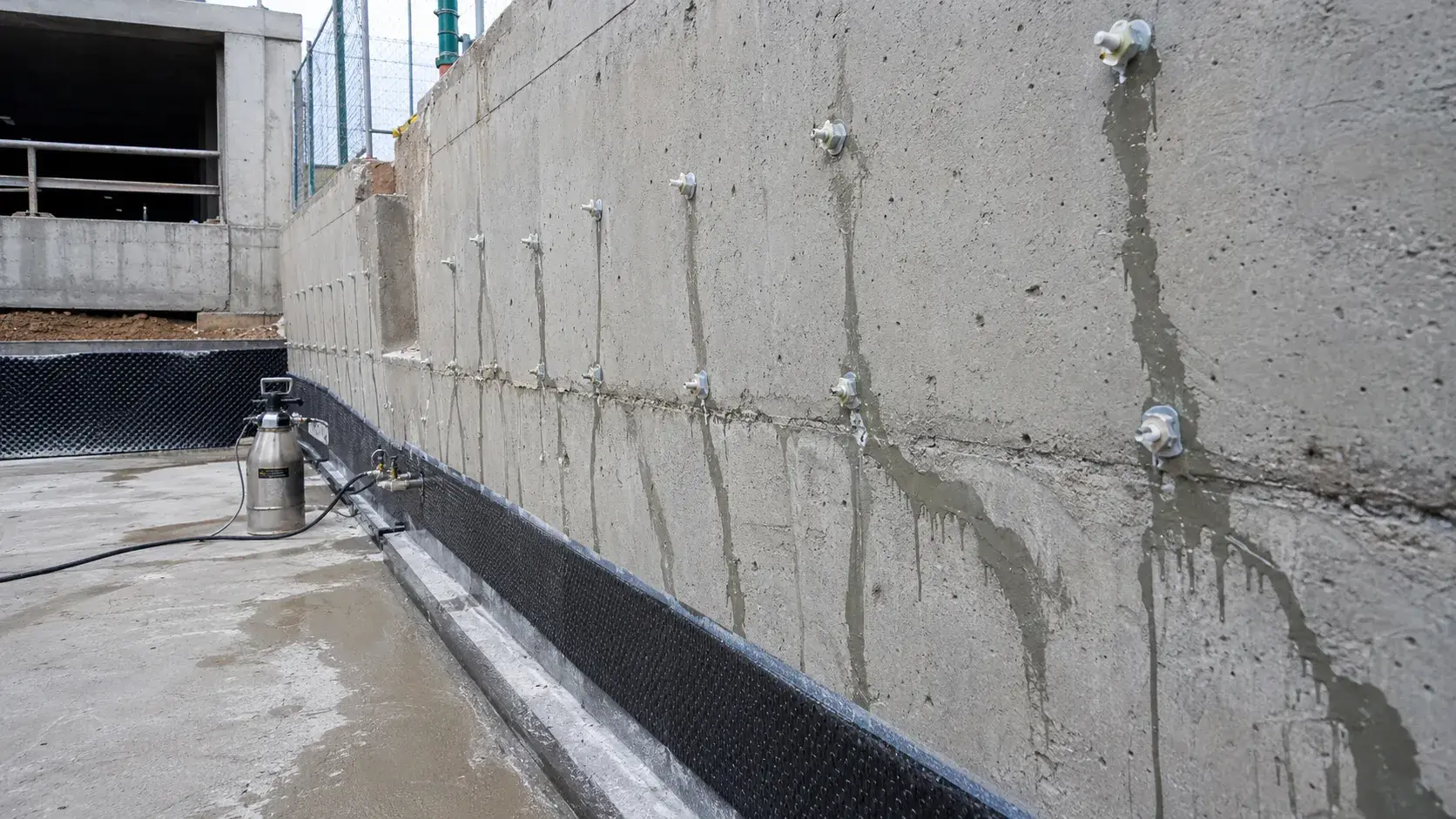
Concrete Crack Repair and Injection in Aurora seals and structurally repairs cracked concrete using epoxy and polyurethane injection.
Tell us what you need and we’ll get you a quote.
Licensed, insured & WSIB-covered · Free, no-obligation quote & on-site assessment.
Built to your engineered drawings, survey, and the real site conditions, not a one-size-fits-all approach forced to fit.
Durable materials and methods chosen for the load, traffic, and environment on site.
Send specs, drawings, or photos and get a free, no-obligation site visit and estimate with no guesswork.
Installation and site work completed in accordance with Ontario requirements.
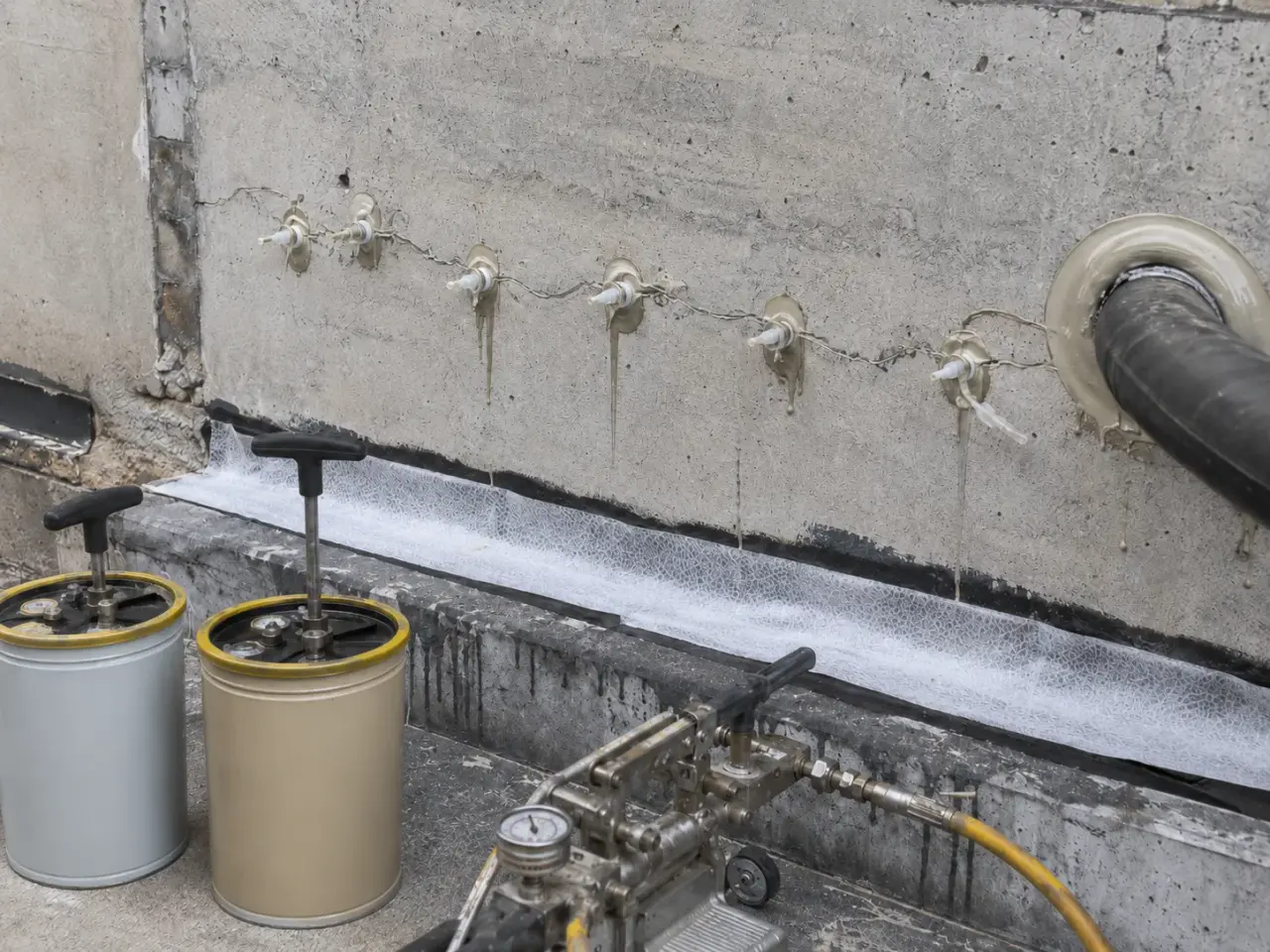
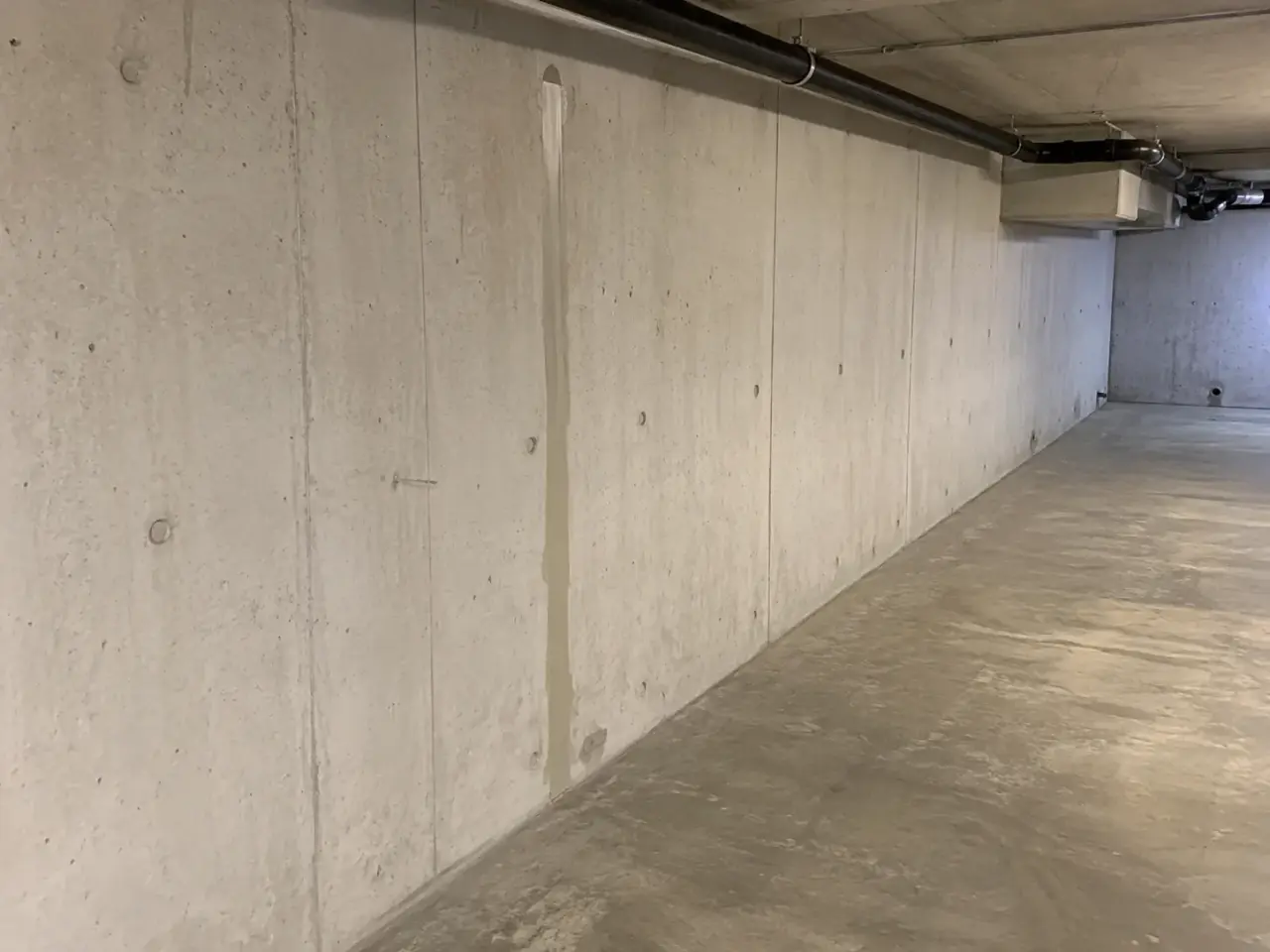
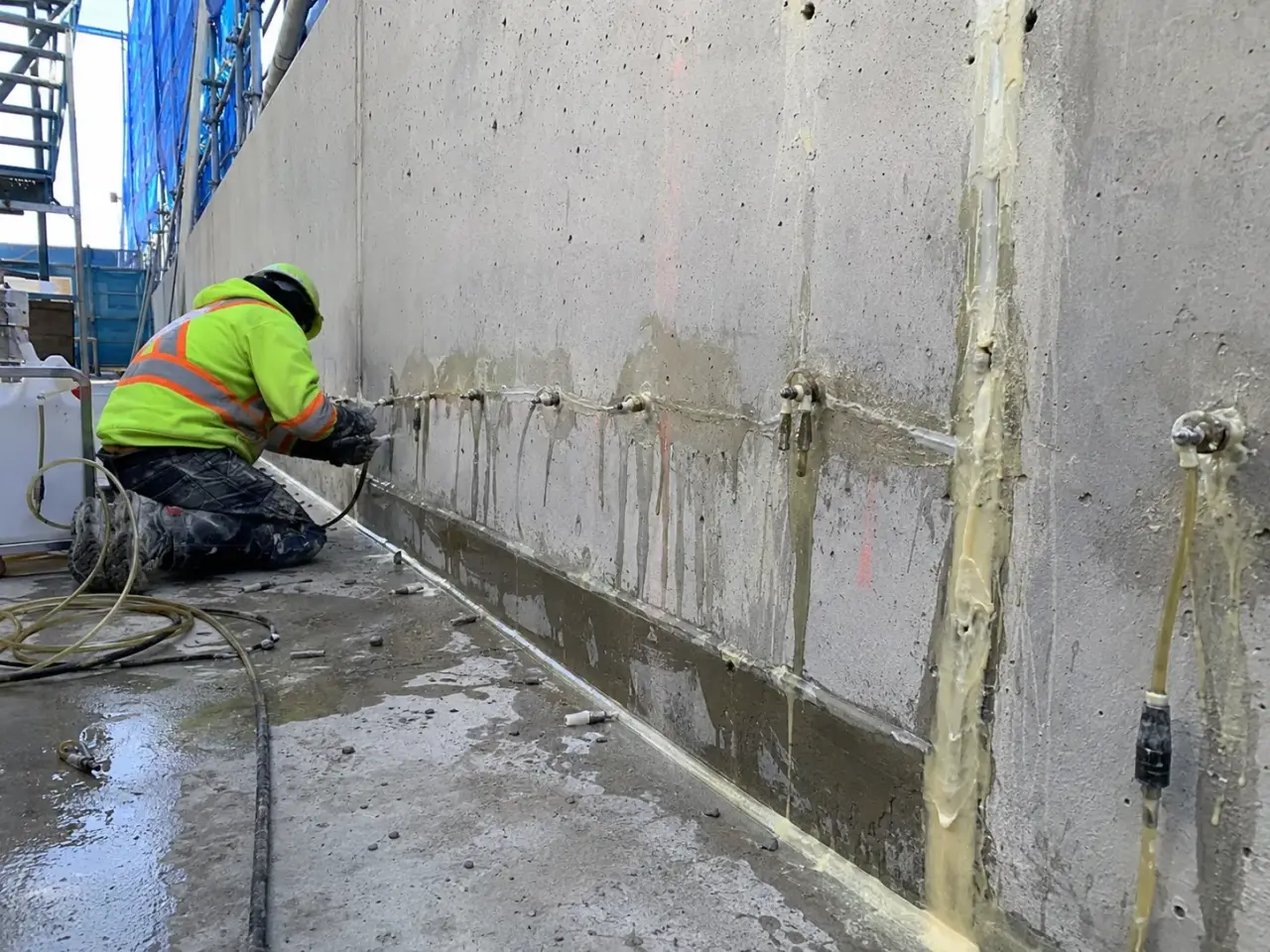
Crack repair begins by deciding whether the crack is dormant or moving, dry or leaking, structural or non-structural, and accessible from one or both faces. Low-viscosity epoxy can restore continuity across suitable dormant cracks, polyurethane resin controls active water paths, routing and sealing accommodates surface movement, and stitching or structural strengthening addresses forces that injection alone cannot resolve.
Epoxy pressure injection. Ports and surface seal create a closed path for resin to fill a clean, relatively dry crack. Injection proceeds at controlled pressure from one port to the next. Epoxy bonds the faces but is rigid after cure, so it is inappropriate where settlement, thermal movement, or joint action continues.
Polyurethane water-stop injection. Hydrophilic or hydrophobic resins react and expand according to product design, making them useful for leaking cracks, joints, and penetrations. Water flow, crack size, pressure, substrate temperature, and future wet-dry cycling guide resin selection. Stopping water does not prove that structural capacity has been restored.
Routing, sealing, and flexible joints. A surface reservoir is cut along the crack and filled with a compatible sealant where the goal is to exclude water and debris while allowing limited movement. Joint geometry, primer, backing material, bond-breaker, and adhesion to clean sidewalls matter more than simply filling the visible line.
Stitching and engineered strengthening. Steel staples, dowels, fibre systems, enlargement, or local replacement may accompany repair where forces cross the crack. The structural engineer determines load transfer and anchorage. Injection remains one component of the repair rather than a universal fix.
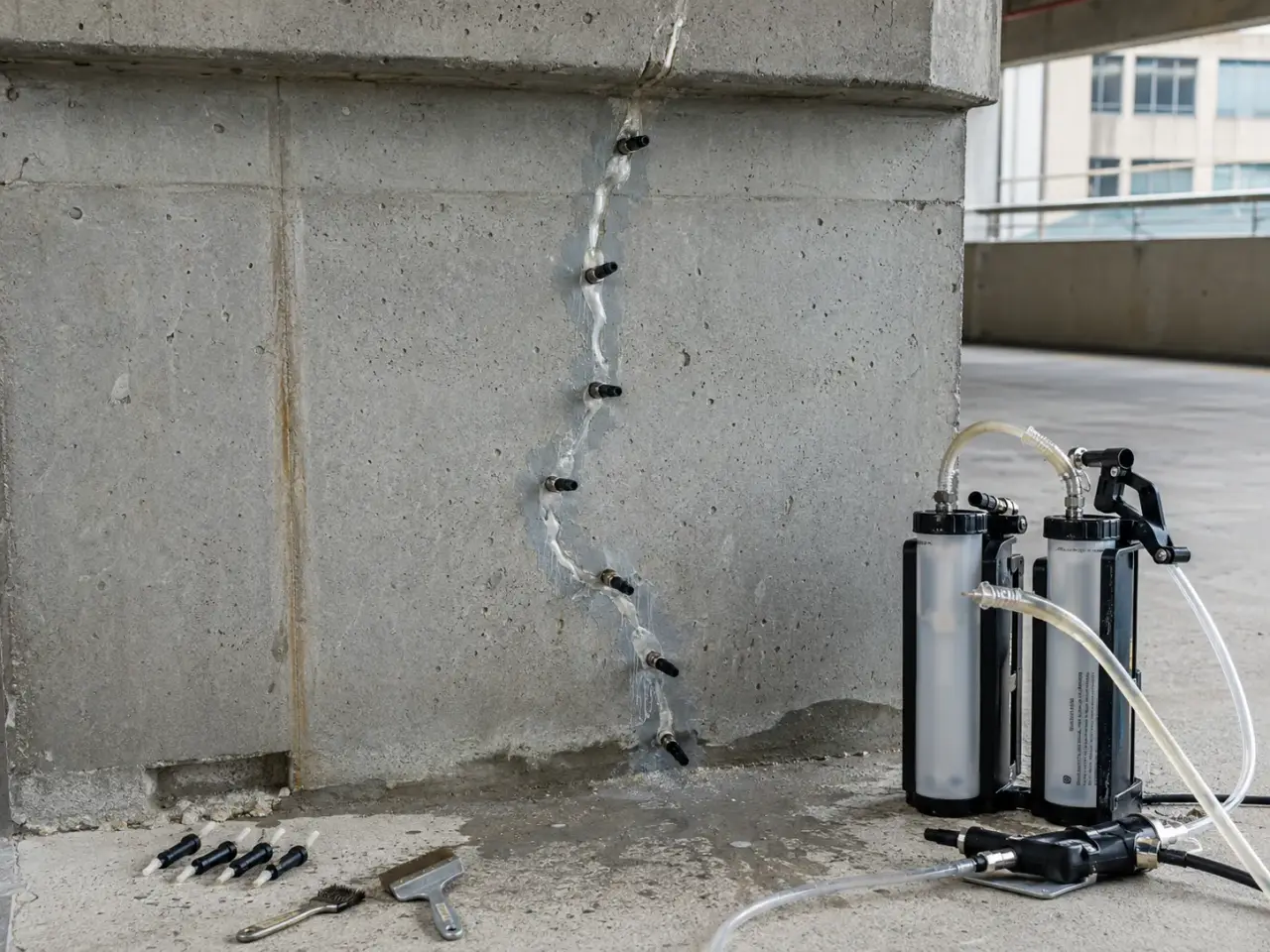
Step 1, diagnose and map the cracking. Harrowgate records width, pattern, displacement, leakage, exposure, temperature, load, corrosion, and previous repairs. Monitoring, sounding, cores, or structural review are added where the cause or activity is uncertain.
Step 2, select and trial the repair. Resin viscosity, flexibility, reaction time, moisture tolerance, port spacing, pressure, routing geometry, and surface preparation are matched to the crack. A trial area confirms that material travels through the intended path.
Step 3, prepare clean repair boundaries. Coatings and contamination are removed. Ports, drill holes, packers, reservoirs, or sealant joints are installed without damaging reinforcement or widening the defect. Active leakage is controlled so resin is not washed away.
Step 4, inject or seal in a controlled sequence. Material is installed within its temperature and pressure limits. Injection progresses port by port while the opposite face and adjacent joints are observed. Pressure is reduced when resistance or unintended migration appears.
Step 5, verify and finish the system. Ports and surface seal are removed where required, holes are patched, and the area is inspected for continuity, leakage, adhesion, or movement. Protective coatings and drainage corrections follow only after the repair is accepted.
We establish why the crack formed, confirm that unsafe movement or overload is addressed, and prepare a continuous injection path. Ports, surface seal, pressure, material reaction, and refusal are controlled along the crack so resin fills the internal plane rather than escaping through hidden exits.
Work stage 1. We map width, length, depth, offset, moisture, deposits, rust, temperature, and relation to joints or loads. Monitoring and structural review separate dormant shrinkage from continuing settlement, thermal movement, corrosion, or overstress.
Work stage 2. Concrete around the crack is sounded and cleaned. Loose edges, coatings, mineral deposits, and previous failed sealants are removed without widening sound concrete or forcing contaminants deeper into the opening.
Work stage 3. For pressure injection, ports are bonded over the crack or installed in angled drill holes, then the exposed line is surface-sealed. Spacing is adjusted for crack width, member thickness, reinforcement, and resin viscosity.
Work stage 4. Epoxy is introduced at low controlled pressure from the lowest port or one end, advancing when material reaches the next port. Pressure is limited to avoid extending the crack, lifting finishes, or forcing resin into drains and cavities.
Work stage 5. Water-reactive polyurethane is injected through packers where active leakage requires flexible foam or gel. Water flow, reaction time, expansion, and confinement are managed so the material forms within the crack rather than only on the face.
Work stage 6. After cure, ports and surface seal are removed where required, holes are filled, and the line is inspected. Cores, sounding, or observation at opposite faces are used when the repair plan requires verification of internal fill.
Planning concrete crack repair and injection in Aurora? Talk it through with our team.
Epoxy cures as a rigid adhesive and is used to bond selected dormant cracks where structural continuity is required. Polyurethane reacts or cures into a flexible solid or foam and is used mainly to stop water and accommodate limited movement. Harrowgate chooses from crack behaviour, moisture, access, and the engineer's intended repair function.
Flowing water interferes with many structural epoxies and can carry material away. We first control or redirect the water, often with a compatible water-reactive polyurethane, then clean and assess the crack. Structural epoxy is used only when the substrate and moisture satisfy its requirements and the engineer confirms that rigid bonding is appropriate.
We compare crack width and displacement over time using gauges, tell-tales, survey points, temperature records, and load or leakage observations. Pattern and location also matter. Movement related to settlement, joints, or structural load must be resolved before rigid repair. A one-time width reading does not establish that a crack is dormant.
Proper port spacing, surface sealing, resin viscosity, pressure, and sequence are designed to fill the internal crack plane. Material reaching adjacent ports or the opposite face provides evidence of communication. Where required, cores or other verification are completed. Face sealing alone is not injection and cannot demonstrate internal bond or water cutoff.
No. Hairline surface checking, moving joints, wide broken sections, corrosion delamination, contaminated cracks, settlement cracks, and voided concrete may need routing, replacement, flexible joint work, reinforcement, or stabilization. Harrowgate investigates the mechanism and rejects injection where the material cannot reach sound crack walls or the structure will continue moving.
Polyurethane can form an effective flexible cutoff within a crack, but water can bypass through adjacent cracks, wall-floor joints, tie holes, penetrations, or failed exterior drainage. Harrowgate traces the route and treats connected defects. Where sustained hydrostatic pressure remains, exterior membrane, footing drain, sump, or grading correction may be part of the complete scope.
After the resin has cured, surface ports and temporary seal are removed where the finish requires it. Holes and shallow recesses are filled with compatible repair material, then the surface is ground or prepared for membrane, coating, or architectural finish. Exposed structural repairs may remain visible when inspection access is more important than appearance.
Usually not by itself. Cured epoxy is rigid, so continuing thermal, settlement, shrinkage, or load movement can reopen the crack or create a new one nearby. The cause and activity are assessed first. A flexible seal, movement joint, stabilization, or engineered strengthening may be required instead.
Cracks connect through hidden planes, construction joints, tie holes, honeycombing, and service penetrations. Resin follows the path of least resistance. Controlled pressure, staged ports, temporary containment, and observation of adjacent surfaces help manage migration while revealing the actual network inside the concrete.
Still have a question about concrete crack repair and injection in Aurora? Ask our team directly.
Commercial and heavy-civil construction delivered for developers, contractors, property managers, and municipalities.
Send drawings, a site plan, or a description of the scope. Harrowgate Group is licensed, insured, and WSIB-covered.
Licensed, Insured & WSIB-Covered, work managed and documented on every job
Tell us what you need and we’ll get you a quote.
Harrowgate Group provides concrete crack repair and injection, delivered and installed with quote-ready support across Toronto and surrounding Ontario communities.
Companies We've Worked With
Harrowgate Group delivers commercial and heavy-civil construction for developers, contractors, institutions, municipalities, and property groups across Ontario.
 Popeyes
  Tim Hortons
  Subway
  University of Toronto
  Madison Group
  RioCan
  Women's College Hospital
  Starbucks
  Mazda
Mazda  TD Bank
  City of Toronto Popeyes Tim Hortons Subway University of Toronto Madison Group RioCan Women's College Hospital Starbucks Mazda TD Bank City of Toronto