Built to spec
Built to your engineered drawings, survey, and the real site conditions, not a one-size-fits-all approach forced to fit.
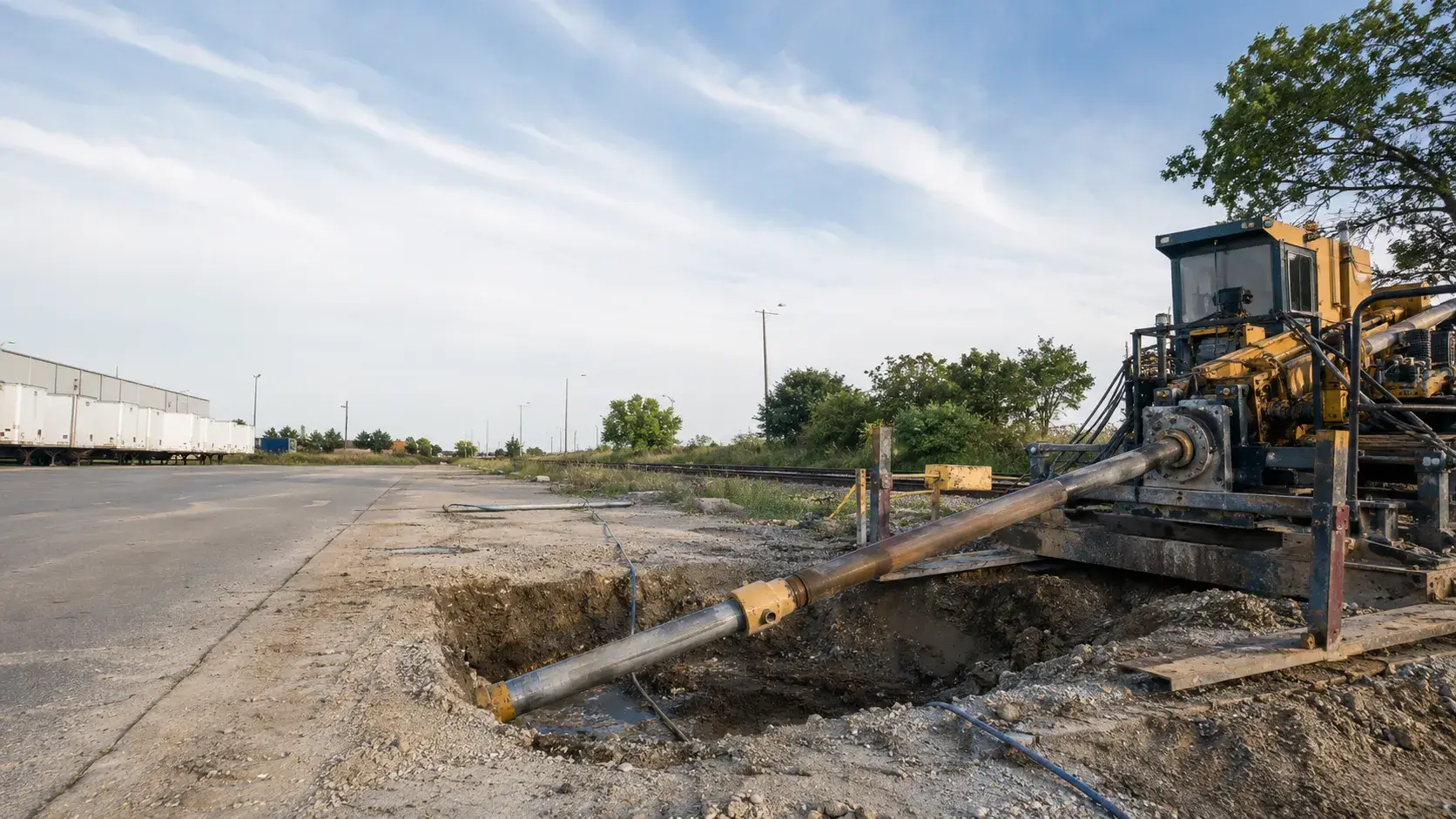
Auger Boring and Pipe Ramming in Niagara Falls push casing and pipe under roads, rail, and structures without excavation.
Tell us what you need and we’ll get you a quote.
Licensed, insured & WSIB-covered · Free, no-obligation quote & on-site assessment.
Built to your engineered drawings, survey, and the real site conditions, not a one-size-fits-all approach forced to fit.
Durable materials and methods chosen for the load, traffic, and environment on site.
Send specs, drawings, or photos and get a free, no-obligation site visit and estimate with no guesswork.
Installation and site work completed in accordance with Ontario requirements.
Auger boring and pipe ramming install steel casing on a controlled alignment beneath an obstruction, limiting surface disruption while creating a protected route for water, sewer, electrical, or communications infrastructure. Harrowgate delivers the work for municipalities, utilities, developers, and civil contractors across the GTA and Ontario.For a crossing contractor, the decisive scope is not bore length alone.
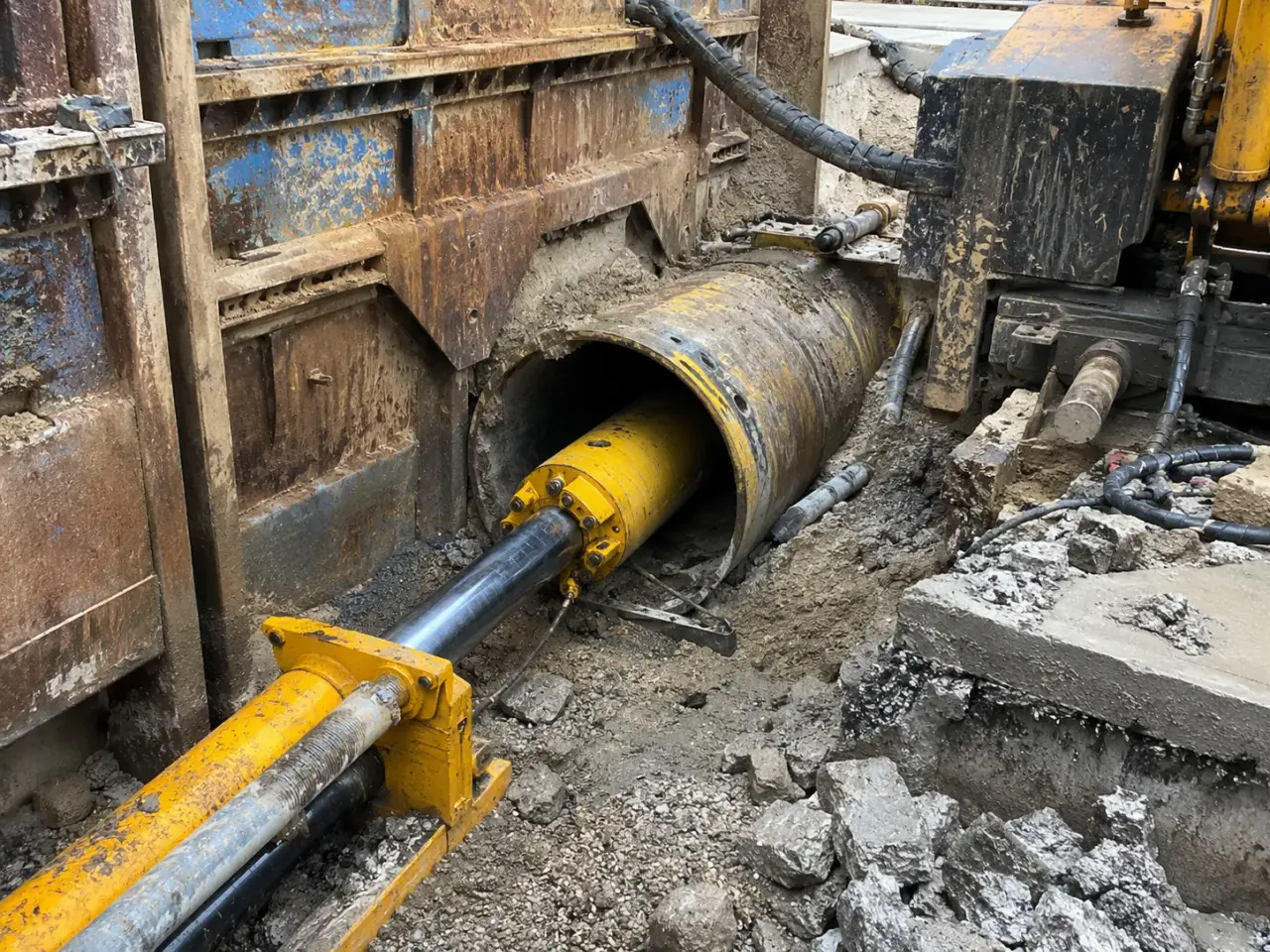
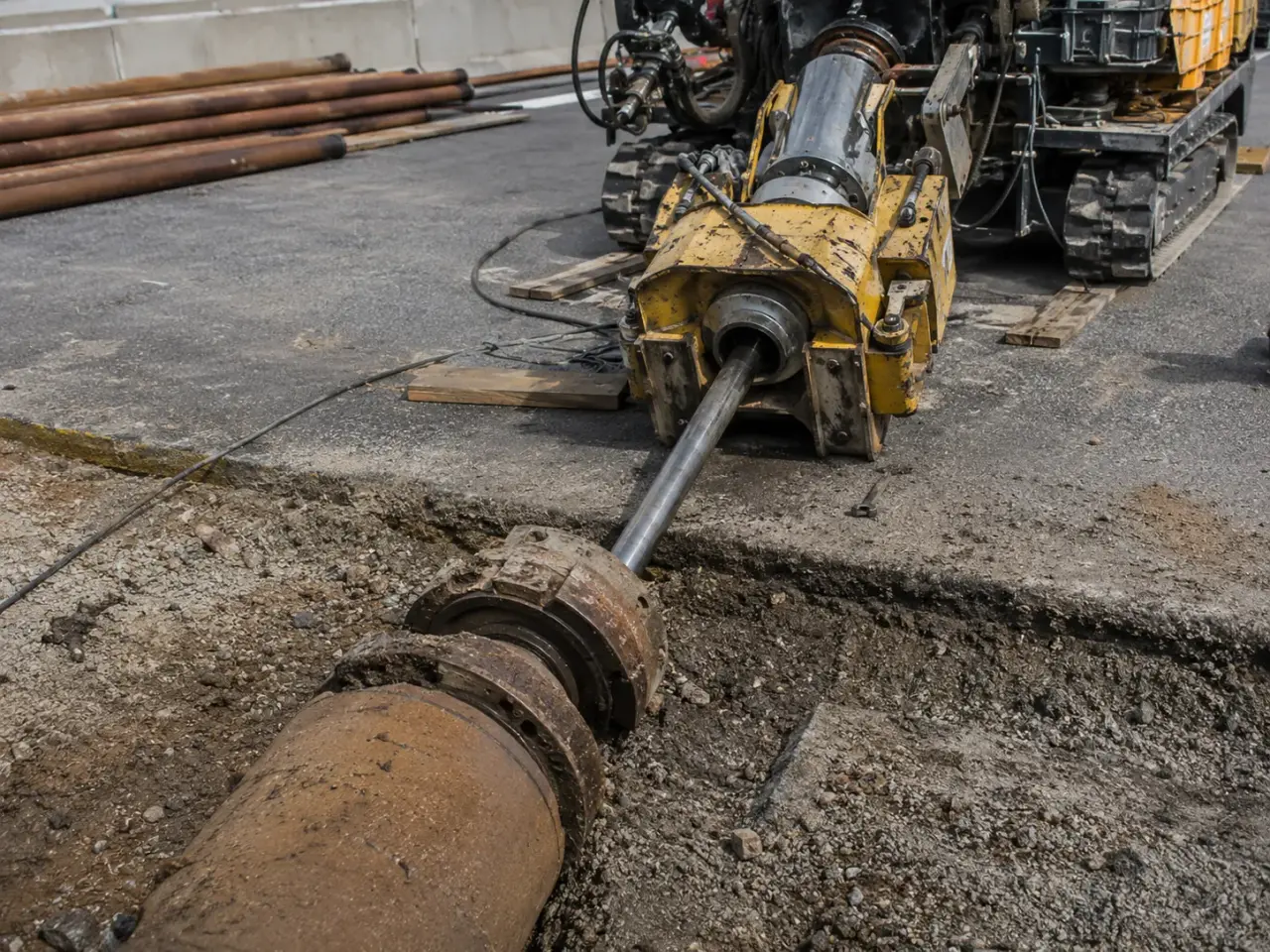
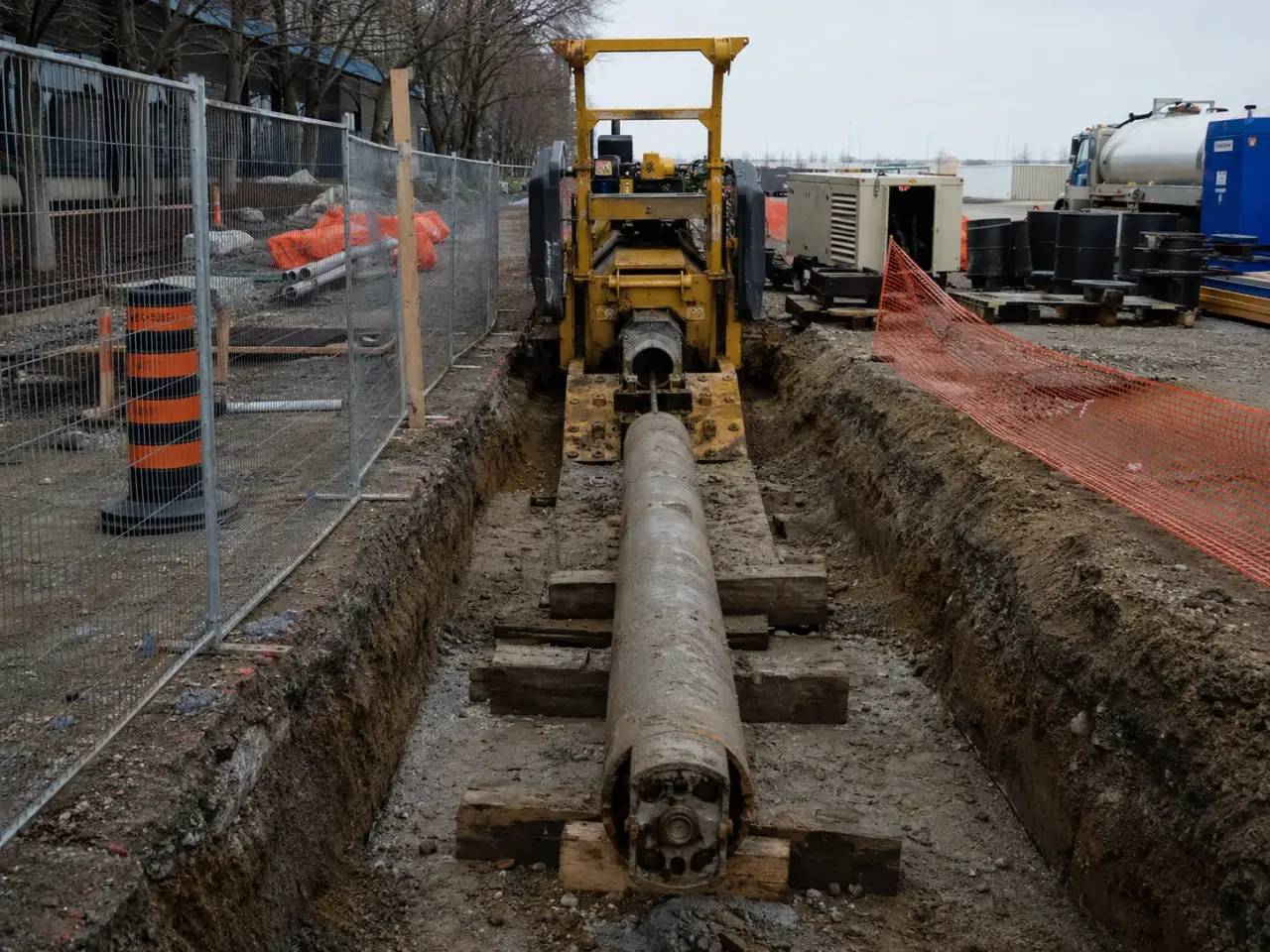
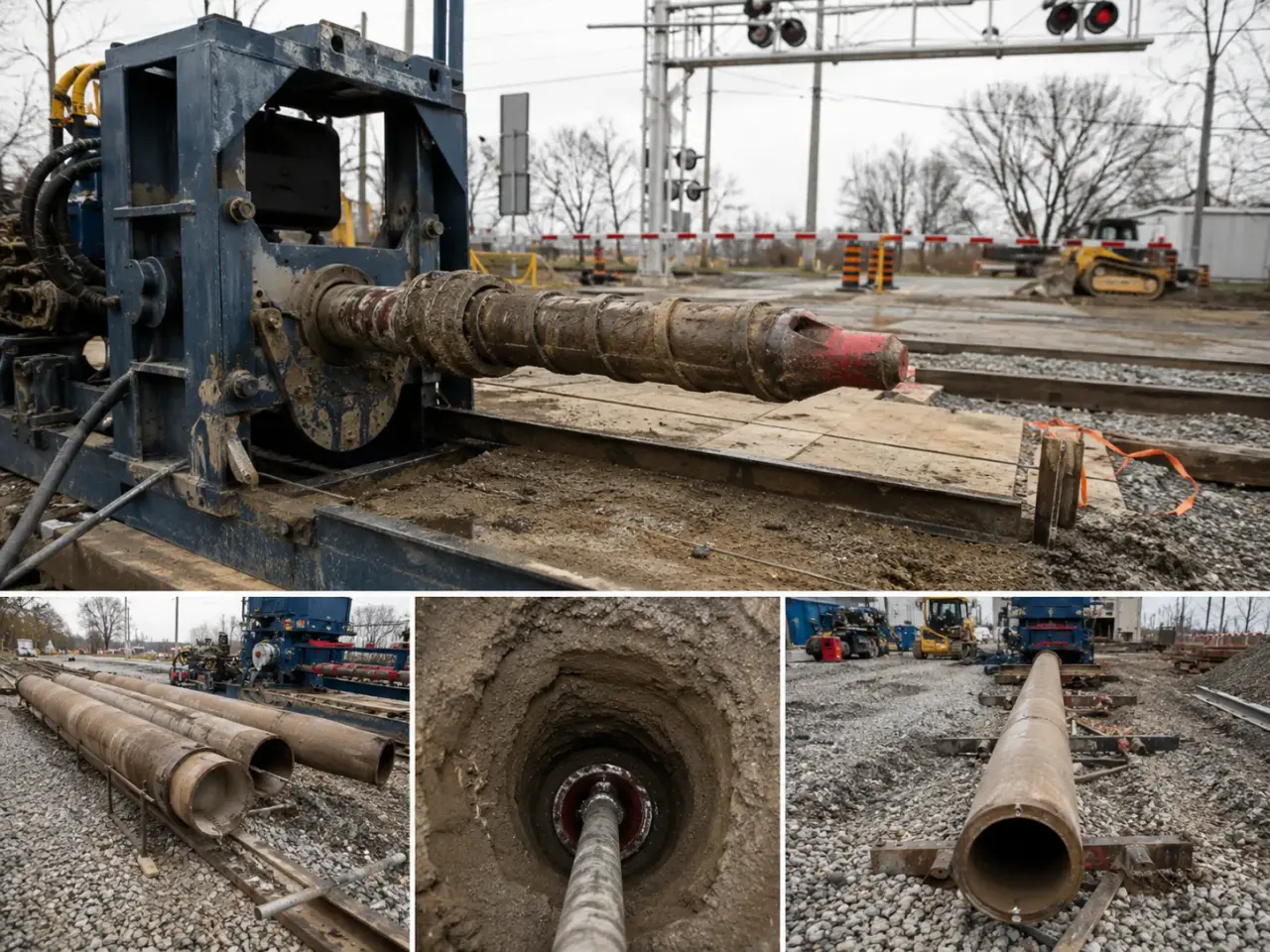
Guided or conventional auger boring rotates continuous-flight augers inside a steel casing while a cutting head advances from a reaction frame. It suits selected stable soils and crossings where spoil can move through the casing.
Pipe ramming uses pneumatic impact to drive an open-ended steel casing, after which the soil plug is removed; it can handle some cobbles and reduce face exposure but creates vibration. Neither method provides the face-pressure and steering control of microtunnelling. Selection follows grade tolerance, ground, groundwater, length, casing, obstruction, settlement, vibration, and pit access.
Step 1,
Step 2, We review the issued profile, geotechnical information, crossing agreement, utility records, casing schedule, and allowable settlement criteria before mobilization. Survey control establishes the entry and exit coordinates, invert, grade, and shaft limits. Existing utilities are located and daylighted, traffic and access controls are established, and launch and receiving excavations are built with the shoring and groundwater controls required by the soil conditions.
For auger boring, we set the boring machine on a rigid track, align the lead casing, rotate the auger train while advancing casing, and remove spoil without leaving an unsupported bore. For pipe ramming, a pneumatic hammer drives an open-ended steel casing through the ground, after which we remove the soil plug using the approved method. We survey progress, monitor the ground and adjacent assets, weld casing joints to the project procedure, install the carrier pipe on spacers, complete annular treatment where specified, and restore both shafts.
Step 3, The first casing section is treated as a critical control point because a small initial angular error grows over the drive. We independently check track position, lead casing elevation, and heading before committing production. Casing advance, spoil volume, jacking or ramming behaviour, groundwater, and monitoring readings are logged by drive interval.
Step 4, Harrowgate completes the crossing with surveyed casing and carrier, accepted welds and seals, carrier tests, annular treatment, monitoring, stable pit backfill, and restored surfaces.
Step 5, Harrowgate completes the crossing with surveyed casing and carrier, accepted welds and seals, carrier tests, annular treatment, monitoring, stable pit backfill, and restored surfaces.
Planning auger boring and pipe ramming in Niagara Falls? Talk it through with our team.
Completed on site to the engineered drawings, coordinated with concrete, servicing, and the surrounding work, then a clean, documented finish.
Auger boring rotates an auger inside advancing steel casing and removes spoil as the casing progresses. Pipe ramming uses percussion to drive an open-ended steel casing, then removes the soil plug. Harrowgate selects and executes the specified method based on diameter, length, ground, alignment tolerance, obstruction, and crossing-owner requirements.
Accuracy depends on drive length, casing diameter, soil, launch setup, steering provisions, and the tolerance shown on the engineered profile. Harrowgate establishes survey control, builds a rigid track, verifies the lead casing, and checks progress during the drive. The accepted line and grade are the contract values, not a generic tolerance.
Send the plan and profile, casing and carrier-pipe schedules, crossing length, geotechnical report, utility information, shaft limits, access constraints, traffic requirements, restoration limits, and crossing-owner specifications. Harrowgate checks the complete work area, including launch and receiving shafts, spoil handling, groundwater control, monitoring, tie-ins, and reinstatement.
Harrowgate coordinates valid locate information, checks records, daylighting requirements, crossing clearances, and owner restrictions before excavation or casing advance. Critical conflicts are exposed where required. Survey control, exclusion zones, monitoring, and a defined stop-work response remain active throughout the crossing, shaft construction, and final tie-in work.
No. Auger boring and pipe ramming reduce excavation across the obstruction, but launch and receiving shafts, carrier-pipe tie-ins, and access still require planned excavation. Harrowgate performs shaft support, groundwater control, casing installation, tie-ins, backfill, pavement or landscape restoration, and closeout documentation as one coordinated scope.
Settlement control starts with the engineered method, ground data, casing size, stable launch alignment, and disciplined spoil removal. Harrowgate avoids over-excavation ahead of casing, observes surface and asset monitoring points, records movement against action levels, controls groundwater, and pauses work when a trigger requires review before advance resumes.
Yes. Harrowgate performs the crossing as a complete heavy-civil package, including shafts, steel casing, carrier-pipe installation, spacers, specified annular treatment, tie-ins, granular backfill, density testing, pavement, grading, and landscape restoration across the GTA and Ontario, with documented closeout records.
Ramming can suit selected crossings where an open-ended casing and percussive installation can pass variable ground or cobbles, while auger boring suits ground that can be excavated and conveyed predictably. Vibration, grade tolerance, groundwater, length, and obstructions govern selection.
Conventional auger boring has limited steering and should not rely on correction around a conflict. Utilities are located and daylighted as required, and the designed alignment preserves clearance before the drive starts.
Still have a question about auger boring and pipe ramming in Niagara Falls? Ask our team directly.
Commercial and heavy-civil construction delivered for developers, contractors, property managers, and municipalities.
Send drawings, a site plan, or a description of the scope. Harrowgate Group is licensed, insured, and WSIB-covered.
Licensed, Insured & WSIB-Covered, work managed and documented on every job
Tell us what you need and we’ll get you a quote.
Harrowgate Group provides auger boring and pipe ramming, delivered and installed with quote-ready support across Toronto and surrounding Ontario communities.
Companies We've Worked With
Harrowgate Group delivers commercial and heavy-civil construction for developers, contractors, institutions, municipalities, and property groups across Ontario.
 Popeyes
  Tim Hortons
  Subway
  University of Toronto
  Madison Group
  RioCan
  Women's College Hospital
  Starbucks
  Mazda
Mazda  TD Bank
  City of Toronto Popeyes Tim Hortons Subway University of Toronto Madison Group RioCan Women's College Hospital Starbucks Mazda TD Bank City of Toronto