
Built to spec
Built to your engineered drawings, survey, and the real site conditions, not a one-size-fits-all approach forced to fit.
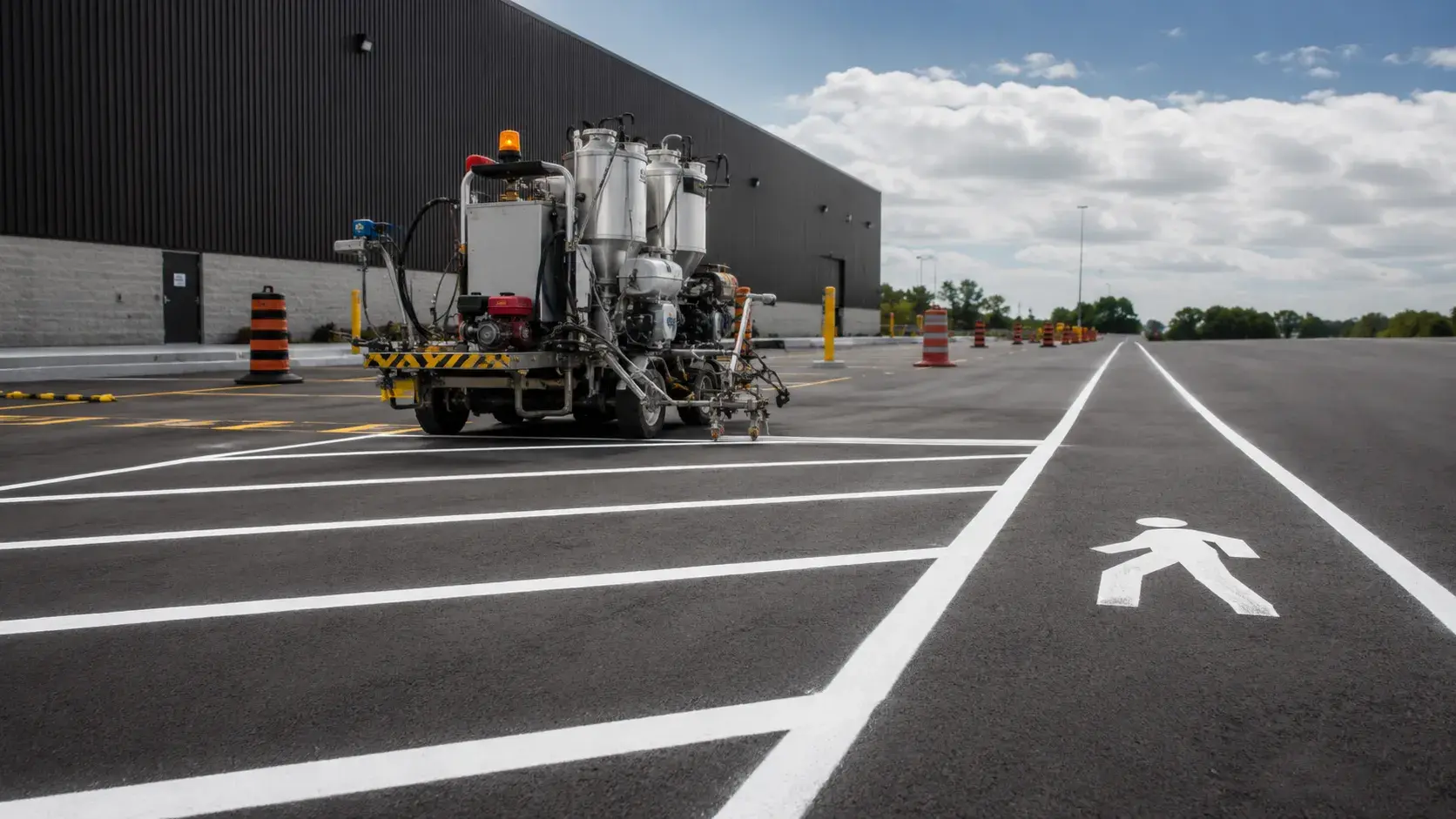
Pavement line marking for GTA parking, industrial yards, roads, fire routes, loading areas, and traffic facilities, performed by Harrowgate with layout, surface preparation, Ontario-compliant materials, symbols, glass beads, and staged traffic control.
Tell us what you need and we’ll get you a quote.
Licensed, insured & WSIB-covered · Free, no-obligation quote & on-site assessment.
Built to your engineered drawings, survey, and the real site conditions, not a one-size-fits-all approach forced to fit.
Durable materials and methods chosen for the load, traffic, and environment on site.
Send specs, drawings, or photos and get a free, no-obligation site visit and estimate with no guesswork.
Installation and site work completed in accordance with Ontario requirements.
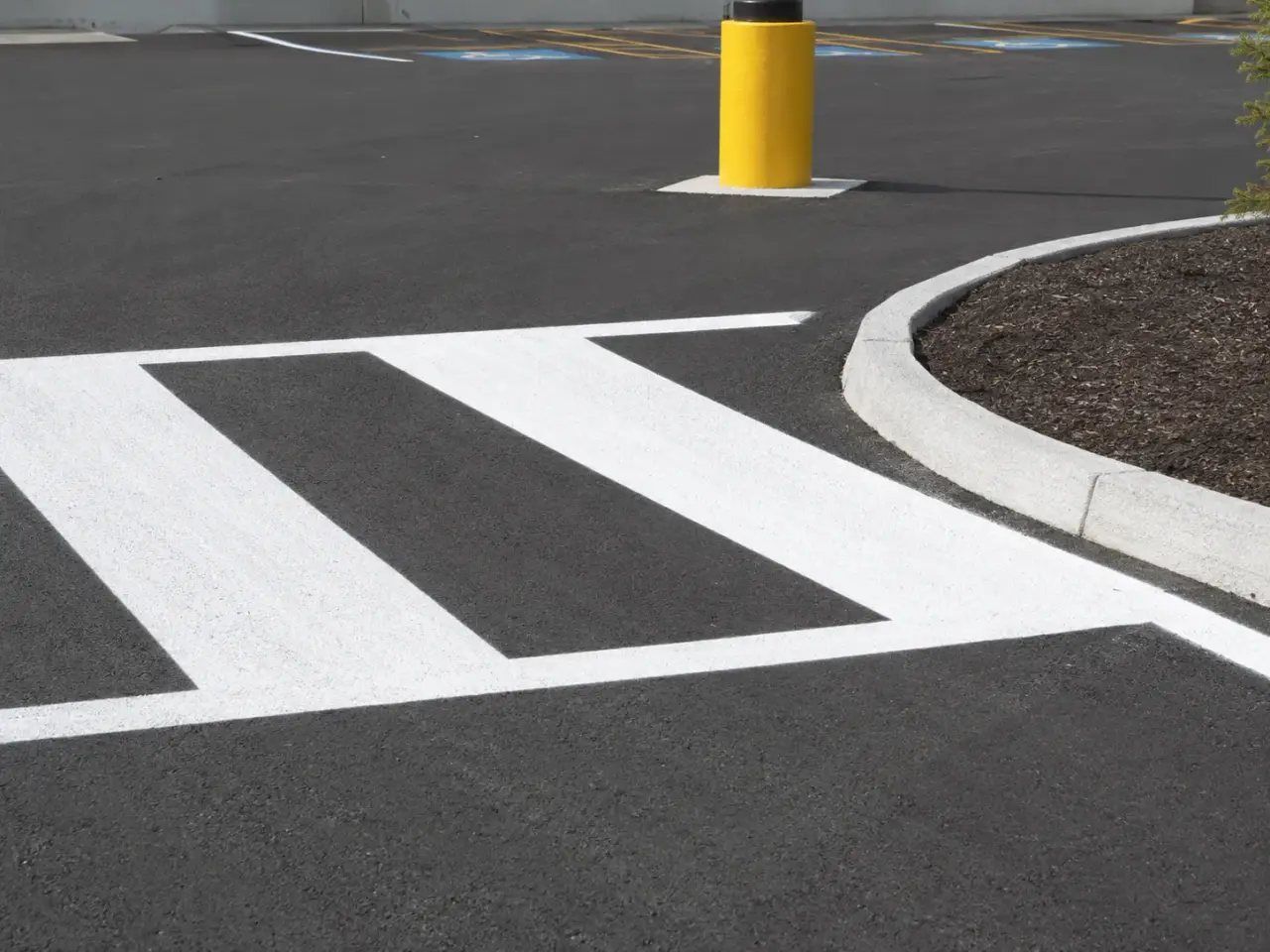
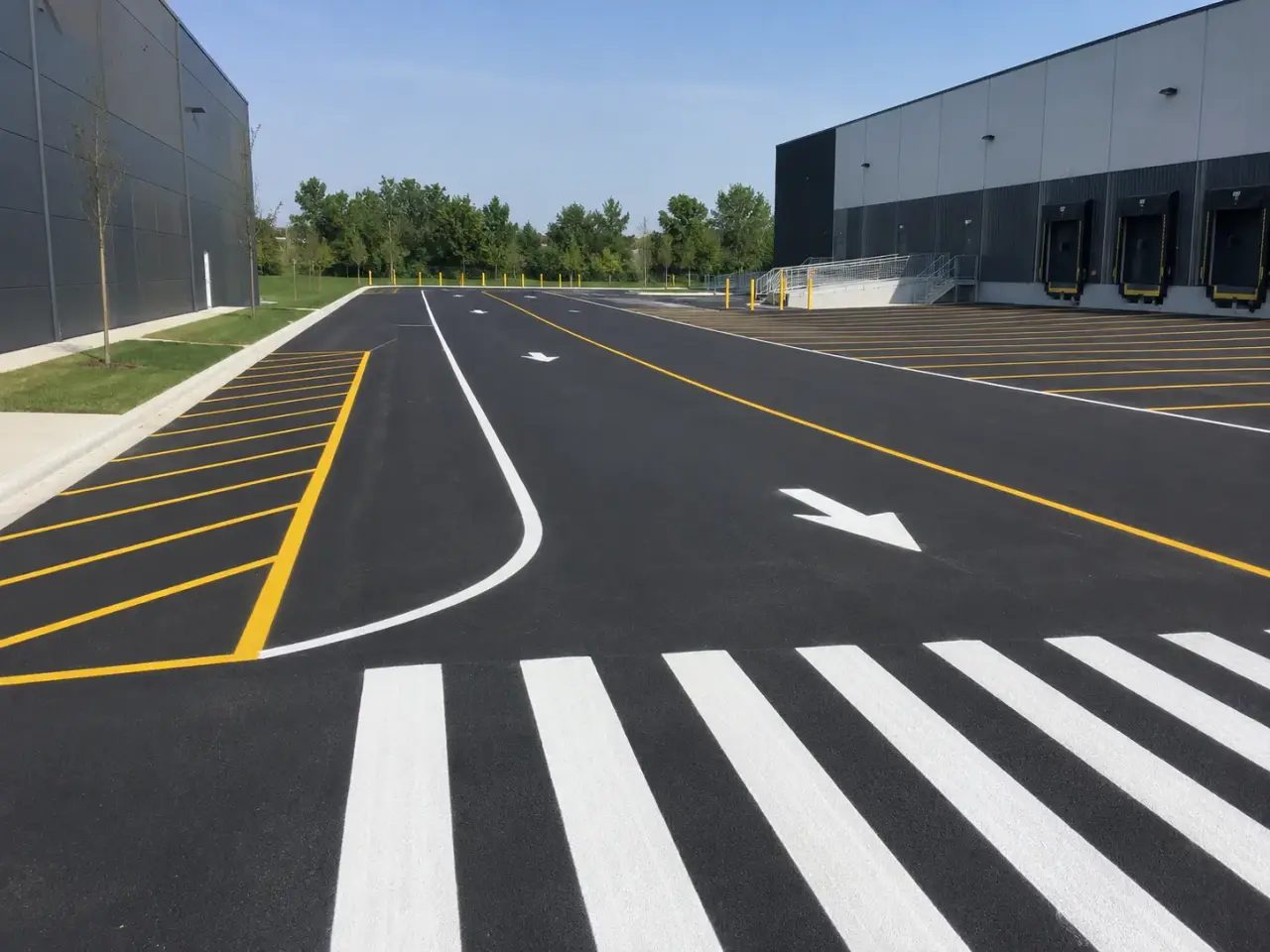
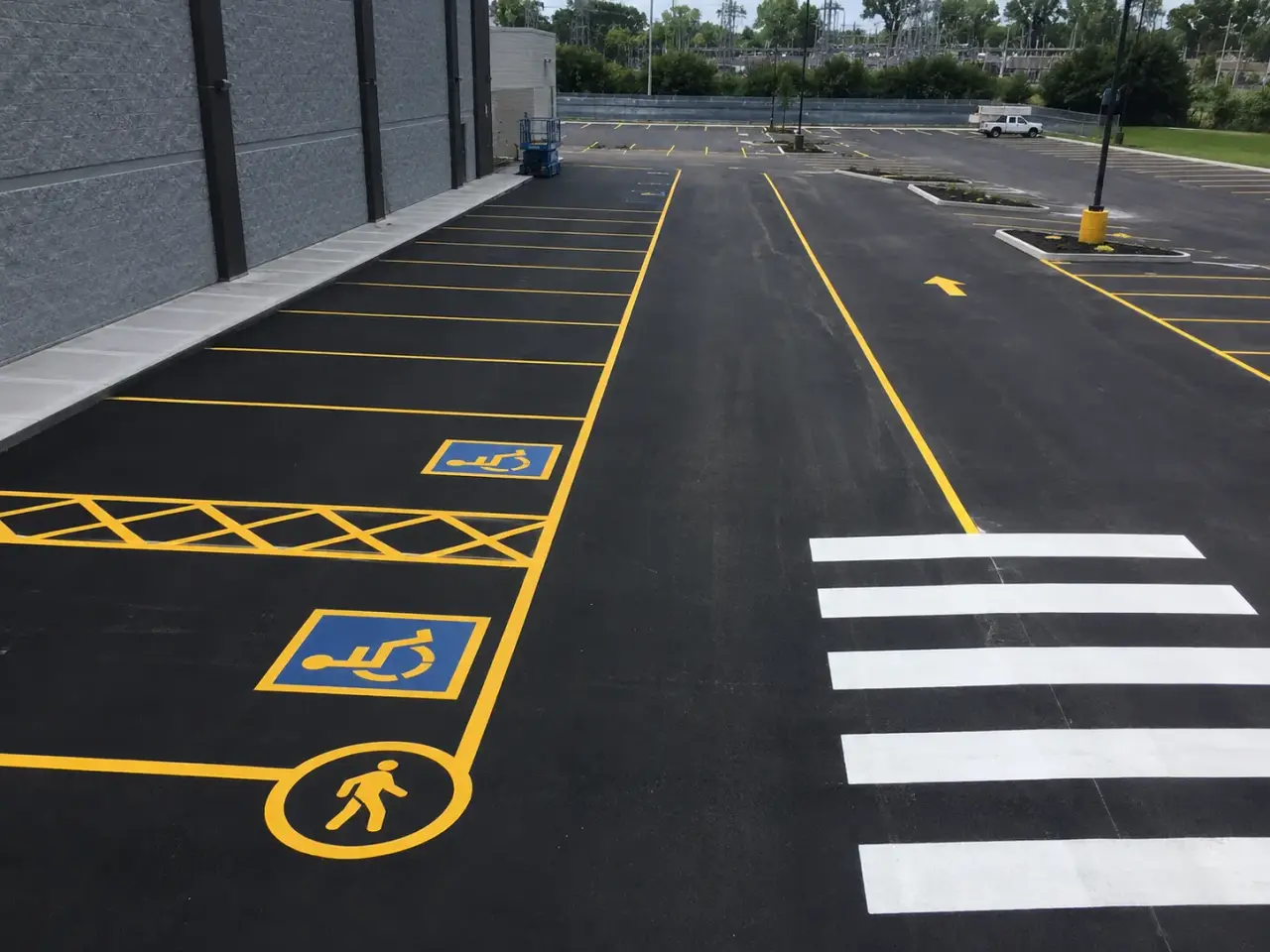
Waterborne paint, solvent-compatible products, durable plastic systems, symbols, and temporary markings suit different pavement, traffic, weather, and removal needs.
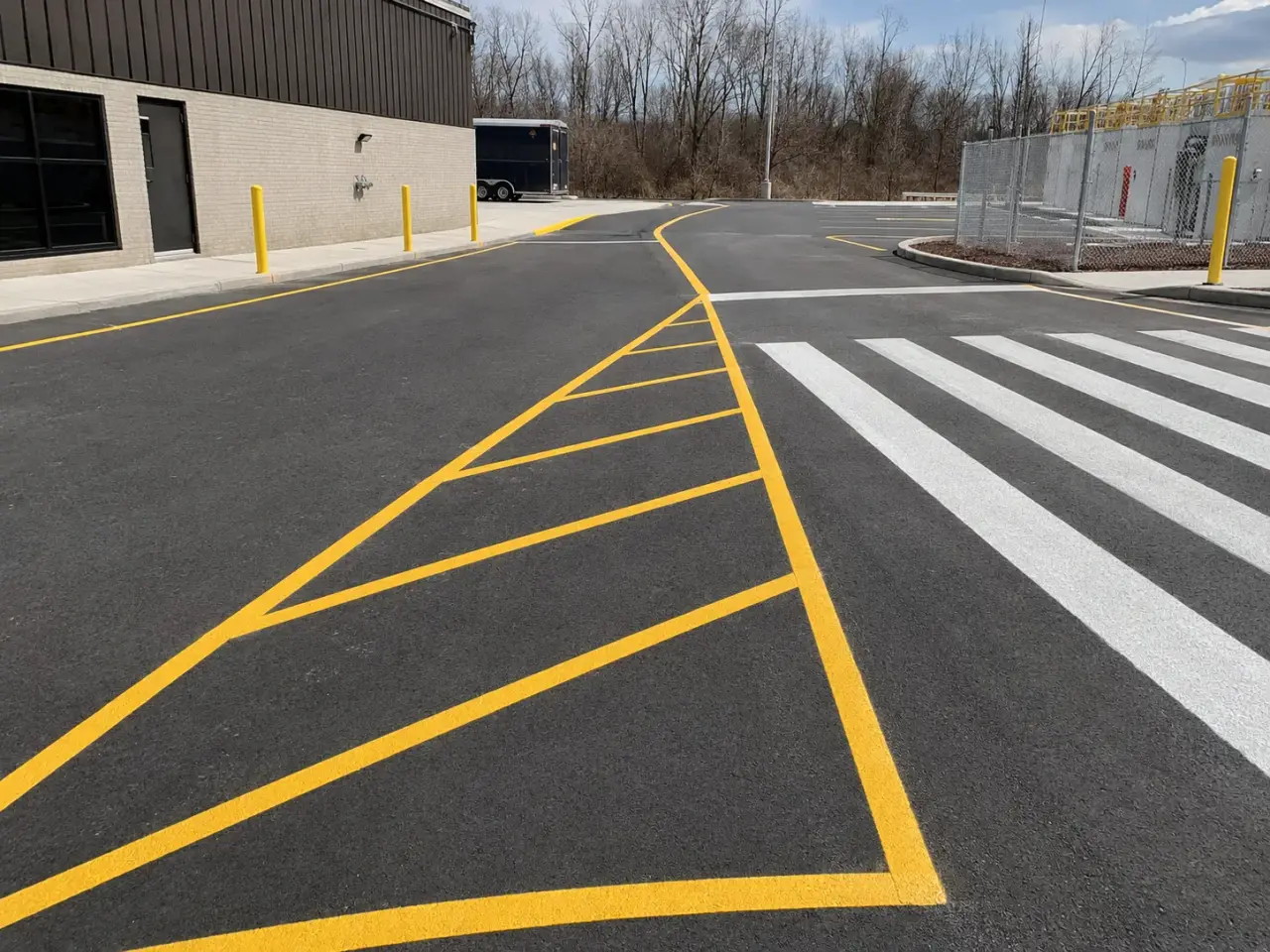
Step 1, Harrowgate treats marking as controlled layout followed by material placement under suitable pavement conditions. We resolve geometry first, remove or black out obsolete lines correctly, clean the bond surface, calibrate equipment, apply beads uniformly, and protect each stage until tracking risk has passed.
Step 2, Plan review and field layout. We reconcile civil, traffic, parking, fire-route, accessible, and signage plans. Control lines establish aisle centre, curb offsets, stall modules, crosswalks, and stop positions. Critical dimensions are checked against actual islands, columns, doors, and turning space because constructed geometry can differ from tender drawings.
Step 3, Old-mark removal. Conflicting markings are removed by grinding, blasting, or approved water methods, or covered with compatible black material where the owner accepts it. Removal avoids deep pavement scars that resemble a line in wet or low-angle light. Ghost markings are reviewed from the driver's approach before new layout proceeds.
Step 4, Surface preparation. Loose aggregate, dust, salt, dirt, curing material, oil, and moisture are removed. New asphalt is allowed the specified stabilization period, and new concrete receives any required curing-compound removal or primer. Areas contaminated by fuel or hydraulic oil are cleaned or repaired because paint applied over contamination peels under the first traffic.
Step 5, Machine striping and symbols. Airless or other approved striping equipment is calibrated for line width, wet-film application, and straight edges. Templates or automated equipment apply arrows, accessibility symbols, letters, numbers, and hatching. Curves are set out with smooth radii, and masking is removed before material tears at the edge.
Step 6, Beads and durable materials. Reflectorizing glass beads are dispensed into wet traffic paint at the specified rate and embedment. Durable polymeric, thermoplastic, or preformed systems receive their required primer, heating, mixing, or rolling process. Material is not stretched beyond coverage merely to complete a planned quantity.
Step 7, Traffic release and inspection. Cones and barricades keep wheels and pedestrians off wet markings. We check straightness, dimensions, colour, coverage, symbol orientation, bead distribution, tracking, overspray, and old-line conflict from the travel direction. Staging moves only when the applied material reaches its traffic-ready condition.
Step 8, Final drawings or marked plans record approved field adjustments. Harrowgate removes layout chalk, masking, grindings, and traffic control, and confirms that signs and markings communicate the same instruction. Facility turnover identifies material type by area so future maintenance does not place incompatible paint over durable polymer, tape, or thermoplastic.
Planning pavement line marking? Talk it through with our team.
Ontario municipal marking work commonly follows OPSS. MUNI 710 for application, with OPSS 1712 for organic-solvent traffic paint, OPSS 1713 for thermoplastic, OPSS 1714 for field-reacted polymeric material, OPSS 1715 for preformed tape, OPSS 1716 for water-borne paint, and OPSS 1750 for reflectorizing glass beads. the applicable local municipal specification applies local requirements where specified.
Line dimensions. Width, length, gap, taper, symbol size, and colour come from the approved traffic or parking plan and Ontario traffic manuals where applicable. Parking stalls and hatching must also fit the constructed aisle. Harrowgate uses fixed control points and verifies cumulative dimensions so small spacing errors do not push the final stall into a curb.
Paint selection. Water-borne paint provides a common lower-solvent option under suitable weather, while organic-solvent formulations can serve other approved conditions. Durable polymeric and thermoplastic materials provide longer wear at high-traffic road locations but require specialized preparation. Compatibility with existing markings and pavement is confirmed before application.
Weather limits. Pavement must be dry and above the product minimum, with no imminent rain or condensation. Cold surfaces slow drying, while high heat can affect application and bead retention. Wind increases overspray and can contaminate adjacent vehicles or finishes. Harrowgate records conditions and postpones placement that cannot cure cleanly.
Reflectivity. Glass beads need uniform spread and correct embedment. Beads sitting on top release quickly, while deeply buried beads do not return light. Paint thickness, bead rate, timing, and equipment alignment are controlled together. Snowplow and traffic wear remain important, especially at stop bars, lane shifts, and intersections.
Concrete and new asphalt. Concrete can require surface preparation and compatible primer because dense paste or curing compound inhibits bond. Fresh asphalt can release oils that affect some paints and may need a specified waiting period. We follow the approved material data and contract rather than applying one product immediately to every new surface.
Durable polymeric, thermoplastic, and preformed systems generally outlast ordinary traffic paint in heavy road service, but pavement, snowplows, traffic, application, and compatibility govern actual life. Paint can be more practical for parking layouts that change. Harrowgate selects the specified Ontario material for the exposure and maintenance plan.
Timing follows the asphalt, marking product, weather, and contract. Fresh asphalt can release oils that affect some materials, while urgent traffic needs may require an approved compatible approach. Harrowgate follows current product and project requirements, confirms the surface is clean and dry, and uses staged temporary control where necessary.
Common causes include dirt, salt, sealcoat, oil, wet pavement, cold application, weak asphalt surface, incompatible old paint, and traffic before cure. Snowplows then accelerate loss. Harrowgate cleans and repairs the surface, uses the specified material and rate, and protects lines until they are ready for wheels.
Spaces, access aisles, symbols, signs, routes, slopes, and curb transitions follow the approved accessibility and site design. Painted symbols alone do not make a space compliant. Harrowgate verifies constructed dimensions and fixed obstacles, then marks the approved geometry so hatching and pedestrian paths remain clear.
Blackout can suit some temporary or owner-approved private applications, but it may remain visible against aged pavement and become confusing when wet or backlit. Durable old markings often require physical removal. Harrowgate checks the material and viewing angle, then uses the removal or masking method required by the contract.
The pavement must be clean and dry, temperatures must meet the material minimum, and rain or condensation must not occur before cure. Wind must allow controlled spray and bead placement. Harrowgate checks surface and air conditions, not only the forecast, and maintains closures longer when cool weather slows drying.
Provide the approved layout, line lengths and widths, symbols and text, colours, Ontario material specification, bead requirements, existing-line removal, pavement type and age, traffic closures, phasing, and working hours. Harrowgate field-checks fixed geometry and identifies cleaning or pavement repair that must occur before marking.
Opening depends on material, film thickness, surface and air temperature, humidity, and manufacturer requirements, not one universal time.
The paving and marking specifications determine timing; surface oils, temperature, cleanliness, and required layout acceptance must be suitable.
Still have a question about pavement line marking? Ask our team directly.
Commercial and heavy-civil construction delivered for developers, contractors, property managers, and municipalities.
Send drawings, a site plan, or a description of the scope. Harrowgate Group is licensed, insured, and WSIB-covered.
Licensed, Insured & WSIB-Covered, work managed and documented on every job
Tell us what you need and we’ll get you a quote.
Harrowgate Group provides pavement line marking, delivered and installed with quote-ready support across Toronto and surrounding Ontario communities.
Companies We've Worked With
Harrowgate Group delivers commercial and heavy-civil construction for developers, contractors, institutions, municipalities, and property groups across Ontario.
 Popeyes
  Tim Hortons
  Subway
  University of Toronto
  Madison Group
  RioCan
  Women's College Hospital
  Starbucks
  Mazda
Mazda  TD Bank
  City of Toronto Popeyes Tim Hortons Subway University of Toronto Madison Group RioCan Women's College Hospital Starbucks Mazda TD Bank City of Toronto