Built to spec
Built to your engineered drawings, survey, and the real site conditions, not a one-size-fits-all approach forced to fit.
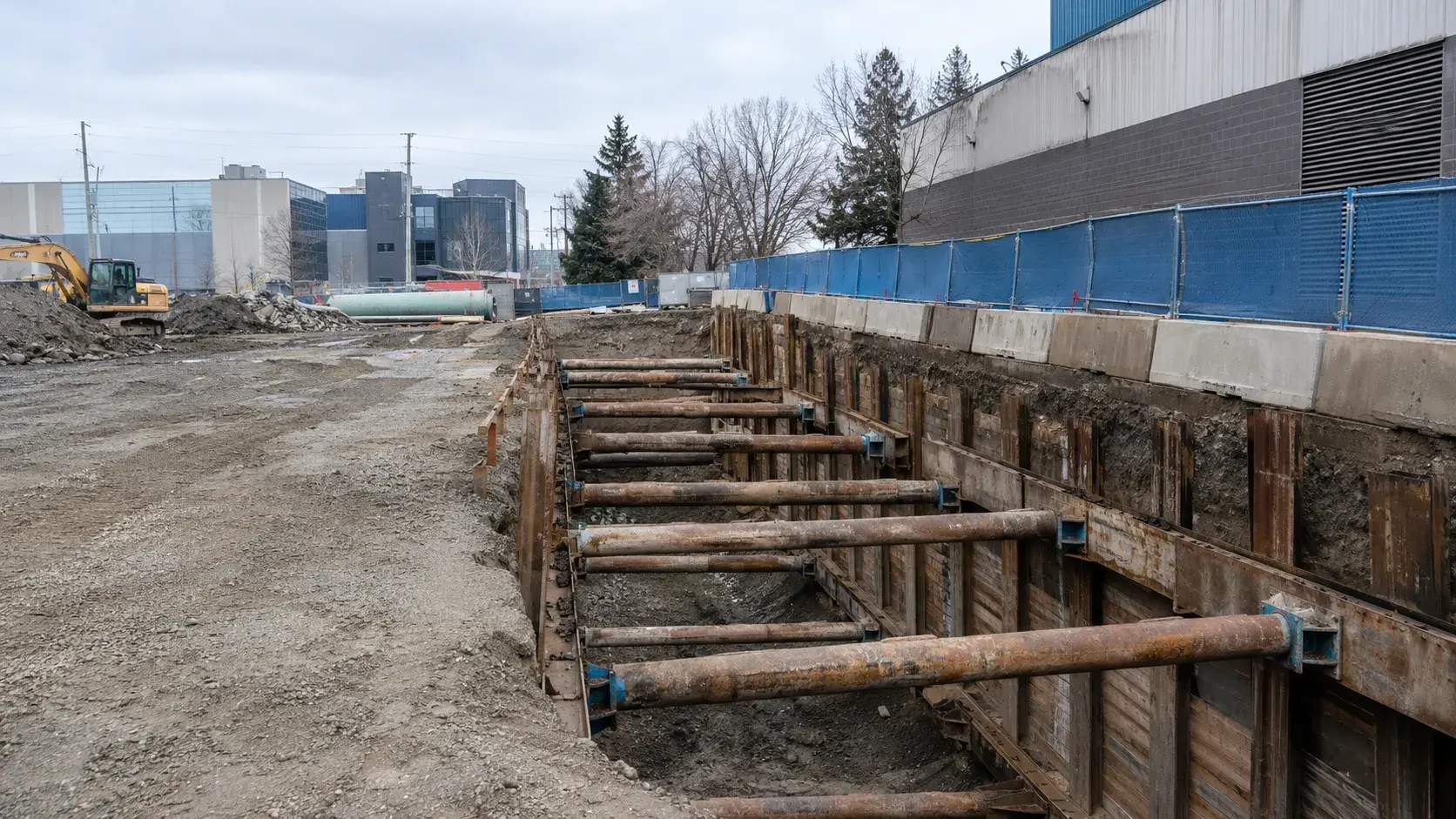
24/7 Emergency Response in Georgina is Harrowgate's around-the-clock mobilization for watermain breaks, sewer failures, collapses, and site emergencies.
Tell us what you need and we’ll get you a quote.
Licensed, insured & WSIB-covered · Free, no-obligation quote & on-site assessment.
Built to your engineered drawings, survey, and the real site conditions, not a one-size-fits-all approach forced to fit.
Durable materials and methods chosen for the load, traffic, and environment on site.
Send specs, drawings, or photos and get a free, no-obligation site visit and estimate with no guesswork.
Installation and site work completed in accordance with Ontario requirements.
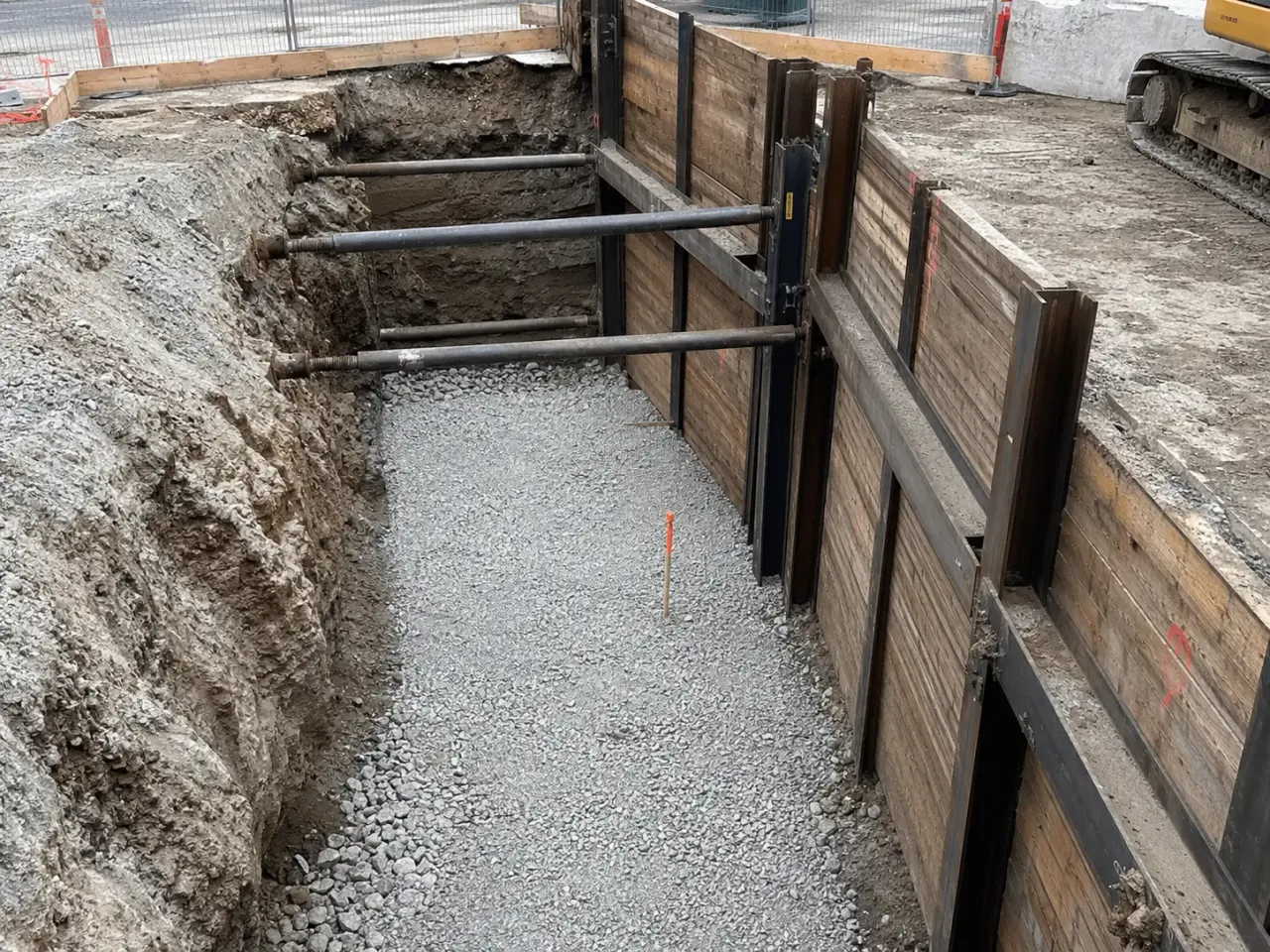
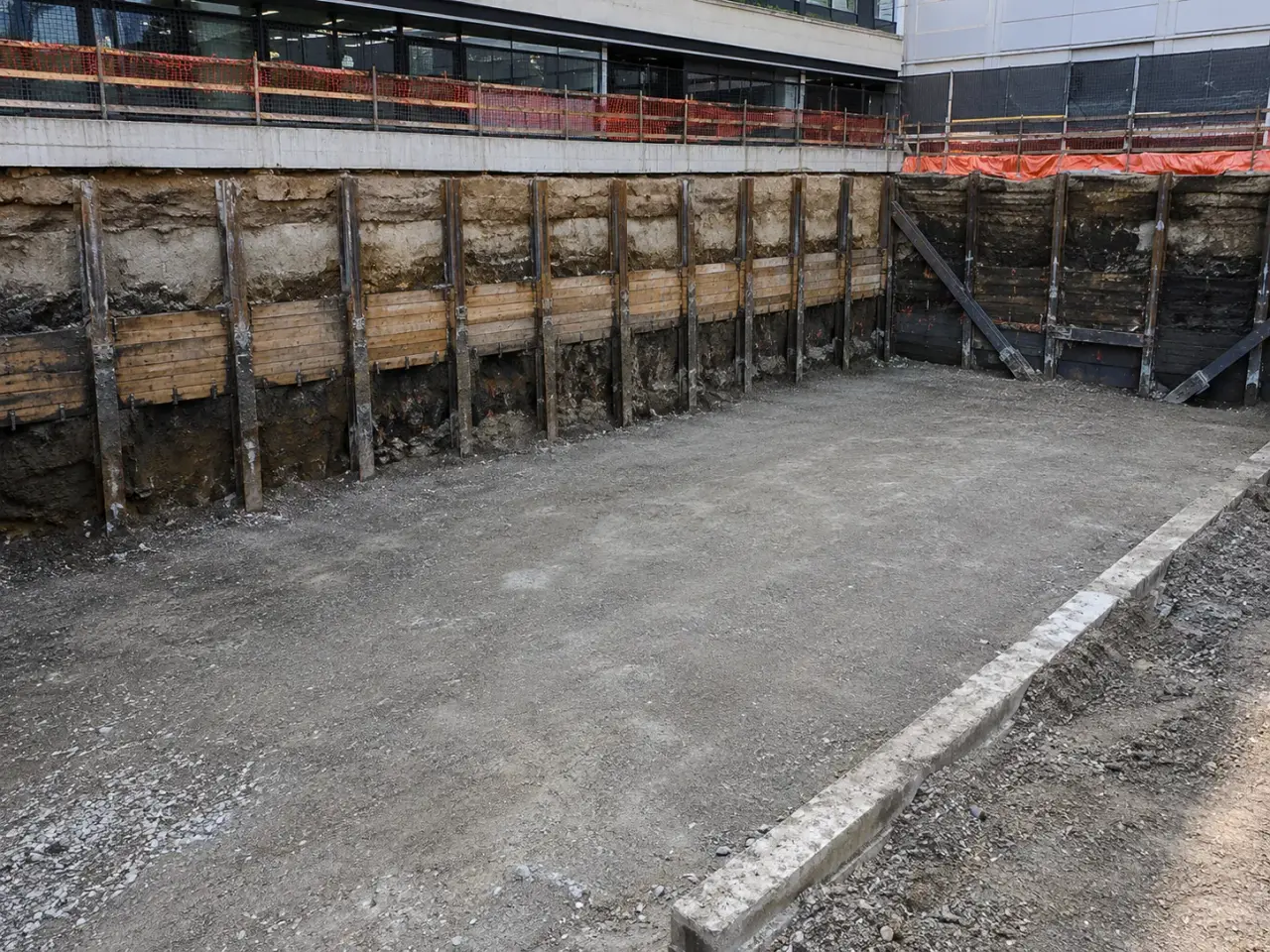
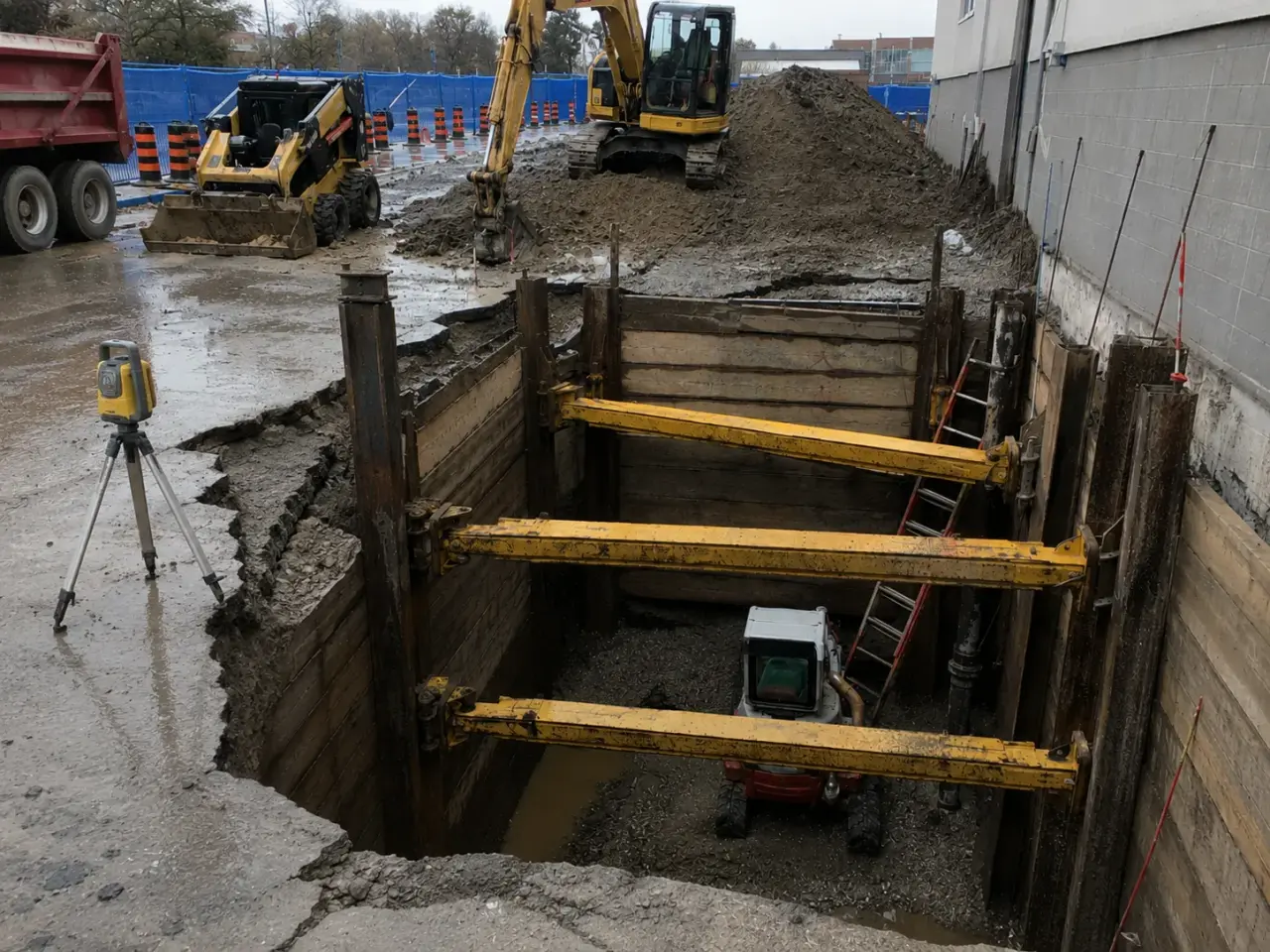
Water emergencies can require isolation, pumping, containment, temporary drainage, and erosion repair. Structural incidents can require exclusion zones, unloading, engineered bracing, weather protection, and selective removal. Ground failures can require utility locating, shoring, void exposure, and controlled backfill. Access emergencies can require barriers, road plates, temporary pavement, lighting, and traffic staging. The response package is selected from the active mechanism and assets still at risk, not from one generic dispatch list.
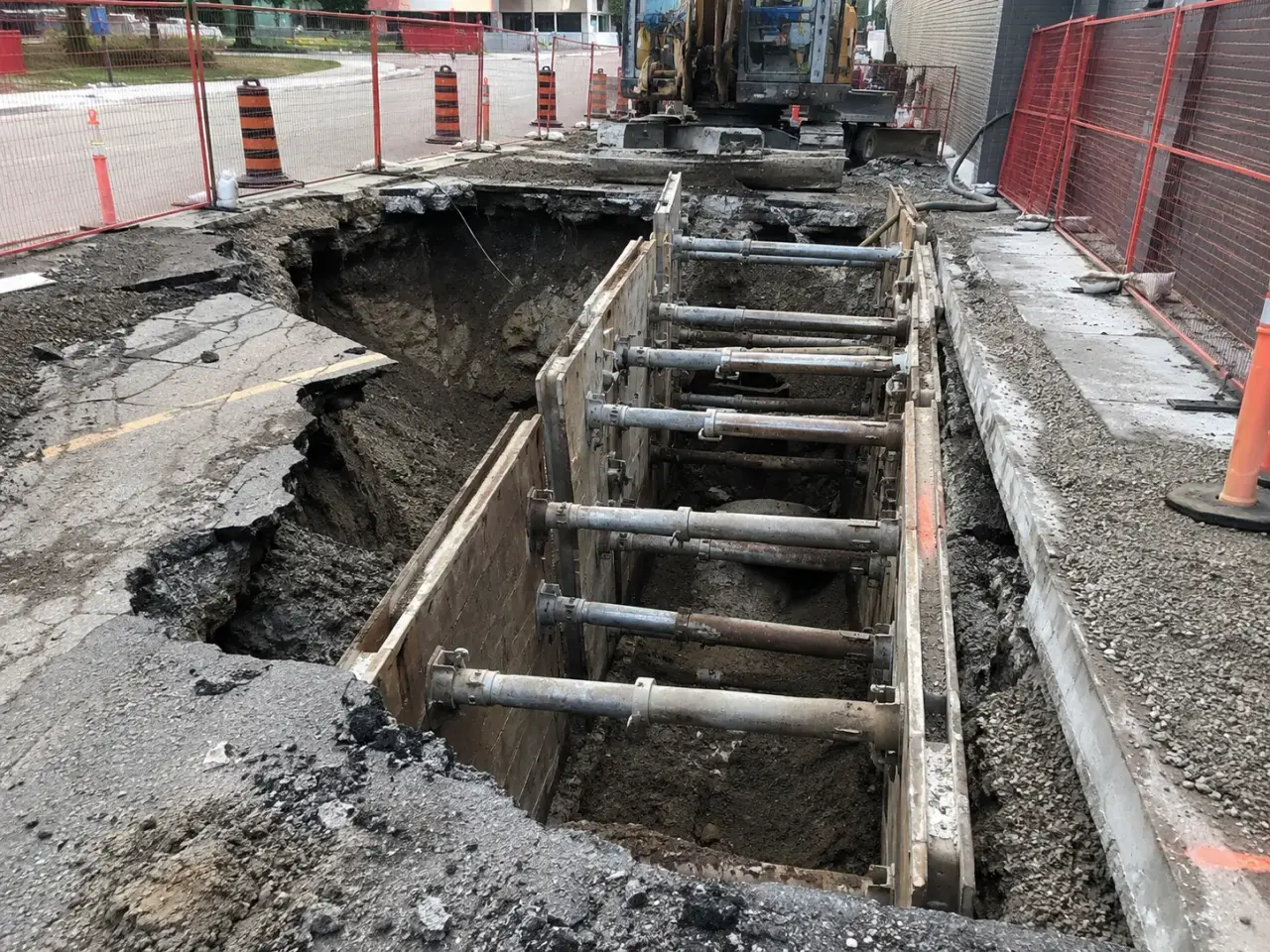
Step 1,
Step 2, During intake we ask what happened, when it happened, whether conditions are changing, who is on site, which areas are inaccessible, and which operations are critical. We request photos from a safe location, plans, service records, engineer or authority directions, and known contamination information. A water release, structural movement, exposed utility, public-road obstruction, and ordinary equipment breakdown require different people and equipment. Accurate intake prevents a generic mobilization that arrives without the pumps, shoring, traffic control, lifting capacity, or materials the incident demands.
Step 3, Stabilization is selected by mechanism. For flooding, we stop or isolate the source through the asset operator, protect unaffected drains and areas, establish pumping and containment, and prevent discharge from spreading. For a washout or sinkhole, we barricade beyond the visible edge, locate utilities, control water, expose the void safely, and rebuild support from competent material.
For partial structural damage, we secure the fall zone, remove loads where directed, install designed temporary support, and selectively remove only material released by the engineer or authority. For an unsafe trench, no entry occurs until soil, water, surcharge, and protection comply with the excavation plan.
Step 4, Equipment is dispatched for the specific work package. It can include excavators, loaders, skid steers, vacuum equipment, pumps, hoses, generators, task lighting, barriers, road plates, concrete saws, breakers, compactors, bins, shoring, and lifting equipment. Redundancy is assigned where a single failure would allow flooding, loss of access, or renewed instability. Fuel, discharge routing, noise, lighting, winter conditions, and overnight supervision are planned with the same care as the primary machine.
Step 5, Once the site is stable, we define the recovery boundary. Some incidents can move directly to permanent repair. Others need temporary weather protection, bracing, a plated excavation, a bypass, or a protected access route while drawings, permits, materials, and testing are completed. We record concealed conditions, quantities, disposal streams, equipment time, instructions, and photographs so the owner and consultant can make the next decision with a reliable field record.
Planning 24/7 emergency response in Georgina? Talk it through with our team.
We respond to commercial, industrial, institutional, municipal, and heavy-civil incidents including flooding, failed sewers and watermains, sinkholes, washouts, unstable excavations, localized structural damage, vehicle impact, storm damage, collapsed concrete or masonry, blocked access, and urgent temporary works. The mobilization is matched to the actual incident and operating site.
Provide the exact address, safe site contact, incident time, changing conditions, injuries or authority involvement, restricted areas, affected operations, known utilities, water or material release, and safe equipment access. Send photos only from a protected location. Drawings, service records, engineer directions, and facility emergency procedures help refine the mobilization.
No. Public emergency services, authorities, and utility operators retain their mandates for life safety, public control, and asset isolation. Harrowgate controls the construction scope released to us, such as barriers, pumping, shoring, excavation, selective removal, temporary protection, and repair, while coordinating boundaries and status with the responsible parties.
Yes, when the site can support safe access, lighting, communication, supervision, noise, traffic, utility status, and the required permits or authority controls. We plan shift handovers, pump and fuel checks, inspections, exclusion zones, deliveries, and operational interfaces so changing crews do not lose critical information about temporary conditions.
We assess whether the cause is controlled, whether design information and materials are available, and whether permanent work can proceed without increasing risk. Temporary stabilization is used when engineering, permits, drying, testing, procurement, or continuing operations require time. Its limits, inspections, restricted access, and replacement sequence are documented for the owner.
We identify the source and likely quality before selecting containment, treatment, sewer discharge, or off-site removal. Stormwater, sewage, sediment-laden groundwater, chlorinated water, fuel-affected water, and process liquids require different routes. Pumping is monitored so it does not transport soil fines, spread contamination, overload drainage, or undermine nearby assets.
Reopening depends on evidence, not appearance. Criteria can include stable structural or ground conditions, accepted temporary support, verified utility status, controlled water, restored drainage, compacted fill, secure barriers or plating, clear access, completed inspections, and release by the owner, engineer, authority, or asset operator responsible for that condition.
Records are matched to the incident and contract, and can include arrival and shift logs, site instructions, photographs, equipment and labour time, pump monitoring, disposal documents, locate information, concealed-condition notes, material tickets, compaction or inspection results, and temporary-condition handovers. These records support recovery decisions and the permanent repair package.
From a safe location, provide what happened, when it began, whether conditions are changing, injuries or public hazards, utility status, affected operations, access, site contact, photographs, available drawings, known contamination, and any authority or engineer direction.
Not always. The first release may cover isolation, stabilization, pumping, temporary support, weather protection, or safe access. Permanent work proceeds when conditions, design, permits, materials, testing, and operating windows are established.
Still have a question about 24/7 emergency response in Georgina? Ask our team directly.
Commercial and heavy-civil construction delivered for developers, contractors, property managers, and municipalities.
Send drawings, a site plan, or a description of the scope. Harrowgate Group is licensed, insured, and WSIB-covered.
Licensed, Insured & WSIB-Covered, work managed and documented on every job
Tell us what you need and we’ll get you a quote.
Harrowgate Group provides 24/7 emergency response, delivered and installed with quote-ready support across Toronto and surrounding Ontario communities.
Companies We've Worked With
Harrowgate Group delivers commercial and heavy-civil construction for developers, contractors, institutions, municipalities, and property groups across Ontario.
 Popeyes
  Tim Hortons
  Subway
  University of Toronto
  Madison Group
  RioCan
  Women's College Hospital
  Starbucks
  Mazda
Mazda  TD Bank
  City of Toronto Popeyes Tim Hortons Subway University of Toronto Madison Group RioCan Women's College Hospital Starbucks Mazda TD Bank City of Toronto