
Built to spec
Built to your engineered drawings, survey, and the real site conditions, not a one-size-fits-all approach forced to fit.
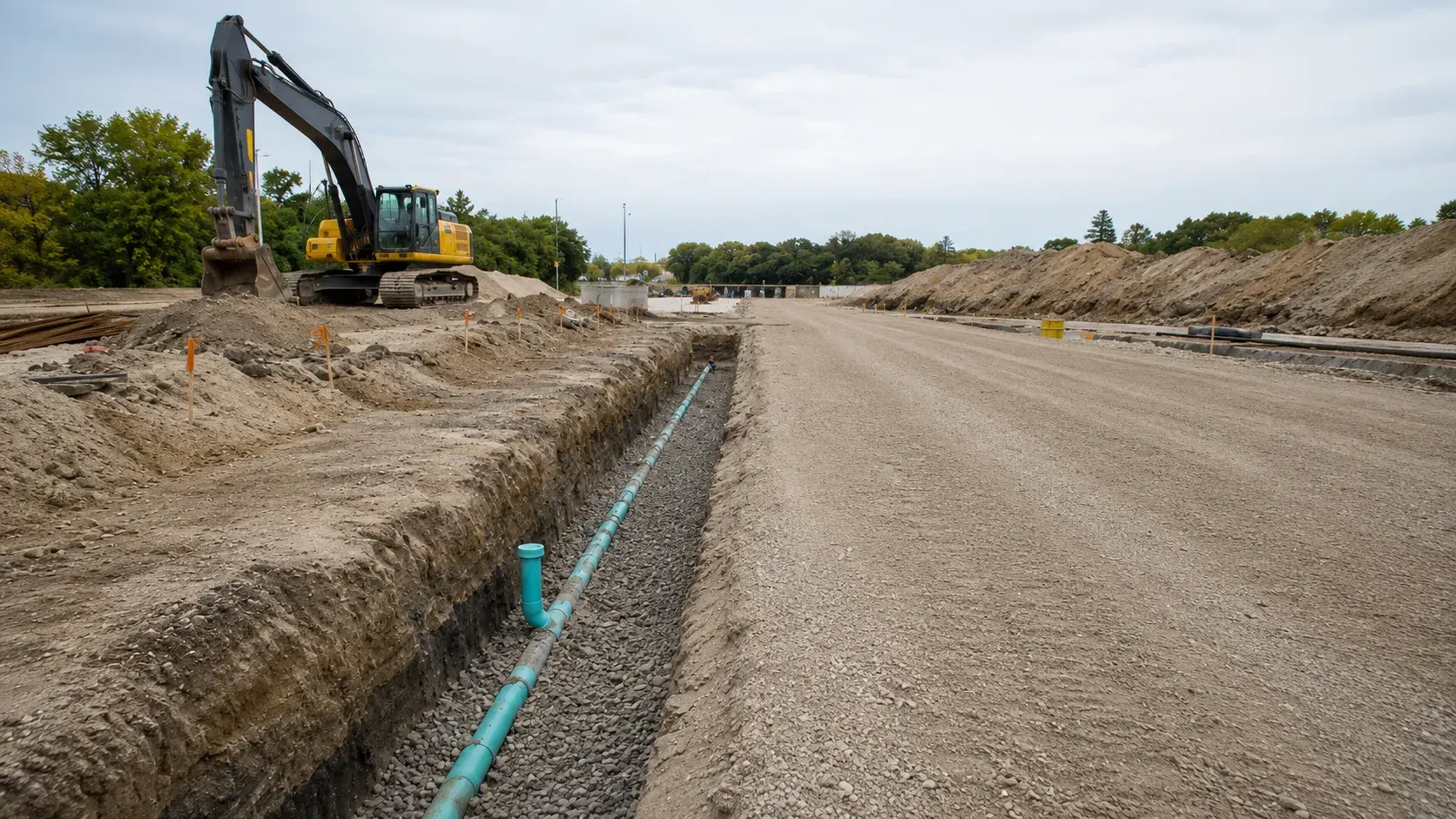
Trenching in North York is the controlled excavation of trenches for utilities, services, and drainage, shored and backfilled to spec.
Tell us what you need and we’ll get you a quote.
Licensed, insured & WSIB-covered · Free, no-obligation quote & on-site assessment.
Built to your engineered drawings, survey, and the real site conditions, not a one-size-fits-all approach forced to fit.
Durable materials and methods chosen for the load, traffic, and environment on site.
Send specs, drawings, or photos and get a free, no-obligation site visit and estimate with no guesswork.
Installation and site work completed in accordance with Ontario requirements.
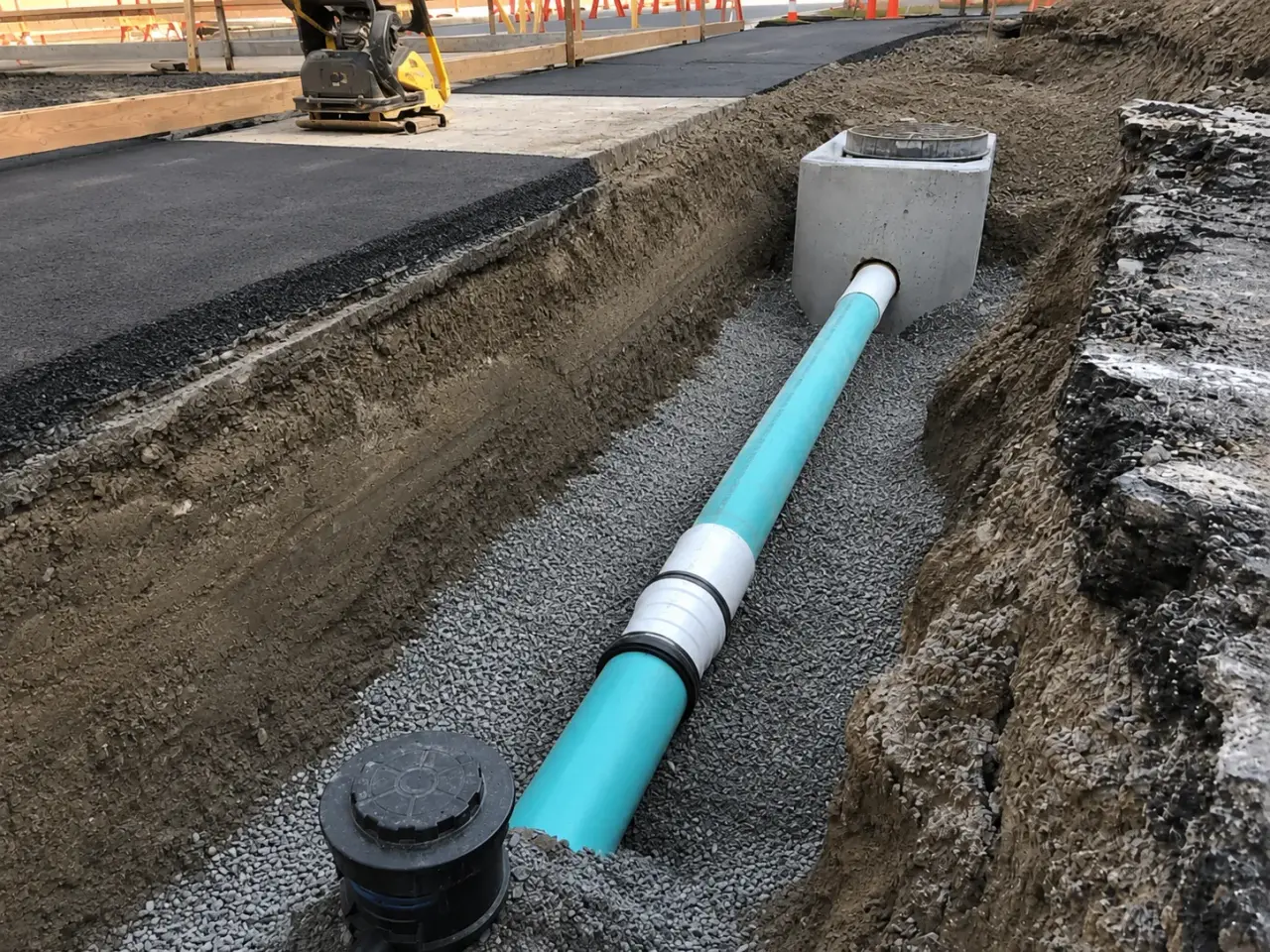
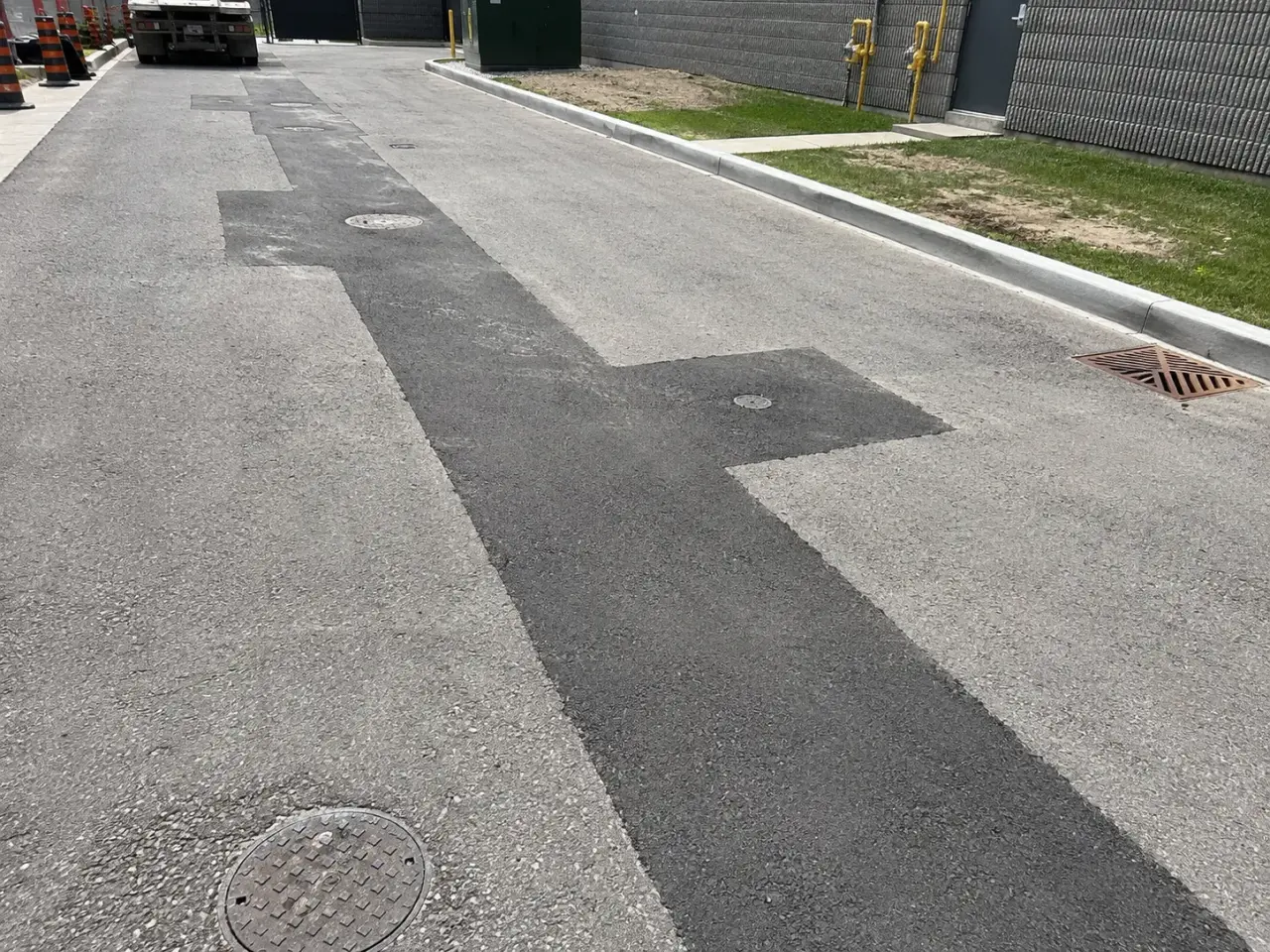
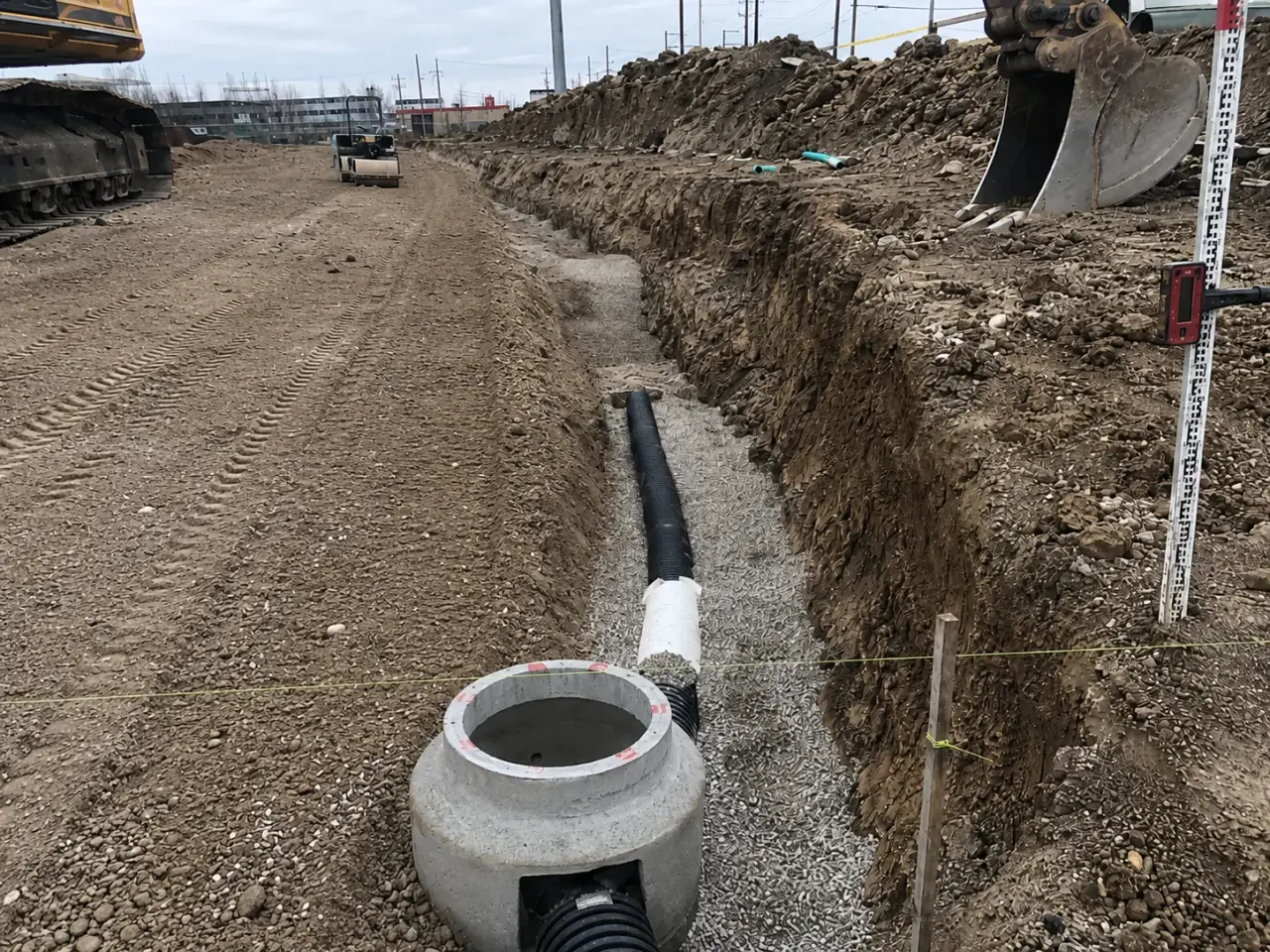
Trench method is determined by depth, soil, groundwater, adjacent loads, utilities, pipe material, bedding, available width, access, and the temporary support required to protect workers and nearby assets.
Sloped or benched trenches. Open profiles are used only where soil, depth, space, weather, surcharge, and the protective-system plan permit stable geometry.
Shielded excavation. Trench boxes protect workers within the shield while requiring controlled movement, safe access, appropriate clearance, and care around installed pipe.
Shored trenches. Hydraulic shores, timber systems, sheet piles, slide rail, or engineered support restrain ground where slopes cannot fit or adjacent movement must be limited.
Specialty exposure. Hydro excavation, hand digging, vacuum support, and short staged cuts manage congestion, crossings, and sensitive services.
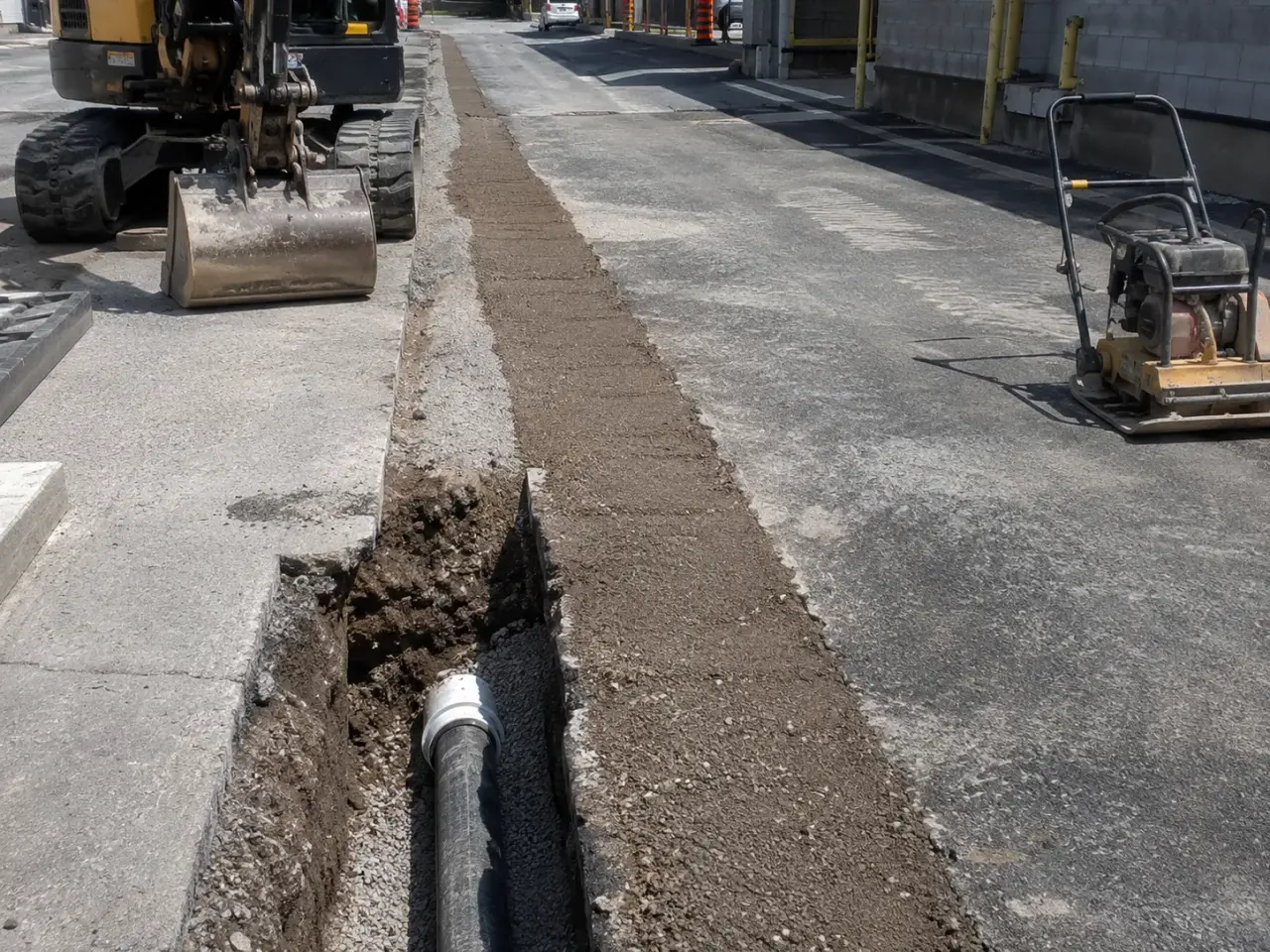
Step 1, Confirm locates, daylight crossings, survey, geotechnical conditions, trench support, groundwater, pipe requirements, access, and spoil placement.
Step 2, Install barriers, traffic controls, safe access, shoring or shielding, pumps, and stable equipment positions before workers enter.
Step 3, Excavate in controlled reaches, support exposed services, keep spoil and equipment outside surcharge limits, and prepare undisturbed formation.
Step 4, Place bedding, install the service to line and grade, complete joints and structures, and obtain required inspections and tests.
Step 5, Place pipe-zone and trench backfill in specified lifts, test compaction, remove support in sequence, and restore the surface.
We set trench line and invert control, review crossings and connection elevations, obtain current utility information, and daylight critical conflicts before opening a production run. The excavator advances only as far as the pipe or duct installation can safely follow.
Trench boxes, hydraulic shoring, sheeted systems, or approved slopes are selected for soil, depth, width, surcharge, groundwater, and adjacent structures. Ladders remain within the protected area. Spoil and heavy equipment are kept back from the edge, and pumps draw from filtered sumps that do not remove bedding or native fines.
Final grade is trimmed without disturbing the bearing zone. Specified bedding is placed to uniform depth, shaped around the lower pipe, and checked by laser or survey. After the installed service passes required inspection and testing, embedment is placed evenly on both sides to prevent movement. Backfill rises in controlled lifts, with lighter equipment around the utility and full compaction restored above it. Harrowgate records crossings, fittings, service stubs, and abandonment points before pavement, slab, or landscape restoration closes the trench.
Planning trenching in North York? Talk it through with our team.
Support is generally required unless a specific exception in Ontario Regulation 213/91 applies. Relevant factors include depth, worker entry, soil type, slope geometry, rock condition, water, surcharge, and nearby structures. Harrowgate assesses the actual cut and uses an approved shield, shoring system, engineered support, or compliant slope before entry.
Ontario guidance requires heavy equipment, excavated soil or rock, and construction material to remain at least 1 metre from the upper edge. More distance may be needed where surcharge affects support design or access. Harrowgate establishes a marked setback and places truck routes, pipe strings, and spoil piles outside the controlled edge zone.
A competent person inspects trenches and excavations daily before worker entry and again when conditions change. Rain, thaw, vibration, new surcharge, groundwater, support movement, or an extended shutdown can all trigger reassessment. Harrowgate records the inspection and corrects hazards before workers re-enter the protected work area.
The specified bedding system assumes a defined relationship among pipe diameter, side clearance, embedment, native soil, and compaction access. An unnecessarily wide trench increases soil load and restoration volume, while a narrow trench can prevent proper haunch compaction. Harrowgate matches excavation width to the standard detail and support system.
Runoff is diverted at the surface and groundwater is collected through filtered sumps, wellpoints, or another approved system. Pump intakes are separated from loose bedding and discharge is controlled. Harrowgate watches for migrating fines, boiling, erosion, and settlement, then maintains a firm base until embedment has enough cover to resist movement.
Durable restoration requires removal of loose material, compatible backfill, controlled lifts, moisture adjustment, density testing, and proper rebuilding of granular and asphalt layers. Confined zones around maintenance holes and valves receive special attention. Harrowgate also addresses soft native edges and abandoned service voids instead of bridging over them with surface granular.
Yes, after routes, shutdown limits, emergency access, crossings, contaminated-process risks, and temporary protection are agreed with the operator. Harrowgate limits open excavation, uses barriers and steel plates where designed, schedules tie-ins in approved windows, and verifies every existing line before exposure. The work area is restored progressively to return operating space.
A trench box primarily shields workers from a collapse but does not necessarily prevent ground movement. Shoring supports trench faces and may be engineered to limit movement beside utilities, roads, or structures.
Stable formation, suitable bedding and backfill, controlled lift thickness, equipment suited to confined zones, moisture control, mapped density tests, and coordinated removal of shoring reduce voids and weak layers.
Still have a question about trenching in North York? Ask our team directly.
Commercial and heavy-civil construction delivered for developers, contractors, property managers, and municipalities.
Send drawings, a site plan, or a description of the scope. Harrowgate Group is licensed, insured, and WSIB-covered.
Licensed, Insured & WSIB-Covered, work managed and documented on every job
Tell us what you need and we’ll get you a quote.
Harrowgate Group provides trenching, delivered and installed with quote-ready support across Toronto and surrounding Ontario communities.
Companies We've Worked With
Harrowgate Group delivers commercial and heavy-civil construction for developers, contractors, institutions, municipalities, and property groups across Ontario.
 Popeyes
  Tim Hortons
  Subway
  University of Toronto
  Madison Group
  RioCan
  Women's College Hospital
  Starbucks
  Mazda
Mazda  TD Bank
  City of Toronto Popeyes Tim Hortons Subway University of Toronto Madison Group RioCan Women's College Hospital Starbucks Mazda TD Bank City of Toronto