
Built to spec
Built to your engineered drawings, survey, and the real site conditions, not a one-size-fits-all approach forced to fit.
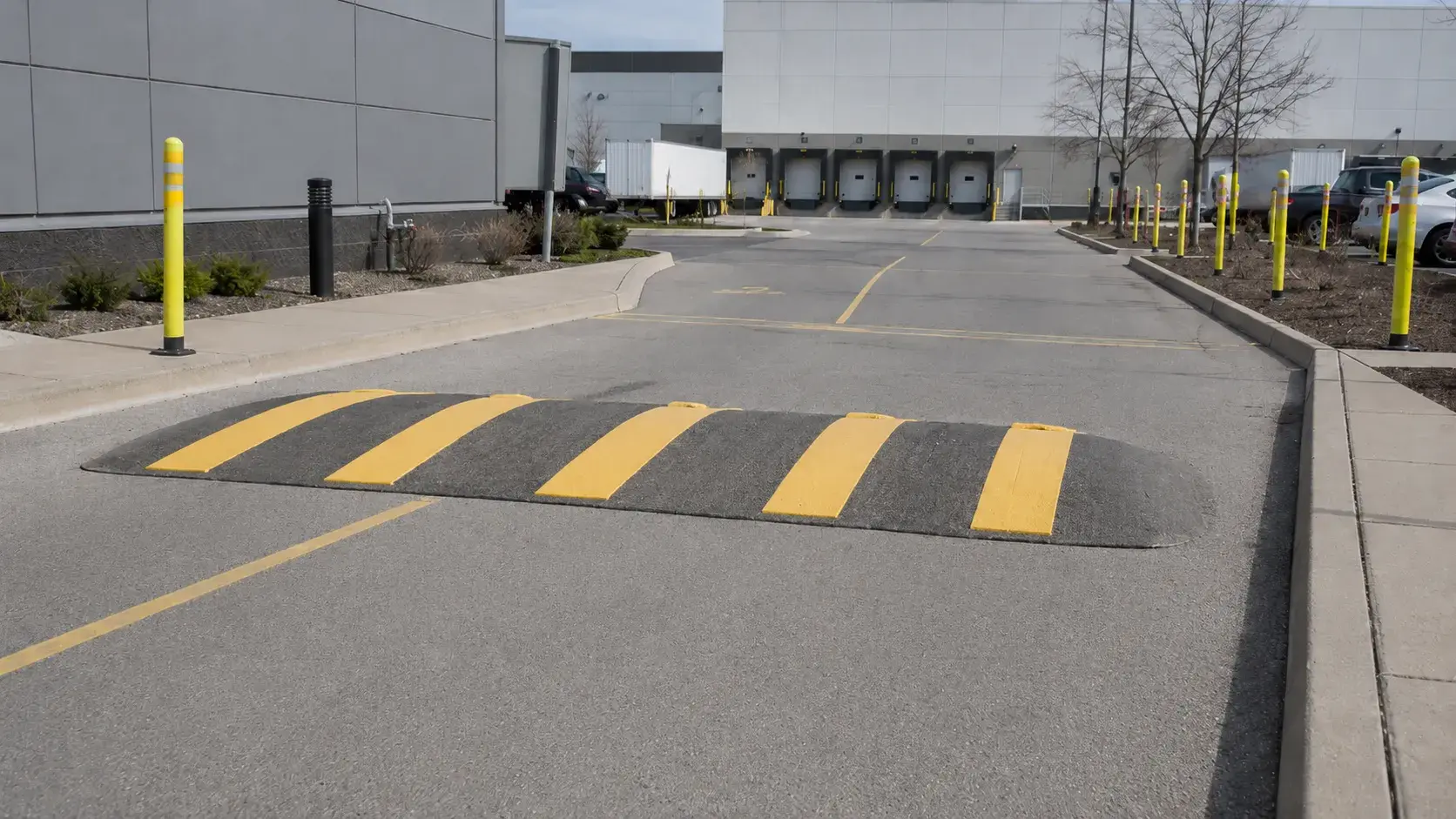
Speed Bumps and Traffic Calming in Innisfil are the concrete or asphalt bumps, humps, and features that slow traffic on private roads and lots.
Tell us what you need and we’ll get you a quote.
Licensed, insured & WSIB-covered · Free, no-obligation quote & on-site assessment.
Built to your engineered drawings, survey, and the real site conditions, not a one-size-fits-all approach forced to fit.
Durable materials and methods chosen for the load, traffic, and environment on site.
Send specs, drawings, or photos and get a free, no-obligation site visit and estimate with no guesswork.
Installation and site work completed in accordance with Ontario requirements.
Traffic calming uses engineered vertical and horizontal measures to reduce operating speed, clarify priority, and protect pedestrians on private and public-facing sites. Harrowgate performs GTA speed humps, raised crossings, speed cushions, islands, curb extensions, bollards, signs, drainage changes, and markings to the approved geometry and traffic plan.
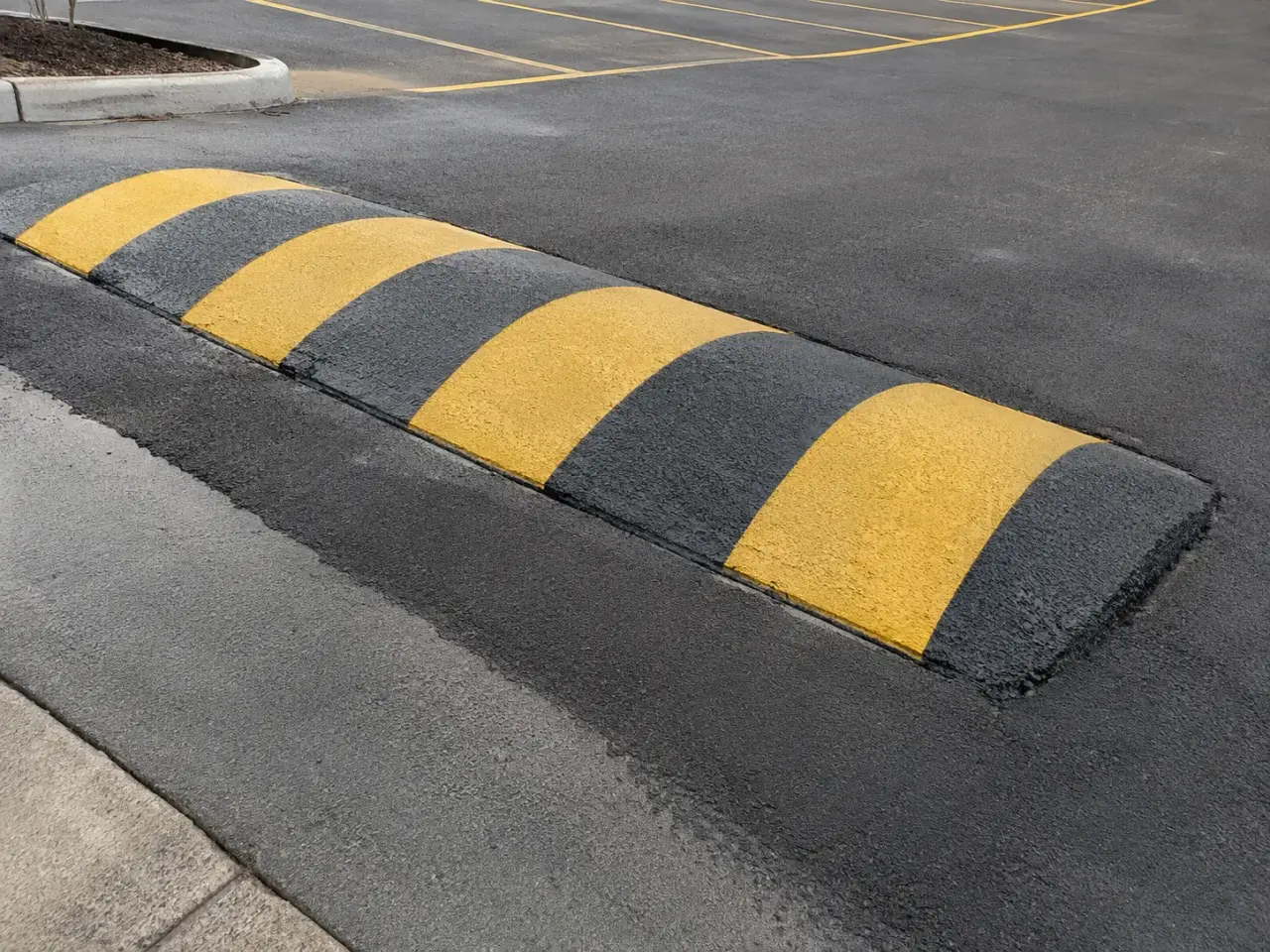
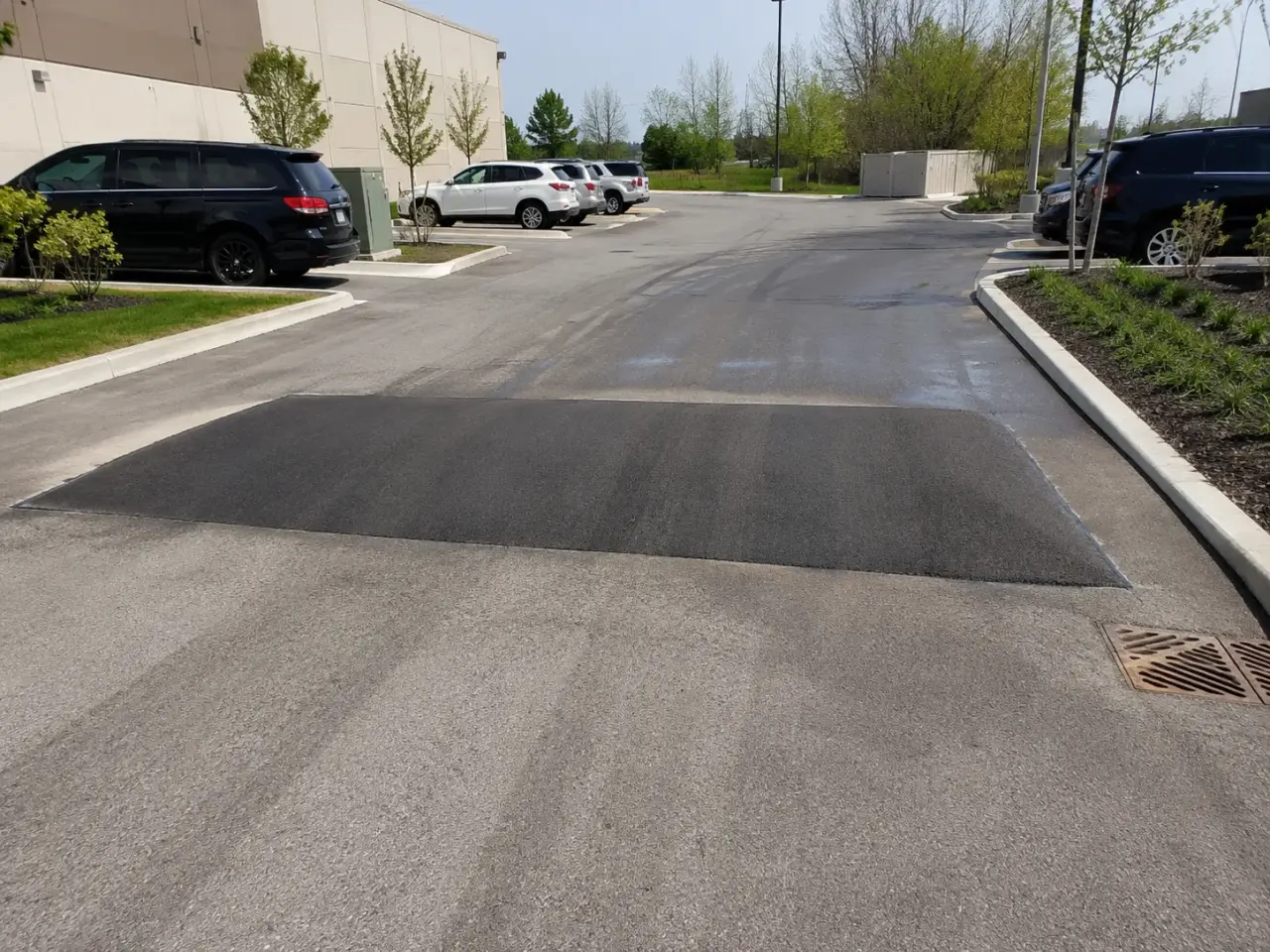
Asphalt speed humps create a long raised profile that can reduce operating speed with smoother heavy-vehicle passage. Shorter speed bumps produce a sharper response and suit selected low-speed private areas. Rubber modular units allow defined profiles and replacement but depend on pavement and anchorage. Raised crosswalks, curb extensions, islands, chicanes, markings, signs, and gateway treatments address route geometry and pedestrian priority rather than vertical deflection alone. The traffic design chooses the measure for speed, volume, emergency access, drainage, maintenance, and users.
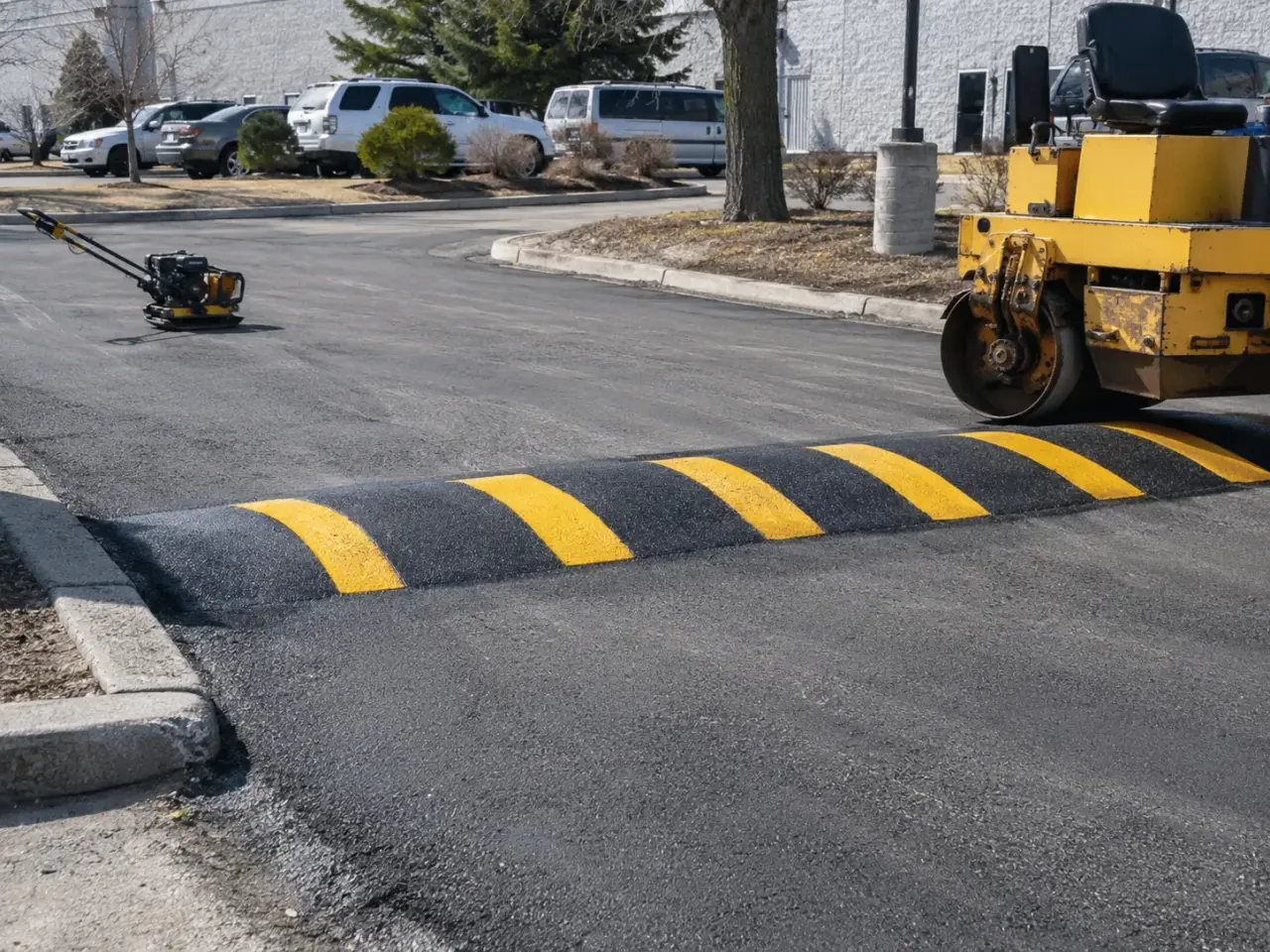
Step 1, For asphalt humps, the pavement is cleaned, limits are marked from survey, and edges are sawcut or milled where the detail requires a positive key. A tack coat bonds new material. Asphalt is placed in controlled lifts using templates or screed control, compacted without flattening the crest, and checked across multiple stations for length, height, and smooth approach transitions.
Step 2, Concrete raised crossings and tables require pavement removal, base correction, forms, dowels or reinforcement, durable exterior concrete, joints, and curing. Curb extensions and islands add drainage inlets, detectable edges, signs, landscaping, and truck-turning checks. Speed cushions use wheel-track gaps set to the approved emergency and transit vehicle geometry.
Step 3, Drainage is preserved through regrading, curb openings, catch-basin relocation, or side channels shown in the design. Harrowgate does not cut improvised grooves that weaken a device. Utility covers are adjusted outside wheel-impact transitions where possible. Temporary traffic control remains until material strength, line paint, symbols, signs, and nighttime visibility are complete.
Step 4, Final acceptance uses straightedge and survey checks plus a controlled drive-through. We inspect tie-ins for impact, verify that water reaches the intended inlet, confirm sign visibility, and check that raised crossings connect flush to accessible routes. Deficient profiles are corrected before general traffic uses them.
Step 5, The completed measure is checked for profile, transitions, markings, signage, drainage, anchor security, route clearance, and representative vehicle behaviour before final handover.
Planning speed bumps and traffic calming in Innisfil? Talk it through with our team.
Traffic-calming construction follows the issued traffic, site, accessibility, and civil design, OPSS where specified, approved product data, and applicable local municipal requirements. The traffic professional or owner defines the device and operating objective.
Materials, profile, transitions, anchors, pavement preparation, concrete, asphalt, markings, signs, and visibility follow the accepted details. The construction team does not invent a municipal profile on a city variant page.
Emergency, transit, service, accessible, cycling, and pedestrian routes remain functional through staging and final operation. Drainage and winter maintenance are reviewed with the layout.
Closeout includes survey or template checks, material and compaction records where specified, anchors, markings, signs, drainage, and a deficiency review after opening.
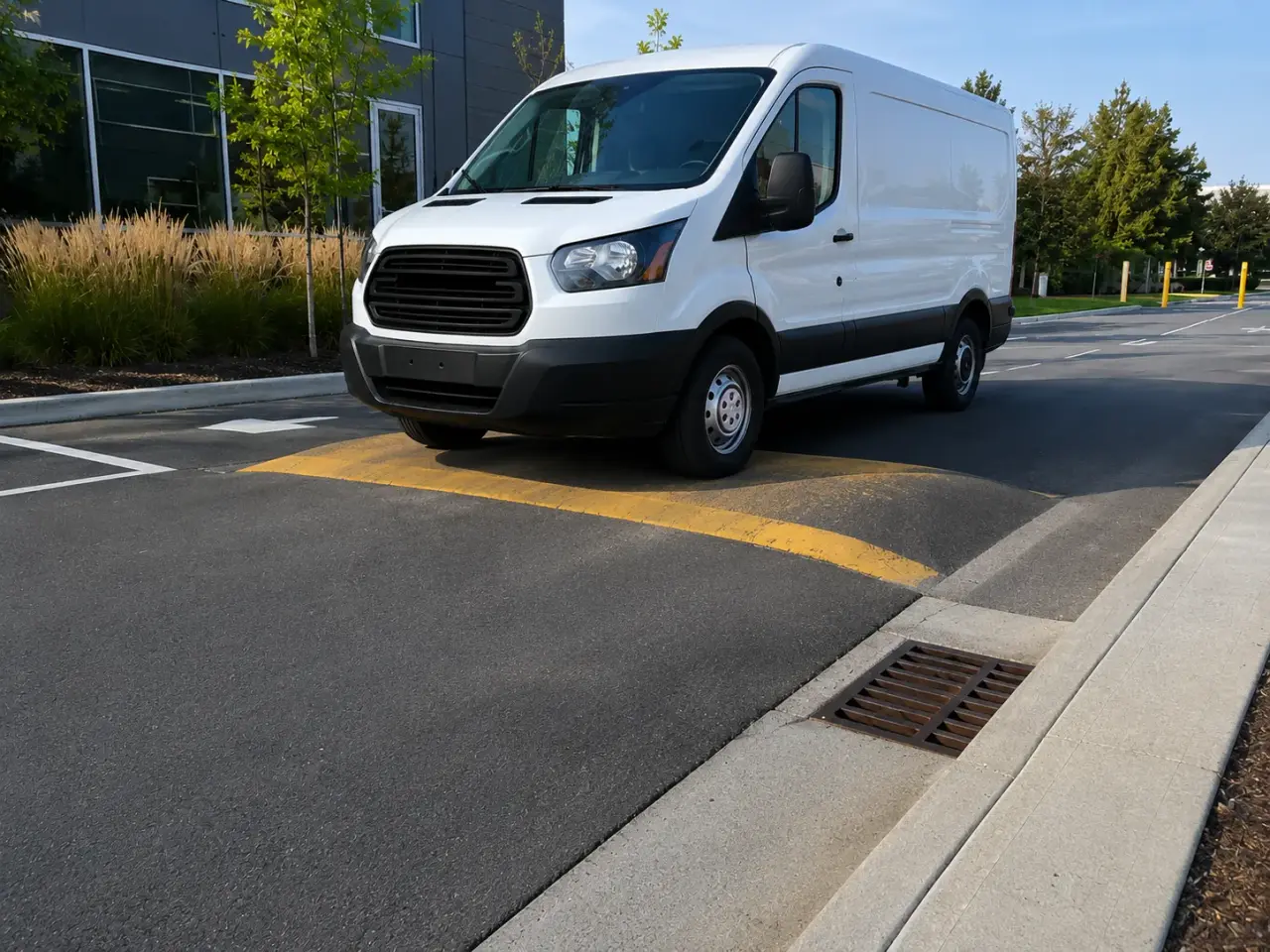
Completed on site to the engineered drawings, coordinated with concrete, servicing, and the surrounding work, then a clean, documented finish.
A speed bump is generally short and produces a more abrupt vehicle response. A speed hump has a longer profile suited to a controlled roadway speed. Raised tables and speed cushions have other geometries and purposes. The traffic designer selects the device based on route function, target speed, vehicles, drainage, and emergency access.
Only where the authority and approved traffic design permit the selected device. Emergency response, transit, heavy trucks, snow clearing, and target speed must be assessed. Speed cushions can be designed with wider wheel paths in some situations, but Harrowgate builds only the approved geometry and coordinates required signs and markings before opening.
Height, ramp length, crest width, and profile come from the approved owner or municipal detail and traffic study. A small height change materially affects vehicle response. Harrowgate lays out from survey, uses templates, checks asphalt during compaction and after cooling, and corrects profiles that fall outside the specified tolerance.
We map gutter and sheet-flow paths before construction. The design may leave gutter channels, relocate a catch basin, alter curb, or regrade the device and approaches. Harrowgate completes those features and checks the finished drainage. Cutting an unapproved groove through the hump can weaken it and does not solve surrounding low spots.
The approved traffic plan specifies advance signs, pavement symbols, chevrons, crosswalks, reflective materials, and any speed advisory. Markings must be visible from the approach and remain coordinated with stall or lane lines. Harrowgate keeps the area closed until vertical geometry, signs, paint, and nighttime visibility are complete.
Yes. The design must provide compliant pedestrian clear width, running and cross slopes, flush transitions, tactile or detectable features where required, drainage, and protection from vehicle encroachment. Harrowgate coordinates concrete or asphalt profile with curb ramps and sidewalks so the crossing does not introduce lips or ponding.
We stage one drive aisle or direction at a time, maintain emergency and delivery routes, use signed detours, and coordinate material cure or cooling. Work can occur off-hours where operations permit. Devices remain barricaded until profile checks, drainage, signs, and markings are complete, preventing traffic from using an unfinished edge.
A speed hump normally has a longer, smoother vertical profile, while a speed bump is shorter and produces a sharper vehicle response. The issued traffic design selects geometry from target speed, vehicle types, route function, and emergency access.
Yes, if it crosses the flow path without a coordinated grade or drainage opening. Survey, catch-basin location, crossfall, tie-ins, and winter icing are reviewed before placement, then water paths are checked after construction.
Still have a question about speed bumps and traffic calming in Innisfil? Ask our team directly.
Commercial and heavy-civil construction delivered for developers, contractors, property managers, and municipalities.
Send drawings, a site plan, or a description of the scope. Harrowgate Group is licensed, insured, and WSIB-covered.
Licensed, Insured & WSIB-Covered, work managed and documented on every job
Tell us what you need and we’ll get you a quote.
Harrowgate Group provides speed bumps and traffic calming, delivered and installed with quote-ready support across Toronto and surrounding Ontario communities.
Companies We've Worked With
Harrowgate Group delivers commercial and heavy-civil construction for developers, contractors, institutions, municipalities, and property groups across Ontario.
 Popeyes
  Tim Hortons
  Subway
  University of Toronto
  Madison Group
  RioCan
  Women's College Hospital
  Starbucks
  Mazda
Mazda  TD Bank
  City of Toronto Popeyes Tim Hortons Subway University of Toronto Madison Group RioCan Women's College Hospital Starbucks Mazda TD Bank City of Toronto