
Built to spec
Built to your engineered drawings, survey, and the real site conditions, not a one-size-fits-all approach forced to fit.
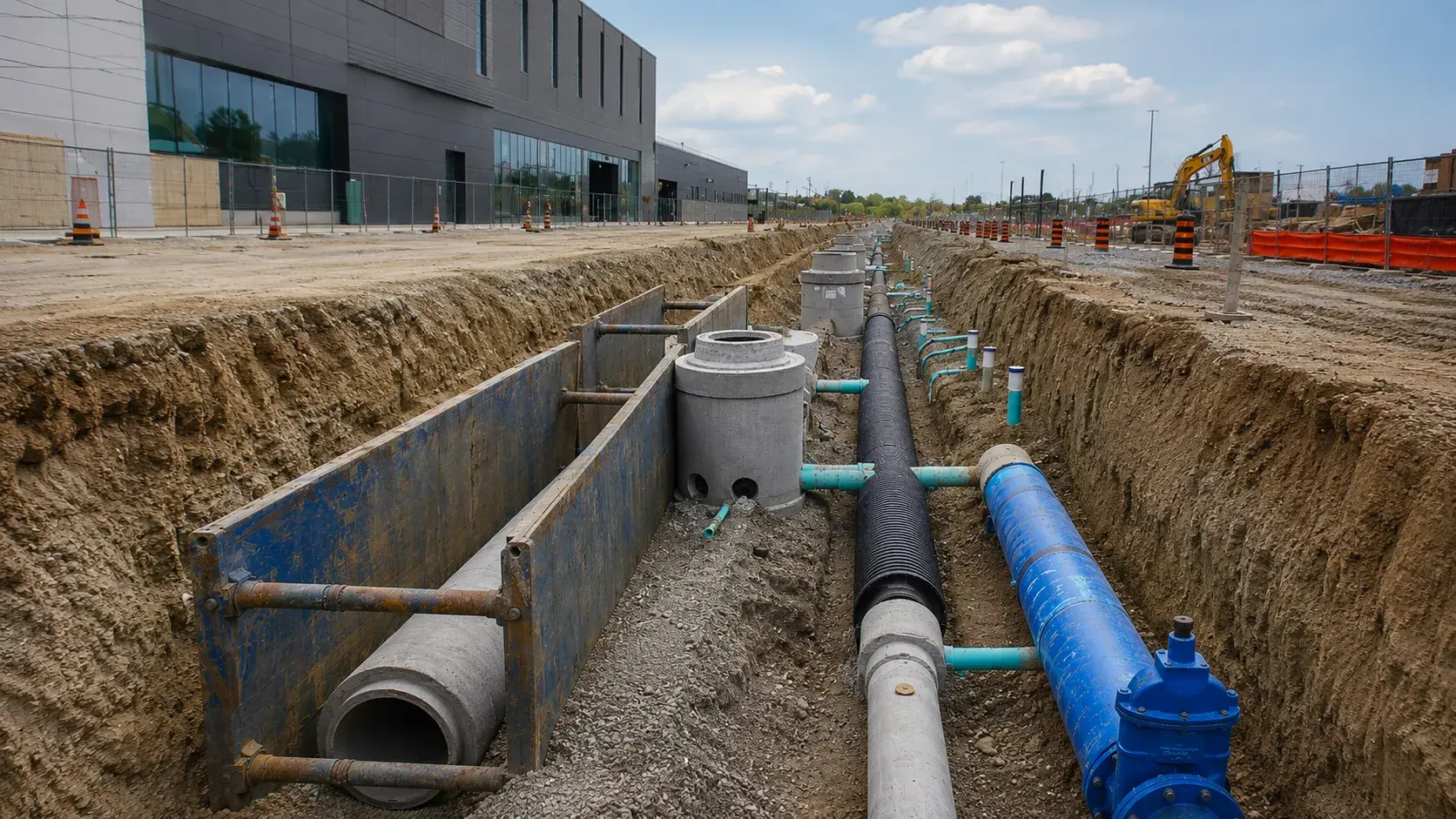
A Site Servicing Contractor installs the underground infrastructure, sanitary and storm sewer, watermain, and roadworks, that services commercial and municipal developments.
Tell us what you need and we’ll get you a quote.
Licensed, insured & WSIB-covered · Free, no-obligation quote & on-site assessment.
Built to your engineered drawings, survey, and the real site conditions, not a one-size-fits-all approach forced to fit.
Durable materials and methods chosen for the load, traffic, and environment on site.
Send specs, drawings, or photos and get a free, no-obligation site visit and estimate with no guesswork.
Installation and site work completed in accordance with Ontario requirements.
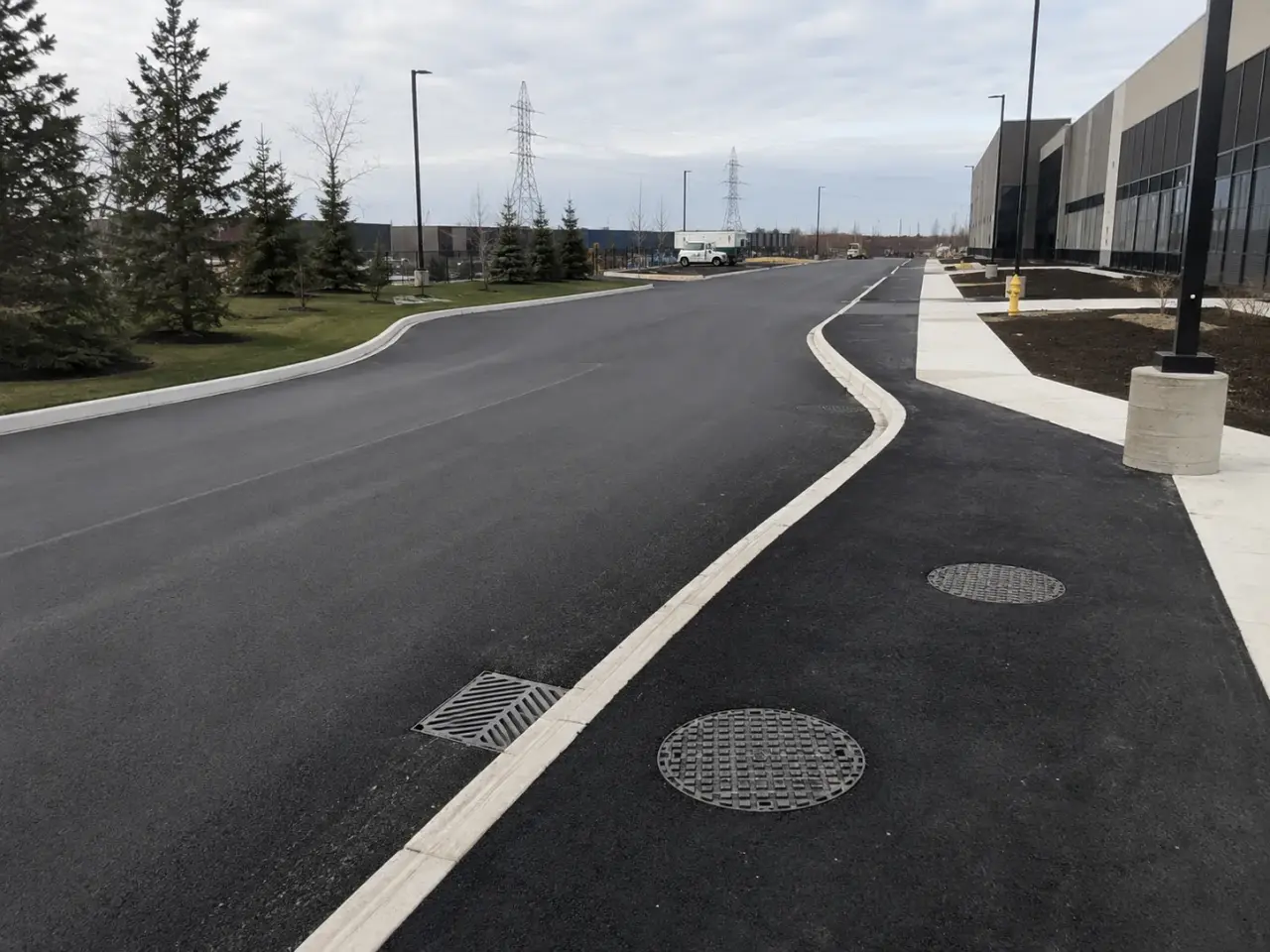
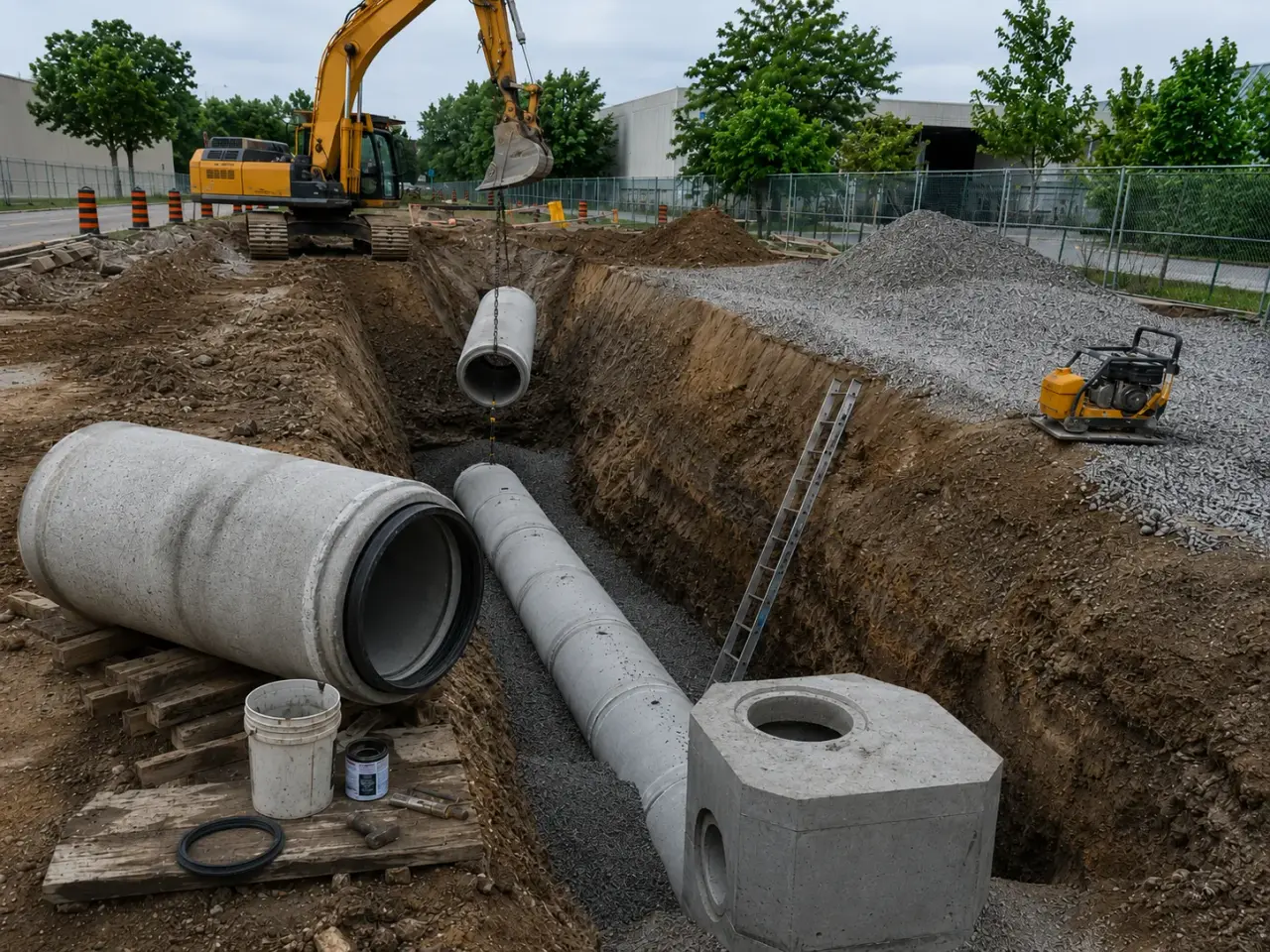
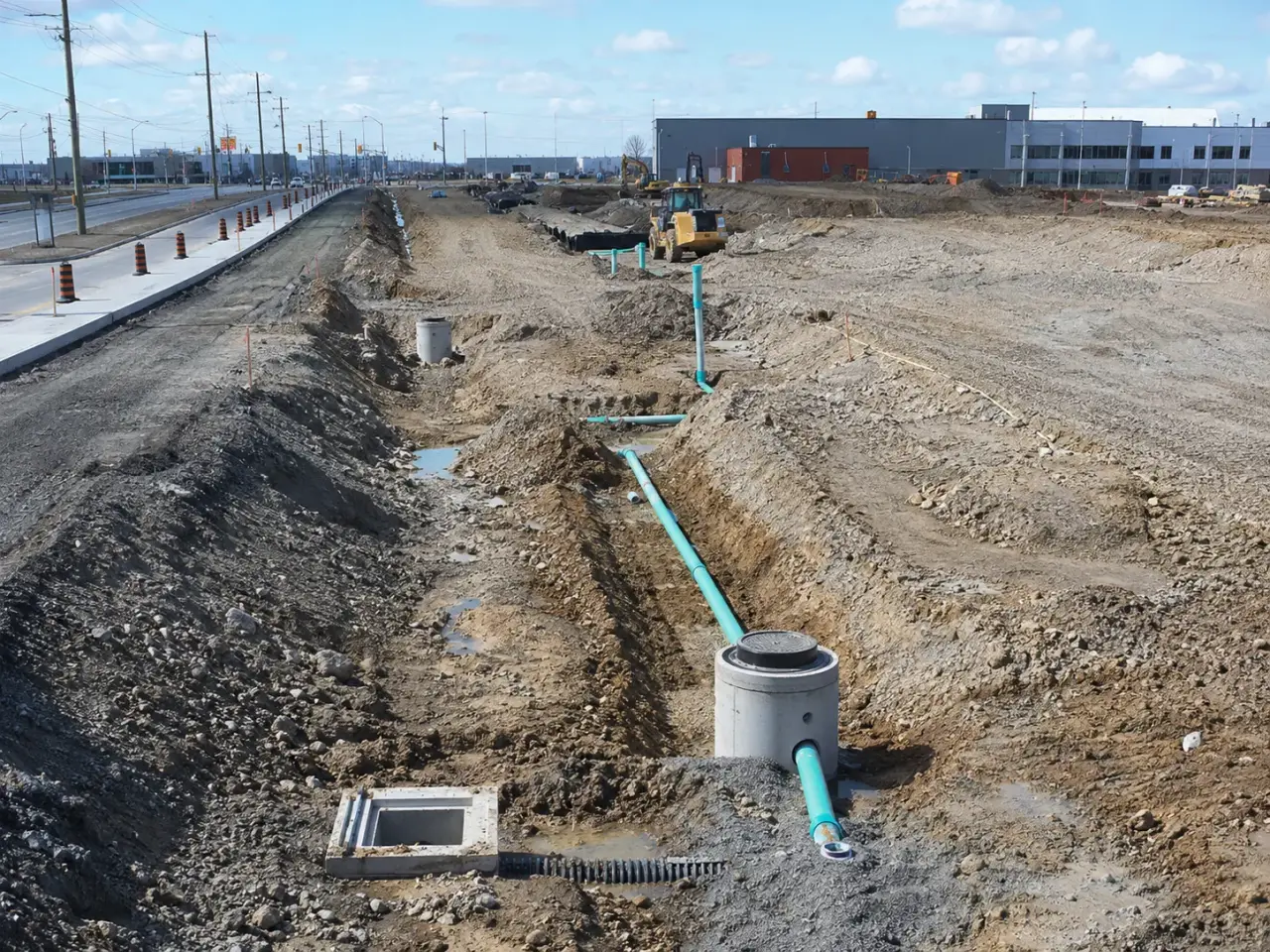
Open-cut installation is the standard where the corridor can be excavated safely, while trenchless methods reduce surface disruption at roads, rail, waterways, or congested crossings. Service selection also covers pipe material, joint system, bedding, restraint, corrosion protection, temporary bypass, and connection method based on municipal standards and issued design.
Open-cut sewer and watermain installation. Trenches expose the full alignment for bedding, pipe, fittings, valves, chambers, services, and visual inspection. This method gives direct grade control but requires utility clearance, soil classification, shoring or sloping, groundwater control, traffic staging, and engineered restoration.
Trenchless crossings. Horizontal directional drilling, auger boring, pipe ramming, microtunnelling, and pipe jacking solve different ground, accuracy, diameter, and carrier-pipe conditions. Entry and exit shafts still need space and support. The selected method must protect existing utilities and achieve the required line and grade, especially for gravity sewers.
Live connections and temporary service. Tie-ins may use shutdowns, cut-ins, wet taps, line stops, temporary water, or sewer bypass pumping under the authority's accepted procedure. Connection planning identifies valves, customers, sampling, disinfection, contingency, and the maximum interruption window before excavation exposes the main.
Gravity sewers. Sanitary and storm pipe depend on surveyed invert, uniform bedding, sealed joints, access structures, and tested connections. Small grade errors accumulate over long runs. Installation proceeds from a known downstream point where practical so every upstream elevation can be checked against the outlet.
Pressure systems. Watermains and fire mains require restrained fittings or designed thrust resistance, tracer wire where specified, valves, hydrants, corrosion protection, hydrostatic testing, flushing, and disinfection. Passing a pressure test does not replace bacteriological acceptance for potable water.
Step 1, release the approved information. Harrowgate checks civil drawings, profiles, municipal details, geotechnical and environmental reports, connection permits, utility records, easements, road-occupancy conditions, traffic plans, testing, and commissioning requirements. Conflicts between plan, profile, and details are resolved before procurement.
Step 2, survey and daylight conflicts. Baseline control, property limits, road elevations, existing inverts, and connection points are verified. Utility locates are supplemented by potholing or hydro excavation at crossings. A utility shown on a drawing is not treated as physically confirmed until its position is exposed where risk requires it.
Step 3, prepare excavation, support, and water control. Soil type, depth, adjacent loads, traffic, structures, and groundwater determine sloping, trench boxes, hydraulic shoring, sheeting, or an engineered support system. Spoil and equipment are kept clear of trench limits. Dewatering or bypass systems maintain a stable base and protect downstream water quality.
Step 4, install pipe and structures to survey control. Bedding is trimmed, pipe barrels receive uniform support, joints are cleaned and assembled, and fittings or maintenance structures are placed without forcing alignment. Grade is checked frequently. Watermain restraint, thrust details, valves, hydrants, services, tracer wire, and corrosion components are installed with the pipe.
Step 5, inspect, test, and accept before concealment. Sewer work can require leakage testing, deflection testing, flushing, and CCTV. Watermain work includes thrust restraint completion, pressure and leakage testing, flushing, disinfection, sampling, and connection authorization under municipal procedures. Failed results are diagnosed and corrected, not explained away by backfill.
Step 6, backfill and restore in lifts. Embedment supports the pipe haunches and protects the crown. Approved trench backfill is placed and compacted to the specification, with special attention beside structures and at utility crossings. Granular road base, asphalt, concrete, boulevard, and landscaping are restored to permit conditions.
Step 7, deliver usable records. Harrowgate records pipe, fitting, valve, hydrant, service, and structure positions and elevations while they remain accessible. Test forms, bacteriological results, CCTV, material records, approved changes, and as-built survey are organized for municipal assumption, owner operations, and future utility locating.
Planning site servicing contractor in Whitby? Talk it through with our team.
Choose a contractor that can read the complete utility plan, verify connection points and crossings, control safe excavation, and carry each system through inspection, testing, restoration, and as-built records. The proposal should state limits, assumptions, hold points, and responsibility for temporary services.
Send current civil plans and profiles, composite utility drawings, geotechnical and environmental reports, municipal or utility comments, connection information, traffic and access restrictions, testing requirements, project phasing, and milestone dates. Missing information should be identified as an assumption rather than silently priced as fact.
Yes. Temporary roads, building connections, crane pads, foundations, permanent roads, and service commissioning can be sequenced by zone. Installed infrastructure needs protection from heavy traffic, sediment, freezing, and unapproved use until the relevant system is accepted.
The approved procedure can include filling, air removal, stabilization, pressure and leakage testing, flushing, disinfection, neutralization, sampling, valve operation, and authorized connection. Exact acceptance steps follow the issued project and applicable local municipal requirements.
The contract and project structure determine responsibility. Harrowgate coordinates its field work, notices, access, hold points, and records with the owner, designer, utility owners, and applicable inspectors without claiming that one municipal process applies everywhere.
Typical records identify pipe, service, valve, hydrant, fitting, and structure locations and elevations, along with material information, field changes, tests, samples, CCTV where specified, compaction results, connection records, and restoration status.
Work stops in the affected area, the utility is protected, and its ownership, status, and location are investigated. Any change to clearance, alignment, support, or connection is coordinated with the responsible parties before excavation resumes.
A sanitary sewer conveys wastewater to the sanitary collection system. A storm sewer conveys runoff to an approved storm outlet or management facility. Their pipe routes, structures, service connections, testing, and discharge controls must remain distinct.
Gravity capacity depends on the elevation at the inside bottom of the pipe. Survey before concealment identifies a flat or reversed reach, structure mismatch, or crossing error while pipe and bedding can still be corrected.
Trenchless work can reduce road, rail, watercourse, or operating-site disruption. Feasibility depends on soil and rock, groundwater, bore path, required accuracy, launch and receiving space, existing utilities, settlement tolerance, pipe material, and the ability to verify the completed installation.
Still have a question about site servicing contractor in Whitby? Ask our team directly.
Site Servicing, for the full technical underground-infrastructure scope
Watermain Installation, for pressure pipe and commissioning
Sanitary Sewer Installation, for gravity collection systems
Storm Sewer Installation, for storm pipe and structures
Subdivision Servicing, for coordinated development infrastructure
Commercial and heavy-civil construction delivered for developers, contractors, property managers, and municipalities.
Send drawings, a site plan, or a description of the scope. Harrowgate Group is licensed, insured, and WSIB-covered.
Licensed, Insured & WSIB-Covered, work managed and documented on every job
Tell us what you need and we’ll get you a quote.
Harrowgate Group provides site servicing contractor, delivered and installed with quote-ready support across Toronto and surrounding Ontario communities.
Companies We've Worked With
Harrowgate Group delivers commercial and heavy-civil construction for developers, contractors, institutions, municipalities, and property groups across Ontario.
 Popeyes
  Tim Hortons
  Subway
  University of Toronto
  Madison Group
  RioCan
  Women's College Hospital
  Starbucks
  Mazda
Mazda  TD Bank
  City of Toronto Popeyes Tim Hortons Subway University of Toronto Madison Group RioCan Women's College Hospital Starbucks Mazda TD Bank City of Toronto