
Built to spec
Built to your engineered drawings, survey, and the real site conditions, not a one-size-fits-all approach forced to fit.
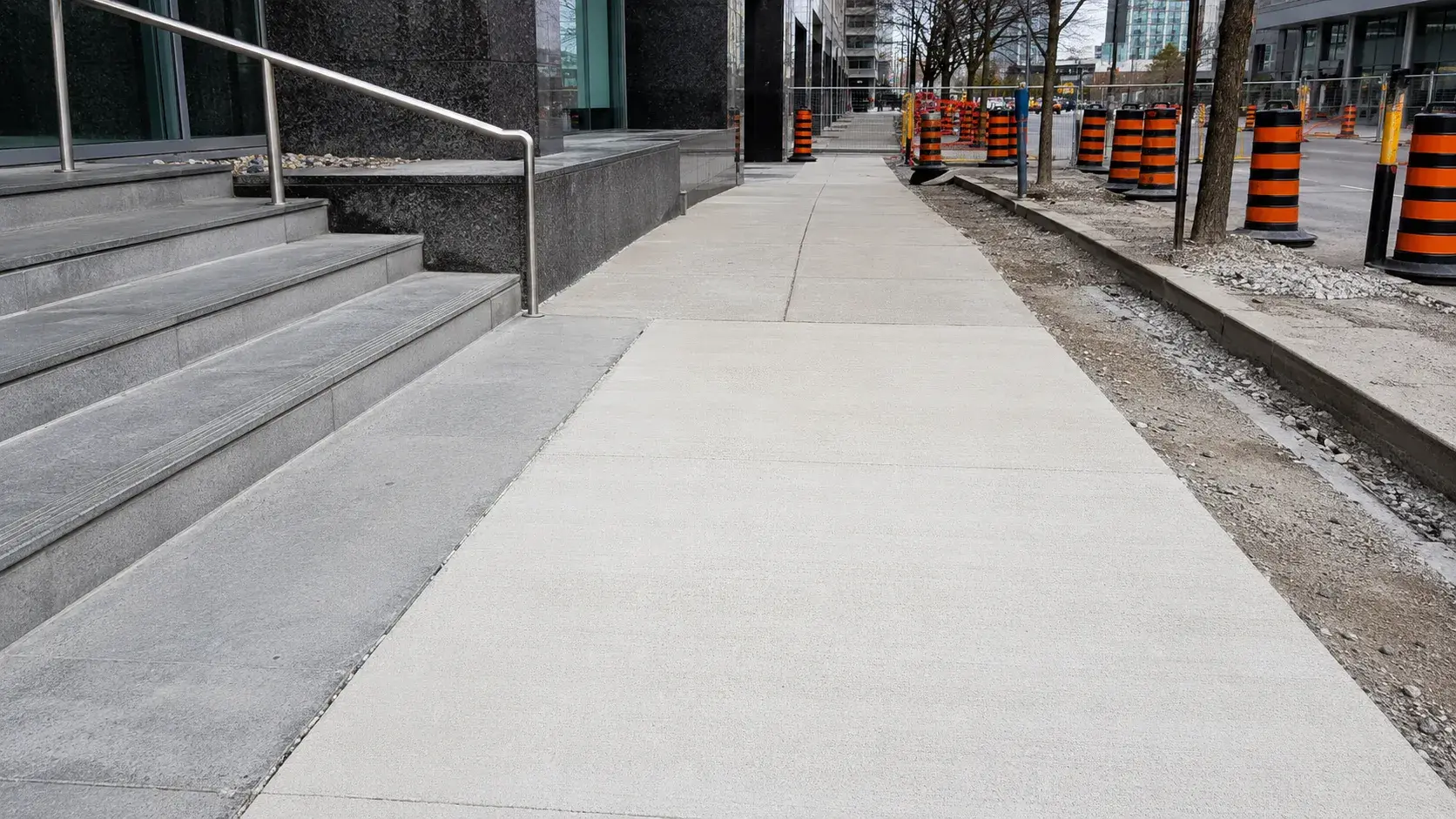
Harrowgate performs concrete panel replacement, precision grinding, slab correction, curb-ramp tie-ins, base repairs, and route restoration across the GTA and Ontario.
Tell us what you need and we’ll get you a quote.
Licensed, insured & WSIB-covered · Free, no-obligation quote & on-site assessment.
Built to your engineered drawings, survey, and the real site conditions, not a one-size-fits-all approach forced to fit.
Durable materials and methods chosen for the load, traffic, and environment on site.
Send specs, drawings, or photos and get a free, no-obligation site visit and estimate with no guesswork.
Installation and site work completed in accordance with Ontario requirements.
Commercial sidewalk repair restores a continuous, stable walking surface by correcting vertical offsets, cracks, settlement, scaling, drainage defects, and failed panels. Harrowgate performs GTA assessment, sawcut removal, grinding, base correction, forming, concrete placement, curing, and accessible-route tie-ins using the repair method suited to the defect and underlying cause.
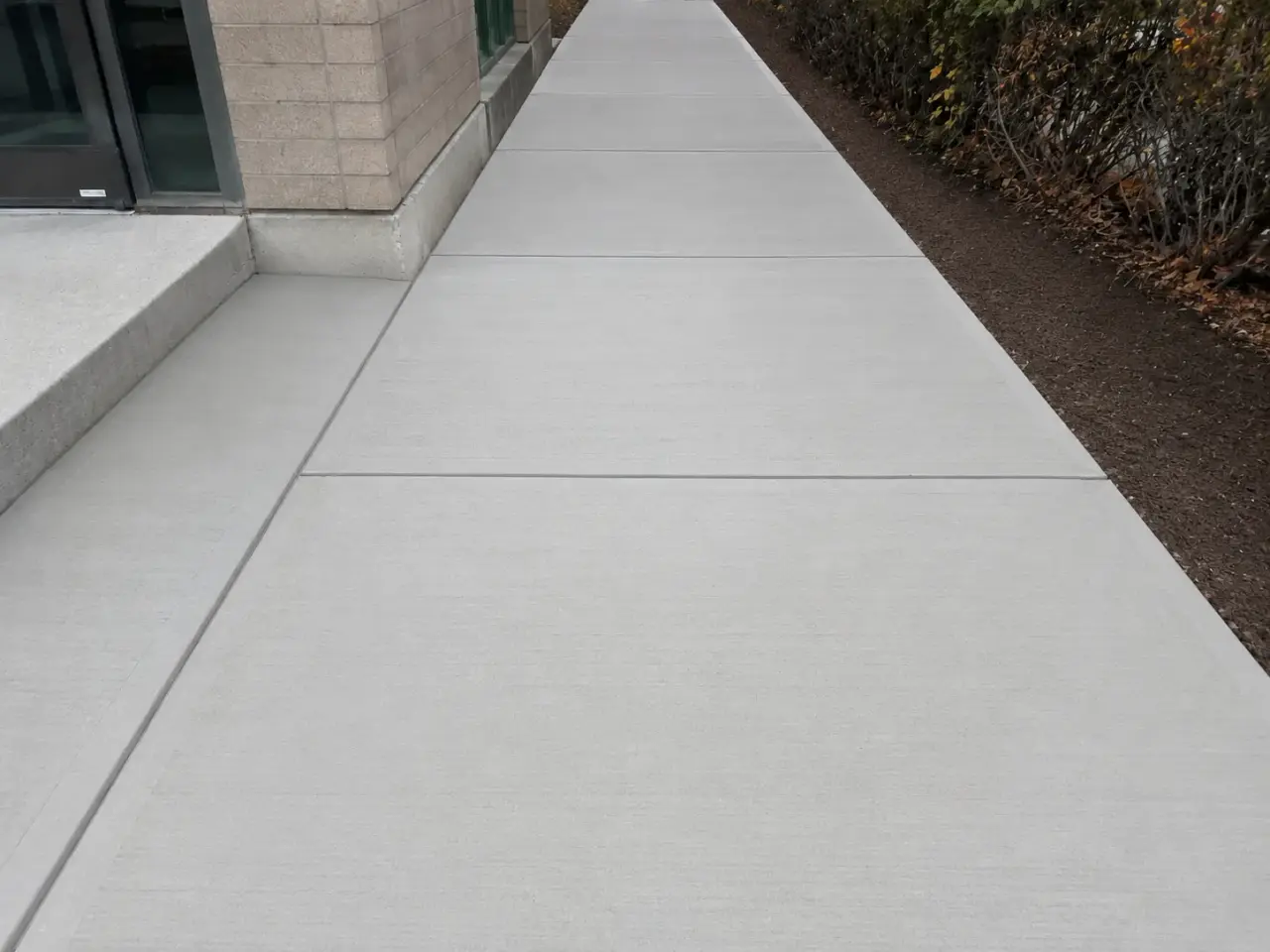
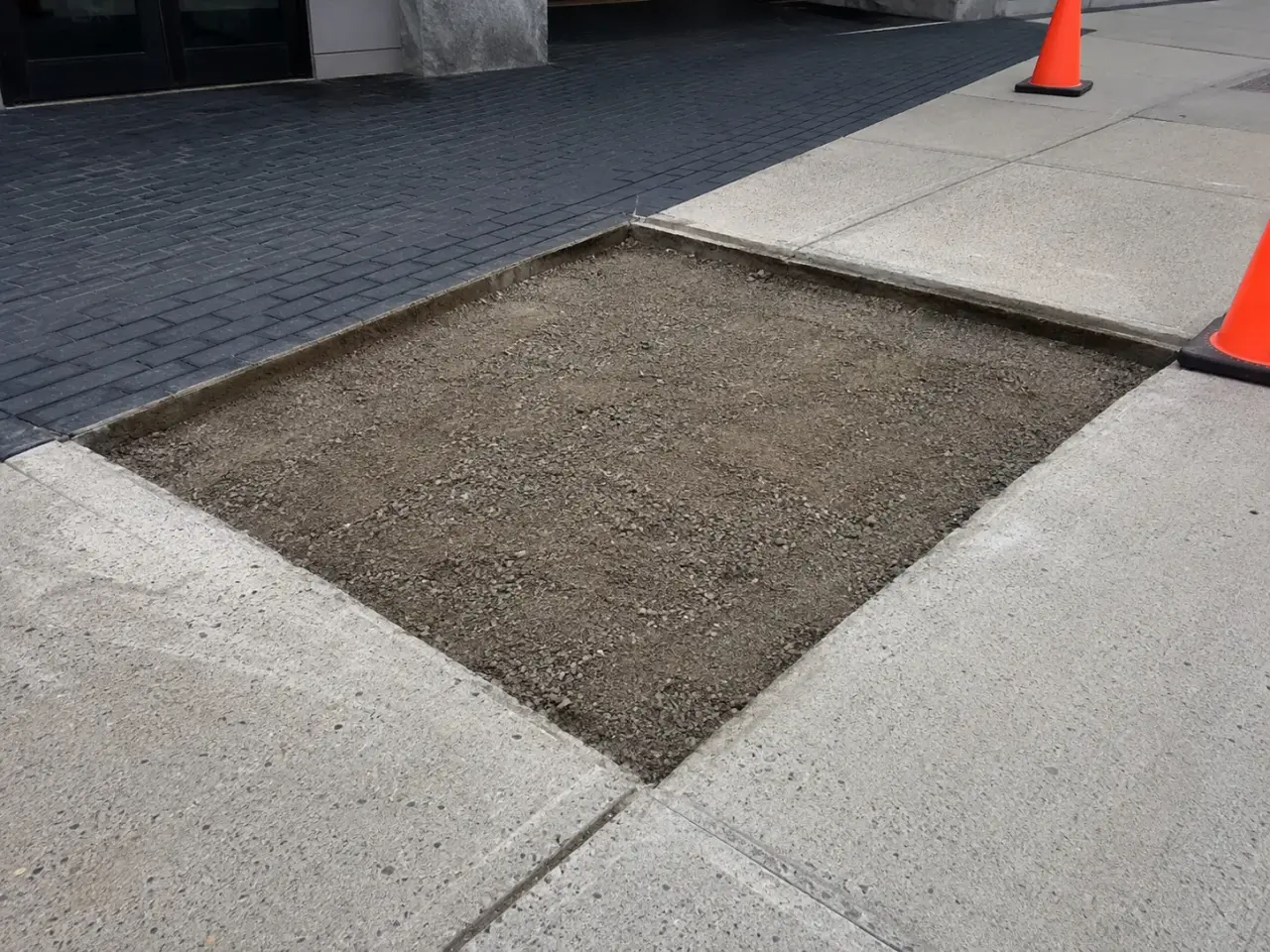
Diamond grinding removes small height differences where enough sound concrete remains and the resulting slope and texture are acceptable. Slab lifting addresses settled intact panels where voids and surrounding elevations permit controlled correction. Localized patching repairs small spalls or edges but cannot stabilize moving support. Full panel replacement is selected for deep cracking, severe displacement, failed base, poor drainage, extensive scaling, root conflict, or geometry that cannot be restored by grinding. The method follows cause, accessibility, panel condition, joints, utilities, and route continuity.
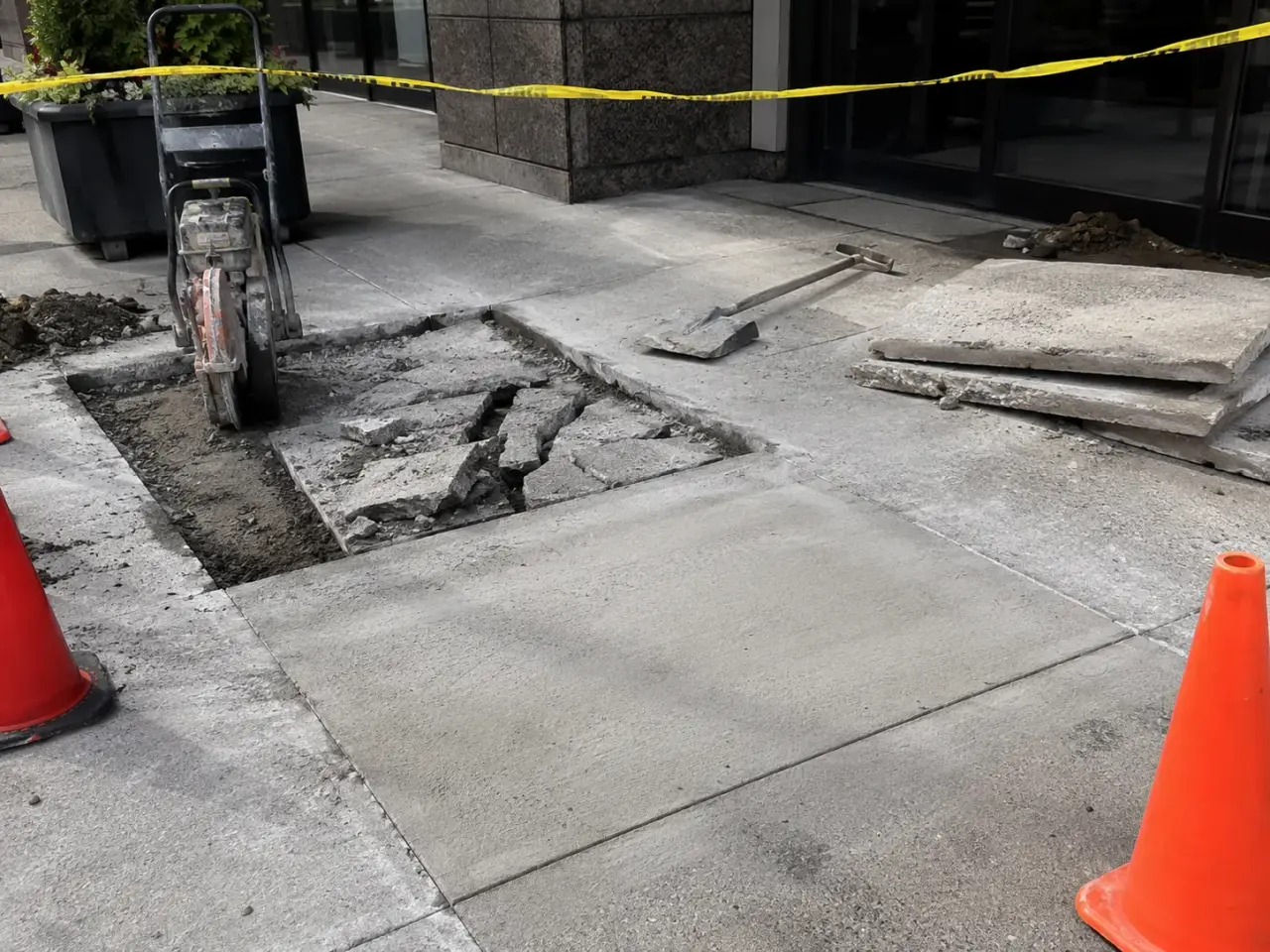
Step 1, Harrowgate records each defect by panel and measures offset, crack pattern, rocking, slope, drainage, and surrounding movement. Sound high lips can be reduced with a dust-controlled scarifier or precision grinder that feathers the transition over a stable distance. The finished texture is slip resistant, edges are rounded, and grinding does not reduce cover over reinforcing or create a water trough.
Step 2, Failed panels are full-depth sawcut at joints or approved limits, then lifted without breaking adjacent curb, building waterproofing, utilities, or tactile surfaces. Roots and soft base are addressed under arborist or engineer direction. Granular is replaced and compacted in lifts. Forms set line, grade, cross slope, joint pattern, doorway transition, and drainage before reinforcement or dowels are installed where detailed.
Step 3, Concrete follows the approved exterior mix and is placed continuously within each panel. Harrowgate strikes from fixed controls, checks cross slope and transitions while plastic, applies a uniform broom finish, and tools joints to the specified depth. Isolation material is installed against buildings, poles, chambers, and fixed structures so movement does not create another lifted edge.
Step 4, Immediate curing and barricades protect the surface. Temporary routes remain until concrete reaches required opening strength. We seal specified joints, reinstate adjacent asphalt or landscape, clean drains, and perform a rolling and walking review of the completed route. Every tie-in is checked for a lip because the repair boundary is where new trip points often appear.
Step 5, Harrowgate inspects the repaired route for transition, slope, texture, rocking, joints, drainage, curing, temporary-route removal, and remaining mapped defects.
Sidewalk repair follows the issued civil and accessibility design, the 2024 Ontario Building Code where applicable, CSA concrete requirements, OPSS where specified, and applicable local municipal requirements.
Concrete, base, joints, reinforcement, curing, texture, tactile surfaces, and transitions follow the accepted project details. Grinding and lifting criteria are agreed before production.
Pedestrian staging maintains safe routes, barriers, lighting, entrances, and access to occupied facilities. Open panels and curing concrete remain protected.
Acceptance checks route continuity, slopes and elevations where specified, texture, joints, drainage, edges, utility covers, restoration, and repair records.
Planning sidewalk repair and trip hazard removal? Talk it through with our team.
Grinding the low slab instead of correcting the high edge can worsen drainage and leave a steep ramp. Harrowgate identifies the movement pattern and uses measured profiles. Rocking, cracked, deeply scaled, or root-displaced panels are replaced or structurally corrected rather than repeatedly ground.
New panels settle when the cause below is ignored. We remove loose fill, correct utility-trench or drainage defects, compact base to the edges, and avoid placing on frozen or saturated material. Roots are handled under the approved tree-protection plan, not cut indiscriminately to fit the form.
A repair can pass at its centre but fail at doors, curb ramps, asphalt edges, or utility frames. We survey the whole travel line, reserve tolerances below maximum slope, and check form elevations before concrete. Final inspection follows actual wheel paths and cane-contact zones, including temporary restoration limits.
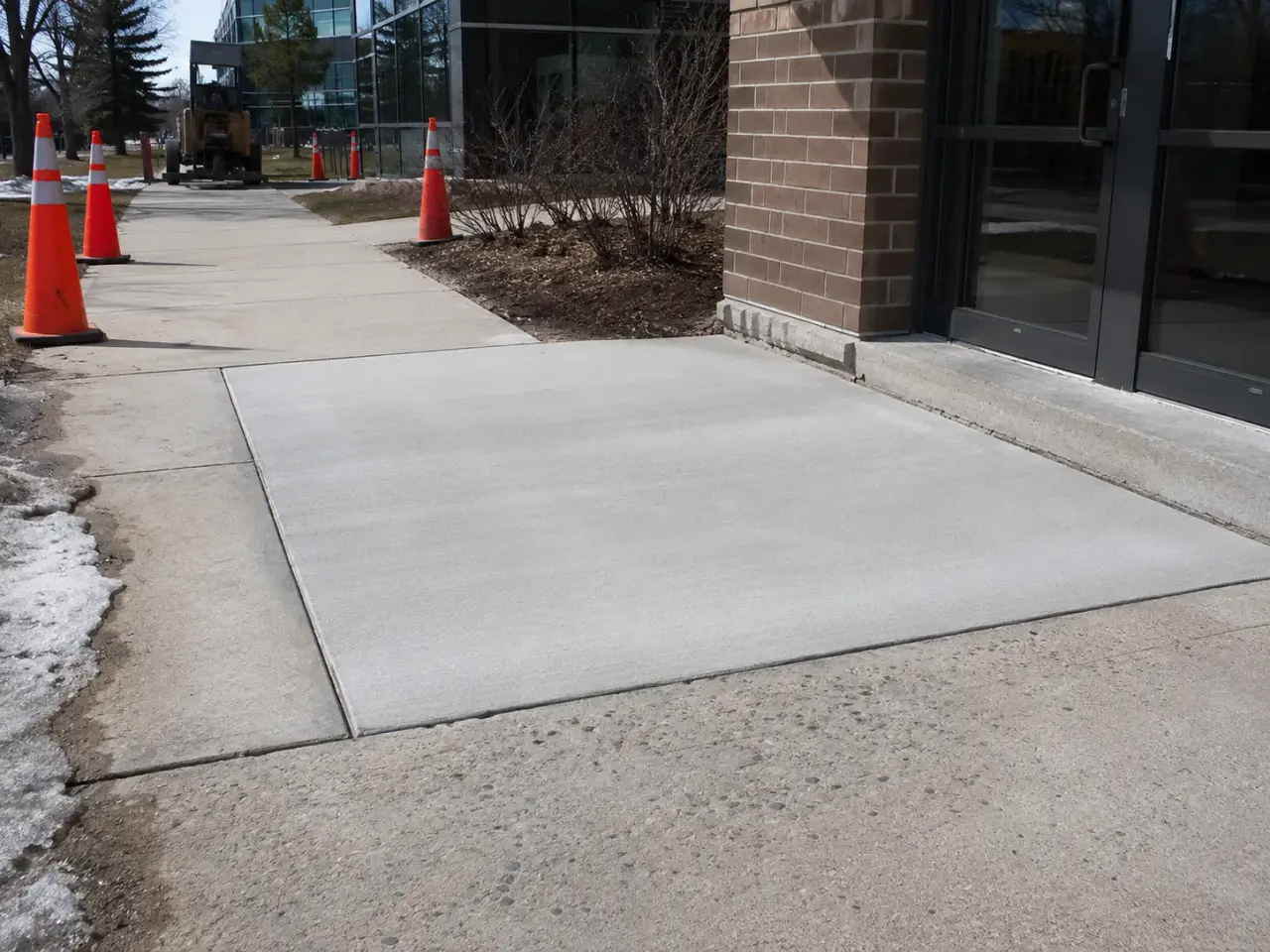
Clean site work and a tidy finish, coordinated with your engineers, the other trades, and the surrounding site conditions, built to the engineered drawings and the applicable codes.
Yes, when the higher panel is sound, stable, thick enough, and the resulting transition meets route and drainage criteria. Precision grinding is not suitable for rocking slabs, deep cracks, widespread scaling, severe root heave, or base loss. Harrowgate measures the profile and selects repair rather than treating every offset the same way.
Replacement is appropriate where concrete is structurally broken, deeply scaled, unstable, badly sloped, extensively patched, or displaced by base, utility, root, or frost conditions. It also allows correction of thickness, drainage, joints, and route geometry. Harrowgate removes to controlled boundaries and repairs the underlying cause before repouring.
We phase panels, establish a signed alternate route, protect door approaches, and schedule demolition and pours around peak operations. Temporary bridging is used only when designed and safe. The repaired route remains closed through the required cure period, then transitions and rail or door interfaces are checked before reopening.
Cross slope is measured perpendicular to travel at multiple points across each panel and transition. Harrowgate sets forms from survey and checks concrete during strike-off because local dips can exceed criteria even when edge elevations appear correct. The applicable accessibility standard and approved drawings govern the acceptance value.
Frost-susceptible soil, trapped water, poor drainage, roots, shallow utilities, and uneven base can lift panels. Durable repair requires drainage and support correction, not just surface patching. Harrowgate removes weak or wet material, places compacted granular, follows joint details, and protects the new work from water entry and early freeze.
Root work requires coordination with the owner and arborist because cutting major roots can destabilize or damage a tree. Options include selective root treatment, route adjustment, structural bridging, flexible zones, or panel reconstruction. Harrowgate follows the approved tree-protection approach while restoring base support and route geometry.
Reopening depends on mix, weather, curing, test or maturity information, panel thickness, and project requirements. Harrowgate maintains barriers until the required opening strength and safe surface condition are reached. Heavy carts, maintenance equipment, and vehicles may require a longer restriction than ordinary pedestrian access.
Grinding suits a limited height difference in sound concrete when enough slab remains to create an acceptable transition and texture. Cracked, thin, moving, severely displaced, or drainage-critical panels can require lifting or replacement.
Root work follows arborist and owner direction because cutting structural roots can destabilize or damage a tree. Layout, bridging, root-friendly details, panel adjustment, or route changes may be considered before removal.
Still have a question about sidewalk repair and trip hazard removal? Ask our team directly.
Commercial and heavy-civil construction delivered for developers, contractors, property managers, and municipalities.
Send drawings, a site plan, or a description of the scope. Harrowgate Group is licensed, insured, and WSIB-covered.
Licensed, Insured & WSIB-Covered, work managed and documented on every job
Tell us what you need and we’ll get you a quote.
Harrowgate Group provides sidewalk repair and trip hazard removal, delivered and installed with quote-ready support across Toronto and surrounding Ontario communities.
Companies We've Worked With
Harrowgate Group delivers commercial and heavy-civil construction for developers, contractors, institutions, municipalities, and property groups across Ontario.
 Popeyes
  Tim Hortons
  Subway
  University of Toronto
  Madison Group
  RioCan
  Women's College Hospital
  Starbucks
  Mazda
Mazda  TD Bank
  City of Toronto Popeyes Tim Hortons Subway University of Toronto Madison Group RioCan Women's College Hospital Starbucks Mazda TD Bank City of Toronto