
Built to spec
Built to your engineered drawings, survey, and the real site conditions, not a one-size-fits-all approach forced to fit.
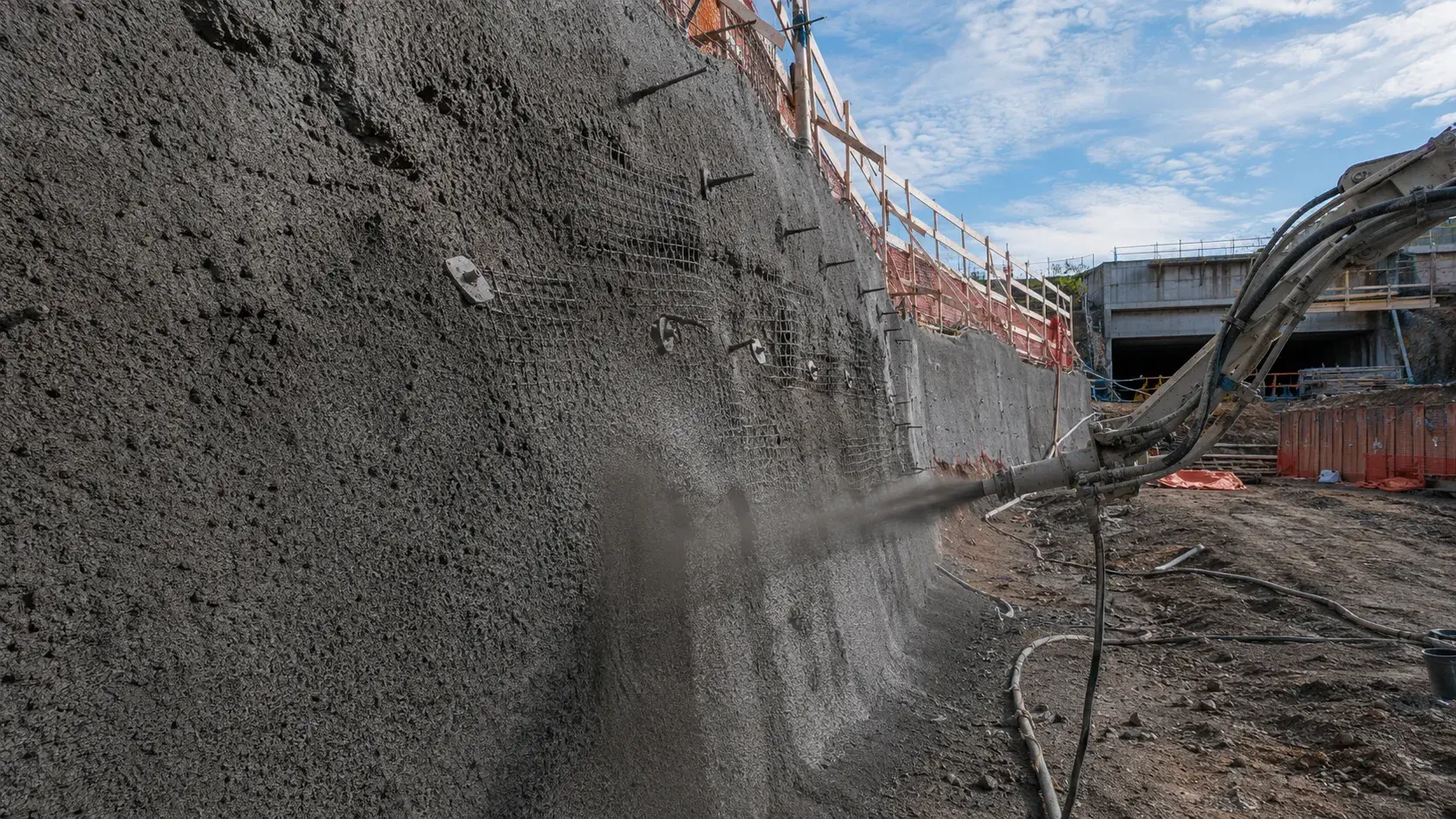
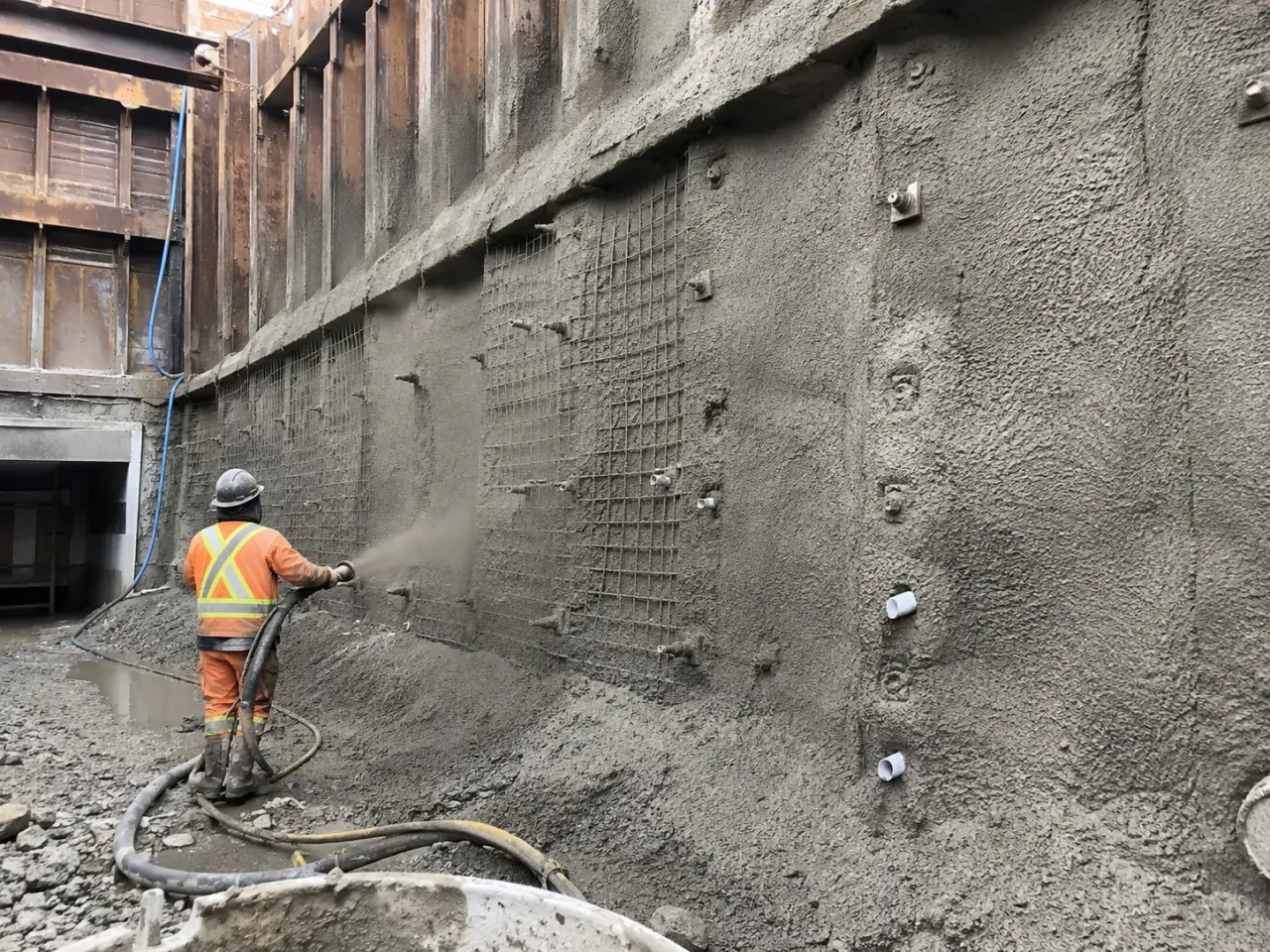
Shotcrete and Gunite in Brampton is sprayed concrete applied at high velocity for slopes, walls, tunnels, and repairs.
Tell us what you need and we’ll get you a quote.
Licensed, insured & WSIB-covered · Free, no-obligation quote & on-site assessment.
Built to your engineered drawings, survey, and the real site conditions, not a one-size-fits-all approach forced to fit.
Durable materials and methods chosen for the load, traffic, and environment on site.
Send specs, drawings, or photos and get a free, no-obligation site visit and estimate with no guesswork.
Installation and site work completed in accordance with Ontario requirements.
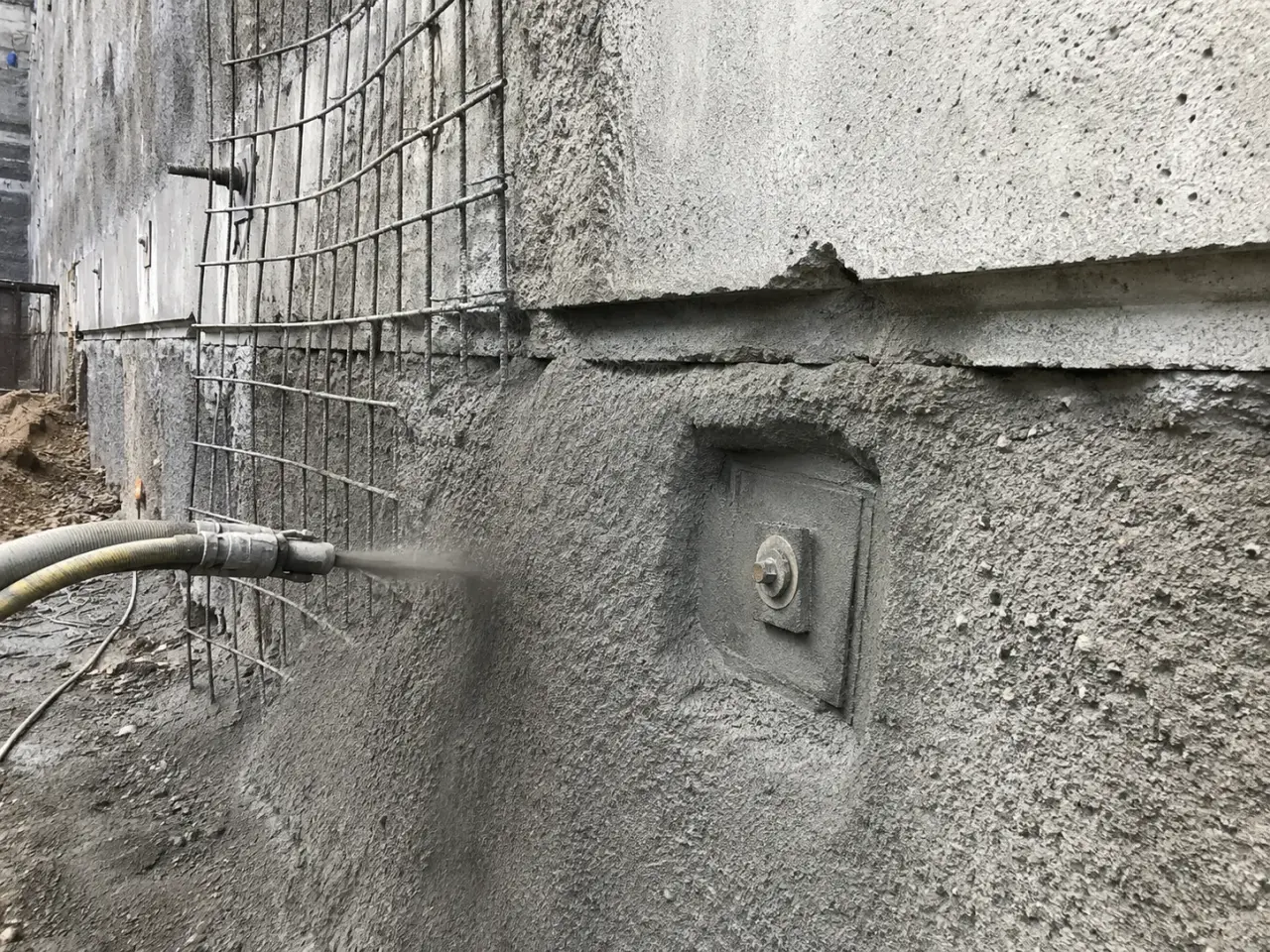
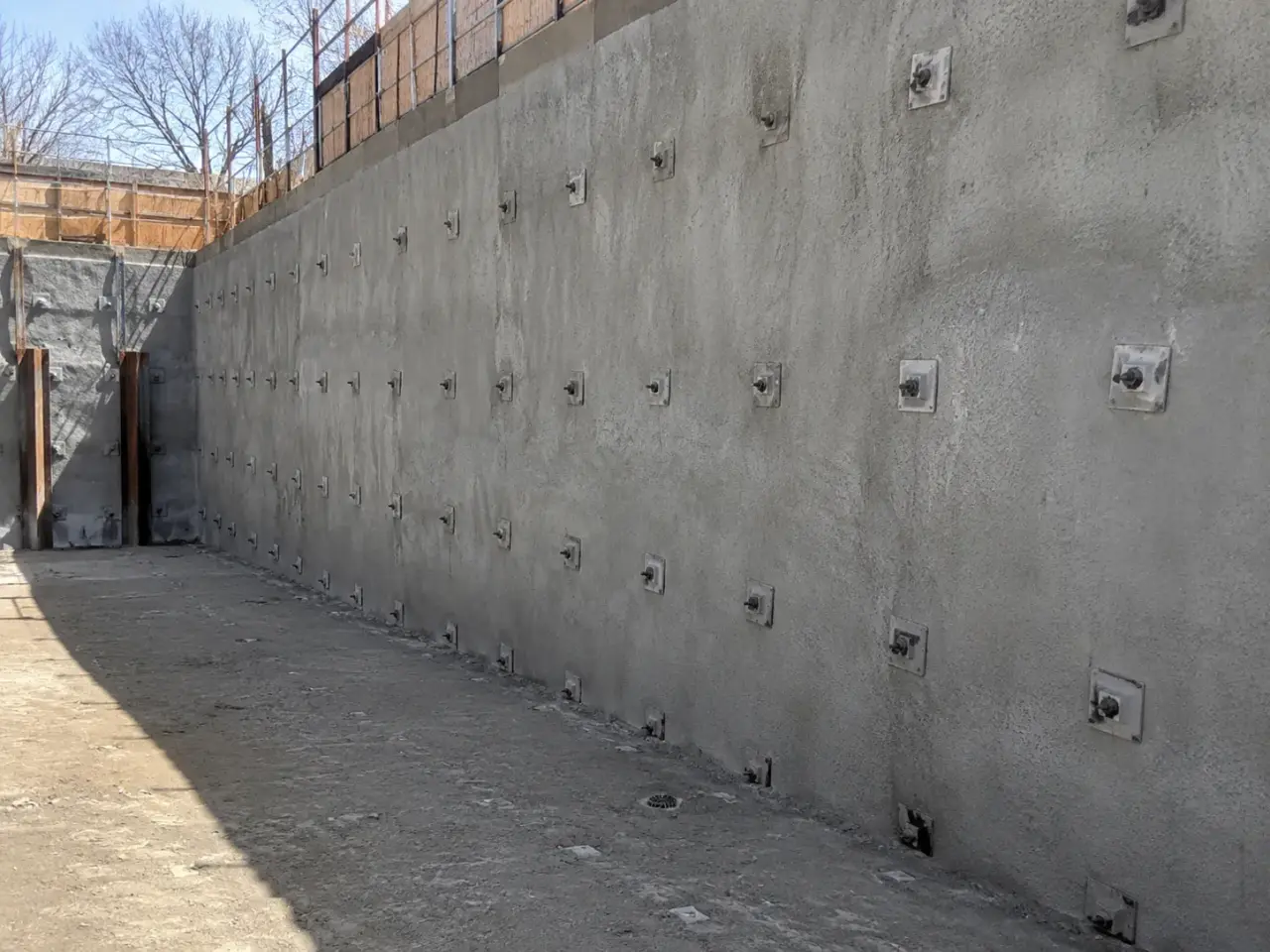
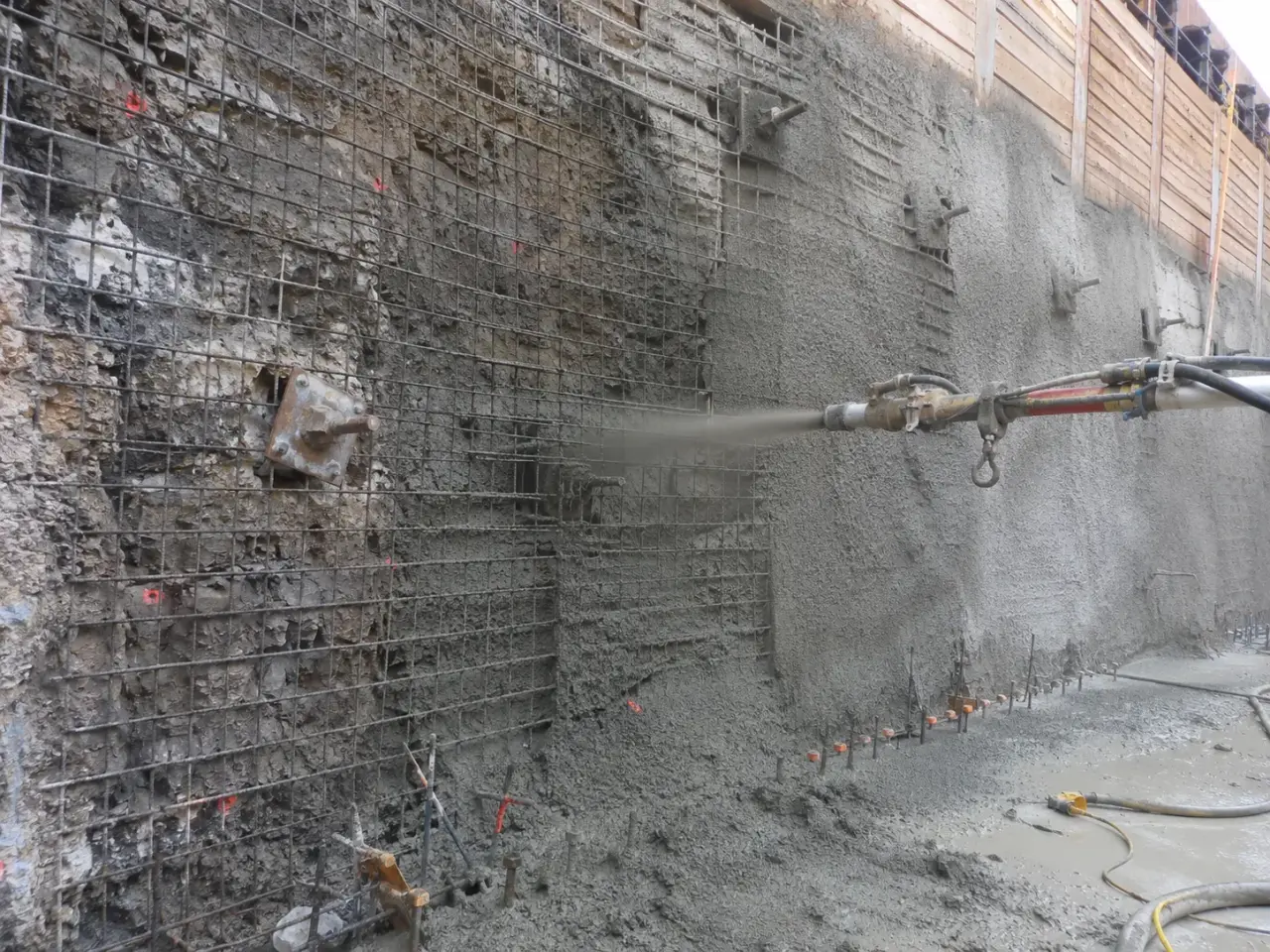
Wet-mix shotcrete pumps fully mixed concrete through the hose and adds air at the nozzle, supporting high production and controlled batching. Dry-mix gunite conveys dry ingredients and adds water at the nozzle, offering flexible starts and stops and nozzle adjustment in selected repairs. Hand-applied repair, formed concrete, or precast work can be better where encapsulation, access, finish, thickness, congestion, or volume does not suit pneumatic placement.
Step 1,
Step 2, For repair work, we first sound and mark delaminated concrete, establish removal limits, and remove unsound material without damaging retained reinforcement. Edges are cut to a sound, defined boundary rather than feathered to zero. Exposed steel is cleaned as specified, section loss is reported, and supplemental bars or anchors are installed to the engineer’s detail. The receiving surface is cleaned of dust, laitance, oil, loose material, and standing water. It is brought to the moisture condition required by the repair specification before placement.
Step 3, For new structural work, we inspect bar size, spacing, laps, couplers, chairs, cover, embedded plates, waterstops, drainage details, and construction joints. Reinforcement must be rigid enough to resist movement under nozzle impact. Congested intersections need shooting access from an angle that lets material flow behind the bars. Guide wires, screed rails, depth pins, or profile templates establish line and thickness. Temporary back forms are tight enough to resist material loss and arranged so rebound can escape instead of collecting in corners.
Step 4, The wet-mix setup includes a compatible concrete pump, delivery hose, air supply, accelerator equipment where specified, and a nozzle sized for the mixture. Dry-mix work requires a gun, metered material feed, adequate compressed air, water pressure at the nozzle, and dust controls. We prove that hose length, lift, bends, and compressor output can maintain a stable material stream. Crew communication covers start, stop, blockage, air, water, and material changes before production begins.
Step 5, The nozzle operator holds a controlled angle and distance so the stream compacts the receiving surface rather than washing across it. Shooting starts in corners, recesses, and behind reinforcement, then builds out in controlled passes. Rebound and overspray are removed and never buried into the work.
Vertical surfaces are generally built from the bottom upward so fresh material has support. Overhead placement uses thinner controlled passes and a mix response that resists sagging. Each pass remains clean and in the required surface condition before the next pass.
Step 6, We trim or finish only after the material has developed enough stiffness to hold the profile. Finish can remain as-shot, be cut to guide wires, wood floated, steel trowelled, or prepared for a coating, depending on service and specification. Construction joints are located, cut, cleaned, and resumed as detailed. Curing starts promptly after finishing and continues by the specified wet covering, fogging, curing compound, enclosure, or temperature-controlled method.
Planning shotcrete and gunite in Brampton? Talk it through with our team.
Wet-mix shotcrete arrives at the nozzle with its mixing water already batched, then compressed air accelerates it. Dry-mix gunite conveys dry cement and aggregate through the hose and adds water at the nozzle. Harrowgate selects the process by volume, access, stop-start frequency, reinforcement, finish, supply, and specified performance.
Yes, when the structural design and specification permit pneumatic placement. Shotcrete can form structural walls, linings, repairs, and complex profiles with one-sided or minimal forms. It does not remove the need for engineered reinforcement, cover, joints, embeds, testing, curing, and dimensional control. Harrowgate coordinates those requirements before selecting the placement sequence.
Specified 28-day strengths of 30, 35, and 40 MPa are common on Ontario work, and higher or early-age requirements can be designed. Strength alone does not define acceptance. Exposure class, water-to-cementing-materials ratio, permeability, air system, consolidation around steel, thickness, curing, and core quality can be equally important to the structure.
A panel proves the proposed mixture, equipment, orientation, reinforcement detail, and crew can produce acceptable in-place material before or during the structure. Cut sections and cores reveal voids, laminations, rebound pockets, and incomplete bar encapsulation that the finished face can hide. Harrowgate builds and shoots panels to the project’s CSA-based testing plan.
We secure the reinforcing, review congestion and shooting access, start placement behind and around bars, control nozzle angle and distance, and remove rebound before it can be buried. Laps, couplers, corners, and dense mats receive deliberate attention. If the reinforcement geometry blocks proper encapsulation, we resolve it with the engineer before production placement.
Yes, with an approved mixture, controlled pass thickness, stable substrate, suitable set response, and protected working environment. Cold-weather work requires heated materials or enclosure conditions as specified and protection of fresh concrete from freezing. Overhead work requires disciplined output, rebound removal, and curing so material remains bonded instead of sagging or drying prematurely.
Provide structural drawings, repair quantities or survey, design thickness, specified strength and exposure, reinforcement, finish, access, elevation, hose route, placement volume, testing, curing, working hours, and site water and power. Photographs help, but a site review is important where geometry, substrate condition, congestion, ventilation, or staging controls production.
Wet mix arrives at the nozzle with water already batched and suits consistent higher production. Dry mix adds water at the nozzle and can suit intermittent or access-sensitive repair. Design, volume, dust, rebound, mixture control, equipment, and nozzle qualification govern selection.
Rebound contains altered proportions and may collect behind reinforcement or on ledges as weak porous material. It is removed before later layers so it cannot interrupt bond, cover, consolidation, or durability.
Still have a question about shotcrete and gunite in Brampton? Ask our team directly.
Commercial and heavy-civil construction delivered for developers, contractors, property managers, and municipalities.
Send drawings, a site plan, or a description of the scope. Harrowgate Group is licensed, insured, and WSIB-covered.
Licensed, Insured & WSIB-Covered, work managed and documented on every job
Tell us what you need and we’ll get you a quote.
Harrowgate Group provides shotcrete and gunite, delivered and installed with quote-ready support across Toronto and surrounding Ontario communities.
Companies We've Worked With
Harrowgate Group delivers commercial and heavy-civil construction for developers, contractors, institutions, municipalities, and property groups across Ontario.
 Popeyes
  Tim Hortons
  Subway
  University of Toronto
  Madison Group
  RioCan
  Women's College Hospital
  Starbucks
  Mazda
Mazda  TD Bank
  City of Toronto Popeyes Tim Hortons Subway University of Toronto Madison Group RioCan Women's College Hospital Starbucks Mazda TD Bank City of Toronto