Built to spec
Built to your engineered drawings, survey, and the real site conditions, not a one-size-fits-all approach forced to fit.
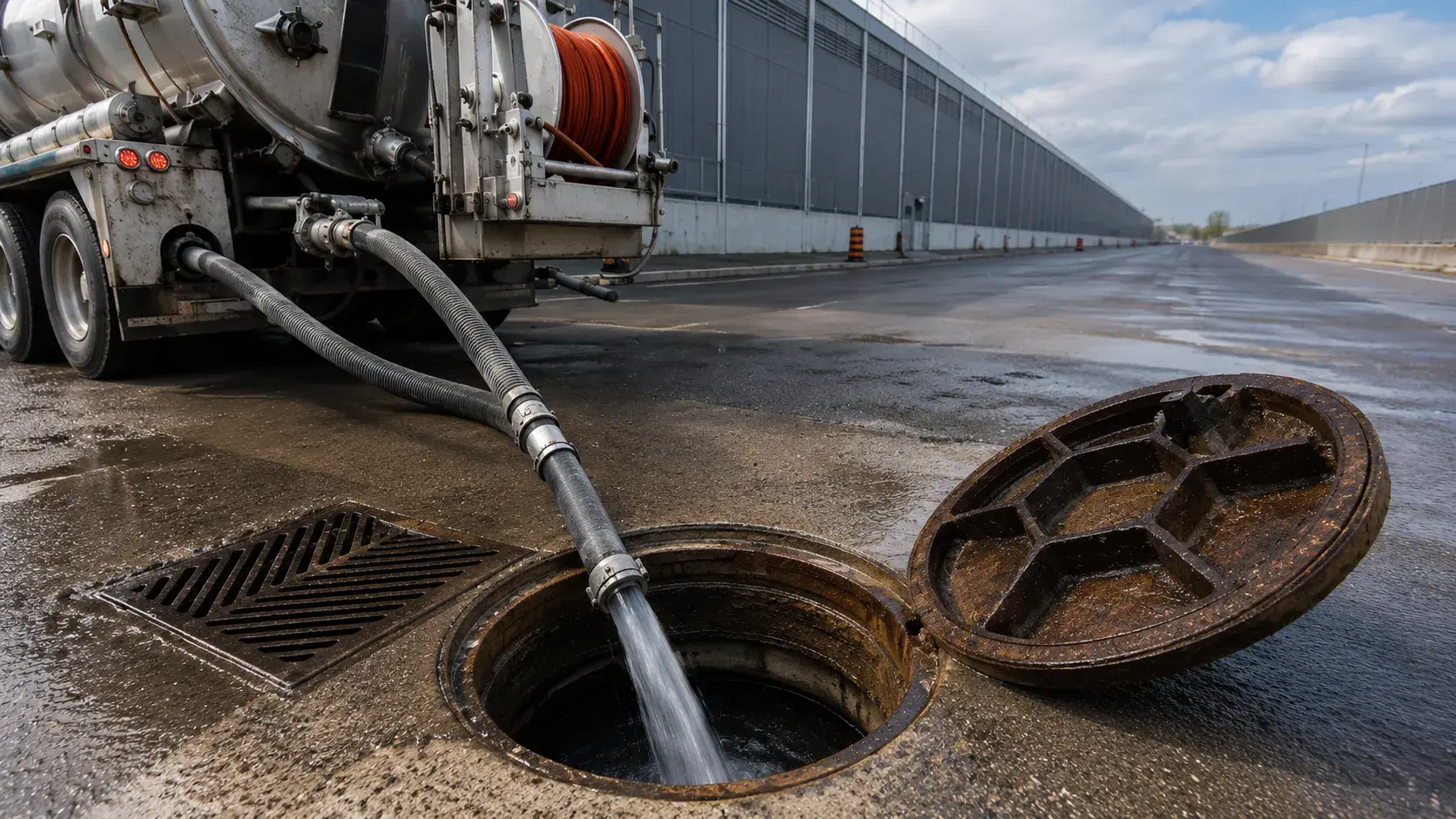
Sewer Cleaning and Flushing in Kitchener uses high-pressure water and equipment to clear blockages, roots, and debris from sewer lines.
Tell us what you need and we’ll get you a quote.
Licensed, insured & WSIB-covered · Free, no-obligation quote & on-site assessment.
Built to your engineered drawings, survey, and the real site conditions, not a one-size-fits-all approach forced to fit.
Durable materials and methods chosen for the load, traffic, and environment on site.
Send specs, drawings, or photos and get a free, no-obligation site visit and estimate with no guesswork.
Installation and site work completed in accordance with Ontario requirements.
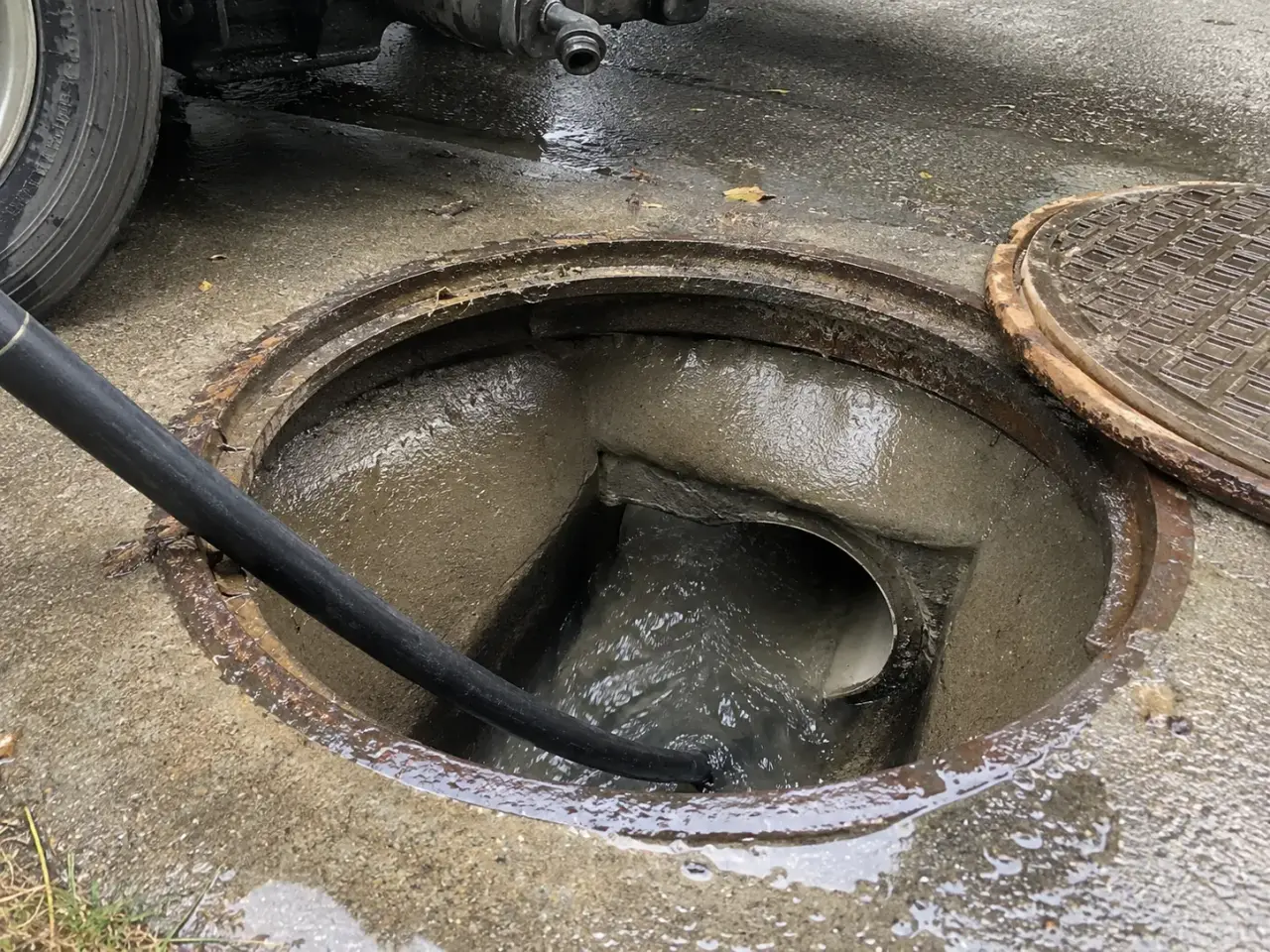
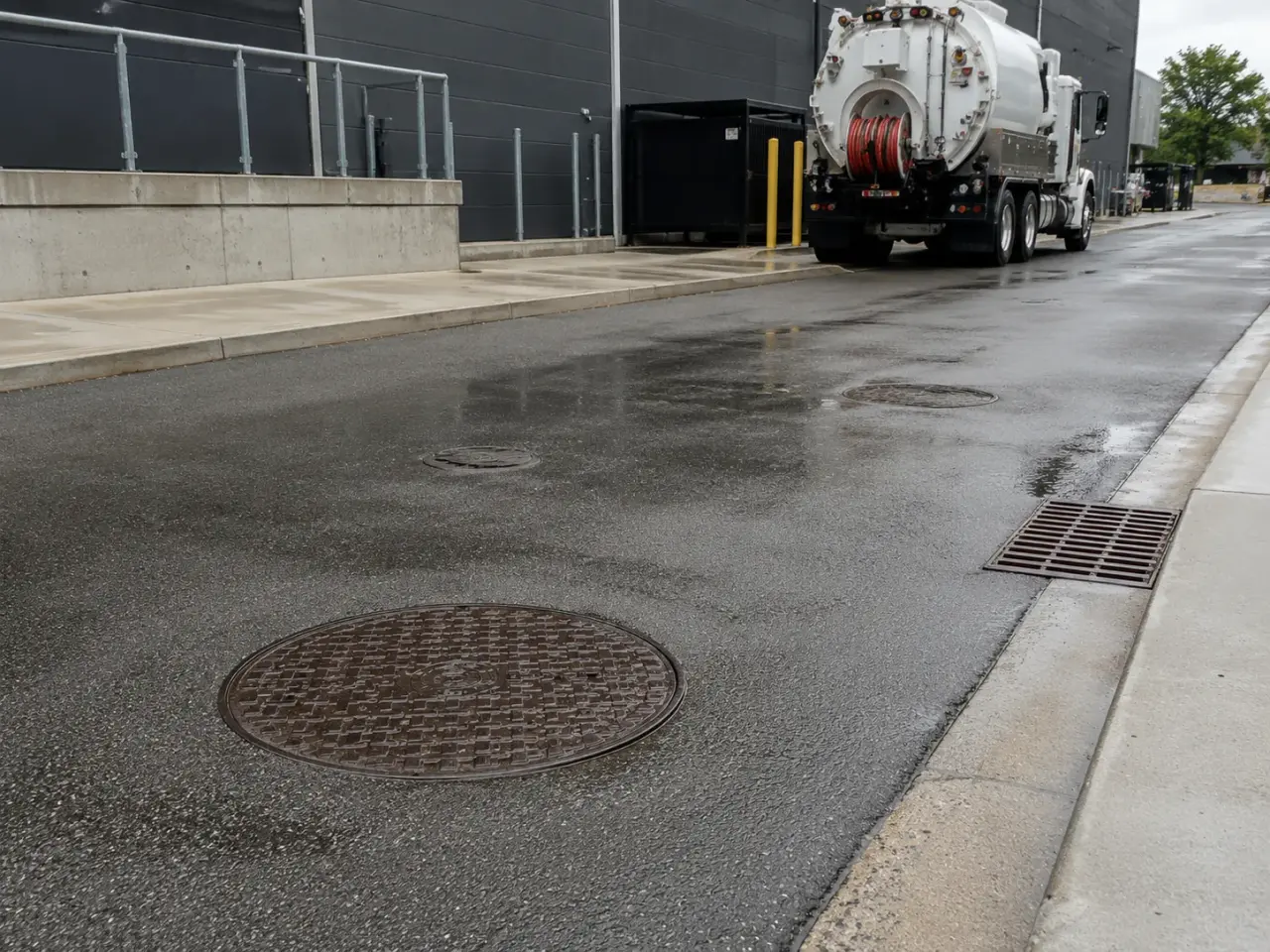
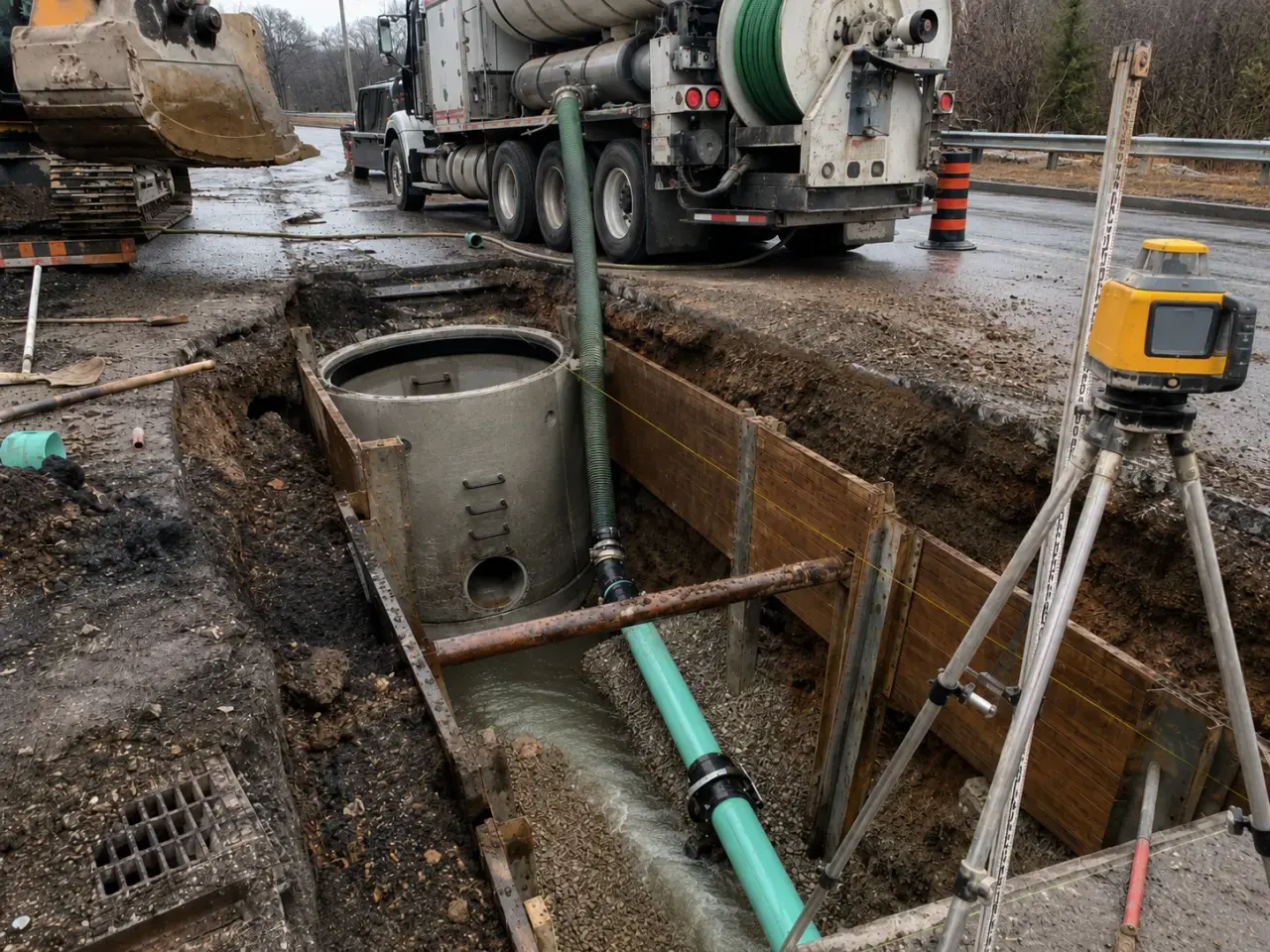
Hydraulic jetting mobilizes grease, sediment, and loose deposits toward a controlled recovery point. Combination trucks pair jetting with vacuum removal. Mechanical rodding, chain flails, root cutters, milling tools, and robotic cutters address tougher localized obstructions when pipe condition permits. Large sewers can require specialized nozzles, winches, or manned methods under approved controls. Cleaning intensity follows material, deterioration, blockage, rehabilitation objective, and downstream consequence.
Step 1,
Step 2, Our field review confirms the upstream and downstream maintenance holes, incoming laterals, pipe diameter, approximate length, depth, traffic exposure, discharge destination, and whether continuous business or plant operations impose flow windows. Covers are opened and the atmosphere and access conditions are assessed under the project safety plan.
Where upstream flow could overwhelm the reach, we schedule low-flow work, plug an inlet under controlled conditions, or establish temporary bypass pumping sized for actual flow and contingency needs. Traffic control, hose protection, and exclusion zones keep the jetting unit and open structures separated from vehicles and site personnel.
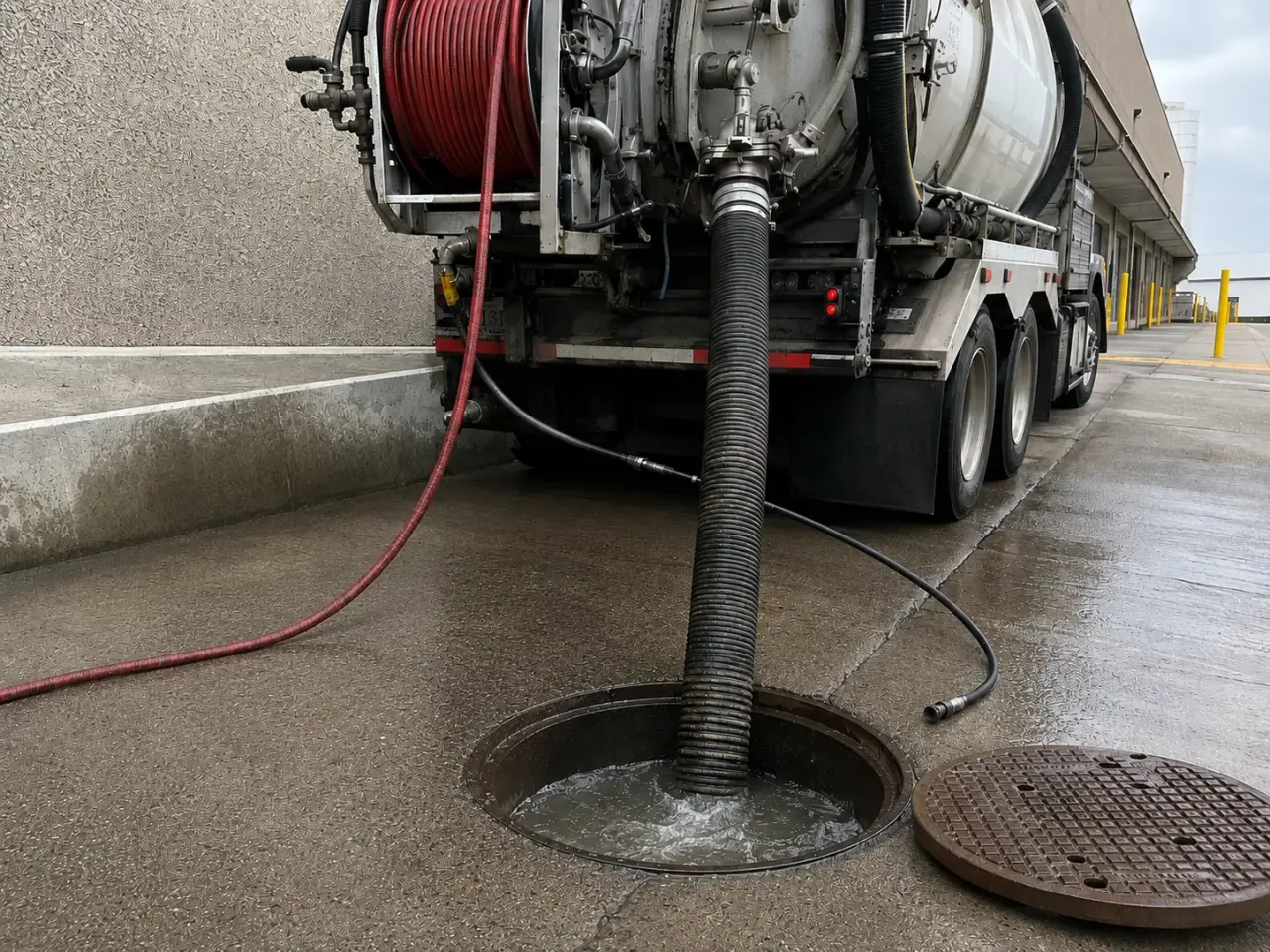
Step 3, A combination vacuum and high-pressure water unit is positioned so its hose can advance against the deposit and pull material back toward the recovery point. A penetrator or forward jet can open an initial path through a soft blockage. Rear-facing jets then propel the nozzle upstream while scouring the pipe on the controlled return pass.
A radial nozzle attacks wall deposits, a rotating nozzle cuts grease and mineral scale, a root-cutting head removes intrusions, and a heavy debris or sand nozzle moves dense grit. Pressure alone does not define effectiveness. Nozzle flow, jet angle, stand-off from the wall, pipe diameter, hose speed, and repeated controlled passes determine cleaning energy and the risk imposed on the pipe.
Step 4, Vacuum recovery removes the solids and spent water accumulated at the maintenance hole. Large rocks, broken pipe, reinforcing wire, or hardened concrete require mechanical retrieval or a defined repair rather than increasingly aggressive jetting. We stop when resistance, observed fragments, or camera evidence indicates a structural defect.
After cleaning, a camera or visual verification confirms whether the invert is open, deposits are removed, and defects previously hidden by debris are visible. We document inaccessible sections, active infiltration, offset joints, collapsed areas, protruding services, and any reach that needs repair instead of further cleaning.
Step 5, The reach is checked for restored flow, captured material, remaining obstruction, pipe damage, and the cleanliness required for its next inspection or rehabilitation step. Unresolved defects are located and reported rather than hidden by a general completion note.
Planning sewer cleaning and flushing in Kitchener? Talk it through with our team.
Frequency depends on loading and evidence, not a fixed calendar. A food facility, grit-producing plant, or large parking system may need scheduled cleaning, while a low-risk reach may be condition-based. Harrowgate uses blockage history, CCTV findings, deposit depth, pipe slope, and operating consequences to establish practical intervals for each reach.
Root-cutting and controlled jetting remove intruding roots and restore access, but roots usually indicate an open joint, crack, or failed connection. After cutting, we verify the entry location by CCTV and define the structural repair or rehabilitation needed to stop the defect from continuing to admit roots and groundwater.
Aggressive cleaning can disturb pipe that is already fractured, delaminated, displaced, or badly corroded. We review known condition, make a controlled proving pass, select a nozzle suited to the material, and monitor returned debris. Repeated resistance or pipe fragments trigger investigation, not more force. Unsound sections are identified for repair.
Recovered water and solids are vacuumed at the controlled access point, contained in the unit, and taken to an approved receiving or disposal location under project requirements. We do not push debris into the next sewer reach or release it to a catch basin, watercourse, boulevard, or another part of the site drainage system.
Existing footage helps identify weak areas and select a safe cleaning method, but acceptance-quality inspection follows cleaning. Deposits can conceal cracks, joints, deformation, infiltration, and laterals. A post-cleaning camera run shows the pipe wall and invert clearly, records remaining defects by chainage, and confirms whether the reach is ready for rehabilitation or acceptance.
Yes. We phase work around process discharge, tenant activity, deliveries, and critical drainage. Depending on incoming flow, the plan can use low-flow windows, temporary isolation, vacuum control, or bypass pumping. The required operating restrictions and contingency measures are established before a maintenance hole is opened or a sewer reach is placed under control.
Provide a site or sewer plan, pipe diameters and materials, approximate reach lengths, maintenance hole locations and depths, known blockage history, available CCTV, operating hours, and access restrictions. Note suspected grease, roots, grit, chemicals, or contaminated sediment. This lets us select equipment, recovery capacity, flow controls, and disposal requirements accurately.
Yes. Excess pressure, aggressive nozzles, cutters, or repeated stationary jetting can damage weak joints, exposed reinforcement, brittle pipe, liners, or connections. Equipment and operating parameters are adjusted from pipe material, condition, diameter, deposit, and observed response.
Debris is drawn or carried to a controlled recovery point, captured with suitable vacuum or collection equipment, and transported to an approved discharge or disposal destination. It is not intentionally pushed into a downstream pipe where it can create another blockage.
Still have a question about sewer cleaning and flushing in Kitchener? Ask our team directly.
Commercial and heavy-civil construction delivered for developers, contractors, property managers, and municipalities.
Send drawings, a site plan, or a description of the scope. Harrowgate Group is licensed, insured, and WSIB-covered.
Licensed, Insured & WSIB-Covered, work managed and documented on every job
Tell us what you need and we’ll get you a quote.
Harrowgate Group provides sewer cleaning and flushing, delivered and installed with quote-ready support across Toronto and surrounding Ontario communities.
Companies We've Worked With
Harrowgate Group delivers commercial and heavy-civil construction for developers, contractors, institutions, municipalities, and property groups across Ontario.
 Popeyes
  Tim Hortons
  Subway
  University of Toronto
  Madison Group
  RioCan
  Women's College Hospital
  Starbucks
  Mazda
Mazda  TD Bank
  City of Toronto Popeyes Tim Hortons Subway University of Toronto Madison Group RioCan Women's College Hospital Starbucks Mazda TD Bank City of Toronto