
Built to spec
Built to your engineered drawings, survey, and the real site conditions, not a one-size-fits-all approach forced to fit.
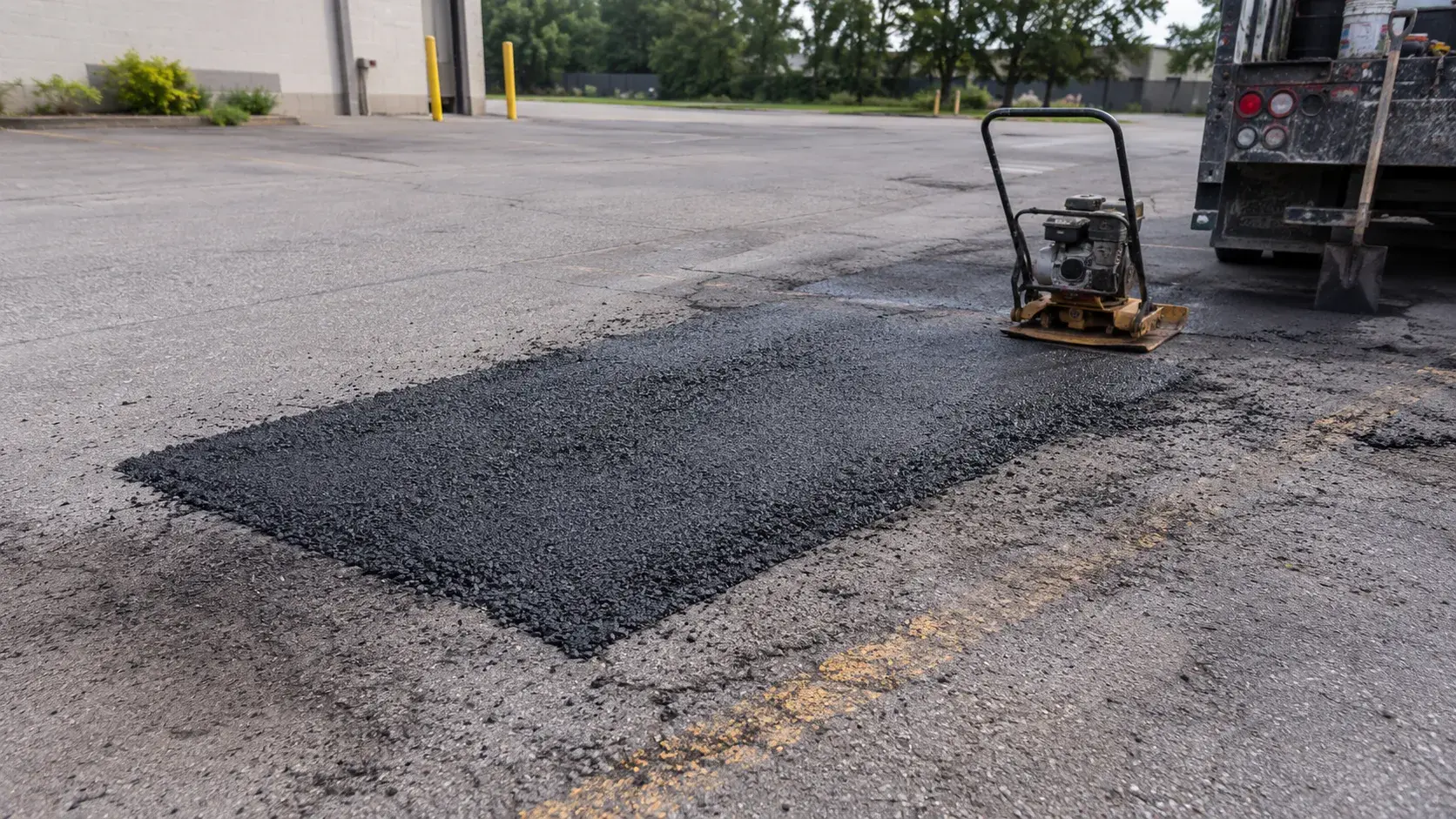
Harrowgate performs rapid-response and permanent pothole repair for commercial, industrial, and civil pavement, including square cutting, water removal, base correction, hot mix placement, compaction, and joint sealing.
Tell us what you need and we’ll get you a quote.
Licensed, insured & WSIB-covered · Free, no-obligation quote & on-site assessment.
Built to your engineered drawings, survey, and the real site conditions, not a one-size-fits-all approach forced to fit.
Durable materials and methods chosen for the load, traffic, and environment on site.
Send specs, drawings, or photos and get a free, no-obligation site visit and estimate with no guesswork.
Installation and site work completed in accordance with Ontario requirements.
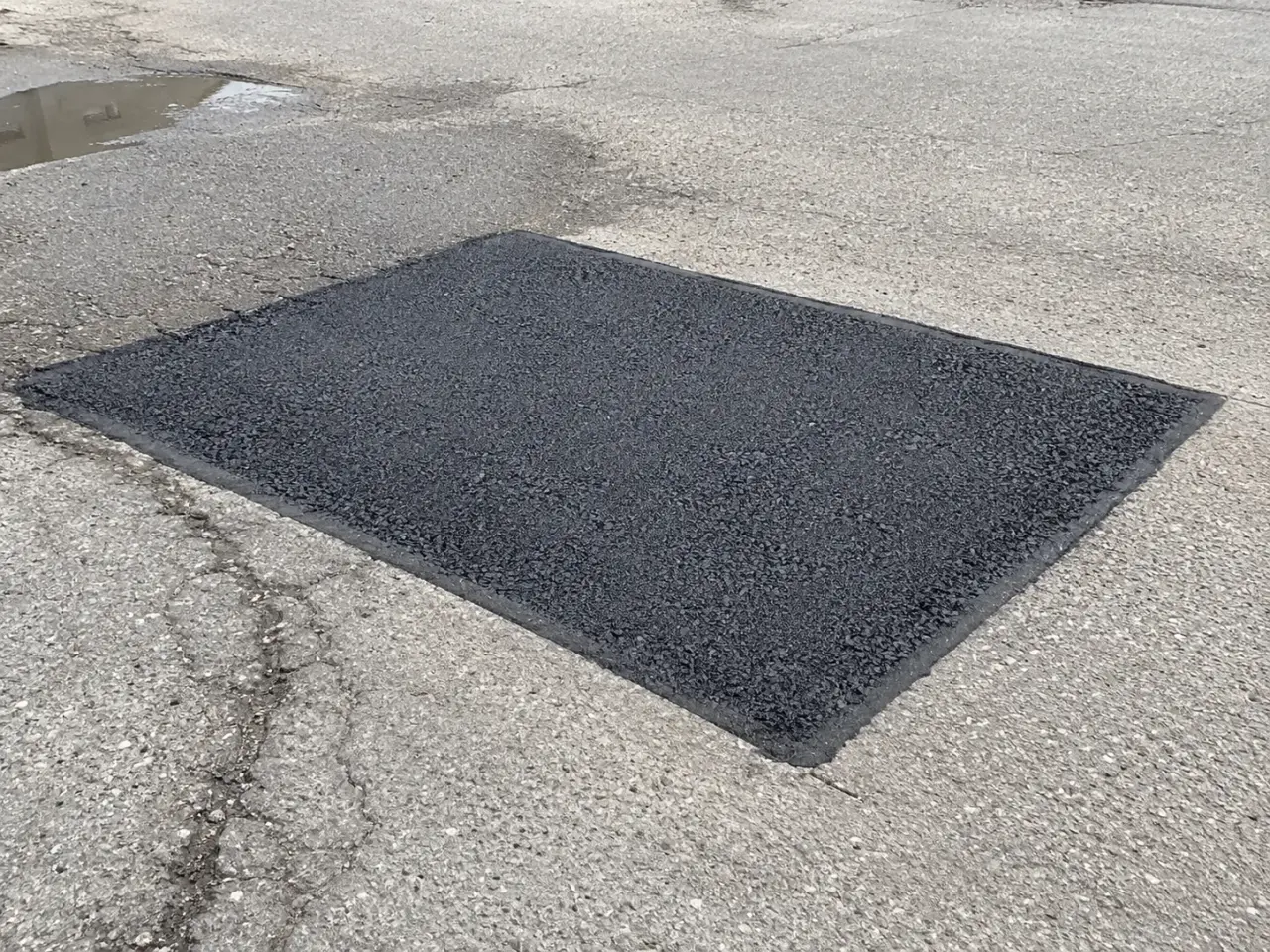
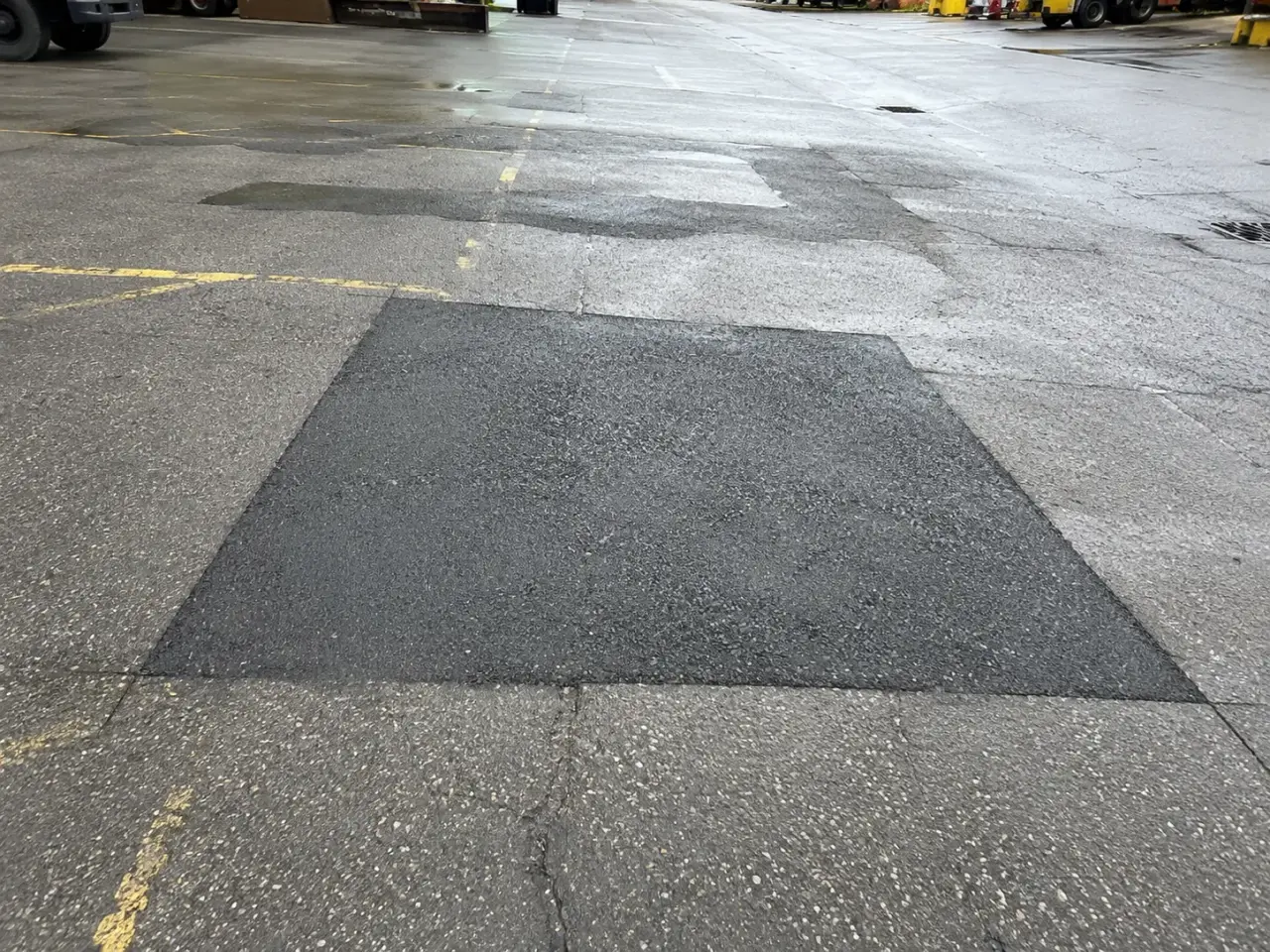
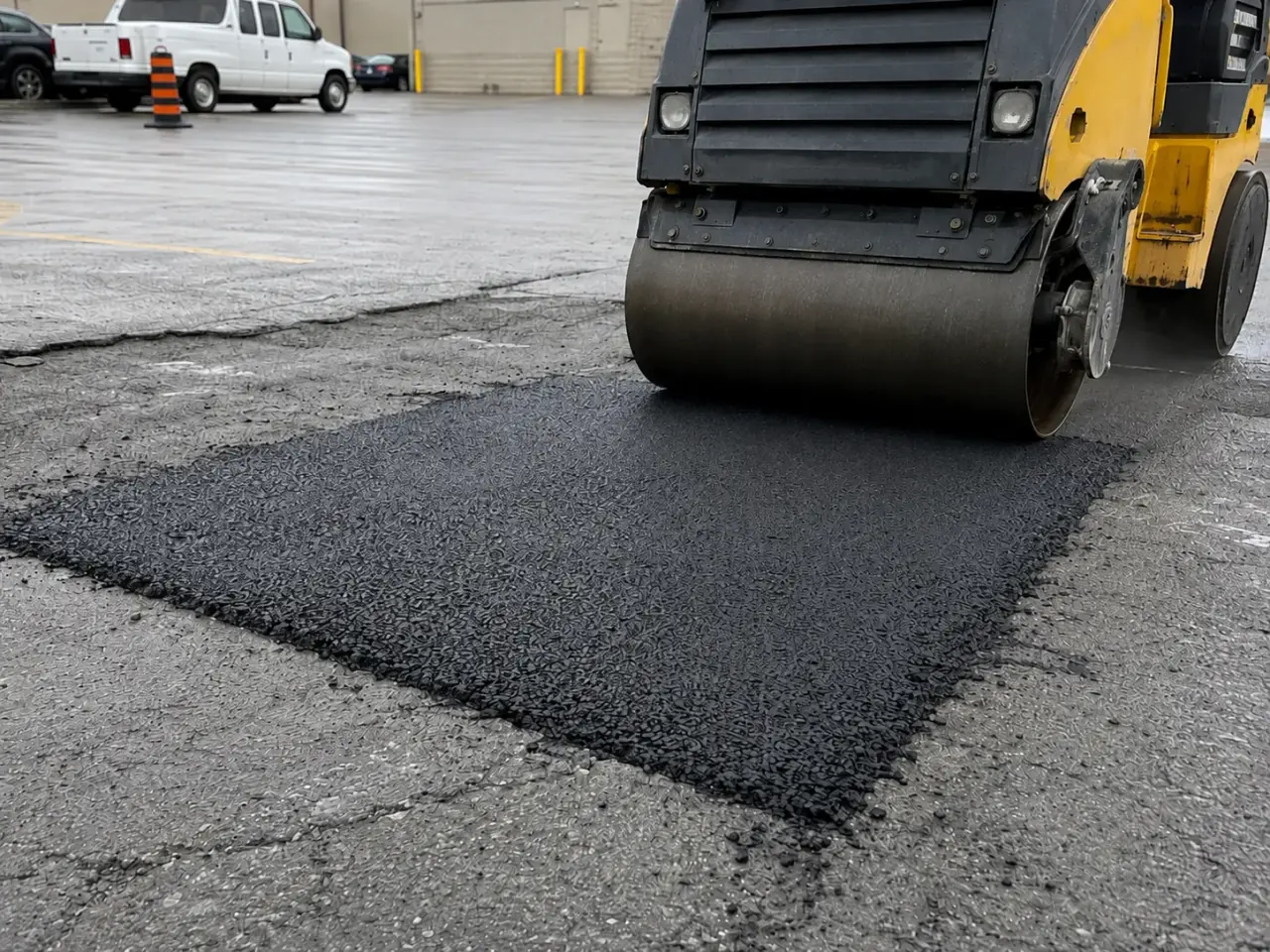
Throw-and-roll emergency fill, prepared cold patch, hot-mix permanent patching, infrared repair, and full-depth reconstruction provide different durability under weather, traffic, and base conditions.
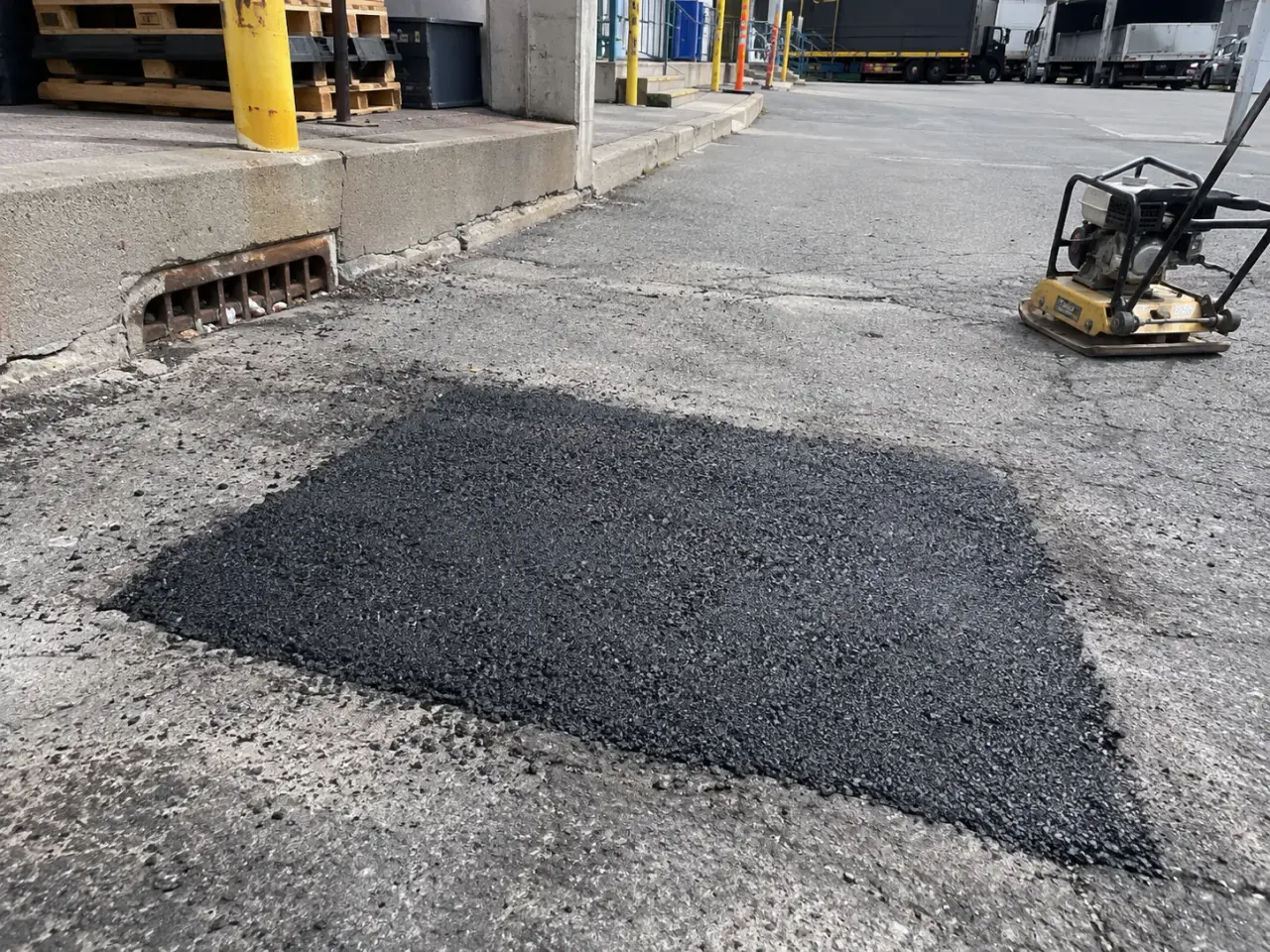
Step 1, We first make the traffic area safe, then classify the repair as temporary or permanent. Permanent work opens the cavity beyond loose asphalt, removes wet and displaced base, rebuilds in thin lifts, and compacts from the perimeter inward without leaving a water-catching depression.
Step 2, Work stage 1. The area is barricaded and loose fragments are removed so the cavity can be measured. We check depth, undercut edges, standing water, pumping, nearby cracks, wheel-path location, and whether a utility trench or drainage structure is involved.
Step 3, Work stage 2. For emergency winter work, the hole is cleaned as far as conditions allow, water and ice are removed, approved cold patch is placed in lifts, and each lift is compacted. The location is logged for permanent warm-weather repair.
Step 4, Work stage 3. Permanent boundaries are sawcut into a square or rectangle beyond fractured asphalt. The cut reaches the affected lift, and loose asphalt is lifted out without breaking the surrounding dense mat.
Step 5, Work stage 4. Wet, contaminated, or displaced granular is removed and replaced. A deep cavity is reconstructed with compacted base before asphalt, rather than filled entirely with one thick mass of surface mix.
Step 6, Work stage 5. Clean vertical faces and the cavity receive tack. Hot mix is placed in compactable lifts, avoiding segregation, then rolled or plate-compacted from sound pavement toward the centre.
Step 7, Work stage 6. The surface is finished tight and flush to adjacent grade, joints are sealed where specified, and runoff is checked. Debris is removed from nearby catch basins and traffic returns after cooling.
Planning pothole repair? Talk it through with our team.
Permanent pothole work follows the applicable hot mix, tack coat, and restoration specification. City of Toronto guidance identifies freeze and thaw action and water entering through cracks as primary causes, while the applicable local municipal specification provides compaction and joint requirements for permanent hot mix work.
Control point 1. Hot mix must match the repair depth and pavement course. Binder mix supports deeper reconstruction, while surface mix forms the wearing layer. Cold patch is documented as temporary where winter temperature prevents accepted hot work.
Control point 2. Each lift is kept within a thickness that the available roller or plate compactor can densify. Deep cavities are not filled in one lift because the bottom remains loose while the top appears sealed.
Control point 3. Tack coat creates bond on clean, dry existing asphalt. The application is a uniform film, not a puddle, and vertical edges receive full coverage before hot material is placed.
Control point 4. the applicable local municipal specification lists minimum compaction values by hot mix type and requires low results to be verified or replaced under its acceptance process. Small patches need the same dense, closed texture at joints.
Control point 5. Final surface elevation matches the adjacent crossfall. A slight hump that redirects water or a low patch that ponds is not an acceptable permanent repair, even if the cavity is filled.
Control point 6. Repair records distinguish emergency stabilization from permanent completion, including location, approximate area, material, weather, depth, base work, and follow-up requirement.
Water enters cracks and joints, saturates the pavement layers, then expands during freezing and weakens support during thaw. Vehicle loads break the loosened asphalt and eject material. Poor density, open joints, drainage defects, thin pavement, and failed utility trenches accelerate the process. Permanent repair addresses the cavity and its water or support problem.
Cold patch is valuable for winter and emergency safety work when hot mix cannot be placed and compacted to specification. Harrowgate records these locations for follow-up. A permanent repair normally cuts to sound edges, removes wet or failed base, applies tack, places hot mix in controlled lifts, compacts each lift, and seals the perimeter.
Sawcutting removes cracked, undercut, and loose asphalt and creates straight vertical faces that can be cleaned, tacked, filled, and compacted. Irregular feathered edges are difficult to densify and admit water. The boundary extends beyond the visible hole because pavement surrounding the cavity is often fractured even when it has not broken away.
Yes. We isolate a compact work zone, maintain safe alternate routes, and schedule high-traffic or loading areas in phases. Emergency filling can be quick, while permanent cutting, base work, hot mix, cooling, and sealing need a planned closure. Truck turning and concentrated loads may remain restricted longer than passenger vehicles.
The pavement may be settling because basin backfill is loose, the frame is rocking, a pipe opening leaks soil, or the lead has failed. Filling the surface does not stop that movement. Harrowgate inspects the structure and surrounding granular, repairs the basin or connection where required, then reconstructs the pavement to final drainage grade.
Depth follows the failed layers, not a fixed number. A surface defect can be partial-depth, while pumping, alligator cracking, wet granular, or a failed utility trench requires full asphalt and base reconstruction. We remove material until the exposed support is stable and the remaining asphalt edge is dense enough to bond and carry load.
When cavities overlap, cracking connects them, the area moves under traffic, or water has affected a common base zone, one full-depth rectangular patch creates fewer joints and restores support consistently. Harrowgate maps the entire distress limit and compares targeted repair with milling, resurfacing, or reconstruction before placing many small fills.
Some engineered cold materials can perform well, but wet dirty holes, unstable base, inadequate compaction, and severe traffic often make temporary repairs short lived.
Water entry, cracked pavement, failed base, poor drainage, utility settlement, thin asphalt, and weak patch joints can remain after the visible cavity is filled.
Still have a question about pothole repair? Ask our team directly.
Commercial and heavy-civil construction delivered for developers, contractors, property managers, and municipalities.
Send drawings, a site plan, or a description of the scope. Harrowgate Group is licensed, insured, and WSIB-covered.
Licensed, Insured & WSIB-Covered, work managed and documented on every job
Tell us what you need and we’ll get you a quote.
Harrowgate Group provides pothole repair, delivered and installed with quote-ready support across Toronto and surrounding Ontario communities.
Companies We've Worked With
Harrowgate Group delivers commercial and heavy-civil construction for developers, contractors, institutions, municipalities, and property groups across Ontario.
 Popeyes
  Tim Hortons
  Subway
  University of Toronto
  Madison Group
  RioCan
  Women's College Hospital
  Starbucks
  Mazda
Mazda  TD Bank
  City of Toronto Popeyes Tim Hortons Subway University of Toronto Madison Group RioCan Women's College Hospital Starbucks Mazda TD Bank City of Toronto