
Built to spec
Built to your engineered drawings, survey, and the real site conditions, not a one-size-fits-all approach forced to fit.
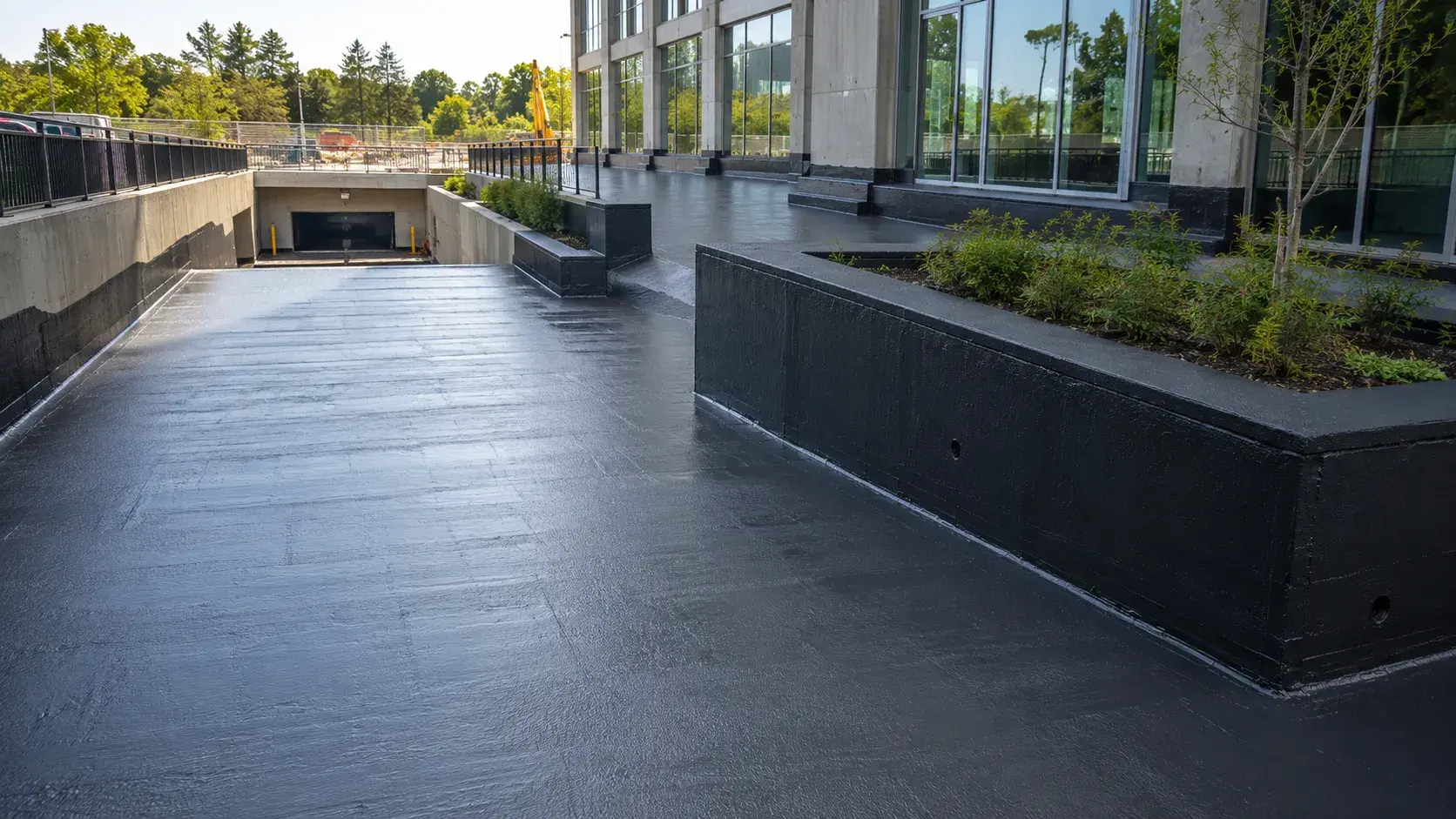
Liquid Membrane Waterproofing in Innisfil is seamless, rolled or sprayed waterproofing applied to decks, foundations, and structures.
Tell us what you need and we’ll get you a quote.
Licensed, insured & WSIB-covered · Free, no-obligation quote & on-site assessment.
Built to your engineered drawings, survey, and the real site conditions, not a one-size-fits-all approach forced to fit.
Durable materials and methods chosen for the load, traffic, and environment on site.
Send specs, drawings, or photos and get a free, no-obligation site visit and estimate with no guesswork.
Installation and site work completed in accordance with Ontario requirements.
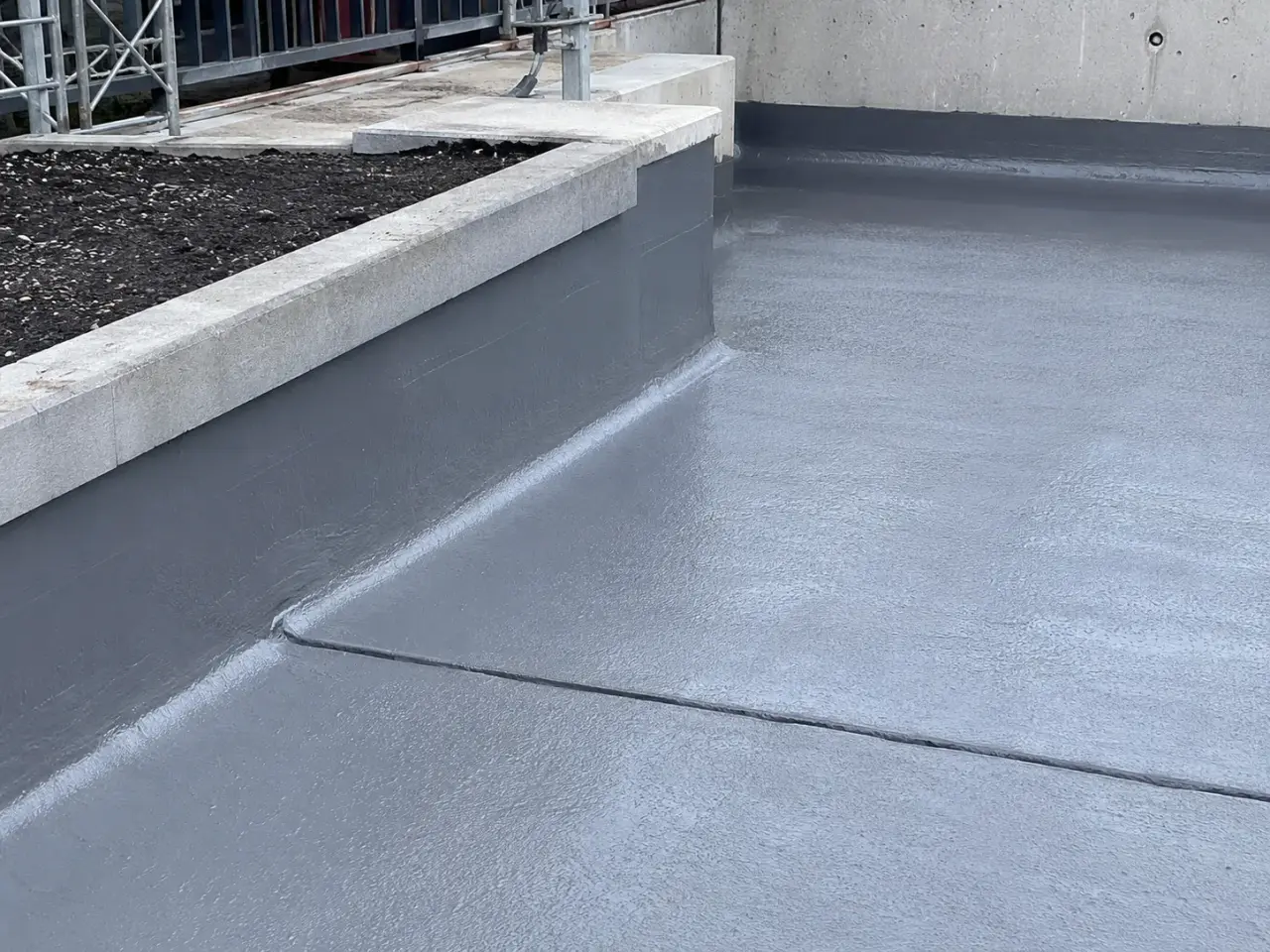
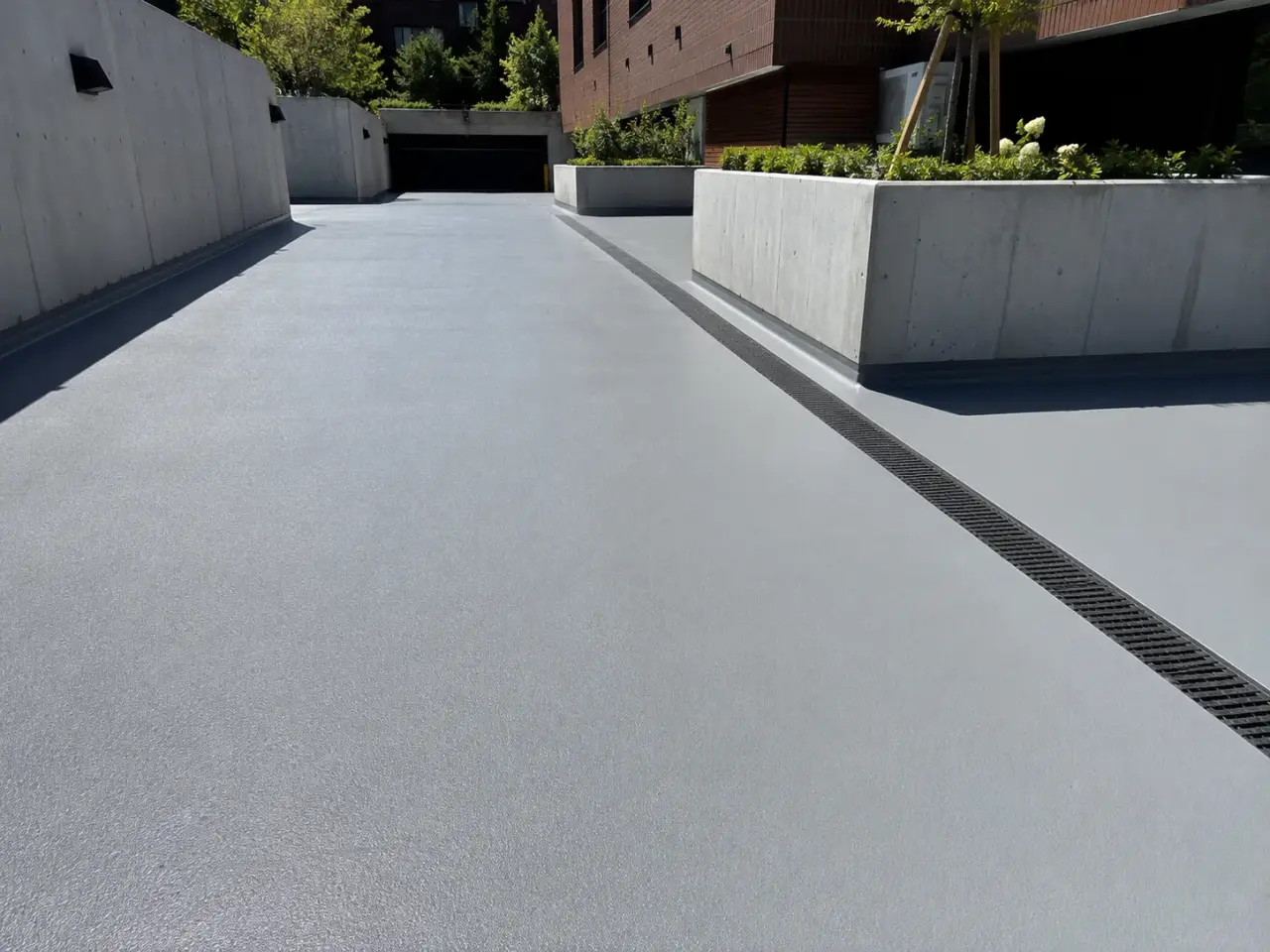
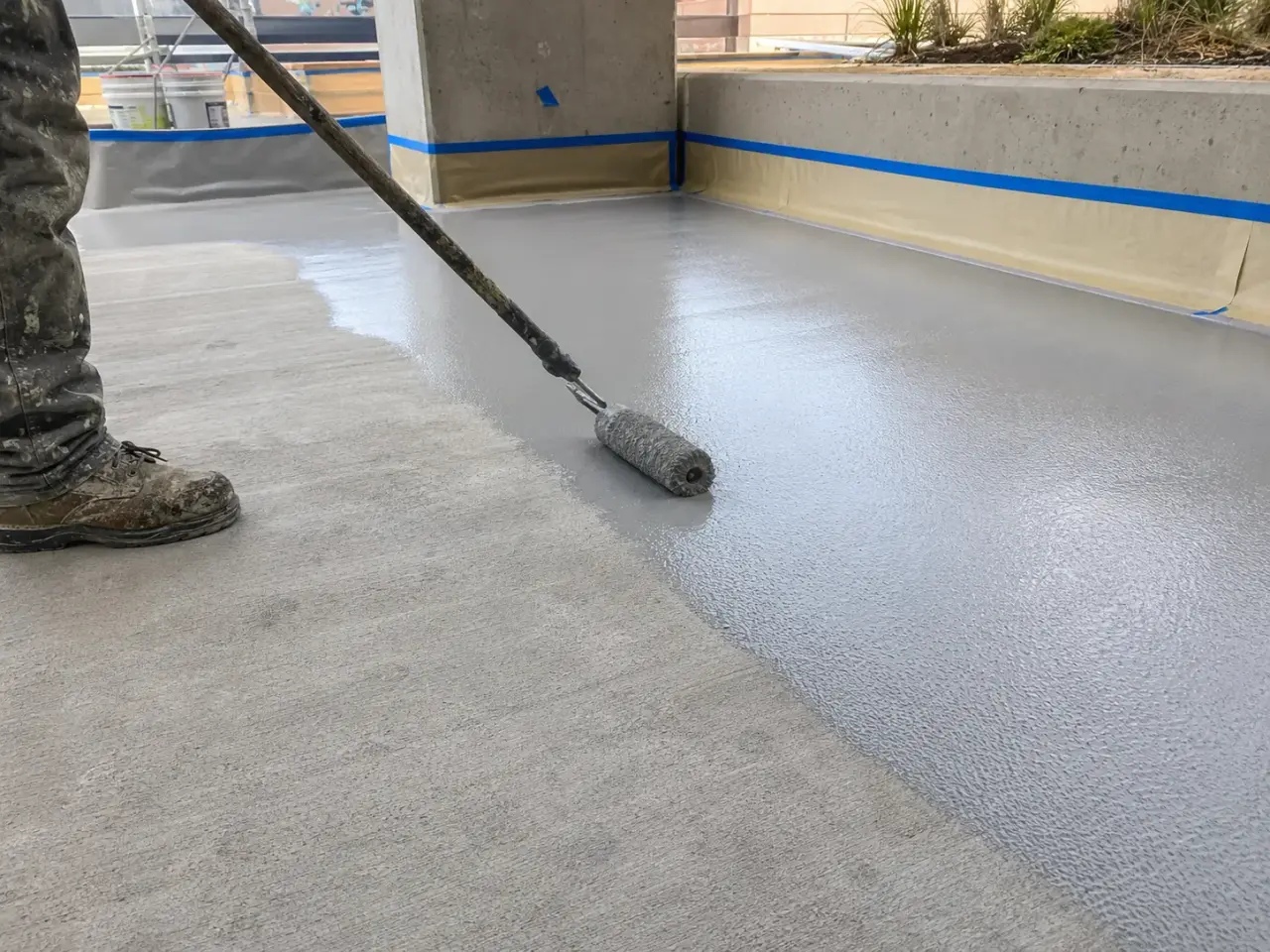
Cold fluid-applied, hot rubberized asphalt, reinforced liquid, and traffic-bearing liquid systems differ in chemistry, thickness, substrate, exposure, and protection.
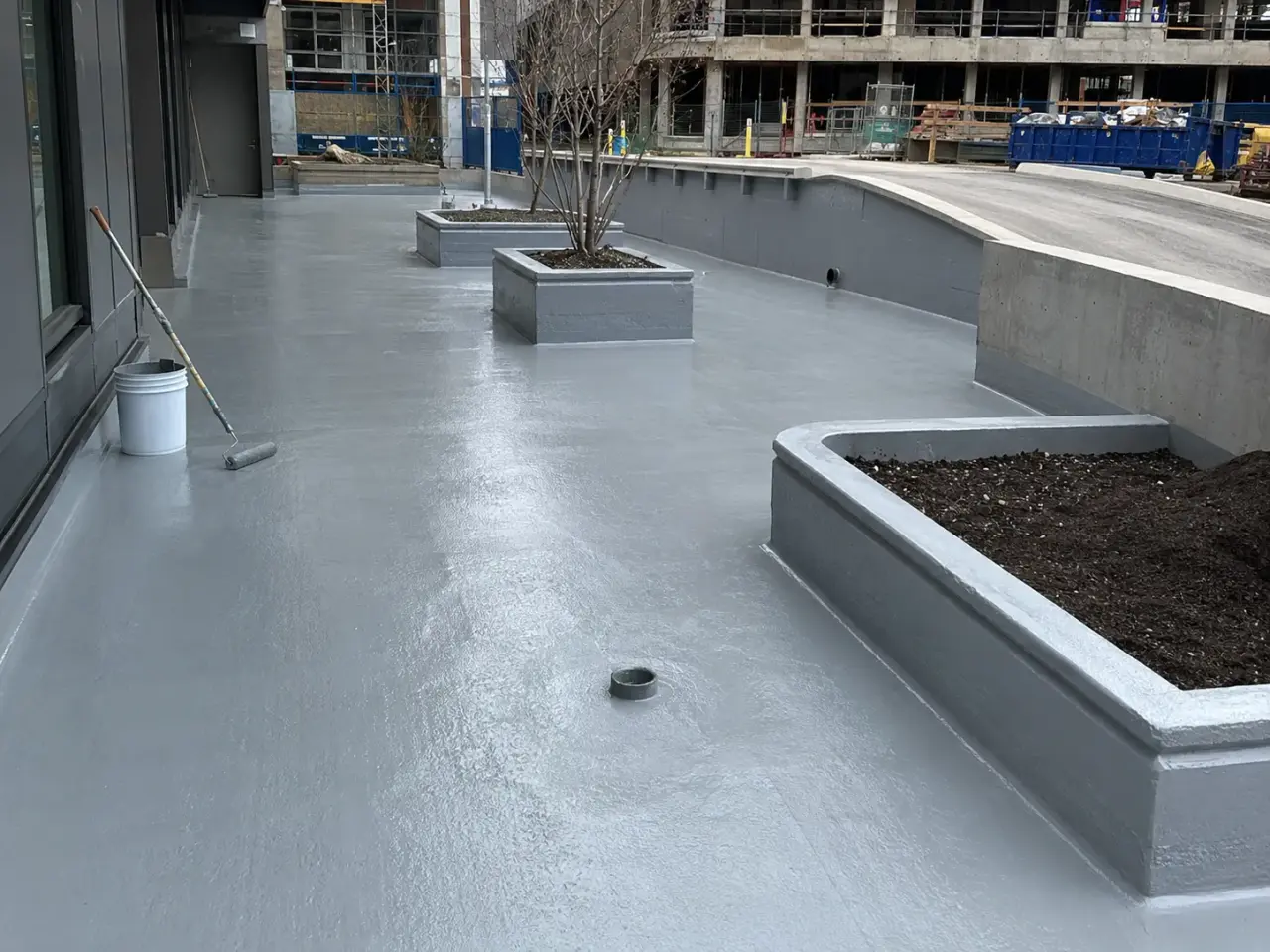
Step 1, Harrowgate creates a continuous liquid membrane through disciplined substrate preparation and film control. We complete every detail before the open field, maintain wet edges and coverage, verify cure and integrity, then install protection and drainage without puncturing the finished barrier.
Step 2, Substrate assessment and repair. Concrete is checked for laitance, fins, bugholes, honeycombs, cracks, curing compounds, oil, moisture, and sharp changes. Unsound material is removed, holes and recesses filled, high points ground, and compatible slope repairs completed. Masonry receives parging where required so liquid material is not expected to bridge deep joints and voids.
Step 3, Primer and adhesion confirmation. Primer is selected for concrete, wood, metal, old membrane, or other approved substrate and applied at controlled coverage without puddles. Porous areas may need additional treatment. Test patches confirm wetting and bond, especially on repair mortars and transitions. Primer is membrane-system material, not a generic bonding agent.
Step 4, Crack and detail reinforcement. Cracks, cold joints, corners, wall-to-footing angles, drains, sleeves, curbs, and terminations receive stripe coats, fabric, fleece, sealant, cants, or preformed accessories. Reinforcement is embedded without wrinkles and extended beyond the stress line. Active expansion joints use a designed movement system separate from the field membrane.
Step 5, Field membrane application. Self-levelling grades are spread on horizontal work, roller or squeegee grades serve open decks, non-sag materials serve vertical surfaces, and spray equipment suits large areas where approved. Crews monitor material temperature, batch time, weather, wet edge, and wet-film thickness. Multiple coats use contrasting colours where helpful for coverage.
Step 6, Testing and repairs. After cure, the surface is reviewed for pinholes, thin spots, blisters, contamination, and damaged details. Horizontal assemblies can receive a 50 mm water head for 24 hours where flood testing is specified and structurally permitted. Electronic or other integrity testing is used where compatible. Repairs are retested before cover.
Step 7, Protection and overburden. Drainage mat, protection board, insulation, asphalt, concrete topping, pavers, soil, or traffic wear courses are installed only after membrane cure and acceptance. Temporary access uses load-spreading protection. Fasteners, stakes, and stored reinforcement are excluded unless the detail specifically provides for them.
Step 8, Application records include substrate conditions, repairs, primer, product lots, weather, area, material quantity, wet-film checks, cure, test results, and mapped repairs. Harrowgate photographs drains, penetrations, joints, and terminations before protection. Overburden handoff identifies allowable equipment and access routes so the accepted membrane remains intact through later work.
Planning liquid membrane waterproofing in Innisfil? Talk it through with our team.
Many cold-applied protected systems are specified around 1.5 mm dry thickness, while traffic, hot-applied, and specialized systems can differ. Solids content means wet and dry film are not always equal. Harrowgate checks wet-film gauges, measured area, and material yield against the approved Canadian assembly rather than judging thickness by colour.
Only products specifically approved for that substrate condition can be used, and damp is different from active leakage or standing water. Many membranes require dry concrete and controlled vapour. Harrowgate checks product limits, tests suspect areas, controls water, and does not use extra primer as a substitute for acceptable substrate moisture.
Cracks are assessed for width, movement, structure, and water. Small dormant cracks can receive routed sealant and a reinforced stripe coat, while active structural or expansion joints need engineered treatment. The detail extends beyond the crack so movement is distributed before the full field membrane is applied across it.
Testing begins only after the membrane reaches the cure specified by the manufacturer and details are complete. Where the structure and drains permit it, a common procedure uses roughly 50 mm of water for 24 hours. Leaks are mapped, repaired under the approved process, and retested before protection is installed.
Cold liquid systems cure from polyurethane, polymer-modified bitumen, acrylic, or reactive resin and can serve vertical, horizontal, exposed, or protected uses depending on product. Hot rubberized asphalt is heated and applied as a thick protected monolithic membrane, commonly on plazas, podiums, and protected roofs. Each needs its complete system.
Protected below-grade and overburden systems do. Protection board or drainage composite prevents puncture during backfill, concrete topping, pavers, soil placement, and later work. Exposed traffic systems instead use compatible wear coats and topcoats. Harrowgate installs the protection specified for the actual load and construction sequence.
Provide plans, details, membrane system and thickness, substrate, repair scope, cracks and joints, penetrations, drains, slopes, vertical turn-ups, testing, protection, drainage, overburden, weather limits, and phasing. Harrowgate calculates detail and field quantities separately so corners, reinforcements, and transitions are not hidden inside a generic area rate.
Wet-film gauges, consumption records, reinforced-layer checks, and specified dry-film or test methods verify coverage by zone.
No. Crack width, movement, moisture, structure, reinforcement detail, and product limits determine whether routing, fabric, joint treatment, or structural repair is required.
Still have a question about liquid membrane waterproofing in Innisfil? Ask our team directly.
Commercial and heavy-civil construction delivered for developers, contractors, property managers, and municipalities.
Send drawings, a site plan, or a description of the scope. Harrowgate Group is licensed, insured, and WSIB-covered.
Licensed, Insured & WSIB-Covered, work managed and documented on every job
Tell us what you need and we’ll get you a quote.
Harrowgate Group provides liquid membrane waterproofing, delivered and installed with quote-ready support across Toronto and surrounding Ontario communities.
Companies We've Worked With
Harrowgate Group delivers commercial and heavy-civil construction for developers, contractors, institutions, municipalities, and property groups across Ontario.
 Popeyes
  Tim Hortons
  Subway
  University of Toronto
  Madison Group
  RioCan
  Women's College Hospital
  Starbucks
  Mazda
Mazda  TD Bank
  City of Toronto Popeyes Tim Hortons Subway University of Toronto Madison Group RioCan Women's College Hospital Starbucks Mazda TD Bank City of Toronto