
Built to spec
Built to your engineered drawings, survey, and the real site conditions, not a one-size-fits-all approach forced to fit.
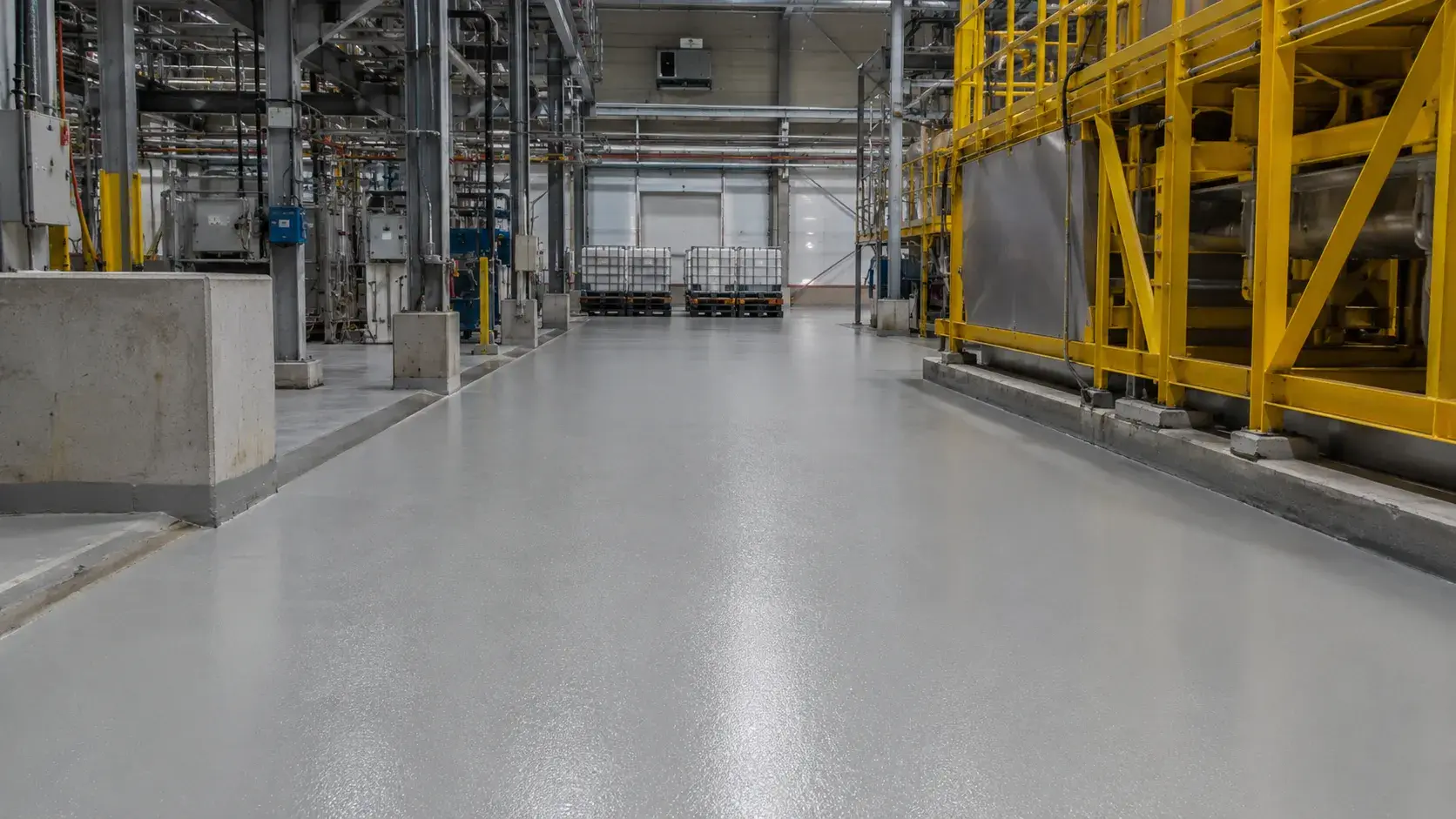
Industrial Floor Coatings in Barrie are heavy-duty resin and urethane systems built for chemical, thermal, and abrasion resistance in demanding facilities.
Tell us what you need and we’ll get you a quote.
Licensed, insured & WSIB-covered · Free, no-obligation quote & on-site assessment.
Built to your engineered drawings, survey, and the real site conditions, not a one-size-fits-all approach forced to fit.
Durable materials and methods chosen for the load, traffic, and environment on site.
Send specs, drawings, or photos and get a free, no-obligation site visit and estimate with no guesswork.
Installation and site work completed in accordance with Ontario requirements.
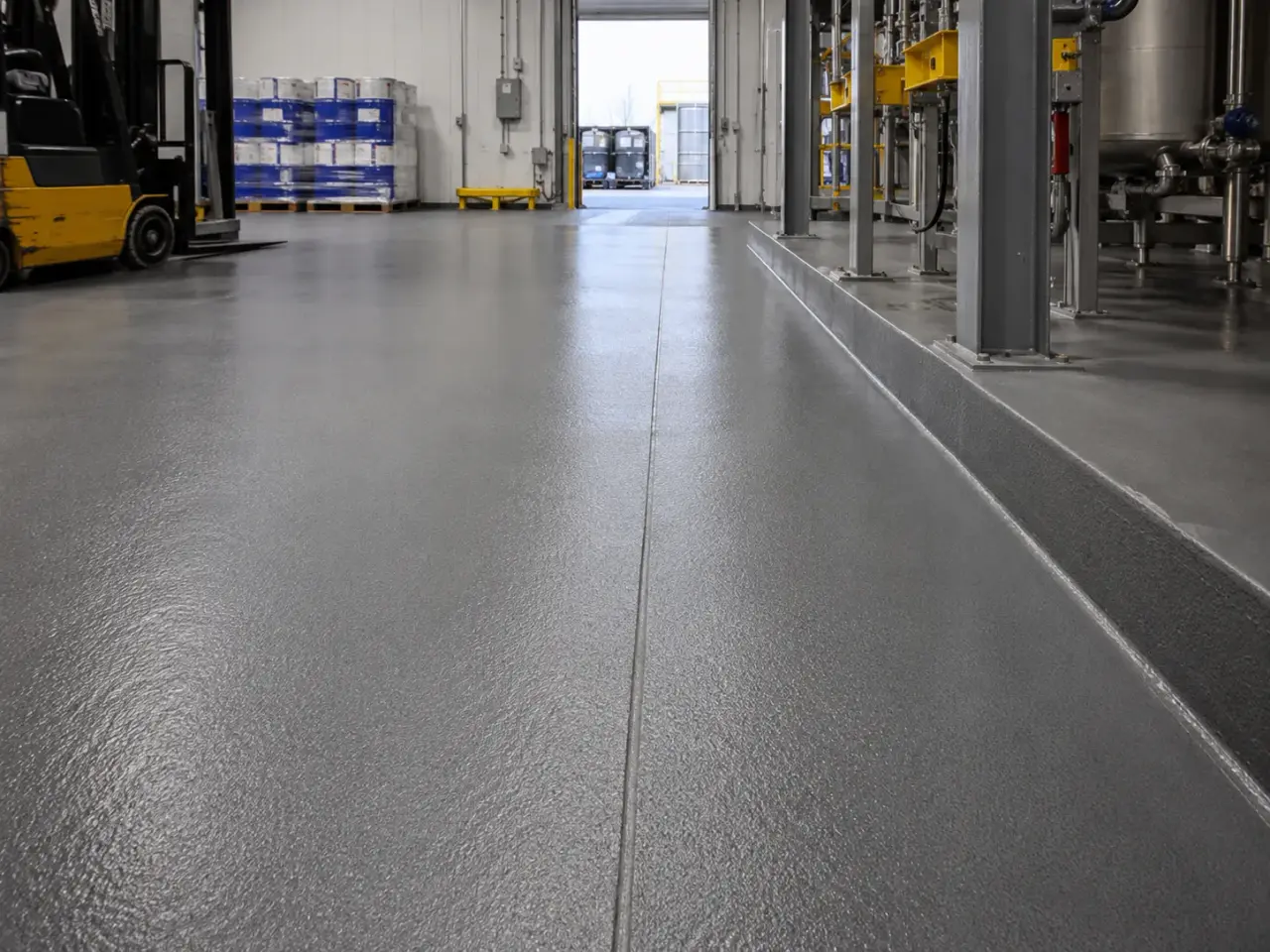
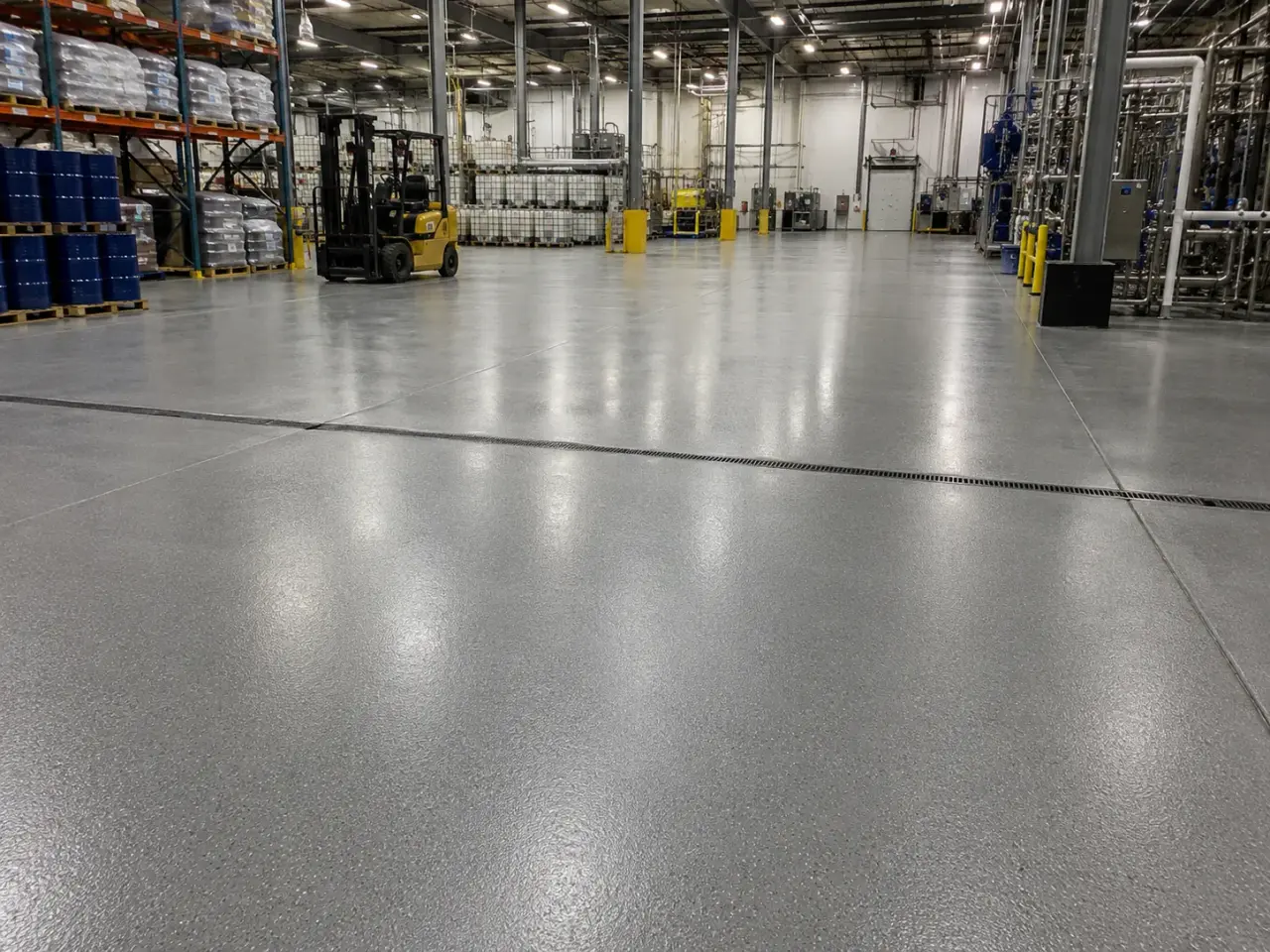
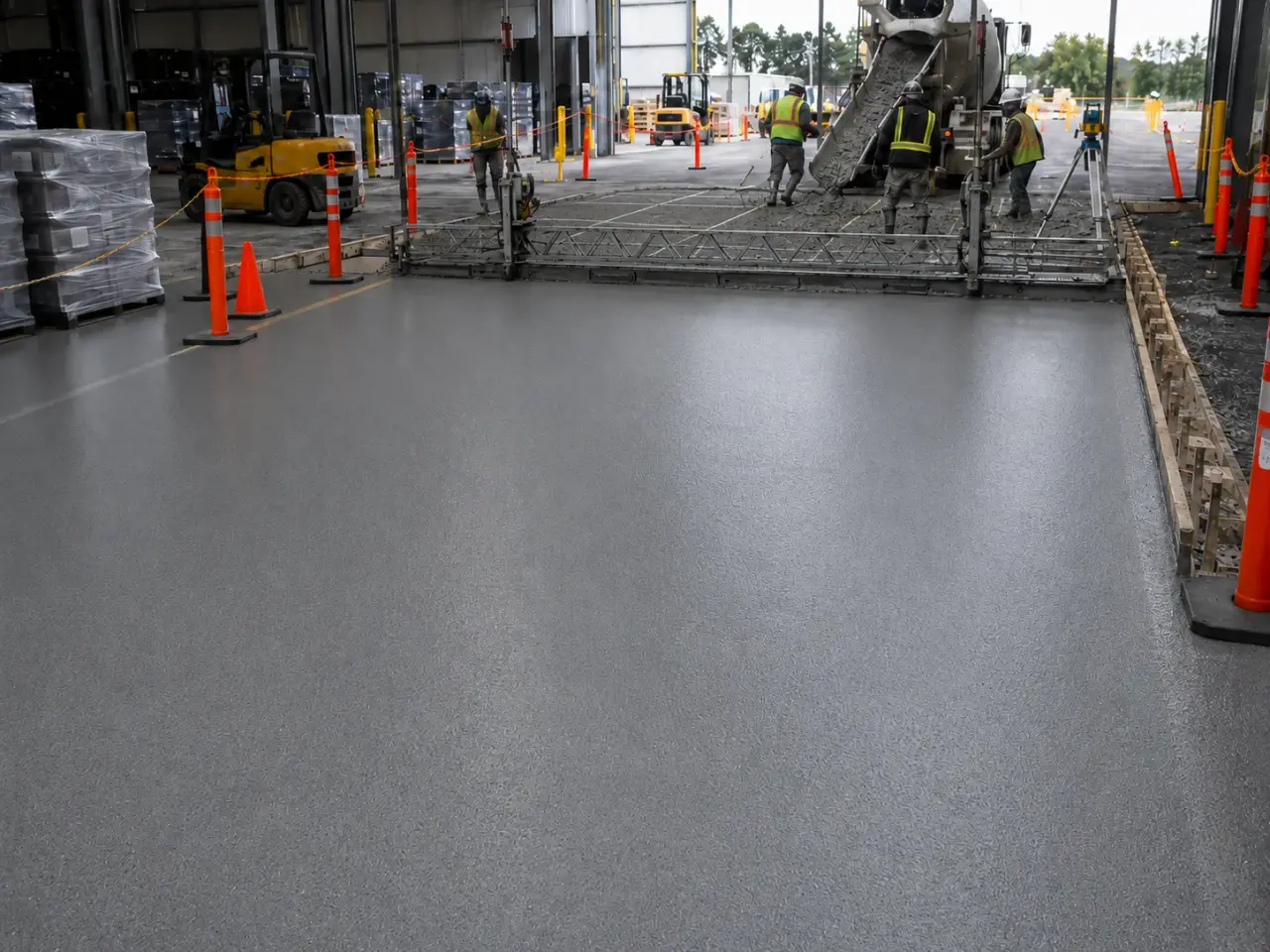
Industrial resin selection follows chemical exposure, impact, abrasion, traffic, washdown, thermal cycling, slip, concrete moisture, drainage, downtime, and the repairable film build required by operations.
Thin and high-build epoxy. Epoxy systems provide adhesion, colour, cleanability, and chemical resistance at thicknesses selected for service.
Urethane cement. Cementitious urethane systems suit wet processing, thermal shock, moisture, and heavier chemical duty when properly detailed.
Broadcast and mortar floors. Aggregate broadcasts, slurries, and trowelled mortars build texture, thickness, impact resistance, and slope correction.
Specialty topcoats. Polyurethane, polyaspartic, novolac, ESD, or other approved finishes address UV, rapid return, conductivity, stain, or chemical criteria.
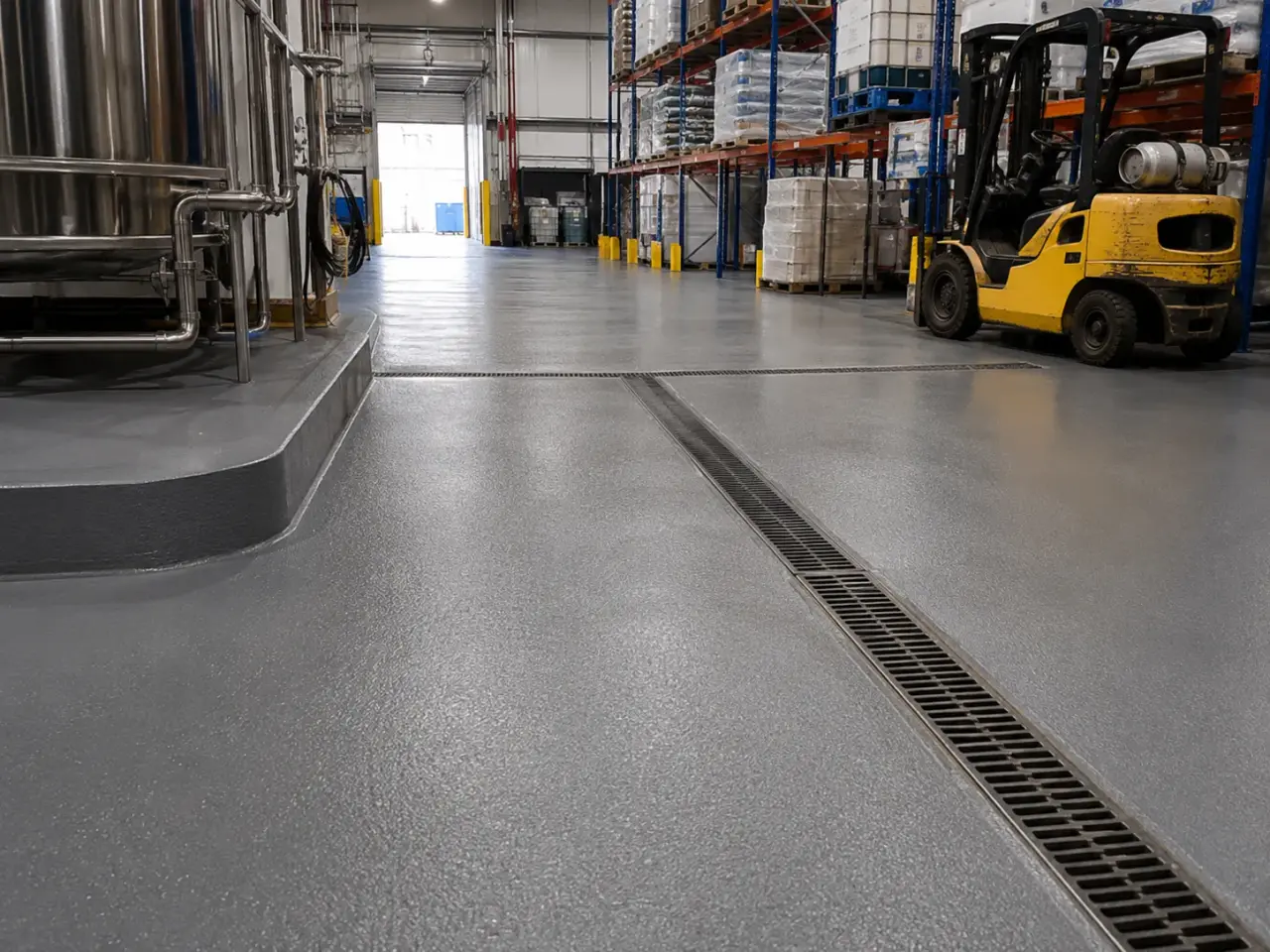
Step 1, Map traffic, chemicals, temperatures, cleaning, drains, joints, moisture, contamination, texture, colour, and shutdown by zone.
Step 2, Test the slab, complete mockups, isolate operations, and mechanically prepare to the specified sound profile.
Step 3, Repair concrete, cracks, joints, coves, drains, penetrations, and transitions according to movement and exposure.
Step 4, Apply primer, body, aggregate, grout, and topcoats within ratio, pot life, coverage, recoat, temperature, and humidity limits.
Step 5, Inspect adhesion, continuity, thickness, cure, texture, and terminations before documented return to operational loading.
Industrial flooring is installed as a complete substrate-to-service assembly. Harrowgate controls preparation depth, repair compatibility, resin mixing, aggregate loading, cove continuity, temperature, and cure so the floor is ready for the documented process rather than merely dry to the touch.
Process and traffic assessment. We record chemical names and concentrations, spill temperature, contact duration, cleaning agents, wash temperature, wheel material, axle loads, impact points, static control needs, and shutdown limits. This separates chemical containment zones, wet production, dry logistics, machine areas, and general circulation into rational system types.
Aggressive substrate preparation. Shot blasting removes weak paste and creates a uniform profile over open production floors. Diamond grinding addresses dense surfaces, edges, and residues. Scarifying or milling removes thick failed systems and contaminated surface concrete. Dust extraction and isolation keep preparation debris out of bearings, controls, stored product, and adjacent operating lines.
Repairs and anchoring details. We rebuild broken joints, slab edges, drain shoulders, equipment-pad transitions, and impact damage with high-strength compatible mortars. Cementitious urethane systems may receive anchor grooves at perimeters, drains, doorways, and terminations so thermal and mechanical stress does not peel the edge. Moving joints are preserved through the finish.
Coves, falls, and process details. Integral coves eliminate an open floor-to-wall joint in wash areas. We form cove radius and termination height consistently around columns, curbs, and equipment bases. Local screeds restore positive drainage to trenches and floor drains where feasible. The waterproof or chemical-resistant layer is carried continuously through these details.
Body system placement. Self-levelling resin is gauge-raked and spike-rolled, broadcast systems receive graded aggregate to refusal, and mortar screeds are trowelled to the specified depth. Cementitious polyurethane components are mixed in complete premeasured units and placed rapidly because working time is short. Crew size and batch staging maintain a live edge.
Finish and process turnover. Seal coats control porosity and lock aggregate. Colour coding identifies traffic, quarantine, chemical, and safety zones. We inspect pinholes, terminations, texture, and drain flow, then hold the area until it reaches the system's required cure for forklifts, washdown, heat, or chemical exposure. Those release times are not assumed to be equal.
A facility turnover plan identifies compatible cleaning methods, where aggressive chemicals need immediate recovery, and which joints and drain interfaces require routine inspection. We also record high-wear zones so future maintenance is targeted before the membrane or body coat is exposed. This is particularly important at turning lanes, dock approaches, filler lines, and hot-discharge points.
Planning industrial floor coatings in Barrie? Talk it through with our team.
Cementitious polyurethane is commonly selected because its thermal movement is closer to concrete and thick screed systems tolerate hot wash better than thin rigid epoxy. Final selection depends on water temperature, cycling, chemicals, drainage, and cleaning. Harrowgate verifies the Canadian system's stated exposure limits before specifying thickness.
Build varies from high-build coatings to 3 to 6 mm screeds and 6 to 9 mm heavy-duty mortars. Greater thickness supports aggregate, thermal resistance, impact durability, and anchor details. The correct depth follows wheel type, chemicals, wash temperature, impact, slab condition, and the selected manufacturer's tested system.
Yes. Harrowgate divides the work at logical joints, doorways, line boundaries, or planned termination strips. Each phase includes dust isolation, equipment protection, preparation, cure, and a clean traffic handover. The transition must be detailed so forklifts do not strike a feathered edge and wash water cannot migrate beneath it.
Bubbles can result from concrete outgassing, substrate moisture, mixing air, porous repairs, or resin placed while slab temperature is rising. We investigate the cause, use suitable primer or scratch coat, control placement timing and temperature, and reject wet or contaminated areas rather than trying to bury defects under another coat.
We need the chemical name, concentration, temperature, contact duration, frequency, and cleanup method. Splash, intermittent ponding, and full containment are different exposures. Harrowgate compares that matrix with current Canadian product resistance data and creates separate systems or protective details where one resin cannot serve the entire facility.
No. Joints that move must remain functional, while broken edges require removal and rebuilding before the finish. Bridging a live joint with rigid resin transfers movement into a crack. Harrowgate coordinates joint filler or sealant hardness with wheel traffic and uses reinforced terminations around the joint shoulders.
Provide floor plans, process zoning, chemical and cleaning lists, wash temperatures, forklift and wheel data, equipment loads, previous coating history, drainage complaints, sanitation requirements, and shutdown windows. This information lets Harrowgate investigate the right test areas and prepare a system schedule tied to actual operating conditions.
The designer and manufacturer compare actual chemicals, concentration, temperature, contact duration, cleaning agents, immersion or splash, and substrate condition with tested system resistance.
Structural and movement joints must continue to move. Rigid coating across them can crack or debond, so compatible sealant and reinforced termination details preserve movement.
Still have a question about industrial floor coatings in Barrie? Ask our team directly.
Commercial and heavy-civil construction delivered for developers, contractors, property managers, and municipalities.
Send drawings, a site plan, or a description of the scope. Harrowgate Group is licensed, insured, and WSIB-covered.
Licensed, Insured & WSIB-Covered, work managed and documented on every job
Tell us what you need and we’ll get you a quote.
Harrowgate Group provides industrial floor coatings, delivered and installed with quote-ready support across Toronto and surrounding Ontario communities.
Companies We've Worked With
Harrowgate Group delivers commercial and heavy-civil construction for developers, contractors, institutions, municipalities, and property groups across Ontario.
 Popeyes
  Tim Hortons
  Subway
  University of Toronto
  Madison Group
  RioCan
  Women's College Hospital
  Starbucks
  Mazda
Mazda  TD Bank
  City of Toronto Popeyes Tim Hortons Subway University of Toronto Madison Group RioCan Women's College Hospital Starbucks Mazda TD Bank City of Toronto