
Built to spec
Built to your engineered drawings, survey, and the real site conditions, not a one-size-fits-all approach forced to fit.
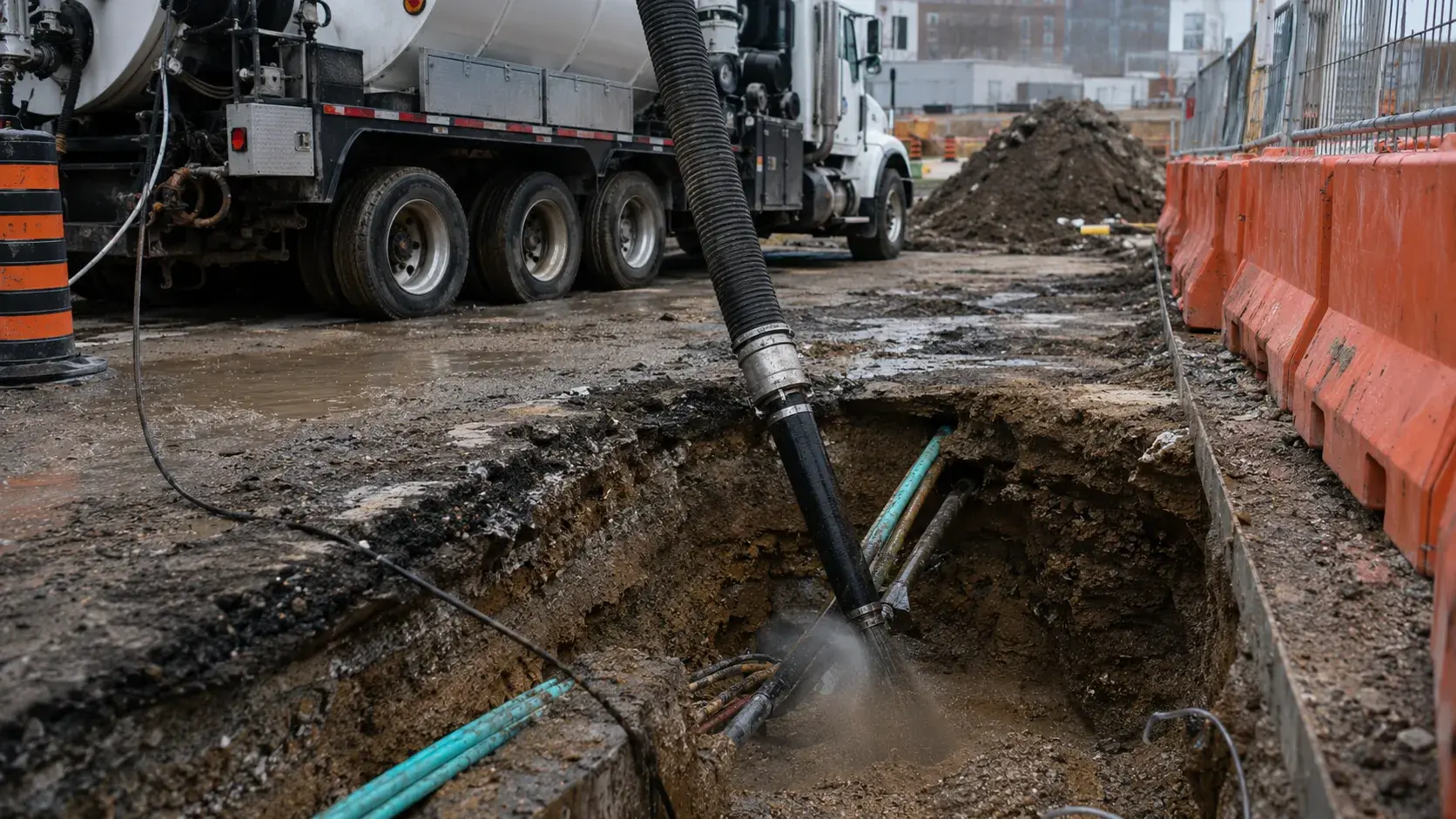
Hydro Excavation in Scarborough, or hydrovac, uses high-pressure water and vacuum to excavate precisely and safely around buried utilities.
Tell us what you need and we’ll get you a quote.
Licensed, insured & WSIB-covered · Free, no-obligation quote & on-site assessment.
Built to your engineered drawings, survey, and the real site conditions, not a one-size-fits-all approach forced to fit.
Durable materials and methods chosen for the load, traffic, and environment on site.
Send specs, drawings, or photos and get a free, no-obligation site visit and estimate with no guesswork.
Installation and site work completed in accordance with Ontario requirements.
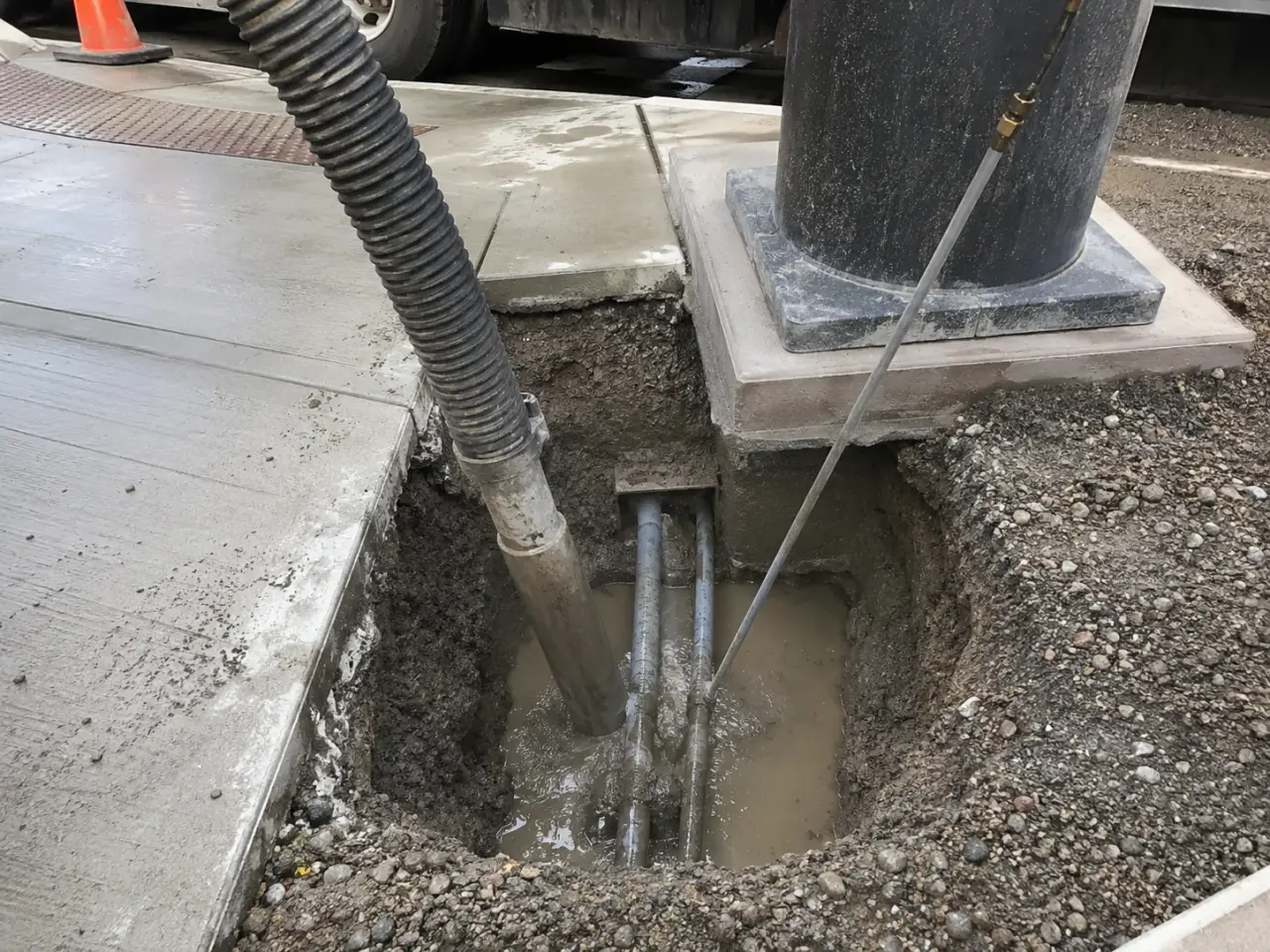
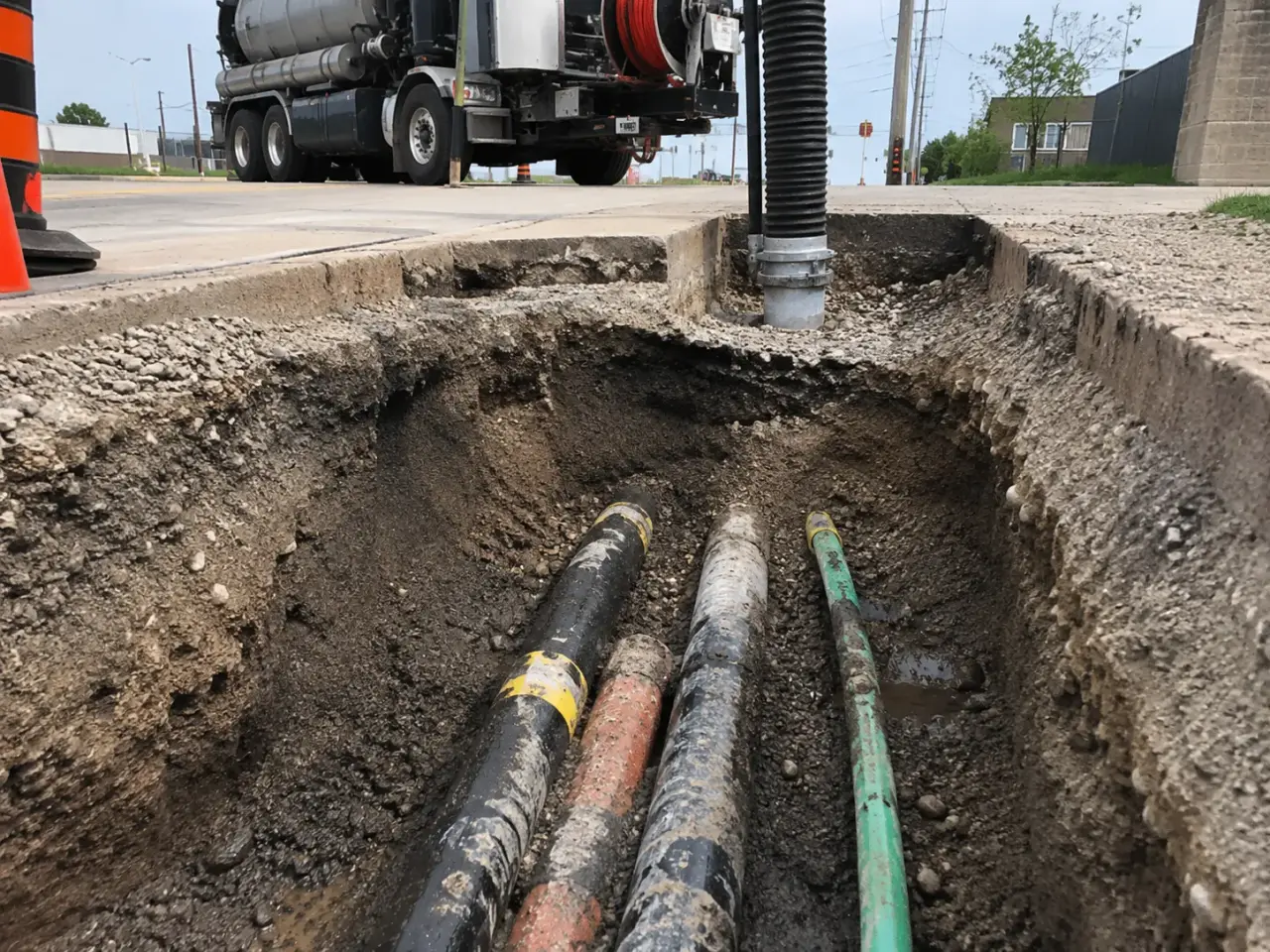
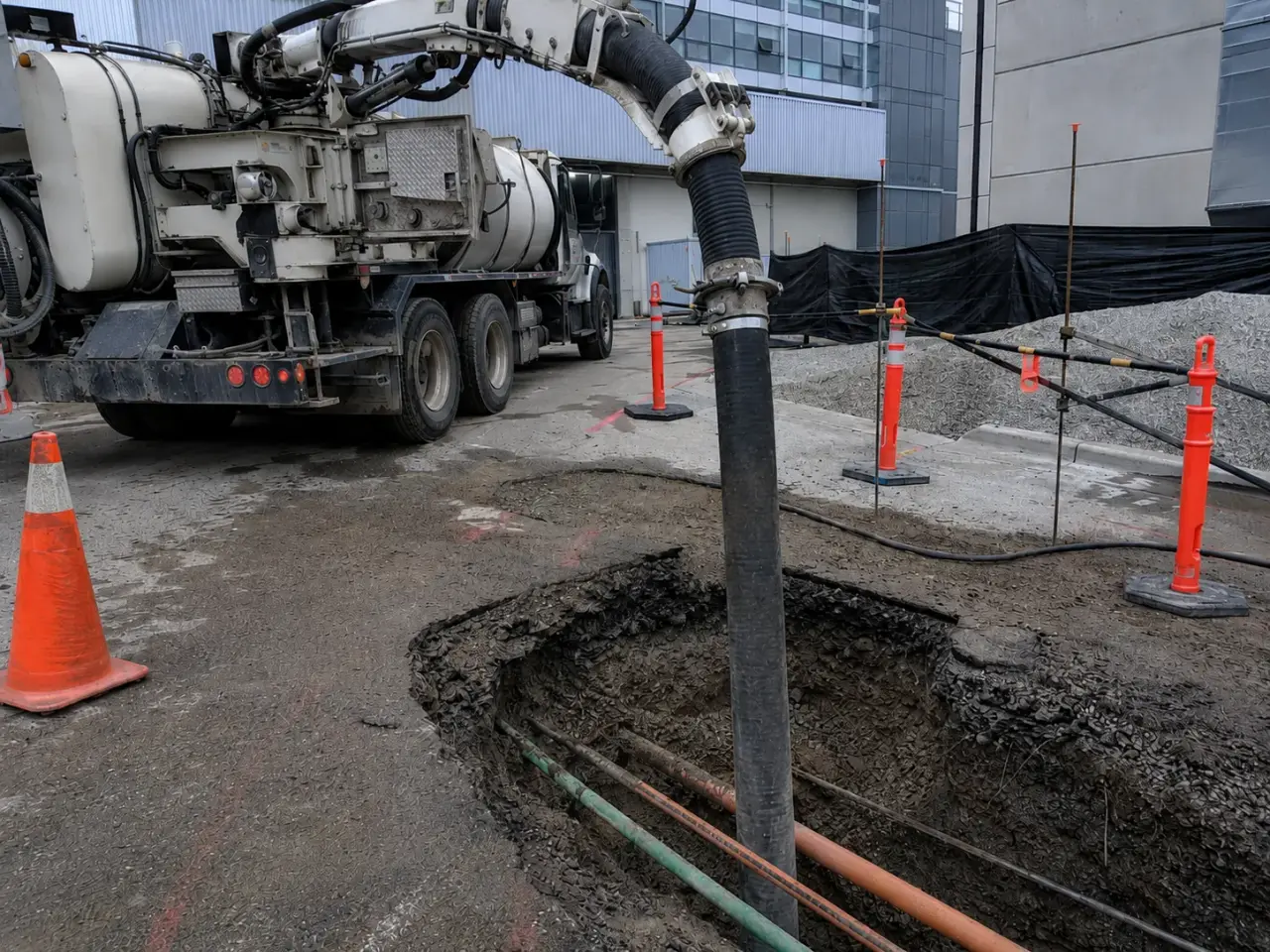
Method selection for hydro excavation follows ground, water, utilities, access, environmental controls, temporary works, material behaviour, receiving capacity, testing, and its required handoff.
Utility daylighting. Small test holes expose horizontal and vertical service position using pressurized water and vacuum recovery before mechanical excavation, drilling, coring, or design finalization.
Slot trenching. Narrow continuous slots expose crossing utilities, poles, signs, barriers, or service routes with less surface disturbance than broad mechanical excavation.
Pile and pole holes. Vacuum excavation can create controlled holes around congestion where soil, depth, water, access, and disposal support the method.
Cold-weather and specialty excavation. Heated water, remote hose, compact equipment, air excavation, and staged spoils handling serve frozen ground, substations, plants, and restricted urban sites under specific controls.
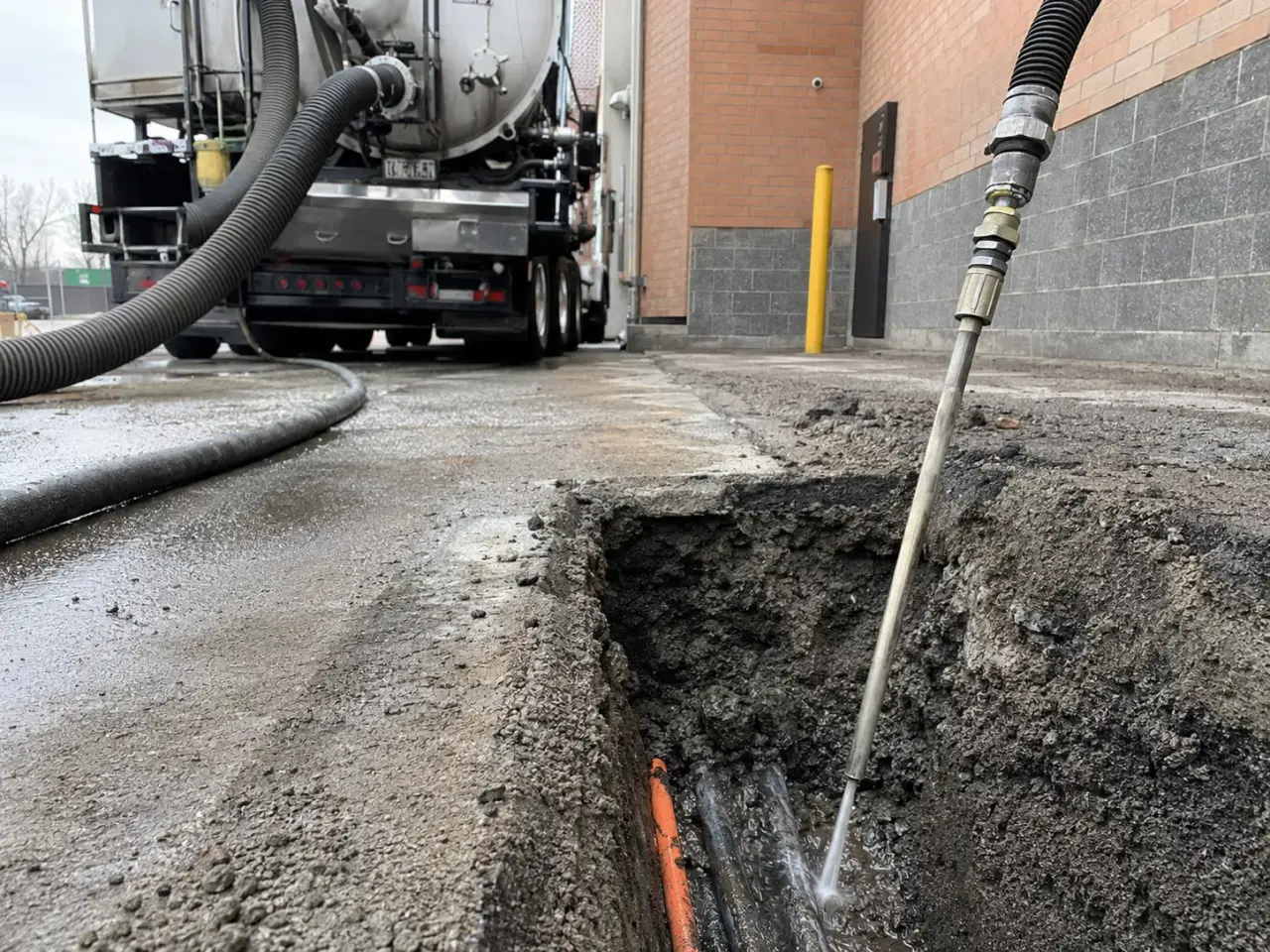
Step 1, review locates, records, surface evidence, target utility, access, pressure limits, water source, traffic, spoil destination, and emergency response.
Step 2, set barriers, grounding or electrical precautions, hose routes, vacuum position, mats, water and debris containment, and a stable truck location.
Step 3, cut the surface where required and excavate in controlled passes while the operator observes soil and utility response.
Step 4, measure and record utility type, material, size, depth, alignment, condition, and survey coordinates without using the exposed service as a support.
Step 5, backfill with approved material, compact, restore the surface, clean the site, and track recovered slurry to its accepted destination.
We review locate sheets and markings, confirm validity and limits, notify or coordinate with utility owners, establish traffic and pedestrian controls, and inspect the proposed excavation for conflicts.
Hydro Excavation and Utility Daylighting sequence, step 2. The operator uses water pressure and nozzle technique appropriate to the soil, utility material, temperature, and owner requirements while the vacuum removes loosened material and keeps the exposure visible.
Hydro Excavation and Utility Daylighting sequence, step 3. Excavations advance in controlled passes from a safe approach, with hand tools and reduced pressure near known assets. Exposed utilities are supported and protected from abrasion, freezing, impact, and undermining.
Hydro Excavation and Utility Daylighting sequence, step 4. Slurry is contained in the debris tank, classified where required, and taken to an approved receiving location. Test-hole measurements, photographs, survey, backfill, compaction, and surface restoration follow.
Planning hydro excavation in Scarborough? Talk it through with our team.
We review locate sheets and markings, confirm validity and limits, notify or coordinate with utility owners, establish traffic and pedestrian controls, and inspect the proposed excavation for conflicts. Slurry is contained in the debris tank, classified where required, and taken to an approved receiving location. Test-hole measurements, photographs, survey, backfill, compaction, and surface restoration follow.
The governing document set is O. Reg. 213/91 sections governing utility locating and excavation, Ontario One Call requirements, utility-owner procedures, municipal road-cut and restoration standards, applicable OPSS requirements, and project soil-management criteria. Backfill type, lift thickness, compaction, flowable fill, pavement restoration, and test-hole records follow the road authority, utility owner, geotechnical specification, and project drawing.
The price responds to number and size of holes, soil type, frost, depth, access, traffic control, water source, hose reach, slurry volume and disposal, contamination, backfill, pavement restoration, travel, and operating windows. Unmanaged slurry can enter sewers, spread contamination, or overload a receiving site. Sealed tanks, classification, approved disposal, and washout controls keep material contained.
The controlling schedule factors are locate availability, utility-owner coordination, permits, traffic windows, frost and soil conditions, water supply, disposal-site hours, excavation depth, survey response, backfill testing, and restoration requirements. Slurry is contained in the debris tank, classified where required, and taken to an approved receiving location. Test-hole measurements, photographs, survey, backfill, compaction, and surface restoration follow.
Yes. Hydrovac is suited to constrained operating sites. We establish equipment and hose zones, maintain emergency and delivery routes, control noise and spray, and restore each exposure promptly. Unmanaged slurry can enter sewers, spread contamination, or overload a receiving site. Sealed tanks, classification, approved disposal, and washout controls keep material contained.
We document locate information, excavation location and dimensions, utility type and depth, photographs, survey coordinates where requested, slurry destination, backfill material, compaction or flowable-fill records, and restored surface condition. Backfill type, lift thickness, compaction, flowable fill, pavement restoration, and test-hole records follow the road authority, utility owner, geotechnical specification, and project drawing.
Provide locate information, private utility records, proposed hole coordinates and dimensions, expected depths, utility owners, access and traffic limits, soil or contamination information, water availability, disposal requirements, and restoration details. Slurry is contained in the debris tank, classified where required, and taken to an approved receiving location. Test-hole measurements, photographs, survey, backfill, compaction, and surface restoration follow.
Yes if pressure, nozzle distance, temperature, angle, or exposure is unsuitable for the service condition. The method reduces contact risk but still requires trained operators, utility information, controlled pressure, and observation.
Recovered water and soil remain contained in the debris tank and are transported to an accepted facility or managed under the approved project plan. Characterization may be required where contamination is possible.
Still have a question about hydro excavation in Scarborough? Ask our team directly.
Commercial and heavy-civil construction delivered for developers, contractors, property managers, and municipalities.
Send drawings, a site plan, or a description of the scope. Harrowgate Group is licensed, insured, and WSIB-covered.
Licensed, Insured & WSIB-Covered, work managed and documented on every job
Tell us what you need and we’ll get you a quote.
Harrowgate Group provides hydro excavation, delivered and installed with quote-ready support across Toronto and surrounding Ontario communities.
Companies We've Worked With
Harrowgate Group delivers commercial and heavy-civil construction for developers, contractors, institutions, municipalities, and property groups across Ontario.
 Popeyes
  Tim Hortons
  Subway
  University of Toronto
  Madison Group
  RioCan
  Women's College Hospital
  Starbucks
  Mazda
Mazda  TD Bank
  City of Toronto Popeyes Tim Hortons Subway University of Toronto Madison Group RioCan Women's College Hospital Starbucks Mazda TD Bank City of Toronto