Built to spec
Built to your engineered drawings, survey, and the real site conditions, not a one-size-fits-all approach forced to fit.
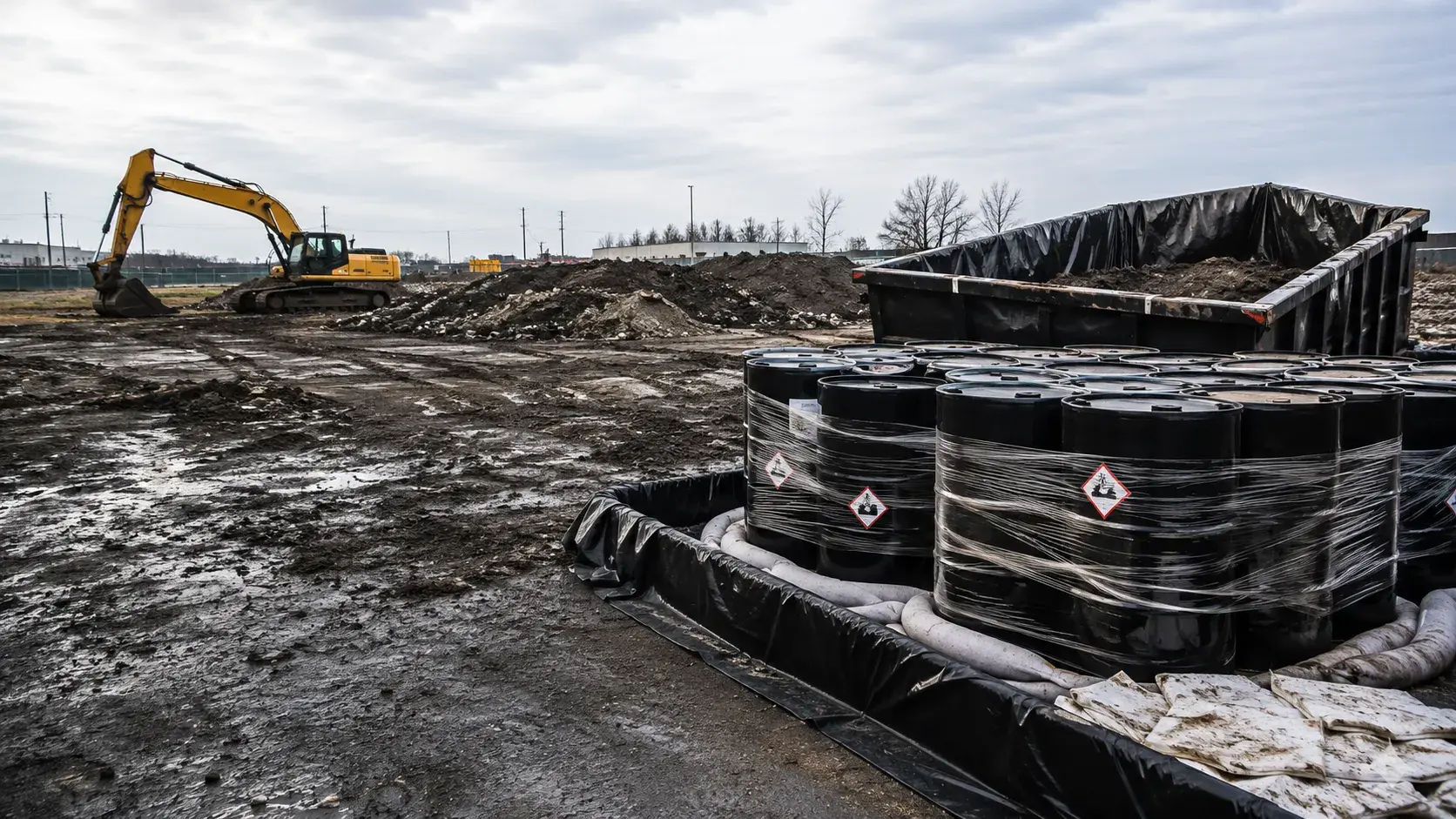
Harrowgate performs hazardous-waste identification support, segregation, packaging, loading, and compliant removal for GTA and Ontario commercial, industrial, and heavy-civil sites.
Tell us what you need and we’ll get you a quote.
Licensed, insured & WSIB-covered · Free, no-obligation quote & on-site assessment.
Built to your engineered drawings, survey, and the real site conditions, not a one-size-fits-all approach forced to fit.
Durable materials and methods chosen for the load, traffic, and environment on site.
Send specs, drawings, or photos and get a free, no-obligation site visit and estimate with no guesswork.
Installation and site work completed in accordance with Ontario requirements.
Hazardous waste removal is the controlled characterization, segregation, packaging, documentation, loading, transport coordination, and delivery of regulated waste to an authorized Ontario receiver. Harrowgate performs the site work across the GTA, managing the waste from its exact generation point through secure staging and documented transfer without mixing it into ordinary construction debris.
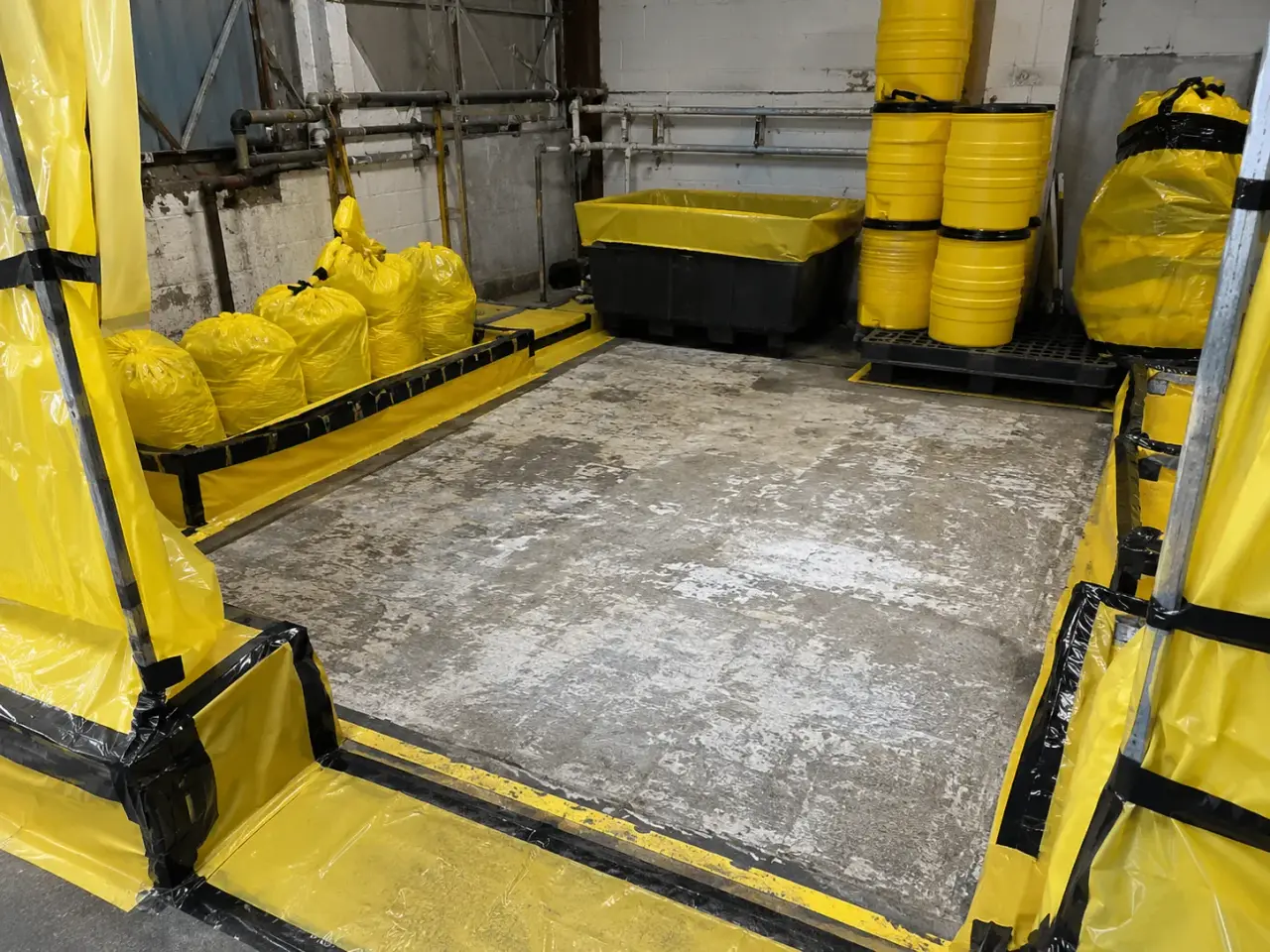
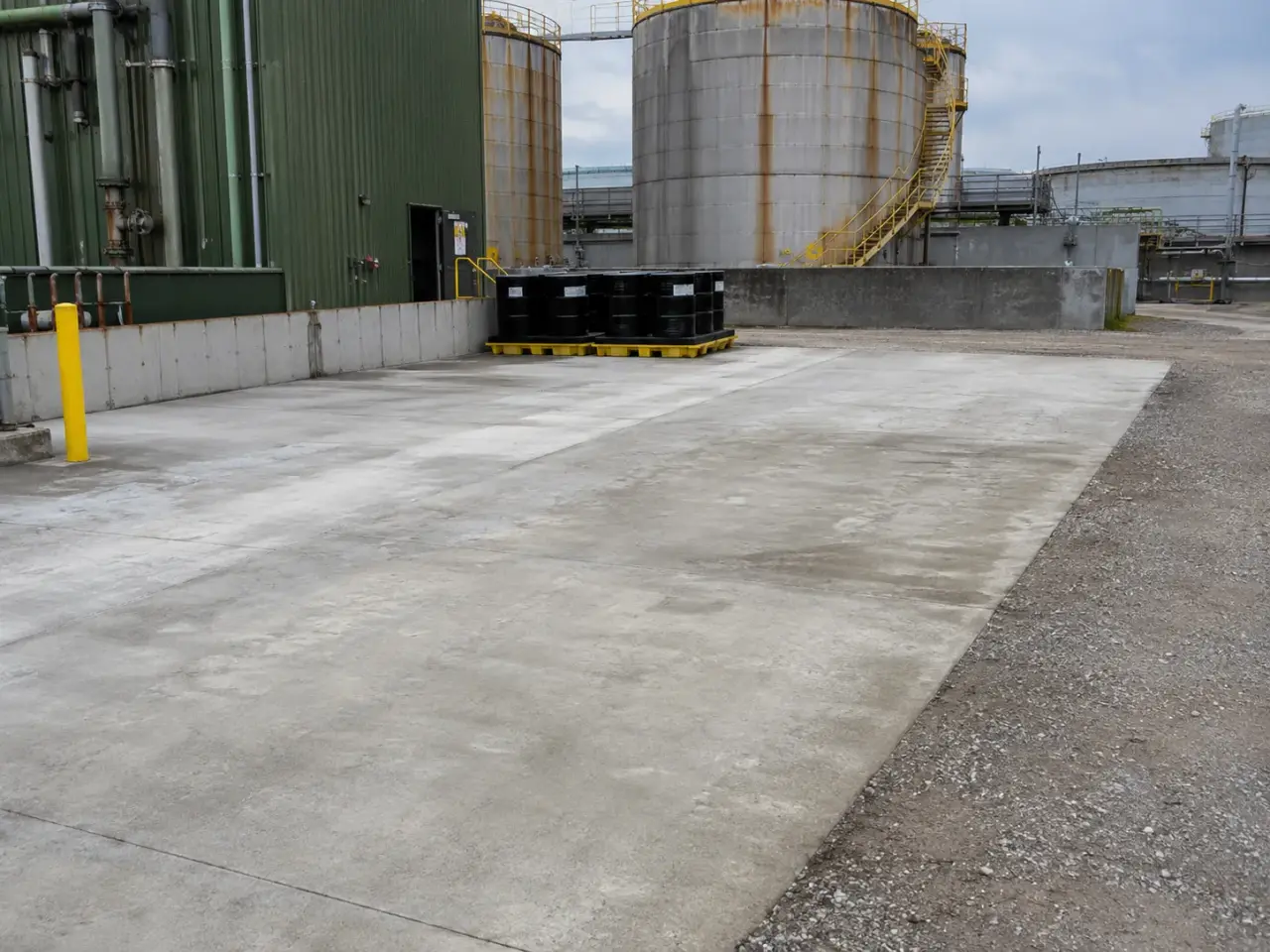
Lab-packed small containers, overpacked drums, pumped liquids, vacuum recovery, sealed bins, supersacks, roll-off containers, and component removal serve different waste forms. Bulking is considered only where identity and chemical compatibility are confirmed. Unknowns require controlled identification before handling. Reactive, flammable, corrosive, toxic, oxidizing, infectious, pressurized, battery, lamp, aerosol, oil, sludge, and contaminated-soil streams can need separate packaging, transport, and receiver routes.
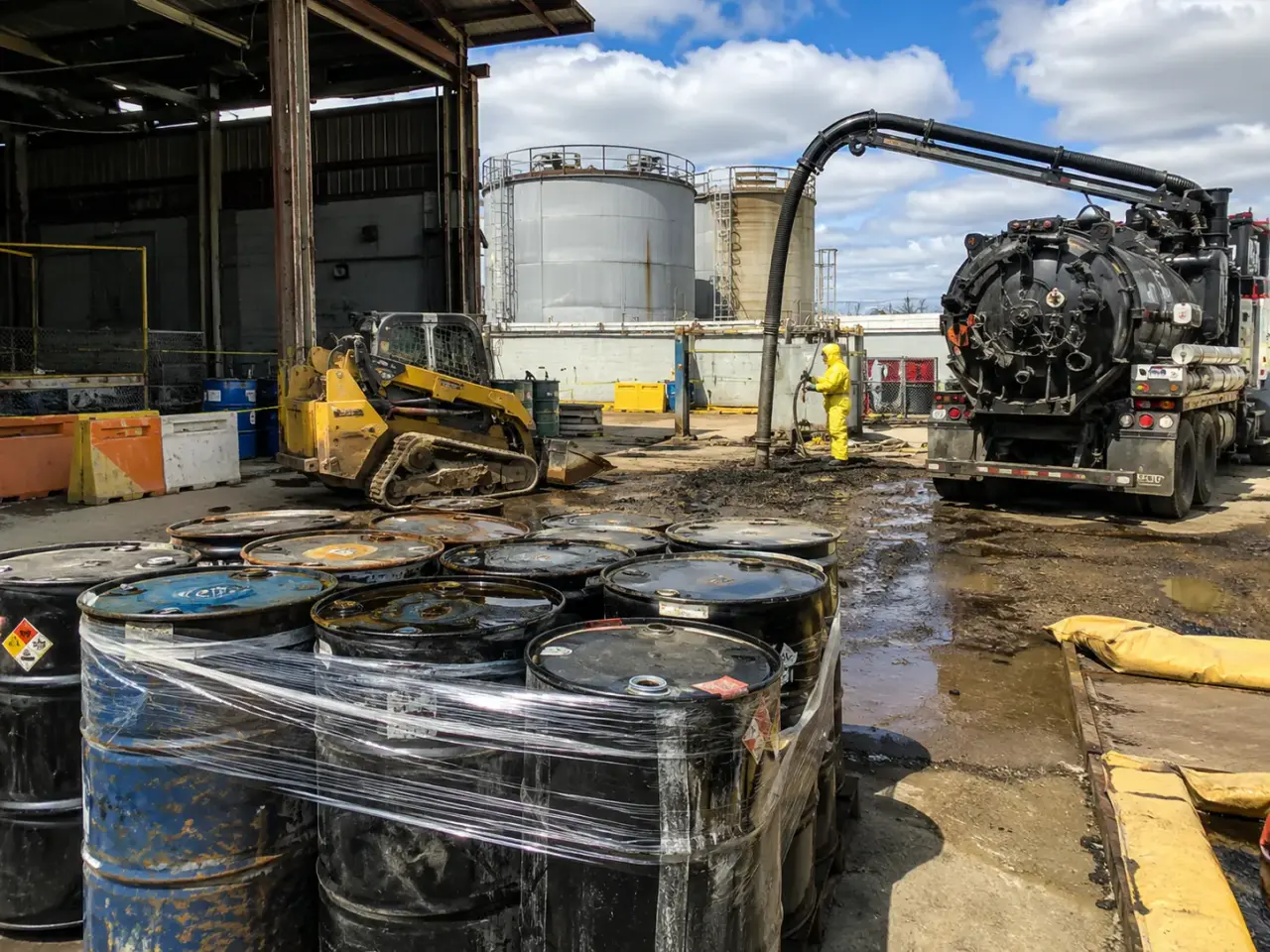
Step 1, Harrowgate establishes a controlled staging area with secondary containment, weather protection, security, spill response, and separation for incompatible materials. Container numbers link the field inventory to photographs, contents, source location, estimated volume, waste class, and receiver profile. Unknown material is sampled under consultant direction and remains quarantined until the result supports a route.
Step 2, Liquids are transferred only with compatible pumps, hoses, bonding measures, and closed containers suited to the hazard. Solids are loaded into drums, lined bins, overpacks, or sealed packages without generating uncontrolled dust. Damaged drums are overpacked rather than handled as sound containers. Free liquids, sharp debris, reactive chemicals, and absorbents are not combined unless the approved receiver and governing requirements specifically allow that process.
Step 3, Before shipment, we confirm generator registration, waste class, carrier authorization, receiver approval, package count, weights or volumes, and digital manifest data. The carrier inspects the load, containers are secured against movement, and the device displaying the manifest accompanies the waste. Chain-of-custody is maintained at each handoff from generator to carrier to receiver.
Step 4, After loading, Harrowgate inspects the staging surface, secondary containment, drains, travel path, and original storage location. Residues and disposable cleanup material are classified and added to the shipment or a separate profile. Receiver-confirmed quantities are compared with field estimates and the manifest so discrepancies are resolved rather than left as an accounting gap.
Step 5, Harrowgate reconciles the initial inventory with packages, movements, carrier and receiver records, incidents, final cleanup, and material that remains. Discrepancies are resolved before the work zone is released.
Hazardous-waste removal follows current Ontario classification, generator, packaging, movement, carrier, receiver, spill, and record requirements plus applicable local municipal requirements. The project identifies responsible parties and documentation without relying on a city-specific rule.
Compatibility governs containers, liners, pumps, hoses, overpacks, absorbents, pallets, and consolidation. Unknown, reactive, flammable, corrosive, oxidizing, toxic, pressurized, and liquid streams remain segregated until qualified information supports handling.
Carriers and receiving facilities must be authorized for the actual material and quantity. Shipping descriptions, labels, manifests or movement documents, emergency information, and receiver acceptance are checked before dispatch. Chain-of-custody or analytical needs are preserved.
Spill prevention protects drains, soil, surface water, workers, occupants, and transport routes. The response plan addresses leaks, fire, exposure, incompatible reaction, vehicle incident, and receiver rejection. Final records reconcile what was found, moved, received, and left.
Planning hazardous waste removal? Talk it through with our team.
Misidentification is the largest risk. Similar-looking liquids can be corrosive, flammable, reactive, or non-hazardous, and old handwritten labels can be unreliable. We preserve labels, trace the process source, segregate unknowns, and obtain representative characterization. No unknown is poured together or placed into a mixed debris container to reduce package count.
Incompatible storage can create heat, pressure, gas, fire, or container failure. Acids, bases, oxidizers, flammables, water-reactive products, and metal-bearing wastes are separated using the compatibility review. Leaking containers are overpacked, liquid staging has secondary containment, and emergency equipment is selected for the actual materials present.
Manifest errors and receiver mismatches cause refused loads and regulatory exposure. We reconcile waste class, generator number, carrier, receiver, package count, and quantity before departure. The field inventory remains the control document, and accepted receiver weight is checked after delivery. Rejected material returns to a secure controlled location with its identity intact.
Classification depends on Regulation 347, the generating process, physical and chemical properties, listed waste classes, and required analytical results. Solvents, fuels, corrosive liquids, process sludge, metal-bearing debris, chemical residues, contaminated absorbents, and some cleanup waters can qualify. Harrowgate keeps suspect material isolated while the appropriate characterization establishes its route.
All off-site movement of Ontario subject hazardous waste and liquid industrial waste is tracked using a digital manifest. It identifies the waste and records transfer from generator to carrier and receiver. The generator registration, waste class, carrier, receiver, quantities, and shipment information must align before the load leaves the site.
Not simply for convenience. Regulation 347 limits mixing, blending, bulking, and intermingling, and incompatible chemicals can react dangerously. Harrowgate separates materials by identity and compatibility. Combining is considered only where it is technically safe, accurately classified, accepted by the authorized receiver, and permitted by the governing requirements.
Unknown drums are isolated, photographed, inspected without unnecessary movement, and traced through labels, records, and process history. A qualified consultant can direct sampling and analysis. Until identified, the drum is treated conservatively, protected from incompatible storage, and not opened, pumped, or consolidated as routine waste. Damaged packages can require an overpack.
An authorized receiver holds the Ontario environmental permission needed to accept and manage the specific numbered waste class and quantity. Approval for one waste does not cover every stream. Harrowgate confirms the proposed receiver against the completed profile, package form, and manifest before transport is scheduled.
We confirm identity, volume, access, pump compatibility, hose route, tank condition, secondary containment, and receiving profile. Liquids transfer through a controlled closed path into a compatible vehicle or container. Remaining sludge, rinse water, filters, and absorbents are separately assessed because they can have different physical forms and waste classes.
A complete package can include the field inventory, container numbers, waste profiles, analytical reports, photographs, generator and carrier details, digital manifests, receiver confirmations, accepted weights or volumes, discrepancy notes, and cleanup records. These documents show what was removed, from where, under which class, and where it was accepted.
No. Unknown material can present incompatible, reactive, toxic, flammable, pressurized, or environmental hazards. It is secured and characterized to the level needed for safe packaging, transport, and receiving before movement.
Only when qualified information confirms identity and chemical compatibility and the receiver accepts the combined stream. Unverified bulking can create heat, gas, pressure, precipitation, fire, or a waste that no authorized facility will accept.
Still have a question about hazardous waste removal? Ask our team directly.
Commercial and heavy-civil construction delivered for developers, contractors, property managers, and municipalities.
Send drawings, a site plan, or a description of the scope. Harrowgate Group is licensed, insured, and WSIB-covered.
Licensed, Insured & WSIB-Covered, work managed and documented on every job
Tell us what you need and we’ll get you a quote.
Harrowgate Group provides hazardous waste removal, delivered and installed with quote-ready support across Toronto and surrounding Ontario communities.
Companies We've Worked With
Harrowgate Group delivers commercial and heavy-civil construction for developers, contractors, institutions, municipalities, and property groups across Ontario.
 Popeyes
  Tim Hortons
  Subway
  University of Toronto
  Madison Group
  RioCan
  Women's College Hospital
  Starbucks
  Mazda
Mazda  TD Bank
  City of Toronto Popeyes Tim Hortons Subway University of Toronto Madison Group RioCan Women's College Hospital Starbucks Mazda TD Bank City of Toronto