
Built to spec
Built to your engineered drawings, survey, and the real site conditions, not a one-size-fits-all approach forced to fit.
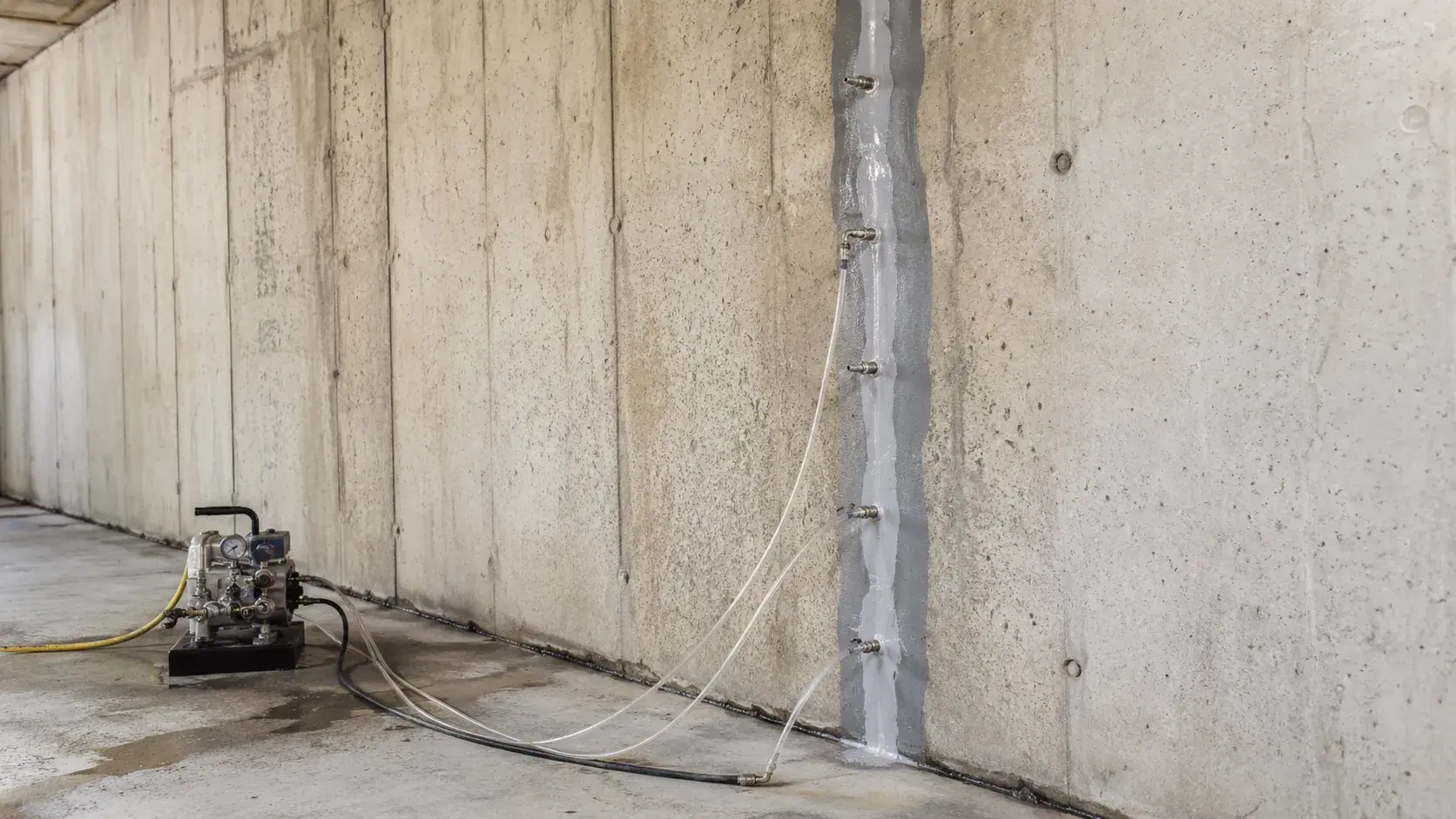
Foundation Crack Injection in Pickering seals leaking foundation cracks with polyurethane or epoxy injection to stop water intrusion.
Tell us what you need and we’ll get you a quote.
Licensed, insured & WSIB-covered · Free, no-obligation quote & on-site assessment.
Built to your engineered drawings, survey, and the real site conditions, not a one-size-fits-all approach forced to fit.
Durable materials and methods chosen for the load, traffic, and environment on site.
Send specs, drawings, or photos and get a free, no-obligation site visit and estimate with no guesswork.
Installation and site work completed in accordance with Ontario requirements.
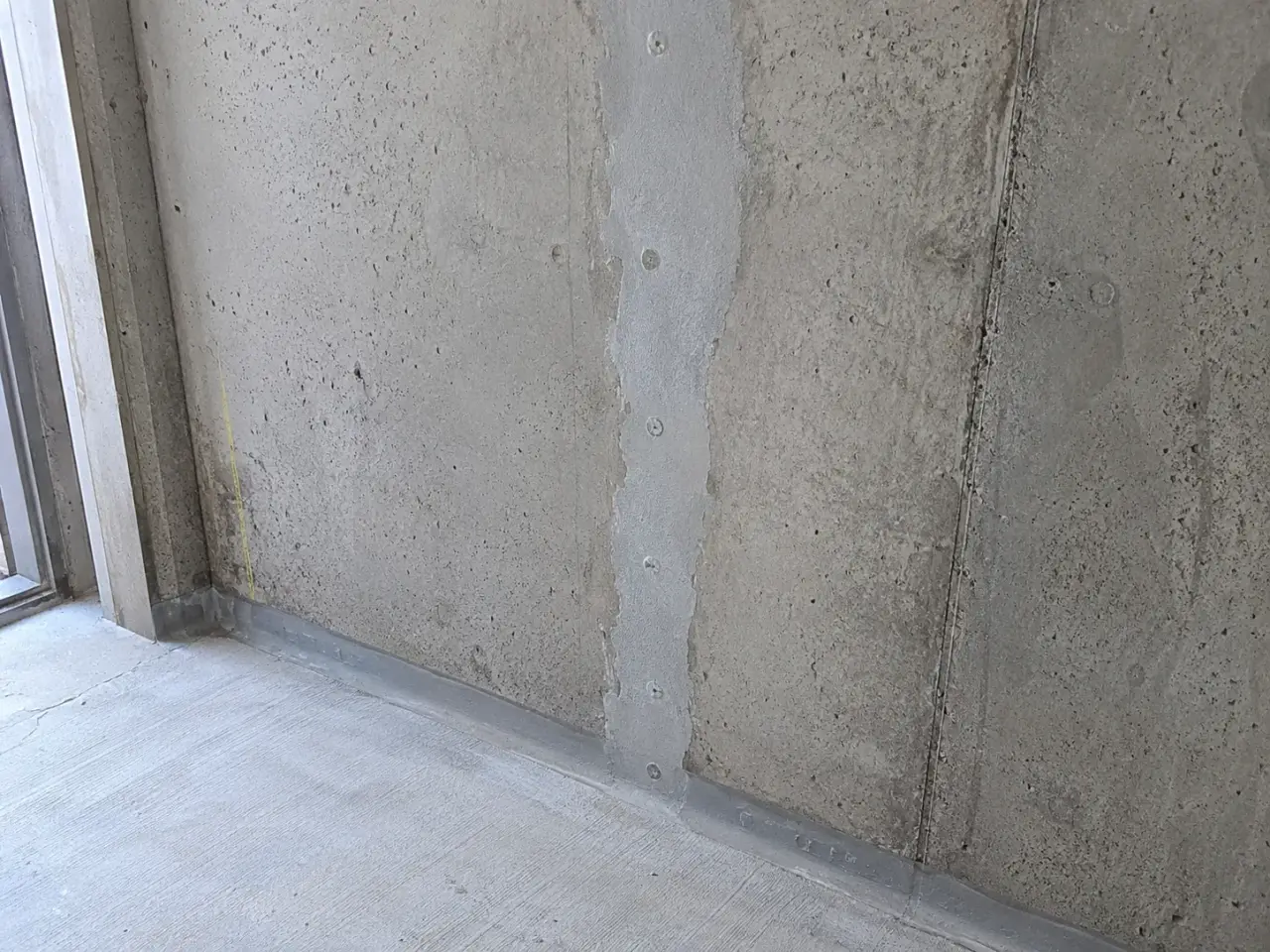
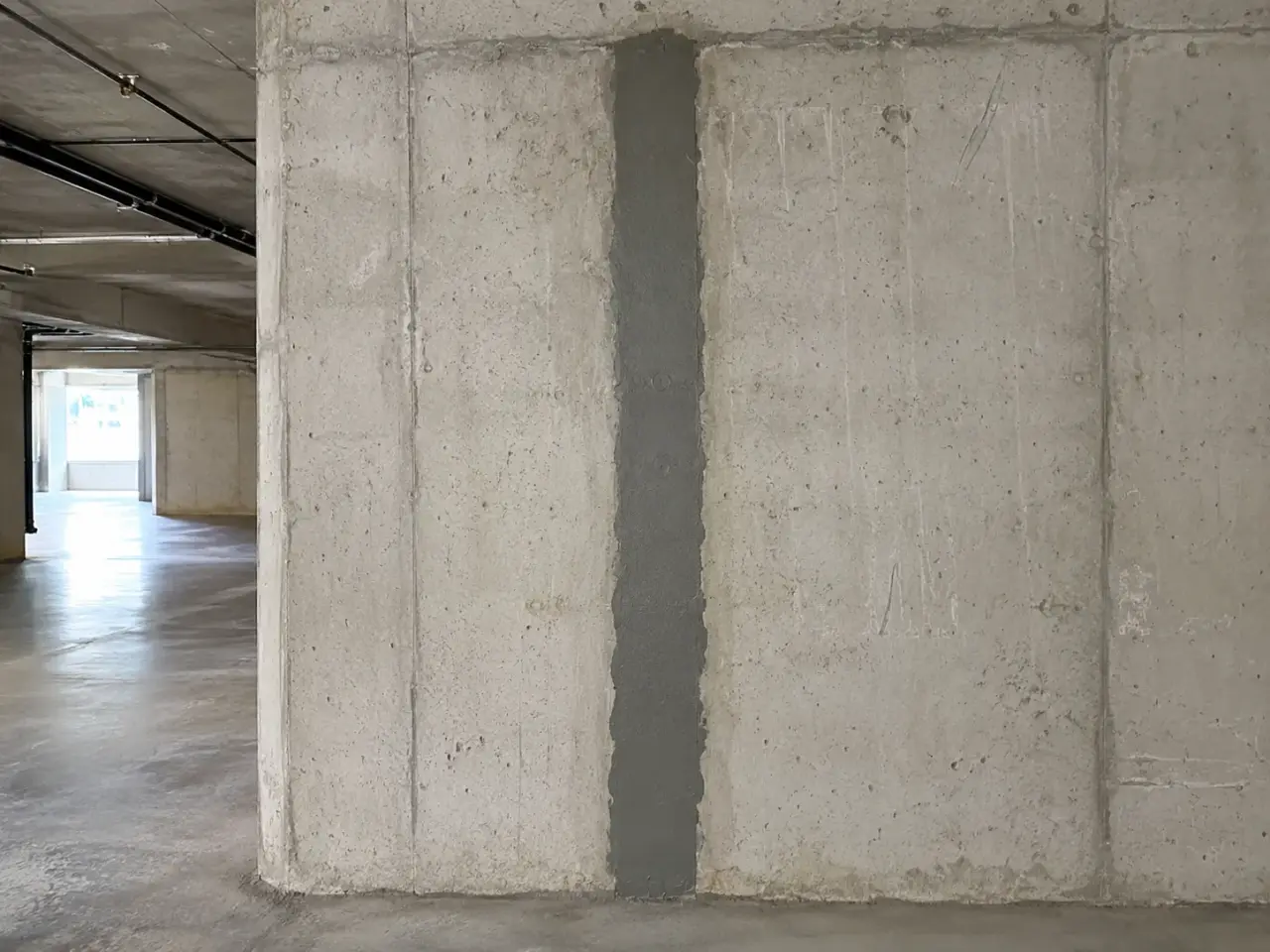
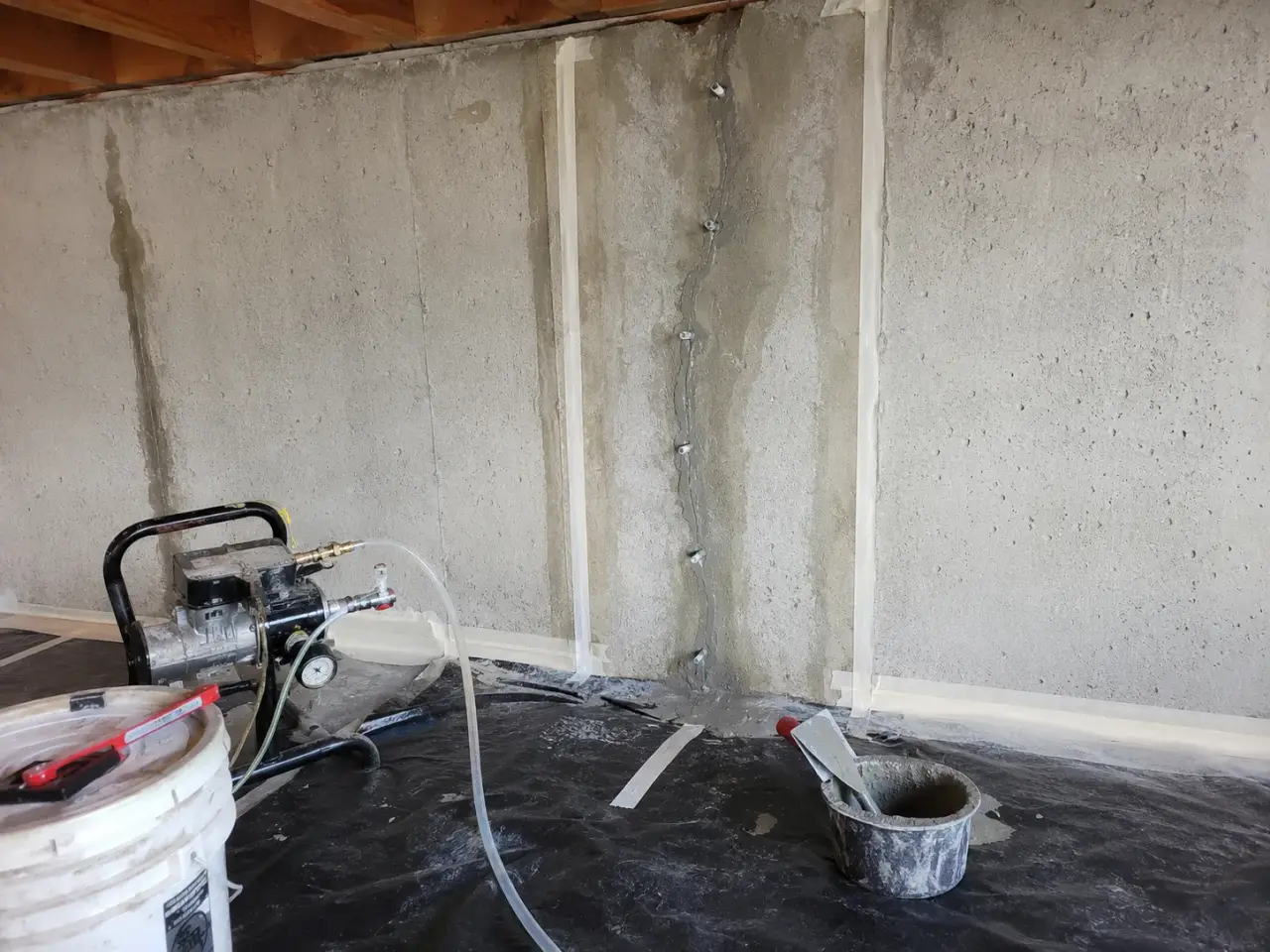
Low-viscosity epoxy injection is used to bond dry, stable cracks where structural continuity is the objective. Hydrophobic polyurethane reacts with moisture to form a flexible water-control seal, while hydrophilic polyurethane is selected where controlled swelling and wet adhesion suit the detail. Curtain grouting is reserved for conditions where resin must form a barrier behind the wall. Routing and surface sealing can be appropriate for shallow non-structural defects, but neither substitutes for full-depth injection.
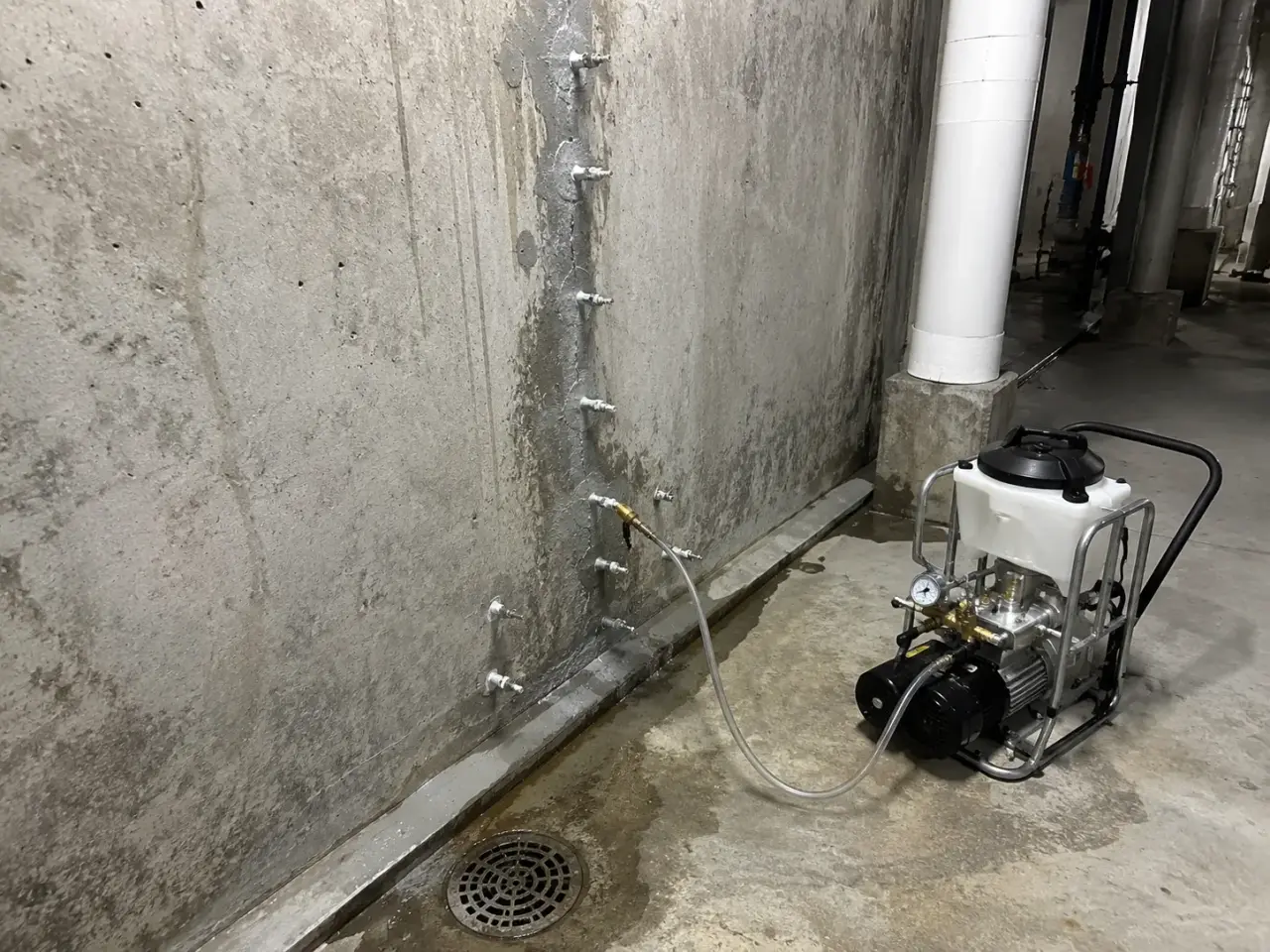
Step 1,
Step 2, The surface is cleaned to sound concrete. Surface-mounted or drilled injection ports are spaced to intersect the crack, then the face is sealed where the selected injection method requires containment.
Step 3, Injection normally proceeds from the lowest port upward for vertical cracks, using controlled pressure and volume. Resin appearance at the next port confirms continuity before that port is capped.
Step 4, After cure, ports and surface seals are removed or finished as specified. We inspect continuity, address voids, and complete water testing or monitoring where the project requires performance confirmation.
Step 5, After cure, ports and temporary face seals are finished, resin communication and material take are reviewed, and the repaired foundation is observed or tested by the acceptance method selected for the original water-control or structural objective.
Planning foundation crack injection in Pickering? Talk it through with our team.
Material selection considers viscosity, reaction time, moisture tolerance, elongation, bond strength, expansion, temperature, crack width, and whether the repair is structural or water-control work.
Foundation Crack Injection requirement 2. Structural repairs are coordinated with the engineer under the applicable Ontario Building Code and CSA A23.3 design requirements. Concrete repair preparation and acceptance follow the project repair specification.
Foundation Crack Injection requirement 3. Injection pressure is kept below the level that could propagate the crack, dislodge the face seal, or force material into drainage systems and occupied process areas. Ports are monitored individually.
Foundation Crack Injection requirement 4. Where hydrostatic pressure remains, injection is integrated with joint repair, external waterproofing, drainage, or waterstop work. Injection alone does not correct settlement, overload, or ongoing foundation movement.
Applicable document set. the 2024 Ontario Building Code, CSA A23.3 where structural design is involved, CSA A23.1 concrete requirements, engineer-issued repair details, and manufacturer installation limits for the selected Canadian-market system.
We map cracks, record widths and leakage, review movement and load history, sound the surrounding concrete, and identify whether external water pressure or failed joints must also be addressed. After cure, ports and surface seals are removed or finished as specified. We inspect continuity, address voids, and complete water testing or monitoring where the project requires performance confirmation.
The governing document set is the 2024 Ontario Building Code, CSA A23.3 where structural design is involved, CSA A23.1 concrete requirements, engineer-issued repair details, and manufacturer installation limits for the selected Canadian-market system. Material selection considers viscosity, reaction time, moisture tolerance, elongation, bond strength, expansion, temperature, crack width, and whether the repair is structural or water-control work.
The price responds to crack length and width, access, active leakage, wall thickness, resin type, drilling pattern, surface preparation, working height, water control, finish removal, and testing requirements. Wrong resin chemistry causes poor bond, brittle failure, uncontrolled foaming, or incomplete penetration. We match the product properties to moisture, width, temperature, and movement.
The controlling schedule factors are moisture and temperature, access preparation, leakage control, material reaction time, crack complexity, required monitoring, and coordination with operations on the opposite side of the wall. After cure, ports and surface seals are removed or finished as specified. We inspect continuity, address voids, and complete water testing or monitoring where the project requires performance confirmation.
Yes. Injection equipment has a small footprint. We isolate the repair zone, protect nearby equipment and finishes, control resin discharge, and phase work around plant or tenant operations. Wrong resin chemistry causes poor bond, brittle failure, uncontrolled foaming, or incomplete penetration. We match the product properties to moisture, width, temperature, and movement.
We record crack mapping, material batch, port spacing, injection sequence, pressure and resin take, observed communication between ports, completed surface finish, and specified water or monitoring tests. Material selection considers viscosity, reaction time, moisture tolerance, elongation, bond strength, expansion, temperature, crack width, and whether the repair is structural or water-control work.
Provide crack locations and lengths, photographs, drawings, wall thickness, access on both faces, leakage conditions, prior repair history, structural reports, finish requirements, and operating constraints. After cure, ports and surface seals are removed or finished as specified. We inspect continuity, address voids, and complete water testing or monitoring where the project requires performance confirmation.
Epoxy is normally considered for dry, stable cracks that require structural bonding. Polyurethane is normally considered for active or potentially wet leakage paths because suitable formulations can react with water and tolerate limited movement. Crack activity, width, wall thickness, temperature, access, and the engineer's repair objective control the final selection.
Often it can, provided the crack can be traced, the injection path is accessible, and uncontrolled resin discharge will not damage the exterior assembly or adjacent spaces. Exterior excavation may still be needed when the membrane, drainage, wall surface, or multiple connected defects require direct repair.
Still have a question about foundation crack injection in Pickering? Ask our team directly.
Commercial and heavy-civil construction delivered for developers, contractors, property managers, and municipalities.
Send drawings, a site plan, or a description of the scope. Harrowgate Group is licensed, insured, and WSIB-covered.
Licensed, Insured & WSIB-Covered, work managed and documented on every job
Tell us what you need and we’ll get you a quote.
Harrowgate Group provides foundation crack injection, delivered and installed with quote-ready support across Toronto and surrounding Ontario communities.
Companies We've Worked With
Harrowgate Group delivers commercial and heavy-civil construction for developers, contractors, institutions, municipalities, and property groups across Ontario.
 Popeyes
  Tim Hortons
  Subway
  University of Toronto
  Madison Group
  RioCan
  Women's College Hospital
  Starbucks
  Mazda
Mazda  TD Bank
  City of Toronto Popeyes Tim Hortons Subway University of Toronto Madison Group RioCan Women's College Hospital Starbucks Mazda TD Bank City of Toronto