
Built to spec
Built to your engineered drawings, survey, and the real site conditions, not a one-size-fits-all approach forced to fit.
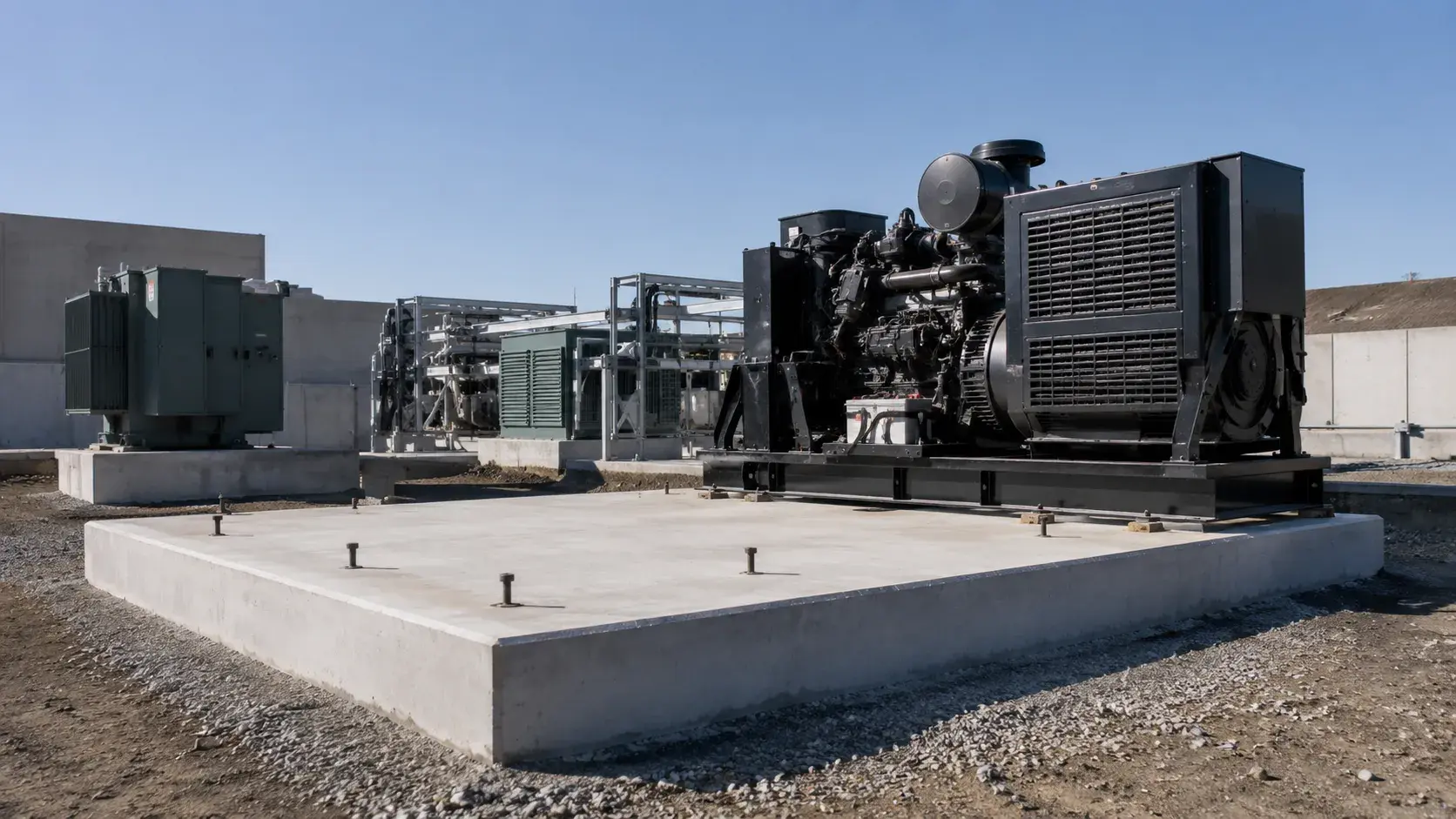
Equipment Pads and Machine Bases in Newmarket are reinforced concrete foundations that support and isolate heavy equipment and machinery.
Tell us what you need and we’ll get you a quote.
Licensed, insured & WSIB-covered · Free, no-obligation quote & on-site assessment.
Built to your engineered drawings, survey, and the real site conditions, not a one-size-fits-all approach forced to fit.
Durable materials and methods chosen for the load, traffic, and environment on site.
Send specs, drawings, or photos and get a free, no-obligation site visit and estimate with no guesswork.
Installation and site work completed in accordance with Ontario requirements.
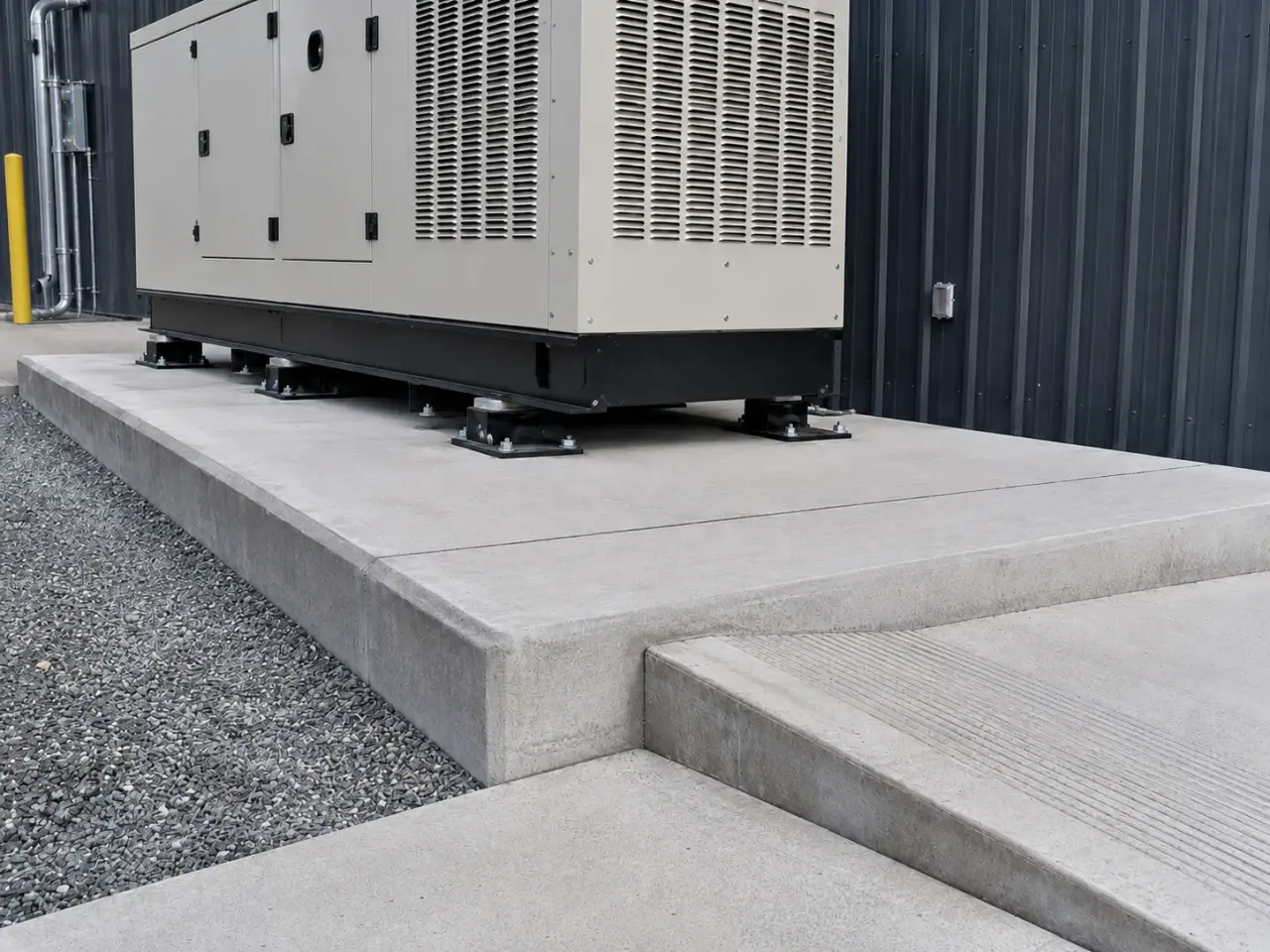
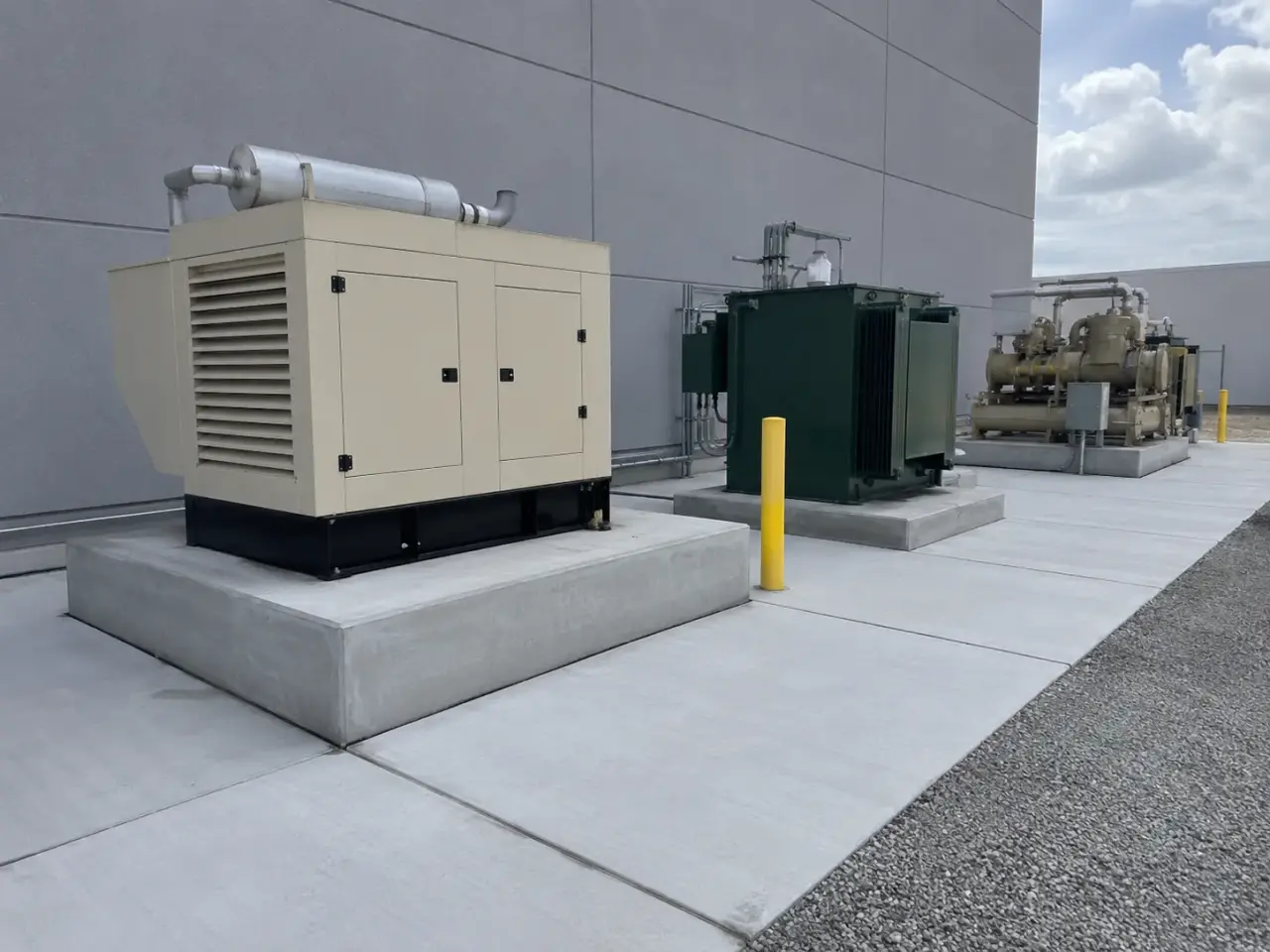
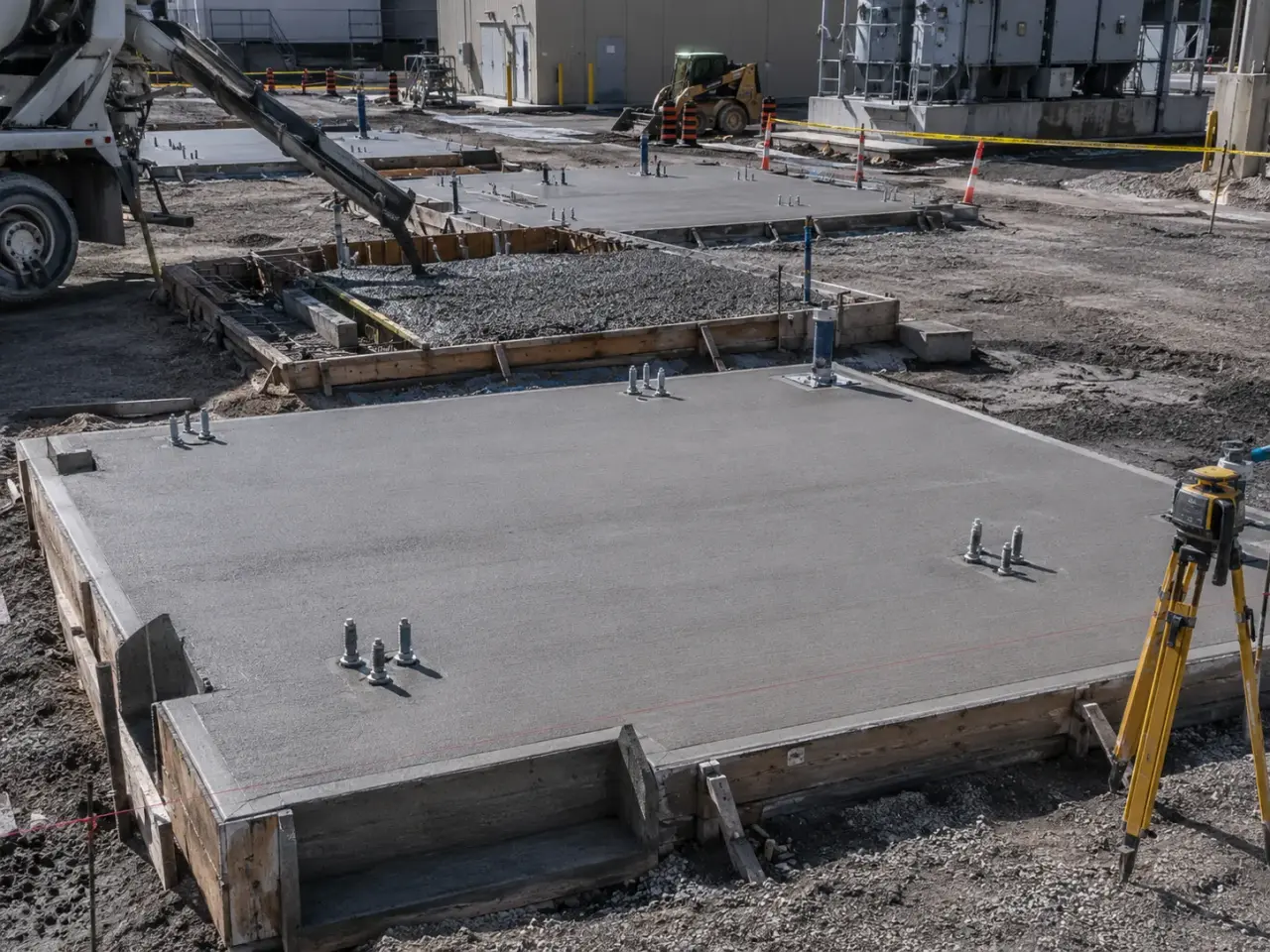
The foundation is selected from static load, centre of gravity, vibration frequency and amplitude, torque, anchors, grout, alignment tolerance, surrounding structure, soil support, maintenance access, and service connections. Housekeeping pads raise light equipment, reinforced inertia bases add mass, isolated foundations separate vibration, and structural plinths transfer equipment loads into a floor or frame.
Housekeeping pads. Pumps, electrical gear, air handlers, and light equipment use raised pads for cleanliness, protection, and anchorage. Height, edge distance, chamfers, sleeves, housekeeping curb, and grout space follow supplier details.
Machine foundations and inertia blocks. Compressors, presses, generators, rotating equipment, and production machinery can need an engineered concrete mass. Dynamic analysis establishes mass, stiffness, isolation, reinforcing, and separation from adjacent slabs.
Exterior utility pads. Transformers, generators, tanks, and packaged equipment require frost-resistant support, drainage, grounding, conduits, oil control, bollards, snow clearance, and service access.
Structural and retrofit bases. Equipment added to an existing slab may require scanning, cores, thickening, dowels, transfer framing, or a separated foundation. The existing slab is not assumed to carry the new load.
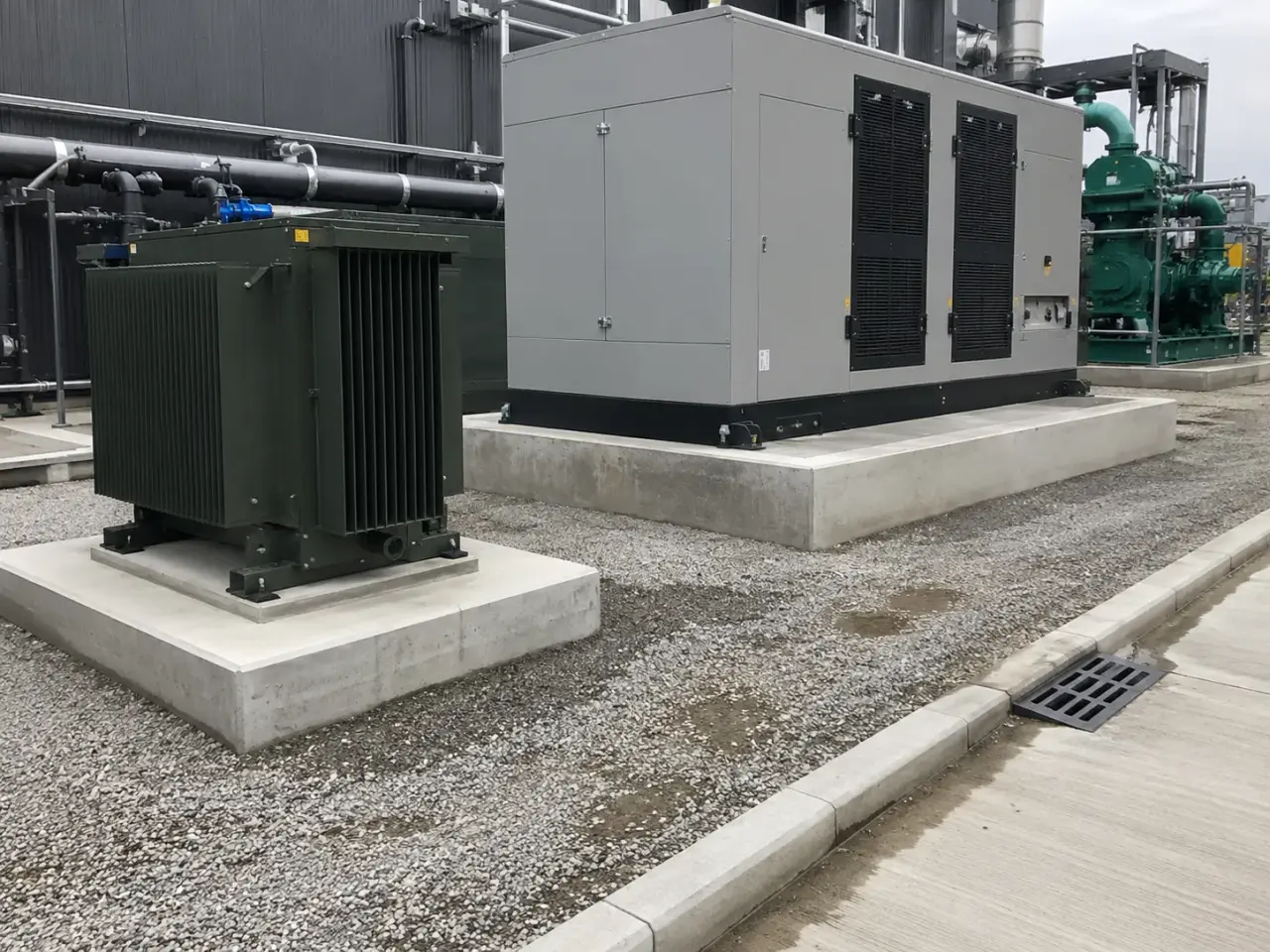
Step 1, coordinate supplier and engineering data. Harrowgate checks loads, vibration, footprint, anchors, grout, conduits, piping, isolation, maintenance clearance, delivery, and setting sequence.
Step 2, survey and prepare support. Existing reinforcement and services are located, excavation or removals proceed, and soil, granular base, slab connection, or structural support is prepared.
Step 3, set forms, reinforcing, and templates. Finished elevation, dimensions, blockouts, sleeves, grounding, isolation joints, embeds, and anchor assemblies are fixed and independently checked.
Step 4, place concrete around precision hardware. Concrete is consolidated beneath templates and through congestion without moving anchors. Surface, grout pockets, drainage, and curing are completed to the installation requirements.
Step 5, verify before equipment setting. Survey confirms anchor coordinates, projection, elevation, flatness, and clearances. Strength, grout, isolation, and loading conditions are released before delivery and alignment.
Existing work begins with scanning and survey. We locate reinforcement, electrical conduits, process lines, tendons where present, and slab edges before drilling or cutting. Concrete is removed to defined limits without damaging retained structure. New-to-existing interfaces are roughened to the engineer's profile, cleaned, and drilled for dowels using approved locations, embedment, adhesive or grout, and hole-cleaning procedure. Isolated foundations receive excavation, base preparation, and mud slab work before reinforcing.
Forms are built rigidly because a few millimetres of movement can affect equipment alignment. Reinforcing, shear keys, sleeves, embedded plates, conduit stubs, drain lines, and anchor rods are installed in a sequence that preserves cover and concrete flow. Anchor rods are held in a surveyed steel template referenced to equipment centreline, not only to the form edges. Projection, thread length, bolt-circle dimensions, elevation, and verticality are checked before and during placement.
Concrete is selected for strength, shrinkage, placement depth, congestion, and service exposure. Deep inertia blocks can require thermal controls, while thin housekeeping pads need aggregate and workability suited to limited depth. We place evenly around anchor templates, vibrate below plates and sleeves, finish bearing areas to the specified grout allowance, and avoid trowelling laitance into surfaces that must bond to grout. Curing continues until the release criteria for equipment work are met.
After form removal, Harrowgate surveys anchor coordinates and pad elevations, protects threads, and prepares the grout interface. Equipment is set on shims or levelling devices under millwright control. Non-shrink cementitious or resin grout is mixed, placed, vented, and cured to the approved product procedure, filling the baseplate without trapped air. Final bolt tightening, alignment, piping connection, and startup follow the equipment supplier and engineer sequence so construction does not introduce soft foot or base distortion.
Planning equipment pads and machine bases in Newmarket? Talk it through with our team.
Provide structural drawings, equipment general arrangement, operating and shipping weights, anchor plan, baseplate details, dynamic reactions, grout specification, isolation requirements, existing-structure information, utility scans, shutdown window, lifting route, and required survey tolerances. Harrowgate uses these inputs to define demolition, forming, embeds, concrete, grout, access, and sequencing.
Harrowgate uses a rigid surveyed template tied to machine centreline and independent supports where practical. We check bolt spacing, diagonals, projection, thread, verticality, and elevation before placement. Concrete is placed evenly around the assembly and vibrated without striking it, followed by another coordinate check while controlled correction remains possible.
Grout fills the gap between the levelled baseplate and concrete, creating continuous bearing and transferring machine loads into the foundation. A proper installation requires prepared concrete, sealed forms, controlled mixing, enough placement head, venting, complete contact, and curing. Harrowgate follows the approved grout procedure and verifies accessible edges.
No. The structural and vibration design determines whether equipment can bear on a slab, needs a thickened pad, requires an isolated inertia block, or needs a deeper foundation. Operating speed, unbalanced force, support stiffness, machine mass, nearby sensitive equipment, and soil conditions all affect the selection.
Installation starts after the concrete reaches the strength required for anchoring, bearing, lifting, and grout preparation. Harrowgate coordinates test results and engineer criteria, then protects the pad during setting. Operation waits until grout, anchors, alignment, piping, and isolation components meet their respective release conditions.
Yes. Harrowgate plans scanning, isolation, demolition, debris removal, dowels, forms, reinforcing, concrete or approved rapid material, curing, equipment setting, and grouting backward from the startup deadline. The sequence identifies hold points and realistic material cure times so commissioning is based on achieved performance rather than schedule pressure.
Cracking can result from restraint, inadequate reinforcement, anchor forces, thermal gradients in deep blocks, vibration, poor support, shrinkage, or impact. Harrowgate follows the engineered geometry and reinforcement, controls joint and isolation details, manages placement temperature and curing, and prevents equipment loads until the concrete and grout reach required strength.
A rigid template controls spacing, orientation, projection, and group position while concrete is placed and vibrated. Survey ties the template to the machine datum. Individual bolts set by tape can drift, rotate, or lean beyond the adjustment available in the equipment baseplate.
Only when the engineer confirms the slab, support, load path, vibration behaviour, reinforcement, and dowel detail. Some equipment needs a separated inertia block, new footing, thickened slab, or structural transfer rather than a bonded pad on the existing floor.
Still have a question about equipment pads and machine bases in Newmarket? Ask our team directly.
Commercial and heavy-civil construction delivered for developers, contractors, property managers, and municipalities.
Send drawings, a site plan, or a description of the scope. Harrowgate Group is licensed, insured, and WSIB-covered.
Licensed, Insured & WSIB-Covered, work managed and documented on every job
Tell us what you need and we’ll get you a quote.
Harrowgate Group provides equipment pads and machine bases, delivered and installed with quote-ready support across Toronto and surrounding Ontario communities.
Companies We've Worked With
Harrowgate Group delivers commercial and heavy-civil construction for developers, contractors, institutions, municipalities, and property groups across Ontario.
 Popeyes
  Tim Hortons
  Subway
  University of Toronto
  Madison Group
  RioCan
  Women's College Hospital
  Starbucks
  Mazda
Mazda  TD Bank
  City of Toronto Popeyes Tim Hortons Subway University of Toronto Madison Group RioCan Women's College Hospital Starbucks Mazda TD Bank City of Toronto