
Built to spec
Built to your engineered drawings, survey, and the real site conditions, not a one-size-fits-all approach forced to fit.
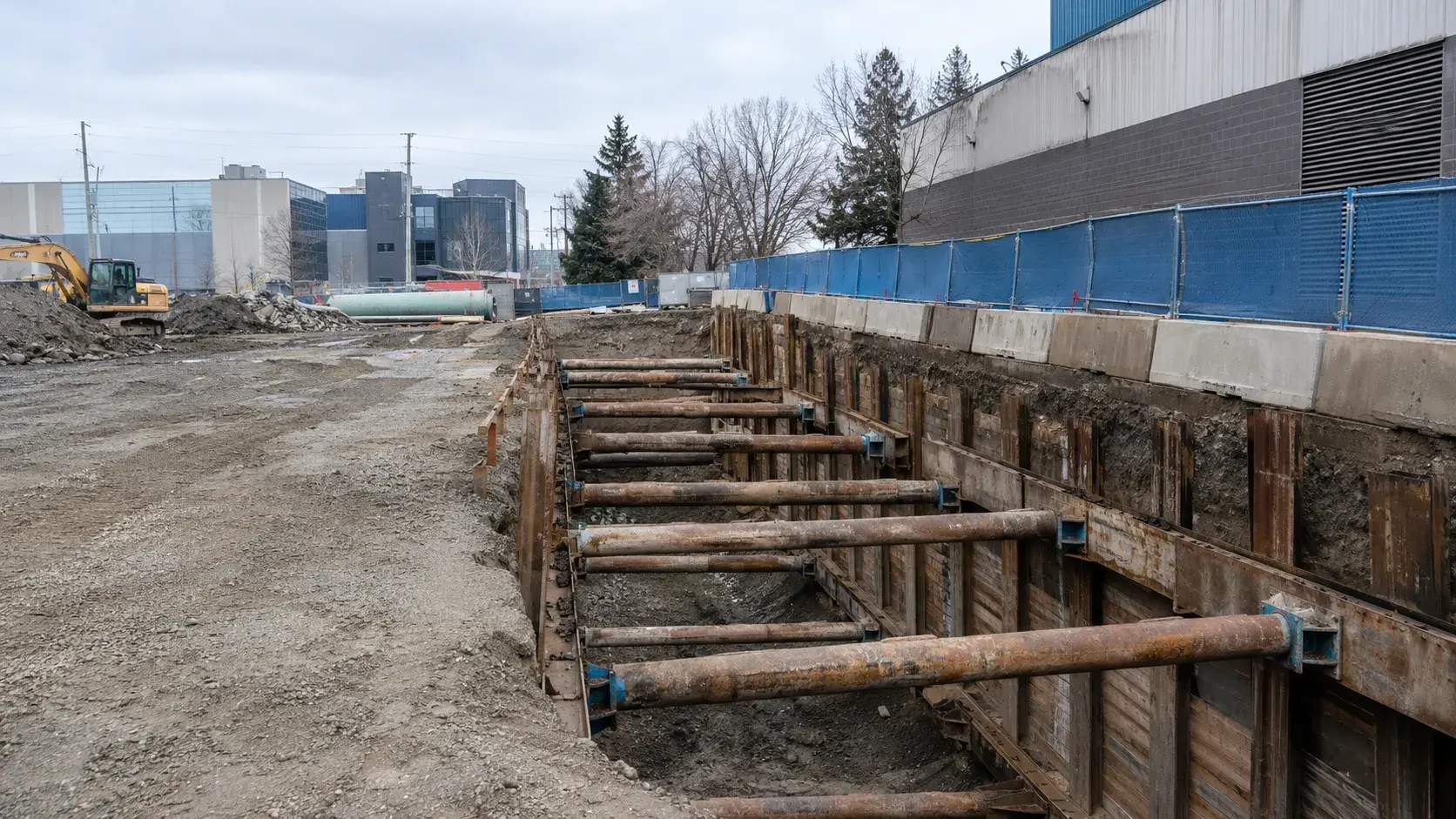
Emergency Excavation and Shoring in Aurora is the rapid stabilization of collapses, sinkholes, and failing excavations to make sites safe.
Tell us what you need and we’ll get you a quote.
Licensed, insured & WSIB-covered · Free, no-obligation quote & on-site assessment.
Built to your engineered drawings, survey, and the real site conditions, not a one-size-fits-all approach forced to fit.
Durable materials and methods chosen for the load, traffic, and environment on site.
Send specs, drawings, or photos and get a free, no-obligation site visit and estimate with no guesswork.
Installation and site work completed in accordance with Ontario requirements.
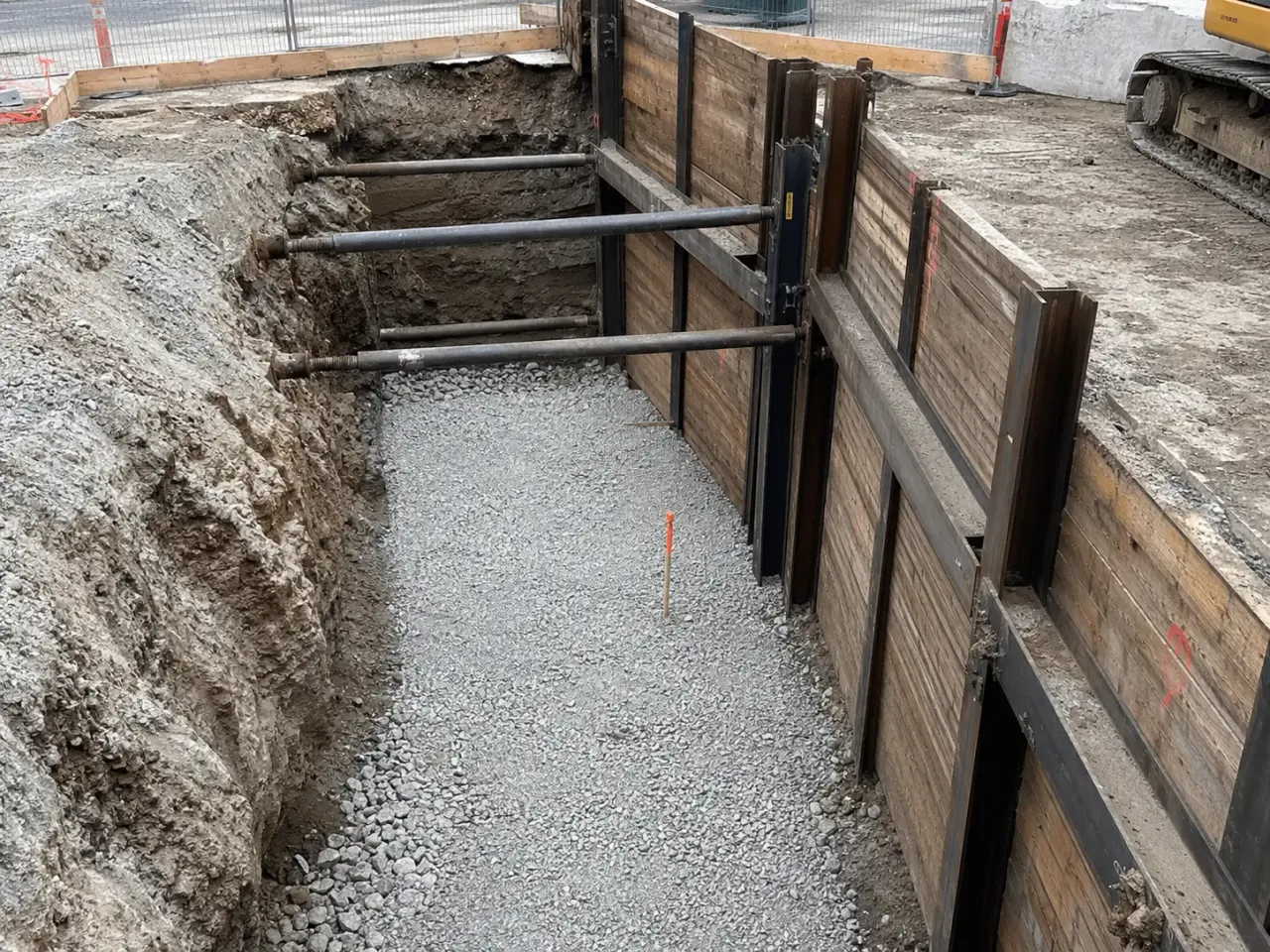
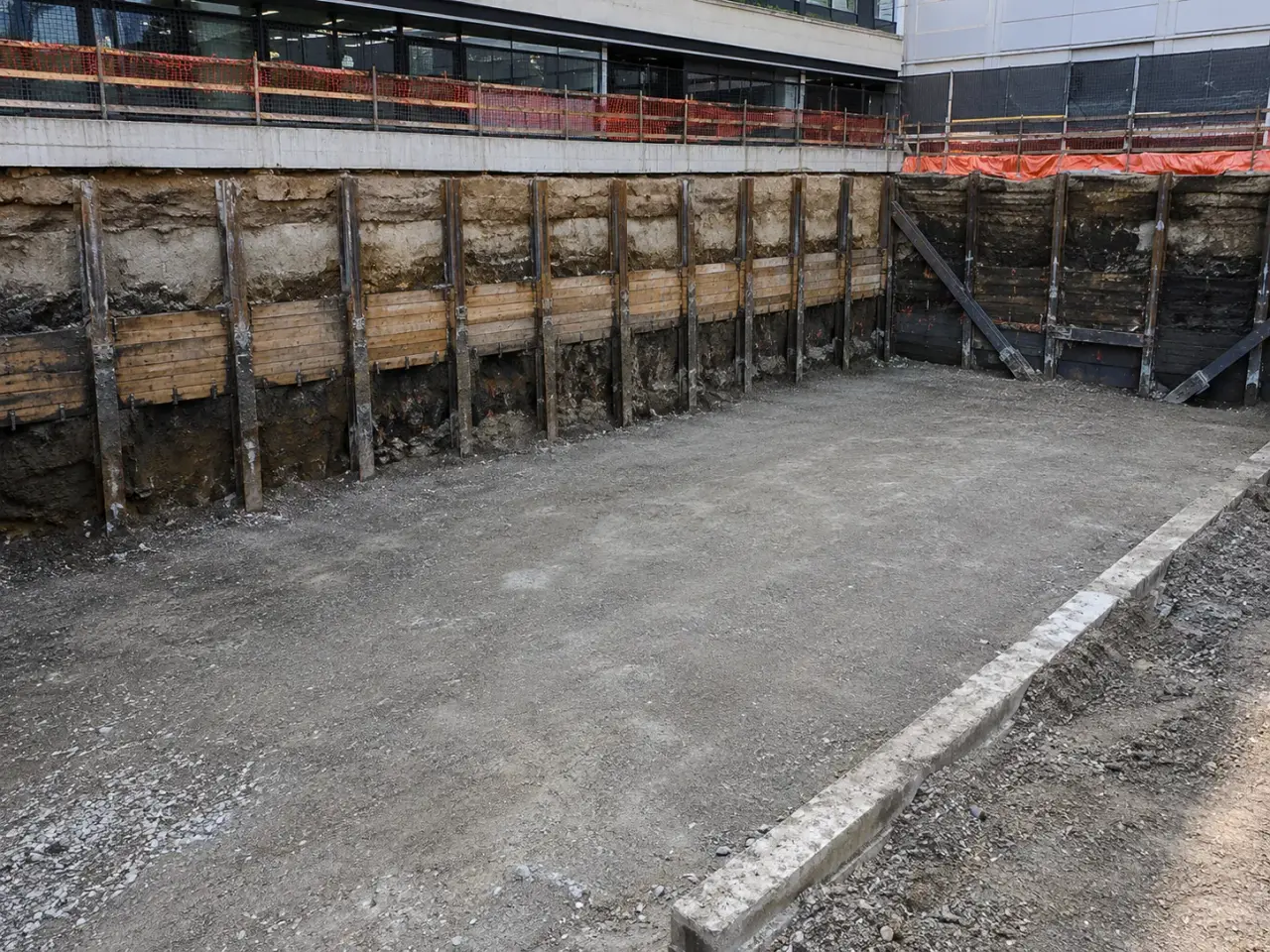
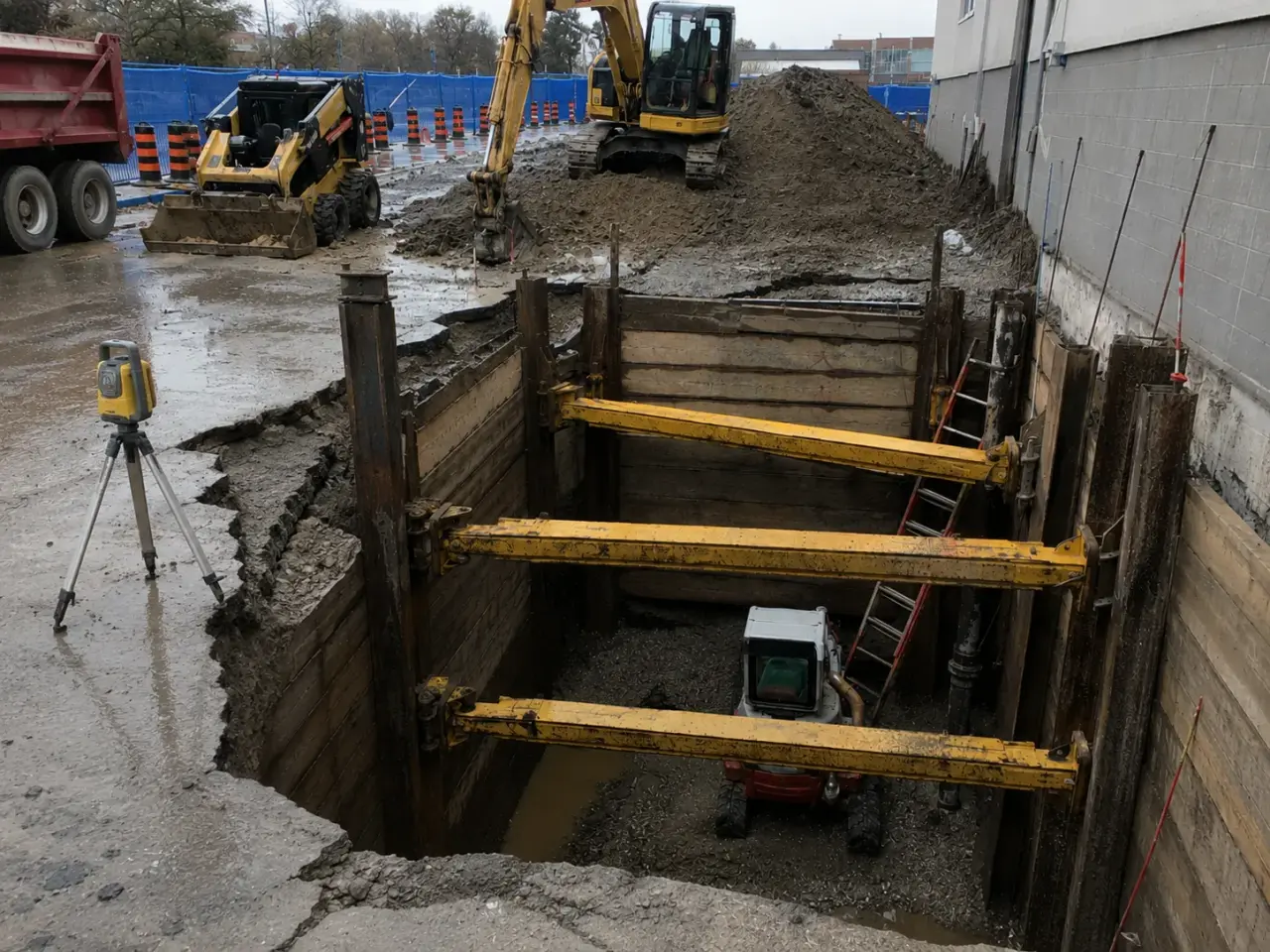
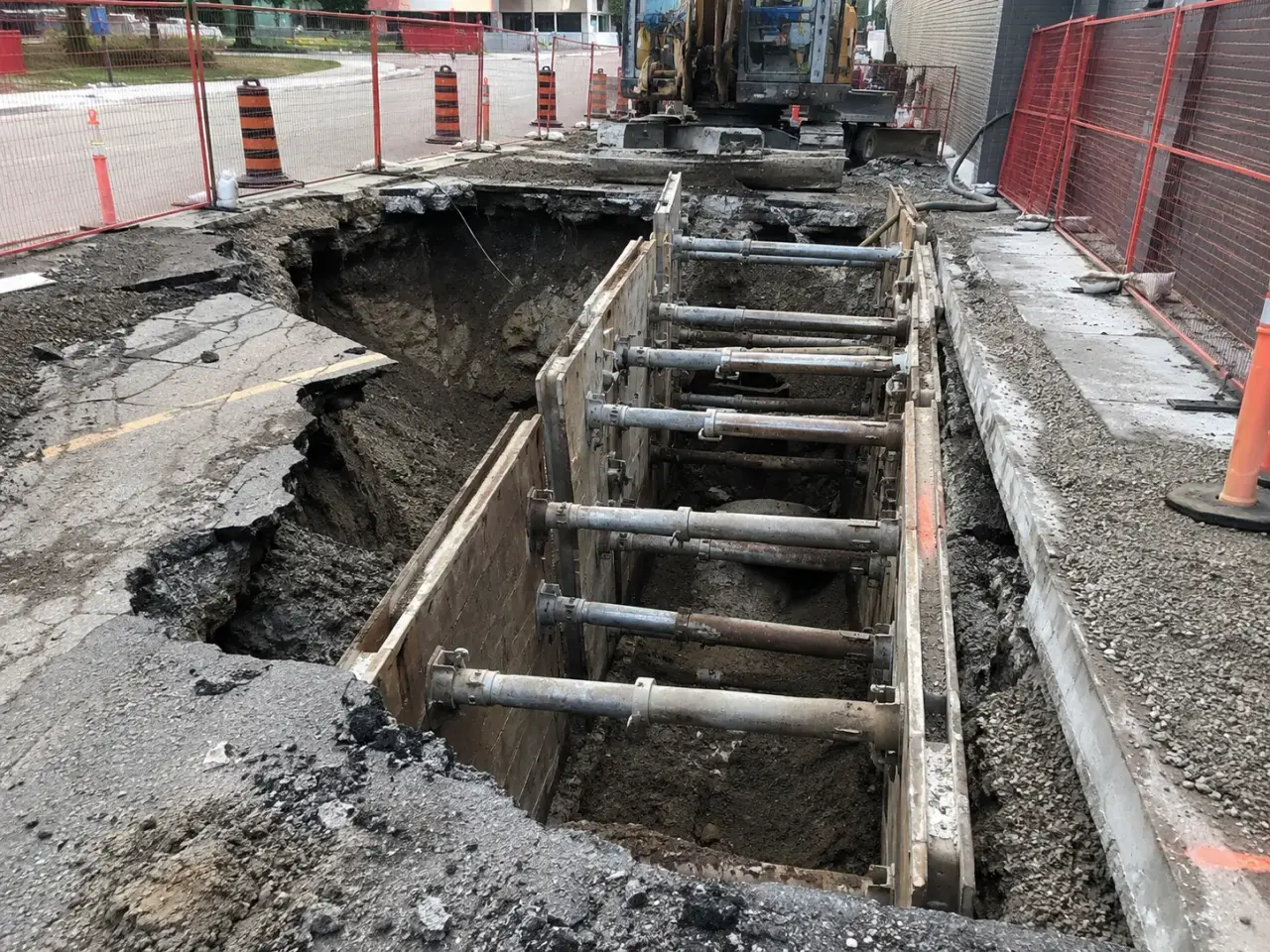
Benching or sloping can stabilize suitable soil where space and surrounding assets permit. Trench boxes protect workers within selected excavations but do not restrain movement that threatens neighbouring structures. Hydraulic shoring supports trench walls with rapid installation. Soldier piles, lagging, sheet piling, braced frames, underpinning, needles, or other engineered systems control deeper, wider, loaded, or irregular failures. The method follows soil, groundwater, geometry, surcharge, utilities, movement, and rescue access.
Step 1,
Step 2, The first field review records excavation dimensions, soil layers, groundwater, rainfall, cracks, sloughing, existing support, adjacent foundations, stockpiles, parked equipment, traffic, vibration sources, overhead hazards, and exposed utilities. We confirm who controls the site and the written emergency procedure. If an existing excavation has failed, no one enters to retrieve tools, adjust pumps, or inspect damage until a competent assessment and safe method are in place.
Step 3, We reduce loading where it can be done without approaching the collapse zone. Spoil, materials, cranes, excavators, and vehicles are moved back. Surface water is diverted from the crest. Broken pavement and unsupported edges are barricaded. Emergency utility locates are initiated through the applicable Ontario One Call process, and private utility information is gathered from the owner. Where a damaged gas, electrical, water, sewer, communication, or process line is involved, its operator controls isolation and status while our work proceeds around it.
Step 4, The support selection depends on the objective. Hydraulic shoring can provide progressive wall support in suitable trench geometry. Slide rail systems allow panels and posts to be advanced as soil is removed, limiting open exposure. Soldier piles with timber lagging can support a longer or irregular excavation, while internal bracing or tiebacks address load according to the engineered design and property constraints.
Sheet piles can provide continuous support and groundwater cutoff where driving conditions, vibration limits, and buried services permit. Trench boxes suit linear pipe work where wall movement outside the shield will not endanger adjacent assets. Sloping may be practical on an open site with enough room and the required soil-specific geometry, but it is rarely the answer beside a building or congested roadway.
Step 5, Once the excavation is stable, we execute or support the urgent underground repair. Backfill and shoring removal follow a planned reverse sequence. Support is not stripped early to speed production. The regulation requires a support system to remain until immediately before backfill, and removal is supervised by a competent person. We place backfill to maintain support at the pipe, structure, and walls, then remove temporary elements in stages so voids are not left behind.
Planning emergency excavation and shoring in Aurora? Talk it through with our team.
Stop work and entry, move people beyond the affected area, prevent traffic and equipment from approaching the crest, and follow the site’s written emergency procedure. Do not enter to inspect, retrieve equipment, or adjust pumps. Record observations from a safe location and provide dimensions, photos, drawings, weather, and utility information.
Shoring supports excavation walls and limits ground movement that could affect utilities, roads, or foundations. A trench box is primarily a shield that protects workers inside its rated area if soil collapses. Where movement outside the box would endanger an adjacent asset, the excavation generally needs a support method designed for that objective.
Mechanical excavation does not proceed into unverified buried-service risk. Ontario One Call handles emergency and priority locate requests by telephone, while the owner must also identify private infrastructure outside the public locate process. Safe work can include barricading, surface-water diversion, remote observation, and other controls that do not disturb unverified ground.
We identify whether water is surface runoff, a leaking utility, perched water, or groundwater, then select sumps, filtered pumping, wellpoints, cutoff, or staged drawdown. Discharge clarity, volume, and surrounding settlement are monitored because uncontrolled pumping can remove soil fines and enlarge voids beneath pavement, utilities, and foundations.
Yes, when the system is designed to control the ground movement and loads that matter to that foundation. The review considers footing depth, setback, soil, groundwater, building loads, excavation sequence, and permissible movement. Shoring may be combined with underpinning, internal bracing, tiebacks, or monitoring under the responsible engineer’s design.
The excavation and support are checked before entry and as work progresses, with renewed assessment after rain, freezing or thawing, vibration, impact, pumping changes, soil movement, or altered loading. Inspection frequency and responsibilities also follow the engineered design and project procedure. Any damaged member, pressure loss, crack, or movement triggers immediate reassessment.
Removal follows the design and a reverse sequence coordinated with backfill. Material is placed and compacted to support the permanent work and excavation walls before the corresponding braces, panels, or sheets are withdrawn. Extraction voids are treated as specified, and workers remain within protected areas until the excavation is fully closed and stable.
A trench box primarily protects workers inside the shielded zone. It does not necessarily support excavation walls or prevent settlement of a road, utility, or foundation. Movement-control needs can require shoring designed for the surrounding assets.
Useful inputs include excavation geometry, soil and groundwater, adjacent foundations and utilities, surcharge loads, movement evidence, access, intended repair, monitoring limits, and the sequence for installing and later removing support.
Still have a question about emergency excavation and shoring in Aurora? Ask our team directly.
Commercial and heavy-civil construction delivered for developers, contractors, property managers, and municipalities.
Send drawings, a site plan, or a description of the scope. Harrowgate Group is licensed, insured, and WSIB-covered.
Licensed, Insured & WSIB-Covered, work managed and documented on every job
Tell us what you need and we’ll get you a quote.
Harrowgate Group provides emergency excavation and shoring, delivered and installed with quote-ready support across Toronto and surrounding Ontario communities.
Companies We've Worked With
Harrowgate Group delivers commercial and heavy-civil construction for developers, contractors, institutions, municipalities, and property groups across Ontario.
 Popeyes
  Tim Hortons
  Subway
  University of Toronto
  Madison Group
  RioCan
  Women's College Hospital
  Starbucks
  Mazda
Mazda  TD Bank
  City of Toronto Popeyes Tim Hortons Subway University of Toronto Madison Group RioCan Women's College Hospital Starbucks Mazda TD Bank City of Toronto