
Built to spec
Built to your engineered drawings, survey, and the real site conditions, not a one-size-fits-all approach forced to fit.
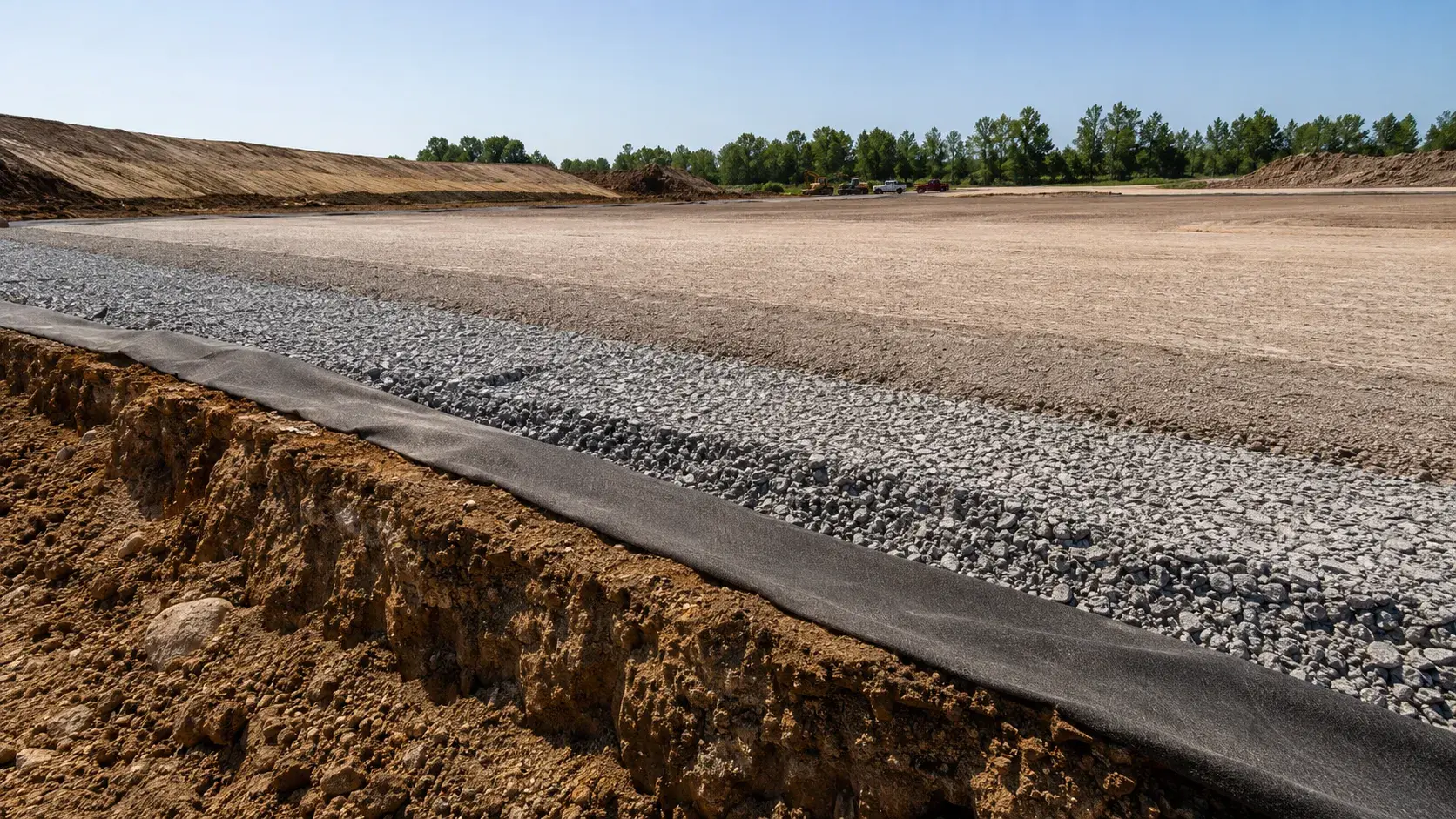
Cut and Fill and Compaction in Mississauga is the balancing of earthwork volumes and the engineered compaction that produces a stable subgrade.
Tell us what you need and we’ll get you a quote.
Licensed, insured & WSIB-covered · Free, no-obligation quote & on-site assessment.
Built to your engineered drawings, survey, and the real site conditions, not a one-size-fits-all approach forced to fit.
Durable materials and methods chosen for the load, traffic, and environment on site.
Send specs, drawings, or photos and get a free, no-obligation site visit and estimate with no guesswork.
Installation and site work completed in accordance with Ontario requirements.
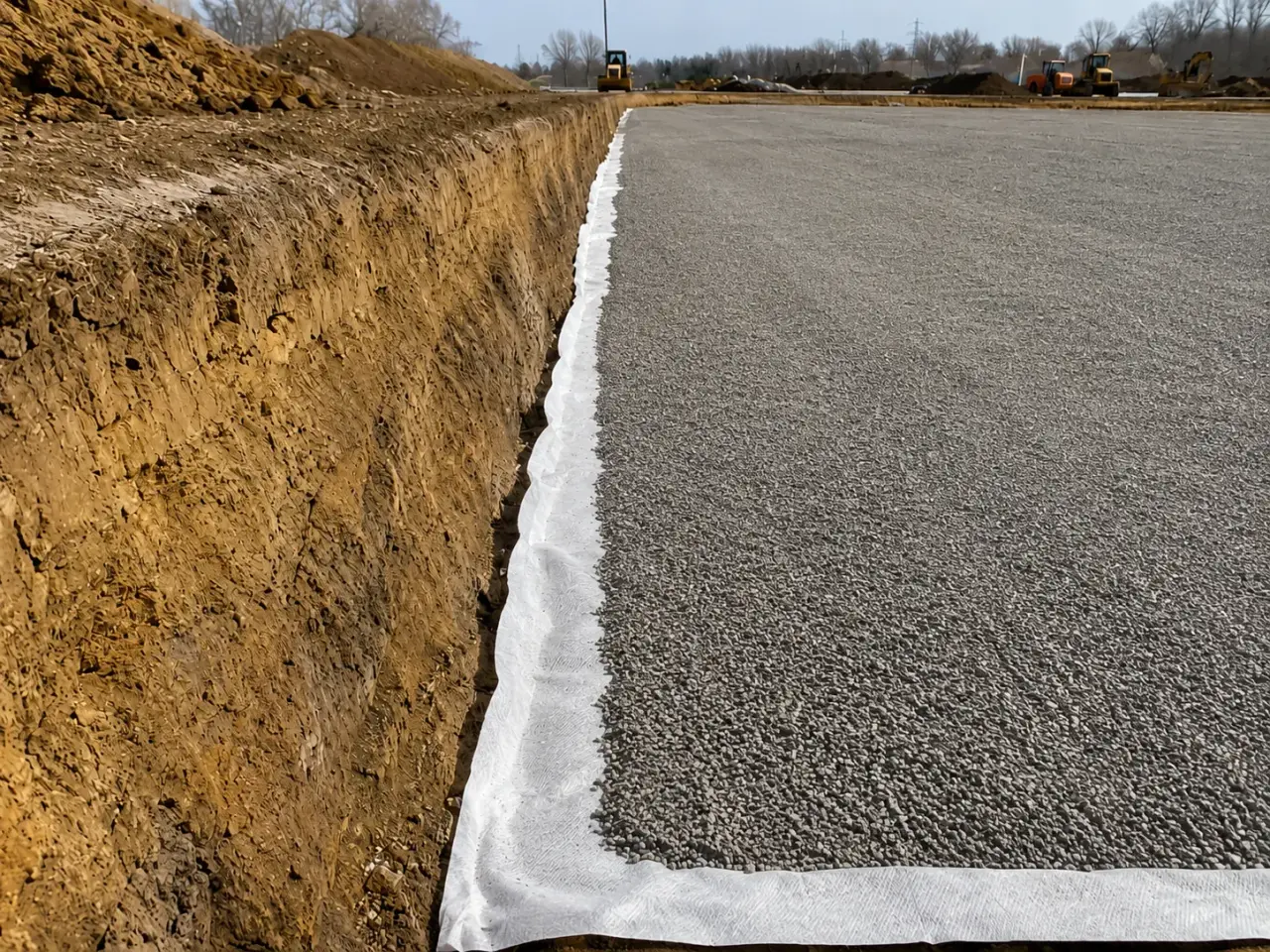
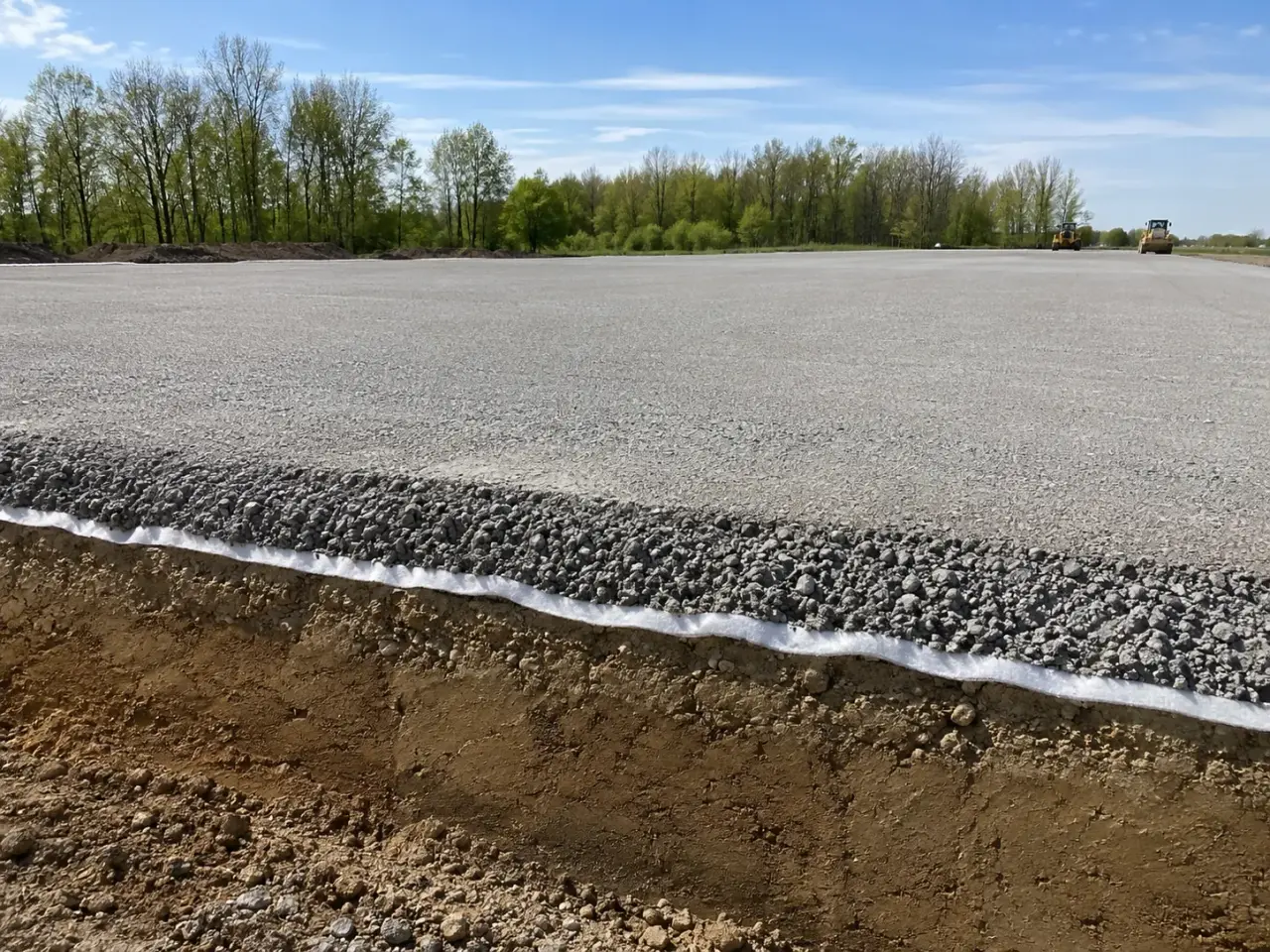
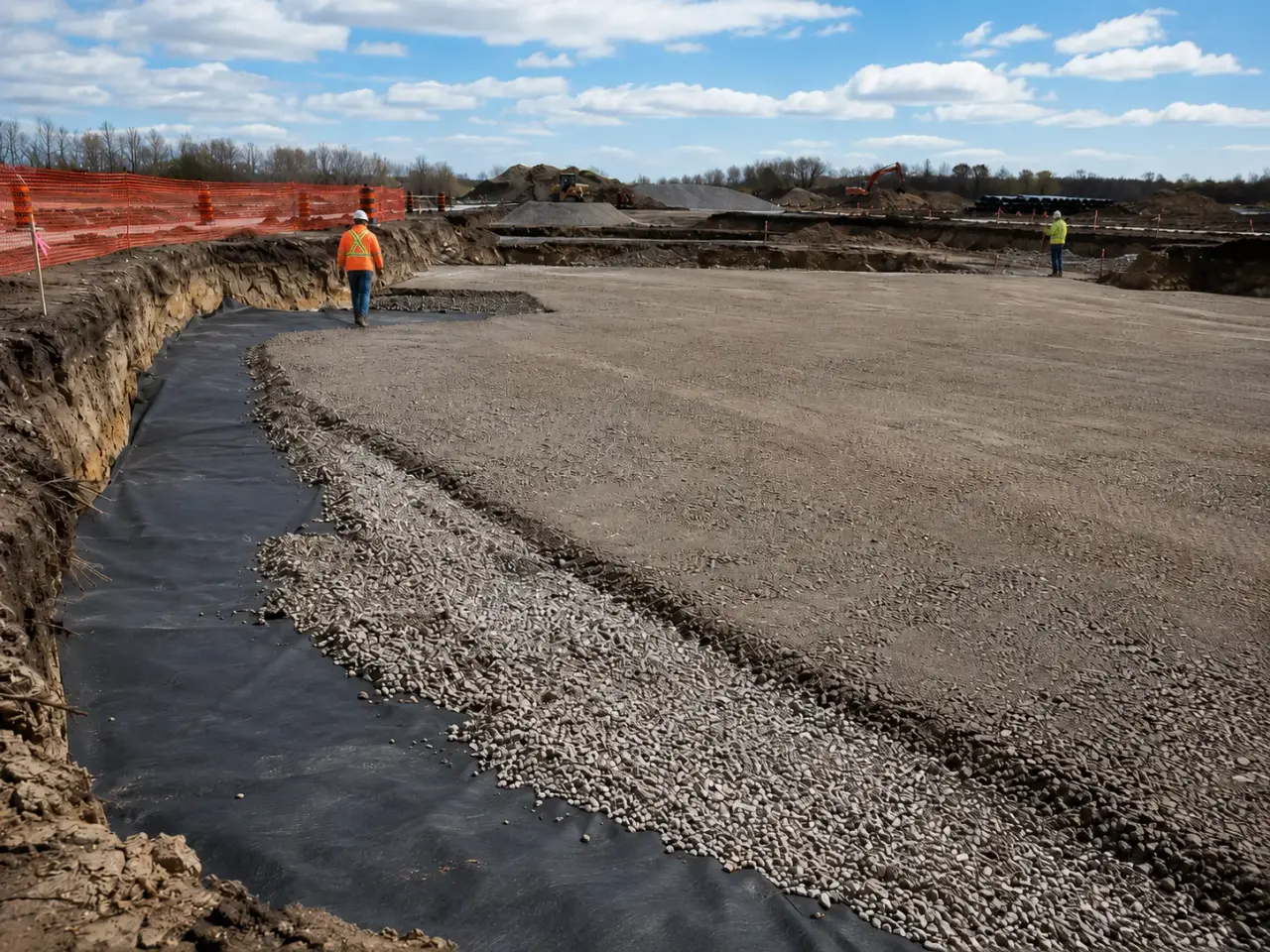
Method selection for cut and fill and compaction follows ground, water, utilities, access, environmental controls, temporary works, material behaviour, receiving capacity, testing, and its required handoff.
Balanced cut and fill. Suitable excavated soil is processed and moved into engineered fill zones when moisture, gradation, organic content, contamination, and geotechnical acceptance permit reuse.
Imported engineered fill. Granular or selected soil is sourced, sampled, tracked, placed, and compacted where site material cannot meet strength, drainage, frost, or volume requirements.
Soil conditioning. Drying, aeration, blending, scarification, moisture addition, stabilization, and controlled stockpiling can bring accepted soil into a compactable range without changing its classification by assumption.
Deep fills and staged embankments. Thick fills require prepared keys, benches, drainage, lift control, settlement allowance, proof testing, monitoring, and sometimes staged loading or ground improvement.
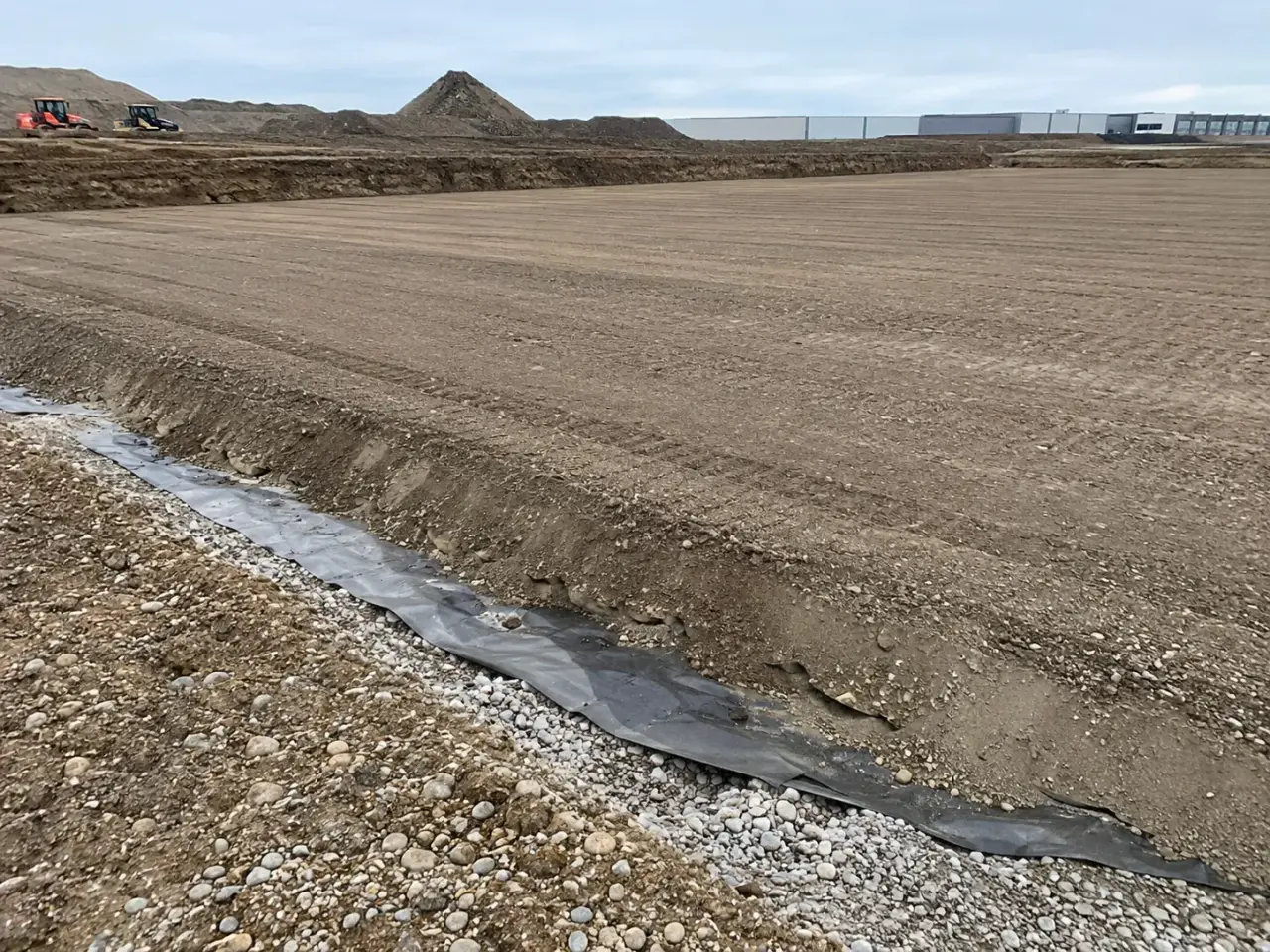
Step 1, divide the site into cut, stockpile, processing, fill, drainage, and haul zones from survey and geotechnical criteria.
Step 2, strip topsoil and unsuitable material, proof the receiving ground, and install benches, keys, underdrains, or separation layers.
Step 3, process accepted soil to the required moisture and place uniform lifts with equipment suited to soil type and confinement.
Step 4, test density, moisture, elevation, and proof response by lift and correct failures before covering them.
Step 5, finish subgrade to tolerance, protect it from weather and traffic, and issue fill records for the next pavement, slab, or foundation.
Fill construction begins with an accepted base, stripped of topsoil and loose material, benched where it meets an existing slope, drained, and proofed or inspected as specified. The cut face is worked selectively so clay, granular, shale fragments, and unsuitable seams remain separate.
Dozers spread a consistent loose lift, water trucks or aeration bring moisture toward the required range, and padfoot, smooth-drum, or pneumatic equipment is selected for the soil. Test locations are identified by grid, station, or work lot, and the next lift does not erase a failed result.
Harrowgate controls the entire material cycle. Excavators load from an approved source zone, haul units follow stable routes, spreading equipment avoids segregation, and compactors use the required coverage and overlap. Around structures and utilities, lift thickness and equipment size are reduced to avoid impact or lateral displacement. Survey tracks the rising fill against the design surface, including settlement or preload allowances. When weather changes moisture faster than production can correct it, we stop accepting that material into structural fill rather than burying a future problem.
Planning cut and fill and compaction in Mississauga? Talk it through with our team.
It means the field dry density must reach 98 percent of the maximum dry density established by the specified laboratory method for that material. The number is incomplete without the reference method, moisture condition, test depth, and fill zone. Harrowgate follows the project specification and does not transfer one target to every soil.
Lift thickness depends on soil, particle size, moisture, compactor type, confinement, and the approved procedure. Cohesive fill may need thinner loose lifts than free-draining granular, especially beside walls or utilities. Harrowgate verifies the project limit, controls it during spreading, and changes equipment or thickness when testing shows incomplete density at depth.
Water helps particles rearrange up to an efficient range, but too little leaves stiff clods and too much creates pore pressure and weaving. The same roller can produce very different density as moisture changes. Harrowgate aerates, mixes, or adds controlled water before compaction and rejects frozen or saturated placement conditions that cannot be corrected.
Only when the geotechnical design allows it. Thick or compressible foundation soils may require staged lifts, waiting periods, instrumentation, wick drains, reinforcement, or preload to control settlement and stability. Harrowgate follows the approved sequence, maintains survey and test records by elevation, and preserves monitoring points throughout production.
The existing slope is stripped and cut into benches sized by the design so new fill does not rest on a smooth inclined plane. Drainage and weak seams are addressed before placement. Harrowgate builds lifts from the low side upward, compacts the bench interface, and surveys the resulting slope rather than trimming loose material onto it.
Common causes include a lift that is too thick, unsuitable moisture, wrong roller, too few passes, oversized particles, soft support below, or testing in a disturbed surface zone. Harrowgate identifies the affected depth, scarifies and conditions the material, recompacts with an adjusted method, and obtains a passing retest before cover.
Useful records include base acceptance, source and soil classification, environmental approvals, lift elevations, daily placement areas, moisture observations, compaction equipment, test locations and results, failed-area repairs, import tickets, and final survey surfaces. Harrowgate organizes these by work lot so a later question can be traced to a specific material and elevation.
No. Reuse depends on geotechnical acceptance, contamination, organics, gradation, moisture, frost susceptibility, debris, intended load, and the ability to process and compact the material.
A density test samples a small location. Pumping can reveal excess moisture, weak layers, bridging, poor drainage, or deeper yielding. The failed area is investigated and corrected before cover.
Still have a question about cut and fill and compaction in Mississauga? Ask our team directly.
Commercial and heavy-civil construction delivered for developers, contractors, property managers, and municipalities.
Send drawings, a site plan, or a description of the scope. Harrowgate Group is licensed, insured, and WSIB-covered.
Licensed, Insured & WSIB-Covered, work managed and documented on every job
Tell us what you need and we’ll get you a quote.
Harrowgate Group provides cut and fill and compaction, delivered and installed with quote-ready support across Toronto and surrounding Ontario communities.
Companies We've Worked With
Harrowgate Group delivers commercial and heavy-civil construction for developers, contractors, institutions, municipalities, and property groups across Ontario.
 Popeyes
  Tim Hortons
  Subway
  University of Toronto
  Madison Group
  RioCan
  Women's College Hospital
  Starbucks
  Mazda
Mazda  TD Bank
  City of Toronto Popeyes Tim Hortons Subway University of Toronto Madison Group RioCan Women's College Hospital Starbucks Mazda TD Bank City of Toronto