Built to spec
Built to your engineered drawings, survey, and the real site conditions, not a one-size-fits-all approach forced to fit.
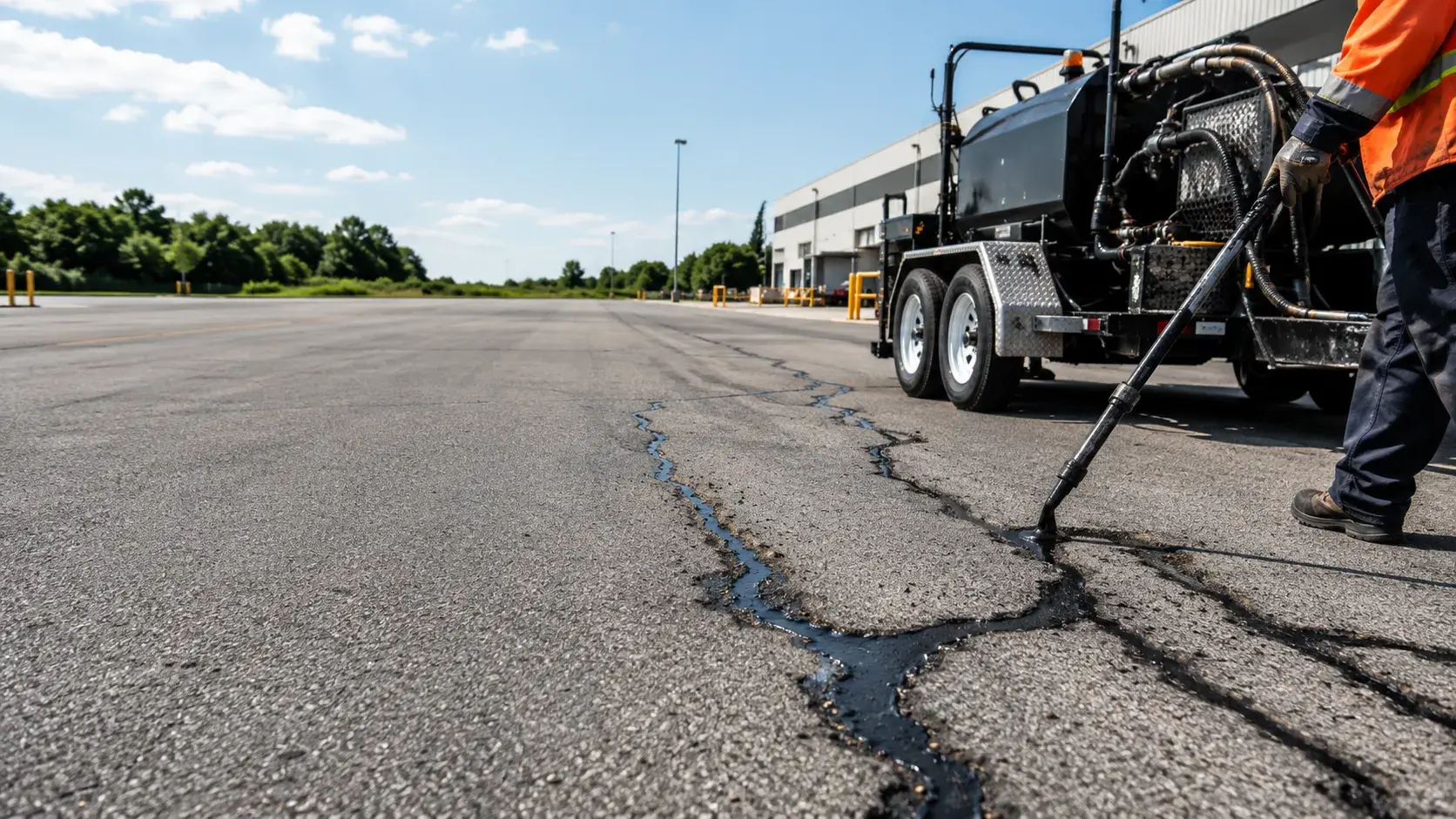
Crack Sealing in Scarborough is the routing and sealing of asphalt cracks to keep water out and stop pavement from failing.
Tell us what you need and we’ll get you a quote.
Licensed, insured & WSIB-covered · Free, no-obligation quote & on-site assessment.
Built to your engineered drawings, survey, and the real site conditions, not a one-size-fits-all approach forced to fit.
Durable materials and methods chosen for the load, traffic, and environment on site.
Send specs, drawings, or photos and get a free, no-obligation site visit and estimate with no guesswork.
Installation and site work completed in accordance with Ontario requirements.
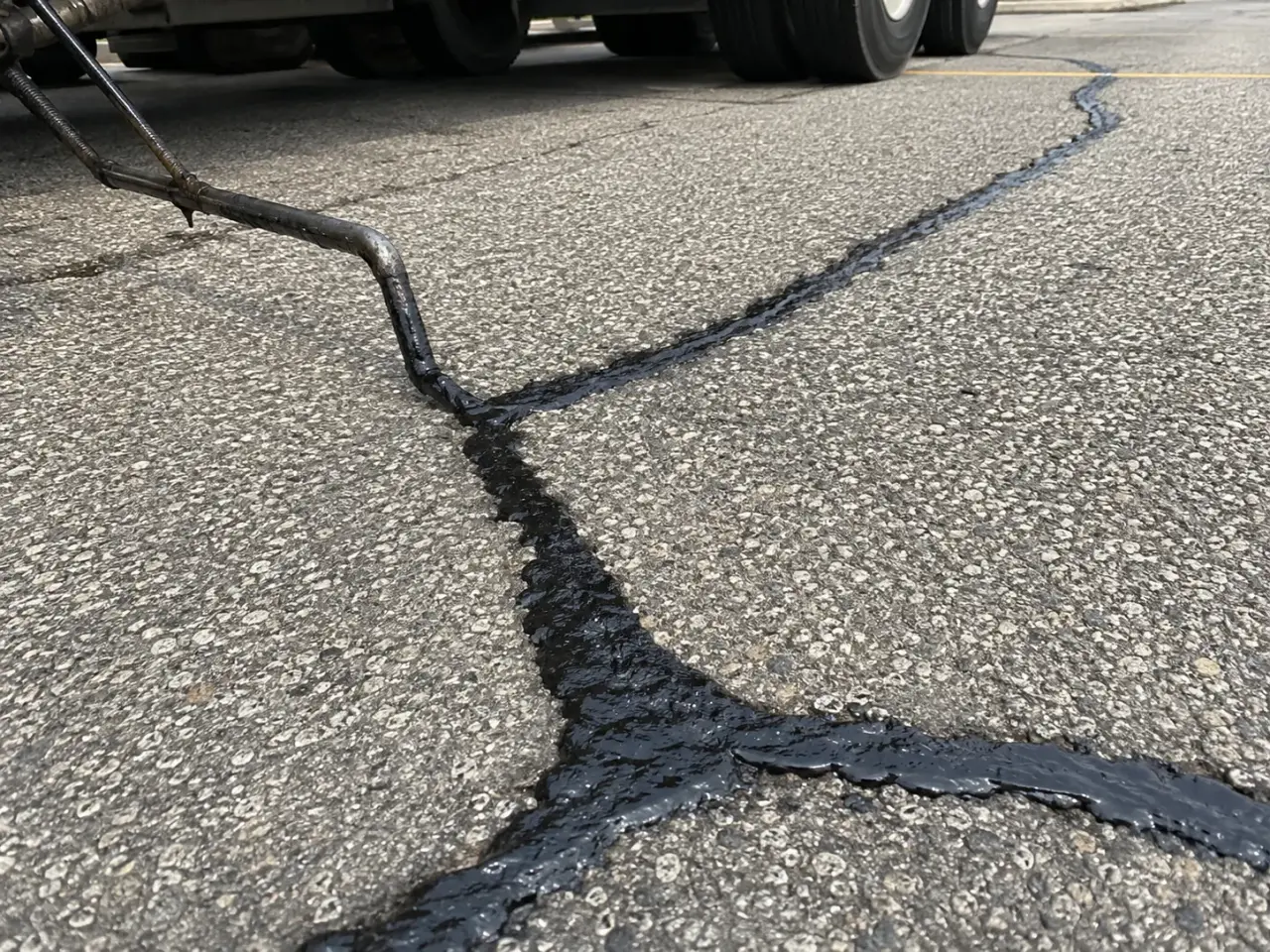
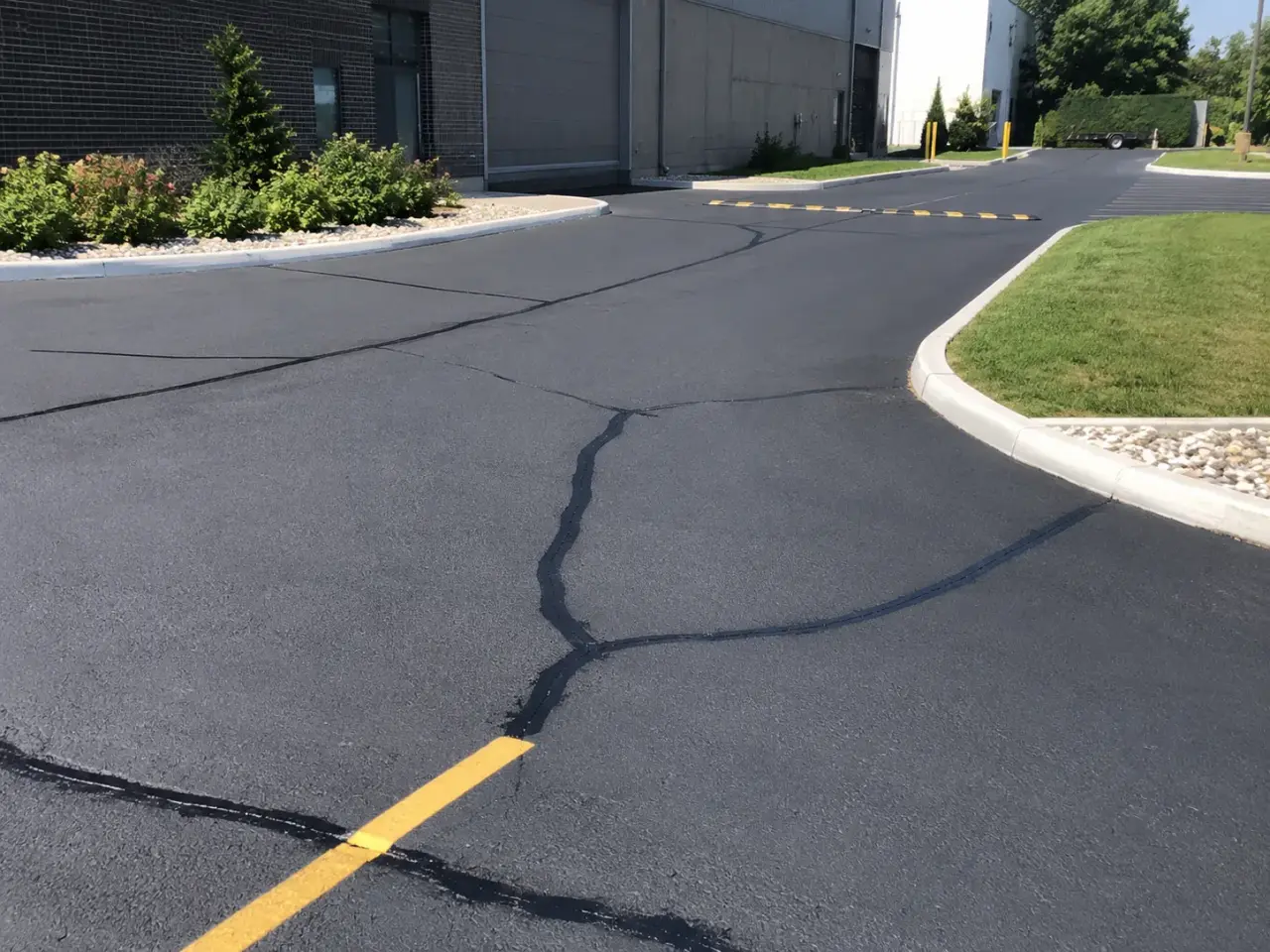
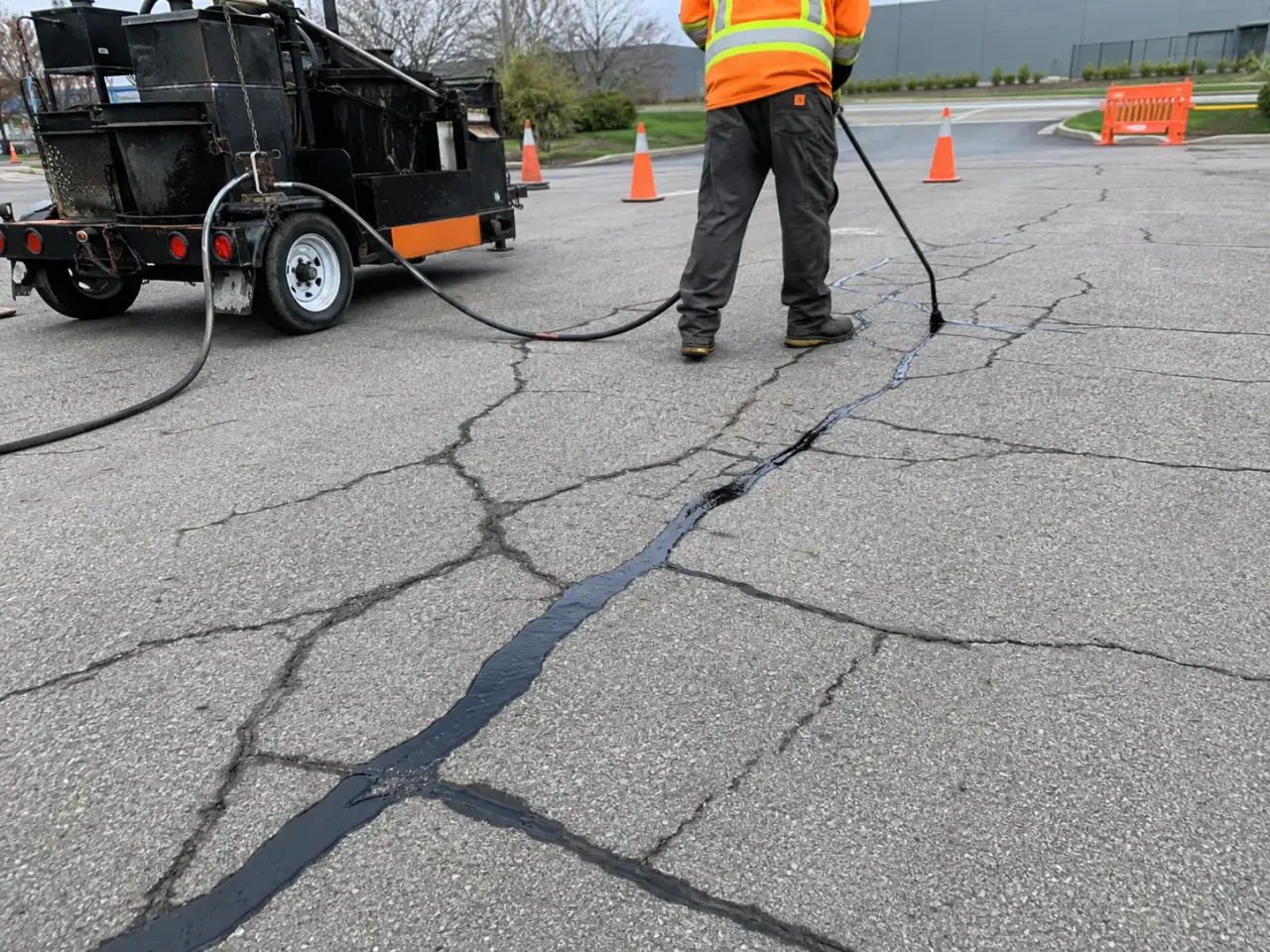
Hot-pour routed sealing, clean-and-seal work, cold-applied materials, overbanding, and mastic repairs suit different crack widths, movement, pavement condition, weather, and traffic.
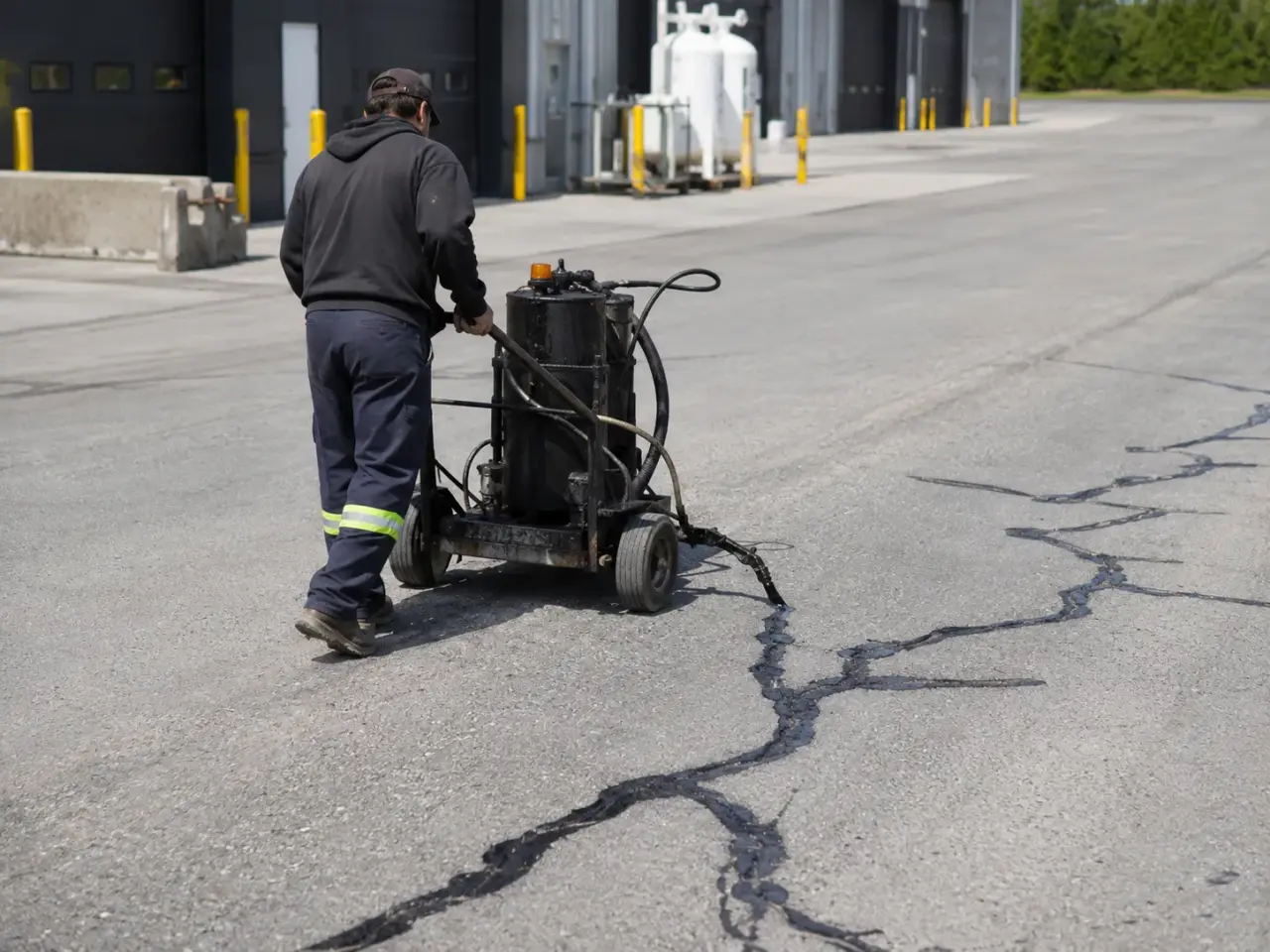
Step 1, The production line keeps routing, cleaning, heating, placement, and traffic release close together. Reservoir geometry, crack dryness, sealant temperature, and neat termination are controlled so material bonds to both walls and remains below snowplow and tire pickup zones.
Step 2, Work stage 1. We map cracks by type, width, movement, edge condition, and surrounding distress. Tight stable cracks, working thermal cracks, open joints, and fatigue networks receive different treatment or no seal at all.
Step 3, Work stage 2. Where specified, a router or saw creates a uniform reservoir centred on the crack. The cut removes oxidized edges and provides material geometry suited to movement without widening into adjacent sound pavement.
Step 4, Work stage 3. Mechanical brushes, oil-free compressed air, and hot-air lances remove dust, vegetation, moisture, and loose asphalt. Heat is controlled to dry the walls without scorching or hardening the asphalt.
Step 5, Work stage 4. Rubberized sealant is heated in an agitated, temperature-controlled melter and circulated until application. Material that is overheated, reheated beyond limits, or contaminated is not placed.
Step 6, Work stage 5. A wand fills the reservoir from the bottom and leaves the specified recessed, flush, or narrow overband profile. Excessive wide bands are avoided around parking stalls, pedestrian paths, and wheel tracks.
Step 7, Work stage 6. Release agent or blotter is used only when approved. Sealant is allowed to cool and skin, the work is inspected for skips and pull-away, and traffic returns without tracking material across the site.
Planning crack sealing in Scarborough? Talk it through with our team.
Crack sealing follows the selected Canadian hot-poured rubberized product, project pavement-preservation specification, and municipal requirements. the applicable local municipal specification requires a 20 mm bead of hot-poured rubberized asphalt for identified joints and cracks in concrete or hot mix pavement with small movement.
Control point 1. Sealant type is matched to Ontario low temperature, movement range, traffic, and application season. Material certificates, batch identification, safe heating range, and maximum application temperature are reviewed before work.
Control point 2. Reservoir width and depth come from the detail and product system. Too shallow creates a thin band that tears, while a deep narrow fill wastes material and can restrict the intended flexible shape.
Control point 3. Crack walls must be clean and dry. A hot-air lance is used immediately ahead of sealing where allowed, but visible burning, smoking asphalt, or glazed edges indicate excessive heat.
Control point 4. Melter temperature is read independently and agitation remains active so polymer and asphalt stay uniform. Prolonged heating changes viscosity and elastic response even if the material still pours.
Control point 5. The finished profile stays within the routed reservoir or approved overband width. Thick ridges can be cut by snow-clearing blades and pulled by turning tires.
Control point 6. Crack sealing is scheduled after structural patches and before sealcoat or resurfacing where the preservation plan calls for it. New cracks and repaired limits are recorded for future inspection.
Discrete transverse thermal cracks, longitudinal joints, construction joints, and some block cracks can be sealed when surrounding pavement remains stable. Cracks with loose edges are routed or repaired first. Alligator cracking, pumping, deep rutting, and settlement indicate support failure and need patching or reconstruction. Harrowgate classifies each area before measuring seal quantity.
Routing removes oxidized, irregular crack edges and forms a uniform reservoir with geometry suited to flexible sealant. It improves wall contact and lets the material move without leaving a thick surface ridge. Routing is used where the specification and crack condition call for it, because weak or severely broken pavement may require removal instead.
No. Water, frost, and damp fines prevent adhesion and can flash into steam near hot material. Harrowgate cleans and dries the reservoir with approved equipment and seals immediately before it is recontaminated. Work stops during rain or when temperature and surface conditions fall outside the product and project requirements.
A hot-poured rubberized asphalt compound selected for Ontario temperature and movement is commonly used. The exact product must satisfy the project specification and approved application range. Harrowgate verifies batch data, keeps the melter agitated, monitors temperature, and rejects overheated or contaminated material because heat history directly affects elasticity and bond.
The material must cool and develop a surface that resists pickup by tires. Time changes with sealant type, reservoir size, pavement temperature, shade, and traffic. Harrowgate controls each work lane until a field check shows no tracking. Approved blotter or release treatment is used only where the specification permits early crossing.
It reduces water and debris entering suitable cracks, which slows one pathway that contributes to potholes. It cannot correct thin asphalt, poor drainage, failed base, settlement, or fatigue cracking. Harrowgate combines sealing with patching, inlet repair, edge work, and resurfacing so preservation is applied only to pavement that can benefit from it.
Structural patches are completed first, then suitable cracks are routed, cleaned, and sealed. Sealcoat follows after the crack material has cooled or cured as required and compatibility is confirmed. This sequence treats movement with a flexible reservoir and oxidation with a thin surface film, instead of asking sealcoat to bridge active openings.
Dense alligator cracking, potholes, pumping, wide failed joints, unstable patches, and base-related settlement require structural repair rather than isolated sealing.
Moisture can prevent adhesion, create steam and safety hazards, and trap water below the material, leading to early separation.
Still have a question about crack sealing in Scarborough? Ask our team directly.
Commercial and heavy-civil construction delivered for developers, contractors, property managers, and municipalities.
Send drawings, a site plan, or a description of the scope. Harrowgate Group is licensed, insured, and WSIB-covered.
Licensed, Insured & WSIB-Covered, work managed and documented on every job
Tell us what you need and we’ll get you a quote.
Harrowgate Group provides crack sealing, delivered and installed with quote-ready support across Toronto and surrounding Ontario communities.
Companies We've Worked With
Harrowgate Group delivers commercial and heavy-civil construction for developers, contractors, institutions, municipalities, and property groups across Ontario.
 Popeyes
  Tim Hortons
  Subway
  University of Toronto
  Madison Group
  RioCan
  Women's College Hospital
  Starbucks
  Mazda
Mazda  TD Bank
  City of Toronto Popeyes Tim Hortons Subway University of Toronto Madison Group RioCan Women's College Hospital Starbucks Mazda TD Bank City of Toronto