
Built to spec
Built to your engineered drawings, survey, and the real site conditions, not a one-size-fits-all approach forced to fit.
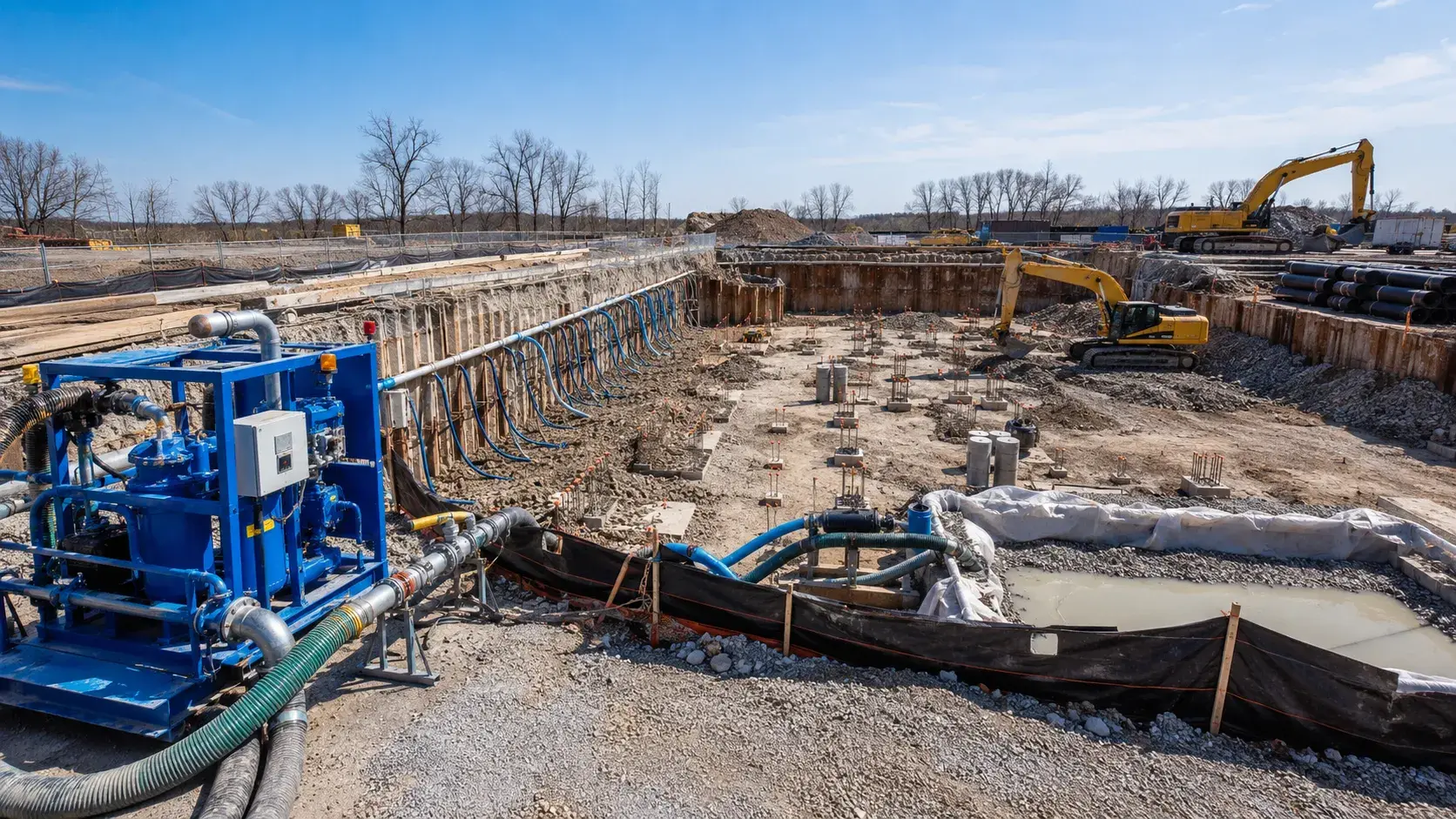
Construction Dewatering in Brampton is the pumping and control of groundwater that keeps excavations and foundations dry during construction.
Tell us what you need and we’ll get you a quote.
Licensed, insured & WSIB-covered · Free, no-obligation quote & on-site assessment.
Built to your engineered drawings, survey, and the real site conditions, not a one-size-fits-all approach forced to fit.
Durable materials and methods chosen for the load, traffic, and environment on site.
Send specs, drawings, or photos and get a free, no-obligation site visit and estimate with no guesswork.
Installation and site work completed in accordance with Ontario requirements.
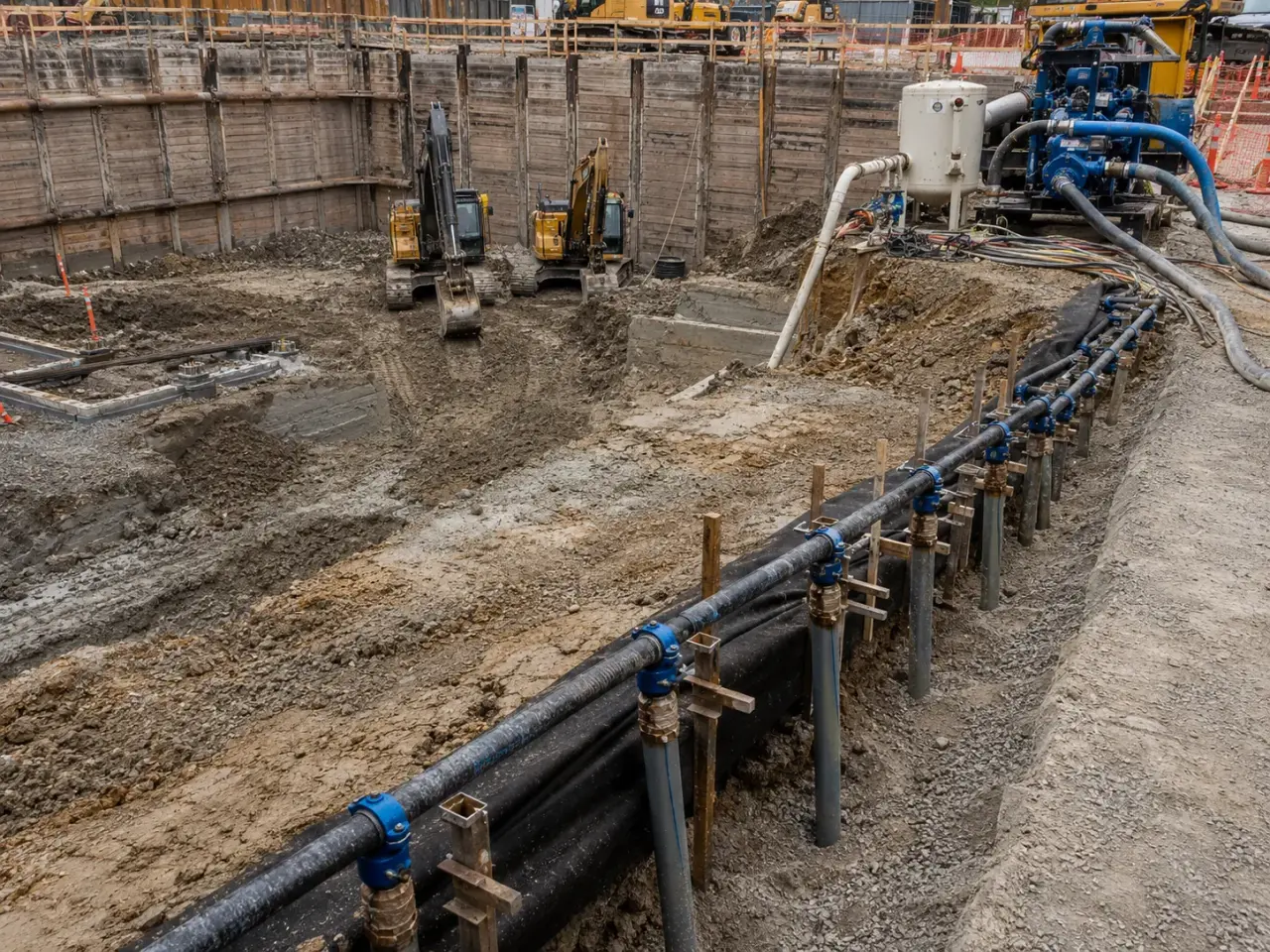
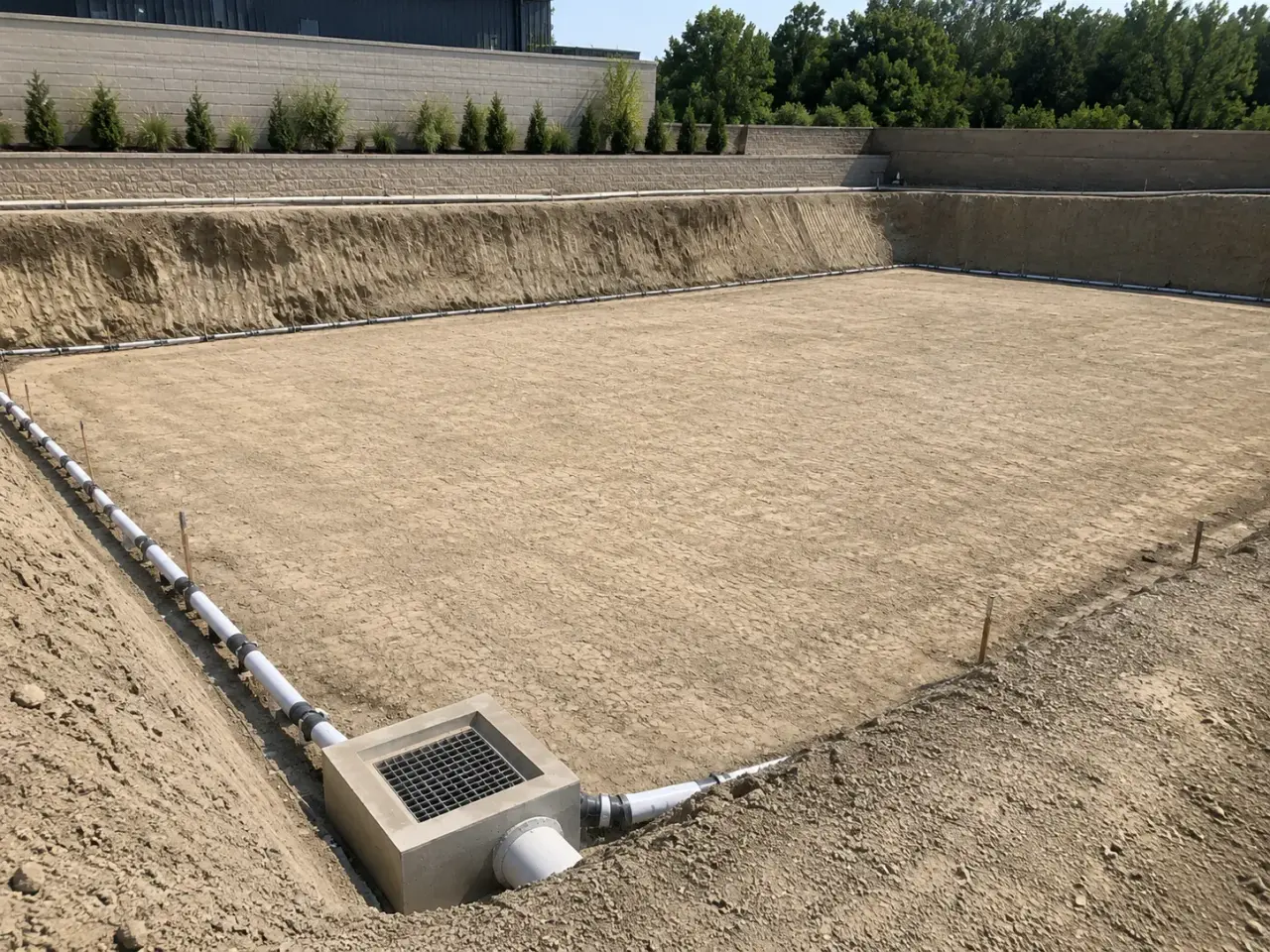
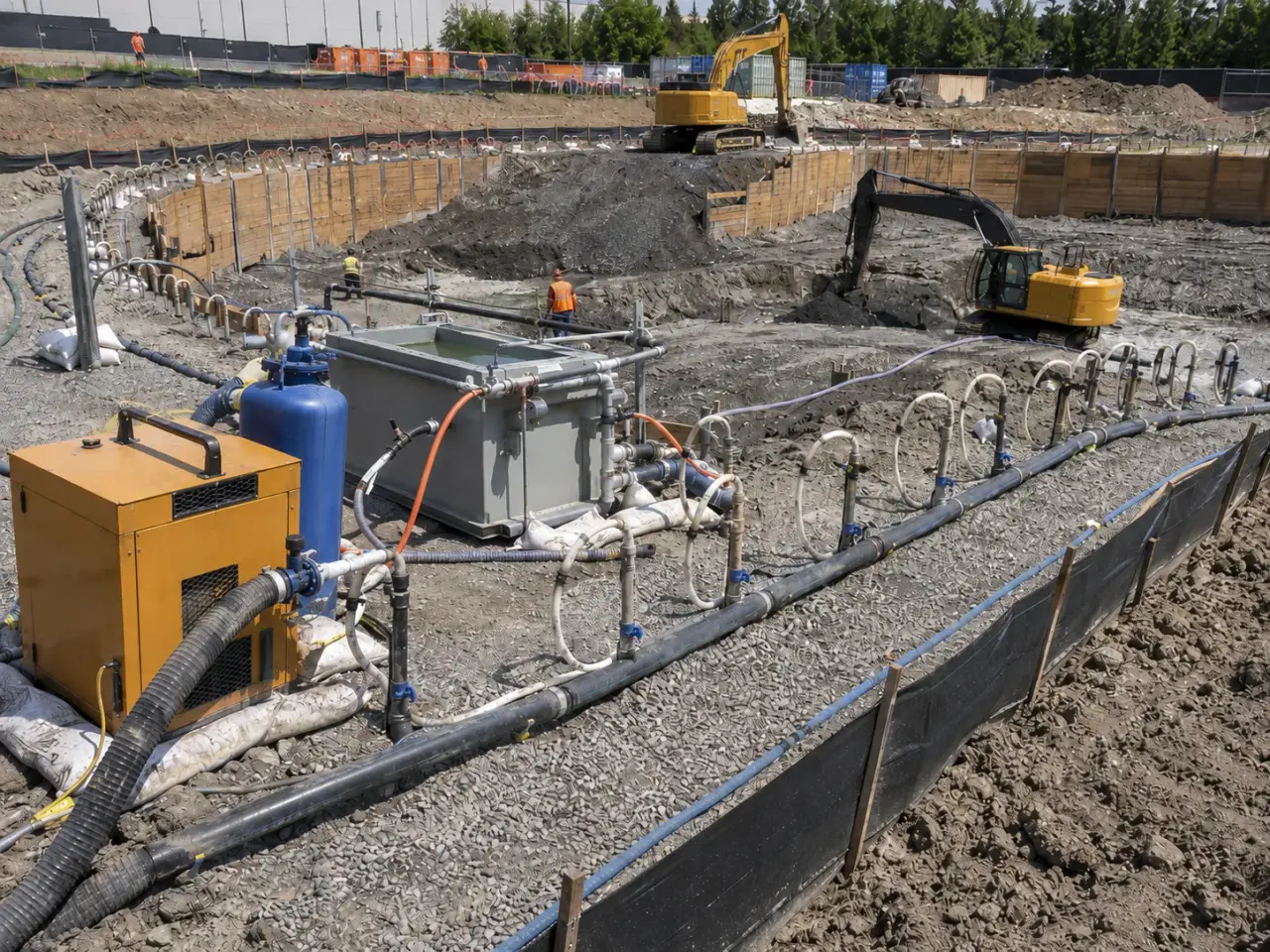
Method selection for construction dewatering follows ground, water, utilities, access, environmental controls, temporary works, material behaviour, receiving capacity, testing, and its required handoff.
Sump pumping. Filtered sumps collect local seepage and rainfall in stable granular drainage where drawdown and soil migration can be controlled.
Wellpoint systems. Closely spaced shallow wells connected to headers lower groundwater around trenches and excavations in permeable soils within practical suction limits.
Deep wells and eductors. Submersible deep wells address greater drawdown and flow, while eductors can depress pore pressure in lower-permeability soils under engineered design.
Cutoffs and recharge. Sheet piles, slurry walls, grouting, liners, staged excavation, and recharge wells reduce inflow or control off-site drawdown where pumping alone creates unacceptable effects.
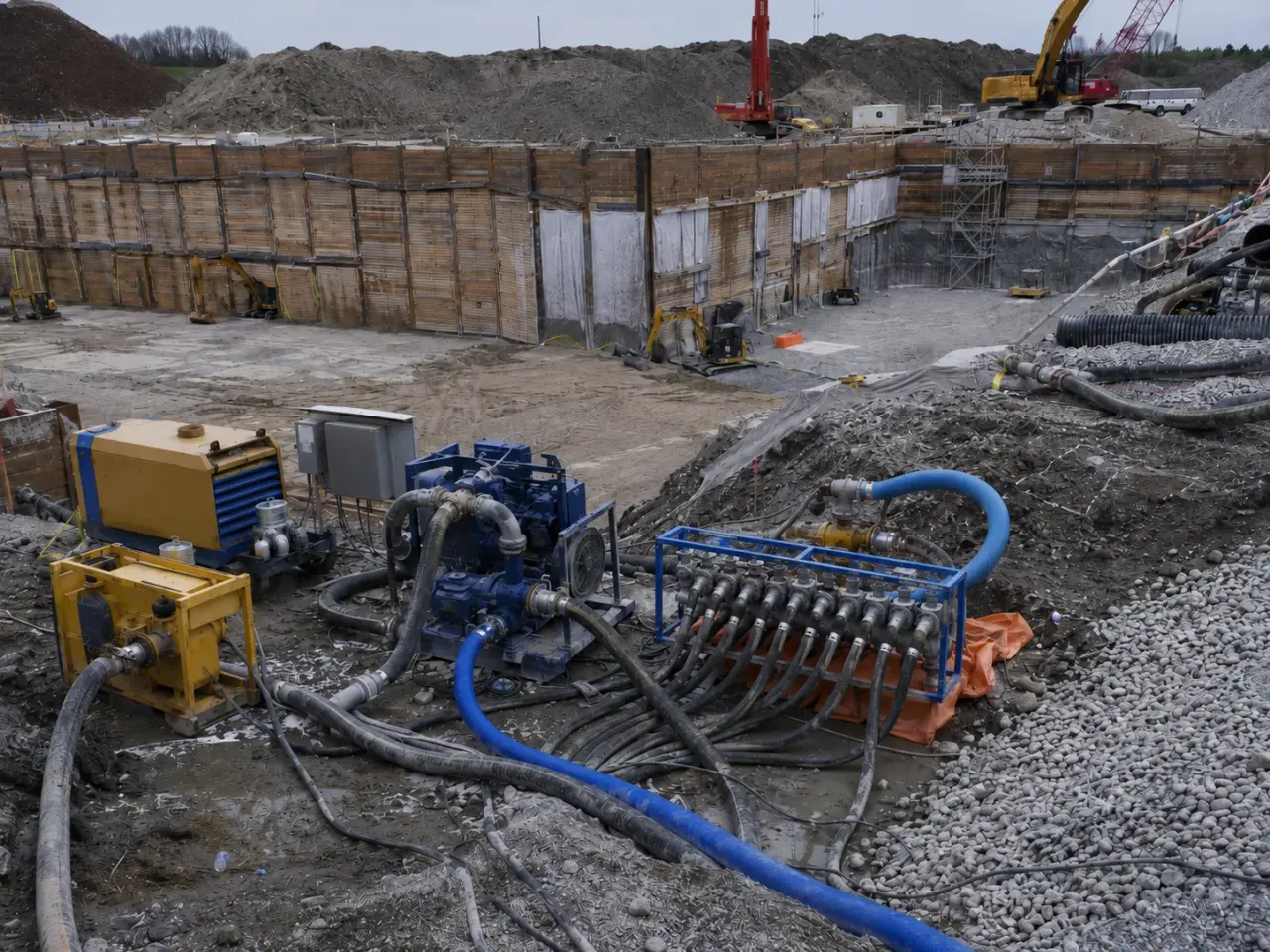
Step 1, review hydrogeology, piezometers, excavation, shoring, adjacent foundations, water quality, discharge, redundancy, and monitoring.
Step 2, install wells, sumps, filters, headers, pumps, power, tanks, treatment, standby capacity, and protected discharge.
Step 3, commission in stages while monitoring drawdown, turbidity, flow, settlement, shoring, and nearby water levels.
Step 4, operate and maintain continuously through excavation, concrete, waterproofing, and backfill with alarms and records.
Step 5, reduce and shut down pumping under the engineered sequence while confirming permanent drainage and groundwater recovery.
We establish baseline groundwater and discharge requirements before pumping, install staged collection and filtration, start at a controlled rate, observe settlement and drawdown, and maintain duty and standby capacity through storms, shutdowns, concrete placement, and backfill.
Work stage 1. We review boreholes, piezometers, hydraulic conductivity, groundwater elevation, excavation geometry, utilities, nearby foundations, water bodies, and precipitation. Pump tests or trial sumps refine expected flow and treatment demand.
Work stage 2. Shallow granular soils may use closely spaced wellpoints connected to a vacuum header. Deeper or higher-flow excavations use screened deep wells and submersible pumps, while tight localized seepage may use sumps or eductor systems.
Work stage 3. Sumps are wrapped in graded filter aggregate and geotextile where designed so water enters without eroding the base. Ditches direct runoff away from bearing surfaces and fresh concrete while separating clean stormwater where practical.
Work stage 4. Discharge passes through settling tanks, weir tanks, filter bags, sand media, or other approved treatment. Turbidity, total suspended solids, pH, temperature, oil sheen, and site-specific parameters are monitored for the permitted outlet.
Work stage 5. Flow meters, piezometers, settlement points, pump amperage, tank condition, and outlet observations are logged. Pumping rate is adjusted when drawdown, ground response, or treatment performance moves outside the plan.
Work stage 6. Duty pumps, standby pumps, backup power, high-level alarms, spare hoses, protected fuel or electrical supply, and emergency storage remain ready. Wells and sumps are decommissioned and sealed as backfill and permanent drainage take over.
Planning construction dewatering in Brampton? Talk it through with our team.
Most water takings above 50,000 litres on any day require an Ontario environmental permission. Eligible construction dewatering from more than 50,000 through 400,000 litres per day uses EASR registration with required technical reports and operating measures. Takings above the applicable 400,000-litre threshold require a Permit to Take Water under the current regulation.
Not without the required City approval and compliance. Toronto requires a sewer discharge permit or agreement before private water, including groundwater and construction dewatering, enters a storm, sanitary, or combined sewer. Water must meet the specified limits and monitoring conditions. Sediment-laden water is treated, and no construction slurry or debris is allowed into inlets.
Sump pumping collects water after it enters the excavation and suits localized seepage or stormwater where soil remains stable. Wellpoints lower groundwater outside or beneath the cut through screened points connected to a vacuum header, which is useful in shallow permeable soils. Harrowgate selects from soil, depth, inflow, stability, and drawdown requirements.
We use properly selected well screens and filter packs, graded sump stone, geotextile where designed, low intake velocity, controlled pumping rates, and staged treatment. Turbidity, settlement, piezometric level, and base condition are monitored. Running sand, cloudy discharge, or new settlement triggers immediate adjustment because the system must remove water without mining the ground.
Critical systems use duty and standby pumps sized for design flow, backup power, automatic level controls, high-level alarms, spare hoses and fittings, protected electrical or fuel supply, and emergency storage or alternate discharge. The reserve depends on inflow and consequence of failure. Harrowgate tests standby operation and keeps access clear for service during storms and off-hours.
Treatment is selected from flow and water quality. Settling or weir tanks remove heavier solids, filter bags and media capture finer particles, and additional systems address pH, oil, metals, or other project parameters. Samples and field readings confirm compliance before discharge. Tanks and filters are cleaned before accumulated sediment reduces residence time or causes bypass.
Shutdown occurs only after the structure, backfill, utilities, and permanent drainage can resist groundwater and storm inflow. Harrowgate follows the engineer's sequence, reduces pumping gradually where required, monitors rebound and movement, and decommissions wells or sumps with approved seals. Premature shutdown can uplift slabs, flood work, soften bedding, or overload incomplete drainage.
Dewatering removes water and lowers pressure using sumps or wells. Exclusion reduces inflow with cutoff walls, grouting, liners, or other barriers. Many projects combine both.
Off-site readings show whether pumping is drawing down water around adjacent foundations, utilities, wells, or sensitive ground. Trigger levels allow the system or excavation sequence to change before unacceptable movement develops.
Still have a question about construction dewatering in Brampton? Ask our team directly.
Commercial and heavy-civil construction delivered for developers, contractors, property managers, and municipalities.
Send drawings, a site plan, or a description of the scope. Harrowgate Group is licensed, insured, and WSIB-covered.
Licensed, Insured & WSIB-Covered, work managed and documented on every job
Tell us what you need and we’ll get you a quote.
Harrowgate Group provides construction dewatering, delivered and installed with quote-ready support across Toronto and surrounding Ontario communities.
Companies We've Worked With
Harrowgate Group delivers commercial and heavy-civil construction for developers, contractors, institutions, municipalities, and property groups across Ontario.
 Popeyes
  Tim Hortons
  Subway
  University of Toronto
  Madison Group
  RioCan
  Women's College Hospital
  Starbucks
  Mazda
Mazda  TD Bank
  City of Toronto Popeyes Tim Hortons Subway University of Toronto Madison Group RioCan Women's College Hospital Starbucks Mazda TD Bank City of Toronto