
Built to spec
Built to your engineered drawings, survey, and the real site conditions, not a one-size-fits-all approach forced to fit.
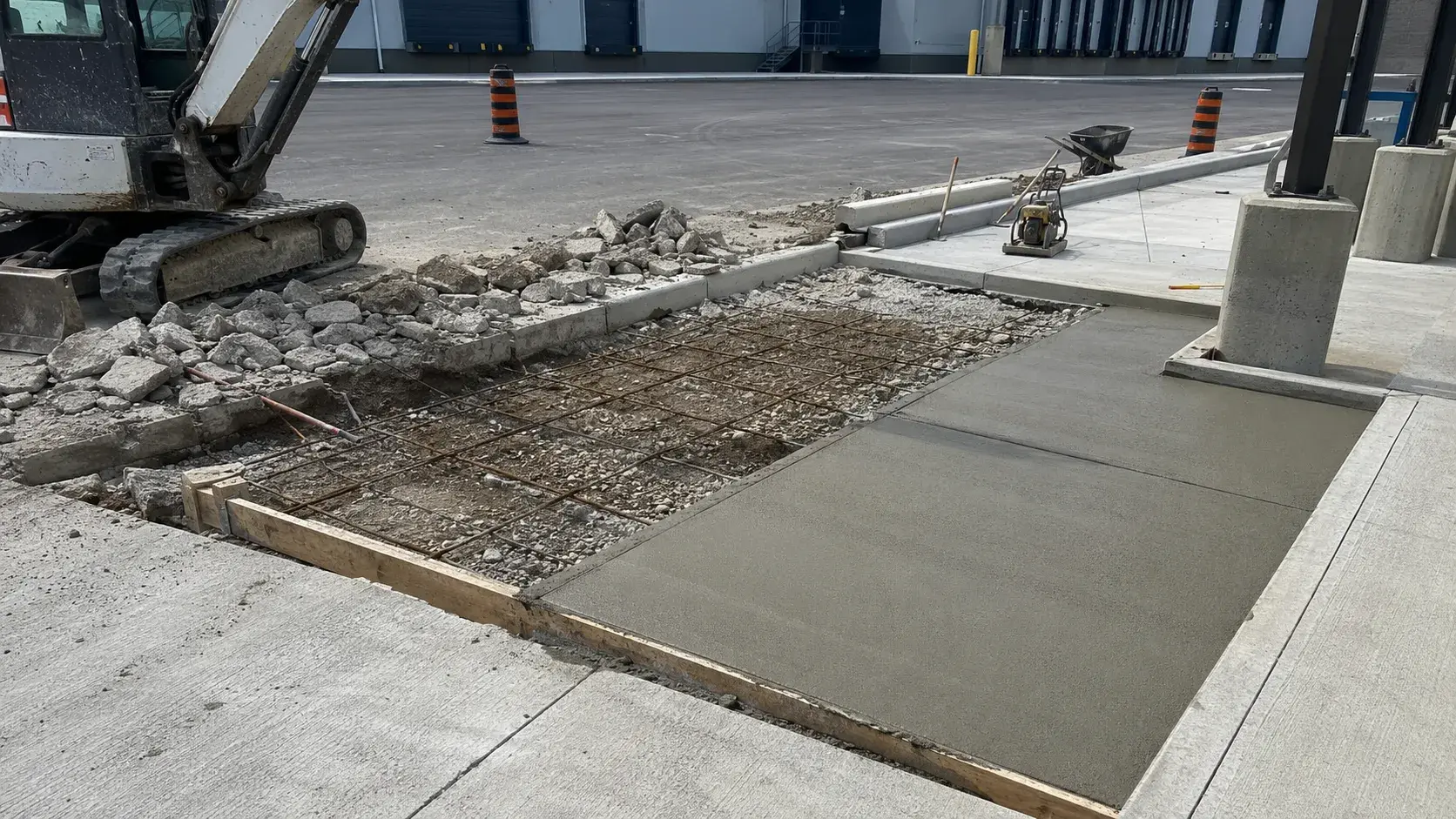
Concrete Replacement in Barrie is the removal of failed concrete and placement of new, from slabs and curbs to structural elements.
Tell us what you need and we’ll get you a quote.
Licensed, insured & WSIB-covered · Free, no-obligation quote & on-site assessment.
Built to your engineered drawings, survey, and the real site conditions, not a one-size-fits-all approach forced to fit.
Durable materials and methods chosen for the load, traffic, and environment on site.
Send specs, drawings, or photos and get a free, no-obligation site visit and estimate with no guesswork.
Installation and site work completed in accordance with Ontario requirements.
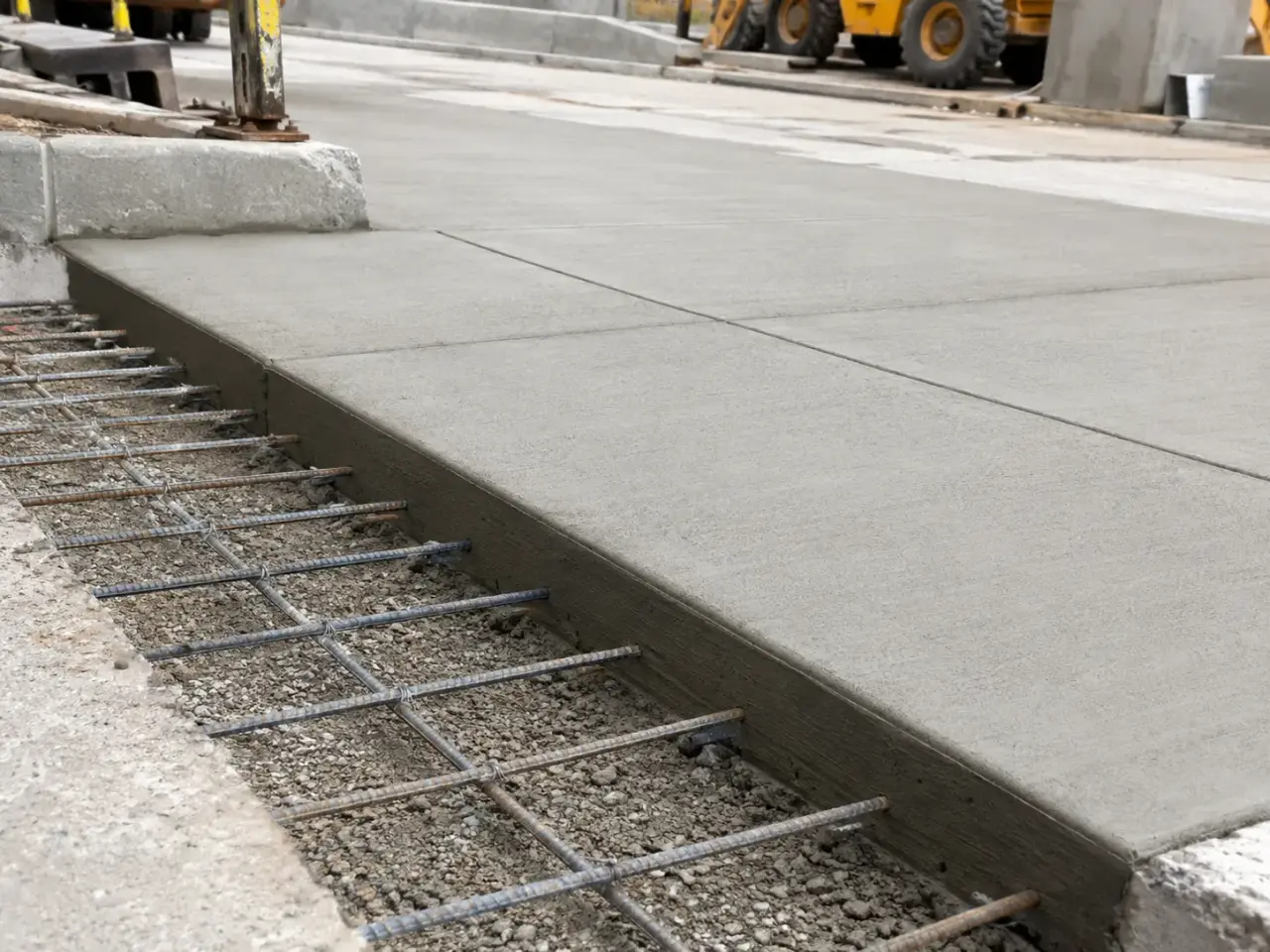
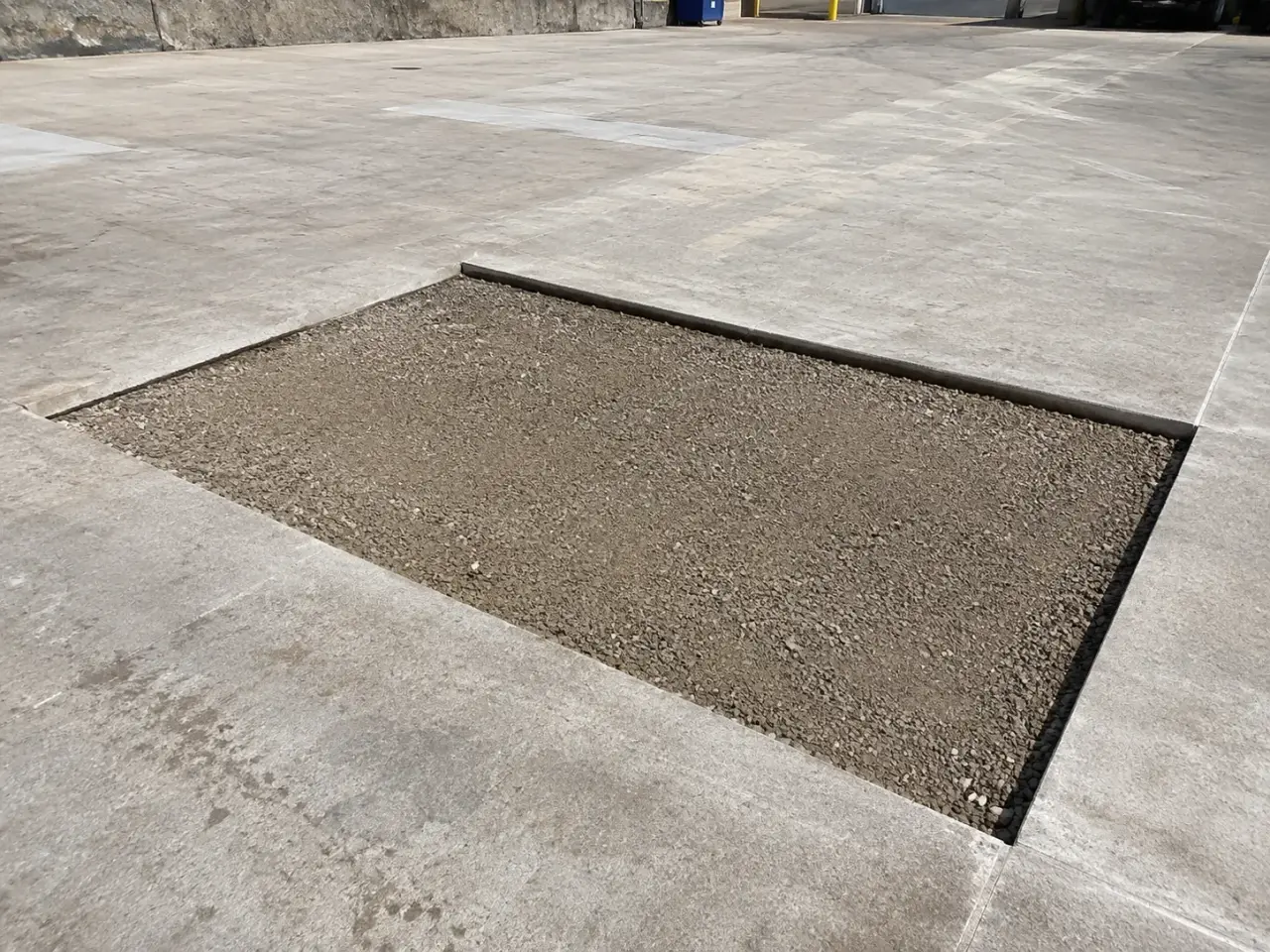
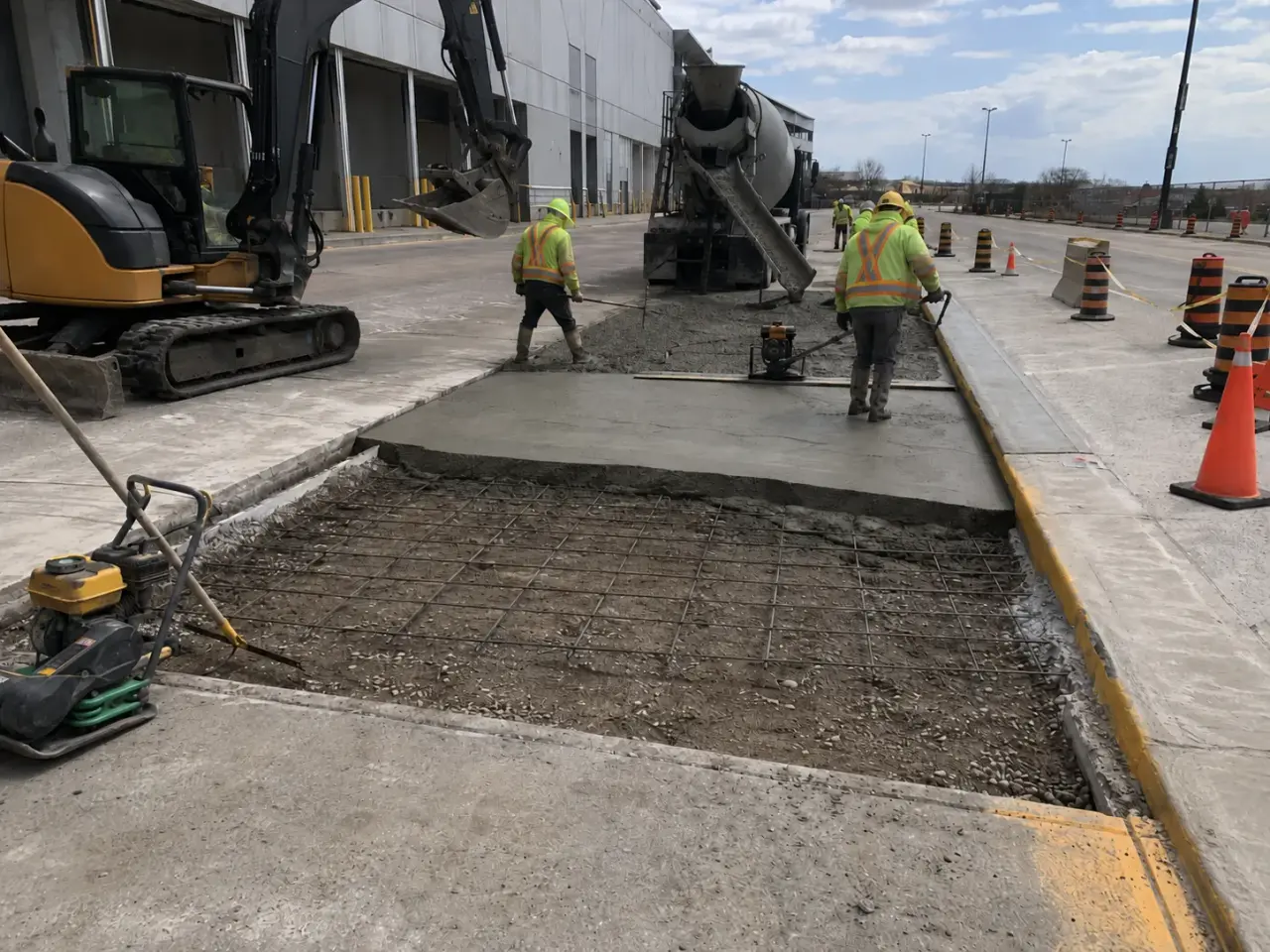
Replacement is appropriate when deterioration extends through the section, support has failed, reinforcement requires full access, geometry must change, or repeated patching no longer addresses the cause. Isolated panel replacement preserves sound neighbouring work, full-depth structural replacement restores a designed load path, phased replacement keeps facilities operating, and reconstruction with drainage or base corrections prevents the same failure from returning.
Slab and pavement panels. Full-depth sawcuts isolate failed areas without feathered edges. Base support, dowel load transfer, joints, reinforcement, drainage, thickness, curing, and reopening strength are rebuilt for the traffic. Panel limits follow condition and load path rather than the easiest shape to remove.
Curbs, walks, ramps, and entrances. Replacement corrects settlement, spalling, unsafe transitions, drainage, and accessibility geometry. Tie-ins to doors, asphalt, catch basins, rails, and landscaping are surveyed before demolition so the new element solves the connected grade problem.
Structural members and sections. Walls, beams, columns, suspended slabs, and equipment supports require engineered shoring, load removal, reinforcing continuity, formwork, and a defined connection to retained concrete. Hydrodemolition, sawcutting, breakers, or wire sawing are selected to limit damage to the substrate and bars.
Phased operational replacement. Loading docks, plants, garages, campuses, and retail sites often cannot close the whole area. Work zones, temporary routes, pour size, protection, early loading, and weather are sequenced so the facility retains safe access without placing demand on young concrete.
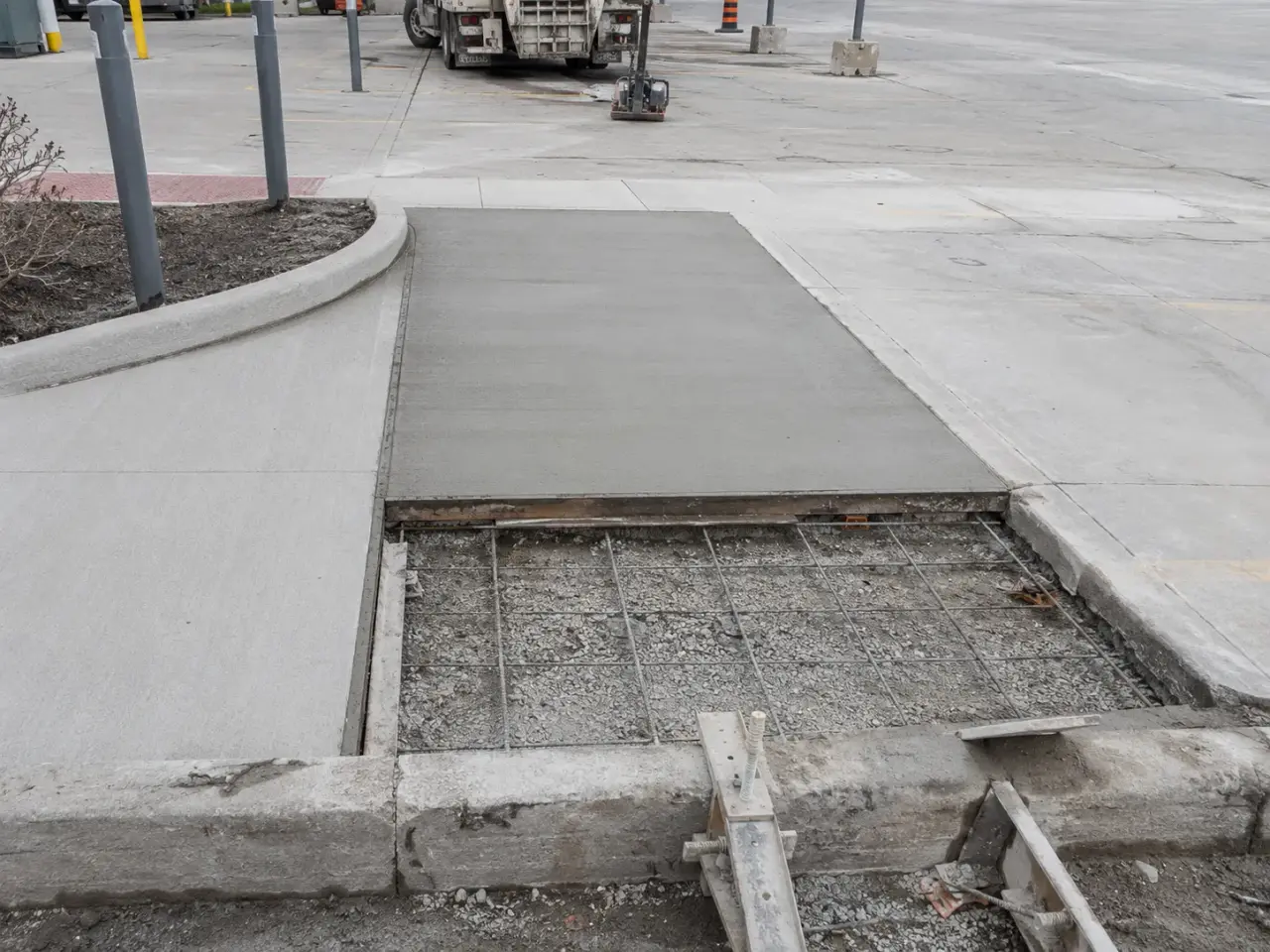
Step 1, establish replacement limits and cause. Harrowgate checks sounding, cracking, cores, drainage, support, reinforcement, loading, settlement, salts, chemicals, and prior repairs. The designer confirms structural boundaries and temporary support where required.
Step 2, isolate services, loads, and retained concrete. Sawcuts, shoring, traffic control, dust and slurry control, utility locations, and debris routes are set before removal. Demolition proceeds with methods suited to the vibration and edge-quality limits.
Step 3, rebuild the support and connection. Unsuitable base is corrected, retained concrete is prepared, reinforcement is cleaned or supplemented as directed, and dowels, joints, membranes, drainage, embeds, and forms are installed to the issued details.
Step 4, place and cure the replacement. Concrete is matched to exposure, loading, thickness, and placement method. Consolidation, finishing, testing, curing, temperature protection, and joint timing are recorded by placement.
Step 5, verify before reopening. Geometry, surface, joints, drainage, strength, coatings, rails, and adjacent restoration are checked. Traffic and follow-on work return only when the specified acceptance and loading conditions have been reached.
Our replacement sequence starts with limits and load paths, not demolition equipment. We locate embedded services, support retained construction, define sawcut boundaries, remove concrete in controlled pieces, restore subgrade or reinforcement, and place the new concrete under a documented finishing and curing plan.
Work stage 1. We sound, scan, core, and measure the existing concrete as needed to establish thickness, reinforcing, deterioration depth, and embedded utilities. Survey control records slopes, joint lines, elevations, drainage, thresholds, rails, and equipment interfaces that must be reinstated.
Work stage 2. Straight perimeter sawcuts separate the replacement from retained concrete and prevent ragged fractures. Hand-held saws, slab saws, wall saws, wire saws, breakers, and lifting equipment are selected for access and the vibration tolerance of adjacent structures.
Work stage 3. Removed material is sorted and hauled, while the exposed base or substrate is inspected for pumping, soft spots, voids, contamination, and drainage defects. Failed granular is excavated, replaced in compacted lifts, and tested before forms or steel proceed.
Work stage 4. Dowels, tie bars, reinforcement, embeds, sleeves, waterstops, and edge isolation are installed to the engineer's detail. Existing bars are retained only where sound and properly developed, and post-installed anchors receive full hole cleaning and cure control.
Work stage 5. Concrete is placed continuously within planned pour limits, consolidated around steel and embeds, struck to elevation, and finished for the use. Exterior pavement, warehouse floors, machine pads, walls, and suspended repairs each require different finishing, tolerance, and curing methods.
Work stage 6. We protect the placement from rain, rapid evaporation, freezing, vibration, and early loading. Joints are cut or formed at the planned time, curing remains continuous, test results are reviewed, and sealants, coatings, markings, or equipment return follow the required strength milestone.
Planning concrete replacement in Barrie? Talk it through with our team.
Replacement is favoured when deterioration extends through most of the section, the base has failed, reinforcement or load transfer is inadequate, elevations must change, or previous shallow patches have repeatedly debonded. Local repair remains suitable when sound concrete can carry the intended load. Harrowgate verifies depth and support before defining the removal limit.
We combine sounding, visual mapping, cores, reinforcing scans, survey, and test openings. Limits extend beyond delamination, cracking, contamination, or unsupported edges to competent concrete and base. Structural areas follow the engineer's sequence. Sawcuts are laid out around retained reinforcement, services, joints, drainage, and practical pour geometry rather than following only visible surface damage.
Yes. We divide work at designed joints or engineered pour boundaries, maintain protected routes, and schedule noise, removal, concrete delivery, curing, and reopening around production or tenant needs. Each phase must still allow proper reinforcement, concrete placement, testing, and cure. Temporary ramps or plates are used only where their support and loading are approved.
Strength is selected by the engineer and CSA exposure requirements, not by one universal value. Many exterior placements specify at least 32 MPa, while industrial, structural, early-opening, or low-permeability work may differ. Air content, aggregate, shrinkage, curing, and permeability can be as important as compressive strength for actual service conditions.
Traffic return depends on mixture, slab thickness, temperature, curing, test results, axle load, and edge condition. Harrowgate ties reopening to the specified strength milestone or approved maturity data. Pedestrian access, light service, forklifts, and loaded transport trucks do not receive the same release time, and coatings or sealants can require additional cure.
We scan and expose bars with controlled tools, then clean and assess them against the repair drawings. Sound bars are retained with adequate clearance and development. Corroded or damaged bars are supplemented or replaced as directed. New dowels and couplers are installed with recorded drilling, cleaning, embedment, alignment, and adhesive cure before concrete placement.
Common causes include unstable base, restrained shrinkage, late joint cutting, rapid moisture loss, re-entrant corners, excessive water, thermal change, and early loading. Harrowgate addresses these through base testing, compatible reinforcement, planned joints, controlled placement, evaporation protection, continuous curing, and a defined reopening threshold. The crack-control plan is set before the truck arrives.
Limits consider delamination, cracking, reinforcement condition, support, load transfer, geometry, drainage, and the ability to connect new work to sound retained concrete. Sounding, cores, probes, drawings, and consultant review may be used. A neat rectangular outline is not useful if weak concrete remains beneath its edge.
A bonded topping can work when the remaining slab is sound, stable, adequately thick, and properly prepared. Full-depth replacement is better where deterioration, cracking, contamination, voiding, or support failure extends through the section. Investigation determines whether a partial-depth repair has a reliable substrate.
Still have a question about concrete replacement in Barrie? Ask our team directly.
Commercial and heavy-civil construction delivered for developers, contractors, property managers, and municipalities.
Send drawings, a site plan, or a description of the scope. Harrowgate Group is licensed, insured, and WSIB-covered.
Licensed, Insured & WSIB-Covered, work managed and documented on every job
Tell us what you need and we’ll get you a quote.
Harrowgate Group provides concrete replacement, delivered and installed with quote-ready support across Toronto and surrounding Ontario communities.
Companies We've Worked With
Harrowgate Group delivers commercial and heavy-civil construction for developers, contractors, institutions, municipalities, and property groups across Ontario.
 Popeyes
  Tim Hortons
  Subway
  University of Toronto
  Madison Group
  RioCan
  Women's College Hospital
  Starbucks
  Mazda
Mazda  TD Bank
  City of Toronto Popeyes Tim Hortons Subway University of Toronto Madison Group RioCan Women's College Hospital Starbucks Mazda TD Bank City of Toronto