
Built to spec
Built to your engineered drawings, survey, and the real site conditions, not a one-size-fits-all approach forced to fit.
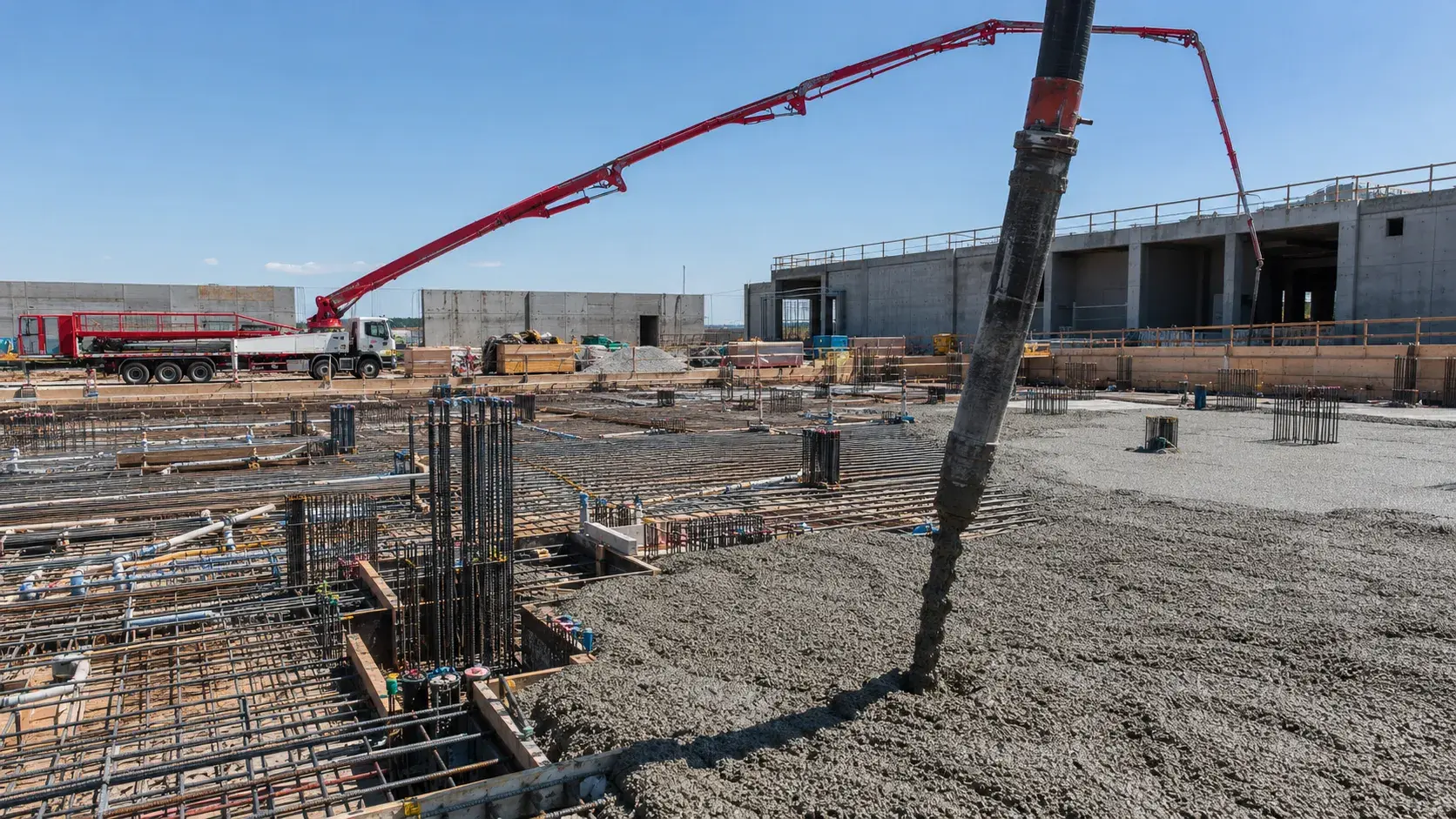
Concrete Pumping and Placing in Toronto is the equipment and crews that move and place concrete accurately on constrained or large-volume sites.
Tell us what you need and we’ll get you a quote.
Licensed, insured & WSIB-covered · Free, no-obligation quote & on-site assessment.
Built to your engineered drawings, survey, and the real site conditions, not a one-size-fits-all approach forced to fit.
Durable materials and methods chosen for the load, traffic, and environment on site.
Send specs, drawings, or photos and get a free, no-obligation site visit and estimate with no guesswork.
Installation and site work completed in accordance with Ontario requirements.
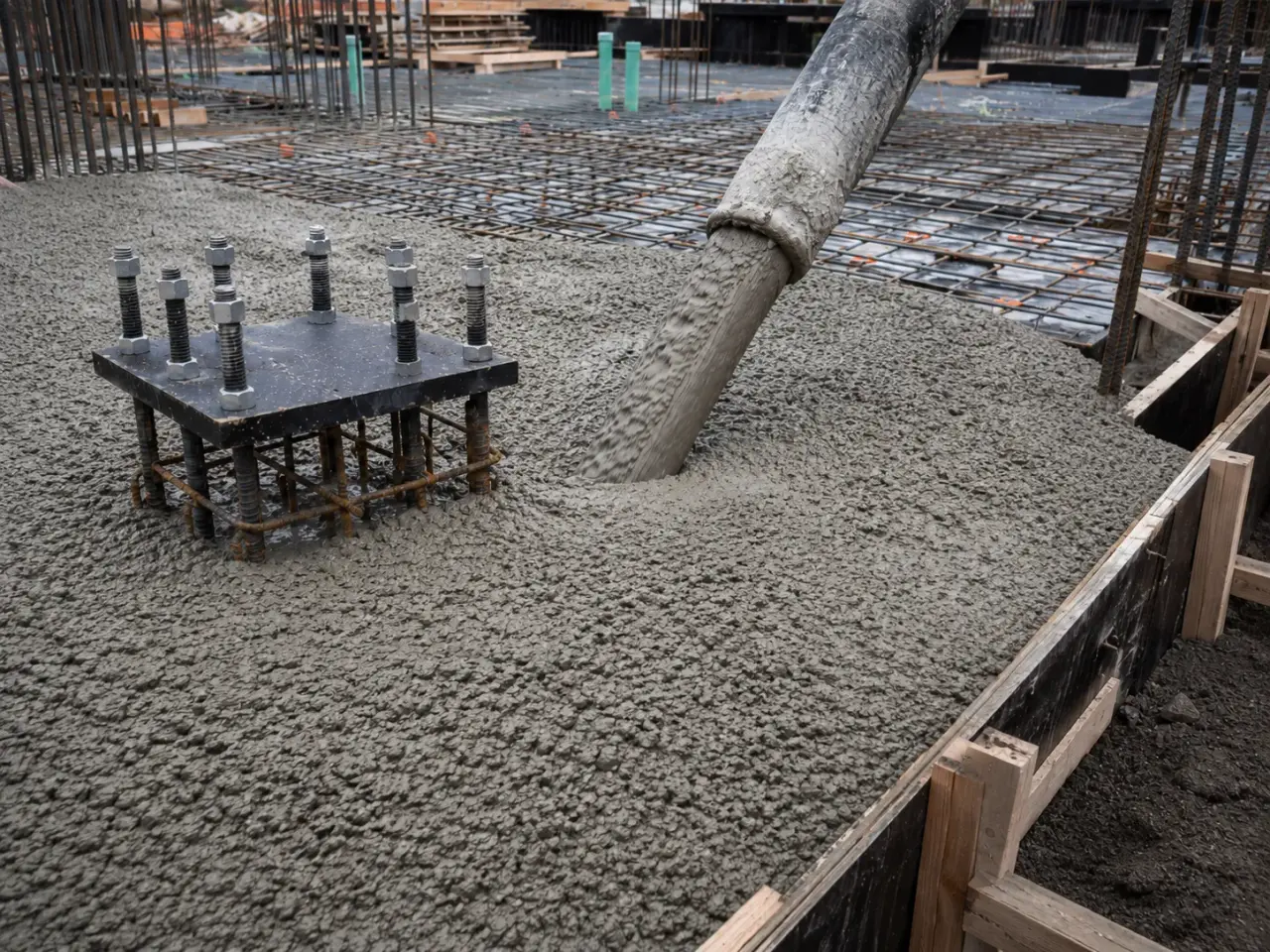
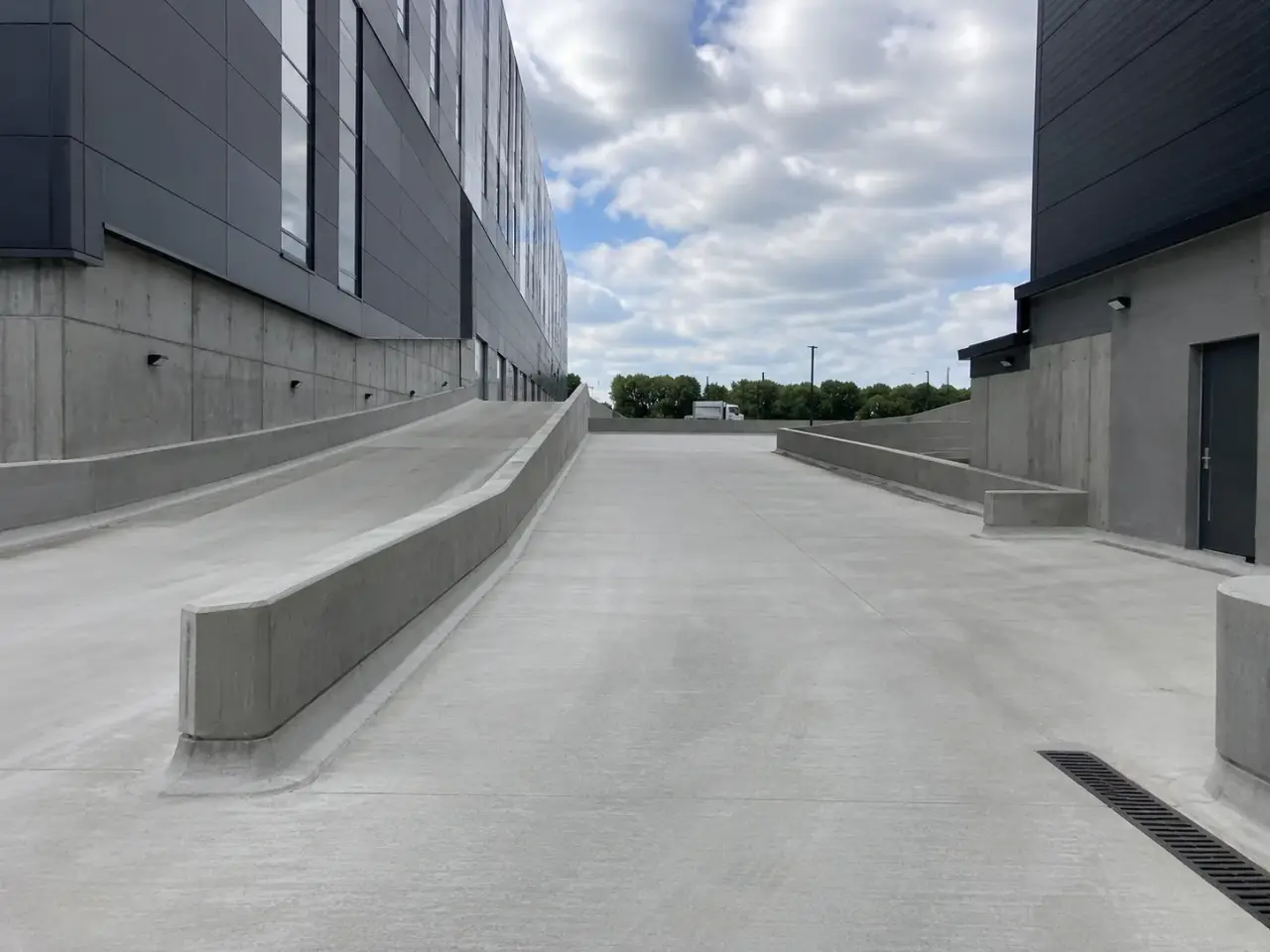
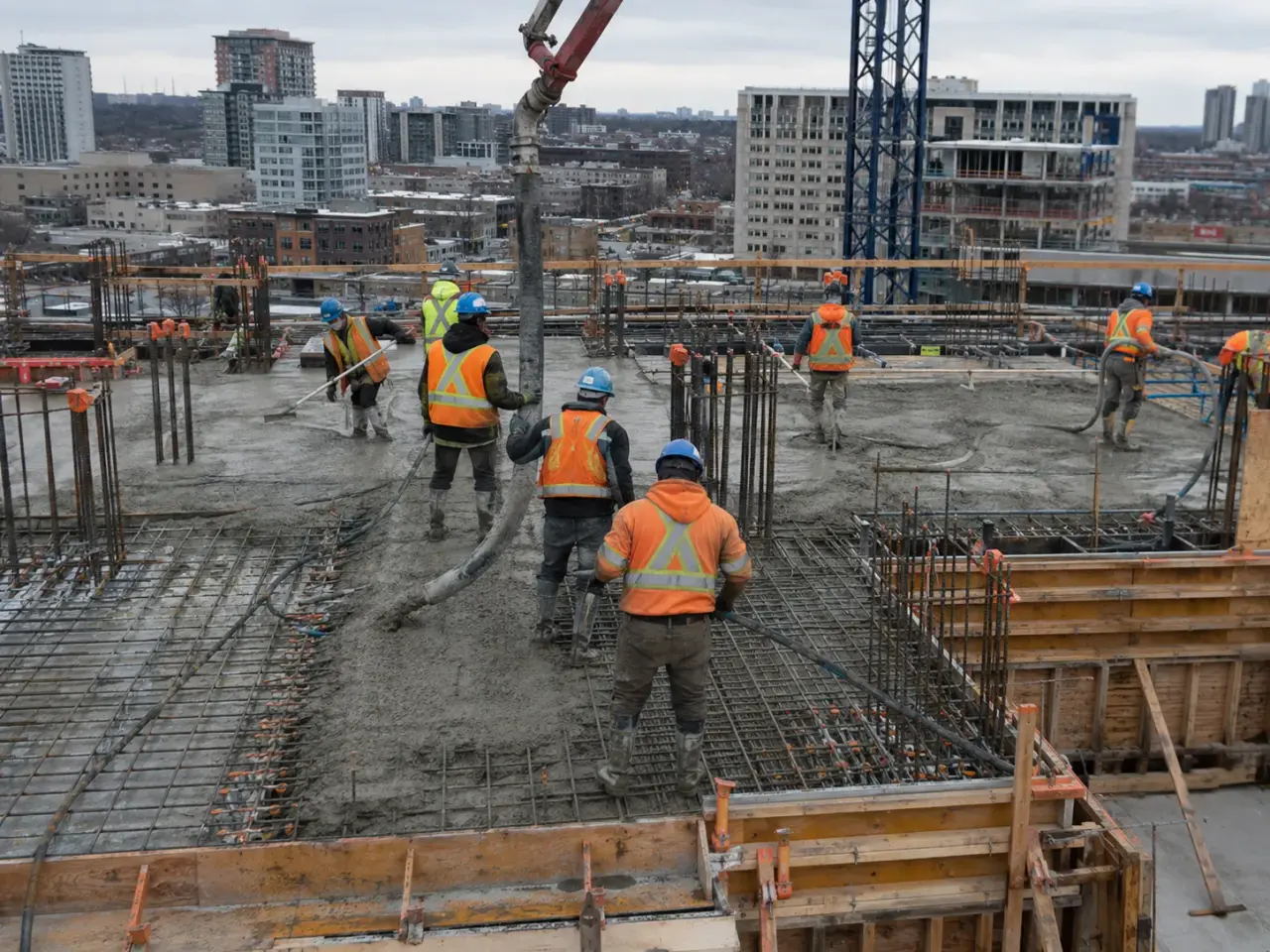
Placement method is chosen from volume, rate, reach, elevation, access, mixture, reinforcement congestion, and the element being filled. Truck-mounted booms place large volumes over obstacles, line pumps serve restricted or interior work, placing booms support repeated high-rise cycles, crane buckets handle small controlled lifts, and tremie methods place concrete below water or slurry.
Boom pumping. Articulating booms reach foundations, slabs, walls, and elevated work without dragging line across reinforcement. Set-up requires verified ground bearing, outrigger clearance, overhead utility control, exclusion areas, washout, and a delivery route that keeps the hopper supplied.
Line and trailer pumping. Steel and flexible hose can travel through buildings, around corners, or into areas beyond boom reach. Line diameter, bends, vertical rise, mixture pumpability, restraint, priming, and cleanout are planned because high pressure and blockages create serious hazards.
Placing booms and high-rise systems. Tower-mounted or floor-mounted booms receive concrete through a vertical pipeline and distribute it across repeated floors. Pipeline anchors, floor openings, climbing sequence, pressure, communication, and backup arrangements become part of the structural cycle.
Bucket, conveyor, and direct discharge. Crane buckets suit discrete wall, column, or mass placements where pump output would exceed the finishing sequence. Conveyors handle selected accessible pours. Direct chute placement works only when trucks can approach without contaminating or overloading the prepared base.
Tremie and controlled specialty placement. Tremie pipes keep the outlet embedded in fresh concrete during underwater or slurry placement, limiting washout and segregation. Self-consolidating mixtures help fill dense reinforcement, but they require suitable forms, quality control, and placement planning.
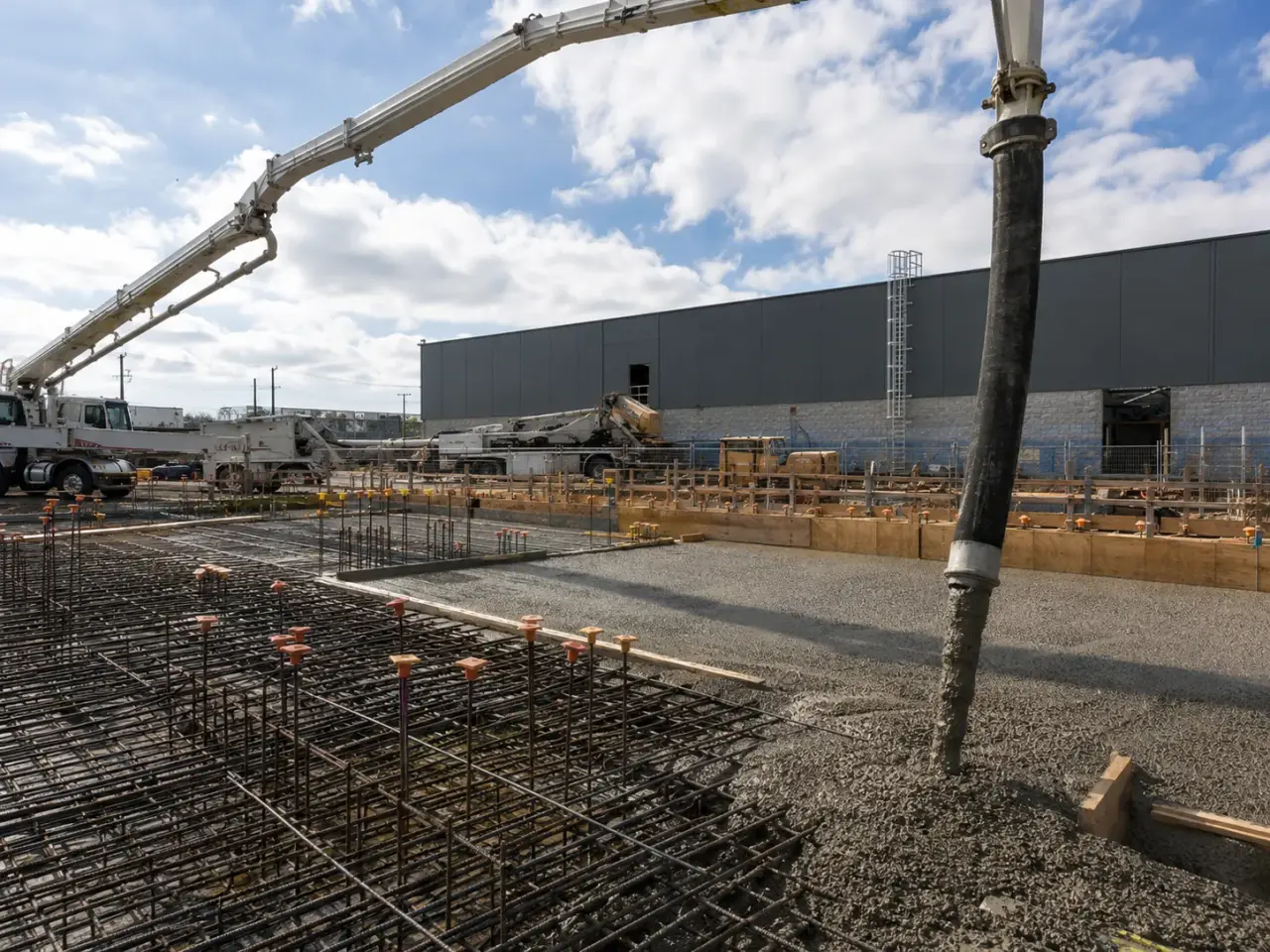
Step 1, match equipment to the placement. Harrowgate checks volume, element dimensions, concrete mixture, output required, vertical and horizontal distance, hose route, reinforcing, pump location, delivery cycle, finishing capacity, testing, washout, and contingency.
Step 2, verify setup and pipeline. Ground and outrigger support are confirmed, overhead and underground hazards are controlled, barricades are placed, and pipe, clamps, gaskets, anchors, reducers, elbows, hoses, and end controls are inspected for the pressure and configuration.
Step 3, prime and begin at a controlled rate. The line is lubricated using the approved method and priming material is kept out of the structural placement. Pump rate begins slowly, communication is tested, and the discharge is directed close to final position.
Step 4, maintain continuity and consolidation. Trucks are sequenced to avoid gaps without overwhelming the placing and finishing teams. The hose is moved to limit horizontal flow and segregation, and concrete is consolidated around reinforcement, embeds, corners, and joints.
Step 5, finish, clean, and document. The last load is calculated to limit waste. Line pressure is released before disconnection, cleanout follows the planned containment method, and wash water is controlled. Tickets, test samples, placed quantities, interruptions, and approved field changes are recorded.
Before mobilization, we inspect access and confirm pump position, outrigger footprint, bearing support, underground services, excavations, shoring, overhead electrical conductors, crane conflicts, public separation, and truck approach. Engineered mats or cribbing distribute outrigger reactions where required. The pump is set level within manufacturer limits, outriggers are fully deployed to the planned configuration, and exclusion zones keep workers and vehicles away from boom and support hazards.
Pipeline and hose are selected for aggregate size, output, pressure, routing, and final placement. Clamps, gaskets, supports, bends, reducers, end hose, and restraint are inspected before priming. Vertical lines receive engineered support and do not hang from random formwork or reinforcing. The line route avoids sharp unplanned bends, vehicle crossings, and locations where a blockage release could expose workers. A controlled priming procedure captures the initial material before structural concrete reaches the forms.
During placement, the operator, hose crew, testing team, truck marshal, finishers, and pour supervisor maintain one communication plan. Loads are checked against the approved mix and delivery limits. Concrete advances continuously, with discharge close to final position to reduce segregation. The hose does not drag reinforcement, strike embeds, or overfill one wall zone. Placement rate is tracked against form pressure and the crew's ability to vibrate and finish the concrete.
If flow changes, pumping stops for a controlled assessment. Clamps are not opened on a pressurized line, and blockages are cleared under the equipment procedure. At completion, the line is emptied to a contained location and washed without releasing cement water to soil, drains, or public roads. Harrowgate records pump setup, concrete loads, interruptions, rejected material, tests, weather, and washout, then leaves the route safe for curing and follow-on work.
Planning concrete pumping and placing in Toronto? Talk it through with our team.
Harrowgate evaluates required output, boom reach, vertical and horizontal distance, line pressure, aggregate and fibres, member geometry, setup footprint, outrigger reactions, overhead restrictions, truck access, street occupancy, and backup options. The selected boom or line pump must place concrete at a rate the forms, vibration crew, and finishers can control.
A pumpable mix has compatible aggregate grading and size, enough cohesive mortar, controlled water-to-cementing-material ratio, suitable workability, and admixtures matched to temperature and travel time. Fibres, long lines, elevation, and tight bends change demand. Harrowgate coordinates the approved mix with the concrete supplier and actual pumping system before placement.
Only through the approved mix and project procedure, within supplier and specification limits, with the change recorded and concrete retested where required. Uncontrolled water can reduce strength and durability, alter air and setting, increase shrinkage, and damage finish quality. Harrowgate resolves pumping issues through controlled mix, line, timing, and equipment decisions.
The pump supplier provides outrigger reactions and setup requirements. Harrowgate checks soil, fill, underground services, excavation edges, suspended structures, and available footprint, then uses engineered mats or cribbing where required. Outriggers remain monitored and the exclusion zone prevents vehicles, excavation, or changing ground conditions from undermining support.
Pumping stops, the operator assesses pressure and blockage location, and the crew follows the equipment procedure. No clamp is opened while the line is pressurized. Workers remain clear of discharge and potential release zones. After controlled clearing, suspect segregated material is isolated and the line is re-established before structural placement resumes.
Harrowgate calculates volume and placement rate, confirms plant capacity and truck cycle, stages access, maintains communications, and prepares backup line components and contingency joints. Concrete is advanced in manageable lifts and consolidated into the preceding lift while workable. A prolonged interruption is handled at an engineer-approved construction-joint location.
Washout and priming material go to a designated contained system that prevents cement water and solids from entering soil, storm drains, sewers, roads, or watercourses. Harrowgate locates the area before pumping, protects access, manages hardened waste, and leaves lines and equipment clean without contaminating the completed work or property.
A pumpable mixture has cohesive mortar, compatible aggregate grading and size, enough paste, and workability suited to the line diameter, bends, distance, and output. Adding uncontrolled water is not a solution to poor pumpability. The supplier, specification, and pump configuration must be coordinated before placement.
Outrigger reactions are checked against the available bearing surface, underground structures, trenches, utilities, and excavation setbacks. Engineered mats or cribbing spread the load where required. Setup is relocated or redesigned if adequate support and full outrigger deployment cannot be achieved.
Still have a question about concrete pumping and placing in Toronto? Ask our team directly.
Commercial and heavy-civil construction delivered for developers, contractors, property managers, and municipalities.
Send drawings, a site plan, or a description of the scope. Harrowgate Group is licensed, insured, and WSIB-covered.
Licensed, Insured & WSIB-Covered, work managed and documented on every job
Tell us what you need and we’ll get you a quote.
Harrowgate Group provides concrete pumping and placing, delivered and installed with quote-ready support across Toronto and surrounding Ontario communities.
Companies We've Worked With
Harrowgate Group delivers commercial and heavy-civil construction for developers, contractors, institutions, municipalities, and property groups across Ontario.
 Popeyes
  Tim Hortons
  Subway
  University of Toronto
  Madison Group
  RioCan
  Women's College Hospital
  Starbucks
  Mazda
Mazda  TD Bank
  City of Toronto Popeyes Tim Hortons Subway University of Toronto Madison Group RioCan Women's College Hospital Starbucks Mazda TD Bank City of Toronto