
Built to spec
Built to your engineered drawings, survey, and the real site conditions, not a one-size-fits-all approach forced to fit.
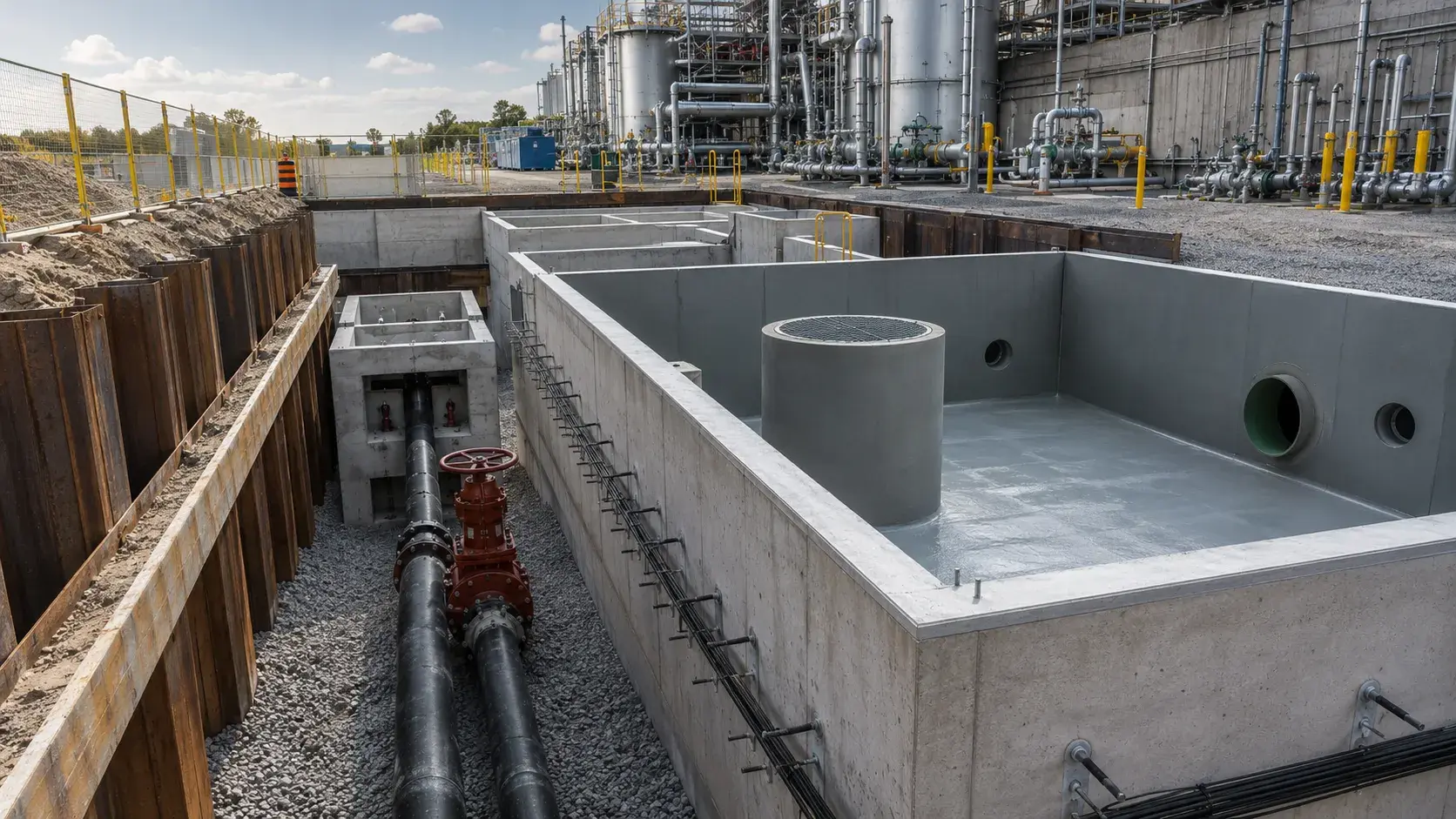
Concrete Containment Structures in Belleville are reinforced, sealed concrete basins and walls built to contain liquids and protect against spills.
Tell us what you need and we’ll get you a quote.
Licensed, insured & WSIB-covered · Free, no-obligation quote & on-site assessment.
Built to your engineered drawings, survey, and the real site conditions, not a one-size-fits-all approach forced to fit.
Durable materials and methods chosen for the load, traffic, and environment on site.
Send specs, drawings, or photos and get a free, no-obligation site visit and estimate with no guesswork.
Installation and site work completed in accordance with Ontario requirements.
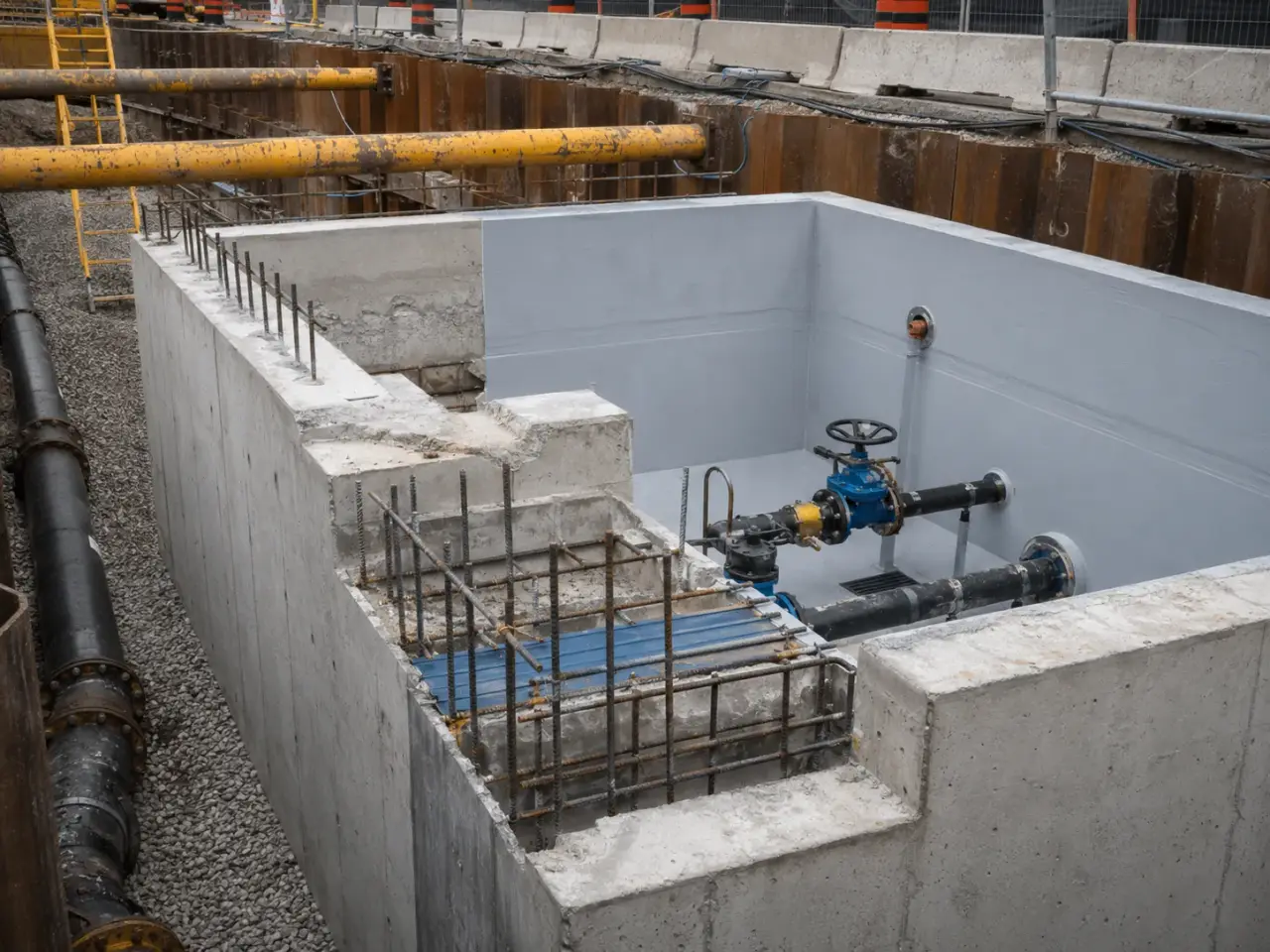
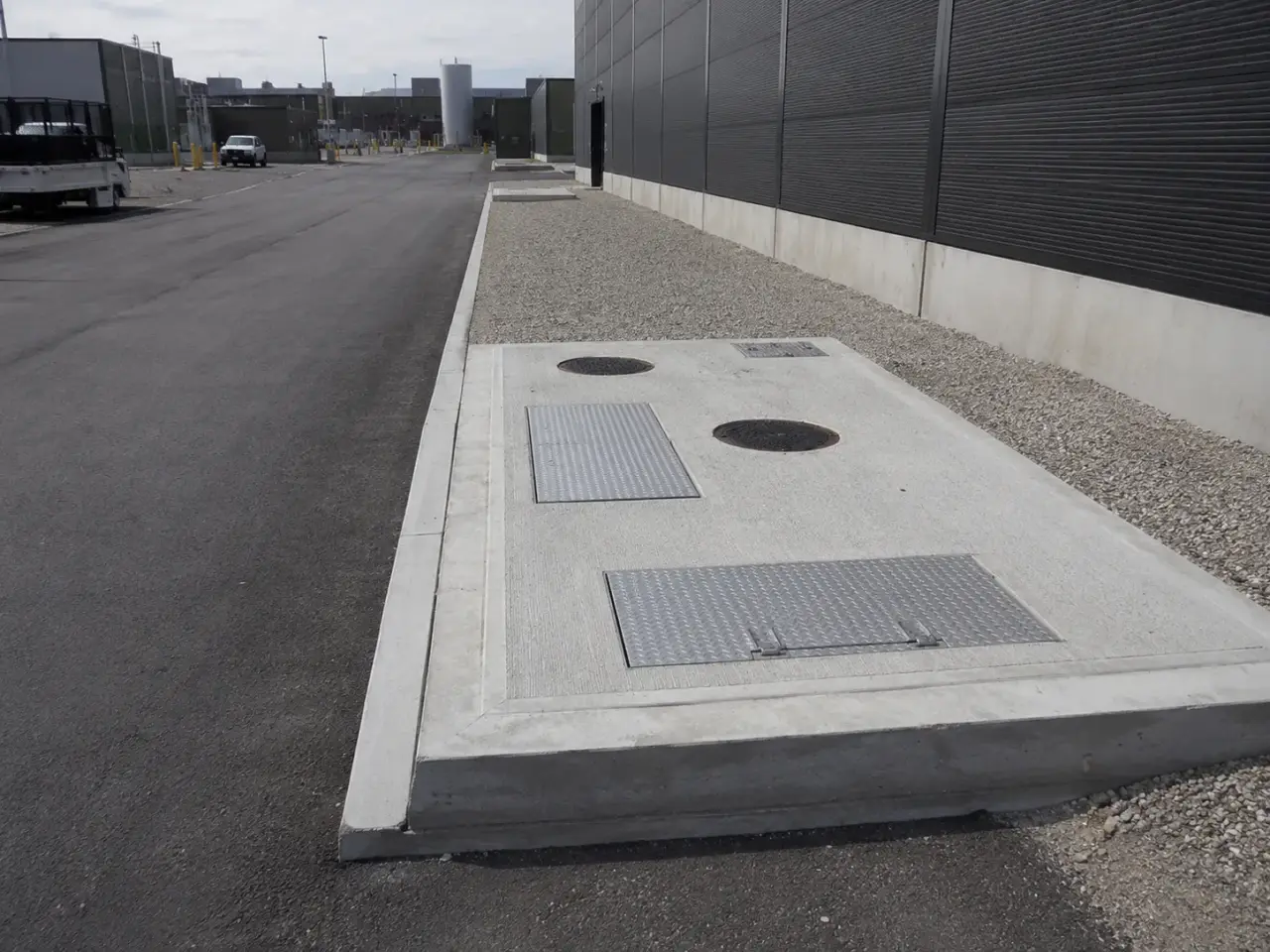
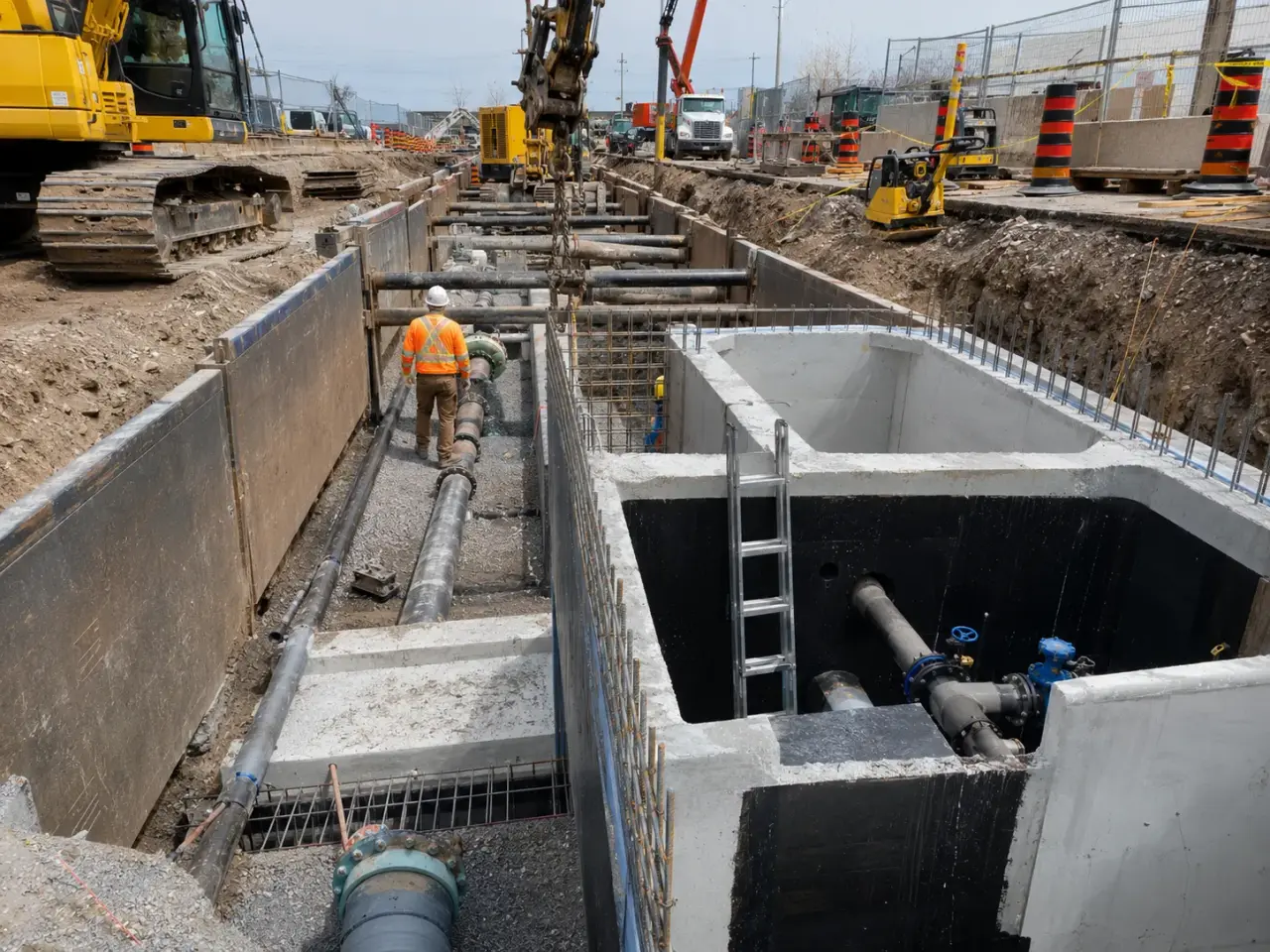
Containment is selected from the liquid or material stored, operating temperature, chemical exposure, hydrostatic pressure, environmental consequence, cleaning method, crack-control requirement, and access for inspection. Monolithic reinforced tanks minimize joints, jointed basins use engineered waterstops, secondary containment protects around primary vessels, and protective linings address exposures that concrete alone cannot tolerate.
Water-retaining tanks and process basins. These structures use controlled reinforcement, deliberate joint spacing, waterstops, low-permeability concrete, and curing intended to limit crack width. Fill sequence, wall restraint, roof connection, penetrations, and hydrostatic testing are part of the design.
Secondary containment and spill slabs. Curbed slabs and diked areas hold a defined release around tanks, loading points, transformers, or chemical storage. Capacity, freeboard, drainage valves, sumps, vehicle access, joint continuity, and liner termination determine whether the area actually contains a spill.
Below-grade pits and vaults. Process pits, pump chambers, and environmental vaults can face inward liquid pressure and outward groundwater pressure at different times. Uplift, dewatering, base-to-wall joints, pipe boots, access hatches, gas hazards, and safe cleaning entry must be resolved together.
Lined and coated containment. Epoxy, vinyl ester, polyurethane, cementitious, or sheet lining systems are selected from verified chemical concentration, temperature, immersion, and movement. Concrete moisture, surface profile, pinholes, terminations, and cure conditions decide performance. A coating is not a substitute for structural crack control or sound joints.
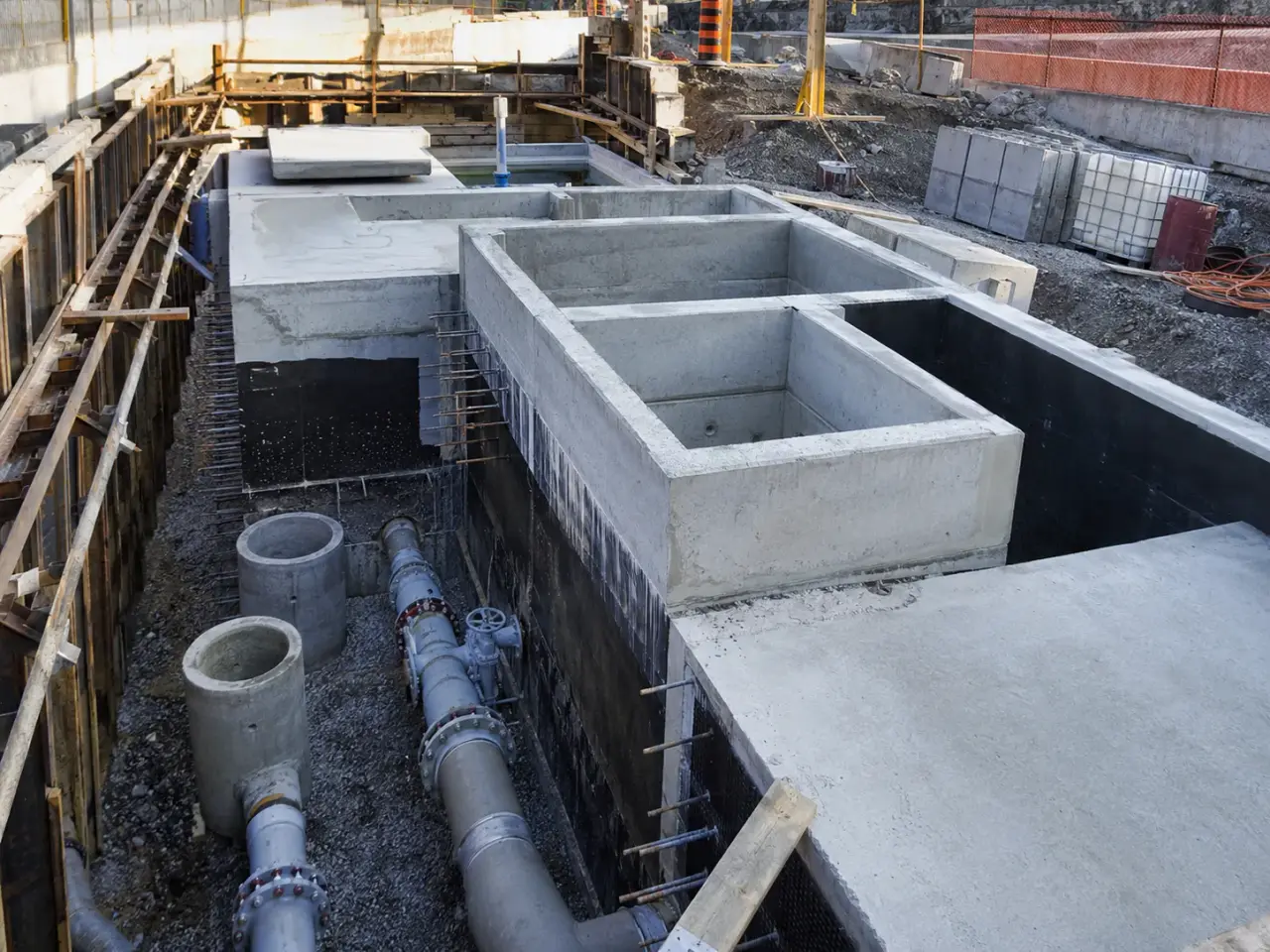
Step 1, define the containment duty. Harrowgate checks stored media, concentration, temperature, required volume, load cases, cleaning, groundwater, penetrations, joints, lining, testing, and emergency operating procedures with the project team.
Step 2, prepare the excavation and base interface. Dewatering and excavation support keep the founding surface stable. Mud slabs, waterproofing, underslab drainage, reinforcement supports, waterstops, sumps, and pipe penetrations are installed without losing survey control.
Step 3, build joints and forms as liquid-control details. Waterstops are continuous through intersections, bulkheads hold their position, form ties suit the exposure, and sleeves or puddle flanges are sealed into the design. Reinforcement cover and crack-control steel are checked before closure.
Step 4, place and cure for continuity. Concrete supply, lift height, consolidation, temperature, finishing, and curing are planned to avoid honeycombing and uncontrolled cold joints. Wall placements are sequenced to manage restraint and waterstops are kept clean and undamaged.
Step 5, test and complete protection. Surfaces, joints, penetrations, and repairs are accepted before lining. Holiday testing, thickness checks, adhesion testing, or hydrostatic testing follows the specification, with drainage valves and operating components verified before turnover.
The foundation is prepared to minimize differential movement. Harrowgate verifies excavation, subgrade, dewatering, granular base, mud slab, drainage layer, and groundwater controls before the containment slab is formed. Survey establishes floor slopes, sump inverts, wall lines, curb heights, and tie-ins. Vapour or waterproof membranes below the slab are sealed and protected where specified, with penetrations detailed before reinforcing obscures access.
Reinforcing is installed for strength and distributed crack control, with robust supports maintaining cover through placing traffic. Construction and movement joints receive the specified PVC, rubber, hydrophilic, or metal waterstop system. Intersections and field splices use approved fabrication methods and are inspected before closing forms. Sleeves can include puddle flanges or cast-in seals, and pipe movement is separated from the concrete where the design requires flexible connections.
Low-permeability concrete is placed in planned sequences that limit cold joints and restraint. Slabs are advanced continuously to defined stop ends, and walls are filled in level lifts with controlled vibration around waterstops and penetrations. We avoid direct discharge onto flexible waterstops. Floor surfaces are finished to drain without birdbaths, and wall ties receive the specified liquid-tight treatment. Curing is prolonged and uniform because early moisture loss increases shrinkage and permeability.
After forms are removed, surfaces and joints are inspected for voids, cracks, tie holes, and penetration defects. Approved repairs are completed before liners or coatings hide the concrete. Chemical-resistant systems receive the required profile, moisture condition, primer, thickness, terminations, and cure. Harrowgate coordinates water or liquid testing in stages where specified, records levels and observations, and resolves leakage before backfill, equipment, or process piping blocks access.
Planning concrete containment structures in Belleville? Talk it through with our team.
Provide the stored liquid and concentration, temperature, required containment volume and freeboard, tank and vehicle loads, drainage and sump plan, groundwater, structural drawings, environmental approval criteria, joint and waterstop details, coating or liner data, penetrations, testing procedure, and shutdown conditions. Harrowgate uses these inputs to plan the complete liquid boundary.
No. Strength contributes to structural capacity, but liquid control also depends on low permeability, crack-width reinforcement, member thickness, joint layout, waterstops, consolidation, curing, penetrations, and compatible protection. Aggressive chemicals can require a liner or coating even when the concrete has high compressive strength.
The engineer details the joint surface, reinforcement continuity, key or profile, and waterstop. Harrowgate installs and secures the waterstop, forms a clean stop end, protects projecting material, removes laitance and contamination, and places the adjoining concrete with controlled vibration. Waterstop intersections and field splices are inspected before concealment.
Penetrations use engineer-selected cast-in sleeves, puddle flanges, modular seals, waterstops, boots, or flexible connectors suited to pressure, chemical, temperature, and movement. Harrowgate fixes the assembly against float and rotation, maintains reinforcing clearance, consolidates concrete fully around it, and completes specified seal and test work before process connection.
A liner is required when the stored chemical, concentration, temperature, contact time, cleaning method, or regulatory criteria exceed the concrete's resistance or demand enhanced leak control. Harrowgate coordinates the selected system's substrate profile, crack treatment, moisture, primer, film or lining thickness, terminations, cure, spark or holiday testing where specified, and service opening.
The contract procedure defines test medium, staged filling, hold time, level measurement, evaporation and temperature correction, inspection points, allowable loss, and reporting. Harrowgate cleans the structure, isolates penetrations, records reference marks and observations, monitors joints and surfaces, and repairs and retests any area that does not meet the specified criteria.
Yes. Harrowgate sequences temporary spill control, process isolation, ventilation, access, demolition, concrete, cure, liner work, testing, and reconnection around operations. The temporary plan maintains the owner's required containment capacity, and the new system does not enter service until concrete, joints, protection, drains, and testing are complete.
A joint depends on sound concrete faces, an intentional geometry, continuous waterstop or seal system, correct consolidation, compatible movement capacity, and protected transitions at corners and penetrations. The waterstop must remain fixed during placement. Repairing a displaced joint after the wall is filled is far less reliable.
A lining is considered when the stored material, concentration, temperature, cleaning chemicals, or exposure duration exceeds what the concrete can tolerate. Selection follows a documented chemical-resistance review. Moisture condition, surface profile, cracks, joints, terminations, cure, and inspection remain critical after a resin is chosen.
Still have a question about concrete containment structures in Belleville? Ask our team directly.
Commercial and heavy-civil construction delivered for developers, contractors, property managers, and municipalities.
Send drawings, a site plan, or a description of the scope. Harrowgate Group is licensed, insured, and WSIB-covered.
Licensed, Insured & WSIB-Covered, work managed and documented on every job
Tell us what you need and we’ll get you a quote.
Harrowgate Group provides concrete containment structures, delivered and installed with quote-ready support across Toronto and surrounding Ontario communities.
Companies We've Worked With
Harrowgate Group delivers commercial and heavy-civil construction for developers, contractors, institutions, municipalities, and property groups across Ontario.
 Popeyes
  Tim Hortons
  Subway
  University of Toronto
  Madison Group
  RioCan
  Women's College Hospital
  Starbucks
  Mazda
Mazda  TD Bank
  City of Toronto Popeyes Tim Hortons Subway University of Toronto Madison Group RioCan Women's College Hospital Starbucks Mazda TD Bank City of Toronto