
Built to spec
Built to your engineered drawings, survey, and the real site conditions, not a one-size-fits-all approach forced to fit.
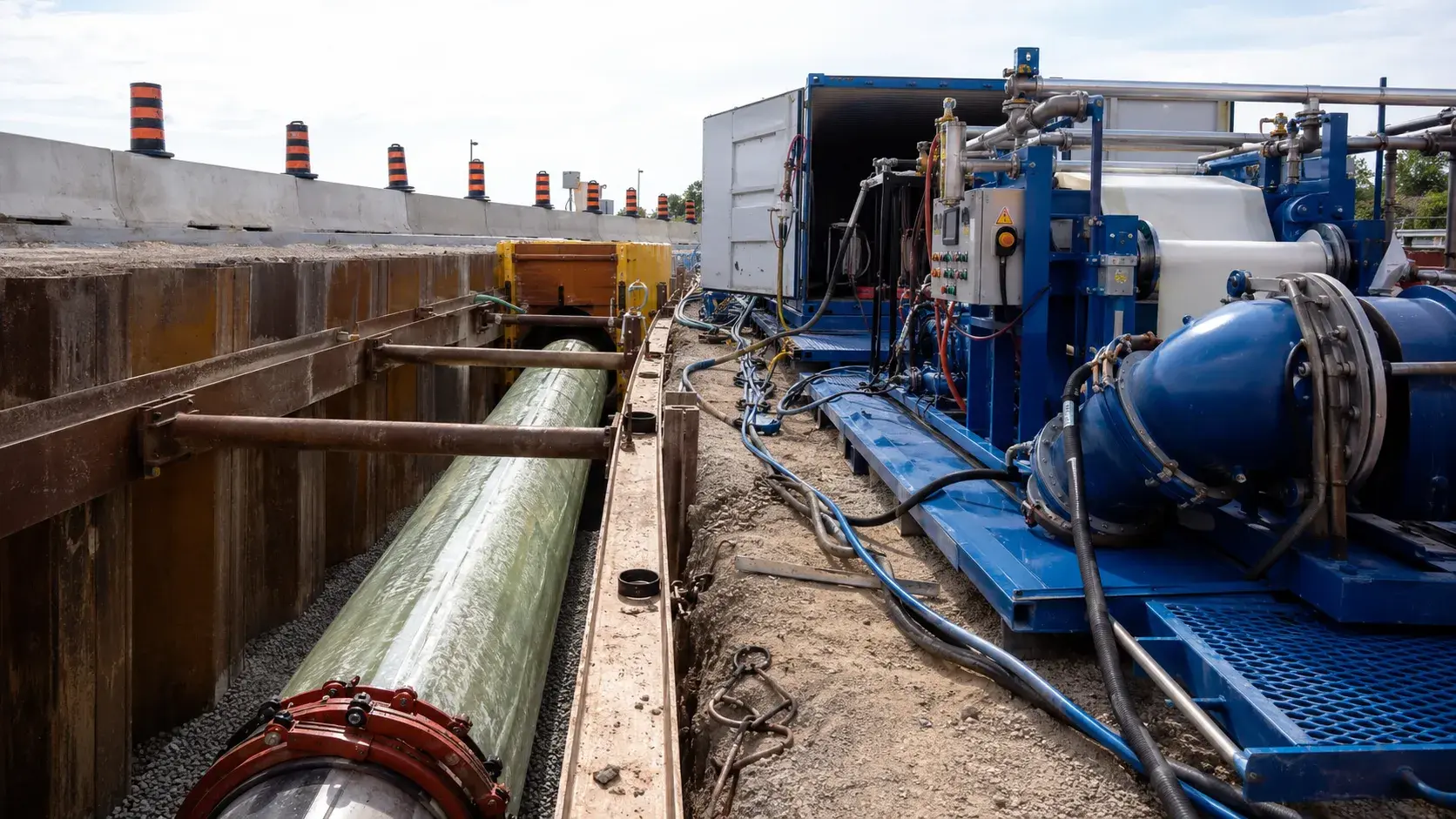
CIPP Pipe Lining in Oakville is cured-in-place trenchless rehabilitation that installs a new pipe inside the old one without excavation.
Tell us what you need and we’ll get you a quote.
Licensed, insured & WSIB-covered · Free, no-obligation quote & on-site assessment.
Built to your engineered drawings, survey, and the real site conditions, not a one-size-fits-all approach forced to fit.
Durable materials and methods chosen for the load, traffic, and environment on site.
Send specs, drawings, or photos and get a free, no-obligation site visit and estimate with no guesswork.
Installation and site work completed in accordance with Ontario requirements.
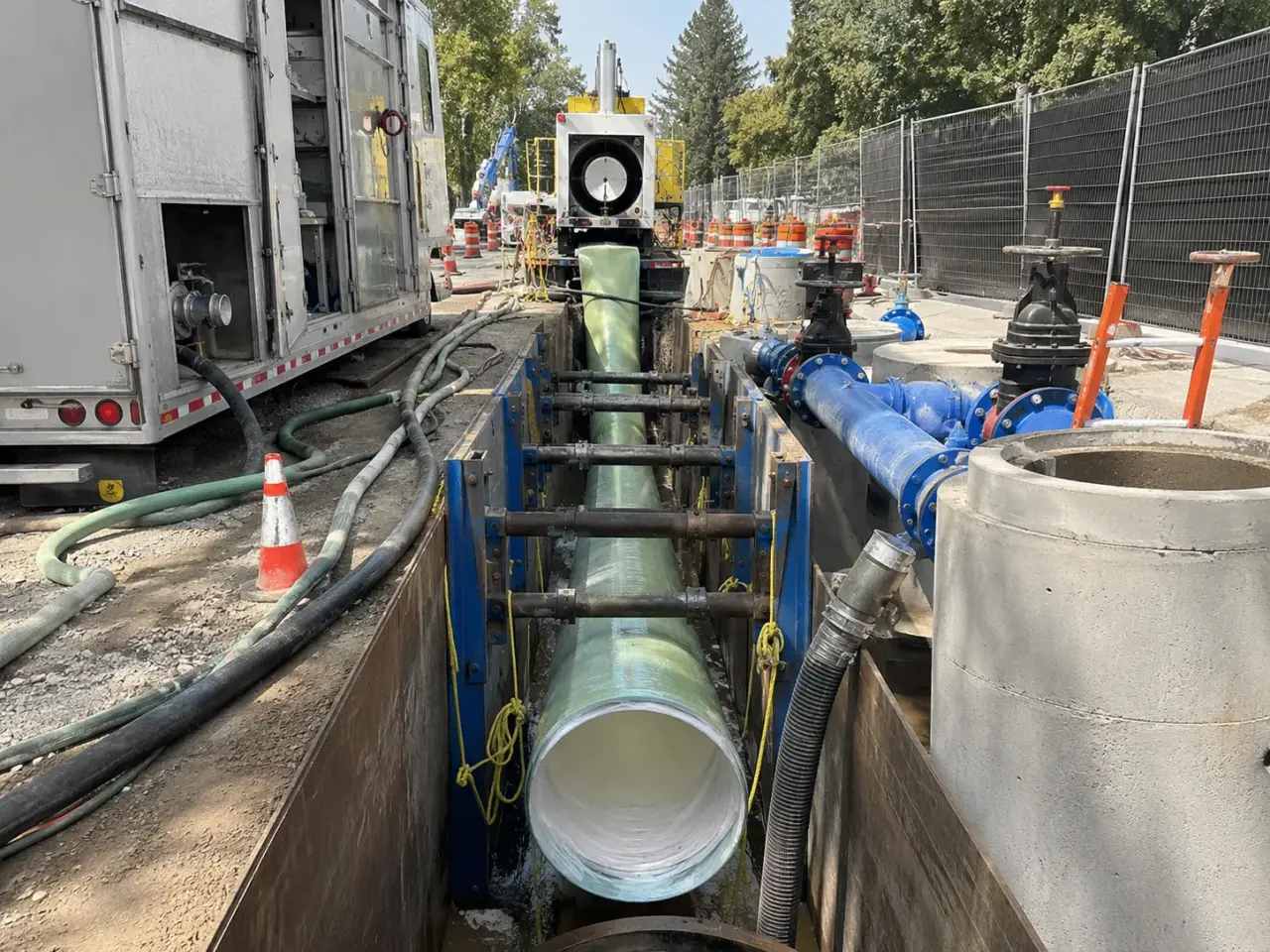
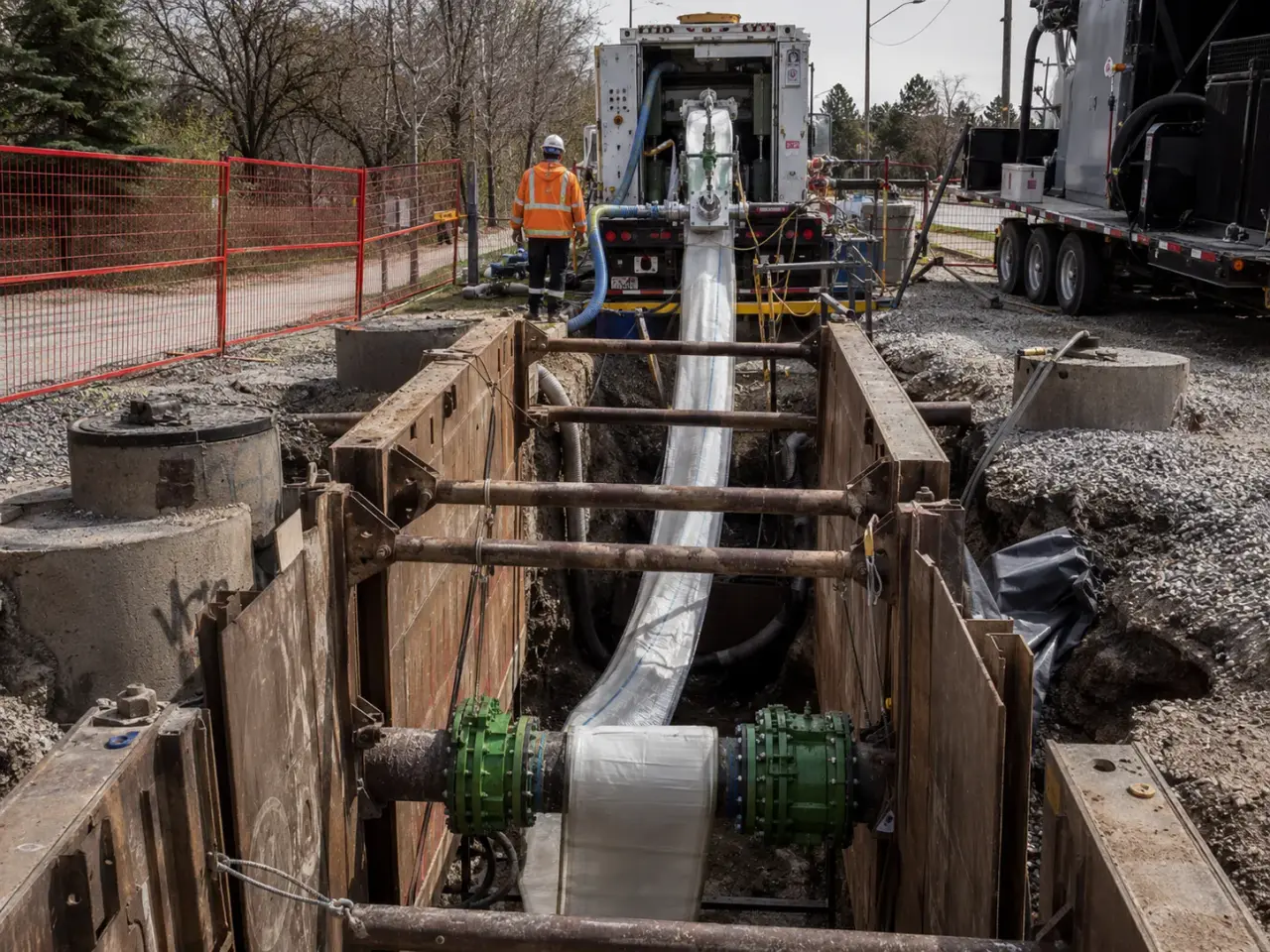
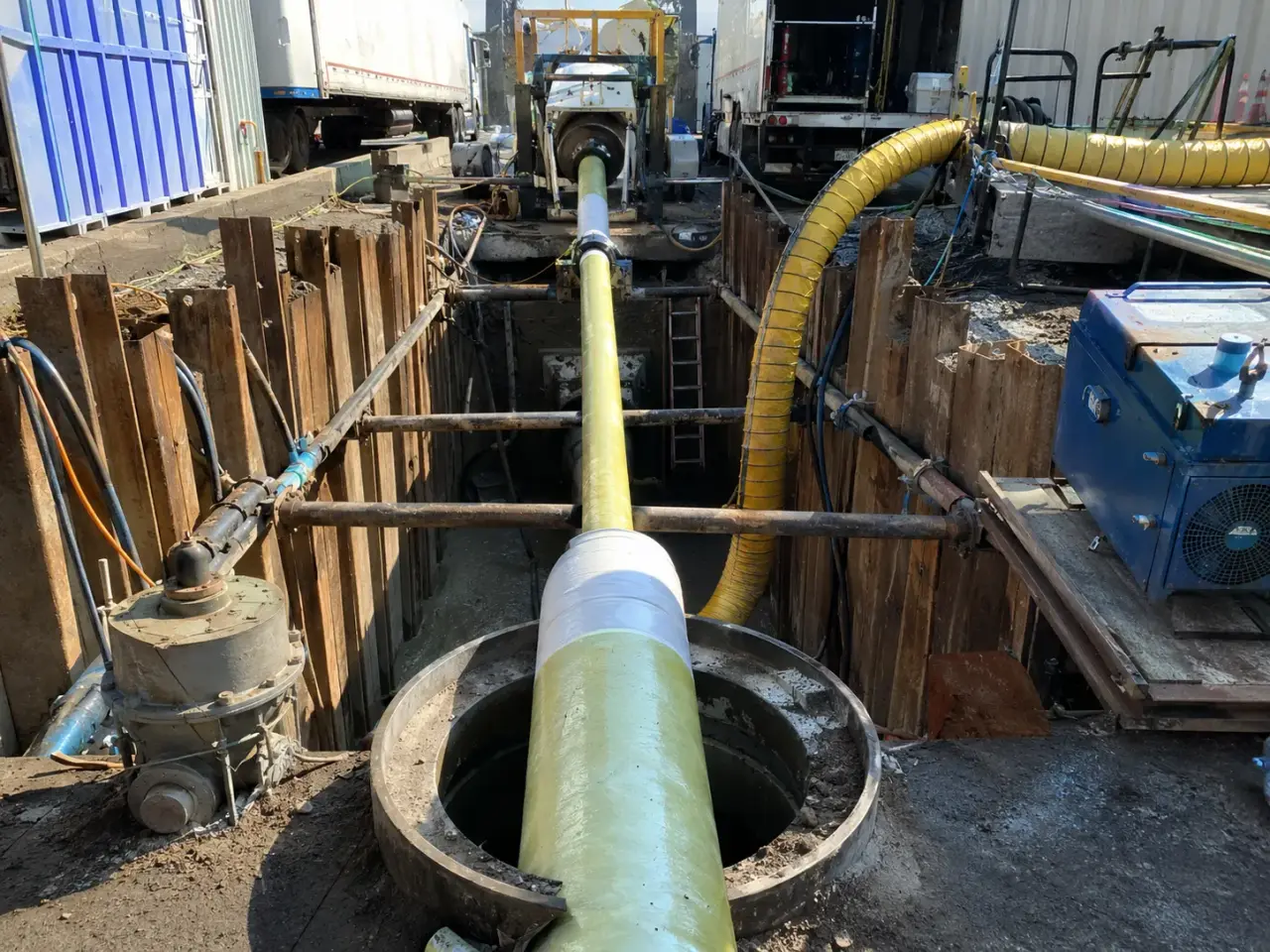
Thermal-cure CIPP uses hot water or steam to activate a resin-saturated tube, while ultraviolet-cure systems use a light train with compatible resin and reinforcement. Inversion and pull-in-place installation address different access, diameter, and liner constructions. Mainline, lateral, and connection liners require distinct designs. CIPP is screened out where collapse, severe offset, inadequate geometry, hydraulic restriction, or unmanageable infiltration prevents a continuous designed liner.
Step 1,
Step 2, The initial V1 CCTV inspection confirms the section, access, active connections, visible deterioration, debris, groundwater entry, bends, shape, and any changed condition that differs from tender information. We verify length, internal diameter, ovality, depth, and other design inputs in the field. These measurements matter because a liner sized to nominal drawings can wrinkle in an undersized reach, overstretch in an oversized reach, or be structurally inadequate where actual ovality and groundwater exceed assumptions.
Step 3, Flow control is established before preparation or lining. For a local gravity sewer, that can include upstream plugging and pump-around discharge to the next available maintenance hole. Larger or higher-risk assets require monitored duty pumps, backup pumping, secure suction, restrained discharge piping, fuel planning, alarms, and staff coverage. We assess upstream storage, dry-weather flow, rainfall exposure, industrial discharges, and the consequence of interruption. CIPP work does not begin until bypass capacity and a response plan are operating.
Step 4, Preparation removes everything that prevents close contact or safe installation. High-pressure flushing removes sand, silt, grease, and loose material. Robotic cutters, chain flails, root tools, grinders, or milling heads remove roots, mineral deposits, protruding service taps, concrete, and hard obstructions. We capture waste at the downstream access. Sharp edges are trimmed, voids are addressed where the design requires support, and isolated pipe defects that cannot carry installation pressure receive a point repair.
Step 5, The liner assembly is selected for diameter, length, thickness, resin system, reinforcement, cure method, transport, and installation pressure. Felt or glass-reinforced tubes carry thermosetting resin, commonly polyester, vinyl ester, or epoxy systems chosen for the conveyed flow and project requirements. Wet-out must fully saturate the tube without dry zones, contamination, premature reaction, or uncontrolled resin loss. Refrigerated transport and temperature monitoring preserve the planned working window for heat-cured systems.
Step 6, Inversion uses water or air pressure to turn and advance the tube through the pipe, while pull-in-place installation positions the tube with a winch before inflation. We set insertion pressure high enough to expand the material into close contact without overstressing weak host pipe or stretching the liner beyond design. End restraints, calibration hose where used, access protection, and continuous pressure control keep the tube stable through the cure.
Step 7, Hot-water cure circulates and heats water through the installed liner. Steam cure introduces controlled steam and air. Ultraviolet cure pulls a light train through a light-reactive, commonly glass-reinforced tube. Each method needs a documented cycle that reaches the resin system’s required temperature or light exposure throughout the wall, followed by controlled cool-down. Rushing heat-up can create uneven reaction, while cooling or depressurizing too quickly can shrink, wrinkle, lift, or separate the new liner.
Step 8, After cure, we cut and finish the liner at maintenance holes, remove process material, and inspect the ends. Active service connections are reopened robotically from inside the main to the recorded dimensions and location, then viewed with pan-and-tilt CCTV. The opening must restore flow without cutting beyond the connection or leaving a restrictive lip. Where a lateral connection also requires sealing, a main-to-lateral connection liner or separate lateral rehabilitation is designed as its own scope.
Step 9, Final V3 CCTV records the full length after every service is reinstated and maintenance hole benching is complete. We examine continuity, fit, wrinkles, fins, bulges, lifts, service openings, ends, debris, and flow path. Cured samples are measured and tested as specified, then the installed thickness and material results are reconciled with the liner design. Acceptance depends on the built liner, not merely the submitted product data.
Planning CIPP pipe lining in Oakville? Talk it through with our team.
Duration depends on diameter, length, flow, cleaning, access, cure system, service count, and defects found during inspection. A straightforward maintenance hole section can be prepared and lined within a planned outage, while heavy deposits, point repairs, complex bypass, large diameter, or many connections extend the sequence. We schedule from verified field conditions.
Yes, the cured wall occupies some cross-sectional area. The engineer checks finished diameter and hydraulic capacity before approval. A smooth liner can reduce friction compared with a rough or tuberculated host pipe, which can offset part of the area loss. Capacity is calculated for the specific size, thickness, slope, and flow requirement.
CIPP can bridge many cracks, joints, and localized missing-wall areas when designed for the verified structural condition. Deformation and ovality require measurement and can increase thickness or change the calculation method. Severe collapse, sharp offset, unstable voids, or excessive shape loss requires preparation, point repair, or another method before lining.
We record each connection before lining, confirm it after cleaning, and reopen it from inside the cured main with a robotic cutter. The opening is sized to restore flow without damaging the surrounding liner. Pan-and-tilt CCTV checks the finished cut, and the final survey confirms that every scheduled active connection is open.
Hot water and steam add controlled heat to activate a thermosetting resin. Ultraviolet systems move a calibrated light train through a light-reactive liner, often with glass reinforcement. Access, diameter, liner construction, water and power availability, environmental controls, cure monitoring, and project specification determine the appropriate system for each section.
V1 documents initial condition and changed conditions. V2 proves that cleaning, cutting, void work, dimensions, and connections are ready for the final design and liner. V3 records the completed liner after connections and benching are finished. Keeping these records separate makes each construction hold point visible and traceable.
Testing follows the owner’s specification and engineered design. Cured samples are measured for actual wall thickness and tested for specified physical properties. Installation and cure records are reviewed with the results. The engineer then checks whether the built values satisfy the design inputs or require formal reconciliation and corrective action.
No. Access pits, collapsed segments, severe offsets, cross-bores, inaccessible connections, trapped equipment, unstable voids, or sampling requirements can require excavation. The advantage is that suitable pipe lengths are renewed without a continuous trench. Early CCTV and constructability review identify the locations that still need surface access before installation begins.
A qualified design uses actual pipe geometry, depth, groundwater, soil and live loading, host-pipe condition, ovality, missing wall, material properties, safety factors, and the structural objective. Diameter alone is not enough to select thickness.
Some infiltration can be controlled during preparation, but uncontrolled water can wash resin, cool the system, create voids, or prevent fit. The source is sealed, diverted, grouted, or otherwise managed to the installation limits before the liner is cured.
Still have a question about CIPP pipe lining in Oakville? Ask our team directly.
Commercial and heavy-civil construction delivered for developers, contractors, property managers, and municipalities.
Send drawings, a site plan, or a description of the scope. Harrowgate Group is licensed, insured, and WSIB-covered.
Licensed, Insured & WSIB-Covered, work managed and documented on every job
Tell us what you need and we’ll get you a quote.
Harrowgate Group provides cipp pipe lining, delivered and installed with quote-ready support across Toronto and surrounding Ontario communities.
Companies We've Worked With
Harrowgate Group delivers commercial and heavy-civil construction for developers, contractors, institutions, municipalities, and property groups across Ontario.
 Popeyes
  Tim Hortons
  Subway
  University of Toronto
  Madison Group
  RioCan
  Women's College Hospital
  Starbucks
  Mazda
Mazda  TD Bank
  City of Toronto Popeyes Tim Hortons Subway University of Toronto Madison Group RioCan Women's College Hospital Starbucks Mazda TD Bank City of Toronto