Built to spec
Built to your engineered drawings, survey, and the real site conditions, not a one-size-fits-all approach forced to fit.
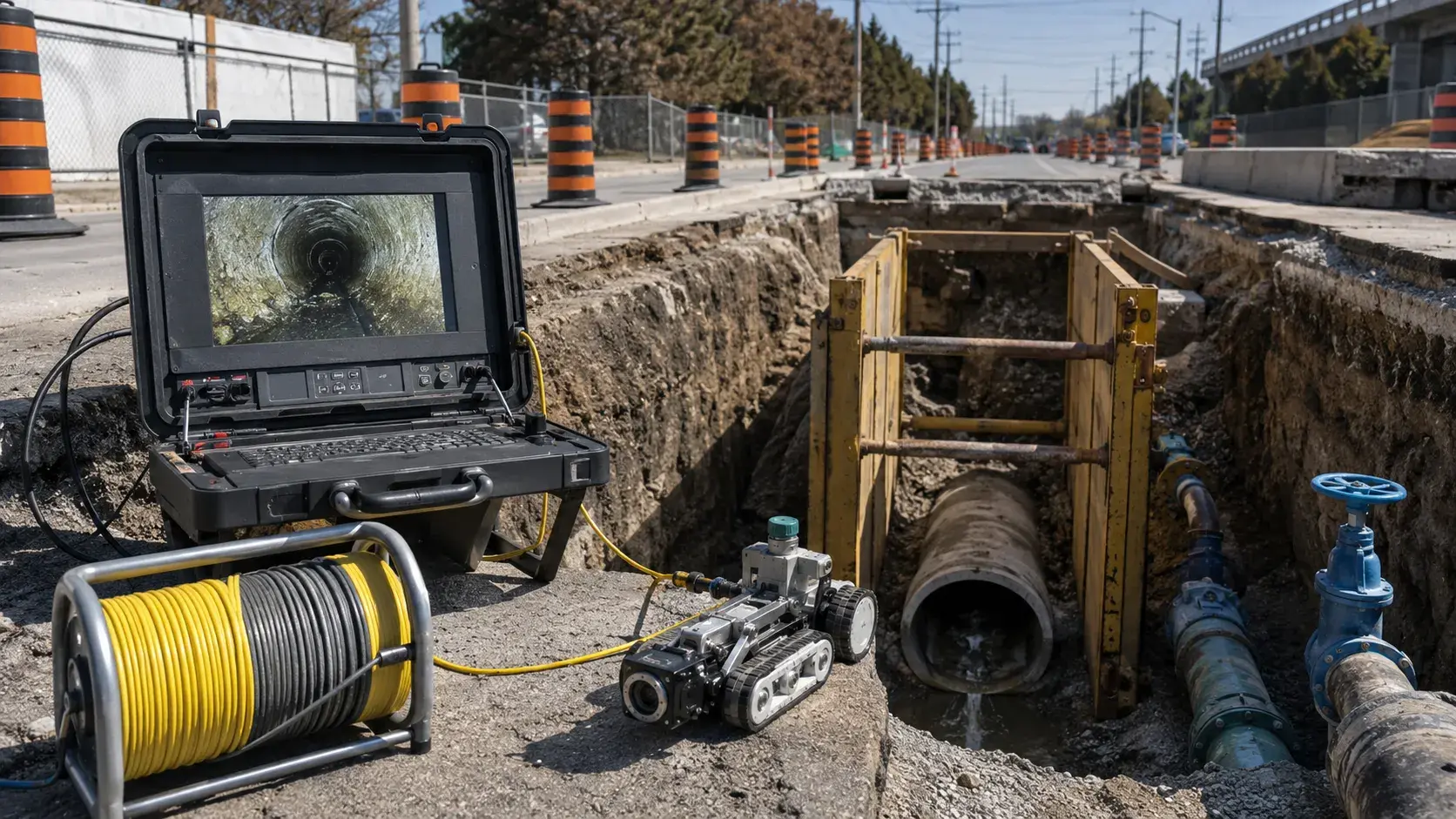
CCTV Sewer Inspection in Vaughan uses camera systems to locate and assess defects, blockages, and condition inside sewer and drainage pipes.
Tell us what you need and we’ll get you a quote.
Licensed, insured & WSIB-covered · Free, no-obligation quote & on-site assessment.
Built to your engineered drawings, survey, and the real site conditions, not a one-size-fits-all approach forced to fit.
Durable materials and methods chosen for the load, traffic, and environment on site.
Send specs, drawings, or photos and get a free, no-obligation site visit and estimate with no guesswork.
Installation and site work completed in accordance with Ontario requirements.
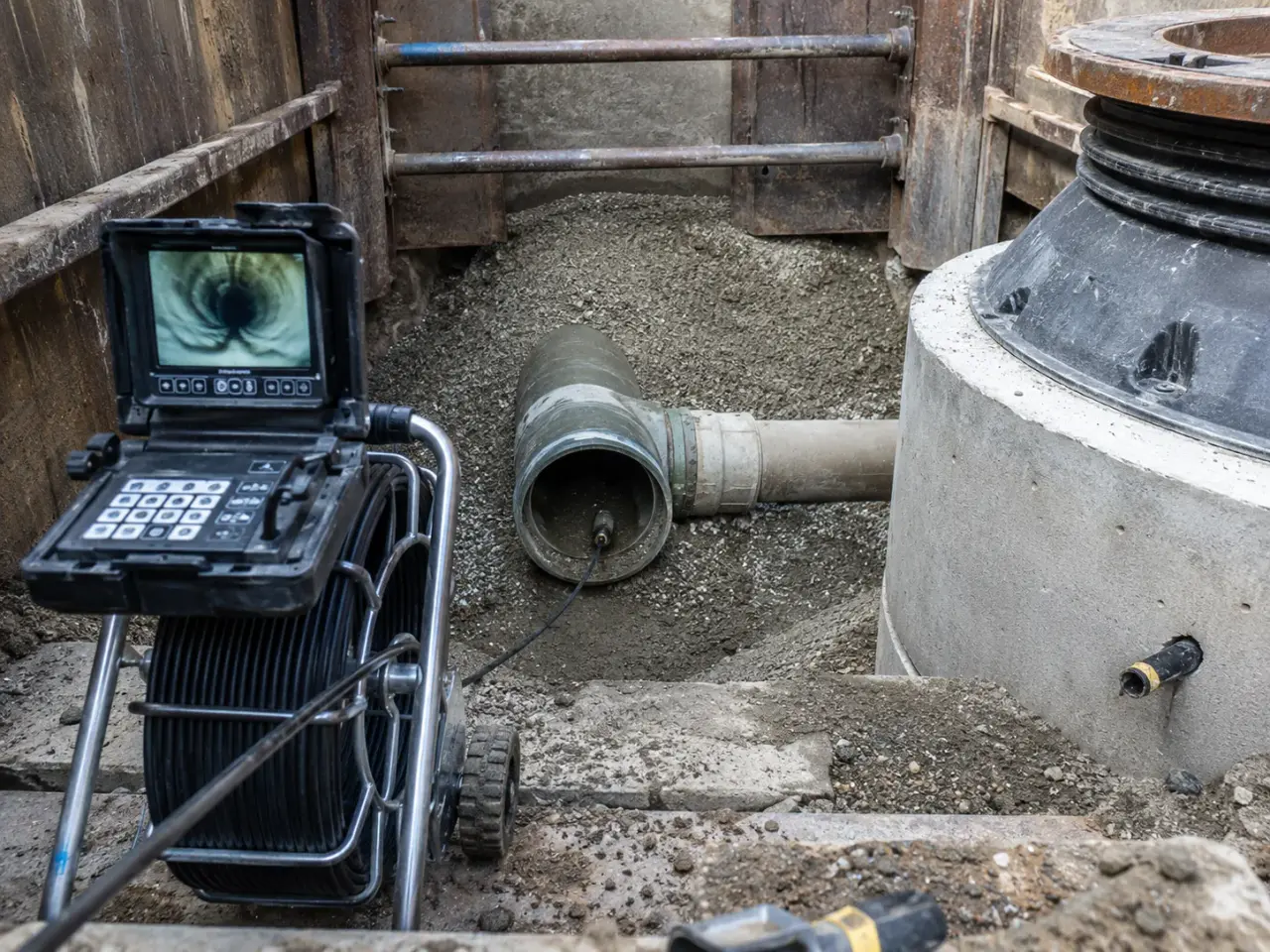
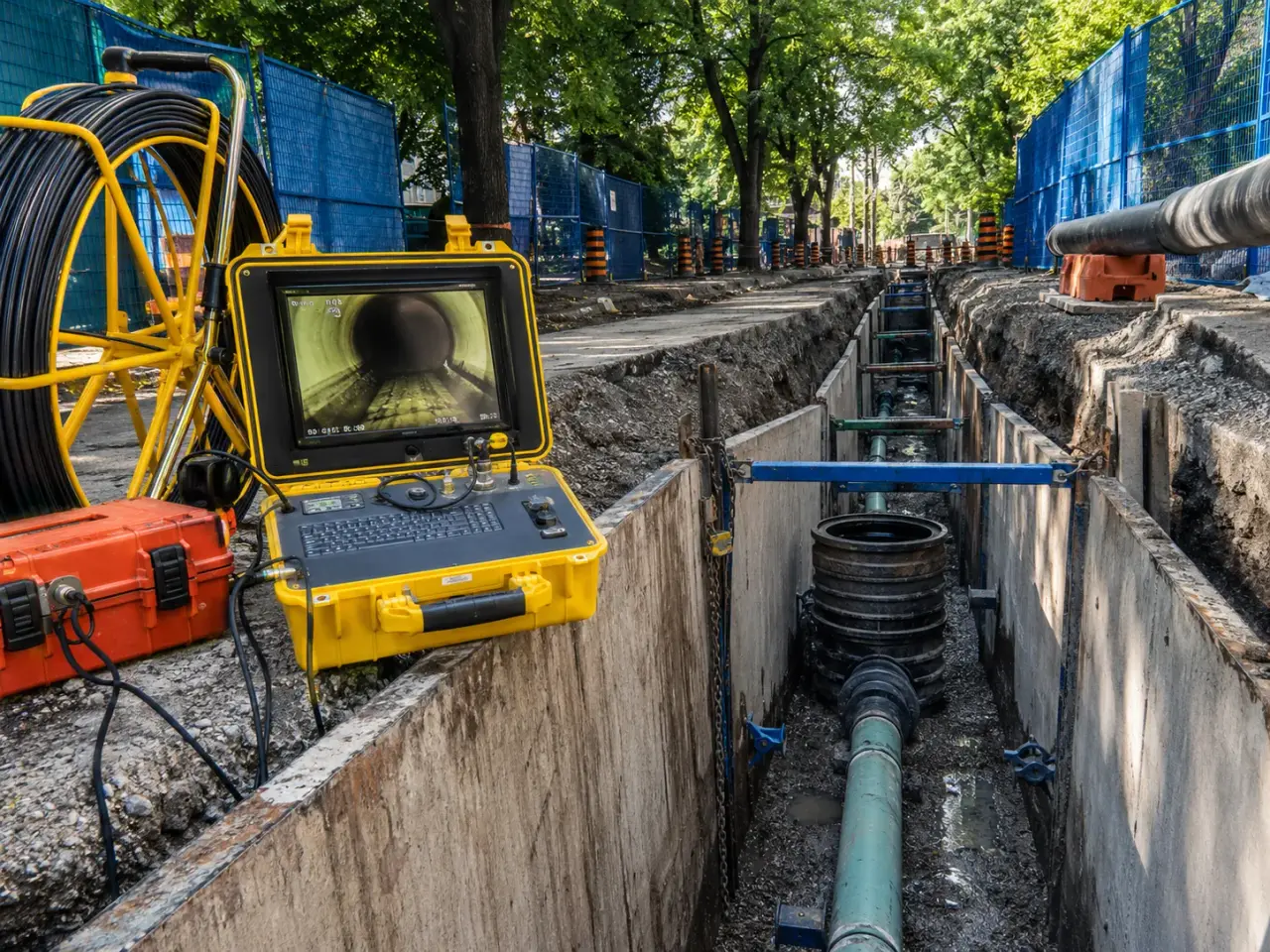
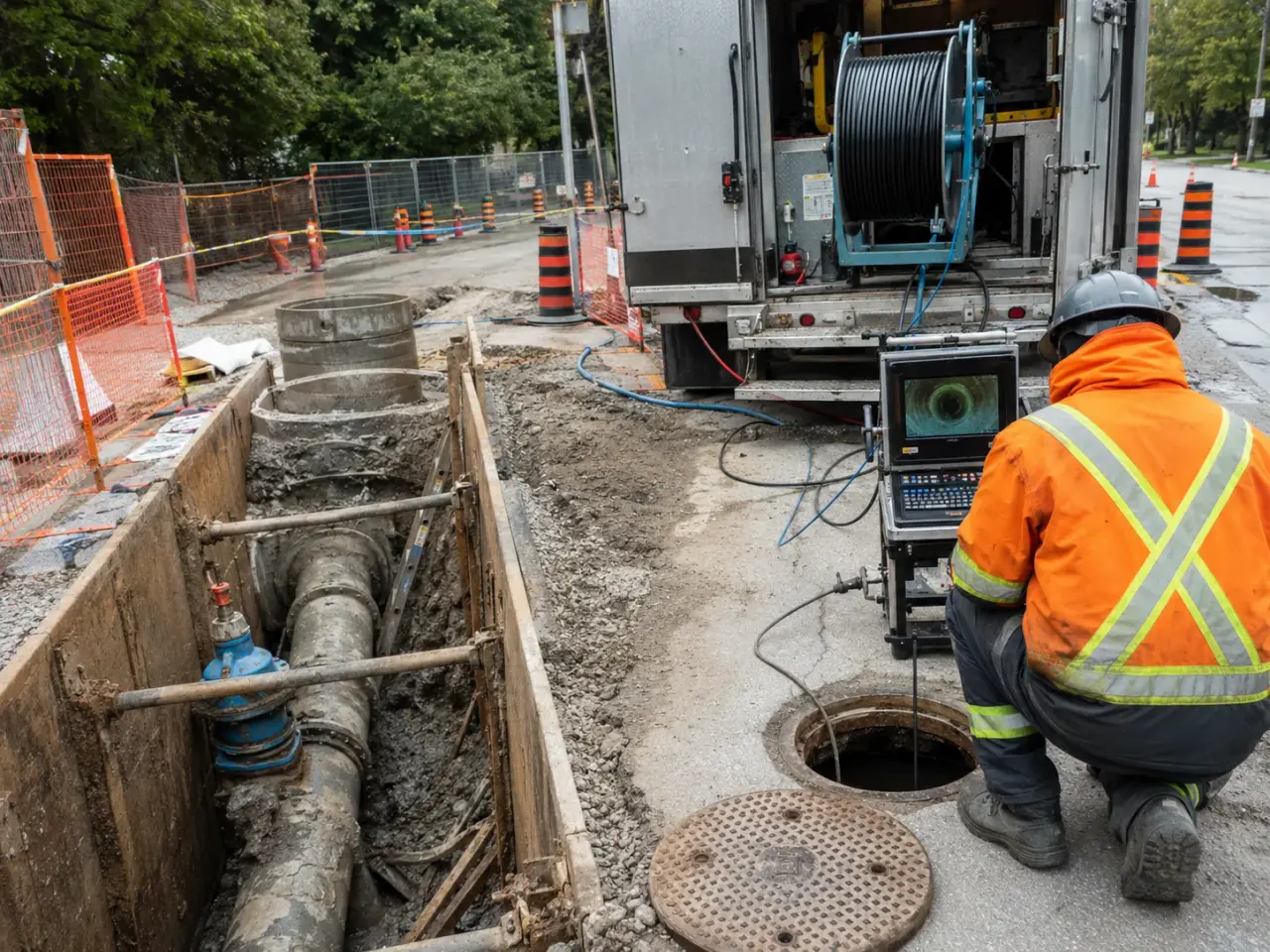
Mainline crawler inspection provides controlled pan, tilt, lighting, distance, and continuous video through accessible sewers. Push cameras suit short laterals and restricted diameters. Lateral-launch systems inspect services from the main, while zoom cameras provide rapid screening from a structure without replacing a full traverse. Sonar or laser profiling can supplement video where water, deformation, or dimensional questions prevent the camera image from answering the engineering objective.
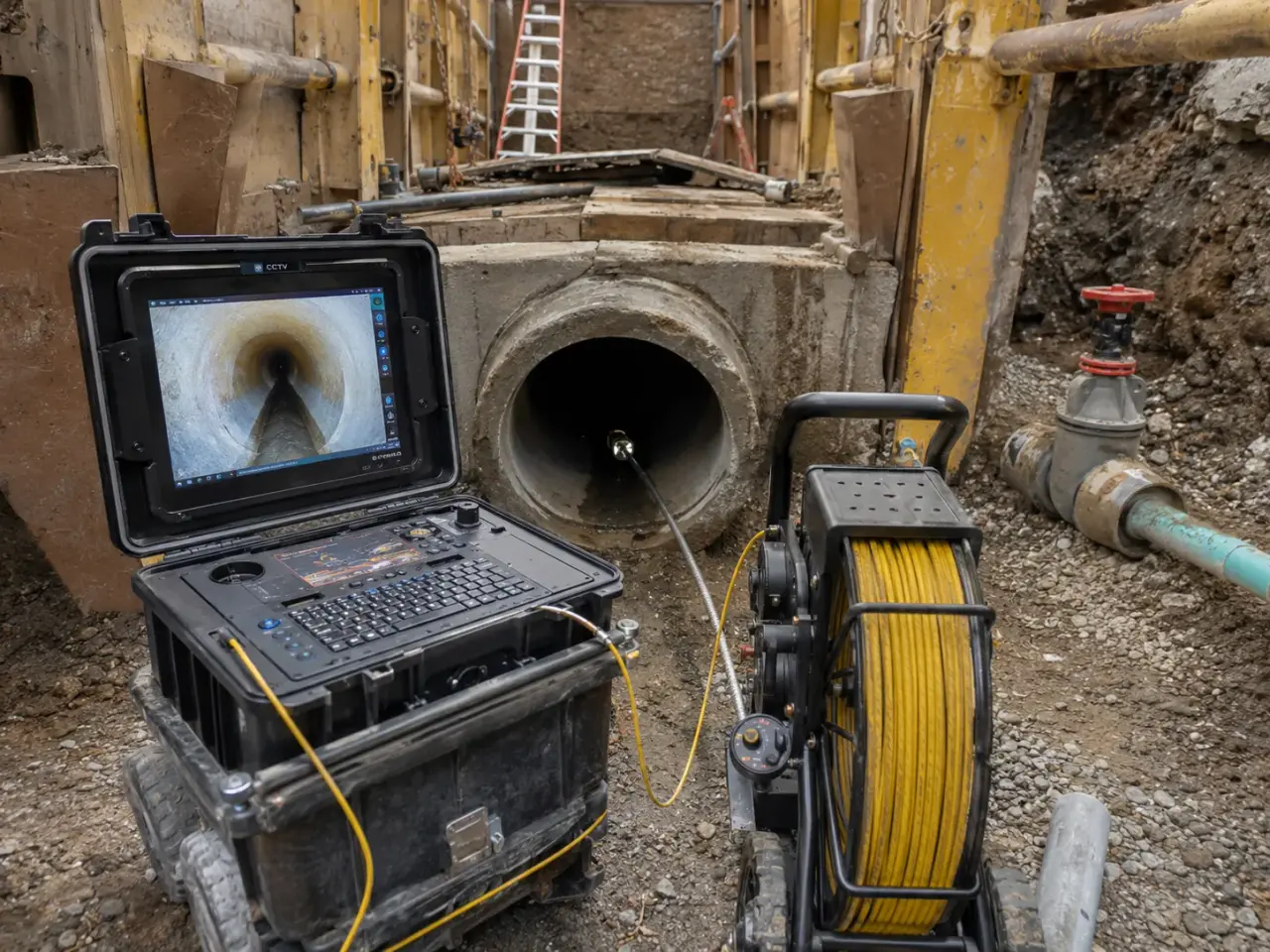
Step 1,
Step 2, Before mobilization, we review plans, asset identifiers, maintenance hole records, previous videos, known restrictions, required file conventions, traffic conditions, and the expected pipe range. Ontario One Call locates are arranged where the inspection requires excavation, buried access recovery, or surface work near utilities. We inspect maintenance holes from the surface, confirm the correct inlet and outlet, measure depth where required, and establish whether surcharge, hazardous site conditions, or poor access changes the plan.
Step 3, Cleaning is matched to the inspection objective. A preliminary emergency look may require only enough flushing to see the failure. A condition assessment or rehabilitation survey normally requires removal of silt, gravel, grease, roots, and loose debris that would hide the wall. High-pressure flushing moves material to a controlled recovery point, while root cutters, chain flails, milling tools, or specialized nozzles deal with harder deposits. We capture removed solids rather than send them through uninspected downstream assets.
Step 4, Where flow covers the invert or obscures the wall, we use plugs, flow-through devices, upstream control, or bypass pumping suited to the pipe and service risk. Fog and vapour are cleared with ventilation. A dry, visible perimeter matters because cracks at the waterline, infiltration at a joint, and debris under shallow flow can disappear on an otherwise sharp recording. We clean the lens and adjust lighting to avoid glare on wet PVC, washed-out brickwork, or shadows behind displaced joints.
Step 5, If the crawler cannot complete the reach because of blockage, deformation, high water, hard debris, a line deviation, or inaccessible maintenance hole, we document the reason with a still image and report note, then attempt a reverse setup from the opposite end.
Push cameras and lateral launch systems serve smaller lines and connections. Large trunk sewers may require a wheeled platform, float, skid, sonar, or digital scanning approach selected for the depth, flow, shape, and access. We do not present a partial survey as a complete pipe record.
Step 6, After fieldwork, we review the video and observations together. Deliverables can include MP4 video, condition report, defect stills, asset and section summary, maintenance hole information, connection table, digital database, marked plan, and prioritized repair notes. For construction or lining work, we separate initial, post-cleaning, and finished-condition videos so the owner can see what changed at each hold point.
Planning CCTV sewer inspection in Vaughan? Talk it through with our team.
For a complete condition or acceptance survey, yes. Silt, grease, roots, and loose debris can hide defects and block the camera. An emergency inspection can use limited cleaning when the immediate goal is locating a collapse or obstruction. We set the cleaning level according to the pipe condition and required decision.
Typical deliverables include asset identification, section limits, pipe use, size and material, survey direction, cleaning level, video, chainage-based observations, defect stills, connections, access notes, incomplete-survey reasons, and a condition summary. Municipal submissions can also require a prescribed database structure and exact file-naming convention.
It provides internal chainage from a defined maintenance hole wall or access point. We verify the counter and relate the observation to surface measurements and drawings. Final excavation layout also considers pipe alignment, depth, utility locates, and field exposure, because camera chainage alone does not identify every surface conflict.
We record the stopping condition and chainage, capture a still, and attempt a reverse inspection from the opposite access point. Cleaning, root cutting, flow control, or removal of a hard obstruction can then complete the survey. A partial reach is clearly identified so the owner does not mistake it for full coverage.
CCTV shows standing water, sags, joint displacement, and visible changes in invert profile, but video alone is not a precise grade survey. Where acceptance depends on elevation, the engineer can require level survey, laser profiling, or other measurement. We report visible ponding accurately and avoid assigning an unsupported slope from imagery.
Three distinct surveys support control. The initial survey records existing and changed conditions. The post-cleaning survey confirms preparation, dimensions, connections, and liner readiness. The final survey covers the completed liner after service reinstatement, confirms an unobstructed bore, records finished condition, and identifies any correction needed before acceptance.
Yes. We inspect sanitary, storm, process, yard drainage, culvert, lateral, and catch basin lead assets for plants, warehouses, shopping centres, campuses, and development sites. We coordinate access, discharge restrictions, production schedules, traffic, cleaning, and flow control around the facility’s operating requirements and reporting needs.
Video documents visible internal condition but does not measure every hidden property of the pipe or surrounding soil. Structural conclusions may also require deformation data, laser or sonar profiling, samples, geotechnical information, leakage evidence, or engineering analysis.
Cleaning removes deposits and obstructions that conceal cracks, joints, connections, roots, corrosion, or deformation. The cleaning level depends on whether the survey is for screening, rehabilitation design, repair location, or final acceptance, and removed debris must be captured rather than pushed downstream.
Still have a question about CCTV sewer inspection in Vaughan? Ask our team directly.
Commercial and heavy-civil construction delivered for developers, contractors, property managers, and municipalities.
Send drawings, a site plan, or a description of the scope. Harrowgate Group is licensed, insured, and WSIB-covered.
Licensed, Insured & WSIB-Covered, work managed and documented on every job
Tell us what you need and we’ll get you a quote.
Harrowgate Group provides cctv sewer inspection, delivered and installed with quote-ready support across Toronto and surrounding Ontario communities.
Companies We've Worked With
Harrowgate Group delivers commercial and heavy-civil construction for developers, contractors, institutions, municipalities, and property groups across Ontario.
 Popeyes
  Tim Hortons
  Subway
  University of Toronto
  Madison Group
  RioCan
  Women's College Hospital
  Starbucks
  Mazda
Mazda  TD Bank
  City of Toronto Popeyes Tim Hortons Subway University of Toronto Madison Group RioCan Women's College Hospital Starbucks Mazda TD Bank City of Toronto