
Winter Concrete Pouring in Ontario: Is It Possible and What Does It Cost?
How winter concrete placement works in Ontario, what protection and curing require, and how cold weather affects commercial concrete budgets and schedules.
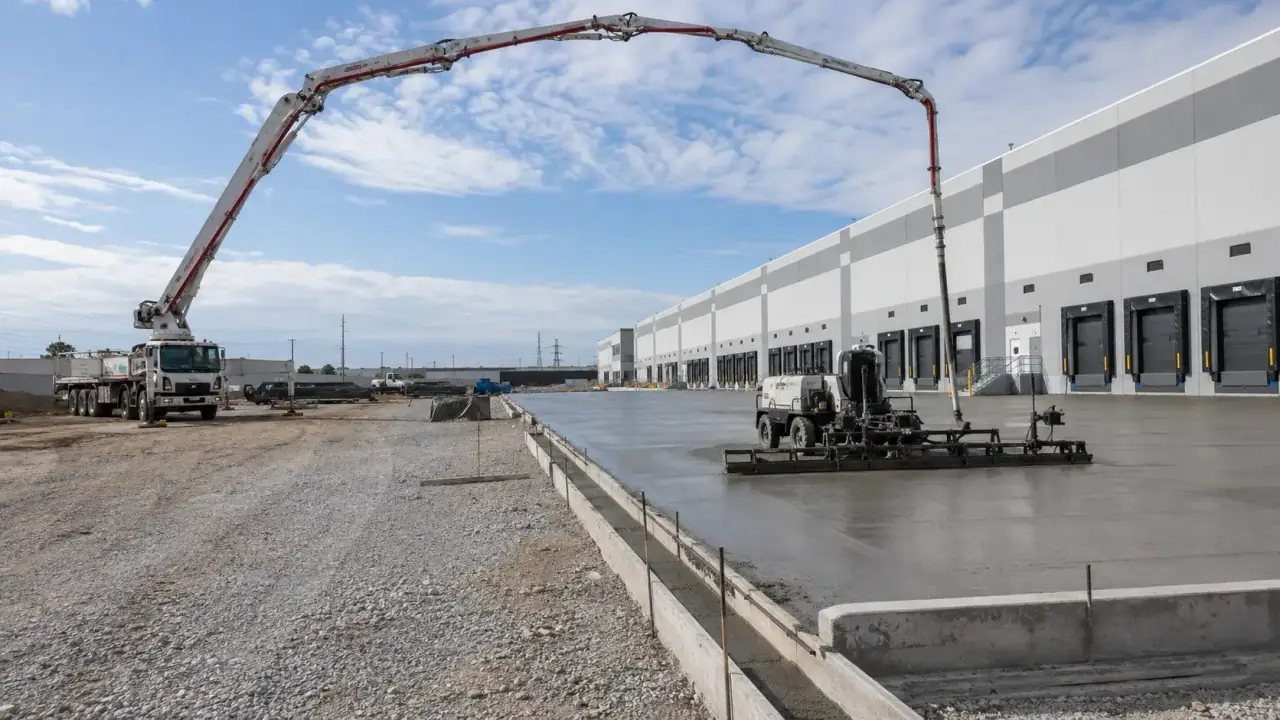
Yes, concrete can be placed successfully during an Ontario winter when the mix, subgrade, forms, reinforcement, placement temperature, enclosure, heat, curing, and monitoring are planned together. Winter work often adds roughly 10 to 30 percent to the placement package, but small, exposed, remote, or highly heated pours can cost more. Price the actual protection plan.
By Harrowgate Group
Last updated: July 24, 2026
Cold weather does not automatically damage concrete. Uncontrolled freezing and low curing temperature are the risks. The contractor and engineer need an agreed plan for material temperature, frozen surfaces, snow and ice, protection duration, temperature records, strength confirmation, and safe heater operation.
What adds cost to winter concrete?
| Cost item | Why it is needed | Typical pricing method |
|---|---|---|
| Ground thaw and surface preparation | Concrete cannot be placed on frozen or contaminated surfaces | Area, duration, equipment, fuel |
| Enclosures and tarps | Controls wind and retains heat | Area, geometry, reuse, labour |
| Temporary heat | Maintains curing environment | Equipment, fuel, monitoring |
| Mix adjustments | Supports placement and strength development | Per cubic metre |
| Blankets and insulated forms | Reduces heat loss | Area and rental duration |
| Temperature monitoring | Verifies the protection plan | Sensors, labour, reporting |
What affects winter concrete placement most?
Forecast and exposure
Air temperature alone is not enough. Wind, slab surface area, member thickness, ground temperature, snowfall, and enclosure leakage affect heat loss.
Member size
Thin slabs and edges lose heat faster than massive walls or footings, so the same forecast can require a different protection method.
Mix and finishing
Accelerators, heated materials, slump, placing time, bleed water, finishing, and curing must be compatible rather than treated as separate purchases.
Protection duration
The plan must account for early strength, form removal, loading, subsequent trades, weekends, power, fuel, and backup equipment.
What do Ontario rules and current data say?
The Cement Association of Canada’s 2025 guide notes that temperature affects concrete set time and that protection and curing are vital to strength development. Source: Cement Association of Canada, Guideline for Specifying Low Carbon Ready Mixed Concrete, 2025.
Statistics Canada found Toronto non-residential construction prices were 2.9 percent higher year over year in first-quarter 2026, so winter premiums should be compared with the carrying cost of delay using current numbers. Source: Statistics Canada Building Construction Price Index, first quarter 2026.
How should you plan winter concrete placement?
- Write a cold-weather plan. Confirm forecast thresholds, mix, delivery, surface preparation, enclosure, heat, curing, monitoring, responsibilities, and emergency response.
- Prepare before trucks arrive. Remove snow and ice, thaw frozen materials, protect embeds, test heaters, secure fuel, and inspect access.
- Control placement and curing. Record concrete and ambient conditions, avoid rapid moisture loss, maintain protection, and check temperatures at vulnerable locations.
- Release protection by evidence. Use the engineer’s requirements, temperature history, field-cured specimens, maturity, or testing as specified before loading or stripping.
What problems should owners watch for?
- Placing on frozen ground: Thaw after placement can cause settlement and loss of support.
- Unvented combustion heat: Heaters can create worker hazards and affect exposed concrete surfaces; ventilation and equipment selection matter.
- Removing protection early: A warm pour can cool quickly after crews leave, particularly at edges and corners.
For winter concrete placement, Harrowgate Group’s trust baseline is 20 years in business, licensed, insured, and WSIB-covered.
Frequently asked questions
What temperature is too cold to pour concrete?
There is no single air-temperature cutoff for every placement. Project specifications and the cold-weather plan govern concrete temperature, surfaces, protection, and curing.
Can concrete freeze overnight?
Fresh concrete can be damaged if it freezes before adequate early strength develops. Continuous protection and monitoring are therefore essential.
Do accelerators eliminate heating?
No. An accelerator can change set and strength development, but it does not thaw frozen ground, remove ice, enclose the work, or maintain curing temperature.
Why does winter concrete cost more?
Extra labour, lower productivity, enclosures, heating, fuel, blankets, mix adjustments, monitoring, snow handling, and standby risk add cost.
Is it cheaper to wait until spring?
Sometimes, but waiting can extend financing, general conditions, occupancy, or critical-path costs. Compare total project impact, not only the pour premium.
Can precast avoid winter concrete work?
Precast can shift some casting into a controlled plant, but foundations, connections, grouting, access, and erection conditions still need winter planning.
What is the next step?
For a site-specific plan, review Harrowgate Group’s commercial concrete foundations, structural concrete, and excavation services. Request a winter-work quote.