Built to spec
Built to your engineered drawings, survey, and the real site conditions, not a one-size-fits-all approach forced to fit.
Asbestos Abatement in Belleville is the licensed containment, removal, and disposal of asbestos-containing materials under strict controls.
Tell us what you need and we’ll get you a quote.
Licensed, insured & WSIB-covered · Free, no-obligation quote & on-site assessment.
Built to your engineered drawings, survey, and the real site conditions, not a one-size-fits-all approach forced to fit.
Durable materials and methods chosen for the load, traffic, and environment on site.
Send specs, drawings, or photos and get a free, no-obligation site visit and estimate with no guesswork.
Installation and site work completed in accordance with Ontario requirements.
Ontario defines asbestos-containing material as material containing at least 0.5 percent asbestos by dry weight. Common commercial and industrial locations include sprayed fireproofing, mechanical insulation, boiler and pipe fittings, ceiling texture, acoustic plaster, vinyl floor tile and mastic, cement products, gaskets, roofing materials, transite panels, and concealed service-shaft finishes.
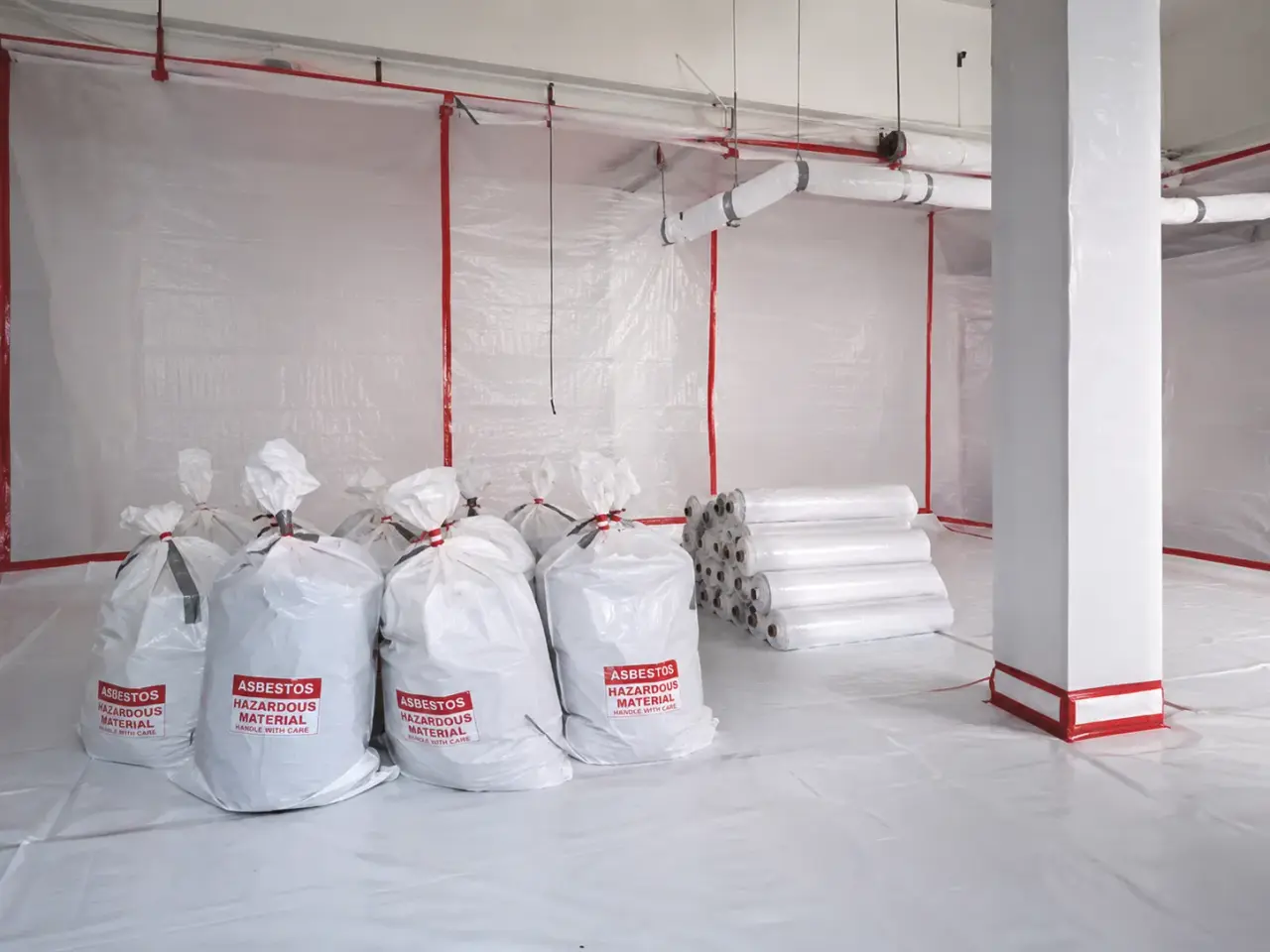
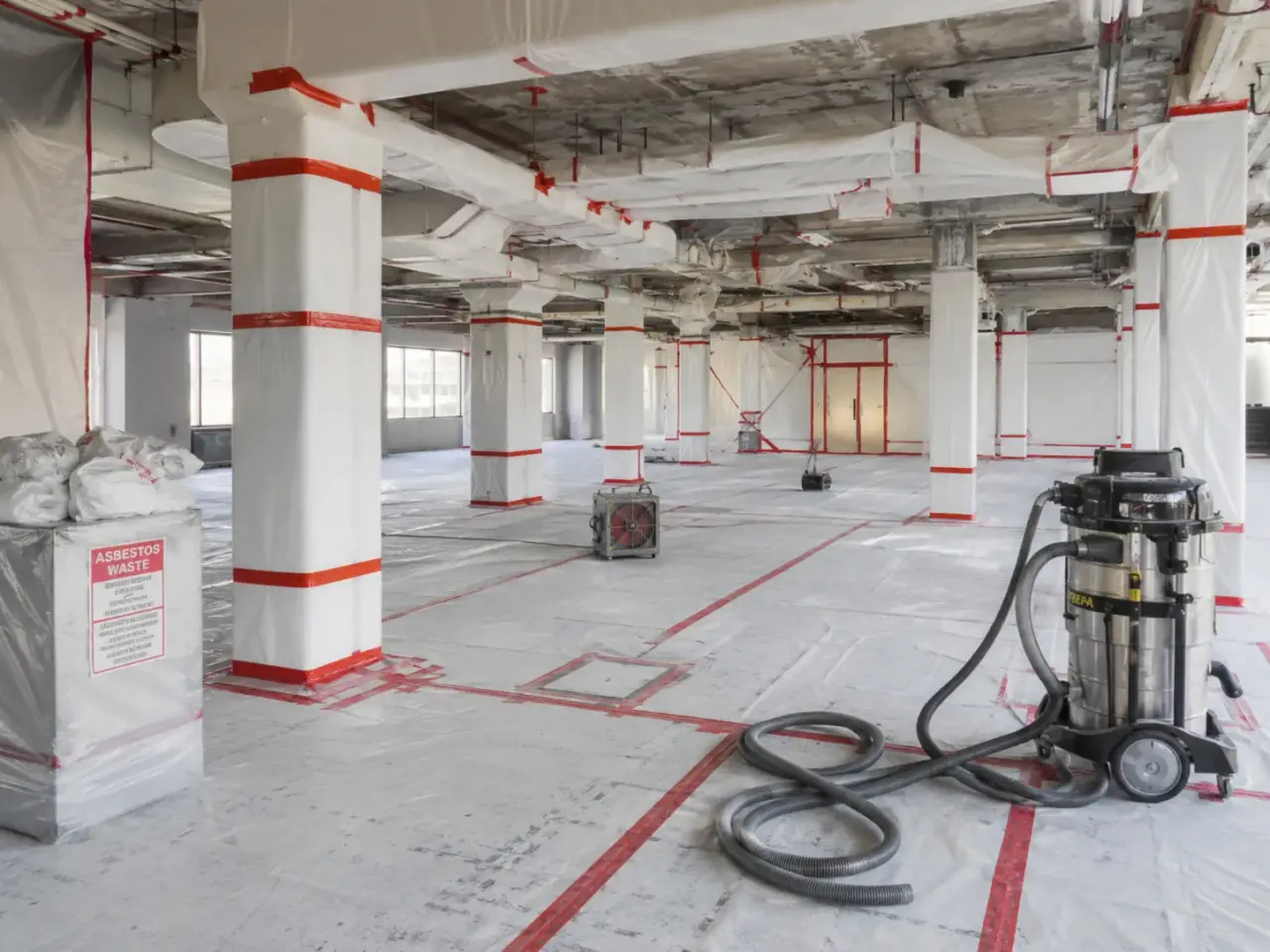
Ontario asbestos work is classified from the material, friability, condition, quantity, task, tools, and potential disturbance. Lower-risk controlled removal, glove-bag or localized enclosure work, and full containment with negative pressure address different exposure conditions. Wet methods, HEPA-filtered tools and vacuums, isolation, decontamination, respiratory protection, and waste procedures are selected through the applicable work classification and project procedure. Encapsulation or enclosure is considered only where the accepted management plan permits material to remain.
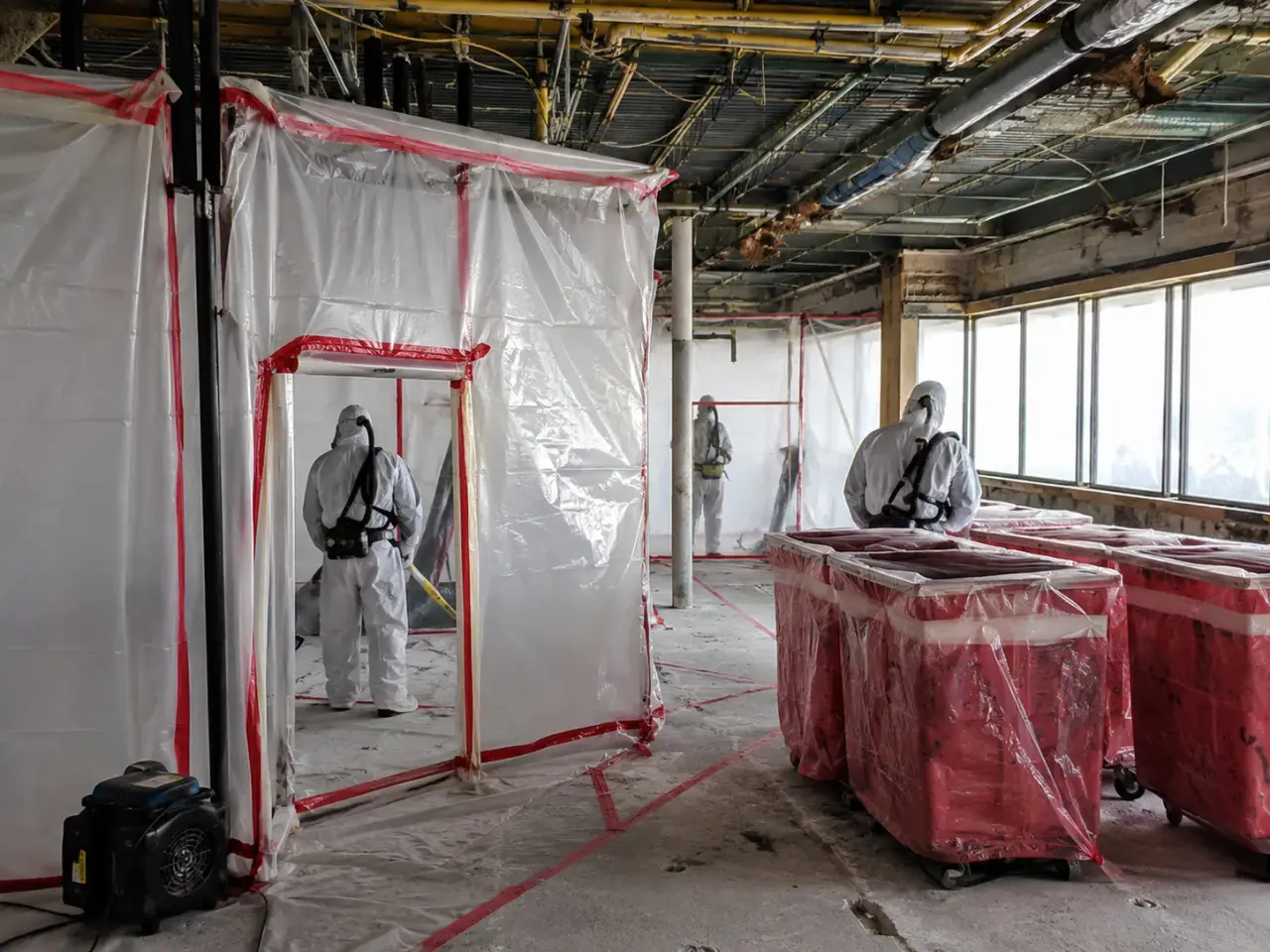
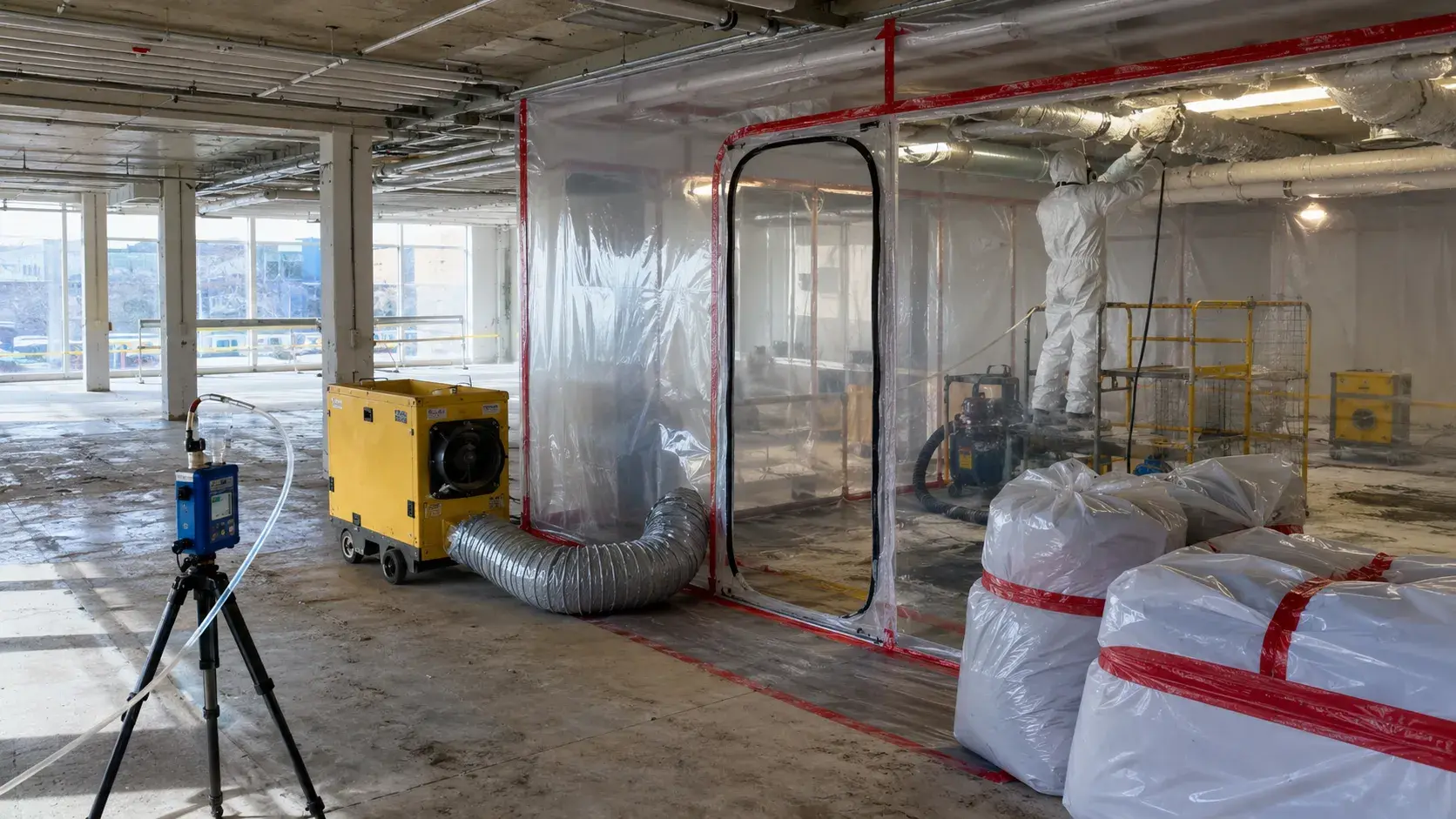
Step 1, For every operation, the work zone is isolated and signs, access control, protective clothing, respirators, drop sheets, waste routes, and hygiene facilities are established for the classified work. Type 1 methods emphasize non-powered hand removal with dust kept below uncontrolled release. Type 2 work adds stronger enclosure, glove-bag, HEPA-tool, or limited-area procedures. Type 3 work uses a full enclosure, negative-pressure ventilation, worker and waste decontamination facilities, and clearance requirements.
Step 2, Containment construction is treated as a critical system. Polyethylene barriers are sealed at floors, walls, ceilings, penetrations, and service openings. Supply and return ducts are isolated. Negative-air units discharge through HEPA filtration and are arranged to draw clean air across the work toward the filters without dead zones. Pressure is checked throughout the shift, and emergency power or response measures are planned where loss of ventilation could release fibres.
Step 3, Removal proceeds with amended water or another effective wetting method unless the regulation permits a different controlled procedure. Material is removed in manageable sections, immediately bagged or wrapped, and transferred through the waste decontamination route. HEPA vacuums and wet wiping clean substrates, ledges, framing, services, and enclosure surfaces. Dry sweeping and uncontrolled compressed air are not used.
Step 4, For Type 3 work, visual inspection and required air clearance occur after detailed cleaning and settling, while the enclosure remains under negative pressure. Only after acceptance are barriers removed inward and the area handed back for demolition or reinstatement. Waste packages are sealed, labelled, protected from damage, and taken to a receiving facility authorized for asbestos waste.
Step 5, The area is released only after removal limits, detailed cleaning, visual acceptance, clearance testing where required, waste documentation, enclosure teardown, and reoccupation or demolition conditions are complete under the project procedure.
Planning asbestos abatement in Belleville? Talk it through with our team.
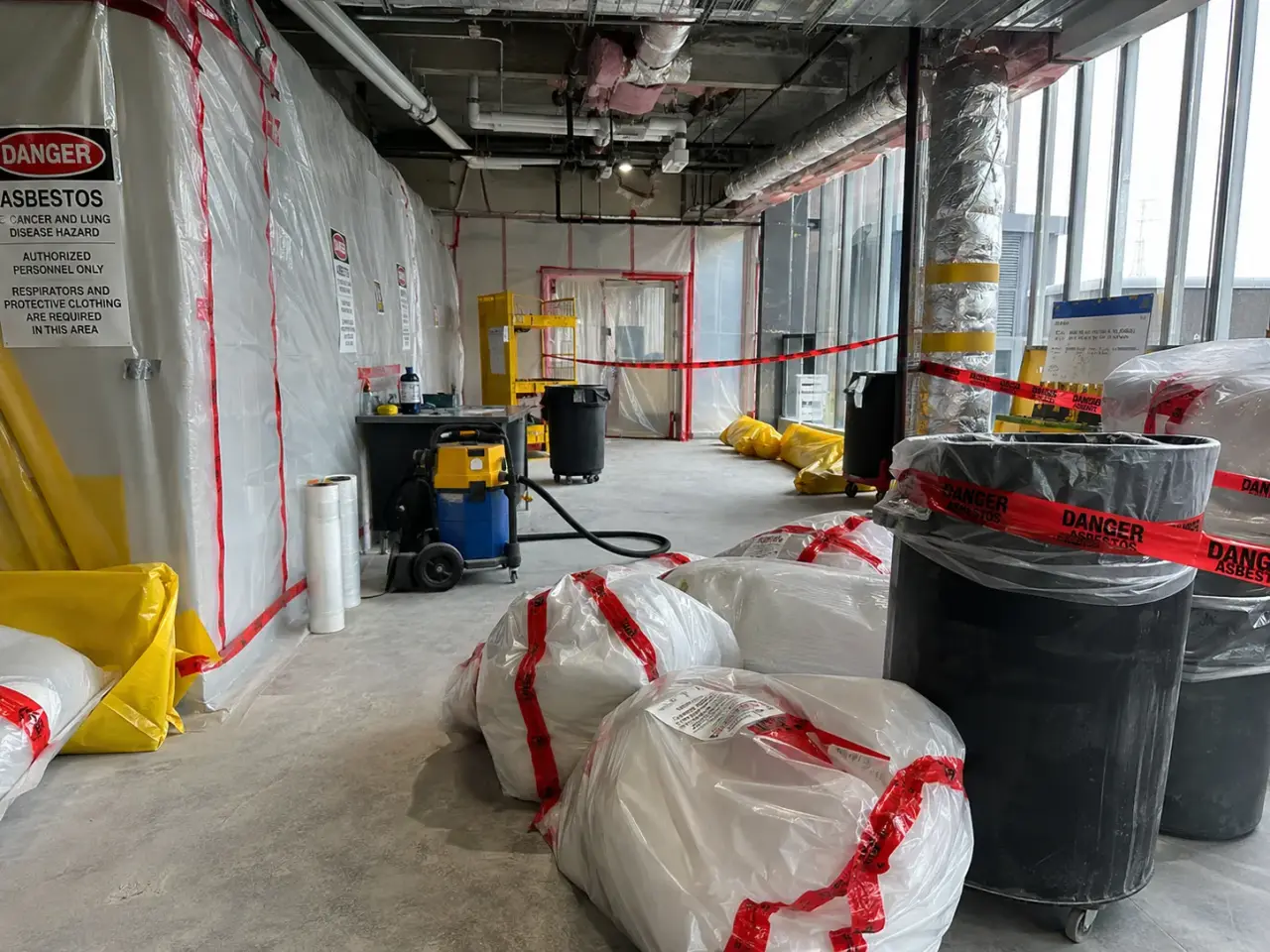
Completed on site to the engineered drawings, coordinated with concrete, servicing, and the surrounding work, then a clean, documented finish.
The types reflect the material, quantity, friability, and disturbance method. Type 1 covers specified lower-exposure tasks. Type 2 adds procedures such as glove bags, HEPA-controlled tools, or limited enclosures. Type 3 covers high-risk disturbance and requires full containment, negative pressure, decontamination, rigorous cleaning, and clearance procedures.
HEPA-filtered negative-air units exhaust more air than enters the sealed work area, creating inward airflow at controlled openings. Unit capacity, filter loading, enclosure leakage, make-up-air location, and room geometry all affect performance. We monitor pressure and barrier condition throughout the shift and stop disturbance if control is lost.
Work stops in the affected area, the material is left undisturbed, and access is controlled. The survey and scope are checked, and representative sampling or consultant direction establishes the material status. If asbestos is confirmed, Harrowgate revises the operation classification and containment before removal. It is never mixed into ordinary demolition debris.
Waste is wetted as appropriate, sealed in labelled bags or wrapped containers, cleaned at the waste exit, secured against damage, and kept separate from general debris. It travels to a facility authorized to receive asbestos waste under Ontario requirements. Package counts, load information, and receiving records are retained with the project documentation.
The enclosure remains operating until removal is complete, all surfaces have been thoroughly cleaned, the area passes the specified visual inspection, and required air-clearance results are accepted. Barriers are then removed carefully inward so settled material is not released. The area is handed back only after the project’s clearance hold point is closed.
Classification follows the material, friability, condition, quantity, task, tools, and potential to release fibres under current Ontario requirements and the project procedure. It is set before pricing and setup because it controls containment, protection, decontamination, and clearance.
Sometimes, when it is in suitable condition and an accepted management, enclosure, or encapsulation strategy controls disturbance. Material in the path of demolition, alteration, or repair may need removal to the extent required before that work proceeds.
The project documents assign visual review, air testing where required, laboratory work, and release to the appropriate competent or qualified parties. Harrowgate maintains containment and cleaning until the specified acceptance is documented, then removes barriers through the approved teardown procedure.
It can where the accepted plan provides effective separation, ventilation isolation, controlled access, decontamination, waste routes, fire and exit protection, communication, monitoring, and staged release. The feasibility depends on material, work classification, building systems, and occupants.
Still have a question about asbestos abatement in Belleville? Ask our team directly.
Ontario defines asbestos-containing material as material containing at least 0.5 percent asbestos by dry weight. Common commercial and industrial locations include sprayed fireproofing, mechanical insulation, boiler and pipe fittings, ceiling texture, acoustic plaster, vinyl floor tile and mastic, cement products, gaskets, roofing materials, transite panels, and concealed service-shaft finishes. Friability, condition, quantity, access, and the tool used determine the exposure potential.
The owner’s designated substance survey and project-specific assessment are reviewed before disturbance. We verify homogeneous material locations against the work area, establish the operation type, notify and coordinate as required, and integrate abatement with demolition, shutdown, access, and reinstatement. If concealed suspect material differs from the survey, work stops in that area until the material is assessed.
Commercial and heavy-civil construction delivered for developers, contractors, property managers, and municipalities.
Send drawings, a site plan, or a description of the scope. Harrowgate Group is licensed, insured, and WSIB-covered.
Licensed, Insured & WSIB-Covered, work managed and documented on every job
Tell us what you need and we’ll get you a quote.
Harrowgate Group provides asbestos abatement, delivered and installed with quote-ready support across Toronto and surrounding Ontario communities.
Companies We've Worked With
Harrowgate Group delivers commercial and heavy-civil construction for developers, contractors, institutions, municipalities, and property groups across Ontario.
 Popeyes
  Tim Hortons
  Subway
  University of Toronto
  Madison Group
  RioCan
  Women's College Hospital
  Starbucks
  Mazda
Mazda  TD Bank
  City of Toronto Popeyes Tim Hortons Subway University of Toronto Madison Group RioCan Women's College Hospital Starbucks Mazda TD Bank City of Toronto